


Now Playing on The Tonearm:
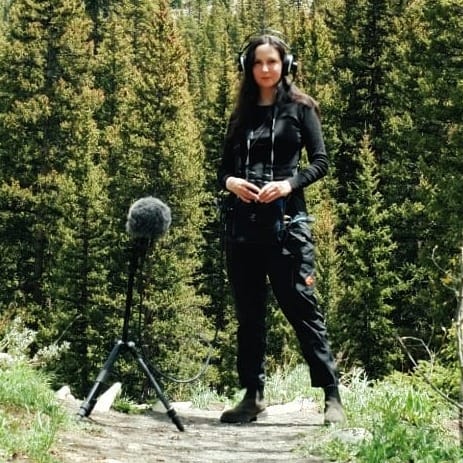
Patricia Wolf — The Sound of All Creatures Great and Small
The ambient composer on her cassette release 'Yarrow,' frog taxis, the power of dormant seeds, and the dread of leaving one's recorder out overnight in the rain. Interview by Carolyn Zaldivar Snow.
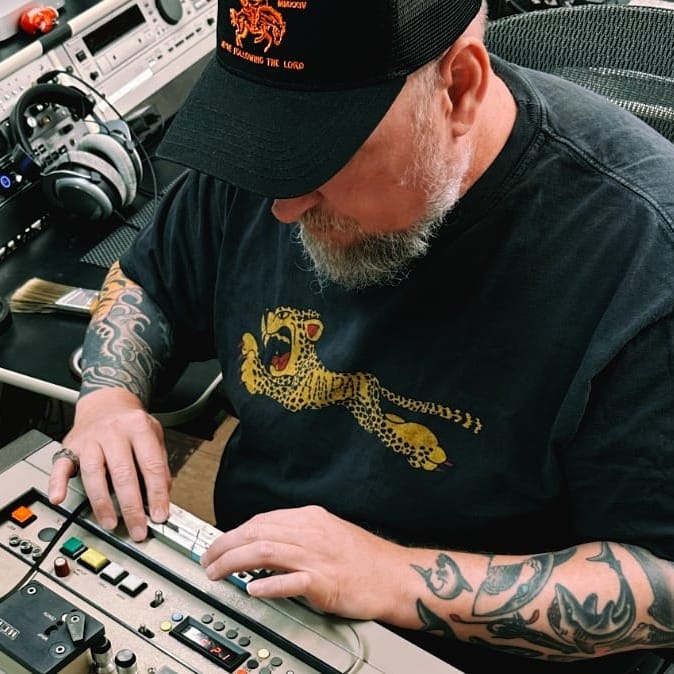
From Dub to Dust — Billy Polo's Life Inside the VP Records Vault
Inside the VP Records vault, restoration engineer Billy Polo is in a race against the physical lifespan of tape — and the even shorter lifespan of the people who know what to do with it. Interview by Lawrence Peryer.
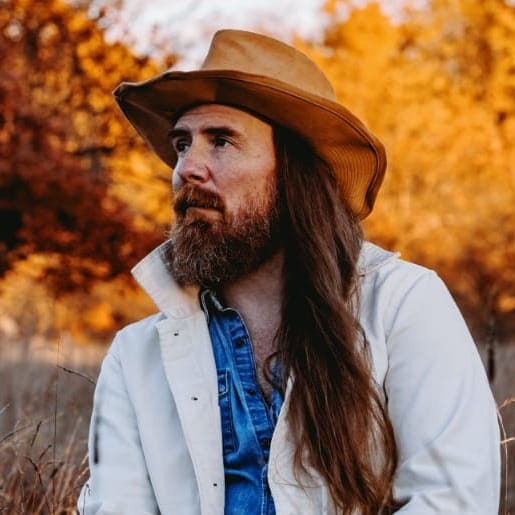
From the Sideman Seat to the Front Porch — Bob Wagner's 'I've Been Down'
With a cast of Nashville heavyweights and a philosophy borrowed from improv comedy, Burlington-based guitarist and songwriter Bob Wagner makes his long-overdue case for the front of the stage. Interview by Sam Bradley.
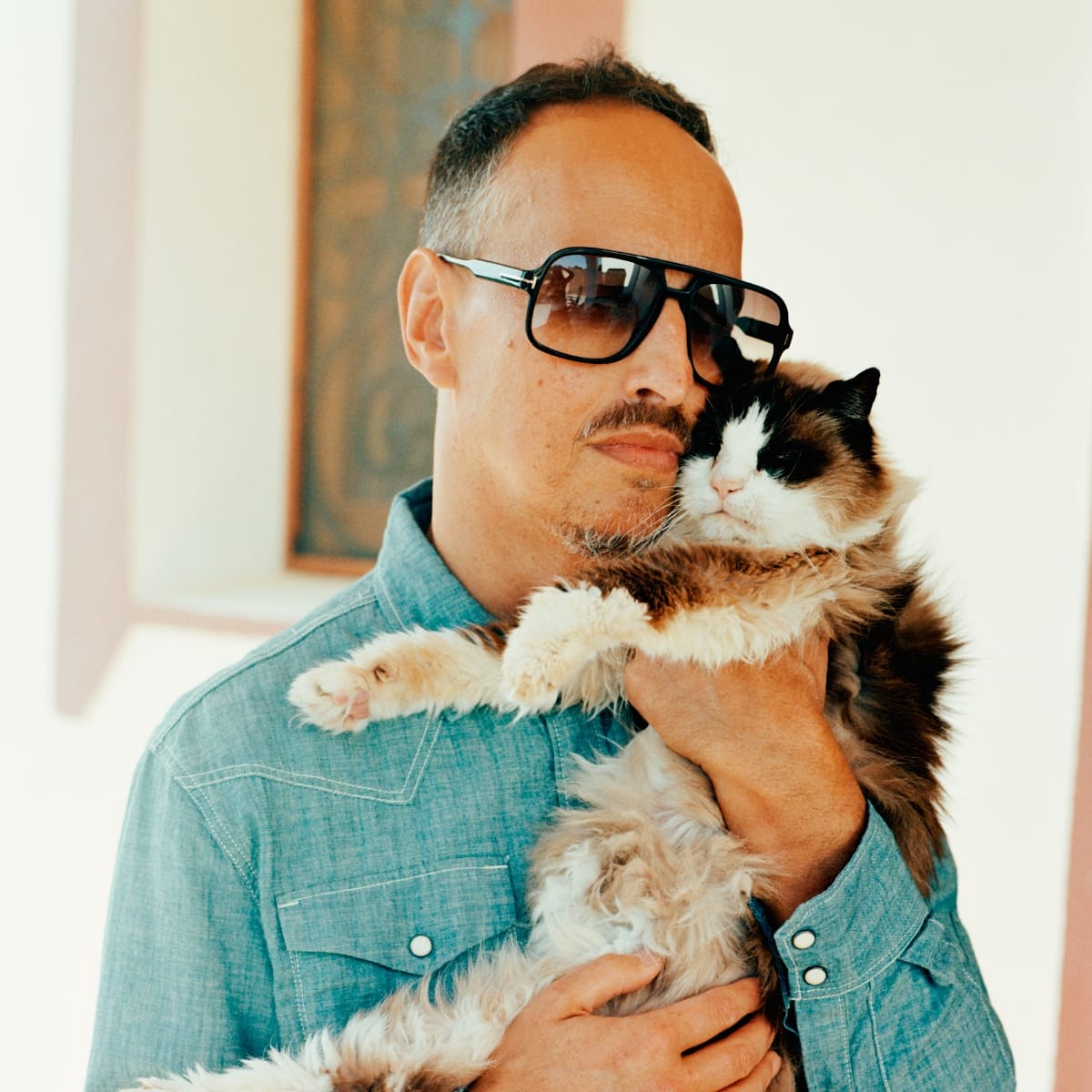
Brings the Dawn In — Mark Barrott On 'The Exit Diaries'
Recorded in an off-grid Spanish farmhouse during a brutal La Niña winter, 'The Exit Diaries' is the sound of a musician who scrapped an entire album's worth of dark orchestral music, listened obsessively to Alice Coltrane, and arrived somewhere he hadn't expected. Interview by Bill Cooper.
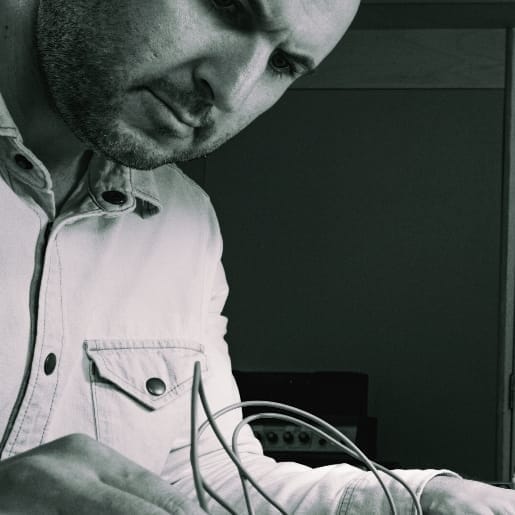
Joseph Branciforte and the Memory in the Machine
With 'ITERAE,' a collaboration with Belgian pianist Jozef Dumoulin, electroacoustic composer Joseph Branciforte turns his live-editing system into an instrument for slowing time. Interview by Chaz Underriner.
This Week's Episode of The Tonearm Podcast:
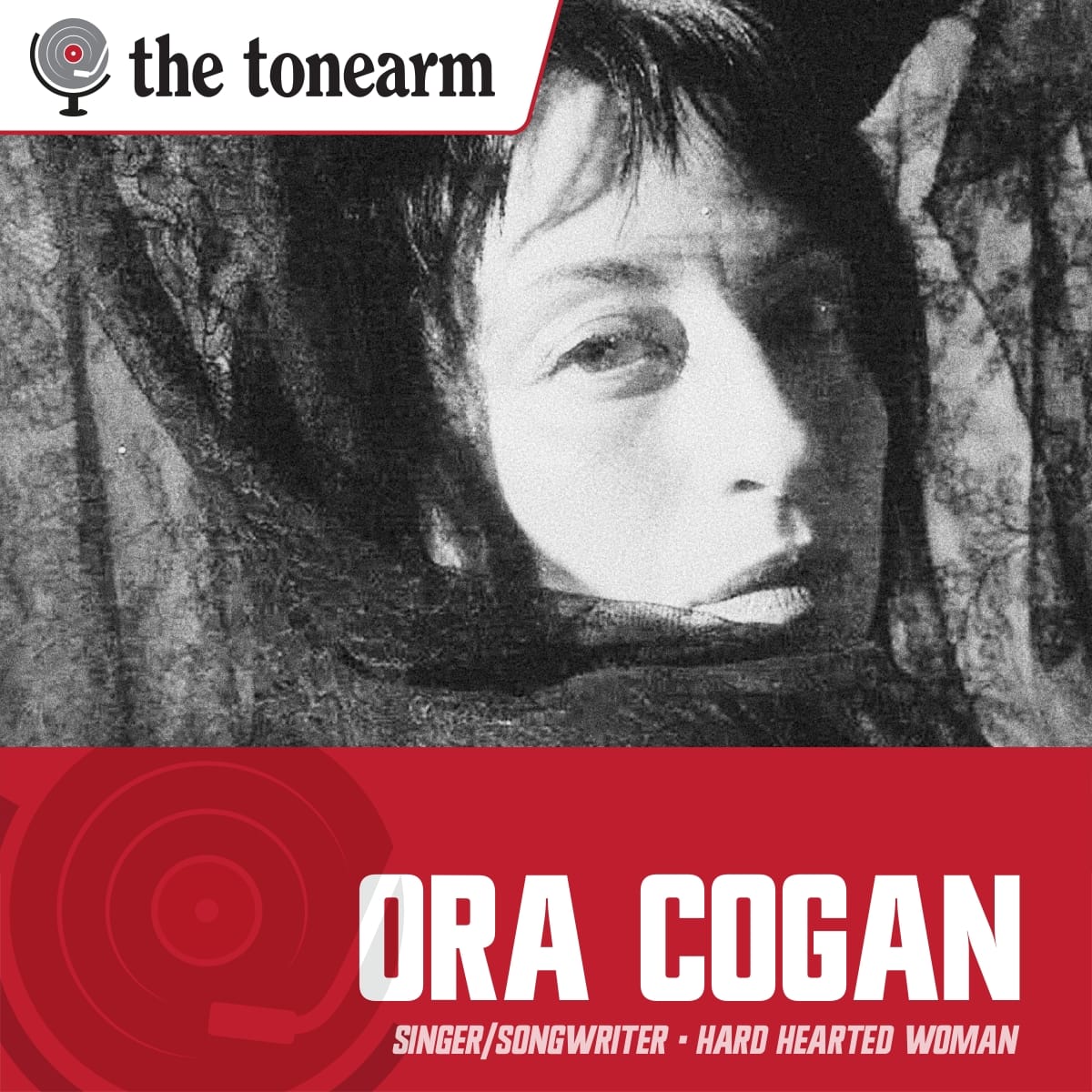
Ora Cogan: Hard Hearted Is How You Survive
Ora Cogan on the politics of 'Hard Hearted Woman,' the hollowing-out of folk tradition, and why her forties have been the best time of her life to be playing music.
Rotations
Lawrence Peryer's Rotations aired its tenth episode this past Tuesday—here's the scoop and how you can listen:
Hour ten of Rotations is live on Mixcloud. From the open with Collin Walcott—the sitarist who studied under Ravi Shankar, played on Miles Davis's On the Corner, and co-founded Oregon—through the close with podcast alumni Julianna Barwick and Mary Lattimore, it is nothing if not diverse. Instead of revealing all the goodies here, have a listen.
The next episode is something of a companion piece to the artists being featured on the podcast and website this week—that's all I'm telling you. Tune in when it airs live Tuesday at 11 PM PT on SPACE 101.1, streaming at space101fm.org. Or, if you prefer to actually sleep at night, it will be up on Mixcloud on Wednesday.

The Hit Parade:
"For all its disparate components, [Abdullah] Ibrahim’s music never sounded like a crude synthesis—perhaps by dint of the unhurried grace of his playing and the deep spirituality of his approach." ❋ "Reg Bloor, our leader, listened to each of us 100 playing for a few seconds unaccompanied to dial in our volume, and often conveyed with a brusque upward gesture that the amp should be louder. I don’t think I once saw her tell someone to turn down." ❋ "Unterberger has unleashed what will likely remain the most comprehensive book on one of rock’s most talked-about and imitated cult bands. It’s a nearly day-by-day narrative and critical testament spanning 800 pages, crafted from more than 100 interviews and firsthand research drawn from a staggering array of resources . . ." ❋ "The Dublin singer’s life might have seemed a world away from a Lebanese–Palestinian girl growing up in a Muslim family, immersed at the time in Detroit’s underground rave scene. But O’Connor’s spirit spoke to Tayeh: 'I was the kid that shaved her head and grew her armpit hair out, and was, like, ‘Fight the real enemy!’'" ❋ “Bellows growl from deep within the organ’s ornate casework. Atonal utterances arrive warped by time, weather and neglect. Wind chests wheeze beneath decades of accumulated dust, while menacing moans rise heavenward through a few carefully chosen stops." ❋ "Ask the musicians shaping Berlin’s jazz-adjacent underground, and most will tell you the same thing: nothing about this emergence was orchestrated. From basement venues to tucked-away off-spaces, a shifting community is pulling live musicianship and dance-music culture into the same frame." ❋ "In the decades since, their slim catalog has blown minds again and again: how could a group that began before punk have predicted post-punk, let alone goth, indie, math-rock, perhaps even electronica, jungle and (as much as the group hate the term) industrial?" ❋ "This was all going on before the Rampart St. studio had any air conditioners; you'd be sweating your ass off in there. But Cos had a solution—he cut a hole in the wall, placed a tube in there with a big block of ice, and had a fan blowing on it from the other side." ❋ With such a fresh-faced bunch, you might assume that ‘Pass The Dutchie’ genuinely did arrive out of nowhere, but a solitary 7” released the previous year on the obscure Birmingham label 021 Records is a fleeting insight into a much deeper back story." ❋ "I still don’t think [Brian Eno] wanted to have a film made about himself, but he wanted to be part of this experiment. I knew he was thinking about these kinds of ideas, different ways of trying to make art that could have a life of its own." ❋ "Morton Feldman had an obstreperous personality, wore Coke-bottle glasses, smoked and drank—and was one of the most important composers of the 20th century. While he began in the company of the avant-garde, he ended up one of the greatest composers in the Western classical tradition." ❋ “This was a time when many pundits decreed that rock was dead and turned their ears instead to world music or to the archives of jazz and soul (and contemporary resurrectors of the same). So there was a certain renegade defiance in taking up the electric guitar and trying to wring new noises out of it." ❋ “In 2026, ‘authentic’ doesn’t mean abandoning our human nature in favor of technology or trends. It means returning to it. We’re seeing a global shift back toward what is organic and real. These movements reflect a greater desire to live in alignment with what sustains us, both physically and emotionally.” ❋ "The message is in the underscoring spirit of the music, having to do with protest, in some sense, but also an inherently progressive inclination: civil disobedience and a questioning spirit as an approach to life and music-making." ❋ “Much as I enjoy the art of concert photography / videography, amateur tho I am, it’s work that requires one to focus primarily on image creation. You can’t fully turn yourself over to the music while you’re shooting, if you’re doing it right. At least I can’t. So I’m always splitting my attention." ❋ For more curated music links, be sure to follow The Tonearm’s feeds on Bluesky and Mastodon.
The Deepest Cut:
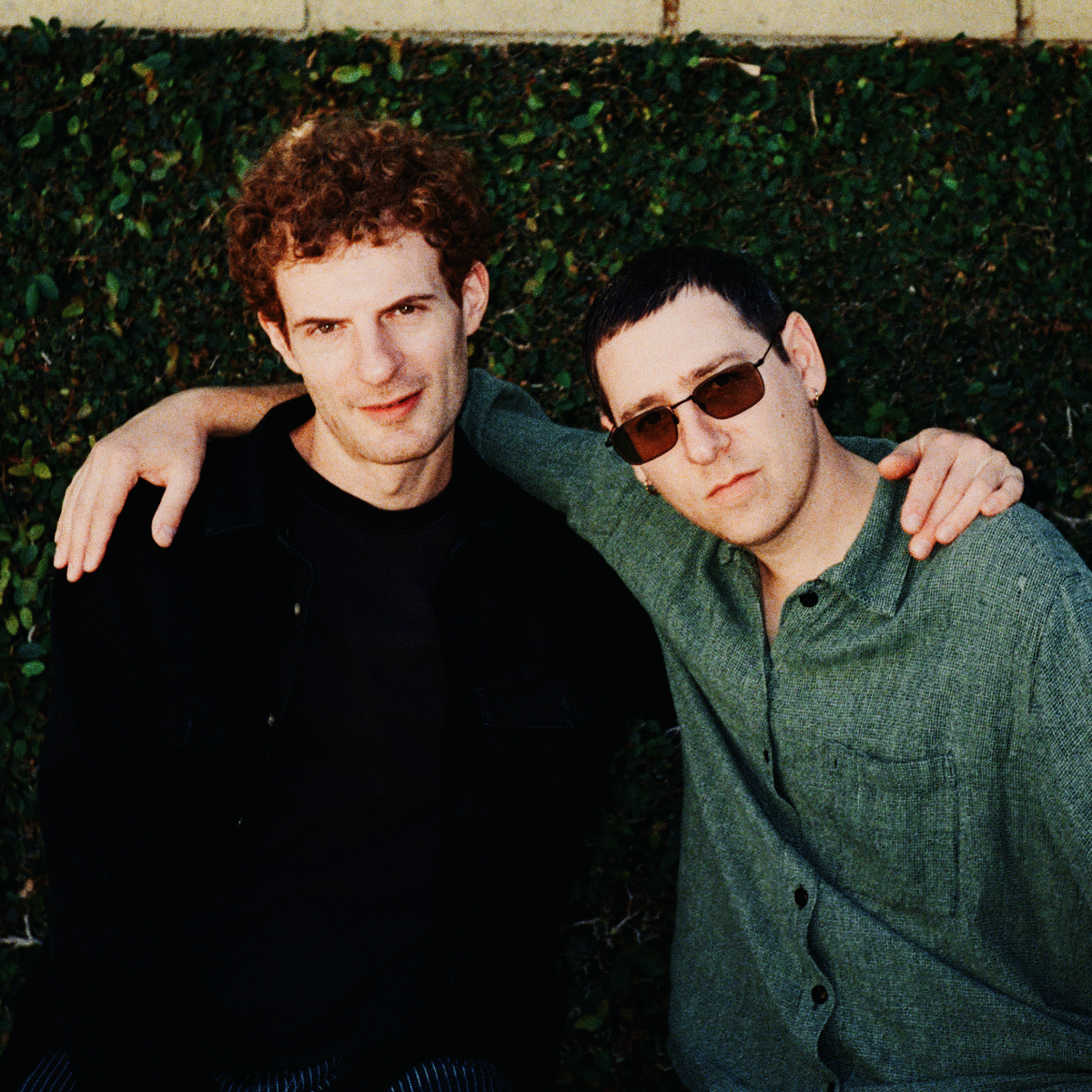
I mentioned OOPS!, an album by the drumming duo of Booker Stardrum and Evan Shornstein, in last week’s newsletter. A ton of music passes through my inbox, but, since its arrival, I’ve repeatedly returned to OOPS! That’s a recommendation of its own, but I’ll also note that the album makes me think of the spirit, if not the method, of My Life in the Bush of Ghosts. Like Eno and Byrne's celebrated collab, OOPS! is playful, rhythmically absorbed, and assembled with a looseness of attention. You can hear Booker Stardrum and Evan Shornstein joyfully figuring things out and discovering them as they go along.
As for the duo’s bona fides, Stardrum has built a reputation in experimental jazz circles for treating the drum kit as a melodic instrument; Shornstein, who records solo as Photay, moves fluently between synthesis and live drumming. Booker and Evan had been circling each other for years—both from the Hudson Valley, both alumni of SUNY Purchase, briefly coexisting in New York City without meeting—before mutual friends finally introduced them in 2021. OOPS! came together in three days in Los Angeles in October 2025, engineered and produced by Spencer Zahn, whose Sudden Quarterly label had approached the pair after Zahn witnessed a largely improvised concert. The album title is as much an instruction as a description. They improvise, follow unplanned detours, and treat happy accidents as compositional decisions.
I reached out to Booker and Evan for some insight on what makes OOPS! so special. I asked them about what it takes to make that kind of looseness work, what two drummers do with the same rhythmic space, and what Booker's handmade mallet instruments have in common with Harry Partch. I also asked them to each name something they love.
Booker Stardrum: We're both percussionists and producers, and although we're coming from slightly different places musically, we speak the same rhythmic language, so playing together is easy. Something we've always enjoyed doing is playing as one with some kind of hybridized instrument—me percussing on the Nord Drum through Evan's Buchla as he controls the sound. Having Spencer there to coax out ideas, move us along, and helm the technical side of things allowed Evan and me to just play together freely and explore ideas. I think we arrived in some unexpected, new territory for us—more melodic and tonal zones, and a whimsical use of preset sounds. Whatever we do next could sound very different.
The primary difference between a collaboration like this and my solo practice is that I tend to get more nitpicky and feel weighed down by the big compositional decisions I have to make on my own. So the process is heavy on the arranging and a little less interactive than when I'm working collaboratively. I enjoy working alone and composing in this way, but it's a different process.
I think when you're making improvised music, one needs to be light—and I don't mean that the content needs to be light emotionally, I just mean that if you get weighed down by expectations and are thinking too hard, you won't be feeling it, and you won't make good work. That's kind of baked into my way of creating music. It's about listening and being in the moment, and then, if you're working with post-production, making good arrangement choices. Evan and I were improvising together, but also co-composing in a fast-and-dirty way.
As for building instruments: if Partch's instrument-building grew out of necessity because he was working with a very specific tuning system, then I think my wood board instruments honestly just come from a place of whimsy and curiosity. I'm always looking for new sounds. But also, I think Partch was about as whimsical and curious as you can get.
Evan Shornstein: Being a producer myself, I've rarely been produced by someone else. When I make a solo record or produce a collaborative record, a large amount of my energy goes into the molding and forming process—figuring out how we get from point A to point B. During the recording of OOPS! I got to focus my energy on playing with Booker and just following interesting tangents. Spencer is a great producer who helped us explore a range of directions while keeping the album’s goal in mind. I think this record is a great blend of Spencer, Booker, and me—all three voices in one record.
Making a record in three days was a new experience. The fast pace forced us to make quick and raw decisions. I wasn't even sure what the album sounded like at the end of those three days. But, as with most recording experiences, the more distance I had from it, the more I began to hear it for what it was. I gave it a listen one month later and was really excited about it.
Booker and I get into a flow very quickly. I think the best part about being drummers is the unspokenness of it all. We don't need much to lock in, and I think we've only really skimmed the surface of what's possible with this duo. I attribute a lot of my rhythmic orientation and musical spirit to my time studying in Guinea. In the context of OOPS! I hear a lot of interesting meters and polyrhythmic sequences coming from my Buchla synth—and it's something to watch how effortlessly Booker receives those shifting patterns and continues to hold down the groove. He's unflappable and can handle a lot of chaos. Those are my favorite moments with Booker, when the syncopation gets out of hand.
This record has a lot of contrast. I was surprised by tracks like "SLEET" and "TREETOP," as we haven't really made anything like that together. I think the studio environment sparked a different energy, because until now we’ve spent more time playing together in live contexts than in the studio. I'm glad we got to explore this side. Perhaps next, we'll do a live record.

Booker and Evan also want to tell us about something each loves:
Booker Stardrum: I live on the Hudson River and kayak a lot in the summer. Being out on the water, you get to hang out with all these different birds and fish; it can be very quiet. Getting to look back toward land I feel very familiar with, but seeing it from a completely different perspective, is something. You notice things differently. Plus, it can be both great exercise and relaxed at the same time, which is kind of my vibe. Maybe I want more people to know about slowing down.
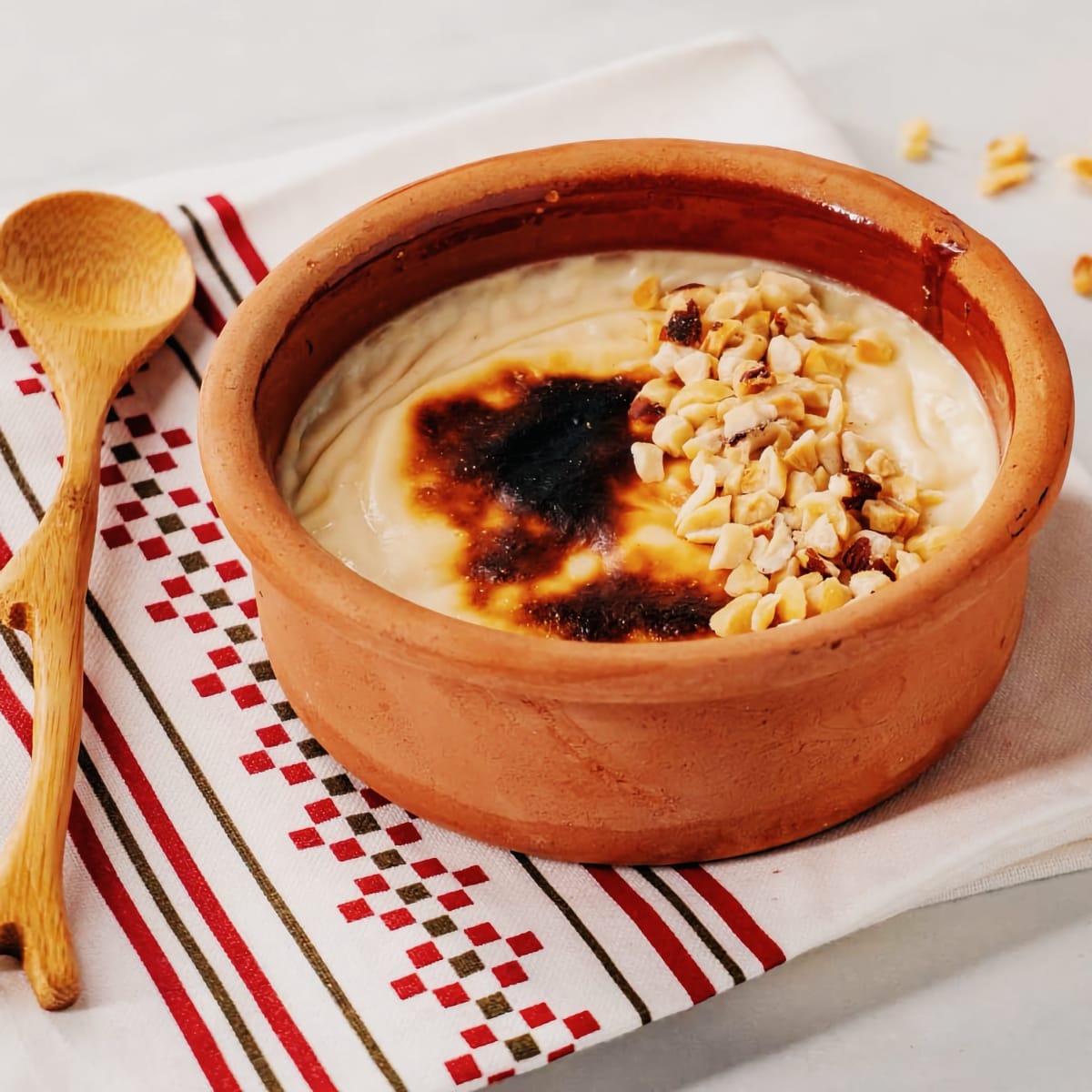
Evan Shornstein: I recently tried Turkish rice pudding—sütlaç—for the first time, in Berlin. It caught my eye because it looked a bit like a crème brûlée, with a burnt top layer. One of my favorite things to do while traveling is order something without knowing what it is. So I ordered some with friends, and we were pretty ecstatic about it. Under the top layer is a marshmallow-esque rice pudding, and it wasn't over-the-top sweet, either. Highly suggest it if you haven't tried it before.
Run-Out Groove:
- The Tonearm is a reader-supported publication, free of advertising and paywalls. Our supporters help fund our writers and make the site possible. Please consider joining and helping us to continue our mission.
- Join the rapscallions of The Tonearm on our new Slack community.
- Sign up to receive our latest articles directly to your inbox in a snazzy, easy-to-read email version. Just go to your account, manage your email preferences, and flick the lever to receive The Total Tonearm.
- The easiest and best way you can help us? Please share this newsletter and our stories with your friends.
Thank you for reading! We'll see you again next week. 🚀


Comments