


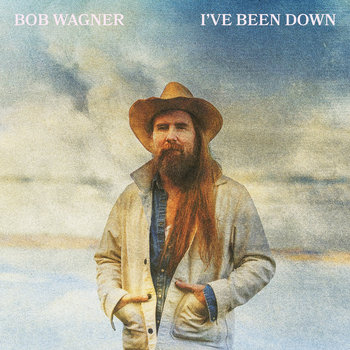
Vermont's homegrown troubadour Bob Wagner steps out of the sideman role on his debut LP, I've Been Down—a project built on the shoulders of his inspirations that still somehow fits perfectly into its day and age. The reverence between Wagner and his guests on the album, which includes Laur Joamets and Oliver Wood, to name just a couple, presents a modern masterclass in country and rock music. His time as a member of Kat Wright's band, described in the presser as an "enchanting retro soul unit," injects the record with a guitar-forward flair and warmth felt in songs like "Jesus, Coffee, Etc." The record's lone cover, a hauntingly beautiful rendition of Elton John's "Daniel," feels like an original tune and holds a very special place in Wagner's life story. The record's patient, smoky beauty paints a full picture of Wagner's songwriting abilities over ten tracks. He takes on the traditional murder ballad in "Richest Man on Earth," which also acts as a protest song of sorts against a villainous billionaire class.
Recently, the Burlington-based guitar slinger completed a tour as a member of Mike Gordon's (of Phish fame) newly revamped solo band. Fans of that outfit should be directed toward "Universe Is Calling," which is very similar to the Gordon-sung Phish tune "Meat." (During my research while writing this, I actually found a live performance of the two songs paired together earlier this year.)
I spoke with Bob Wagner about I've Been Down, his figurehead role as an organizer of Vermont's music scene, and how moving from sideman to frontman was a necessary step for his career. This conversation has been edited for clarity and length.
Sam Bradley: What are some of the early things that inspired you to want to make music? What is your relationship with that same stuff today?
Bob Wagner: I actually have an answer for that. My earliest musical influence probably would have to be my uncle, Daniel. He was just a beloved member of our family, a very talented musician who played by ear. He had no formal training, but he could sit at the piano and just play anything he heard. He was the guy who would lead our family through song after song during the holidays, mostly Broadway musicals. When I was 4 years old or something, it was my first glimpse into the magic that happens when someone plays music in a room. A person plays music, and it changes everything about the energy. It changes everybody's attitude, changes the way we all exist together.
Daniel was my earliest musical inspiration, which got me into playing the piano at a very young age. He was a gay man in New York City in the '70s and '80s, living an out-and-proud life. Long story short, my uncle passed away in the AIDS epidemic, and one song that was played at his funeral was Elton John's "Daniel." I was not planning on putting that song on the record. I recorded that track for my family's sake while I was at the studio with the mics up. I was like, "Oh, we'll just get a quick take of this song." But I just love the way it came out, so it ended up going on the record.
Sam: It's a powerful take on that song, and it fits well with the material, I think.
Bob: I was not planning to put any covers on the record whatsoever. Without getting too esoteric about it, when I think about the subject matter of that song, it's very personal to me for obvious family reasons. Also, what that song is about is actually so interesting. I love the story about Bernie and Elton writing that song. Have you ever heard that story?
Sam: I'm somewhat familiar but not fully off the top of my head.
Bob: The short version that I know is that Bernie Taupin woke up in the morning, grabbed the Times, and read this article about a Vietnam vet who had come home and was struggling. He, like every vet, wasn't getting the support he needed mentally and physically. It really touched Bernie. He wrote the lyrics, and Elton was in the studio that day. He marched the lyrics over to Elton, who read them and wrote the tune, and they recorded it on the same fucking day that Bernie wrote it. In the morning, he wakes up, reads his article, writes the song, hands it to Elton, they record it, and that's the track we all know. Which to me is just like, "What do you mean you wrote and recorded that beautiful tune all in one day?"
Sam: As someone who has spent a lot of time touring with other people's bands and doing session stuff, did you feel any pressure or challenges directing a solo record?
Bob: Something that I have learned over the years is to just hire great people and let them be great. I do a bunch of these large benefit shows as a musical director, with 20 or 30 people on the bill. If I let myself get too heavy-handed about the production, I think I and everyone around me would suffer a horrible fate. Stepping into more of the role of just doing my own thing, my idea was just that I'm going to work with people that I consider to be the best, and I'm not really going to tell anybody what to do. I'm going to let them do their thing. Everybody's got great ideas in the room, so it becomes like what they're doing in improv comedy, the "yes and . . ." thing. You know, it just becomes a game of that until you say, "Okay, we're almost out of time. We have to do whatever the last good idea was and stick with that."
There are a few things on the record where I finished writing the song that morning, and then the take that you hear is the first take of the band playing it. For that song "Sad and Lonesome," I know I finished that song on the morning of the recording, and it was supposed to be a chill, acoustic, cowboy campfire song. Then I had this idea to play it a bit quicker—the tape is rolling, and that first take is what went on the record. That's a great example of the feeling we approached this with. I love everybody that's on this record so much. I love their playing, and I feel really confident about just counting off something they haven't heard before and having the chance to capture their first instincts on it.
Sam: I imagine having that trust takes some mighty pressure off your shoulders.
Bob: 100%. The same kind of thing goes for guitar solos for me—the more you do them, the worse they get. You only get one chance to capture a first impression, and that energy starts to fade after the fifth or sixth, sometimes after the second or third take.
To be honest, I was having a horrible time vocally throughout the whole session. My voice was maybe at like 70%, if I'm being generous, of what I think it can or should do. It was just in a bad place during that session, but I had to just kind of let go of it. If I let myself go crazy overanalyzing and editing things, I would never stop. Something I keep coming back to is that if a song or a piece of art makes you feel anything, then, to me, that's a win. So that's really all I'm going for.
Sam: What can you tell me about how the guests themselves changed the course of the record?
Bob: I have two answers for you. One is that in terms of vision, if I get Josh Weinstein, Jano Rix, and Mark Raudabaugh in the same room together at The Studio in Nashville, with Brook Sutton behind the controls, I know without a doubt that I'm going to walk away with something that I think is great. There's no chance this won't work out.
Two is answering if something ever came around and flipped things on their head. Yeah, Laur Joamets was an absolute last-minute addition and a happy accident during the session. It was my last day in the studio. I was doing some overdubs, cleaning some stuff up, and I was in there by myself with the engineer, Brook. He started telling me about the session that was going to be coming in after me for the next week, and it was like fucking Homer Steinweiss, just an incredible drummer. He starts naming all these names, and he says, "Laur." I was like, "Wait a minute, Laur is going to come in here this week?" And he's like, "Oh yeah." I mentioned something like, "That's funny because I was about to track the guitar solo, and I got to be honest with you, he's one of only two people I would call that I would rather hear on the song." Brook goes, "Oh, do you want me to text him?" I'm freaking out because he's like one of my favorite guitar players.
Long story short, an hour later, Laur's walking his stuff through the door. He was just like, "Yeah, you got me till 5:00 p.m. I got to go home and cut the grass after that." He laid down the solo on that song "Richest Man on Earth" using this funky-ass old Silvertone guitar I had. I was just like, "This guy is just magic." He's never played this kind of guitar before, and I think that the guitar solo he put on that song is timeless and really cool. It blows my mind that it's on a tune I wrote. At the end of the day, I got him on three tunes, and that was just a Nashville magic moment for me. Like "Brook, you just texted somebody, and my favorite guitar player walks through the door and ends up tracking on three of my tunes?" You've got to be kidding me. Where else does that happen?
Sam: I can feel the love and respect you have for that whole crew. Does it feel odd having your name and picture on the cover at all?
Bob: Oh, yeah, it's definitely weird for me because typically I don't really want to see my name up on stuff. I don't love getting my picture taken, you know, shit like that. It's weird, but it's necessary because this is what I want to do with my life. If I think back 20 years, I didn't really want to have to get up on stage and play music either. Some people see a stage, and they're just dying to get on it and perform. For me, it's more like I have to be dragged kicking and screaming. But you get used to it, kind of.
Sam: I know you're heavily involved with organizing work in and around the Burlington music scene—how do you feel that world compares to working in Nashville?
Bob: I wouldn't want to comment too heavily on the Nashville scene, as I've only spent a little time there, but I do have an observation. When I was in Nashville making this record, and I would go out at night with friends, I immediately felt at home. It felt to me like the Burlington music scene, where friends go to each other's shows. All the music people are cheering each other on. There was this wonderful sense of camaraderie that I was picking up on down there. To me, Nashville just feels a lot like Burlington, except there's industry and opportunity there.
One of the things that Nashville obviously has is an incredible songwriter scene. I've been trying to see more of that happen in Burlington and in Vermont as a whole. I'm slowly doing what I can in Vermont to make more opportunities happen for musicians and more session work. We have lots of studios in Vermont, all my musician friends are all great players, just so talented, and would love nothing more than to spend every day working in a studio and getting paid to be there. Unfortunately, that is just not the reality in Vermont. Whereas in Nashville, if you just live there by proximity and if you're a great musician, your phone's going to ring.
Sam: Correct me if I'm wrong, but having that access to industry work in a place like Burlington would probably draw a lot of people out of the woodwork. Overall, do you see that inspiring those same good musicians all over the country?
Bob: It'll be a dream come true. Yeah, I mean, all scenes across the country are capable of building themselves up to whatever point they're capable of building themselves up to. Like, if you go to Cleveland or Akron, there are some killer players, and it's like, "What are you guys doing there?" (laughter)
One of the big things about Nashville, besides the songwriters and all the studios, is that it's in the middle of the country; it's in the Heartland. That's where the touring comes from. People get on a bus there and easily reach so many different markets. You can get to the Southeast, the Northeast, the Midwest, or go out West. There's a reason all the tour bus companies are there. That is not going to happen in Vermont anytime soon.
I will say that the cool thing about living in Vermont and the Northeast in general, especially if you ask anybody who owns a booking agency up here, they all love the Northeast because there are 28–29 legitimate markets to tour your bands through that are all within a day's drive up here. Whereas once you go out West, the bands have to do 10–12-hour drives to get to the next gig instead of two-hour drives.
Sam: It makes it more travel-friendly on both sides of the stage, too. People in the Northeast or the greater East Coast have access to the different cities that bands tour through. An audience might be more likely to attend multiple shows in close proximity.
Bob: Yeah, I don't disagree with that. With the Kat Wright Band, who I've toured with for over 10 years, I was doing all the driving. We always joked that, in the last two or three hours coming home after being out for a week touring down the coast, "If we lived in Albany, we'd be home by now." Then we would always think, "Yeah, but those last two or three hours are what keep all the assholes out of here," you know? It's not for the faint of heart, but it also kind of keeps everything so cool up here in Vermont.
Stay on top of The Tonearm.
Subscribe for exclusive interviews, cultural tip-offs, and community fun.
And your support keeps our site free of advertising and paywalls.
Sam: Can you tell me a bit about how you got connected with Mike Gordon and what it was like touring with his new band?
Bob: We got to know each other just through the Burlington scene; he had me sit in with his band probably over 10 years ago. That was probably the first time we ever played together. I'll call him to see if he wants to be a part of benefit shows, and he's always been gracious about being part of things like that. I don't know if you got a chance to check out anything from his band that we just toured, but it was a great tour. And the band was just so cool with these new additions in there. I don't know if you know that guy Xavier Lynn, the guitar player, but he's great.
Sam: You played a couple of these I've Been Down tunes on that tour, correct?
Bob: Yeah, we did three of them, which was why this tour was so fun for me. It would have been great to just play Mike's tunes—I love all his stuff. But the way he treated this lineup made it seem like he hired Xavier and me to do our music as well. So it was this cool collaborative thing, and I think it makes for a more compelling show when you're playing a two-and-a-half-hour concert, to change it up a bit. I've been sharing my music with him while I was making this record, and he really wanted us to play the songs.
Sam: How long have these songs floated around?
Bob: One of them that's on there has got to be 20 years old. The one I'm thinking of is "Jesus, Coffee, Etc." I wrote that in like 2003 while I was driving across the country for the first time, and the Iraq war had just started. I was listening to the radio every day, keeping tabs on the news, and that song just came out one day.
"I've Been Down," the title track, that tune's over 15 years old. I have played it in the area here, and we were playing it with the Kat Wright Group—I think we were closing a lot of our shows with that one. But, like I was saying, there are other songs that were finished the morning they were recorded. So it's a real mix. I would say most of the songs are new.
Sam: Did you approach any of the songwriting on this record with a deliberate goal to carry on any motifs of country music, like protest songs or murder ballads? Is that more of a natural thing that comes out?
Bob: I wouldn't say that that's any type of conscious thing for me. If I'm lucky, I'm just following wherever I think the song wants to go and trying to get out of the way. Something I learned from my friend Ryan Montbleau is to paint a picture, not a sign. If I'm feeling stuck while I'm writing, I just ask myself, "Are you painting a picture right now? Or are you painting a street sign—a traffic sign? Remember, your job is to paint a picture and not tell people what to think or what to do."
The only real intentional thing on this record is the song "Richest Man on Earth," which is a murder ballad. I bought this almost 100-year-old guitar from my favorite shop up here. I looked at it, and I was like, "Yeah, you know what? I've always wanted to write a murder ballad, and this guitar looks like it's been through some shit." I knew that was going to be the guitar to write a murder ballad on. I asked myself who's going to get killed, and this was during the time of like Elon Musk and DOGE—it was just in the news every day, and it was just making me fucking crazy. I was just like, "Oh, well, he's got to go."
This has never happened before, but I bought that guitar, and then on the drive home, I just opened my voice memos and started writing the tune while I was driving. Not playing the guitar—I just had it next to me—and humming lines. Then by the time I got home, the song was done. All I had to do was put the car in park, grab the guitar, and put it together. That was a total first for me. I wish that would happen every day, but it just doesn't.
Sam: Sounds like a worthwhile purchase then.
Bob: Yeah, without a doubt! It's like my favorite guitar in the world now.
Check out more like this:
 Meredith Hobbs Coons
 Sam Bradley


Comments