


To talk to Ben Dexter Cooley, who goes by the self-assigned alias St. Silva, is to sit with someone who is actually deep. The kids of brain-rot culture are telling us, "it's not that deep" and to "go touch grass"—Ben is already there. There are dark curls pouring out of a cap and serious eyes under the bill on the other end of our video call. I am witnessing a philosophical mind that is engaging in the Socratic method with only himself.
Enshittification, hauntology, and dead internet theory are things Ben thinks about, but there's also the woods. Here Ben becomes St. Silva. The rigors and complications of being someone who is good at things are washed away in a spring thaw. The day jobs may have sent him through MIT and Harvard, but it doesn't bring one any closer to discerning which mushroom is safe to eat.
St. Silva deals in complex systems, but Forager is a way to convey information. A human is a synthesizer. In the snowy puddles of the Vermont woods, St. Silva is always recording and trying to cultivate a spiritual practice away from the Indiana megachurches he grew up in. He is listening without the pageantry. Forager is richly simple—the way soup can be difficult because the base has to be good and is nurtured only by an observant chef. Ben is familiar with the way things are deteriorating in a tech-addled world, particularly in music. It's not hard to generate a soulless chord sequence or download a sample pack in an ever-devolving ambient scene. I think about Anthony Bourdain's take on bouillon—sure you can dump the powdered stuff in—but what are you even cooking for? Ben will continue to do it the honest way.

Carolyn Zaldivar Snow: So I looked up if there's an established Saint Silva, and I came up with a Beatriz da Silva, who is sometimes Saint Silva—but who is Saint Silva?
Ben Dexter Cooley: I adopted the moniker when I started to experiment more with electronic music. I had recently gotten my first field recorder—just one of those little Zoom H4s. I've been a musician most of my life, but I wanted a fresh start, and adopting a moniker felt like a good way. I spent a lot of time in the woods with my field recorder, thinking about the sounds of nature. I was thinking of something that would evoke a natural feeling, and silva is Latin for forest. Silviculture—that's the study of trees. Then on a personal level, I grew up in a Christian evangelical environment, and religion was a big part of my upbringing. It's not so much now, but I wanted to bring the spiritual into the natural a little bit. So when I found Beatriz da Silva . . . it's not a direct callback to that specific saint, but more of a conflation. The spiritual mystical with the natural forest.
Carolyn: There are so many of us in ambient and experimental music that grew up evangelical in the US. I'm one of those. Ben Seretan and claire rousay are others. Why do you think we weird kids go out and stand in the woods alone recording sounds? Do you think it's being fringe and maybe sitting alone a lot, or eating lunch alone, or maybe some of us were homeschooled? Almost like the fringe gives us the patience?
Ben: I was in Christianity pretty deep until just after college, and was dedicated, very devout, and got my meaning and life purpose from that. Then when I deconstructed my faith and started to form my own worldview and push back against some of the things that I grew up hearing from church, it felt like I was losing a big part of me. The rug was pulled out from underneath, and now I have to figure out what to believe. No one's telling me. That is kind of terrifying, right? I was also a big church musician. I was playing in the church band from age twelve, and I played guitar.
Carolyn: Was it a megachurch with a sweet sound system?
Ben: Definitely a megachurch. I grew up in Indiana, so there are quite a few megachurches.
Carolyn: Where in Indiana are you from?
Ben: I grew up on the north side of Indianapolis.
Carolyn: Oh yeah, that is Sweetwater bread-and-butter megachurch band gear territory.
Ben: One hundred percent. The lead singer looked exactly like Jesus—white Jesus, I should say. That's how I really learned to perform and play music. I learned about guitar pedals and reverb and delay. I think that a lot of ambient experimental folks come from the church because they actually do a lot of incredible soundscape-type stuff.
Carolyn: There's nothing quite like a church pedal board.
Ben: My friend used to say that the keyboard player playing the ambient pad behind the pastor as he gives this sermon is what we would call "the spirit hovering over the waters." Like, "just give it a little spirit hovering over the waters, and we'll be good for this part."
I always felt spiritually connected to God or to some higher power, and when I lost Christianity and lost that type of faith, I was looking for a way to still connect to the mystical and something bigger than myself. I felt like I could do that by being in nature, which felt so much bigger than myself.
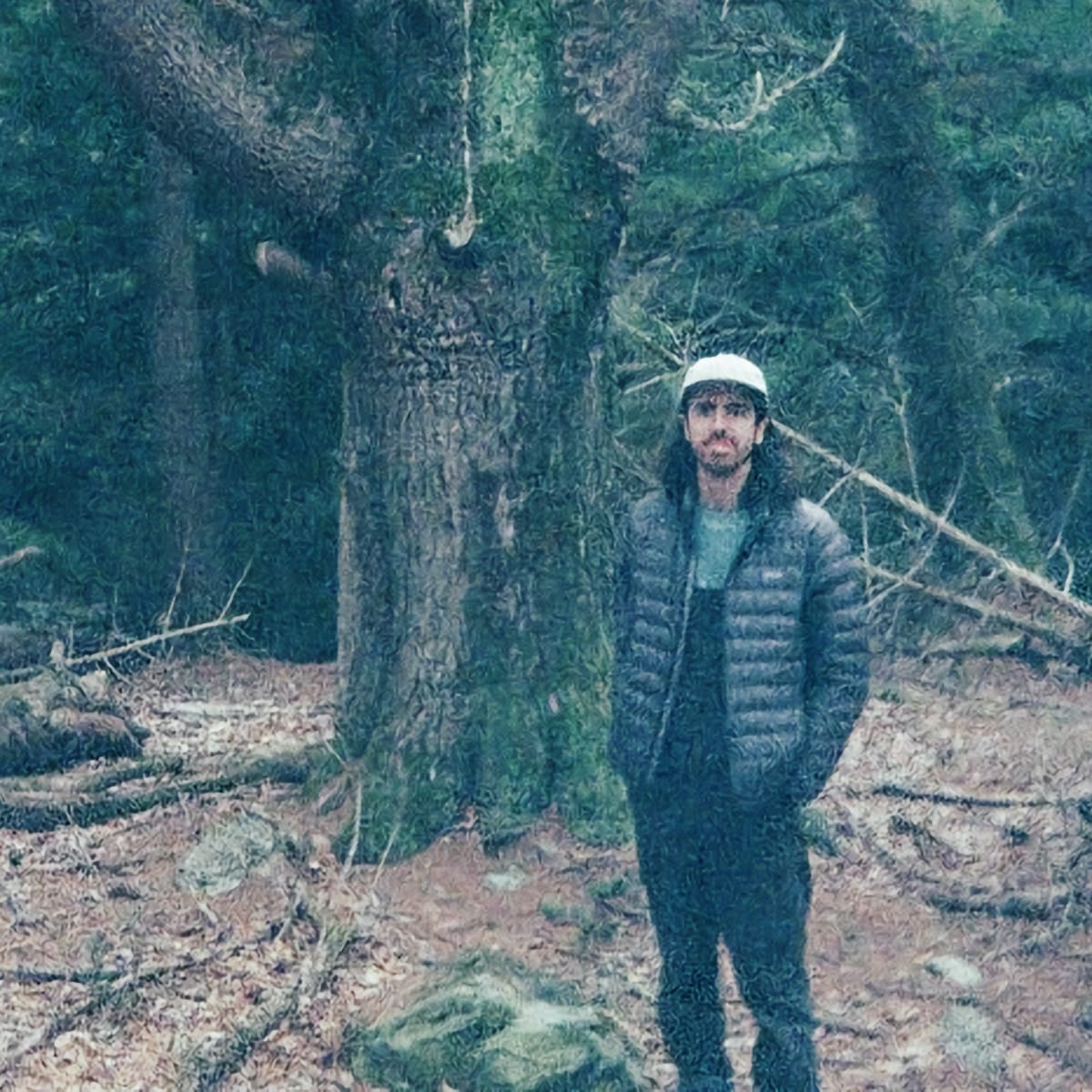
Carolyn: You want to be in nature, and that's a contemplative and intentional place. But also, you're a data guy and work in tech as a day job. You're out there with your gear. How do you skirt these worlds and then break it down to make music?
Ben: It's something I think about so much. It's hard to do music full time. You have a day job, and you have other things in your life. Sometimes I feel this pressure to present myself as someone who does just one thing, and I really leaned into that after I went to grad school because I was trying to get a job, so I was like, "I do data stuff." At the end of the day, it's all me, and there's so much talking and moving between these boxes. They're all connected through these little tunnels, and I think my work is always informed by my job working with complex systems, and vice versa.
Carolyn: Can you give me a working, soft definition for someone reading of a complex system occurring in the world?
Ben: The weather is a classic example of a complex system. We have ways to model what we think will happen in the weather, but there's really a combination of factors. There's barometric pressure. There are the clouds. There are all of these things that make it hard to predict. So you could think about social dynamics as a complex system, too. One of the people I work with studies how infectious certain ideas are in a social system. They use things like the spread of diseases to model how ideas also spread. 'Complex systems' is kind of intentionally vague because it allows you to explore a lot of different things at once. Complex systems are interconnected variables that have a relationship with each other.
I think a huge part of my musical self is a break and a reprieve from my day job self, which I think is probably pretty common. It's a reason that I often will use hardware synths and don't do very much work in a DAW because I'm at a computer all day for my job. I think there's some interesting work to be explored in the more subjective interpretation of data and science. Do you know Patricia Wolf?
Carolyn: Oh yeah, she's the best.
Ben: I love her record, The Secret Lives of Birds. It's actually just synthesized sounds, but evoking the bird calls. Her most recent one was from an arts residency in Colorado, and she's working with scientists on plants.
Carolyn: Yes. That's the record Yarrow from Patricia's time at the Rocky Mountain Biological Laboratory.
Ben: I read the liner notes for it on Bandcamp, and she talks about trying to evoke a scientific process, and she could have done a data sonification of that, like take the like different signals, map it onto a chromatic scale or whatever, and then like play that back. Instead, she's like, "I've learned so much from these scientists about the process of yarrow growing and different plants, and I'm trying to create more of an artistic lens to view that with." I'm more interested in that rather than the hard translation of science directly or exactly.
I think data sonification is really cool, and I still do that work, and I will continue to do that work. But I think specifically for Forager, for this body of work, I really wanted it to be imprecise and leave in a lot of texture that felt like you were just rolling around in the dirt. It doesn't need to be very exact, and a lot of my work and day job feels like it's very exact and precise.
Carolyn: So your record—it feels seasonal to me. I was feeling a transition of late summer into autumn between the track titles, or just the mood between motifs. I'm curious if there was a season appended to Forager. I'm wondering what feels liminal in your own life, so this record feels really like a transition.
Ben: It is seasonal. I was going through the stems and some of the field recordings because I'm trying to figure out how to play some of these live for the release show in a couple of weeks. I try to label them descriptively so I remember, and it was like "the ice was melting, and it was raining." So it was spring. I'm glad that it comes through the sounds and the feelings.
I moved to Vermont three years ago, and what strikes me so much about Vermont is just how seasonal living here is. People really embrace the seasons. It doesn't matter if it's really cold; you strap on your cross-country skis, and you just go out. If it's spring and it's muddy, just put on your wellies and throw on a rain jacket. You move on, you do your normal thing. Every field recording except for one track on this record is all sounds from Vermont, and I really wanted it to feel like an album of place. I think one of my ambient pet peeves is the use of random field recordings that are just taken from a sample pack. I think if people like that as a texture, that's great, but . . .
Carolyn: You can be a hater. You don't have to soothe anybody over technique. It takes a lot of work to make it compelling and stand out.
Ben: I try not to throw too much shade, but I'm really not interested at all in just sort of like ripping bird sounds from a random sample pack. It feels so cheap to me. So capturing the sounds is really important to me.
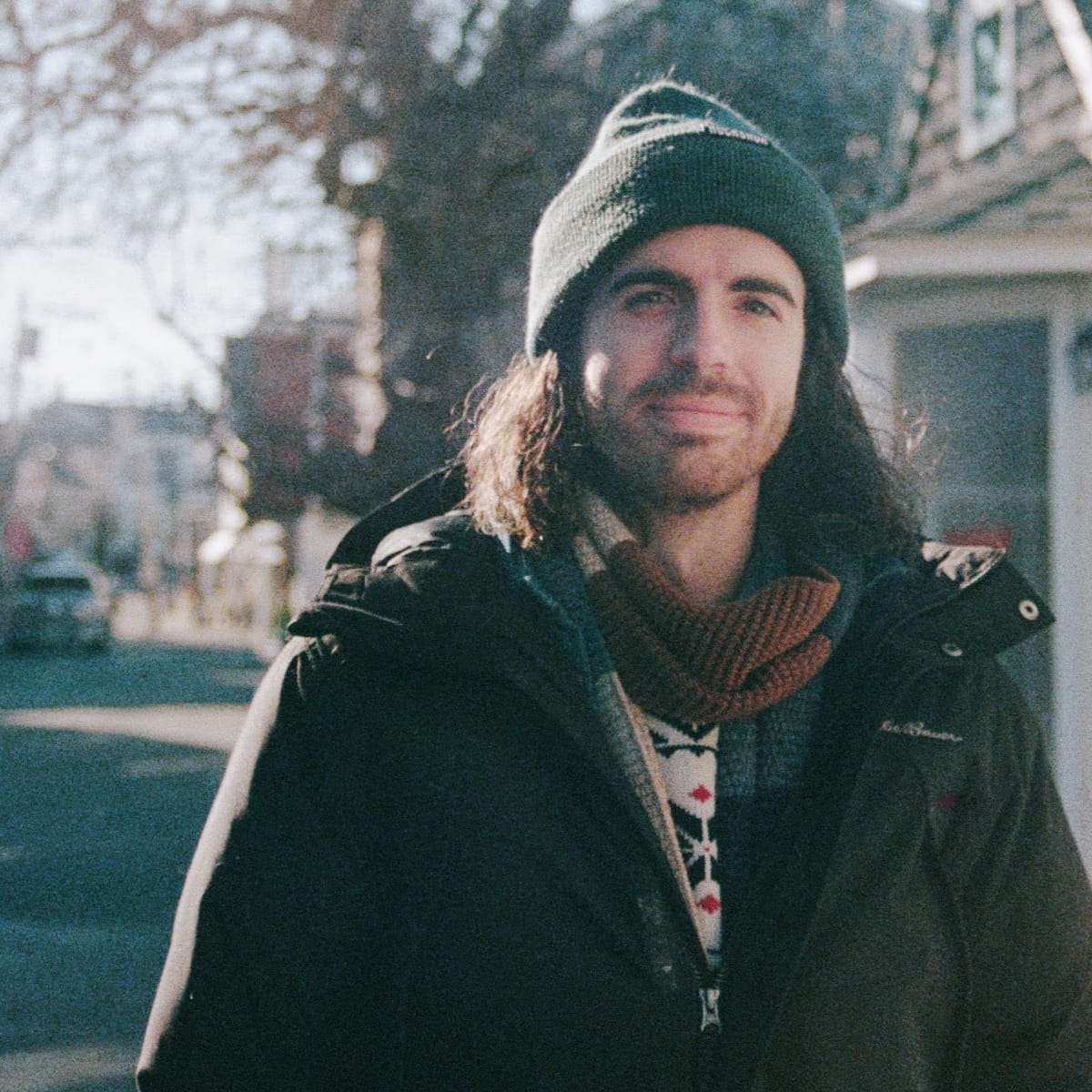
Carolyn: What do you think it takes to imprint a signature sound, or take on a form in ambient? Ambient can feel oversaturated; everything can feel the same.
Ben: Ambient has a complicated history with functional music, going back to Erik Satie's "furniture music." He was a composer around the same period as Claude Debussy. I was reading interviews with Brian Eno, and he has this notion that ambient music should be as interesting as it is ignorable, and as ignorable as it is interesting. Now I just think that technology, streaming services, algorithmic listening, and playlisting have really changed that. Even setting aside AI-generated music, which a lot of ambient is incredibly vulnerable to, at least this style of templated ambient, I find I want to make music that is not functional. People will treat it as functional if they want it to—that's out of my control. I'm not interested in getting on playlists for wellness moods to relax to.
Carolyn: So you do not want to be on the Pandora yoga station?
Ben: I think that I'm far more interested in music that has a clear throughline and concept now. That's one of the things that is a signpost for me of the artists I'm really interested in. They put out a piece of work, and there's like a clear theme. If it's a body of music that is just relaxing sounds I created on my synthesizers, I'm not as interested in it because it feels like it doesn't quite have a soul.
Part of how Forager came into being is that I can get a lot of anxiety about composing. I put a lot of pressure on myself. So my concept was: I'm not going to compose in that way. I'm going to collage more. I'm going to take things that have already been tracked to take away that pressure and just be curious about the sounds I've already collected. That's how the foraging concept came to be, and I hope that is the spirit of the record.
Carolyn: So when I got the preview of Forager from AKP, there's a visualizer where you can see the waveform of each song. Something that stood out to me is that most of your songs clearly have a compositional climax three-fourths of the way in, so the waveform will be kind of similar. In the track "Something Strange," the waveform is completely wonky and different, and I cannot piece together what the field recording is. So what is it?
Ben: It was one of those problem tracks, you know, where it's like I want to use it, but it didn't come together until the end. It started with these piano loops, and I recorded them a while ago. The mode I was playing in felt a little off-kilter, and that was the feeling it evoked in me. The recording is actually inside of my greenhouse. I took out my microphone, and it was raining, and I put the recorder pretty close to the roof panels. That pitter-patter is the bottom of the rain hitting that greenhouse. I forgot how simple some of these field recordings are, which I did intentionally. I didn't want to push them into adding more and more layers. I just wanted to stick with one to two field recordings and one to three musical stems.
Carolyn: Let's talk about the track "Halations." My understanding of a halation is to warp film with light leaks or to give a dream-like structure to what you're shooting. If we have the same definition of halation, I was wondering what in your life feels dreamy or is softening around the edges?
Ben: I think moving to Vermont. I've lived in four different cities post-college. I lived in London for three years. I lived north of Boston in the Somerville–Cambridge area for four years, and moved to Vermont three years ago. The first year you're kind of getting oriented and trying to meet people. The second year you're settling in, you feel more connected, more familiar, and for me this is always how it's been. The third year is really when it feels settled; it feels like you're rooted there, and it doesn't feel like so much work to fit into a place. I think something kind of dreamy for me in this stage of life is feeling a deep connection to a sense of place, which I've never felt anywhere else, even including Indiana, where I grew up. Feeling the rhythm of the seasons and the connection to nature and people here has felt like sort of a dream and kind of serendipitous.
I actually discovered a few months ago that my great-grandfather was born in Vermont, and I have some family history, and I need to take this field trip. My great-great-grandfather had a farm in Randolph, Vermont, which I have not visited. I don't know if it's still standing or not, but it feels like this sort of full circle, like there's some ancestral family ties here.
Carolyn: You have to go find this farm now. Do you actually forage in nature? Are you bringing home mushrooms? And are you a crow? Are you a crow person and picking up objects?
Ben: No. To be honest, I'm a little too scared to pick the wrong thing to actually forage. I've done it one time. I was on a hike with a friend on the section of the Appalachian Trail that cuts through southern Vermont. She did the whole AT, and learned a bit on her travels, and she's like, "Hey, this is a 'chicken of the woods,' this is good. You should take this." And I was like, "Are you sure? Like, how sure are you?"
Carolyn: That one's an easily identifiable one. That's the only thing I've foraged and cooked.
Ben: I took it home. I cooked it in butter. It was delicious. I'm hoping to find a friend who's confident in their abilities. We have wild raspberries and strawberries that grow near our house, so I feel pretty good about those. If I do forage anything, it might be some ferns or plants. A few summers ago I started doing cyanotype printing, so any kind of interesting leaf shape—I'll stick those in my bag.
Carolyn: As far as Forager goes, what would you say is the track that most represents you on this record? The one where you're like, "That's my calling card. I told my story." Pick a favorite child.
Ben: That's so hard. I think I'll answer the calling card question because I feel like that's easier for me than a favorite. "Here Alone" is probably most emblematic of my sound and inspiration. I say that because I think melody is still a big part of this record, even if some of the songs are a little more floating in texture with lots of granular stuff. I can never quite get away from melody, even if sometimes I want to be a little weirder.
Carolyn: Where do you think the pressure comes from to be weirder or more experimental?
Ben: I think it comes from feeling like it's really hard to create something that's fresh and unique and doesn't get thrown into the same bucket as everything else, like something you can work to, or something for your yoga studio. It's become easier to make harmonically beautiful sounds, whatever that means to you.
Carolyn: There's nothing beautiful in my life right now. I hang out with atonal composers. Just kidding, but not really. Okay, I like atonal things.
Ben: There are maybe two ends of that spectrum, and I don't think I'll ever be fully in the atonal camp. Part of it too is working in tech. I am seeing so many algorithmically generated things. In my personal life, I'm always like, "How can I make this a human feeling thing?" and synthesizer sounds are pretty. They can be easily replicated and easily made generic. I think the interesting thing to me about ambient music is trying to find creative ways to use these tools, and using them maybe in the wrong ways, too.
Stay on top of The Tonearm.
Subscribe for exclusive interviews, cultural tip-offs, and community fun.
And your support keeps our site free of advertising and paywalls.
Carolyn: You know, I read your entries about trying to negotiate your digital life. That's something I deal with personally. I'm very you in a different way. Like you have buckets and you're winding down social media and you're trying to use things that are not owned by venture capitalists. For me, my rebellion is refusing to be a brand. So people are like, "I wish you would just post modular synth patches," and I'm like, "Ah, I'm a person, and I went to the beach last week." And people are like, "Oh, you know, you would get more grants if you appeared more professional." Homogenous. What I'm driving at is enshittification. I don't know if you want to comment, but let's comment on the enshittification of music in general. I think that's a really nice term for what I feel is happening.
Ben: I think everyone's got to figure out what feels sustainable for them, and I really admire the kind of people and approach you take of like, "This is who I am. I'm not going to box myself in." It's a debate I have with myself almost every day. Am I being too conforming or something? I'm very open to the dead internet theory, where things are hard to verify, and most people who aren't techy or very involved in that world have a hard time finding any sort of ground truth. You have a harder time connecting with real humans online.
One of the most special musical moments that's happened to me in the past year is a collaboration with my friend Ian Steinberg. He plays under the moniker Coppermind. It's called Loading Screen Music 2; we put it out last year. One of my friends bought it on cassette, and she found a cassette deck at Resource, which is like Goodwill up here. A few months later I ran into her, and she's like, "I just want to tell you that I only own one cassette, and it's your cassette. I listen to it like most mornings when I make coffee. I know when changes happen in the song." You know someone's listened a lot when, in an instrumental ambient song, they know when a change is coming. This feels like such a win. This feels like actually why I want to make music.
Check out more like this:
 Meredith Hobbs Coons
 Carolyn Zaldivar Snow


Comments