


There is an otherworldly level of empathy towards the natural world held in Patricia Wolf. Or I should reframe this notion of otherworldly—it's situated in our world. The world we share with plants and animals, sometimes unnoticed, sometimes noticed. It's the way we might carry a small house spider out on a napkin, through a door frame, or lean down to scratch under the chin of a neighborhood dog on a walk. Seeing robin eggs in a nest for the first time. For me, it was moving to Texas as a kid and seeing an armadillo in my backyard.
The Portland, Oregon-based composer and field recordist takes this further somehow. In the winter rain, Wolf is a tiny light in a chain of lights coming down the mountains, working with a local frog taxi. Headlamp fixed on the wet ground leading into the dense forests out of the city, she is gently scooping red-legged frogs into a bucket with a team.
After all, animals are in her name, but there are the plants too. An invitation in 2024 sent Wolf into thin air above a Colorado ghost town to participate in the art/science exchange at the Rocky Mountain Biological Laboratory (colloquially known as RMBL, pronounced "rumble"). At 9,500 ft with a field recorder in hand, there are the daily concerns—lightning storms, elevation sickness, or the task of introducing environmental listening to scientists working with AirPods in their ears.
We know the feeling of having a good friend hear us—really hear us, and in that regard, Wolf is an extraordinary listener. I'm not the only person to encounter her eco-empath wisdom; most interviewers peering across the table at Wolf say the same thing—I have to fact-check and look up a bunch of things I never thought about. I feel like I might be a better person simply by having a conversation with her.
There's the bassiness of walruses, or the sounds particular birds make in flight. There's the canonical knowledge of piano composers. I can't help but think of being in the car with my dad, asking too many questions and being implored to "get an encyclopedia and look it up." But Wolf is going to guide you through it. You might be on a pillow in a listening café, or at one of her ambient concerts in Europe with the big flicker of immersive visuals cartwheeling behind Wolf's backlit frame to her synth-driven arpeggios.
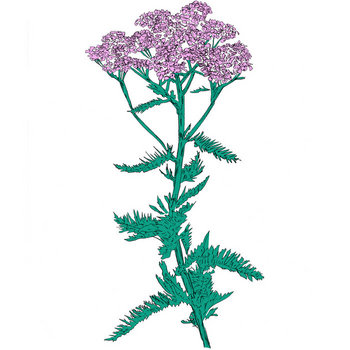
It is difficult to make ambient music in a time of AI encroaching on everything from music production to melody lines. You feed the machine, and out comes something almost like the thing—but you know that hollow feeling (like a friend who doesn't listen and just nods their head). Yarrow bears the imprint of human capacity. There are deep, cinematic synths and a meticulous sound collage that requires you to just yield to what is happening. There are drums. Yes, we have drums. And why not? What is chronicling life at elevation but rhythm? The cassette release from Music To Watch Seeds Grow By is packaged with seeds—yarrow, to be exact, and for an exact reason. As I hammer this intro, Wolf is on a nine-hour flight to London, preparing to tour Europe; she is as cosmopolitan as she is raw. Here is our conversation from a few weeks ago, as I found myself not wanting to end the call—the culmination of a friendly correspondence we had kept this year over soundscape ecologist Bernie Krause.
Carolyn: Did you hike today?
Patricia: I didn't hike today, but I will probably do a nice walk this evening. It's a little bit warm out right now, so when it starts to cool down, I think that's when I'll do my little walk around, but I don't think I'll actually be able to go into any of my favorite hiking spots. There are a lot of great places in my neighborhood to explore, though.
Carolyn: Where would you say your love of the outdoors came from? Did you grow up in that region?
Patricia: I grew up in the Virginia countryside, and there wasn't a whole lot to do outside of exploring nature, but I was perfectly content with that. I had a bunch of books that gave you an ID for all the different plants, birds, and other wildlife in the area. I would just go on scavenger hunts, trying to find them and marking them down. I would get so excited about finding them and learning about them. If someone found an injured animal, it was sad for me as a kid, but they would call me over to try to help it. If somebody would leave their grease out from deep frying something, and then a bird would get in it, thinking it was water, I'd clean it off. I don't know why the adults weren't doing that, but I've always had a connection to animals and nature, and I've always been fascinated by it.
Carolyn: I'm so curious about your field recording practice. When's the first time you felt like composing music or collecting a sound? When did you decide to become sonically engaged with nature?
Patricia: There were a lot of songbirds in Virginia. They're much more noisy on the East Coast than they are on the West Coast, and so they would wake me up as a kid. The dawn chorus was a very loud event, almost to the point where I was like, "Hey, I'm trying to sleep." I'd get kind of irritated by them, but then when I moved out west and noticed it's not as loud—I was like, "Wow, where are the birds? It's too quiet. I don't like that." I think there is a psychological thing about being a human being when it's too quiet. You're like, "Is there a predator around?" You get this eerie feeling, like something is not quite right. I don't know if you feel that way, but I definitely do.
Carolyn: I grew up around daily thunderstorms in Texas, and now I'm in Maryland. We get thunderstorms, but I'm in this weird pocket where the mountains and the ocean collide. The storms go around me. I can't remember the last time I heard a thunderstorm.
Patricia: We rarely get thunderstorms out here in the West. In Maryland and Virginia, they used to come almost daily in the summertime. There's this feeling of electricity in the air. It's a really subtle energy, but I think it's a magical, healing electricity. The air before a storm feels extremely positive. I don't know the science behind it, but I trust my body. I think it's a really great energy, and I know that storms can be intense and scary, but I think that they bring a lot of renewal, or some kind of positive aspect to the living organisms around them.
Carolyn: Yarrow is a very detailed sonic portrait of plant life in a certain region. I love that you interacted with so many scientists and ecologists—can you walk me through that process?
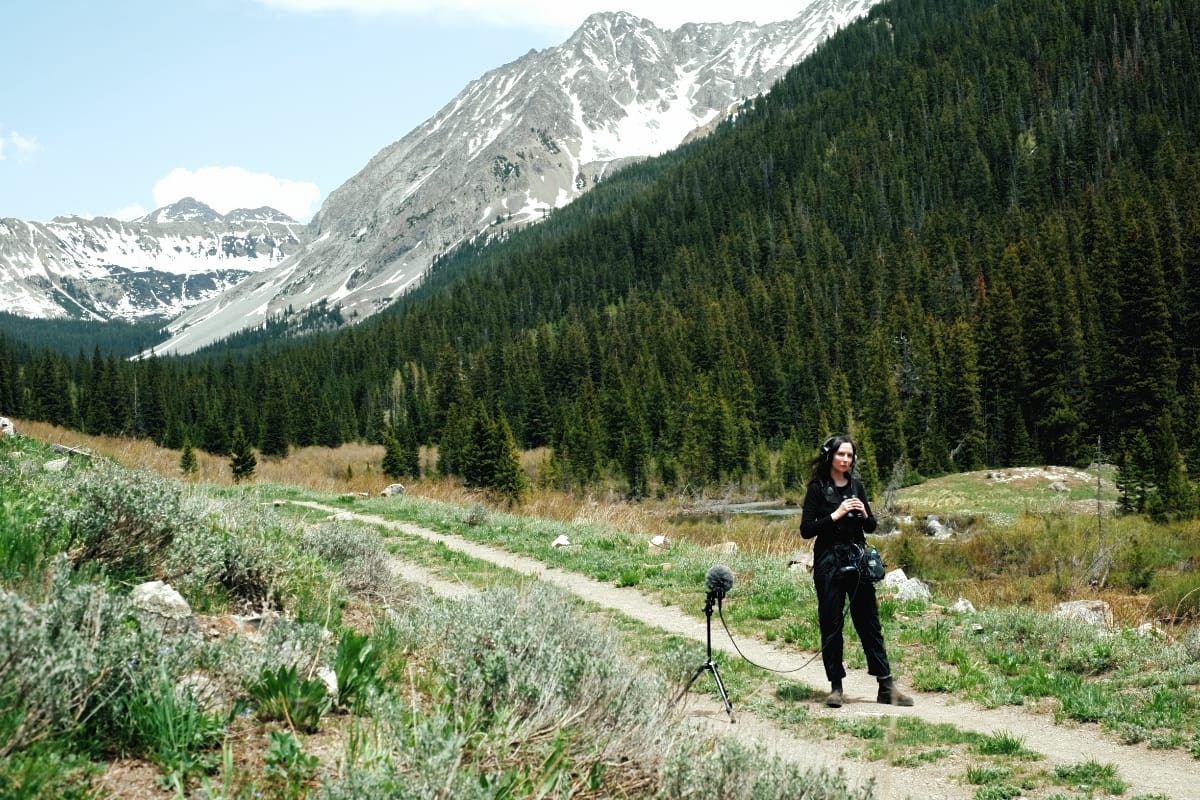
Patricia: I was invited by Dr. Paul CaraDonna; he's an ecologist who has been working on a long-term project with his colleagues, studying interactions between pollinators and plants and how snowmelt timing affects them. Those are important components of the life cycle of plants and the greater ecosystem. The team wanted to have an art-and-science exchange as a way to bring more people to an understanding of what's going on with their research. Dr. CaraDonna had heard my album See Through and said that when he heard "Woodland Encounter," it made him feel emotionally as if he were out in the field, taking in the ecosystem and thinking about all the interconnected interactions among all the life out there. He thought it'd be great to have me out and learn about their work.
There's only one track on Yarrow that has field recordings. It's a 20-minute track where it's an ecosystem meditation. The research area is huge, and there are a lot of different microclimates. Dr. CaraDonna wanted to have a meditation to introduce his students to the space, connect with their senses, and connect with the ecosystem. The site is a remote high-elevation research field station, and some of these students have never been in a place like that. They've only lived in cities, so they don't really know how to tune in to a natural place. They might be out in the field collecting data, but having their headphones on and not using all their senses to observe. I also think the meditation serves well if you're having elevation sickness when you arrive, because it is at 9,500 feet, and many people, including me, got quite ill on the first couple of days. It's a peaceful thing to listen to when you first arrive, and it helps you reset all of your senses of observation, so while you're there, everything's wide open.
The other songs are more about the life cycle of plants in general. Yarrow was chosen because I had to choose a specific plant, and because I know its seeds will be dispersed. I'm really conscious of invasive species, and I don't want seeds dispersed that might disrupt an ecosystem. Yarrow is a plant that's common to North America and Eurasia, so I chose that.
Carolyn: It's a plant we can share?
Patricia: Exactly. I thought that if people are dispersing these seeds, it wouldn't cause any harm to the ecosystem by becoming an invasive species. The music itself isn't explicitly focused on yarrow; it's more about the plant life cycle and the ecosystem. There are specialized adaptations plants have that are unique to them and seem quite vulnerable, but evolution has endowed them with so many amazing features that help them survive all kinds of things. It's important to me to get people interested in and connected to plants and animals, so I really want to be effective.
I wanted to share my emotional connection to these ideas and to these life events occurring around us. I hope people do their own investigation into what these songs mean and become as excited and full of wonder as I was when I learned about these things. The music is an expression of what I imagine it might feel like when I really meditate on these aspects, like "Abiotic Factors," which is the opening track. It's basically the foundation for life—the minerals, the climate, the non-living mass-like material that exists in a space that creates the conditions that allow for life to emerge. It's a meditation on the planet as it was forming, so there's an epic, heavy feeling as that track unfolds.
Carolyn: This feels like a good foundational question for a record—placing yourself in the shoes of plants.
Patricia: I like to think about these ideas and compare our adaptations—how we exist and survive versus how plants do. On the surface, it might seem like they're so fragile in a lot of cases, but they have so many adaptations built into their DNA that are just so intelligent and amazing, and they'll surprise you. Their seeds are so resilient. I'm also a volunteer for the frog taxi here.
Carolyn: What is a frog taxi?
Patricia: There's a frog species called the northern red-legged frog, and they are in peril—because of industrialization, habitat loss, and other factors, their numbers have severely declined. The population of frogs in Forest Park near the Tualatin Mountains lives in a coniferous forest habitat most of the time, but then they migrate to breeding ponds along the Willamette River. In order to get there, they have to cross a four-lane highway, train tracks, and another busy road—they don't really stand much of a chance.
For the past eleven or twelve years, there's been a group of people who volunteer during migration season. So we wait when they're coming down from the mountain, then we catch them and put them in buckets with leaves, and we catalog their sex. The Oregon Zoo, the Oregon Department of Fish and Wildlife, and other biologists are all involved. I'm in my second year volunteering. We take them down to the breeding pond, and then we shuttle them back when they are returning to the forest as well.
It rains here a lot in the winter, and it's cold and dark, and can be really depressing, but being out in the pouring rain in rain gear with a headlamp on—because they only migrate at night—looking for frogs is kind of an antidote to seasonal affective disorder. The frogs are also really hard to see because their coloring matches the color of the big-leaf maple tree leaves when they fall. You have to use your senses to find them. They're really quiet; they only sing underwater. I managed to record them singing underwater. Amphibians are in decline everywhere, and they are experiencing these same challenges all over the world.
Carolyn: What is your philosophy or practice around constructing these ecological narratives with sound? It's really challenging to tell a story without words or lyrics.
Patricia: I just go purely off of intuition and feeling—and that's how all of my music really comes about. I don't go into it with a particular plan on how an album is going to sound. I feel like if I do that, I'm always disappointed that it didn't come together the way I planned. I trust my psyche that while I'm playing, I will be able to touch upon the feelings inside and build from there. I was thinking about the different stages of the plant life cycle; the music just emerged from that, and it's my own subjective interpretation of it.
Carolyn: How do you start those drafts? Do you have a primary instrument you like going to?
Patricia: I've learned to keep a very small array of instruments and tools, because I like to tour and play shows, and I get really frustrated if I have a ton of different things that I can't bring with me. I keep my setup pretty small, and right now I've been mostly composing on the UDO Super 6 and my trusty Novation Peak—I was an official sound designer for the Peak and the Novation Summit. Those have been with me for a long time. I sometimes bring in field recordings that take up a lot of sonic space, and when I'm composing music around them, it's a response to the activity in the recording. I want to leave space so you can hear it. Underneath that is an emotional narrative about what it is I'm thinking or feeling to accompany it. I've done sound design work for some VSTs, and once I've made these patches, I feel inclined to use them, so I sometimes use VSTs and effects.
I would say that melody is extremely important to me in its ability to tell a more traditional emotional story. I really want beauty and recognizable emotional content to come through. Maybe I'm a bit conventional in that way, but that's what I do.
Carolyn: How long have you been doing this?
Patricia: Behind the scenes, I've had electronic music instruments in my private studio since the early 2000s. I wasn't really comfortable or confident enough to share my work until around 2009. That's when I started performing live with a duo I was in, and then went solo around 2015. It's been with me for quite a long time.
Carolyn: What's the most recent concept or tool you've brought into the studio with you? What are you learning right now?
Patricia: Well, gosh—to be honest with you, what I really want to learn is how to play piano well. I love electronic music, and I'll always make it, but I've become really fascinated with classical music and jazz, and making music on acoustic instruments. I have fun with it whenever I am playing, but I don't have much confidence in my technique or my ability to fully create something with just an acoustic instrument that I would feel comfortable sharing. I think the piano is an instrument that I'll probably never be great at. I do think it'll definitely feed into what I’m currently doing and improve it, and it would be fun to perform some songs on piano that I really love, even though I tend to like difficult pieces.
Carolyn: Piano is difficult later in life, I've heard, because we're neurologically rewired, and eyesight and eye-hand coordination also enter into the framework later.
Patricia: I have a few friends who are great at playing piano and really good at sight-reading, and so I think if I just learn a little bit, I can collaborate with them. I really think of myself more as a composer than a performer, so learning a little more will help me as a composer and help my ideas be realized. I just try to think about how it's okay to not know how to do everything. We have a whole world of people who all want to be useful, collaborate, and feel connected, so let's pool our knowledge and resources and make something really cool.
Carolyn: If I were to pick you up and go to the record store, what would you be looking for this week? What's in your ears? What's holding your interest?
Patricia: I just did this really awesome event at Mono Space. It's a listening gallery, and they have an amazing sound system. It's all about just listening to amazing recordings in this beautiful room. I presented some work there, and there were a few things I wanted to present, but I didn't have some of the things on physical media. I thought it would be really cool to share some Pauline Oliveros works—I think it would be great to have people listen to them in a space like that, if they're not acquainted with her work. I have her books, but strangely, I don't have any physical recordings. So that was something I realized I need to add to my collection—probably more classical music CDs.
Carolyn: Now those are at Goodwill for a dollar . . .
Patricia: The coolest music is so cheap, which is amazing. Mel Bonis—a French composer active from the mid-to-late 1800s until the 1930s—is an amazing composer and pianist. She's a little bit under the radar, but recently, there have been people performing her work, which is absolutely gorgeous. She was at the Conservatoire de Paris at the same time as Debussy, and César Franck was a patron of hers. I really want to collect all of her work because she deserves recognition. I love going to record stores and digging through CDs. I'm going to try to do a lot of that when I'm on tour in Europe.
Carolyn: You're gonna come back from tour with a suitcase full of physical media and just plop it down. That's how you know you did it right. I'm a little curious about your field recording practice. Something I've been thinking about—maybe because it's something I'm personally going through—is working in remote locations. I'm often by myself, and I've had a few uncomfortable situations and close calls while field recording. If you felt comfortable talking about it, I wonder what it feels like for you to be in these remote locations, working solo.
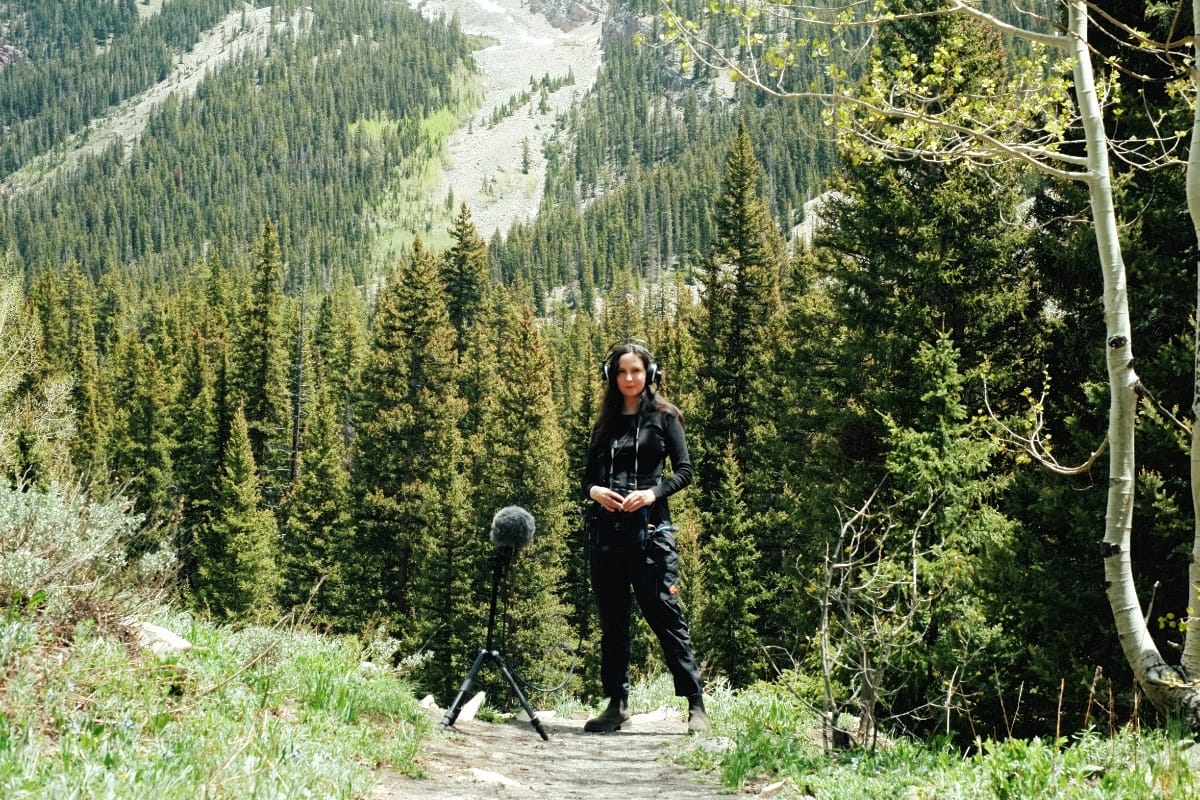
Patricia: I think it's ideal to be alone when you're field recording, because if you're with someone who's not a field recordist, they can't quite understand the importance of being still and just listening. Luckily for me, in a lot of the most important field recording trips I've been on, I've had people near me. For instance, when I was out at the Rocky Mountain Biological Laboratory, the scientists were out in the field with me—they were far away, but we could still see each other, and we all knew what each other was doing. We keep a mutual eye on each other for a lot of reasons—like, there can be a crazy thunderstorm out of nowhere, and they get some major lightning; it can just swoop in in a second. There are a million concerns.
I did make a guide a few years ago—I was helping teach a class on sound design. I wanted to let my students know about some safety concerns, as well as respect, and what the laws are. You should definitely tell people where you plan to be and when you plan to come back. Check in with them, because one thing you should be doing when you're field recording is putting your phone in airplane mode—field recording equipment will pick up weird distortion from the phone, so you're not going to be able to receive texts or calls while you're actively field recording. Many places I've been to don't have reception anyway. Carry some pepper spray, or if maybe bears are in your area, bear spray. Bring first aid in your pack—bandages and something to make a tourniquet if needed. You could easily break your leg, arm, or something if you fell. You shouldn't record cultural or religious ceremonies without permission. There are eavesdropping laws that you could be violating if you're recording without permission—it really depends on what state you're in. Wear clothing that doesn't make a lot of noise, but is also warm, and you can do layers.
Carolyn: I have definitely purchased hiking clothes, then dealt with the swish, swish. I am convinced they put extra swish in. My grandpa used to call corduroy pants "whistle britches."
Patricia: Don't bring your whistle britches.
Carolyn: No whistle britches. What is your favorite sound you've collected, in your span of recording everything from frogs underwater to wind?
Patricia: Every single time I'm out field recording, it is a special experience—to be present in the moment when you're listening, you're so deeply aware of every millisecond passing with sound. I think every moment of field recording is special, but I do love my recordings of the northern red-legged frog. The first time I tried to do it, I didn't get any sounds from the frogs, but there was ice in the pond, so I recorded that, which was really cool-sounding. The second time, I had to leave the recorder out overnight and get a special bag because they were only really active when it was raining. It's kind of scary leaving your equipment out overnight—it was well hidden, and in a private area, but you never know. Going back, grabbing it the next day, and listening—the first few hours were silent, and then maybe after the second or third hour of recording, the frogs started, and they went for hours. I was like, "Oh my god, that's great." And it's also nice because I'm not there. I care deeply about the experience of the organisms I'm recording, and I don't want them to be scared or to have their breeding interrupted. Leaving the recording equipment out at a location allows them to feel safe.
I got this cool sound of a Wilson's snipe—it's called "winnowing." They'll fly up and then dive, and then the sound passing through their feathers will create this 'whooo' sound. I got to record that when I went out to eastern Oregon, and that was the first time I'd heard it in real life. I love that sound, and they're just cute—they have a woodcock-y look to them, a little bit. Woodcocks do cool dive display sounds, too. I had never heard a brown-headed cowbird before, but they have this synthesizer R2-D2 kind of sound that was really fun to record and listen to.
I really love listening to other people's field recordings from around the world as well—I'm a big fan of the Forms of Minutiae label. I played a few field recordings from that label at Mono Space. I wasn't sure what people would think, but there was this one recording of walruses, and it was just so bassy—just hearing this walrus breathe, vocalize, and exist in its habitat. Sometimes you'd hear birds fly by—it was so powerful you could feel, at certain points, its resonance and its body. The air moving through the speakers. There were expressions and reactions from the people lying on these bean bags and pillows. I could tell they were accepting it.
Check out more like this:
 Chaz Underriner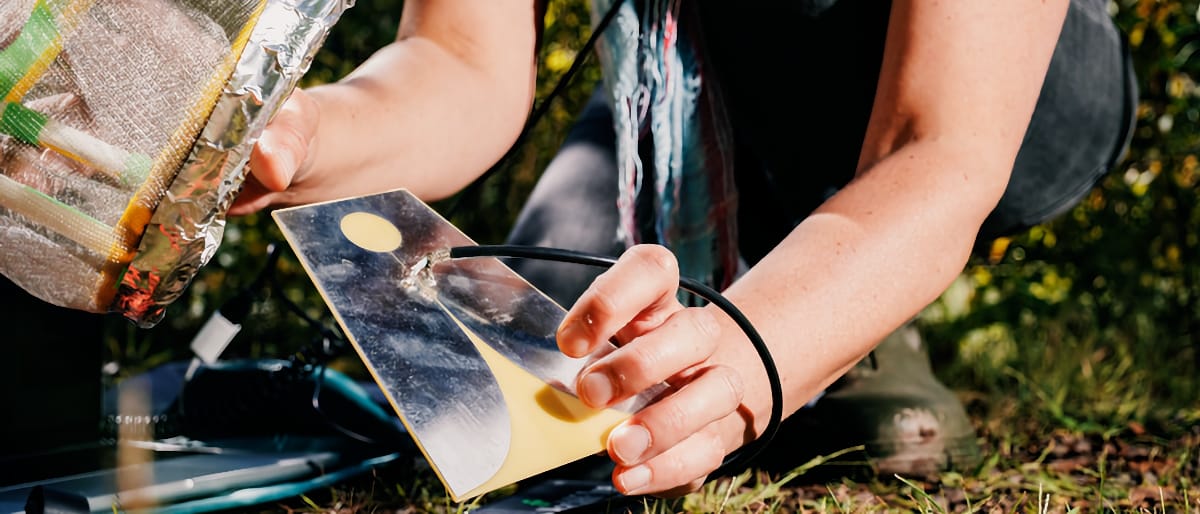
 Carolyn Zaldivar Snow


Comments