


Most things have a vibe, whether they be places, TV shows, or days of the week. Though one's own interpretation of that feeling may differ, a laid-back Sunday morning always conjures specific imagery, at least for me. You know the one: where the sun lazily drapes its way through the windows, and it feels like you have all the time in the world.
This is the moment the musician Mark Barrott attempted to create a soundtrack for in the first half of his latest release, The Exit Diaries. Comprised of two elongated tracks (split into several parts), the album invites total absorption that's easy to become lost in. By combining the calmer, uplifting "Light Variations" first half with its sweeping and grandiose "Stone Tape" second half, listeners will be left with an experience that fosters presence and active listening throughout its over-40-minute runtime.
Barrott, who is also known as the prime instigator of Future Loop Foundation and the International Feel label, has built a body of work around this kind of listening. He has soundtracked the setting sun of Ibiza in Sketches from an Island (2014) and Sketches from an Island 2 (2016), and has also created a reflective soundscape of grief and of working through the loss of his wife in 2023's Everything Changes, Nothing Ends.
Though I enjoyed both 'sides' of the album, I found myself gravitating toward the "Light Variations" due to its intriguing concept and evocative layering. In the twenty-two-minute track consisting of six parts, Barrott weaves saxophone, delightful Moog licks, and other symphonic layering, while also collaborating with Leo Taylor, who adds his skillful drumming and necessary touches to elevate the music to something new. Every time I thought I would hear all there was to hear on the track, there was still more to uncover.
I spoke with Mark Barrott on a video call to discuss his inspiration for creating this work of art, his process, and what artists should focus on to make a living with their art.
This interview has been lightly edited for length and clarity.
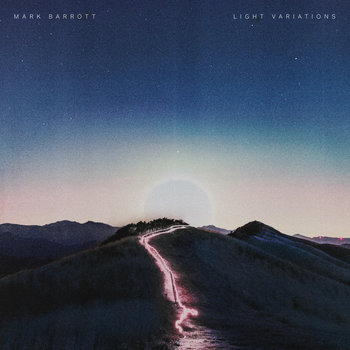
Bill Cooper: One of the things that really attracted me to this album was the idea of you trying to create the perfect soundtrack for a Sunday morning.
Mark Barrott: 'Sunday morning' can be a metaphor for any day of the week when you don't have to rush, and the world is not bombarding you. I yearn for when you can spend time with your partner, friends, or animals, and start the day in a meditative state without feeling the need to check your phone. You can make yourself a tea or a coffee, a little bit of breakfast, and sit there in a pensive, reflective mood. That is what "Light Variations" is trying to soundtrack.
When we are making music and soundtracking, I always think it is like Eno living in the middle of New York and making On Land [Eno's album about nature and his past]. You are soundtracking somewhere you are not. I like to soundtrack the sunset, and it is what I am known for, particularly in Ibiza. But I want to soundtrack quiet moments, too.
Bill: What was your process, and how did you get into the headspace to work through and create that music?
Mark: It was a strange one. I left Ibiza for mainland Spain after my wife died, which was documented in the last album, Everything Changes, Nothing Ends. I went to the mainland thinking it would be similar to Ibiza, and it absolutely was not. The climate was surprisingly different, even though it is only a hop across the water. So, I started making this record in my new studio space in a rural area that wasn't pruned and shaped by human hands. It was raw.
I worked as I had done on Everything Changes, Nothing Ends, with a lot of orchestral material. Then I delivered it to the record label eighteen months ago, this past October, and after a couple of days, I listened back and was horrified. It was really dark, dense, and intense. I came out of that listening experience in headphones feeling quite depressed and sad. I thought, "This is not how I want my musical legacy to be," so I rang the record label and said I was pulling back the record.
The label was expecting this new record, so when I said I was pulling it back, everybody was like, "What?" I said, rather full of bravado, "Don't worry, I'll give you a new one by Christmas." I think they were like, "What the hell is going on?"
I did not quite know what I was doing; I was searching for an idea. Then I got a sequence running in my head that was the beginning of "Light Variations," and I fell into that headspace of making music where I felt like a fish out of water. I thought I needed to make music of where I am not: like Eno making On Land while living in the center of New York. I did not feel sunset-oriented going into winter, and it was a bad winter because of La Niña. So, I was forming minor sevenths and minor ninths on the keyboard, slightly jazzy. I started listening to Alice Coltrane, and that is how the record was born.
At some point in the process, I got some generic drum loops running, and I thought, "I need a real drummer on this—somebody with a real jazz touch." I found Leo [Taylor], who was in a band called The Invisible and was Floating Points' live drummer. He gave it structure and form that I could then build upon. His skill and lightness of touch allowed the piece to realize its full potential. I nearly hit December, but I think I delivered the finished record in the first week of January. Had Leo not come on board and performed magic tricks, it would not be the record it is.
By and large, without being dismissive of the "Stone Tape" side, if I had a favorite child, I would love "Light Variations." I listen to it in headphones as a whole piece, and I think that is as good a twenty-odd minutes of music as I have made in thirty years.
Bill: When you were starting to make the "Light Variations," knowing you needed to do something more upbeat—when did that Sunday-morning idea come about?
Mark: It is hard to know, because when you are in that kind of gestation, everything seems to happen at once. For me, if I am thinking 'Sunday morning,' then I am thinking Fender Rhodes. When I hear Fender Rhodes, minor sevenths, minor ninths, jazz chords with a sustained pedal, maybe a bit of cello, I am always like, "Ah, that's Sunday morning." You want to put a tenor sax on there and sit there and watch the steam rise up off the coffee cup.
I almost had this image in my mind of a 1970s conservatory—like a little arboretum attached to your house with cane furniture and all glass—just sitting there with a great book, or the Sunday papers with all the supplements, or an architectural magazine. Because of the Fender Rhodes, I had a sonic palette in mind.
Bill: I was impressed with the layering. I am curious how you go about adding these layers.
Mark: The perfect record is one that you just like when you listen to it. But if you want to go deeper, there are sub-levels. I have generally worked on headphones ever since I left England for Berlin in 2000, twenty-six years ago. I was in a flat with no way to have speakers, so I spent two years in Berlin working on headphones, and it just became habitual.
When you are working with headphones, you have an intimate relationship with the music. People talk about surround sound, and everything is getting the surround treatment, but I think there is so much we have not explored in the stereo field. Working in headphones allows me to go into all these little nooks and crannies. I know there are bits in this record that I love that nobody will ever hear—but that is okay, because ultimately you are making music for yourself.
Bill: So, you are making a Sunday morning soundtrack, but it is your Sunday morning. It is a very personal thing, but then, because it is so personal, it becomes a very universal thing. How do you put yourself in that mindset?
Mark: You spend so much time in the dirt, trying to find the key that will unlock the house you can see on the horizon line. It takes a long time to find the key to the house. But once I am in through the front door, I become immersed. When I become comfortable and excited about adding that multi-level depth to it, that is what I love.
It is difficult at the beginning. There are just blank pages, and you are doubting your own ability, because you tend to come in after a break. It is all about being in this ecosystem. It is not even one track; the whole album becomes a living organism of jigsaw interconnectivity—with titles and vibes—and the sum of these parts eventually spews out the whole, which is probably nothing like what you imagined when you started.
Once you get the oil running through all the creative machinery, you feel this beautiful, creative feeling that allows you to exist in that world. Everything in your life becomes geared around it: you get up, you work on the music, you go to bed, and weeks go by. You want to keep that flow state for as long as possible. And, of course, then you finish the record, and I often think you finish the record at the very point you are hitting peak creativity.
I am such a guardian of albums because with singles or EPs, you do not get that feeling. When you are making an album, something magical happens. You can feel that same feeling listening to an Alice Coltrane record, or these other great 'odyssey' records—these amazing journeys of creative discovery. And in a way, that is another version of the Sunday morning, this slightly self-hypnotizing, tranquil world in slow motion.

Bill: How do you think expansively, but also make sure you don't lose yourself in it?
Mark: There are two main things. First, I always listen in context. If I am adding something to a four-minute piece at the two-minute mark, I never just listen from a few seconds before—I go all the way back to the beginning. I am always listening in context, because it sounds very different when you hear a new part in the context of the entire work as opposed to just ten seconds before and ten seconds after.
Two, I have a simple barometer for when a song is finished. When you keep adding things, and they don't work, that is the signal. That is part of the craft learned over the years—this innate instinct that I know when I'm just putting more pots in the kitchen sink, which clutters it up.
Generally, the best songs happen very quickly without even thinking; you are just channeling, not consciously adding. But to get those songs, you absolutely have to go through your own processes.
An uneducated person might say, "Why don't you just have a rule—if you don't finish a song in three hours, scrap it?" But you do not understand. You have to go down into the barrel with the rats and the dirt and the filth and the bilge. In there, you find the occasional diamond, the gem, the beauty in the unexpected moments. The idea that Mozart or John Lennon or Prince had a Midas touch—I do not think that is the case at all. There might be mythology around them that says that, but I know what it is like in the trenches, and it is not pretty until it is.
Bill: That's a very visceral representation of what is, in fact, a visceral process.
Mark: It is visceral. When I am in my music mode, which is nine or ten months of the year, everything is geared around the project I am working on, whether it is going well or badly. This is, in that moment, metaphorically life and death. And it should be. That is how great art is created.
Bowie said that if your feet are touching the bottom of the pool, you are not making your best work. It is going to feel uncomfortable. And even in the moments when the flow is good, the snowball is running down the hill, and you can't catch it because the connected energy is so strong, there is still that slightly queasy feeling in your stomach. It is a blank page, and it is scary. And it should be scary, because that is what creates the art.
What I find amazing is that as a whole industry—DJs, promoters, radio pluggers, and record label executives—none of those people have jobs without me and all the other musicians like me. And yet, musicians are the worst-paid link in the chain in the modern world because of the way streaming has been set up. When you have that imbalance, something will eventually break. I do not know what, and I do not know when, but something will break.
Bill: Is there a way out of that? How does it change? How does it get better?
Mark: I do not know, but I do know that the biggest magic trick I have ever performed in my life is being given the keys to the toy shop thirty years ago and never having to give them back. At my age, I have my audience, I can do outside production work, and I am comfortable. But I can tell you that if I were a thirty-year-old producer right now, whilst there are all these fantastic opportunities, I would be hugely nervous about what the future holds.
But in that nervousness lies the opportunity. It is like Darwin wrote in On the Origin of Species: it is not the cleverest or the strongest that survives, it is the most adaptable to change. What I do know, and this is my core belief, is: do good shit. Don't worry about the money, and good shit will happen because you did good shit. That is what carries me forward day to day.
Bill: Is there any other advice you would give to artists trying to make music right now, trying to do similar things to what you do, or just trying to work in the industry?
Mark: In this era of homogenized, generic music, you have to create an environment for yourself where happy accidents can flourish and be applauded. When I grew up working with early music software, you either read the manual or you just did shit until it sounded good. It took me ten years to get from my first synthesizer to making a track that sounded like a record. So put hours into the craft, create an environment that allows for happy accidents, and ultimately—whatever it looks like for you—be prepared to do things that other people cannot do or will not do. That is all I would say.
Check out more like this:
 Mykadelica
 Bill Cooper


Comments