


Now Playing on The Tonearm
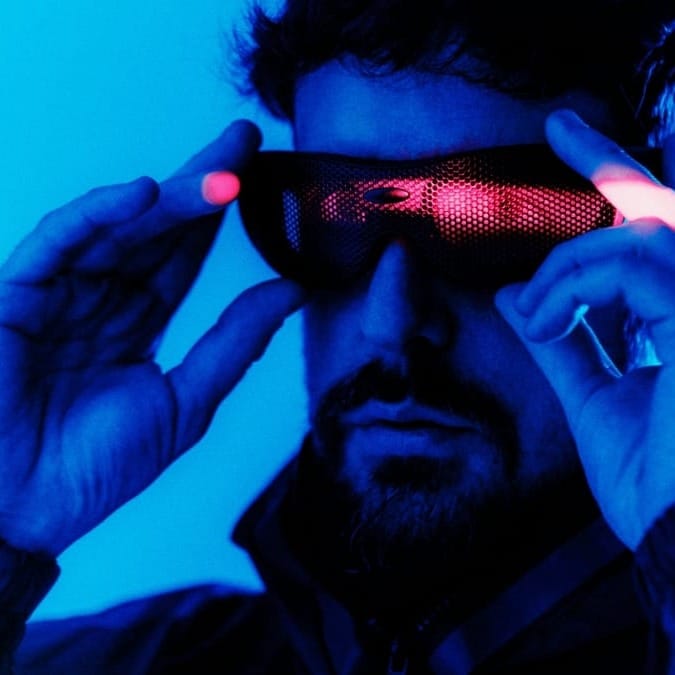
Danalogue Leaves Gravity Behind
Best known for his work in The Comet Is Coming and Soccer96, Danalogue steps out on his own with ‘Teleportations,’ a record built on vintage synthesizers that turns grief and upheaval into a voyage through deep space. Interview by Lawrence Peryer.
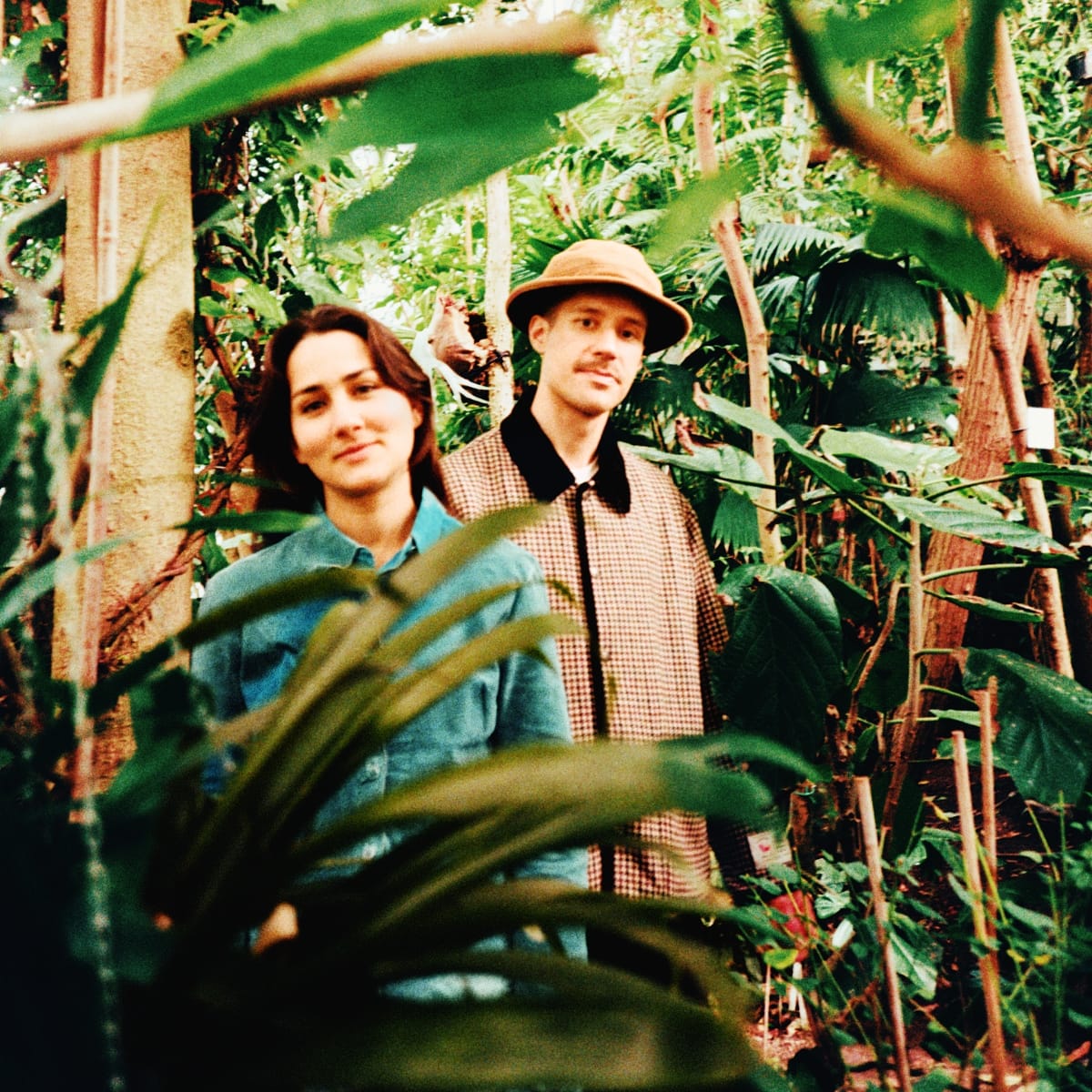
Curió Curió Turns Distance into a Collage of Voices
Luiza Monteiro sings in Portuguese to find her way back to Brazil, slipping between the characters a theatre stage taught her to inhabit. Interview by Bill Cooper.
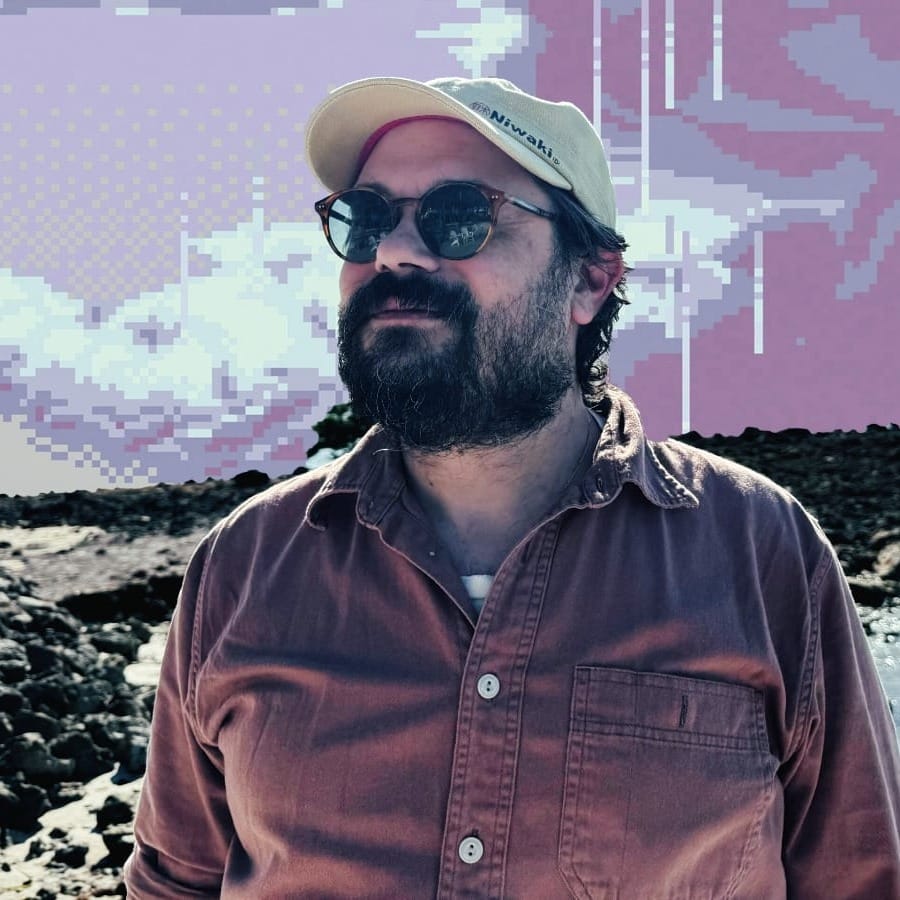
The Company of Others — M. Geddes Gengras and ‘Guest List’
On his fourth album for Hausu Mountain, and his first on vinyl, the restless synthesist talks improvisation, the burden of the solo record, and the surprises that arrived in the mail. Interview by Bill Kopp.
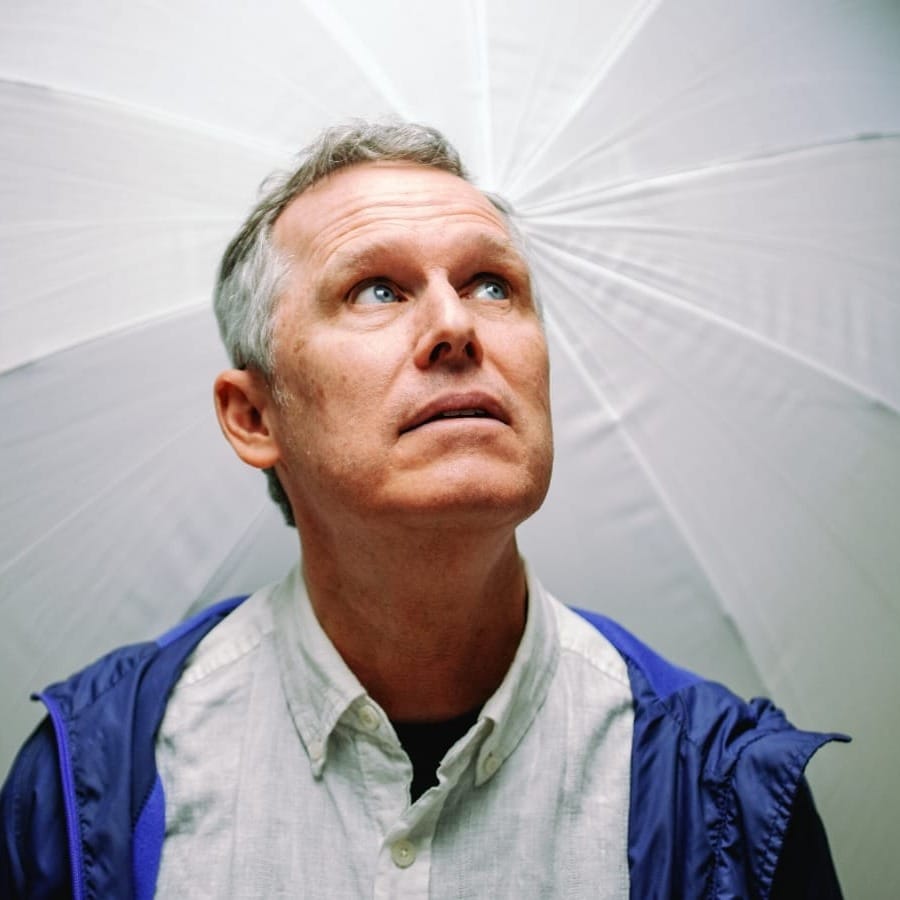
Illegal Art, Myth Math, and the End of Anonymity
Nearly three decades after ‘Deconstructing Beck’, Matthew S sheds the pseudonyms to release the ‘Tongues’ EP as Myth Math, discussing his return to sampling, a collaboration with a former student, and the ethical quandaries AI poses to a career built on borrowed sound. Interview by Carl Dexter.
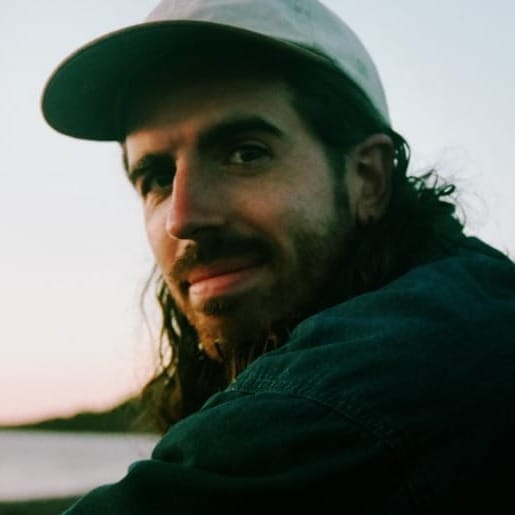
Listening to the Land — The Mystical Turn of St. Silva
The Vermont musician behind ‘Forager’ talks foraged field recordings, a boyhood spent in Indiana megachurches, and why he wants no part of the wellness playlist. Interview by Carolyn Zaldivar Snow.
This Week’s Episode of The Tonearm Podcast

Chris Molanphy: One Chart to Rule Them All
The pop-chart analyst and ‘Hit Parade’ host joins us to discuss what better data revealed about hit songs, the slow end of the monoculture, and the cultural rules that keep outsiders off country radio.
Rotations
Synthesis is the watchword on this week’s edition of Lawrence Peryer’s Rotations, the official radio show of The Tonearm:
The episode of our radio show Rotations that aired this week and is up on Mixcloud now leans heavy on the theme of synthesis: a Buenos Aires–meets–Berlin improv duo, a Vermont ambient composer’s tape collages, and a member of The Comet Is Coming with an album of actual synthesizers. Hearing all of these sounds together inspires my own creative thinking. I hope it does something positive for you.
The setlist expands with some new music The Tonearm turned me on to: Curió Curió and their diaspora-pop debut, and Matthew S reviving his influential Illegal Art label, performing as the song-driven Myth Math.
Back to Berlin again, where the recording sessions for Lee “Scratch” Perry’s final recorded statement took place, a delightfully great album with Mouse on Mars. We visit the English countryside with Spirit Level before closing out with a 1977 Sun Ra tape that waited nearly fifty years for its definitive edition—and that’s on heavy ‘rotation’ here.
Listen here:

The Hit Parade
“The show was just gorgeous, a balm for anything you were carrying, and we are all carrying so much these days. [Glen Hansard] could make any room seem small and personal.” ❋ “This atmosphere of pain and tears that accompanied my youth provoked in me a violent rejection of all self-pity. I see a consequence of this in my immediate love of bop, where I found a refusal of sentimentality.” ❋ “I was just listening to Coil all the time . . . The Coil guys talk about it as being magicians and not musicians. I just find that idea so interesting, trying to insert magic into the world.” ❋ “It’s all there right now, but very soon it will all be dust or ash or both. And it came out of somebody who is now themselves dust and ash. How incredibly strange to exist. My songs have long been about the shock of existence.” ❋ “I like when somebody’s talking about their shoe, or coffee, or cake. Those common denominators that we have when we talk with our neighbors, or strangers—those are the connectors. They don’t feel like things worth repeating, but sometimes they really are resonant.” ❋ “Being a disciple means totally losing my ego. I am not the first priority in my life at the moment, and I have to be open for every study from Terry [Riley]. The outline of myself has totally vanished, and I don’t have to think about that.” ❋ “I really wanted to be different, I wanted to be myself, I wanted to be Mulatu . . . Then once I created Ethio-jazz, I became myself.” ❋ “[James] Spooner navigates the age-old challenge: how to scale an authentic social movement without losing what made it vital in the first place. This is especially challenging in a genre like punk, of course, whose very currency is authenticity.” ❋ “It’s a bit like the modern equivalent of shamanism. When you attune yourself to a certain energy and channel it through what you do with your music—it’s that. Most artists do it, though not all do it consciously. It’s part of art, really.” ❋ “My personal understanding of peace begins with listening, and recognizing that listening is a skill that can take years to develop . . . It means being fully present, trying to understand rather than simply react, and responding thoughtfully instead of adding to the noise.” ❋ “To hear Ornette’s sound next to you—the impact of what that is, and the sound in and of itself—just the weight of that really made me want to figure out how you develop that when you play a note as a pianist.” ❋ “The documentary, directed by Franco Rosso, sees [Linton Kwesi] Johnson performing and recording verses from his poetry collection and album of the same title, with lyrics that vividly depict the racism and marginalization of Black Caribbean immigrants in Britain.” ❋ “If I use the short phrases against his torrents of sound, I get more going; the contrast. I just create my own line. I always try to balance it out like that. You have to listen, or else he backs you up against the wall. With Cecil, you have to fight for your life.” ❋ “They’re hiding us. That society out there created a good many of us. I myself feel that the greatest crime a goodly portion of us at San Quentin are guilty of is one thing: that we were born poor.” ❋ “The couple of dozen unreleased songs he shared spanned four decades of eclectic musicianship, and revealed a globe-trotting life and career that intersects with experimental icons such as Arthur Russell and Allen Ginsberg.” ❋ “What makes a jazz kissa is the host. Not their taste exactly—though taste matters. Their level of intention. The places that have genuinely moved me are run by people who do this as a vocation, as a calling, as a life mission.” ❋ “Great (and popular) artists emerge from a scene. It’s the culture of painting, music, writing, dance, and theater that creates an environment that nurtures the talent that produces the most inspiring art. The people who don’t succeed are crucial to the success of those who do.” ❋ “There is no redemption in hard work and sacrifice and even being better than the robots; you just kill yourself thinking there might be. If there is an optimistic read of the song, it is that John Henry knew as much and still fought the power and beat the machine anyway.” ❋ “Seeing millions of young people mobilising so quickly has been extraordinary. It speaks to a generation that refuses to accept silence as the only option and is not afraid to act.” ❋ For more curated music links, be sure to follow The Tonearm’s feeds on Bluesky and Mastodon.
New Music Recommendations: Bob Holroyd and Simon Painter - Close Up and Far Away (RIYL: slow, spacious instrumental ambient with cinematic sound design) ❋ Bondo - Bondo (RIYL: slowcore post-rock, Slint, Acetone, Unwound) ❋ James Murray - Islands Alight (RIYL: ambient dub and electroacoustic, Home Normal, Ultimae) ❋ MuMu - The Brothel: A Musical Memoir (RIYL: melancholy folk and singer/songwriter pop cut with documentary tape) ❋ sachi’s mirror - Talking in a Different Way (RIYL: dream pop and electroacoustic, james K, Tara Clerkin Trio, Mabe Fratti)
The Deepest Cut
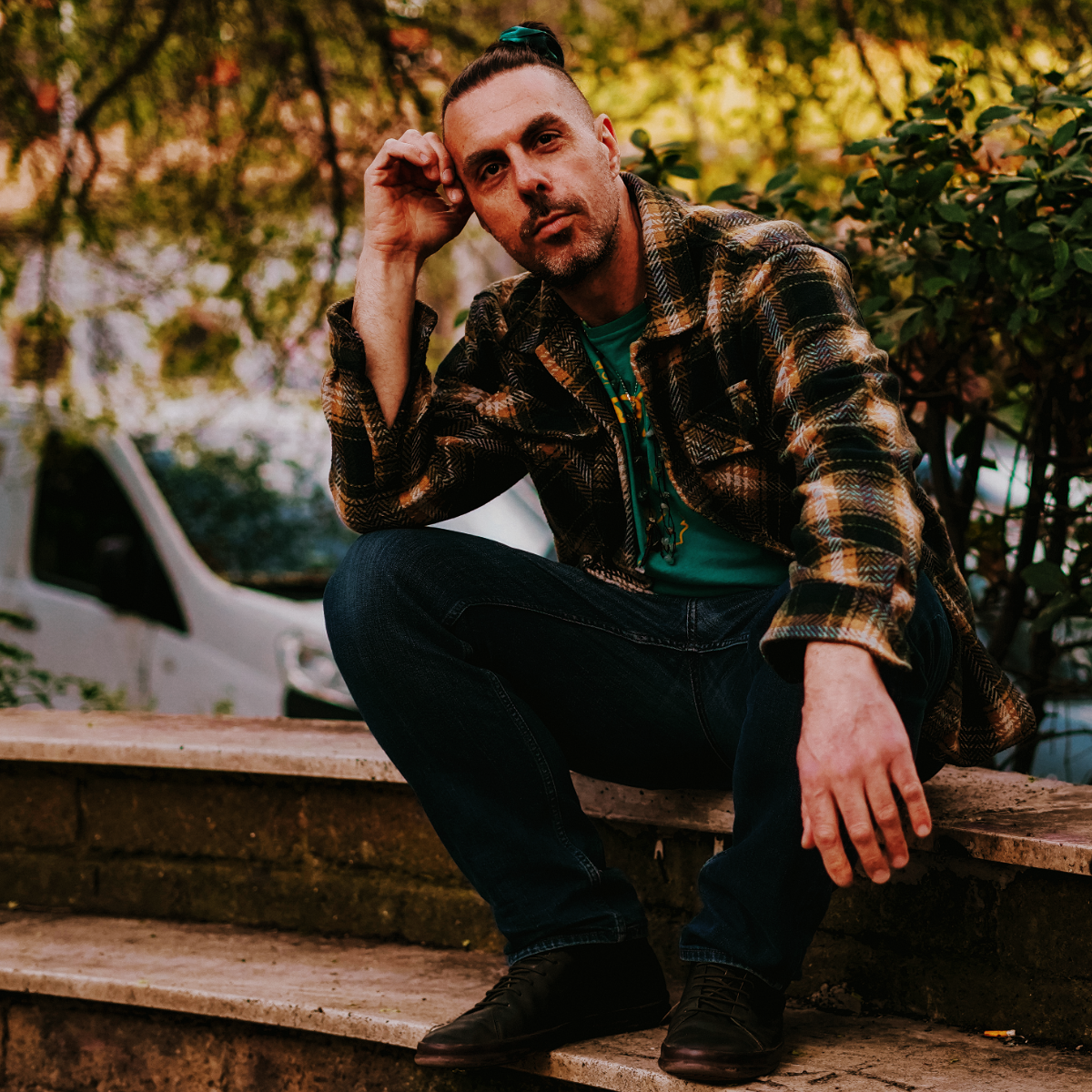
Dave De Rose grew up in Rome surrounded by his father’s jazz records and a house full of instruments, and has since spent his years drumming, producing, and putting unfamiliar musicians in rooms together. Agile Experiments has reached thirteen vinyl releases that way, each one unrepeatable because each release enlisted a different combination of participants. Havana, the newest, arrived July 17 on None More Records, Harry Walsh and Sam Bedford’s decade-old London imprint.
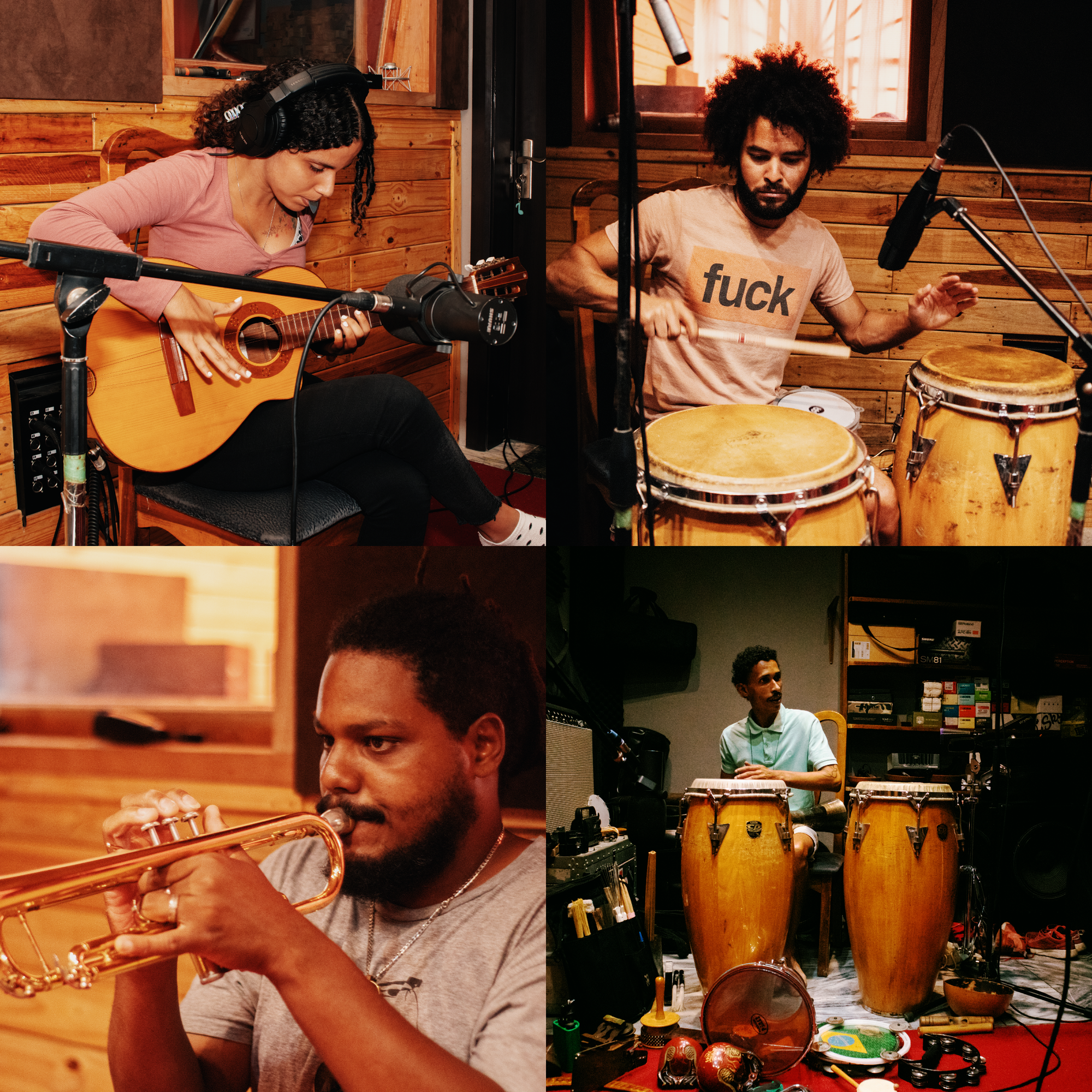
De Rose recorded Havana in a narrow window between commitments at the Havana World Music Festival. The first session was all percussion, with De Rose on drums alongside local players Irán Farías Saínz and Dengis Bofill, and the recording was meant to supply raw material for a different record. Then, the night before, the ensemble booked for the next day evaporated. De Rose cut the percussion into skeletal frameworks overnight and called in trumpeter Rasiel Aldama Chiroles and tres player Amanda Quiñones to improvise over his sketches. The chaos and serendipity of these sessions sat on De Rose’s hard drive for the better part of a year, eventually revisited to form the ten fantastic and fourth-world-inspired instrumental tracks that make up Agile Experiments’ Havana.
Upon my first listen, and especially after hearing the mesmerizing “Mysteries” (surely appearing on any end-of-the-year list of mine), I had to learn more. I asked De Rose what it feels like to make something out of a place you’re only passing through, and about playing the electric bass with an Athenian bus ticket threaded between its strings. And, as is The Tonearm tradition, I also asked for something he loves that more people should know about.
Agile Experiments came out of nowhere with no plan or aim other than to play with local musicians, give something unusual to the air, get some pocket money, eat a pizza, and drink a little something. Shortly after quitting Rokia Traoré’s tour, I found myself back in London without any regular work. My friend introduced me to Victor Greetham, the owner of the Agile Rabbit pizzeria in Brixton Village, who gave me a Thursday night weekly appointment to do whatever I wanted. I would book two or three people from the jazz/free improv scene in London and we would improvise and experiment freely for an hour. I chopped up the best bits from the plays and they stayed on my hard drive till my friend Leon convinced me to release them on white label, hand-written vinyl. The first record sold out on presale.
I love changüí, but I didn’t bring it to the table. Amanda, the tres player on the session, did. I simply made it clear she was free to try anything on the beats I presented. I went with it because I liked it. Because it was good. Agile Experiments is not built around me. I make various decisions and facilitate happenings, but all the music comes from the artists that participate, in combination with each other and me. The title “Open-Eye Changui” is a personal recall of the impact being in Cuba had on my preconceived, and wildly uninformed, perception of the place. One can learn a lot by truly listening, and listening is one of my greatest skills. I sensed a lot of pride in people there, not national pride, personal pride, pride in tradition and pride in moving forward. Talking with Irán about the modern music I’d found on his Instagram page, he said, “Cuban music is evolving.” Absorbing tradition but pushing through the boundaries of it. There’s pride in that. Pride in the past and pride in the present, for the sake of the future. Being in Cuba was a big thing for me. I was confronted with my immense privilege and these people’s inner and outer beauty and resilience. Music skills were off the scale. All my career in the comfort of the UK and Europe, and yet, in that studio with Irán and Dengis, I was right at the edge of my skillset, hanging in the groove by the skin of my teeth.
I didn’t want to make a Cuban record. I wanted to make original music, guided by the spontaneous flow made in Cuba with these artists. I wanted it to be good, but I didn’t want it to sound like something that already existed. I built something like four or five completely new tracks on each of the thirteen tracks of percussion I had cut, and was never happy with any of it. I gave up. For six months or more the Havana recordings lay low on my hard drive. I was sad to see the folder there sometimes.
And then it was summer. In the heat of the Greek August, my producer friend, collaborator and in this case advisor/counsellor, Dimitris Kallousis, invited me to bring my studio setup to his family holiday home in Pilion. Then one day, Dimitris started asking me about my block. It felt like some kind of Rick Rubin moment. That afternoon after lunch I put an Athenian bus ticket in between the strings and opened up the Havana project again for the first time in months.
I had put the ticket between the strings before. I did it because I was looking for ways to affect the bass without pedals, inspired by John Edwards and his incredible extended techniques on the double bass. The ticket greatly reduces the amount of notes that the bass can reproduce clearly enough to be played, but also makes those that you can play sound like a mixture between a kalimba and a badly tuned bongo. This created harmonic ambiguity, and this, I had come to realise in my talk with Dimitris, was exactly what I needed. Notes and harmonic clarity were blocking me from creating music that could satisfy my need for original creation. So to be fair, the press release nailed it, if in a creative-speak way. I think that’s its job. The sound became the portal for the completion of the record.
De Rose now tells us about something he loves:
I love therapy. There are so many different ramifications of it. I love Transactional Analysis and humanistic approaches, but also the psychodynamic approach stemming from Freud. I discovered a new one this year helping my mother with her book as a beta tester. It’s called Internal Family Systems. It’s very naturally psychedelic and extremely helpful. My mother has been writing this book to save the world. Hopefully it’ll be out soon and live up to that promise. These days therapy is way more popular than it has been, but still a lot of people snob and fear it. I honestly think the world will be a better place if we work on ourselves more. Admit our own complexities and work on them instead of pointing the finger at everyone else.
Run-Out Groove
- The Tonearm is a reader-supported publication, free of advertising and paywalls. Our supporters help fund our writers and make the site possible. Please consider joining and helping us to continue our mission.
- Join the rapscallions of The Tonearm on our new Slack community.
- Sign up to receive our latest articles directly to your inbox in a snazzy, easy-to-read email version. Just go to your account, manage your email preferences, and flick the lever to receive The Total Tonearm.
- The easiest and best way you can help us? Please share this newsletter and our stories with your friends.
Thank you for reading! We’ll see you again next week. 🚀


Comments