


Now Playing on The Tonearm
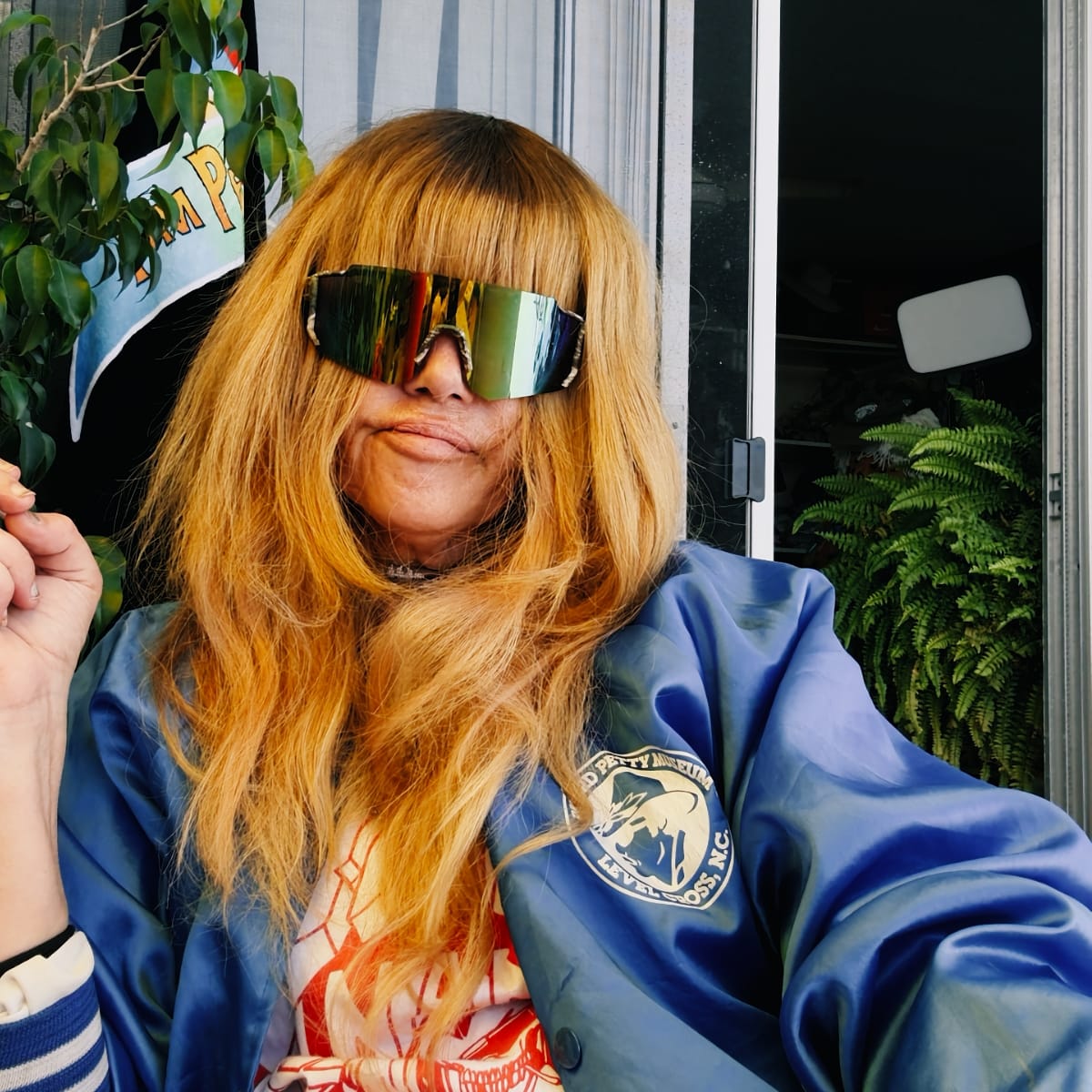
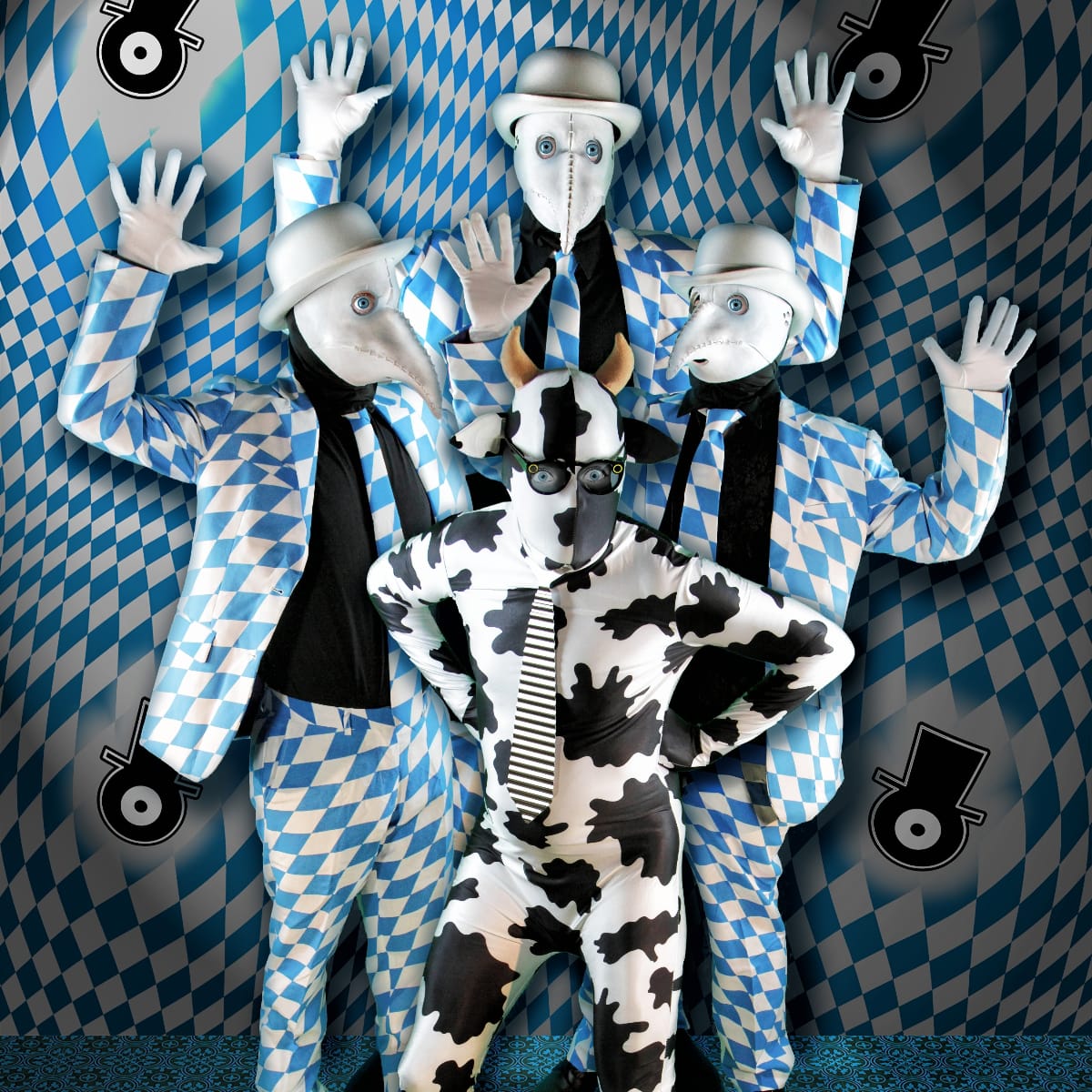
More Spirit Than Concrete — The Residents Revisit 'Eskimo'
The Residents' spokesman Homer Flynn traces the path from a commissioned 20-minute set to the first full staging of the group's Arctic concept album, now expanded with songs drawn from century-old folk tales. Interview by Bill Kopp.
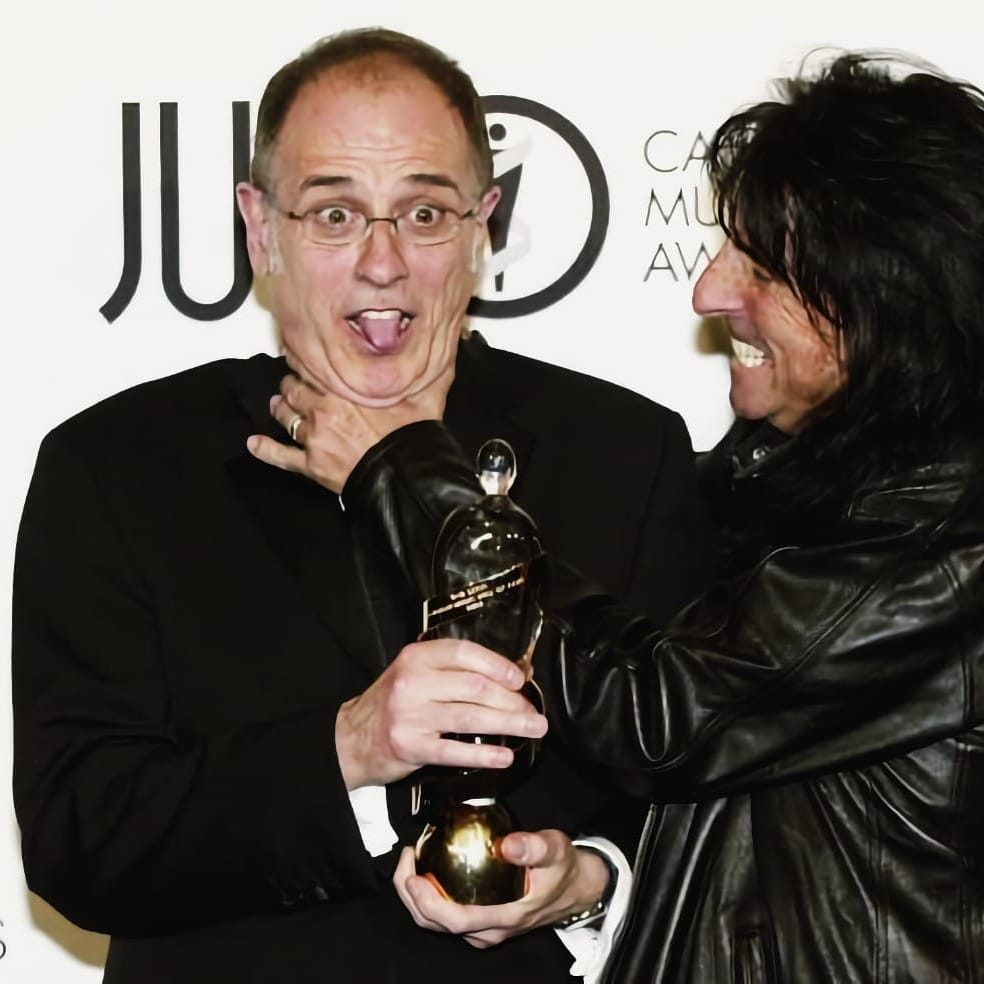
Bob Ezrin Would Rather Be the Dumbest Guy in the Room
The producer of 'The Wall,' 'Destroyer,' and 'Welcome to My Nightmare' discusses his return to the Jayhawks on 'Sanctuary Park,' how he builds a record out of three or four live takes, what a label and a band each want from a producer, and why he thinks the album still exists. Interview by Lawrence Peryer.
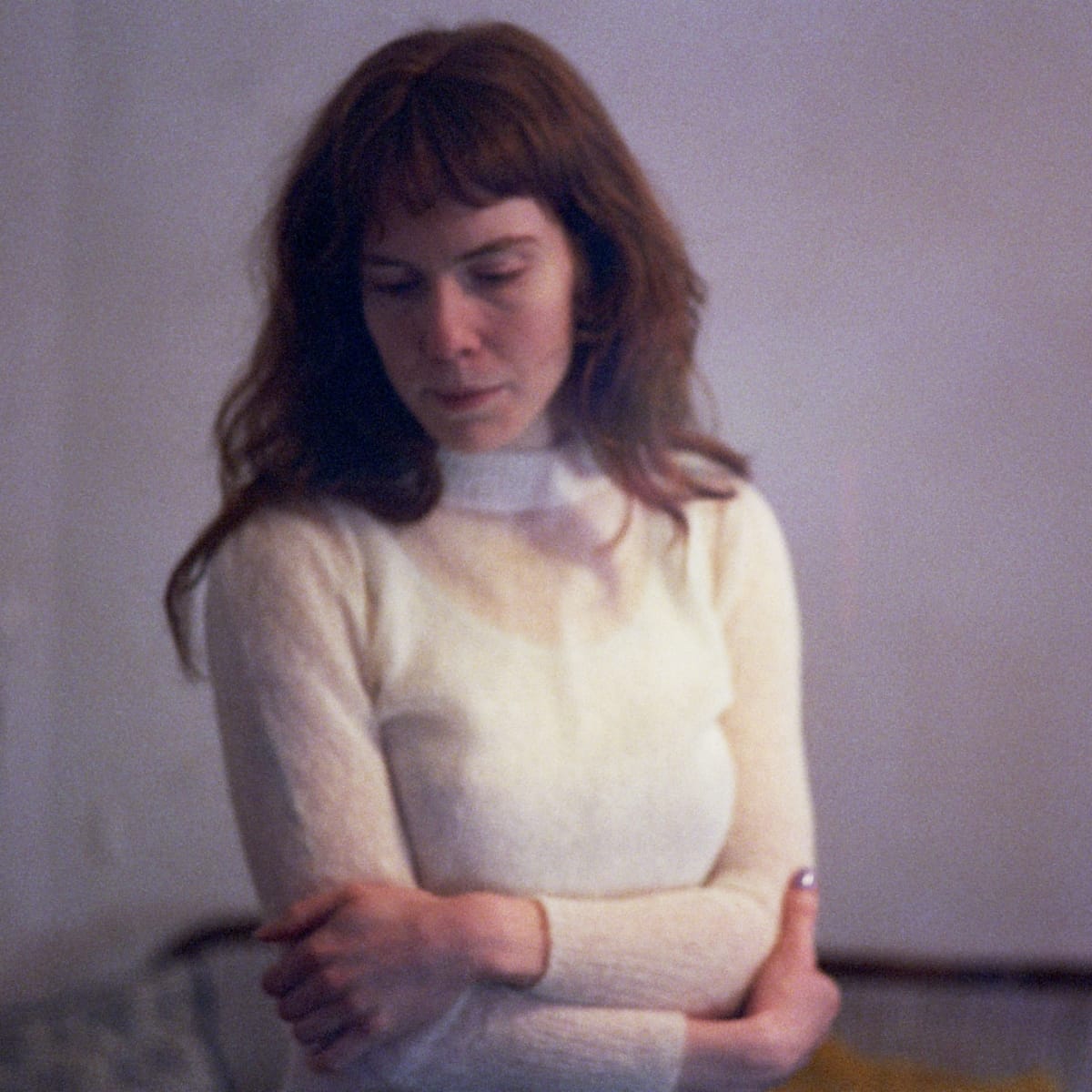
Elanor Moss's English Solitude
Good and evil sit in the same character, the same song, and — Moss suspects — the same person, a Catholic inheritance she hears throughout 'The Knife, The Needle.' Interview by Meredith Hobbs Coons.
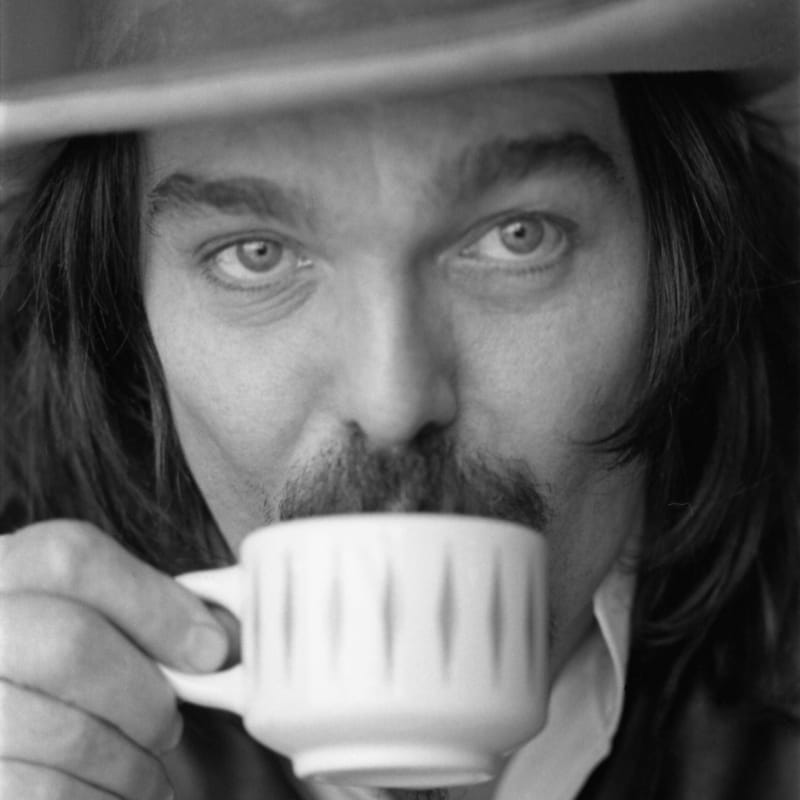
Ginny Winn's Visual Trip to the Music
"I get close. I always want to see the pupils in their eyes," Winn wrote of her method — and 'Grievous Angels, Trout Masks, and American Beauties' is the first gathering of what that closeness yielded, from a coffee shop outside Eureka to the Grateful Dead's ranch. Interview by Andrew Hamlin.
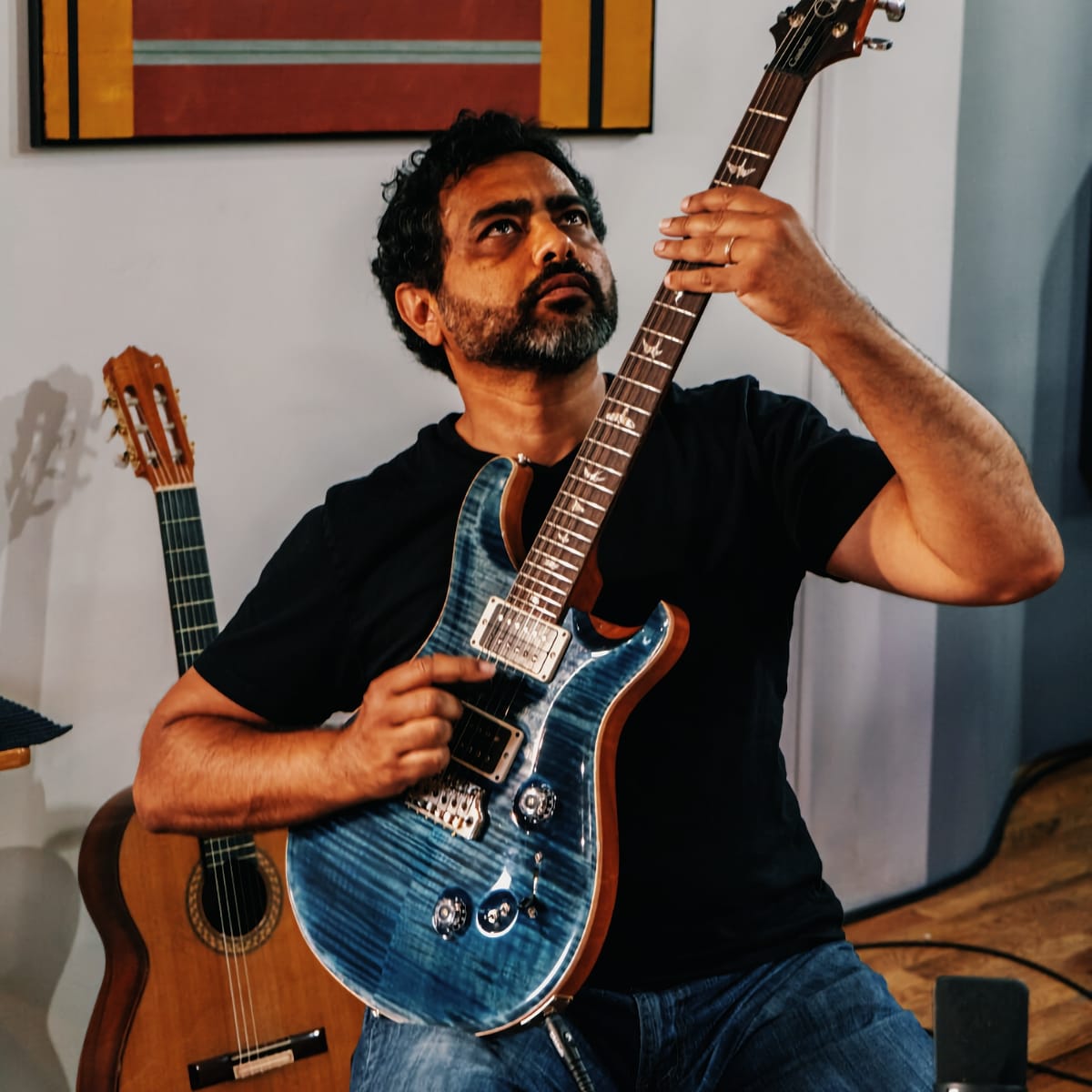
The Long Silence Behind Ayman Fanous's Guitar
The guitarist and bouzouki player discusses 'Brooklyn Stories 1–5,' his five-CD set of duos and small groups for Infrequent Seams, the years of wordless playing alongside Bern Nix that shaped his ear, and what harmolodics can mean on a nylon-string classical guitar. Interview by George Grella.
This Week's Episode of The Tonearm Podcast
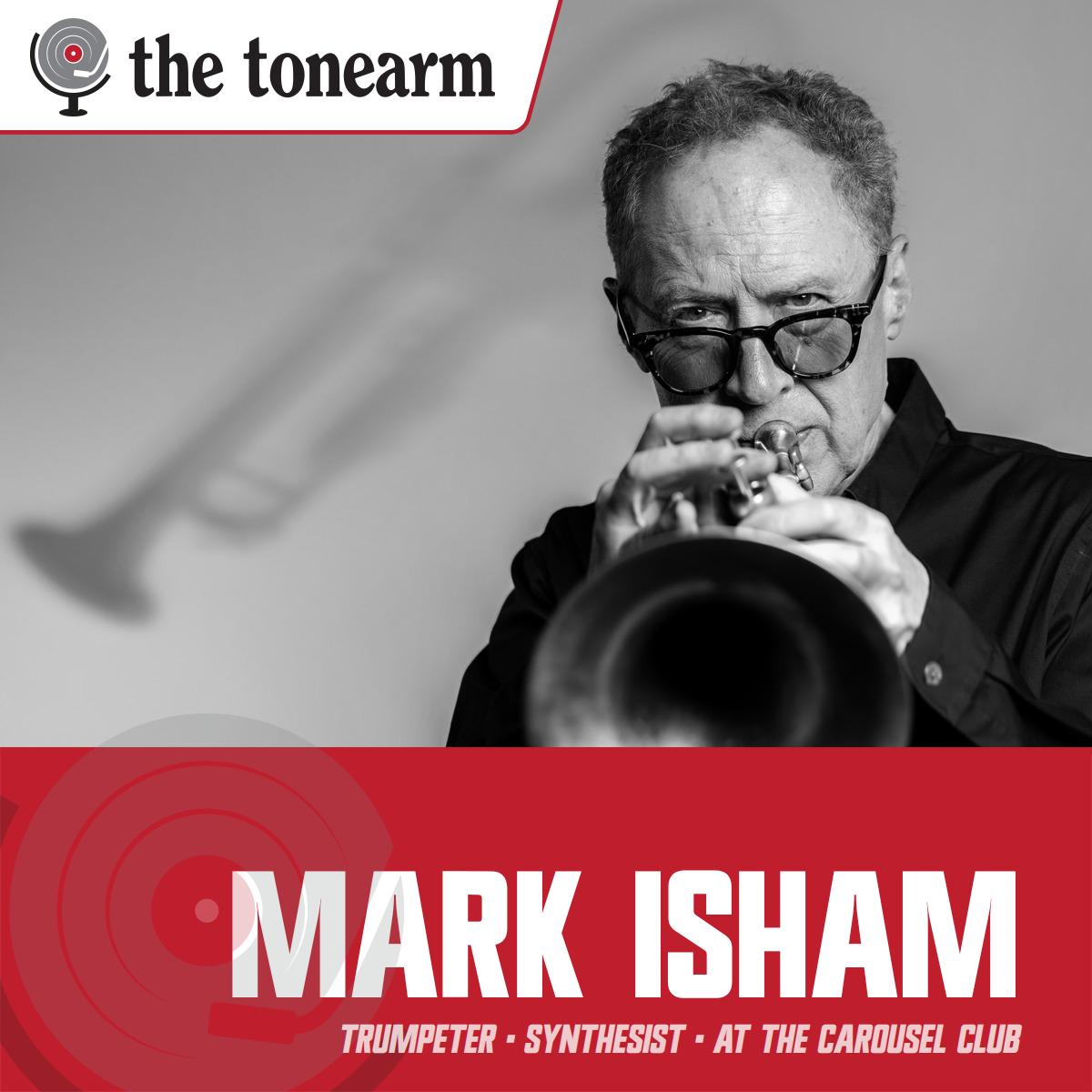
Mark Isham: Analog Machines and a Jazzman's Breath
The Grammy-winning trumpeter and film composer joins us to discuss At the Carousel Club, his first solo album in 15 years, built from a wall of vintage analog synthesizers and a band featuring Nels Cline and Vinnie Colaiuta.
Rotations
This week, Lawrence Peryer's Rotations, the official radio show of The Tonearm, goes digging:
This week's episode is my interpretation of the theme of rediscovery that seems to be present in our work on The Tonearm this week, starting with the 1970 Japanese shakuhachi record and closing out with the Swedish duo and their stripped-down reading of an old socialist hymn. In between is a run of songs inspired by one photography book, the unpublished 1970s portraits by the late Warner Bros. photographer Ginny Winn. The Residents are out on tour presenting 1979's Eskimo in full, and some of that's here, too. There's more, but you'll have to listen to find out . . .
Have a listen:

The Hit Parade
"A thickset black man wearing a tight-fitting sharkskin suit, beaming a relentless stream of notes from his saxophone, surrounded by a rag-tag gaggle holding — shaking? beating? — hand percussion . . . I heard John Coltrane live at the peak of his powers, and didn't know what to make of him." ❋ "I made a tape loop on the tape recorder, sat down at the piano, and played against the tape recorder. I could count on the tape recorder to stay put . . . And I would move – and that's how the phasing process was discovered, with the interface of a human being versus a machine." ❋ "After nearly four decades, Broadrick is pulling the plug. After undergoing life-altering abdominal surgery earlier this year, he can no longer execute his patented Godflesh roar without severely risking his health and mobility." ❋ "Pharoah came into the studio, and I explained it to him and I played it to him . . . he did one take all the way through, 40 minutes. Just sat there and played the one take. Then we had lunch from a pastrami place downtown, Langer's, his favorite place in L.A. . . . We came back to the studio after lunch, did one more take, and that was it." ❋ ". . . artists are often secretive about these things in classical music, an industry in which chronic illness or a reputation for unreliability can sink a career. Now, for the first time, Koh is sharing her struggle with a rare neurological condition called Parsonage-Turner syndrome." ❋ ". . . why are there tears on the dancefloor when we're all singing Nusrat Fateh Ali Khan at the highest possible volume we can? There's some sense of healing, and part of that is because in our day to day lives we are maybe a little bit disconnected from our heritage or identity." ❋ "These purists, they're the bane of music. They think they know what music is and all they do is have certain fixations about what they like, and they want everybody to like what they like. They have problems accepting new concepts and innovation." ❋ "While I definitely consider design a form of art, album art designers should remember that the album (and by extension the album artwork) isn't the designer's—it's the recording artist's." ❋ "Julius was at the forefront of this quasi-rubato, collective melodic improvisation. That is where I got everything I have ever done—from hearing him do that, from hearing those little chamber pieces, and from people improvising melodically together with no one soloing." ❋ "That's why Deadhead culture is pure American noir. The darkness lurking beneath it—the heroin, the gate-crashing, and worse—isn't a rebuttal to the utopian ideal. No, it depends on it. You need to believe in the freedom of the road before its captivity feels tragic." ❋ "In the 1970s, it was almost impossible to find a young tenor saxophonist who wasn't closely following John Coltrane's sound, if not his path. Murray was and remains the exception, putting together a sound and style that boils down to a single word: romance." ❋ "Today, anyone can easily hijack a real artist's Spotify page and flood it with AI-generated music. When someone clicks one of those tracks expecting to hear music from their favorite artists, the scammer will collect whatever royalties those streams generate." ❋ "So often, pop from the motherland is treated like a software update for American pop and not its own programming language, so it's fair for an artist to attempt to build a system from the ground up." ❋ "Physical media, but especially vinyl, with its liner notes and its deep, imperfectly preserved history, is for the burrowers. There's nothing so satisfyingly anti-algorithm as grabbing a handful of 45s by artists you've never heard of from an unsorted cardboard box shoved into the corner of a local record store." ❋ "Nostalgia in general is extremely in, and cowboy kitsch is extremely nostalgic — for everyone, not just the imagined 'rural white working-class' who are generally as much of a fantasy for Nashville songwriters and artists as they are for New York Times op-ed writers." ❋ For more curated music links, be sure to follow The Tonearm's feeds on Bluesky and Mastodon.
New Music Recommendations: Dedekind Cut - Dede-K-Tion (RIYL: solo piano and strings, Ryuichi Sakamoto's 1996, Julius Eastman) ❋ Delay 45 - I'll Go Where You Go (RIYL: a jazz quartet doubling on electronics, looping forms, an R&B groove) ❋ Érick d'Orion - Mes fantômes (RIYL: doom weight, free jazz, and motorik pulse; Glenn Branca, Peter Brötzmann, Fly Pan Am) ❋ Jason Dungan & Johan Carøe - Routine (RIYL: Arthur Russell's home recordings, Mabe Fratti, Nico Muhly) ❋ Ka Baird & Chris Ryan Williams - Enthalpy (RIYL: Maryanne Amacher, Joan La Barbara, Art Ensemble of Chicago) ❋ Light Conductor - Sequence Three (RIYL: Cluster, Spiritualized, William Basinski, GAS) ❋ megiapa - Intentions (RIYL: Erykah Badu–era neo-soul, Madlib, Georgia Anne Muldrow) ❋ Michael Sarian - In This Desert (RIYL: Bitches Brew crossed with Armenian folk modes) ❋ Radiator Hospital - Distorting Time (RIYL: Young Marble Giants, Tall Dwarfs, four-track power pop) ❋ Super scintillant - Tarot (RIYL: bass clarinet and modular synth, Terry Riley's "Poppy Nogood and the Phantom Band") ❋ tankerlow - SLAGROOM (RIYL: Suicide, Model/Actriz, Big Black) ❋ Trio Imagination - Creative Inspirations (RIYL: Cecil Taylor and Andrew Hill, with Afro-Caribbean rhythm)
The Deepest Cut
When I was a college-radio-obsessed lad in my early 20s, my band was offered an opening slot at an Orlando date on what turned out to be one of Thin White Rope's last tours. I was a fan, and I was thrilled. One stipulation: I had to make the flyer and help promote the show. My only design experience was of the punk rock sort, so I slapped something together with hodgepodge text surrounding an ominous William S. Burroughs photo I ran across. It was a little pretentious.
Before the club doors opened, one of the Thin White Rope members approached me and asked if I made the flyer. Yikes, I did. I was told it was cool that I knew the connection between Thin White Rope's name and Naked Lunch, where the phrase came from (the meaning akin to the names of the Lovin' Spoonful and, depending on whom you believe, Pearl Jam). I played along like a smarty-pants, but I had no idea.
Guitarist Roger Kunkel joined Thin White Rope in 1982 after answering an ad at Skip's Music in Sacramento, and the band proceeded to make a noisy, feedback-heavy rock out of Can, Suicide, Hawkwind, and Roky Erickson. They were lumped under "desert rock" or the Paisley Underground, both de rigueur at the time, but didn't comfortably fit under either. Stoo Odom first saw them in 1987 as an 18-year-old at New Orleans's Storyville Jazz Hall, where drummer Jozef Becker handed the underage fan a beer. Three years later, Odom moved to California and joined on bass, eight years younger than anyone else in the band, and stayed until the split in 1992.
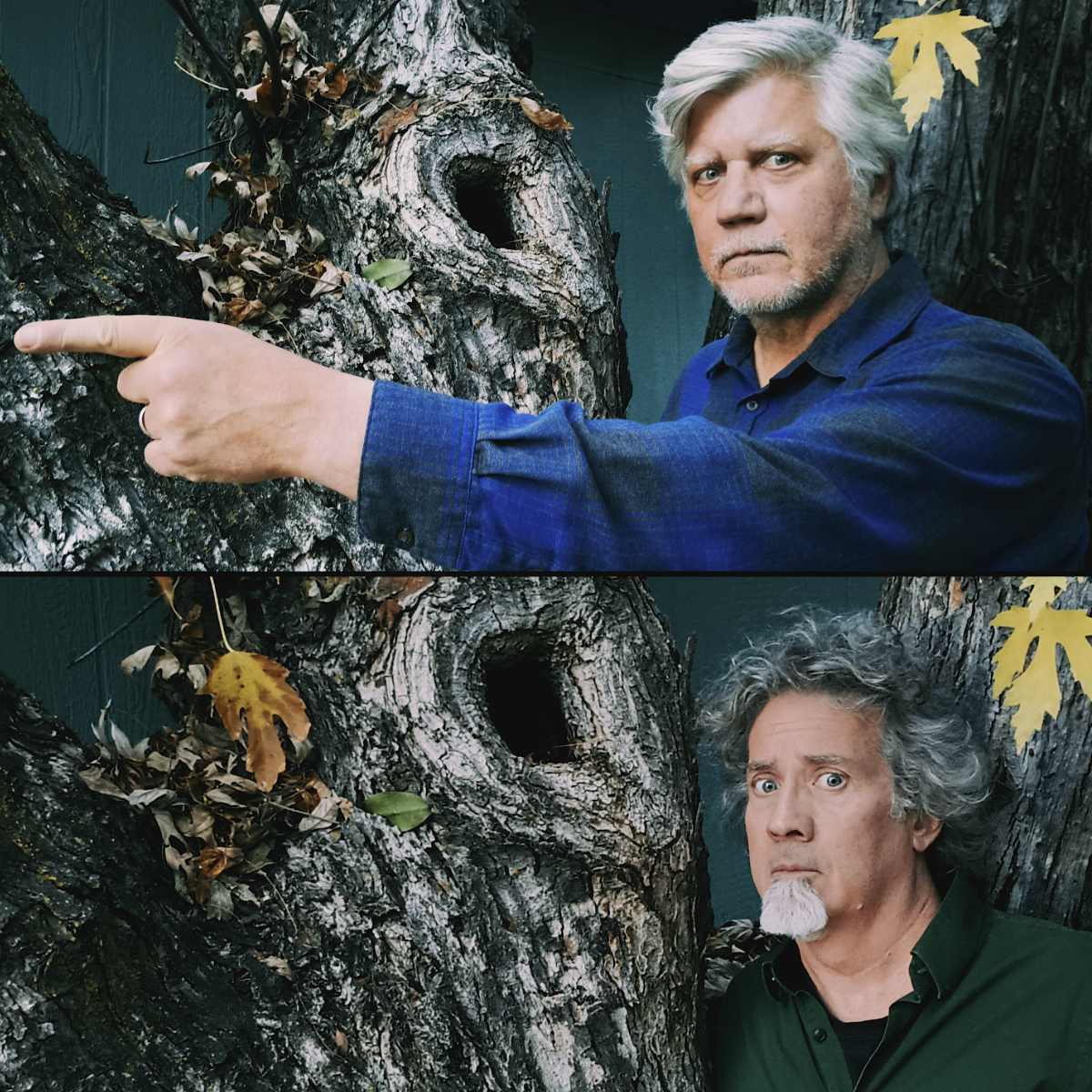
After Thin White Rope, Odom formed the Graves Brothers Deluxe in San Francisco with Kunkel and Becker, and he has since become a regular on Acid Mothers Temple records. Kunkel led the Acme Rocket Quartet, which the press notes sum up as "Chet Atkins meets Sun Ra." Their second release as a duo, Sniffing Spirits, follows 2025's Here Comes the Space Cow and pares things down to detuned guitar, upright bass, and Odom's voice. Its four tracks set two songs, "The Sniffing Song" and "You Gotta Feed," against a pair of gnarly improvisations, "Smell" and "Taste." It's endearing and raw, and rawly endearing, exuding that remote spirit that brought me to Thin White Rope decades ago.
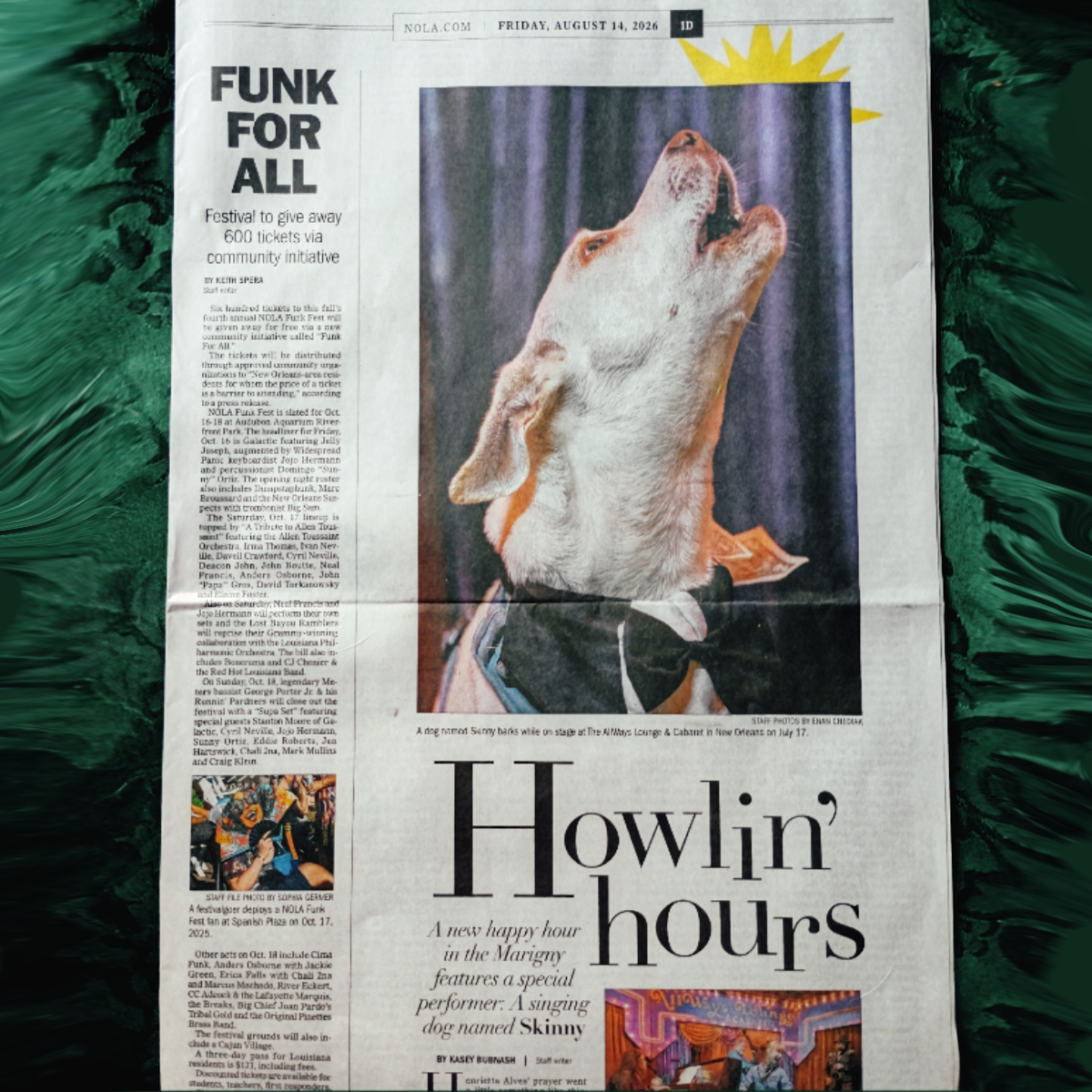
The front cover shows the dog that helped guide Odom's mother into the spirit world, and the back cover shows an urban fox chewing on his hand during what the press notes call "an ill-advised London moment." I wondered which animal, the guide or the biter, best represented this music. I was also curious about "Smell" and "Taste," two canine obsessions. Stoo and Roger answered separately, so you'll hear from both of them below, and each also named something they love that more people should know about. One of those answers involves alligators.
Stoo Odom: Roger and I have been playing together since 1990, mostly known for our work with Thin White Rope. We've gone from MTV to Motel 6s and back, huge festivals to tiny farmyards. Roger approached me cross-country about doing some shows and records, and I dig what we've been doing. The work has always been psychedelic, now less rock and more folk/noise/jazz/experimental. I have no idea what we've accomplished. Ask me again around the new year.
Roger Kunkel: Last spring, I made my second trip to New Orleans to play music with my old bandmate Stoo Odom. On the previous visit, we played an improvisational show with the great percussionist Tatsuya Nakatani, and it made a big impact on me. Having made two free improv albums with Cloud Seeder in the 2010s, I'm not new to such things, but it left me feeling a fresh pull in a jazz/experimental/improv collaboration-focused direction.
Stoo Odom: I'd say it's split evenly [between the guide and the biter]. Skinny (the guide dog) had very antisocial moments for a while after being rescued. And the fox, though his teeth were sharp, was very gentle with me. (Don't try that at home, by the way.) We're all complex. Untamed feeders come in all shapes and professions. And yes, [my dog, Skinny,] sings!
Roger Kunkel: Stoo's lyrics on ["The Sniffing Song" and "You Gotta Feed"] are a reminder that personal experience is the best creative well to draw from. They may seem abstract, and "Feed" is clearly metaphorical, but they are born out of real-life experience. Animals are intuitive. People can seem terrible yet deserve empathy.
Stoo Odom: The whole record was recorded in a couple of hours. "Smell" and "Taste" were completely spontaneous, no plan at all. Re: [whether the senses were] deliberate or discovered, records should write themselves. They have their own mind and use us to manifest. I don't mean this in a particularly mystical way. It just happens. The dog imagery presented itself; the lyrics just showed up. I really don't remember writing any of it.
Roger Kunkel: In my view, launching into a collaborative improvisation only requires the agreement to interact and trust. It requires the view that all voices are present and can lead change. The empty sonic space wants to be filled. I admit that weed soda was an intrinsic element of this session.
Stoo Odom and Roger Kunkel each told me about something they love:
Stoo Odom: Animals singing. Some sounds just mean "watch out for the hawk" or "hey, wanna fuck?" but many are done for enjoyment, and the same animal will refine its style and technique over time. It's not just dogs—lots of birds, primates, and maybe even alligators. Humans did NOT invent music.
Roger Kunkel: More people should know that creative communities abound. They might be small, but they grow and spread like mycelium.
The Run-Out Groove
- The Tonearm is a reader-supported publication, free of advertising and paywalls. Our supporters help fund our writers and make the site possible. Please consider joining and helping us to continue our mission.
- Join the rapscallions of The Tonearm on our new Slack community.
- Sign up to receive our latest articles directly to your inbox in a snazzy, easy-to-read email version. Just go to your account, manage your email preferences, and flick the lever to receive The Total Tonearm.
- The easiest and best way you can help us? Please share this newsletter and our stories with your friends.
Thank you for reading! We'll see you again next week. 🚀


Comments