


There’s a quiet, “English” quality to the music on Elanor Moss’s most recent, and first full-length, album The Knife, The Needle. A wash of woodwinds welcomes the listener in, and Moss’s voice floats gauzily over her intimate, intricately fingerpicked, classical guitar. It lands softly, cozily, upon the ear—that is, until the lyrics sharpen into stories wielding a fierce, at times ferocious, complexity.
The title of the album itself hints at this duality, further explicated in the lyrics to her song “Fixer,” which first wonders whether each member of a couple might be tempted to use their respective, metaphorical “knives” on each other should they ever reveal them before its ultimate, profound turn: “maybe what we thought of as a knife was just a needle / we can use to stitch a wound / and if you show me where it hurts / I can show you where it hurts.” Our pokiest parts can patch things up or provoke or pain the ones we love. In her writing, on this song and throughout the album, Moss makes it clear that she has been a student of such seeming contradictions.
During our conversation, Moss is game to examine her lineage—as a British person raised Catholic and the child of parents who were privately creative—as well as what connects the desire to embrace solitude for the sake of music’s pure, distilled documentation with the drive to court a wider audience for one’s art. We discussed all of this virtually, she from London and I from California.
The transcript has been edited for length, flow, and clarity.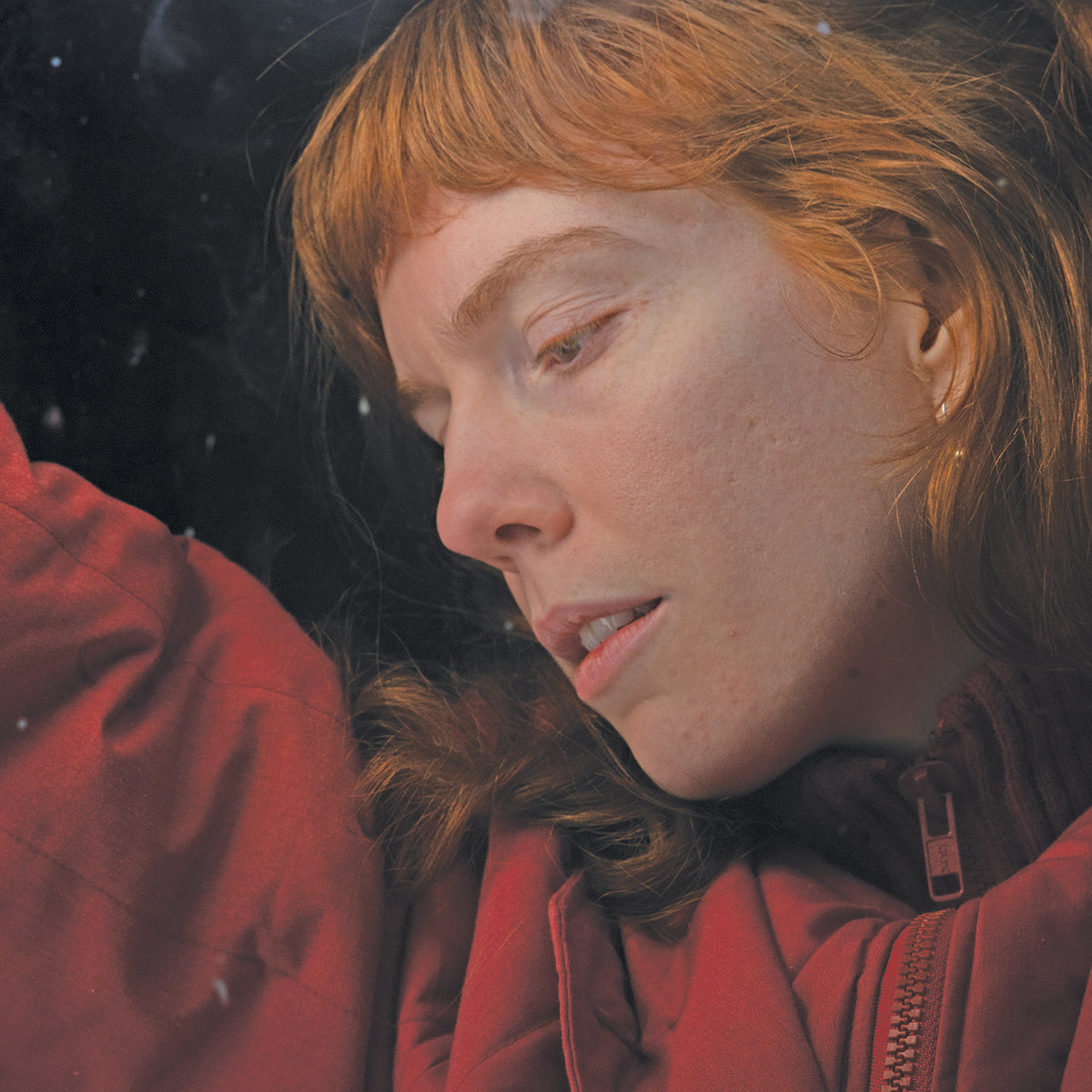
Meredith Hobbs Coons: One thing that drew me to your music is that I am a big Nick Drake head, and you’re operating within that same chamber folk lineage. Do you want to speak to those influences and what they mean to you personally?
Elanor Moss: Absolutely. It’s funny, because truthfully, I love what I do know of Nick Drake’s music, but I wouldn’t describe myself as a “Nick Drake head.” There’s a lovely wealth of Nick Drake’s work I still have available to dive into, and actually, of the Drakes, the person whose work I know most intimately is his mum, Molly Drake.
Meredith: I love that.
Elanor: Obviously, he’s an incredible artist, and we owe so much to him in terms of the evolution of folk and songwriter music in the UK. I look forward to the years ahead to explore his catalog in more depth.
I remember hearing Molly Drake’s record maybe five years ago, and they’re all home recordings of hers, just capturing compositions. It seemed to me that the record, the only record that she has out, is purely just a documentation, like, “I wrote these, and I should probably have some reference for them at some point down the line.” Maybe I’m wrong, but as a listener, I sensed she had a deep interest in writing these songs and capturing them purely for cataloging purposes. There’s this feeling of spontaneity, too, which was quite compelling to me. The other thing that drew me to her was her sensibility in writing songs that would read just as well as a poem on the page as they did when performed. I spent many days in the winter and spring listening to that record. Sometimes you hear a record, and it reminds you that you can do anything you want as a songwriter. That there aren’t any rules. She makes me think like that.
Meredith: Another self-cataloging songwriter that comes to mind is Sibylle Baier.
Elanor: Oh yes, she’s brilliant. That record Colour Green. What’s the story with her recordings?
Meredith: She’s a singer and actor who made demos of her songs to document them when she was a young mother in the early ’70s. She devoted herself to raising her kids, and the songs she wrote and recorded faded into the background of her life. Then, eventually, when she was much older, her son put in the work to release them as an album. So that’s how her work even came into the public sphere at all: her son’s love and acknowledgment of the worth of her art.
Elanor: That’s wonderful. I love the Sibylle Baier story. I knew pieces of it. I knew she was an actor, and I knew she had made these recordings and then shelved them, but I didn’t realize she’d done them when she was a young mother, and that her children were the reason they were discovered. I think that’s beautiful.
Meredith: You have mentioned in interviews that your dad has always been a musician but didn’t really plan to distribute his work publicly, and now I’m connecting that to your attraction to Molly Drake’s music and your own pursuit of a career in music.
Elanor: Oh, I love that thread! My dad is remarkable. The work that he’s done is so good, and he’s not at all bothered whether people discover it or not. It’s not something that he is particularly interested in. Maybe he was at one point, but certainly not anymore. And everything that he’s ever done has been a form of capturing and documenting his music.
When I hit my first big bout of writer’s block in between EP two and writing this latest album, I think that a lot of that had to do with my relationship with the releasing part of the music, which was not something I’d been exposed to, obviously, until I started releasing it. I didn’t have a barometer for how that would feel, because my dad didn’t do that. He kept it for a small circle of people. He played us his music, he read us the stories that he wrote, and he encouraged a kind of sharing within our small unit, but I didn’t have a barometer for what it would be like to suddenly be in a position where you’re releasing music to the public, and I experienced it as quite polluting to me as a person. I felt like it pandered to all the worst human parts of me that are vulnerable—needing affirmation, needing approval, and needing to be told, “Good job.” That is all very normal and human, but I didn’t find it conducive to making more work, and I felt that it started to disorient me as an artist.
I realized I needed to approach it differently if I was going to make art for a long time, the way my dad made art for a long time. I have examples of his kind of path in my life, but none as a career artist, which is what I’m aspiring to be.
What appealed to me when I discovered musicians like Sibylle Baier and Molly Drake—and Connie Converse, who I also love—is that their recordings exist as documents, and they’re not pandering to anything. Their music is what it is, and that’s how they’re going to present it.
There are so many choices you can make about your creative direction once you’ve written a song and, if you’re feeling insecure, that’s where the most noise can happen—like, “This thing is really trendy, so maybe you should try it this way,” or “So-and-so thinks that your songs are best suited to this type of arrangement.” That’s where it can get loud internally, especially when you’re trying to find your identity, which is where I have been for a long time in my career. It’s appealing to look at people who purely documented what they were making, who treated it as documentation and not as a precursor to releasing it and having others find it.
Meredith: It’s like a documentation of a solitary consciousness. And for whatever reason, so many more women seem to exist in musical spaces, from public to private, as singular entities. That’s something that I think about a lot. Obviously, Nick Drake operated as a solo musician, but a lot of women do this: Dolly Parton, for example, as well as these women we’ve mentioned who were making their work from home for their own edification. What do you think drives so many women to want to build their work in isolation like that?
Elanor: I like that question so much, because this preoccupies me quite a lot: this idea of creating in solitude. There might be a connection between making art as a woman and trying to create a kind of solitude in your life around something, creating a space that belongs to you—a psychological space that is yours, that is untouchable by others, in which you function autonomously, and you can exercise your autonomy in this undisturbed way; where you can be selfish, where you can be messy and ugly and imperfect, where you can defy expectations. I’m sure that’s true of all artists in some ways, but I notice quite a gendered feminine aspect to that.
In fact, recently I read this brilliant book called Writing(s). It’s a collection of three essays by three writers: Marguerite Duras, Claire-Louise Bennett, and Dorothy Spencer. The thread that runs through the three essays is solitude. Marguerite Duras’s essay (called Writing) is about writing in her old age as she looks back over her writing life and reflects on the home that she bought so that she could be on her own, so that she could have this protected space where she can write that belongs to her. In “How We Spend Our Days” by Claire-Louise Bennett, she writes as somebody at the beginning of her career trying to figure out how to carve out her own space, how to operate within solitude, and how to curate solitude within herself and without herself in order to have a practice as a writer—I think she was one novel in at the point when the essay is set. Then, the third essay, “Five Minutes Peace” by Dorothy Spencer, is about being a writer now that she’s a mum, how her ideas about solitude have had to shift and change, how her definition of writerly solitude has changed now that she’s a mother, and how she can remain connected to her family and claim solitude at the same time in a beautiful way.
Meredith: Now let’s turn that focus towards you and your artistry. I know you made the album we’re here to discuss in a cabin in the Scottish Highlands, and that has a connotation of solitude, though I think it’s also true that you recorded in collaboration with other musicians. Maybe you can speak to the role solitude played in creating your music, and the environments you built to contain it.
Elanor: This is an exclusive reveal: I think there was some misinterpretation of the original press rollout months ago, and I think a lot of people think we recorded in a cabin when we actually didn’t. I wrote quite a bit in the cabin, but I recorded this album in a wonderful studio in a converted barn in Devon called Middle Farm Studios, on the other side of the country. I feel quite guilty about that, through nobody’s fault at all. That studio was a big part of my journey, because I found myself going there a lot for bursts of solitude in containment, where I could get away from life for a bit and write. They have a cabin there that I stayed in, and we recorded everything very succinctly. We did it all in just two and a half days, and recorded it all live to tape, all of us in the room together. The goal was to treat it like documentation and be as unsparing as possible. If I did an ugly job or didn’t have a strong voice that day, that’s just what’s on the record. That was a big part of our ethos of recording: to be unrelenting in our approach.
The studio also gave me psychological space to retreat to in my mind when I was thinking about making the record—the second version of it, at least—and I spent a lot of time writing at night. That was where most of the good work happened: when no one else was home. I find it difficult to write if anyone else is in, which is neither good nor bad. That’s just how I am. So far, I’ve needed to feel completely unobserved, unneeded, untethered to my real life in order to enter the imaginal realm that the writing comes from, and I don’t hold that up as a pinnacle of how it should be; that’s just the only way I’ve been able to do it. I would be a much more productive writer if I loosened my grip on that, but a lot of the writing has happened whilst I was alone.
Stealing time between activities, being busy, is actually quite helpful for me when I need to write because it means that I’m stealing time out of the day, and that forces productivity—you know, where you’re having a thought or a daydream, and you just have to get it down, and then you’re excited to look at it later? Solitude, to me, is also a way of blocking out the unhelpful things. This is what I was speaking about earlier, when I first started releasing music and found the whole releasing part quite polluting to the creative part. If you’re in solitude, that part just doesn’t exist for you; you’re just in the moment, trying to create a connection between your subconscious and your hands and mouth.
Meredith: It’s understandable. Some people just require that, and I think understanding your own process is helpful rather than fighting it and trying to be a different kind of writer.
Elanor: That’s always a helpful thought, and more empathetic than the idea that I need to optimize my process and get better at writing while people are home.
Meredith: At one point, I read something Roxane Gay wrote in which she described how she had honed the skill of stealing away moments to write—in airports and while traveling, sitting there among people—and I thought that was the ideal, what I should be aspiring to. And now I’m like, “You know what? No.” I need to just set an alarm for super early and write then, because it’s just not going to happen if I’m trying to fight it and think of a busy airport as my benchmark for what I should be able to tolerate.
Elanor: That sounds like that’s one of your ways of creating solitude in your day, time that belongs to just you and your practice.
Meredith: Yeah, true. You’ve hinted at having a difficult time feeling perceived during the creation of things, in the context of mentioning people who created in solitude without the goal of releasing it more broadly. But the fact that your work has connected with people and inspired them to turn around and release things, the way your dad and Molly Drake inspired you, how Molly Drake inspired her son and countless others through her small, contained practice, makes me wonder if you can connect that to your own clearly defined desire to create for broad release?
Elanor: I can’t speak for my dad, and I wonder what he’ll have to say when he reads this back, but, at least from where I’m sat, my dad’s vocation was family and his work as a teacher. His practice as an artist was secondary to those things, which probably gave him some freedom, because it wasn’t the center of his life as his main vocation. Were it his main vocation, the people he could have impacted in a positive way through that particular medium would have been much broader than just me and my siblings. Instead, his vocation as a teacher was the way he reached people beyond his family. His vocation as a teacher touched the lives of so many people.
The work my dad did was impactful in lots of people’s lives, and I see my relationship to music the same way; it’s what I have to offer. For some people, the thing they have to offer is that they’re incredible teachers who can make lasting impacts on people—maybe they touch a hundred people’s lives, maybe they are a teacher their whole life, and they touch thousands of people’s lives—but for me, if I keep the thing that I have to offer just to myself, then it can’t reach anyone that it might have a good impact on.
On a more selfish note, I love to do this. I love to create and to get to spend a life making records, making work, and being curious about making art. It would be the biggest privilege to get to spend my whole life doing it. There are two threads to it: the for others and for myself threads. It’s a mix of both. My pursuit of it is a bit of a mystery, because there are other things I could do; I just don’t feel as compelled to do them. I often wonder about it.
Meredith: There’s a strong storytelling component to your work, and it seems you’re attracted to that aspect of art, too, as you studied English literature in college. It’s interesting to witness these characters you’ve created in your songs, and it seems like what you’re interested in exploring in them is their duality and their capacity to hold violence and gentleness within themselves and express either at different times. I notice that as being kind of a theme in this album, and I wonder if this feels—this is going to sound weird—kind of British to you.
Elanor: I wasn’t expecting you to say that. You’re getting at a sort of mythic thing that we have really liked for a long time in the British work that we have—things like the Brontës, and even the folk revival. They were bringing back old folk tales that would have been developed from pre-Christian times, and there was a lot of brutality, violence, and darkness in them. I’m not a scholar of folk history or anything, but thinking about our physical climate, historically, we’ve had a lot of darkness, rain, and grim weather. I wonder if any of our folk tales are directly born out of this seasonal grappling with the long, dark winters, the return of the light, and the battle between darkness and light in everyday life, reflected in the physical climate we live in. I would want someone who’s much more clued up on this stuff to tell me, because I think there’s probably something related there—maybe it is quite British.
I would actually have said my work is maybe more influenced by Catholicism. I’m interested in the difficulty and the terror of being alive—it’s all very exciting to me—and I do think that’s quite Catholic. We’ve got the devil, and we’ve got Jesus, and these big sweeping stories about good and evil. Some ways of practicing Catholicism are super duper dogmatic: there is good, and there is bad, and there is nothing in between. I have always been more interested in the fact that we all contain equal capacity for both, and that’s quite scary. All the ugliest things you see in other people are there in you, under the right circumstances. Maybe that way of thinking is a hangover from my upbringing of being immersed in these stories. But I also grew up with things like BBC adaptations of Dickens and Lorna Doone, which also have good-and-evil themes, so my sensibility is probably quite British.
Meredith: It could be you’re examining your inner Britishness by cultivating solitude.
Elanor: Yeah, we’re quite standoffish in Britain. That’s one of our characteristics. We like our solitude.
Check out more like this:
 Carolyn Zaldivar Snow
 Meredith Hobbs Coons


Comments