


Now Playing on The Tonearm:
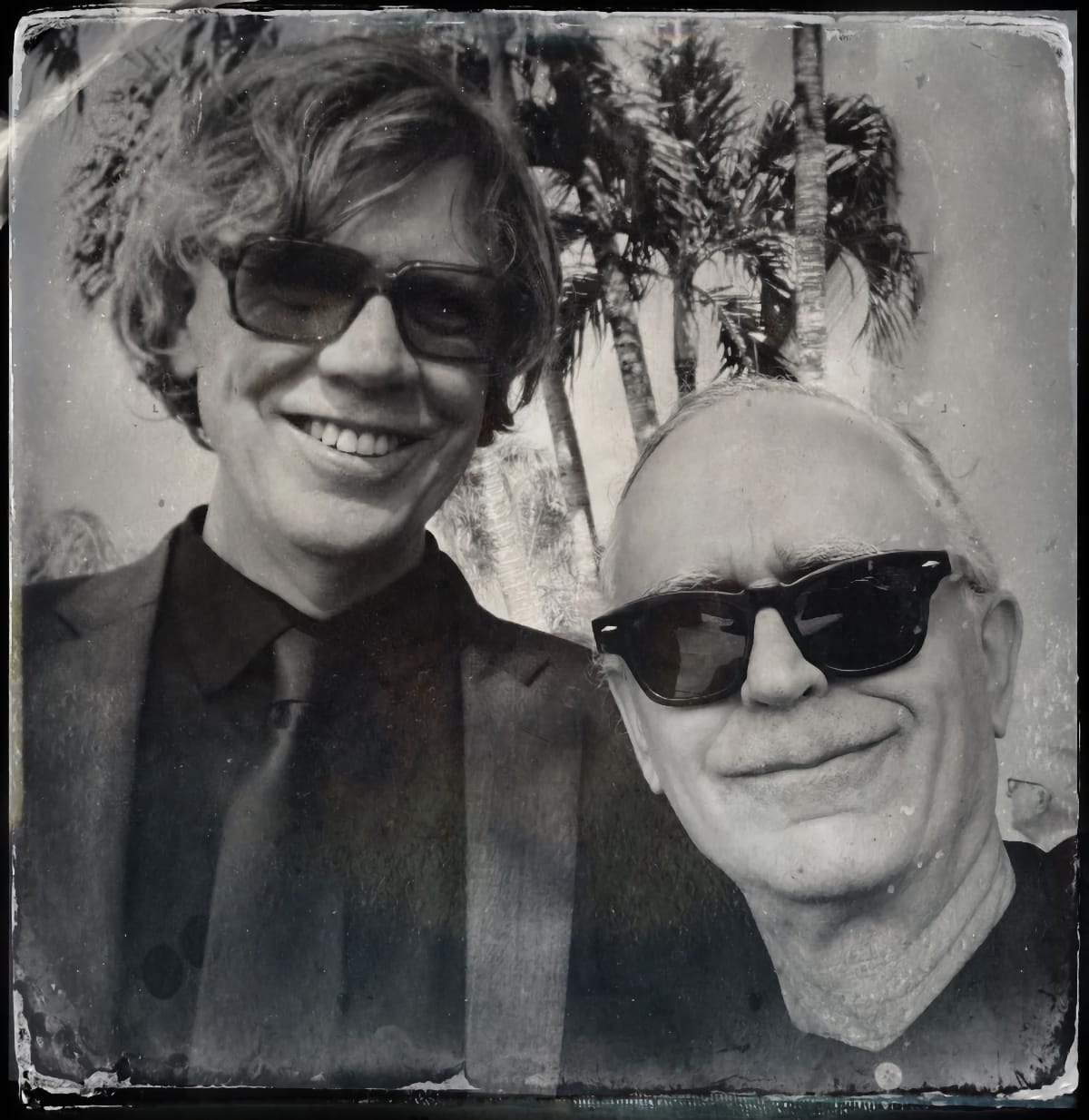
The Only Valid Form of Protest — Bonner Kramer and Thurston Moore
Bonner Kramer and Thurston Moore's debut together, 'They Came Like Swallows,' arrives as a somber, guitar-driven response to a world that has not stopped producing reasons for one. Interview by Steven Garnett.

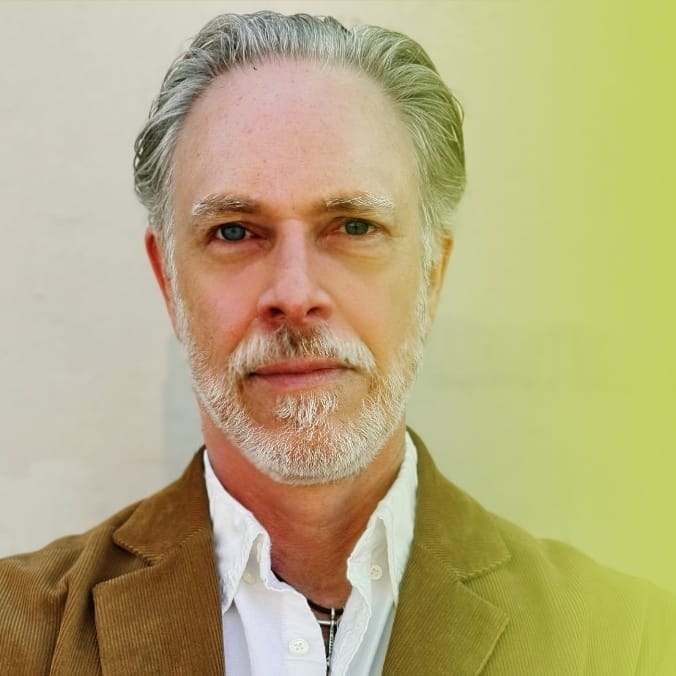
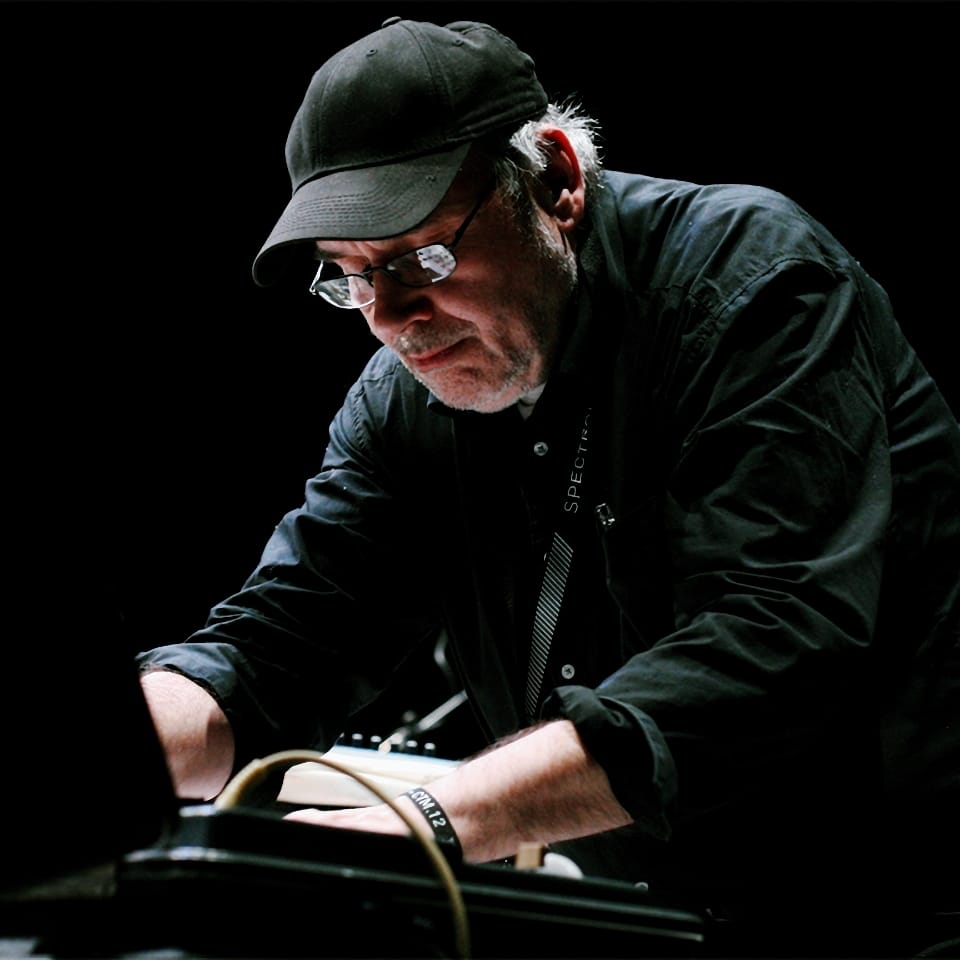
An Orchestra in One Body — Christopher Tignor's 'Bleeding Past the Edges'
On 'Bleeding Past the Edges,' Christopher Tignor upends the interactive electronics playbook, composing for a one-body orchestra through precise, reproducible systems aimed at a single purpose — to break the listener's heart. Interview by Andrea Mazzariello.
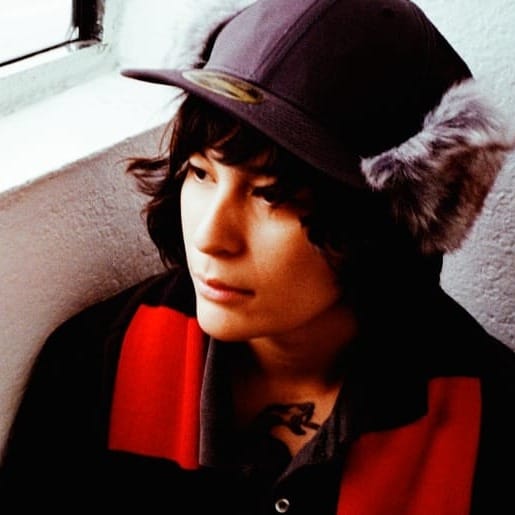
Tape Hiss and Tenderness — zzzahara's 'Distant Lands'
zzzahara's fourth album trades the romantic preoccupations of earlier releases for something harder-won — a tender, analog meditation on grief, mixed identity, and the strange clarity of sobriety. Interview by Damien Joyce.
This Week's Episode of The Tonearm Podcast:
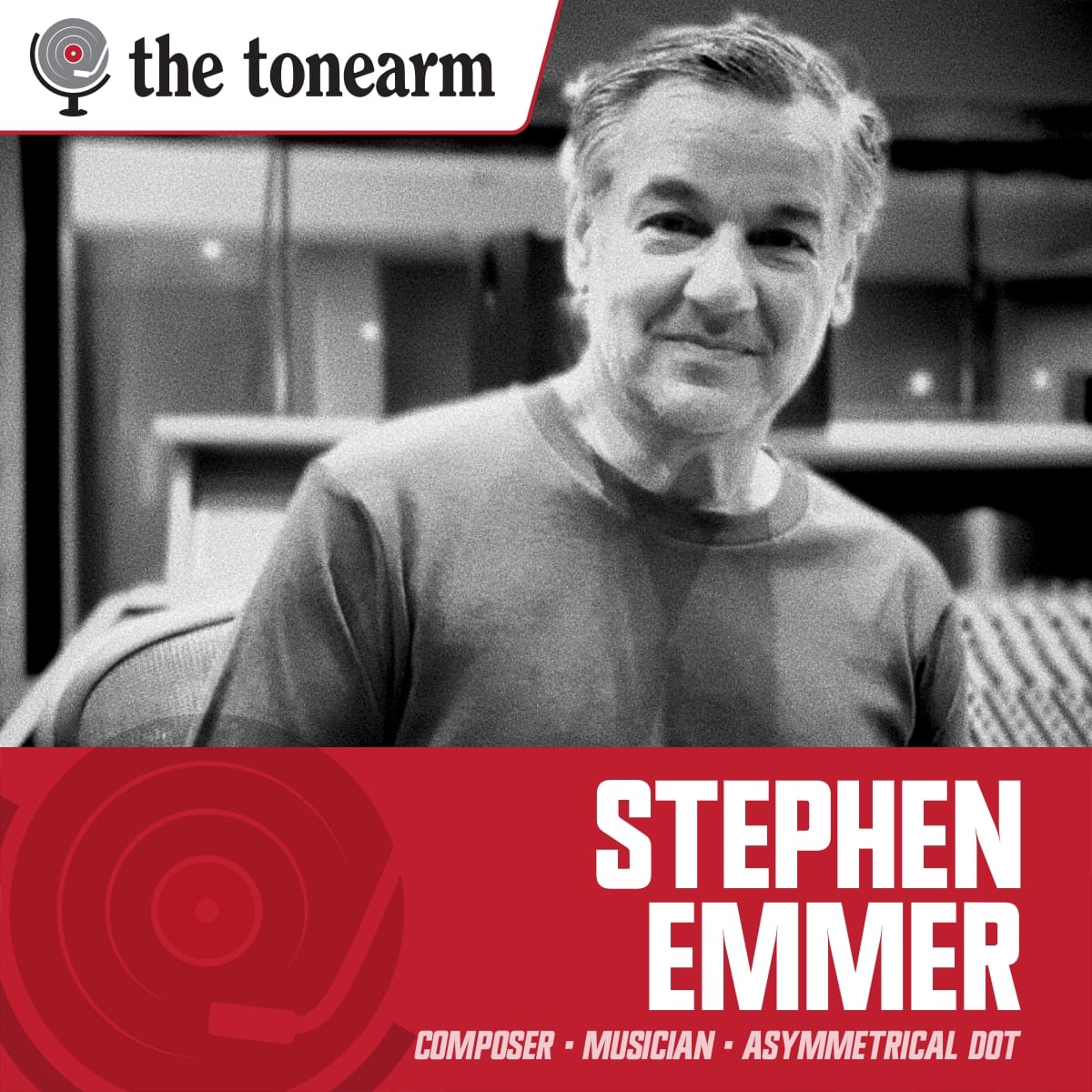
Stephen Emmer: Composing at the Edge of Silence
The Dutch composer joins Lawrence Peryer to discuss 'Asymmetrical Dot,' the album shaped by his mother's death, a grandson's birth, and four decades of learning which clichés to reject.
Rotations
Here's what's coming up on the next installment of Lawrence Peryer's Rotations, the official radio show of The Tonearm, as well as listenable evidence of the previous episode:
This coming Tuesday on Rotations, the hour opens with the Oscillating Revenge of the Background Instruments, a.k.a. ORBI, making the case for the supporting players through a chamber ensemble take on a classic rock epic. From there, the episode is loaded with music from podcast alumni, including new work from vibraphonist Patricia Brennan, pianist Sylvie Courvoisier, and drummer/composer Janek van Laak, along with a new track from Jeff Parker's ETA IVTet. Sprinkled throughout, you'll hear Ornette Coleman, Alexander Hawkins, Micha Acher, and others. Tune in Tuesday at 11 PM PT on SPACE 101.1, or stream at space101fm.org.
Also—check out our Rotations archive on Mixcloud and stream last week’s musical selection below:

The Hit Parade:
“'Relationships are a vast thing,' he told The Chicago Tribune in 1986. 'They’re like people: Everyone is different. So I write about them as I see them, and as I have experienced them.'" ❋ "[Kanya King’s] mission had always been to raise the profile of Black British music and culture, and to boost the careers of its artists. It was never about herself. And when she gained success, she set about trying to create more change . . . " ❋ “When I first saw Sonny Rollins live in the summer of 1987 at Penn’s Landing in my hometown of Philadelphia, it was beyond incredible. Even at age 15, I was well aware that I was watching perhaps jazz’s greatest improviser. Nearly every saxophone player in Philadelphia was at that concert. We were in awe the whole night." ❋ "The algorithms are built upon decades of research that asked not what music is, nor what it means to listen to music, but how a human might be measured based on their musical preferences. Like IQ tests, this research has a dark history." ❋ "From the 1930s through the 1950s, Arthur Q. Smith roamed the country music and radio worlds, drinking, writing, and selling hundreds of songs on envelopes, napkins, and paper scraps, often for the price of a bottle or his bar tab. Some became top Billboard hits . . ." ❋ "Pop stars are not superheroes, but showcasing Latin America’s cultural DNA on the world stage while refusing to code-switch establishes a powerful form of resistance . . . Now, digging into roots music canons and doubling down on regional pride is giving artists and fans the tools to fight back against erasure, exoticism, and the homogenizing effects of globalization." ❋ "I wanted to ask [Rickie Lee Jones] about that infamous sample, hoping to get into The Orb’s artistic merit more than Paterson’s sonically sticky fingers. I wanted to forge a bond of desert lore that stretched across the decades, connecting the two songs. She wasn’t having it." ❋ "The act of remembering rock & roll stars has taken on an increasingly important role in the music industry over the last few decades. And remembrance is never a neutral, dispassionate act, whether it is monetised or not. Stars are constructions, self-fashioned or otherwise, and that’s true whether they are alive or dead." ❋ "The process of making these albums comes across in the way they sound and the way subscribers can hear them, as literally a sequence of three track drops until the final number of 24 is reached. The tracks are like ripples from stone tossed into a pond, spreading out and colliding with new things and changing course." ❋ “When I first got my bass when I was 16, I was living on my own, and I put up a sign above my door which said ‘PRACTICE.’ It was there so that whenever I left the room, I’d see this sign to remind me what I was meant to be doing.” ❋ “I remember saying to my teacher, ‘When do I get to hold it like Elvis?’ They didn't teach anything other than slide guitar and accordion. Limitations can be a friend, but maybe not that one.” ❋ "From soundtracking a vision of the future haunted by the past, to a present that resembles a vision of the past haunted by the future, Kraftwerk are in the unenviable position of having lasted long enough to discover which of their predictions have come true." ❋ “Charlie Parker’s approach became a blueprint for generations of musicians, influencing everyone from John Coltrane and Ornette Coleman to countless artists working beyond jazz’s borders. His ideas traveled across genres and decades, reshaping how others thought about melody, rhythm and expression." ❋ "What Wilson had done with 'Good Vibrations' was nothing short of introducing American Pop—the New Pop, that is, which was really rock, which was really rock n’ roll—to its maturity. Youth Music was now Art Music." ❋ "It takes much more than inventory to make a great record store. An exceptional record store needs a welcoming atmosphere, a unique personality, and a genuine sense of community. The employees should make customers feel like they belong in the store, not just at the cash register." ❋ For more curated music links, be sure to follow The Tonearm’s feeds on Bluesky and Mastodon.
New Music Recommendations: Attorneys General - Live at Ftarri / Live at Pan-Pan / Live at Horse Hospital (RIYL: Free improvisation, live tape manipulation lineage; Tetuzi Akiyama, Wadada Leo Smith) ❋ Booker Stardrum and Evan Shornstein - OOPS! (RIYL: Acoustic groove drumming meeting synthesizer-driven production; Jon Hassell-ish Fourth Worldisms) ❋ Cinna Peyghamy - Music For Tombak & Synth (RIYL: Percussive modular synthesis; Iranian folk instruments digitally processed; 'abstract dancefloor pressure' meeting family memory) ❋ Love Unfold the Moon - Hidden Promises In Joined Terrains, Apex Emerging (RIYL: Post-flamenco free improvisation; Mustafa Stefan Dill's early solo work) ❋ Shape of the Moon - When the land is laid bare (RIYL: Ambient electroacoustic spoken word, ASMR-adjacent instrumental texture under live poetry recitation; Carlos Niño) ❋ Teiku - Klang (RIYL: Jewish liturgical source material transfigured through collective improvisation; Natural Information Society, Art Ensemble of Chicago) ❋ The Huntress and Holder of Hands - Babylon (RIYL: Folk-noir with chamber strings and post-punk edge; Brown Bird, The Devil Makes Three) ❋ Wesely / Cocks / Ángeles / St. Louis / Costa - A Fine Chance for Permanence (RIYL: European free music of the 1960s, lowercase/reductionist music; AMM, Topography of the Lungs)
The Deepest Cut:
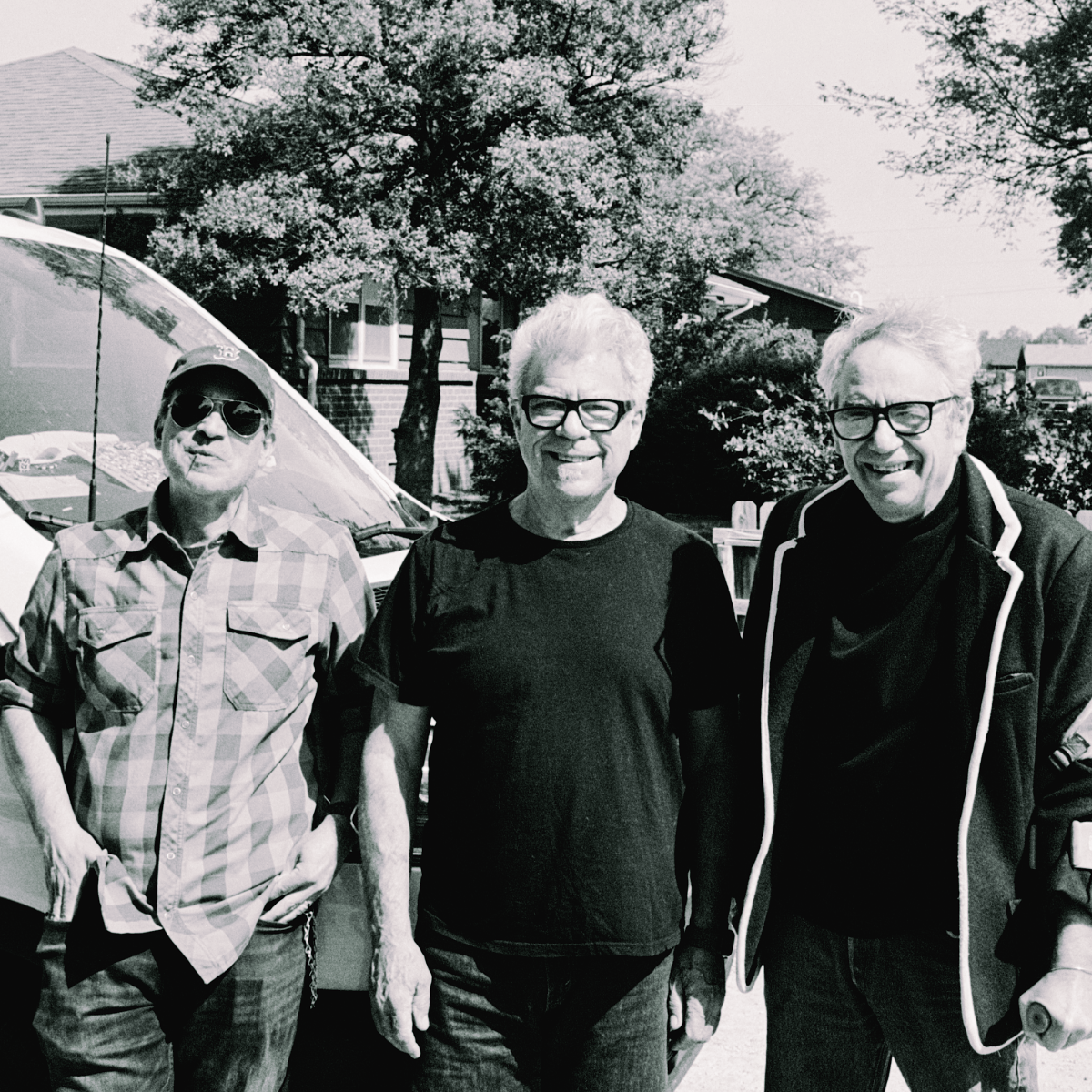
Mike Baggetta has made enough appearances on the site to be considered a ‘friend of The Tonearm'—Sam Bradley spoke to him for our feature on mssv’s 2025 record On and On, and I named an intimate performance by the Aaron Irwin Trio, which included Baggetta, as my highlight of that same year. You see, Mike Baggetta plays guitar and was praised by The Wire as “a player of immense subtlety working with an impressive palette of tones," drawing comparisons to both Robert Fripp and John Fahey. And for the past several years, he has played alongside drummer Stephen Hodges, who has worked across rhythm-and-blues and experimental contexts, and bassist Mike Watt. Watt, of course, co-founded Minutemen and fIREHOSE, and has been a central figure in American underground music for more than four decades. Together, the three are the aforementioned mssv.
See You Through, the fourth mssv release on BIG EGO Records, arrived this week with a production history built on the road. The band spent 2025 on a 52-show stateside tour (not an unusually high number of shows for this crew), refining the songs, then returned to BIG EGO studio in Long Beach, California, to record them with Chris Schlarb, who has produced all four of their records. The six tracks run longer than earlier material, and mssv take more time inside the psychedelic and textural elements of the record, shaped by the influence of Curtis Mayfield, Alice Coltrane, and Neil Young.
The album's lyrics address contemporary life and current events, and Baggetta has described building an insistence on joy and wry humor into them alongside the harder observations. "No Words" was arranged around a musical idea Watt dreamed up during the tour's Iowa City stop. Songs like "Another" and "All Things Come" carry hopefulness in their lyrics, though mssv throw in a few curveballs to complicate that view.
Mike Baggetta reached out to let me know about the new record, and I was quick to invite him to spiel on the development of See You Through over the course of the tour, how he sees himself as a guitarist, and, of course, something he loves that more people should know about.
I'm a guitarist, improviser, and songwriter living in Gainesville, FL. I'm originally from Agawam, MA, and learned guitar from my Dad, who also plays. I love all kinds of music and don't really subscribe to the genre-labeling model for the arts. I'm as much inspired by Wipers as I am by Alice Coltrane, or King Sunny Ade and Neil Young, or Curtis Mayfield, or Gustav Mahler. Anything an artist takes in will inspire them in one way or another, so it's always a little difficult when someone asks me what kind of music I play, so I just honestly say "all kinds!"
I don't necessarily do anything with the intent of fitting myself into any kind of guitar-specific lineage. There are techniques I use to hopefully achieve my musical goals that are inherently guitar-related, like the whammy-bar stuff I do. A lot of sounds I try to deal with on guitar are more related to ideas like "how can I make this part sound like a really loud orchestral passage" or "how can I make this sound like an operatic singing voice," or "how do I make this sound like a really quiet snare drum being played with brushes, but just barely so"—ideas like that are more informative about what I'm trying to do on the guitar.
See You Through is the 4th album from my band mssv, and we recorded it after 51 shows on tour in the US in 2025. That has been the typical model for mssv making records. I write all the material in advance of the tour, including the drum and bass parts for Stephen Hodges and Mike Watt, and then we do practice for a week or so right before we hit the road. The music definitely evolves on the road from playing it every night in front of people, and we talk about the songs after every gig. Of course, both those guys are adding to, subtracting from, and changing their parts alongside me in the songs, helping them evolve into what they eventually become when we lay them down at BIG EGO Studio.
Where our previous album, On and On, was a kind of fever dream song-cycle concept on the patterned and repetitive nature of life and all things in an unending and ever-expanding universe, See You Through's music is much more comfortable lingering in the spaces without having to rush to the point. While mssv has never been shy about embracing dynamics and other musical fundamentals to the extreme, See You Through finds us investigating those subtle qualities in greater depth. Like exploring one's inner life at a pace different from, and yet in sync with, the passage of universal time, or enjoying an eternal drone just for its endless nature and revealing qualities.
As I said, I don't really subscribe to the genre delineations that a lot of folks glom onto. I don't really see that big of a difference between Neil Young and Alice Coltrane, in a sense. Obviously, their own lives, influences, and goals are different from each other as people, but the way these things manifest in their music definitely has a thread running through it that, to my ears, seems very similar in a lot of ways. I've found that any musician who has been committed to this for a long time, with few exceptions, understands the concept that things are much more interrelated than not, unless they are going for some very distinctly specific thing that IS defined by a genre, but to me that always ends up seeming more about something else than the music.
This definitely has a lot to do with my concept, such as it is, for mssv, in that it's music that begins in me and then is artfully processed through me, Hodges, and Watt for the people over time. Everything that everyone involved brings to the table over their entire lives is somewhat on display in that, if we're succeeding at being honest musicians and artists. You can't deny what makes you up if you're really doing it properly.
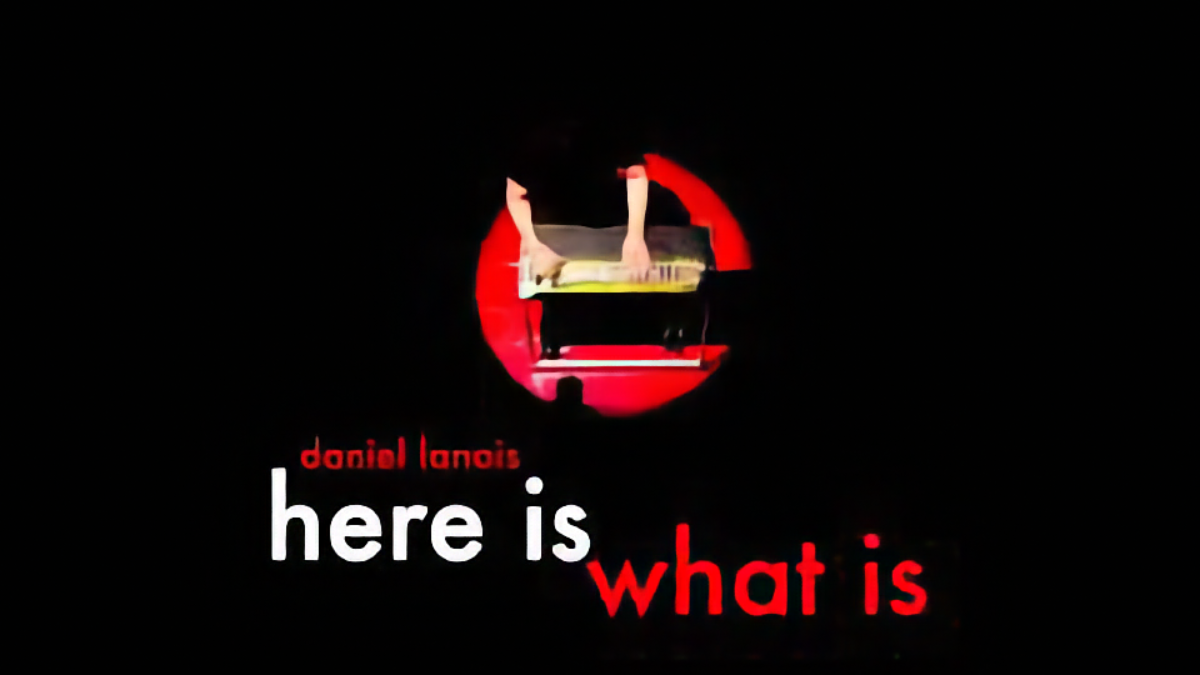
Mike also tells us something he loves that he'd like more people to know about:
I was rewatching the Daniel Lanois documentary/movie called Here Is What Is recently, and there's a scene in there where he asks Brian Eno what he thinks about the whole thing he's doing, trying to make a film about the beauty in the process of the music, and Eno says something like (I’m paraphrasing, of course):
"I think it would be more interesting for you to focus on showing how the beautiful end result often comes from nothing, or even something that is terrible at first. A seed in the right environment can flourish into a whole forest, or in the wrong circumstance will just wither and die. And if you can show how beauty can come from nothing, or things you think are garbage at the beginning, it can inspire people in their own lives to realize what they can achieve on their own as well."
I think creativity is a wonderfully amazing Human thing that everyone should spend more time investigating for themselves, in whatever way they can their own lives.
Run-Out Groove:
- The Tonearm is a reader-supported publication, free of advertising and paywalls. Our supporters help fund our writers and make the site possible. Please consider joining and helping us to continue our mission.
- Join the rapscallions of The Tonearm on our new Slack community.
- Sign up to receive our latest articles directly to your inbox in a snazzy, easy-to-read email version. Just go to your account, manage your email preferences, and flick the lever to receive The Total Tonerm.
- The easiest and best way you can help us? Please share this newsletter and our stories with your friends.
Thank you for reading! We'll see you again next week. 🚀


Comments