


George Grella is music editor at The Brooklyn Rail and contributes criticism to The Wire, the New York Times, and, fortunately for us, The Tonearm. His writing spans jazz, contemporary classical, and experimental music, critically examining works, both new and historical, by consistently asking 'what is it doing?' and 'how?' His new book, Minimalist Music, part of Bloomsbury's 33⅓ Genre series, is his most extended treatment of those questions.
The standard account of minimalist music has been written many times. La Monte Young, Terry Riley, Steve Reich, and Philip Glass form the founding vanguard, united by their rejection of serialism and European modernism, their use of repetition and limited materials, and their emergence in the downtown New York scene of the 1960s and 1970s. They formed their own ensembles and performed in art galleries and lofts, building audiences outside the established concert hall circuit. The music attracted listeners from jazz and rock as much as from classical music, and the repertoire spread largely through recordings in the years before it found its way into traditional programming. Every major book on the subject has built on that founding grouping—a coherent story until you sit with those four bodies of work and notice how differently each of them sounds.
Minimalist Music is Grella's attempt to account for that difference. The book's central argument is that what defines minimalism is a specific relationship to time—the way the music makes the passage of time audible, structural, and felt while style, harmonic language, and the density of materials vary from piece to piece and from one figure to the next. The constant is the practice of composing with and through time. As Grella puts it, "You never leave time unfulfilled." These methods have proven adaptable across jazz, electronic music, and other traditions, which is why minimalism has spread well beyond its original New York context and into a post-minimalist generation working in its tradition. The book traces the genre from its historical roots to its ongoing life and asks: when those who made it are gone, what happens next to the music?
George Grella was a recent guest on The Tonearm Podcast. Along with host Lawrence Peryer, Grella discussed his thesis and the decade of thinking behind it, the line between minimalism and post-minimalism, and a couple of detours into related assessments of Miles Davis and Bill Laswell.
You can listen to the entire conversation in the audio player below. The transcript has been edited for length, clarity, and flow.
Lawrence Peryer: Congratulations on the book.
George Grella: Thank you very much.
Lawrence: Yeah, and the birthing process, I would imagine, is a thing.
George: I like writing books. I like researching and writing books. I like getting the thing done. Now it's like I'm just trying to arrange events. The places that seem more interested in this are listening bars and vinyl shops—not bookstores. My audience is people who, first of all, are drawn to the music, and then want to read about it, not vice versa.
Lawrence: It's not dissimilar from what we ask music artists to be these days—they have to not only be the artists who create the work, but they have to become social media marketing gurus, content creators, and event planners. Every moment we ask our artists to do anything other than create art, it's a tragedy of what we're losing.
George: Yeah, it's really true. It takes so much time, and it's so frustrating, and it seems so fruitless.
Lawrence: Tell me about the thesis of the book, or at least the beginning portion—you talk about an attempt to frame or define minimalism, and this notion of marking the passage of time.
George: That is really why I wrote this book, to give that greater context. I've read all the books on minimalist music, and of course, I’ve been listening to it for decades. All these books are good—I recommend them all. But the story always struck me as a little bit off because it included music by, well, literally, Steve Reich, Philip Glass, Terry Riley, La Monte Young—this is the founding story of all the other books. What my ear was always telling me is that Glass and Reich are doing this thing, and Riley is sort of on the edge of it, and La Monte Young is not doing this thing at all. The experience of their music is so radically different. It's all great, it's complementary, but it's not the same thing.
It was the process of, "Why do I feel that way?" And trying to understand what that reaction is. It took a while, but it was really about how we experience time and how music works in time. And then it connected with this driving thing in my fundamental thinking about music: music only exists in the dimension of time, and there's so little discussion of time. That always struck me as strange because it only exists in this fleeting instant. And then I understood that while I'm listening to La Monte Young, my experience of time is that it's being held. And when I listen to Steve Reich, my experience of time is like, "Oh, I'm watching it go by." And then it was, "Yeah, that's the thing."
For me, minimalist music specifically shows you how it works with time. It may be doing other things—Philip Glass does many other things other than that, Meredith Monk certainly—but Reich is, I think, the key figure in all this because he literally shows you how music works in the dimension of time. He shows you both how music can shape our experience of time passing and how time controls what happens in music. That process of his is so gloriously sequential that it's unmistakable. He even uses the watch metaphor in some of his writing—you see it going ahead step-by-step, and it could only go in one direction because time only goes in that one direction. Other music can alter our perceptions of time—most music does. But Reich is specific: it's right there on the surface, and that doesn't make it superficial, because it is incredibly deep and profound. It connects to the nature of the universe itself. You are living in this moment of time, and here's the next one, here's the next one, here's the next one. And it helps make your memories, which are controlled by your recall of time.
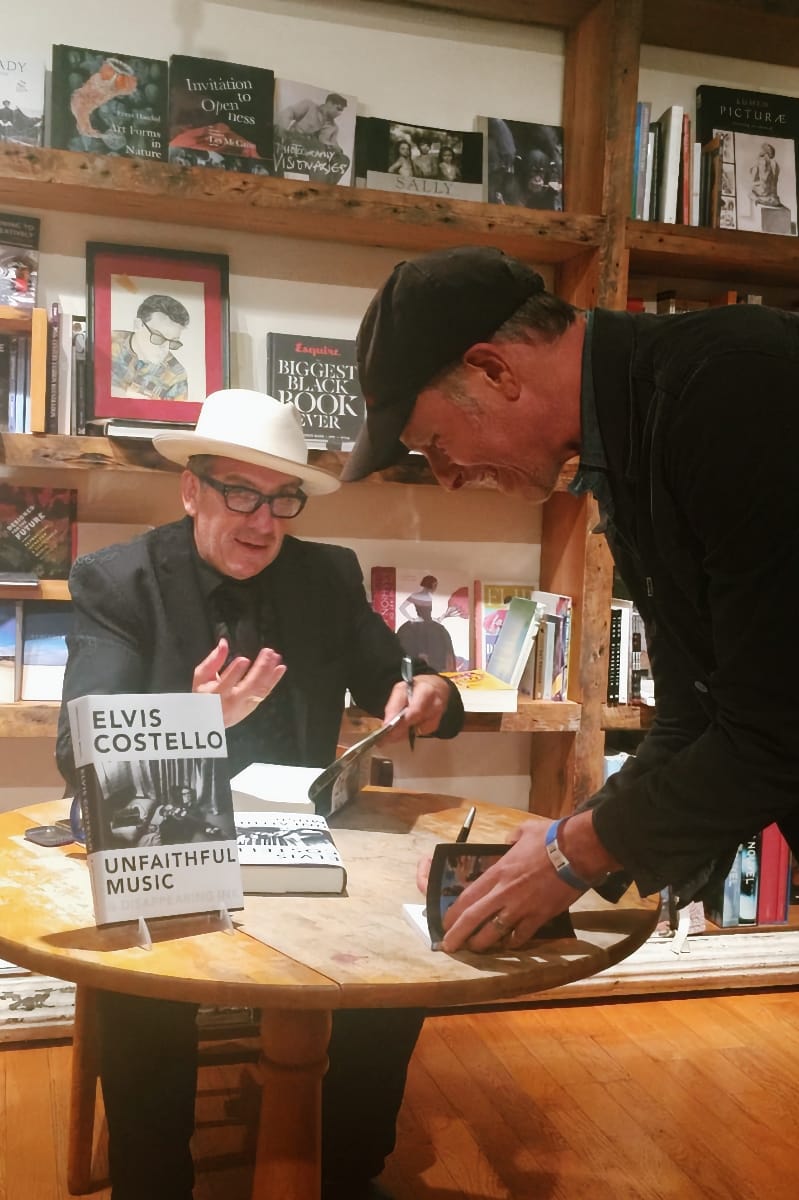
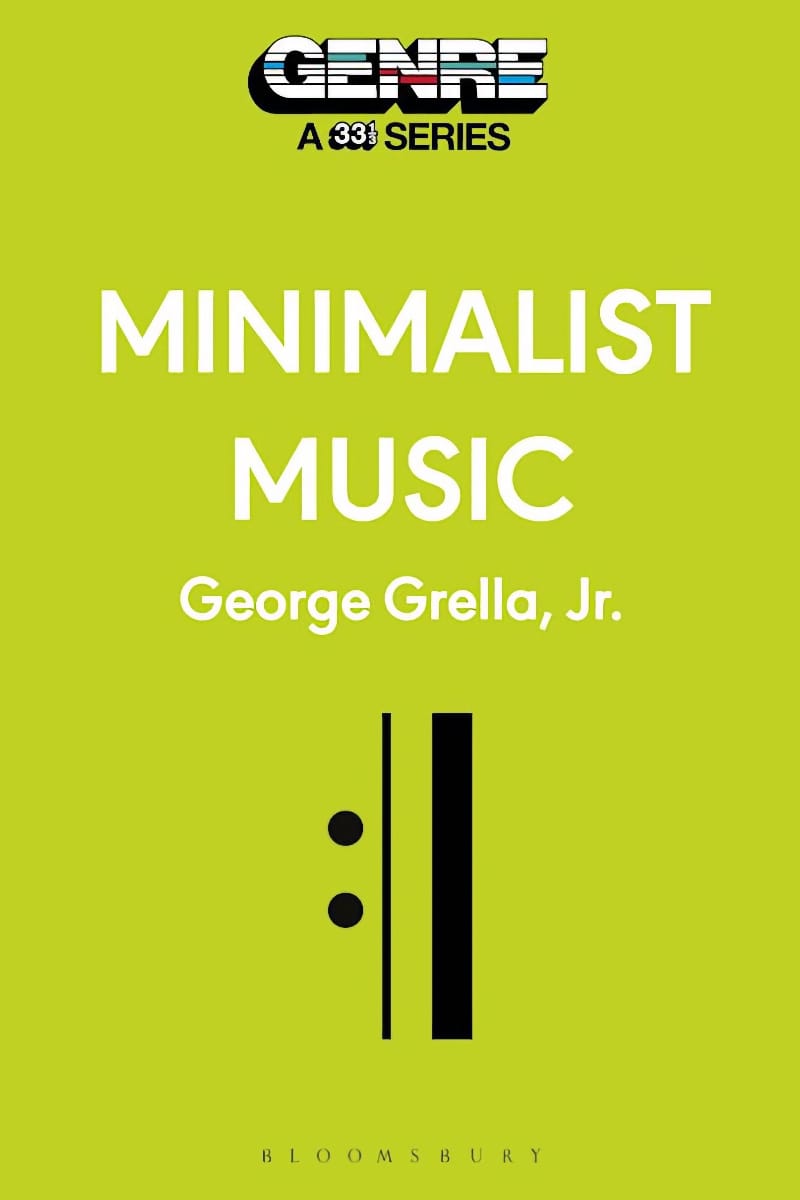
L: George Grella autographs his first 33 1/3 book, Bitches Brew, for Elvis Costello. R: Minimalist Music
Lawrence: Have you ever spoken with Reich?
George: I have not. I always have mixed feelings about talking with critical subjects. With Reich and Glass, I felt very certain about this being my idea, and I kind of didn't want them to dissuade me in any way. I am not necessarily right that there is no single right answer to all this, but the answers I had seen before did not feel right to me. When I wrote this out and thought about it, it made sense of my internal experience.
Lawrence: How long did you carry around that thesis?
George: About a decade of thinking in this way without being able to clearly articulate it to myself. The impetus also came when I read the edited collection On Minimalism by Will Robin and Kerry O'Brien. One of the things I love about that book is how it shows you how, when this music was being formed, there was so much interest in it from outside the official critical establishment—there's like a review from Glamour magazine, there was a general interest going on, which I think is culturally very interesting and profound. But that book, not only roping in La Monte Young, but John Coltrane, Yoko Ono, and some other figures—that didn't feel right to me. And that galvanized my own idea: I understood it's all instinct, in a way, and then it's like, let me explain it to myself.
Another thing I get at in my book is this complex relationship between classical music in Western history and in modern American history, and between classical music and institutions. The institutionalization of classical music after World War II was really a distortion of the direction of history. It set classical music into this kind of frozen set of ideas that had to be preserved in these institutions.
My gestation as a musician and composer went through the normal process of the European classical tradition, getting to Schoenberg and thinking, "Oh, he's this revolutionary." But then, listening to the Adorno debate about Schoenberg and Stravinsky, thinking Adorno was wrong. Schoenberg admitted in his writing that he is trying to preserve the past in the face of present developments that he feels will destroy it. Good for him. Meanwhile, it's Stravinsky who's like, "Okay, I'm finished with Romanticism—what do I do next? Let me hold some of the past up here and make something new of it." That's the revolution. And it also collided with the cultural notion that advanced, difficult things are somehow challenging to experience. Just because something sounds so appealing doesn't mean it's simplistic. It's actually harder to do something complex out of simple means than it is to do something complicated.
That's the same thing with Reich and Glass. They met at the postgraduate level at Juilliard, and they had a moving company together for a while. They were both like, "We don't want to be teaching this stuff; we don't want to make music that follows this approved consensus. We are making our own thing." The groups that they performed with were essentially the same group—when Reich performed, it was Steve Reich and Musicians, and when Glass performed, it was the Philip Glass Ensemble. They were in art galleries and museums, because that was where the venues were. They were presenting their music to the public, and that is the actual history of classical music. This distortion of the twentieth century is ahistorical.
Lawrence: So you give your framing around minimalism and music and the marking of time. But then what does that mean for its influence on jazz or ambient music? Is ambient music by definition minimalism?
George: In the book, I divide it into two different words: "minimalist," which includes Reich, Glass, Meredith Monk, Michael Nyman, and Louis Andriessen, and "minimal music." Minimalist music is a process, while minimal music is about materials—minimal materials. Ambient music is definitely minimal music because, by definition, it uses minimal materials. But minimalist music is about the process by which music works in time. And it did come out of classical music, but it doesn't have to be defined by that, because anybody making music can decide: "I want to explicitly show that I'm working with time." It's not a stylistic thing or a genre thing in that sense.
There's that phrase that chance favors the prepared mind. And Reich and Glass became the composers that they are purely by accidental discoveries. Reich discovered what happens when two tapes go out of sync and said, "Let me try and write this out—this is a phasing process." And Glass got a call when he was in Paris studying with Nadia Boulanger to do some work in a studio for a movie soundtrack, where his job was to use his classical ear training to write down what Ravi Shankar was playing.
Lawrence: That's fascinating.
George: It is. And so Reich discovers his phasing by accident, and Glass discovers that he can structure harmonic rhythm in an entirely different way than he's been doing. He doesn't have to worry about bar lines of 4/4. So he starts working on these additive lines that cycle through a certain number of beats and then repeat, and he moves them around slightly.
They were looking for something else, then they discovered these things that triggered their imagination, and then they got to work. It was these two composers, with really hardcore classical training but dissatisfied with the state of the contemporary professional field, who found a new avenue forward. Reich drew from medieval harmony and Bach. Glass loves Schubert and Bruckner, and you can hear ideas from the late Schubert piano sonatas and Bruckner symphonies in the way he works with thematic lines and harmonic movement. But classical music, in terms of history, was always music of now. This has always been the natural course of things for a thousand years.
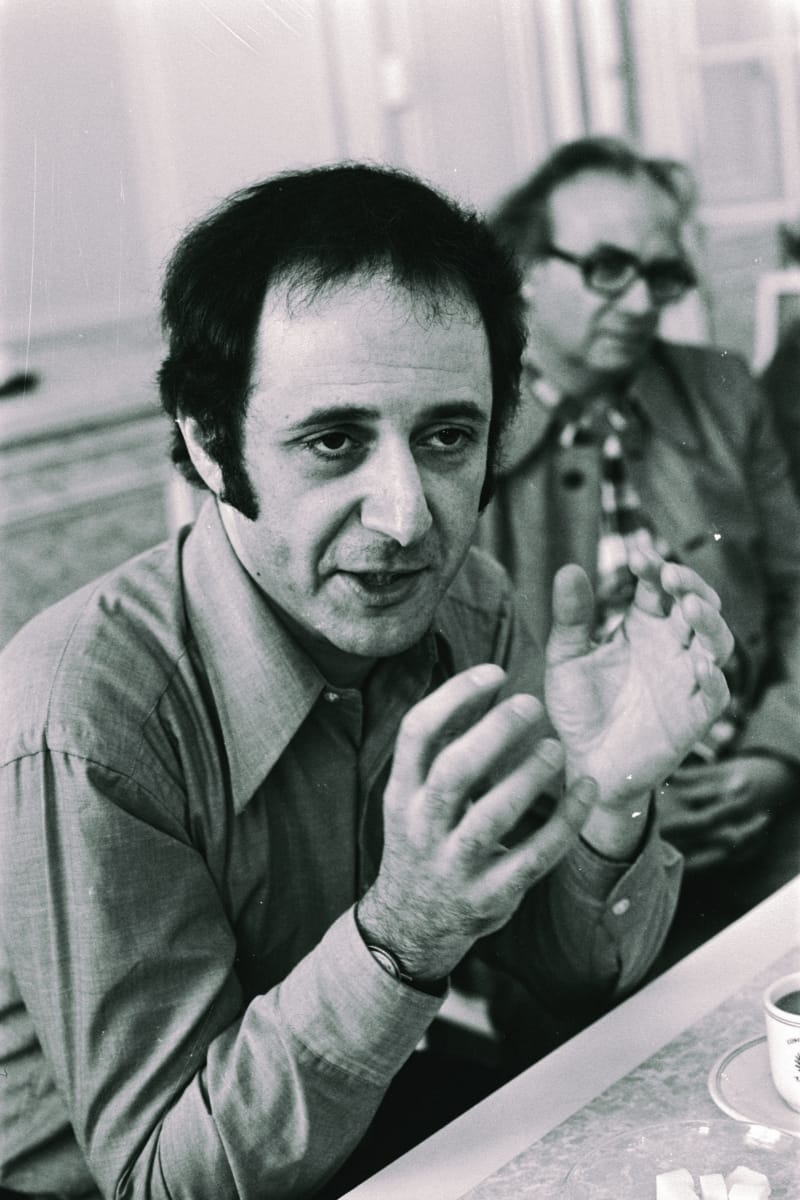
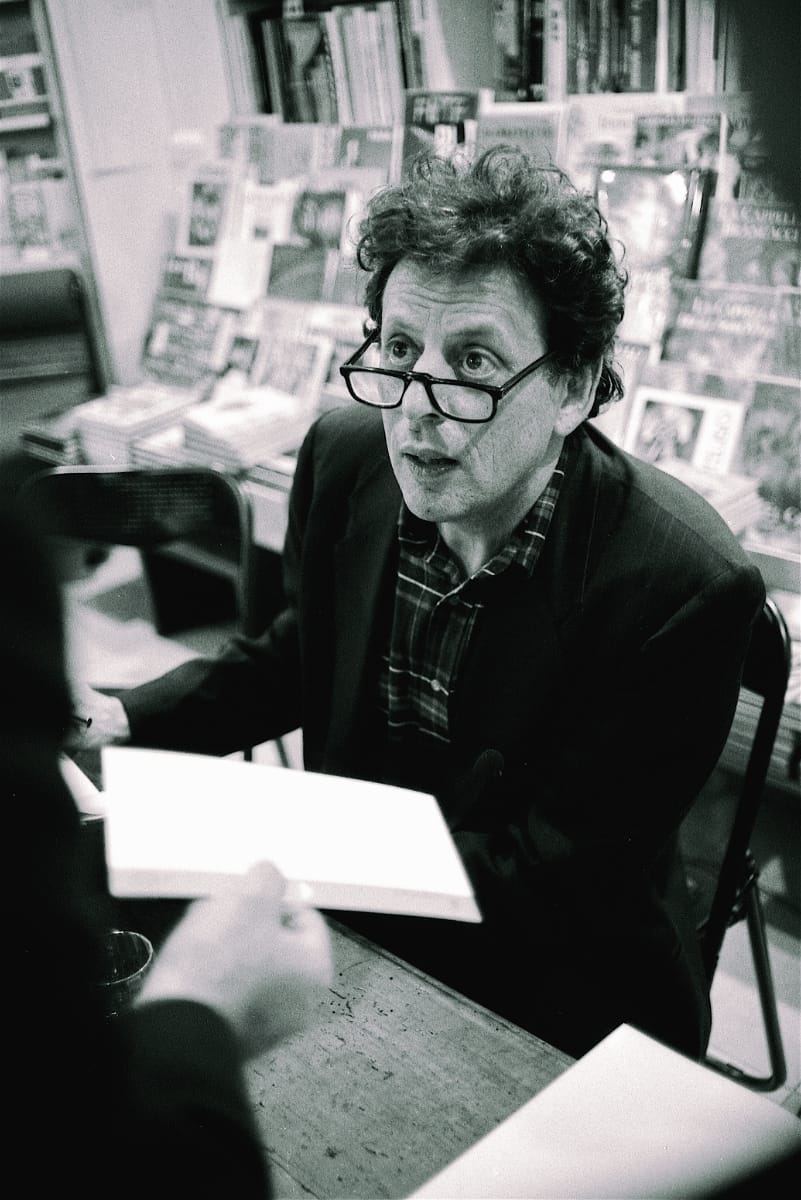
L: Steve Reich in Holland, 1976. Photo by Hans Peters for Anefo. R: Philip Glass in Florence, 1993. Photo by Pasquale Salerno. Both photos via Wikimedia Commons.
Lawrence: It's interesting—the impact of the Second World War on both classical and jazz, taking jazz out of the dance hall and putting it into the club where it becomes a studied, observed music.
George: It also becomes a unique combination of popular music and art music—bebop is like an abstract popular music. There's really no other music like that on Earth. And classical music was never meant for specialist listeners, never meant only for the mind of the composer. It was meant for audiences; it was meant to be played. Even as wild as Charles Ives is, Ives was always like, "I want to play this for people—they'll get it." [Aaron] Copland was a great modernist composer and then became a great populist composer: "Let me make something that works for a lot of people, but that's still good." There's no pandering involved, and there's no dumbing down. It's more like, let me give you a vernacular language—but put it into these forms and structures that you don't have to know anything about, but you will hear their effect. It makes me think of the show Deadwood. It's like this incredibly vulgar language in this incredibly traditional sentence structure.
Lawrence: Right. The Shakespearean sort of monologue.
George: But it speaks to you. That is one of the great parts of American culture—all we have is our own vernacular language, and we can and should put it into all sorts of different forms. You're not making anything elitist that way—this is just the way we talk, it's the way we think, it's the way we hear. And so Glass has that popular appeal, Reich has that popular appeal.
Lawrence: Something that strikes me: had there been another twenty or thirty years of his life, it would have been very interesting to see how Frank Zappa would have been received and evolved—especially his late work, his rejecting the rock band construct. I think had he lived, his music would have turned the corner.
George: That's an interesting idea. I like those pieces where he used the Synclavier to generate material, and then the Ensemble Intercontemporain and Pierre Boulez orchestrated and performed them. It's stuff where he doesn't have all the answers, but he's asking the questions. And that is the fundamental thing.
Lawrence: He's such an American product.
George: Yeah. I think Captain Beefheart and Steve Reich belong to us, and they both speak to us equally well. And Morton Feldman—his ideas about composing, the early indeterminate stuff, are kind of him working through his own experimentation, as Reich worked through phase music. And then Feldman becomes a composer in the traditional sense of notating scores, because he knows exactly what he wants. And his method—the music is not about style, but it is minimalist music. He processes time that way. He's showing you the transformation of music through time. And Reich himself is on record as saying that after Feldman died, he was looking at the String Quartet no. 2 and realizing, "Yes, he's doing what I've been doing, in his own way"—it's the same fundamental concept. Feldman is not doing anything like La Monte Young did. He's doing exactly what Steve Reich was doing. Put Reich and Glass together with the music that they drew from the past, and you have a thousand years of history in their music, especially with Reich skipping over the nineteenth century completely.
Lawrence: Now it makes sense why Kind of Blue is included in On Minimalism, because it's minimal, not minimalist. That one's the biggest stretch.
George: Yeah. Although I have a bone to pick with that, because maybe it's minimal, but it's also modal, and Miles moving to modality was incredibly important for all his music from '64 to '69—which is totally different than Kind of Blue. The best way to honor their qualities is to see what they are. Kind of Blue is sort of like The Rite of Spring—he's actually closing a door on an era, and then in the sixties he's making some of the most advanced, sophisticated, abstract music of any kind in the recorded era. The epitome of what modern jazz can be—equaled since, but never surpassed—and all because of not minimal music, but modality. His whole point was, "I'm tired of hearing the double bar at the end. I want modes because it always feels like it needs to keep moving forward, just like time."
Lawrence: Just as an aside, have you listened much to the Bill Laswell remixes of the Miles stuff?
George: That's an interesting album. I've been listening to it since it came out. Sometimes I love it, and sometimes I hate it. He very much is turning the material into ambient music. Sometimes it's great—just this minimal, clear, very light touch. But on the other hand, if you're going to do this, maybe you should give me a clearer idea of what you think of the music, beyond just "it's this groovy sound." I feel very sensitive to clarity, sincerity, and honesty when I listen to music, and especially when I see somebody perform. Not all those albums hit all three of those things.


L: Meredith Monk in Urbana, Illinois, 2014. Photo by city_of_dis. R: Morton Feldman in Holland, 1976. Photo by Rob Bogaerts for Anefo. Photos via Wikimedia Commons.
Lawrence: Your piece in your Substack newsletter, "Minimalism at the End," poses this larger idea of whether we are at the end of minimalism. And I'm really curious about how literal that concerns you.
George: That's a good question because it concerns me, but I know that I shouldn't be too concerned.
Lawrence: So you're a New York neurotic? (laughter)
George: No, it's more like I'm trying to take the long view. Anyone who loves minimalist music: you are alive in a very unique time, because this is the era in which it has been created, mastered, and is spreading. It can be hard for us to see that we are in the middle of not just something revolutionary, but also something as important and as high-quality as anything that happened a hundred years ago.
Music has not been getting dumber. Music has not been getting worse. That just doesn't happen. We have this fantastically profound, intellectual, beautiful-to-the-heart, and beautiful-to-the-mind revolution that's ongoing. But the people who made this revolution are not going to be with us much longer. This is what happens—Schubert died, Beethoven died, we don't get more. But we have a post-minimalist generation now—David Lang, Michael Gordon, Julia Wolfe—their stuff is fantastic.
No one is making music like Reich makes music, like Glass makes music, like Meredith Monk makes music. But their ideas have moved on to this new generation and are mixing back into contemporary music again, which is the whole tradition of Western music moving forward. It's always been mixing together—it just stopped for a while, and now it's mixing again. And with the music being made outside the academies, records were literally how it became repertoire. The Ensemble Modern learned Music for 18 Musicians from records because there was no score—that is how specialized music becomes something other musicians play. We're on the cusp of that happening more and more.
Lawrence: I always come back to why shouldn't a kid who's sixteen years old be able to go see Led Zeppelin music played live? That popular music exists to be performed in a sweaty, communal environment. I want young people to go hear David Bowie and the Velvet Underground. I want that music to be performed live.
George: Music making is a social activity. A CD, an LP, is a document of something that happened. When a person plays music in front of you, they're showing you what they think about something. It was thirteen people showing what they think about something when Sō Percussion and nine guitarists played Electric Counterpoint at the Bang on a Can Long Play Festival—thirteen different views at the same time. That is a social communication in a very profound sense. The albums can never replace someone in front of you, showing you, in that moment, what they're thinking. The impression live music leaves you is a special thing—you're going to think and feel things that had not occurred to you before.
Check out more like this:
 Lawrence Peryer
 George Grella


Comments