


Care for a Lucky Strike? Let's consider Punching the Clown after reading Kurt Wagner's remarks concerning the Nashville-based Lambchop's 17th studio album. Verbatim: "i'm conflicted not offering a more detailed accounting for these songs but this feels like enough let's just say i tried for simple, restrained vocabulary to get closer to a modest amount of truth through a guise of hyper-naturalism grief love and humor."
Though aurally dissimilar to their electronically grounded prior album The Bible, it's palpably Lambchop because of Kurt Wagner's anchoring voice, a wide array of talented and intuitive musical collaborators, and Wagner's abstrusely personal lyrics. Punching the Clown amounts to Wagner accompanied by banjo, guitar, and two choirs. It's a big sound with a big feel with roots in 19th-century Appalachian country and gospel. Hey ho. Do you remember when you successively listened to Black Flag and Hank Williams Jr. on a scorching midsummer day? I ask because some Punching the Clown lyrics reminded me of those good ol' days moseying around the former World Citrus Center (DM for details). The lyrics from "Just West of Nicollet" read, "I'm a human calculator/And I never make mistakes/And I've been smoking/Like a Russian cosmonaut," which is to say when punk and country coincided for me during what I've coined late-stage Cold War, I could not have imagined Lambchop liberally borrowing from my unconscious mind over the decades. Let's go.
Kurt Wagner is Lambchop's constant as both vocalist and lyricist. In 1993, the band signed to and remain with Merge Records. Lambchop resist easy categorization. While the common noun lambchop itself has two distinct definitions per Merriam-Webster, Lambchop the band are ever-defined by Wagner's singing. Via video chat, Kurt and I conversed one recent Sunday.
The transcript has been edited for length, flow, and clarity.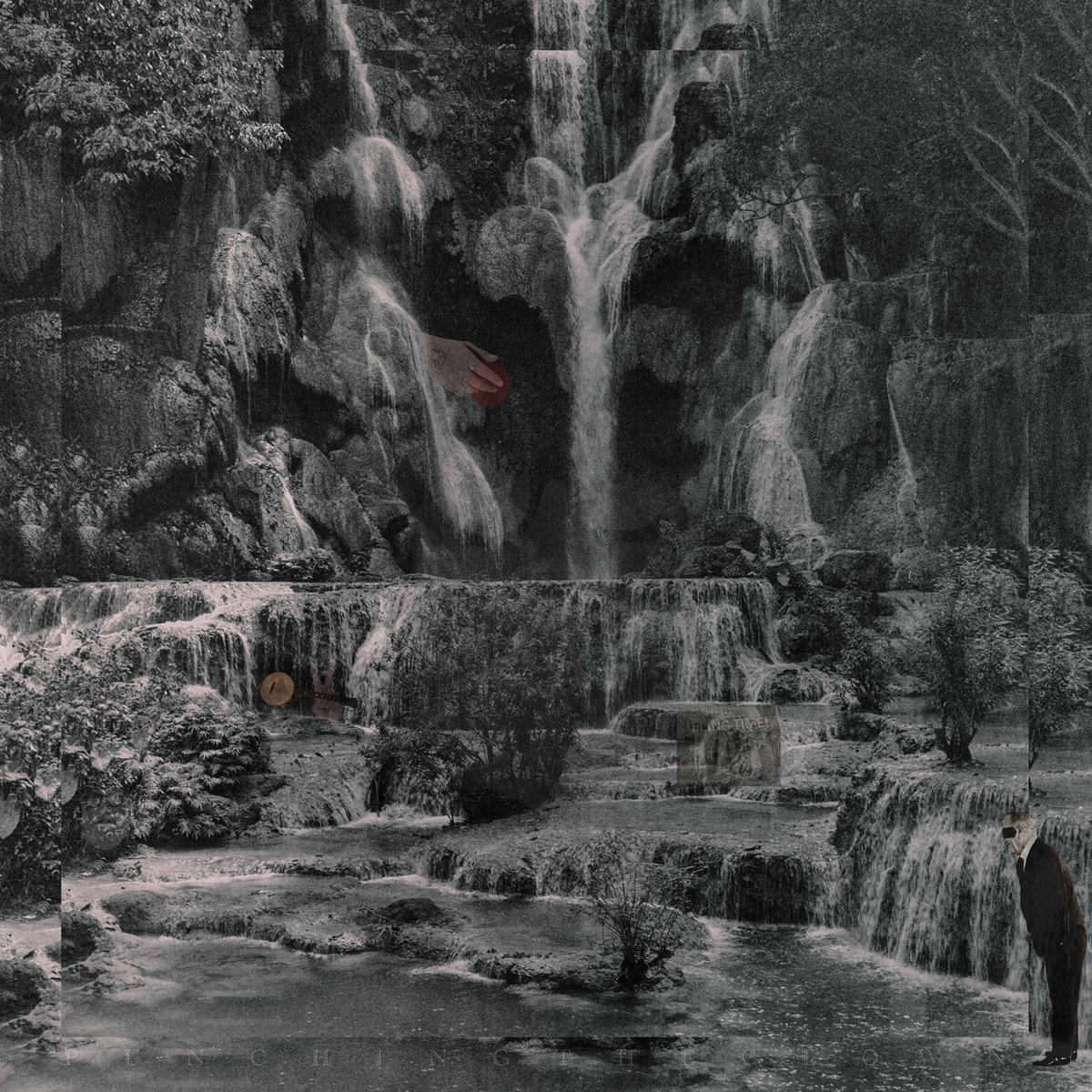
Steven Garnett: I would like you to know how I came to know your music. I think it may be indicative of exactly the type of vignettes you write. So, 1997, I was leaving the American underground noise scene—that was really a lot of what I was putting in my head, just the louder music. So I decided to do a deep dig into the early Dead. I was listening to Aoxomoxoa and Anthem of the Sun. As my name is Steven, I would listen to "St. Stephen" over and over. Lo and behold, now it's 1998. I'm riding in an Isuzu Trooper with my then-girlfriend, now wife, windows down, smoking Dunhills . . .
Kurt: Wow. Classy.
Garnett: . . . and listening to What Another Man Spills. Y'all and Morphine were pretty much my two records.
Kurt: I've got questions for you.
Garnett: Okay.
Kurt: Was the title itself something that drew you into checking it out, because you're into "St. Stephen" and stuff?
Garnett: She had the CD, and I don't think she recognized the reference. It was serendipitous, or divine, or just a great day at the record store. It was funny.
Kurt: But you recognized that, sir? You went, "Oh, I know that line," and you checked it out.
Garnett: Yes! Then, you've got a Curtis Mayfield cover in there ["Give Me Your Love (Love Song)"], so there's a curveball thrown in. Am I listening to some version of the No Depression, Americana stuff? Is there a wink and a nudge?
Kurt: It was a time, I think, where that really wasn't back in fashion, so to speak. People who love music were into that kind of stuff, but it wasn't a thing. Certainly falsetto singing was not groovy at that time—not that I could really do it well, but I thought, "Fuck it, I'm going to give it a shot." It's fun. At that time, it just wasn't happening in indie music, and neither was that kind of production we were discovering how to pull off. That was because we were in Nashville and had these things available to us that other people in other scenes probably weren't even thinking about. There was a lot of indie rock happening, and a little bit of the early stuff that would become Americana, but at that time it just wasn't that cool. We liked it, though, because we liked music—that's where we were heading.
I've gone back with the Dead since I was a kid. I saw them play their last free show in Nashville, which was a big deal for Nashville, having the Grateful Dead come there, in whatever, '70—I can't remember, early seventies. That made a big impression on me. My brother was a huge Deadhead, and I was too, up until—well, of course, now I love it all. But it was starting to change pretty fast, and it wasn't Workingman's Dead anymore, which, for me at that time, I was into a lot of that country-rock that was happening—New Riders and all that stuff. Any of the Dead spinoff stuff, anything that had Jerry Garcia playing steel guitar, I was there. I loved all that stuff.
Garnett: I recently had a conversation with an Austin, Texas, musician—Don Cento—and he made a great point: in a city like Austin, there are so many talented, gifted, nimble musicians willing to try whatever. Kurt, I feel like you've always surrounded yourself with a coterie of like-minded folks where it's, "Let's tackle 'The Hustle.'" Just a real freedom from restrictions that being a strict Deadhead, or someone who only listened to noise music, might impose. Just, "I'm down with music."
Kurt: That was our deal. A lot of it was an open-door policy with Lambchop—if they could hang, and were into the kind of songs I was writing, we had a ball. What I would try to do is consider what they brought to the band and then enhance it in some way. Initially, I tried to handicap it by getting William Tyler [a frequent Lambchop musician] to play the organ instead of guitar. I was trying to stay away from whatever it was they were facile in, and focus more on the fact that they're just great artists, and whatever they play, they're going to bring that to it. They're also gifted enough to just say, "No problem, yeah, I'll play banjo."
Garnett: That's helpful. Another anecdote: I have a dear friend, Pete, who lives up in Waynesville, North Carolina. As early as this morning, we were texting back and forth, and we wondered if your ears were burning, because discussing Lambchop records has been like us discussing how our folks are doing, or what spiritual epiphanies we've had, or how the car's running—over decades. It often comes back to, "What'd you think of that Lambchop song I sent you?" Anyway, there's a longevity to my relationship with your music, and with Punching the Clown you lay out the language pretty clearly about having heard some music while you were driving around, and then came to find out it was lined-out singing.
Kurt: Actually, it wasn't. I was searching for one thing, and that led me to discover this other thing, which was equally intriguing, and very much about the minimalism of what I was trying to go about—how to present songs simply, with just voice and an instrument.
Garnett: Can you drill down on that a little bit, please? The simplification of it, the minimalism.
Kurt: Yeah, because I look at this as a record about songs and how to deliver them simply. That's what I like about songwriters early on—they'll just sit with an instrument and write a song, and from that they can determine whether or not it's good. But if it's good, it should be able to be presented in as simple a way as possible, or in the most ornate way possible. I've done a lot of ornate. So discovering this thing, and it moving me the way it did, fit in with this idea that there's a minimalism to it—you don't need a lot of stuff.
Of course, one would argue a choir is not minimal, but if you think of it conceptually, it's just an instrument in itself. People use machines to sound like that, or you can use the human voice, which is something I was also struck with in lined-out singing—there was an unvarnished quality. These weren't trained voices; these were people singing from their heart, enjoying what happens when you do it together, and that feeling you get. That's powerful stuff. I wanted to explore that, and I thought the songs I ended up writing translated pretty well to this idea.
Garnett: I've been listening to quieter music lately—a lot of choral pieces, ancient stuff, and also lots of hard bop. Neither was in my vocabulary twenty years ago. Do you think Punching the Clown was a logical extension from The Bible, which was less cluttered with voice and more a bed of sonics?
Kurt: It was pretty dense stuff, but it did start to open up that notion, particularly because we were adding choir into some of it, and I developed a relationship with this fellow, and we did some stuff live together. I went and studied a lot of what he does; he's part of an a cappella group that tours all over the world, and they do a repertoire that's varied—straight-up classical, experimental, sometimes kind of hokey. But it's what it is. I learned a lot from him about singing in general, and what's involved in the way he approaches it.
One of the things we did to soften that element, as we added another singer, was to bring in someone with a very ethereal, almost spooky, early vaudeville-style voice. His name was Randall Throckmorton. Putting Randall in the choir started to temper that a little and make it feel more real to me, as opposed to just perfection versus imperfection, which I cover a lot of ground on. It's a weird idea.
Once I was in Prague, not too long after he made this thing, and I was walking around in a store, and there was this crazy music going on—I swear it was a choir and a banjo, singing in Czech. I was like, "What the fuck?" And it turns out this thing's been going on all over the place, and people find their way to it. I don't know why they had a banjo in Czechoslovakia, but great. It was also the simple accompaniment to this thing, and they were doing old gospel, chain-gang kind of stuff sometimes. It was very interesting.
Garnett: I like that. That's a very liberal appropriation, if it was American chain-gang music.
Kurt: Why not? I think these were spiritual people who were moved by the same things. Spiritualism gets overshadowed by the religious aspect of a lot of choir stuff, but spiritualism is a universal thing. It has no greed or whatever you want to call it. It's just human. It's natural.
Garnett: I concur with you, and I may be even a little more dogmatic about it. I wish the broader spiritual search was more widespread. I think that's where one gets insight into what's real. Maybe, to your point about the intimation that perhaps there are aspects of you that are imperfect, even in voice, yet you surround yourself with others, you have something complete.
Kurt: I truly think, in order to accomplish that, I have to go about it in a natural fashion. There has to be a familiarity with whoever else I'm working with that goes beyond just, "Hey, come on in and play on my song." There has to be some understanding of each other as people, and that brings out those kinds of things more naturally, more organically. We're just enhancing that idea.
Garnett: So I had a cool conversation with Matt Hinton, the documentary filmmaker who did Awake, My Soul. It's about Sacred Harp, or shape-note singing. I asked him if he heard the new Lambchop single. He said of your music that "he's doing his own thing, but you can take it back to some foundational Appalachian music," which of course you referenced in the publicity notes—which again takes it back to the simplicity of storytelling, and what I detect in your writing: imagism; very small portraits. William Carlos Williams, maybe fleshed out a little more—maybe we actually smell the breath of the person who's been drinking Skol vodka, paying the cashier. Just the simplicity of telling a story—you did it on Nixon, you've done it all over the place.
Kurt: Yeah.
Garnett: I really like what you're reducing Punching the Clown to. This is only meant as a compliment, taking and simplifying. I wanted to know a little more about what this would look like on the road. I know you're going to play some shows in the States, and then it's over to Europe for a stretch, and then bring it back after.
Kurt: One thing I wanted to mention before answering: to get the full picture, you can listen to the single that was chosen—not by me—but in order to understand the full range of what the choir is, I think we designed this record to be a thing listened to as a whole. I know a lot of artists say this, but the choir's power, its range, reveals itself throughout the record until, in the end, they're completely featured. That was absolutely by design. The whole track listing was created before we recorded a note, and we adhered to that, so we knew what we were doing the whole way through. It's a fairly unique way to go about things, having this overarching idea, which I did for this one.
So, back to your question about how I'm going to pull this off live: it goes back to the very first thing we were talking about—these are songs, and songs can be presented as simply as a guitar and a voice. In many instances, that's what we'll do, and in others, when the situation allows, we'll try to enhance it in different ways. That's why we're starting out in Minneapolis—we just did a show where it was just Andrew [Broder] and myself, and then two other voices: Alex Sauser-Monnig, from Mountain Man and various other things she does, and Randall, with that interesting voice. It was like Crosby, Stills, Nash and Young—a guitar, a bunch of singers—and it was great. It translated fine; it was in a supper club that sounded amazing. We're going to use what's available—there are lots of friends there, people who also participated on the record, and each show will be different because of that.
In New York it'll just be Andrew and me, and then off we go to Europe, where for the most part it'll be just me and Andrew, with some choir action in London—a full choir there, since they live there and it's easier to pull off without a lot of us.
Because they are songs, and that's the focus from the jump, I have no problem presenting them in any of these ways. The trick is trying to present it in a way that's not just singer-songwriter—that would be fine, and maybe it will come across that way to people, but I'm trying to create a space on the stage that's more than that. There's also a sort of casualness in the way we present it, but not the normal "play a song or two, tell a joke, tell a story, play some more" kind of thing. I don't know what it'll evolve into, but conceptually I think it's going to be casual in that nature, but not necessarily the standard way.
Prior to this, when Andrew and I did The Bible, it was just him on piano and me singing. We did it hardcore style—we didn't stop, we just went from one song to the other, and next thing you know it's over. It was intense, man. People were trying to clap and couldn't figure out how, but it was ultimately satisfying for everybody involved, including us, which I think is the goal. It's been cool. This time in Minneapolis is allowing me to refine what I've got in my head a little bit and see how it works, knowing full well we'll break it all down again and be traveling around Europe doing these shows with just him.
Right now I'm designing a kind of hillbilly stage set that really just involves a clothesline and clothespins—that's our only stuff. I'm going to use a microphone stand to create a clothesline. Andrew and I talk a lot when we hang out and play music anyway, so we'll probably keep doing that. We just won't be addressing the audience in that way, only with the music.
Garnett: Since you took The Bible straight through—I've seen live footage of you all doing that with the piano—but you talked about doing it straight through for Punching the Clown too.
Kurt: Flat Duo Jets. They never stopped.
Garnett: Did you just say Flat Duo Jets?
Kurt: I did.
Garnett: I loved those guys.
Kurt: Their show was just like that—nonstop. Fucking fantastic.
Garnett: So I guess Punching the Clown would lend itself to just following the album sequence—whatever is maximalist at the end is maximalist at the end.
Kurt: Even that we've fiddled with a little bit, because the reality is Andrew has to tune his guitar to these weird tunings. We're working all that into it. So what do we do if we're not telling a story? How do we deal with that weird, awkward moment? I love that awkward moment, but I don't think we get a lot of it. I'm trying to figure out ways to distract your attention with something else—whether it's me hanging my song on a clothesline or walking around to get a drink of water, I don't know. There'll be something going on to focus on, so it's not just us staring at each other going, "Yeah, here we are."
Garnett: I like hearing this because I like hearing how the entire piece of art is created. It's nice for you to be that forthright about it.
Kurt: That's it for me. What else have I got? What am I going to look at, how many likes I've got? I'd rather just focus on making things that are cool, that I feel good about, and that maybe are interesting, and that extends to any aspect of this whole record thing. I'm trying to make something I can be proud of, as opposed to ashamed of, and I don't want to waste people's time. But nobody knows what to do with that—the way things are now, it's like it's all laid out, this sort of thing you have to do when you put a record out. That's all fine, but I don't have that ambition anymore, and I don't think I ever did, really.
I don't really care about the likes. I'm off social media, and I'm a happier man for it. I just want to focus on making things. The trouble is we just don't know what to do with them once they're made. They don't really fit in, and that's going to continue, because I guess that's always been the case in some aspects of what Lambchop's been all along. We didn't get into this knowing it was going to be a thing—we just wanted to make the next record, and that's all I want to do. I don't do it for money anymore. All the money goes to making another record, and that's the way life is right now—there's no money to make a living at it anymore. Good thing I'm almost retired. That's a luxury a lot of people don't have, but everybody figures out their own way, and music will continue on. It's going gangbusters—young people are making music all the time, and it's amazing.
Garnett: I'm grateful for your time today, Kurt. It'll help me listen to the record differently. I wanted to let you know I listened to it sequentially, several times through, at high volume.
Kurt: Good. Yes.
Garnett: You're laying the art out, and people can do with it what they wish.
Kurt: Absolutely. I think it rules either way, any way you want to go about it. It's really about you wanting to receive it as a listener. It doesn't mean it's bad if it's not moving you—maybe it's not the right moment to listen to this kind of stuff. However it floats your boat. I'm not going to tell anybody there's one way to do it, and they can hate it—that's entirely possible, because it is pretty out there. But I do think it's worth giving a chance. That's all I really hope for: just check it out.
Check out more like this:
 Meredith Hobbs Coons
 Steven Garnett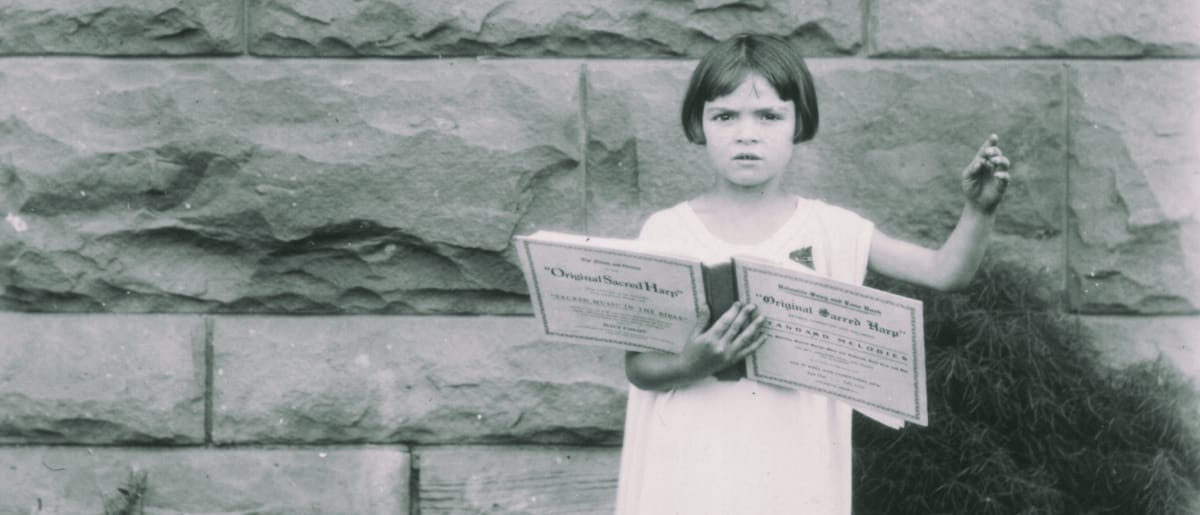


Comments