


Matt Hinton's Awake, My Soul documentary, co-directed with Erica Hinton, first aired on PBS in 2008. The film explored American Sacred Harp singings across the South and the art's origins in New England. Is this new to you? It was to me. Sacred Harp singing is religious music, sure, but, akin to jazz, architecture, or baseball, it is worth familiarizing oneself with even if the names and numbers get busy.
Hearken to A.D. 2008, when PBS was a common cultural trough, remarkably distant from today's streaming services and sequestered American experiences. This year Hinton's selectively screening the film across the nation, maybe even in your hometown.
Upon learning of these screenings and viewing the remastered and re-edited film, I was connected with Hinton after he'd spent two gloriously busy days attending Sacred Harp singings in Alabama and Georgia. We discussed some overlapping sonic, personal, and professional experiences. He learned I knew a range of sacred music and that I taught. I learned he knew a range of sacred music and that he'd taught. Aspects of our conversation drifted into various thought tributaries, including film restoration, Gothic American literature, and the Louvin Brothers. We jawed for nearly 90 minutes. The conversation has been edited for length, clarity, and flow.
Garnett: This is roughly the 20th anniversary of the film. Are you going to take it to cinemas?
Hinton: That's right. We've got six cinemas right now, I think, that have picked it up, and we've got another 10 or 15 we're just trying to work out the scheduling for, so it'll be in New York, LA, and all these places. Portland and Seattle. And so we wanted to go ahead and announce what we could announce. I'll be sending out the other dates soon.
Garnett: So I received the film, and I immediately viewed it.
Hinton: What did you make of it?
Garnett: One, some of the things I'd read on the Awake, My Soul website spoke in terms of technical restoration, and perhaps some additions to the audio, maybe even some more contemporary footage, would be notable.
Hinton: There's no contemporary footage at all. It was all shot before 2008, for sure. Maybe 2007.
Garnett: The fidelity was outstanding. I was taken with Mr. Anderson. He was 90 then.
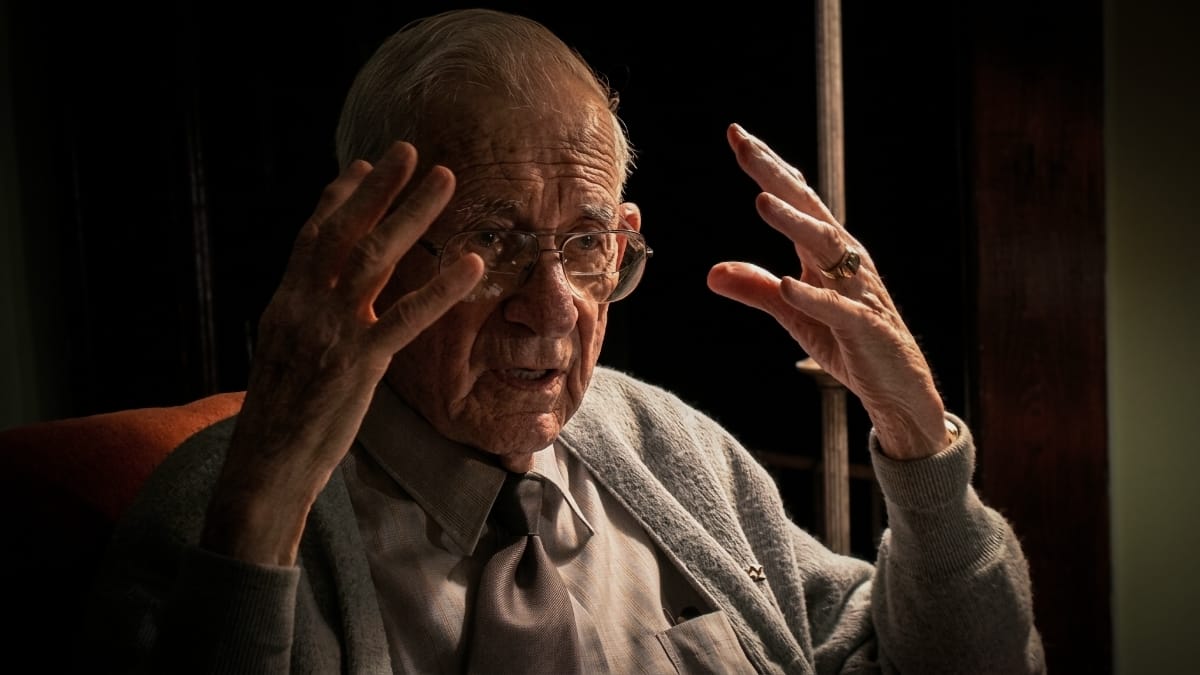
Hinton: That's Mr. Hamrick. He owned Anderson's Jewelers and bought it from Mr. Anderson. He just kept its name. He said people always called him Mr. Anderson. He never corrected them, but his name is Raymond Hamrick.
Garnett: All of it was very strange to me, but as I watched Mr. Hamrick, I saw that he made very clear, in lay terms, his intellectual understanding of this particular form of worship.
Hinton: Mm-hmm.
Garnett: And seeing him in the church and just seeing him navigating and young people talking to him or singing alongside him, I just thought there was a sweet spirit about him, but I thought, too, he's exactly the kind of guy who can put back together an old train conductor's watch. He's methodical in explaining shapenote singing. I don't fully grasp the mathematics of it. It kind of reminded me of Shaker music. What I really liked about it was the energy and enthusiasm, as if the Spirit were moving through the space. I like Hildegard von Bingen and Anglican hymns. I heard some of that.
Some of the sacred hymns, sung by congregational family members or not, remind me of bands with blood harmonies, like the Kirkwood Brothers from Meat Puppets, or, going back, the Everly Brothers.
Hinton: Or the Louvin Brothers! They grew up hearing Sacred Harp. And I always say, and it's sort of half facetious, but if it weren't for Sacred Harp, you wouldn't have the Louvin Brothers. If it weren't for the Louvin Brothers, you wouldn't have the Everly Brothers. If it weren't for the Everly Brothers, you wouldn't have the Beatles. Therefore, if it weren't for Sacred Harp, you wouldn't have the Beatles.
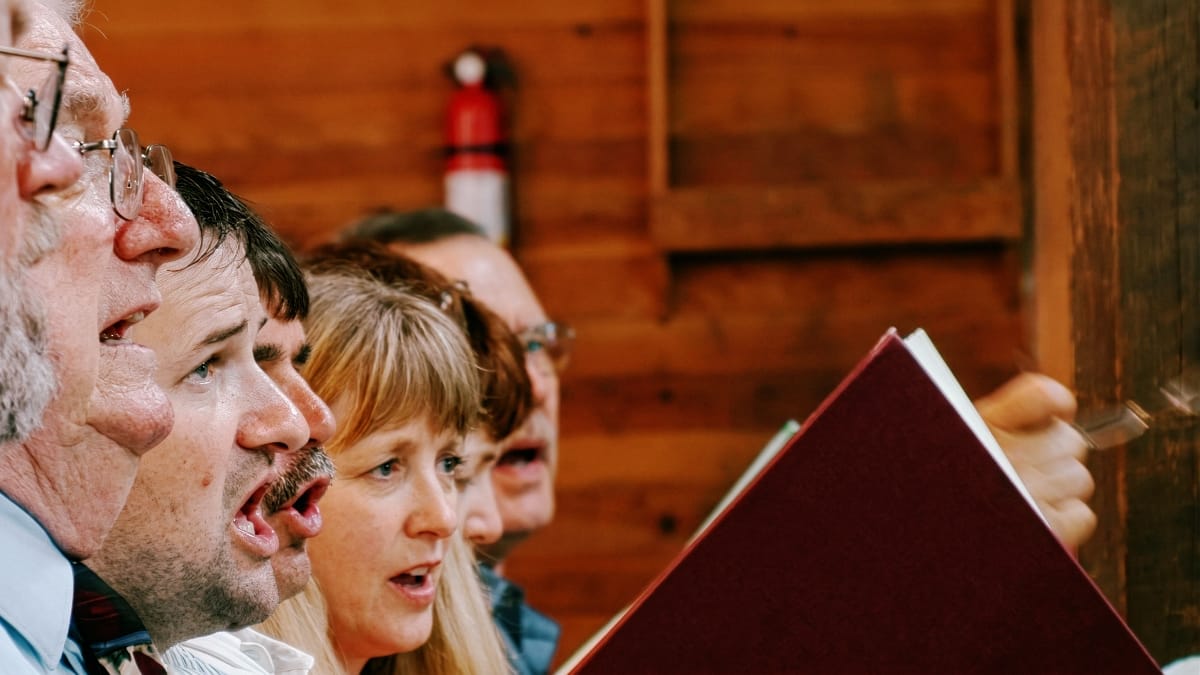
Sacred Harp singing is for voice only. It's coed. The vocalists keep time and are full-throated. The music is rhythmic, undulating, precise, and chock-full of wonder and physicality. Though Hinton's film is regionally specific, Sacred Harp singing can be heard around the world. But it's not at its best if performative; it's truly congregational. For the uninformed, as I was, the film will spotlight authenticity in the community concerning this expanding (or revived) sacred style. Hinton remarked that Sacred Harp singings across the US might include a choir of humanists who appreciate the form, less so the intended function. To such he certainly didn't recoil. It bears noting that appropriation recently became a dirty word with malicious subtextual underpinnings. If that's true, then quietly attending a singing at a local church might better suit all. In such a case, one might sing Hinton's own composition, "Clayton," from the 2025 edition of New Songs in the Sacred Harp.
Garnett: I have friends in Atlanta who attended a singing as spectators and remarked upon the volume and emotions. The Sacred Harp lyrics seem to me [based on film viewing] rather like personal testimony and standard Biblical content. All the songs are in the hymnal.
Hinton: That's right. When the book was originally published in 1844 by B.F. White, his intent seems to have been for it to be as broadly useful as a hymnal as possible, so that any church could buy into it. Now, granted, the churches he was conversant with at the time were probably Baptist, Methodist, or Presbyterian, and that's probably about it. He was from Spartanburg, South Carolina, but moved to Hamilton, Georgia, which is in Southwest Georgia. He seems to have avoided any controversial theological commitments, so there's nothing about infant baptism, not that I can think of any, offhand, but that would be the kind of thing that he would have avoided in all likelihood.
There are people who, in the present day, would characterize these texts as quite strident if they saw them. I think most Christians throughout history would find it altogether recognizable as the Christian texts they're accustomed to. And certainly, a lot of them are familiar outside the Sacred Harp anyway. And to be clear, someone who writes hymns is really just the person who wrote the words; the tune is a different thing from the hymn. So John Newton, for example, who wrote "Amazing Grace," would never, in his lifetime, have heard the tune we think of as "Amazing Grace," which, as we mentioned in the film, is called "New Britain." And that was originally published sometime in the early 1830s, but the first time it was paired with that text was 1835 in a book called The Southern Harmony, which was published by B.F. White's brother-in-law, William Walker, who is mentioned in the film.
Again, people with a more secular background might find some of it to be rather hair-raising. But I would say, in general, it is pretty straightforward Christian hymnody, though there are some occasions where it goes beyond sort of typical hymn writing that you would find in most hymnals, to stuff that's maybe more searching in a way, and certainly a little bit more pessimistic, perhaps.
That's sort of unusual, I think, for the way a lot of people understand hymns to function. There's a song, for example, called "Mear," on page 49 of the book, and it begins by asking whether God will forever cast us off. And so, ordinarily, you would expect that by the end of that, you would get the answer, "No, He will not forever cast us off." But in this case, it ends "no prophet speaks to calm our grief / but all in silence mourn / nor know the hour of our relief / the hour of thy return." And so it doesn't give you the kind of answer that you yearn for. But, you know, that's how a lot of the Psalms are. Sometimes Psalms just leave you in sadness for a bit.
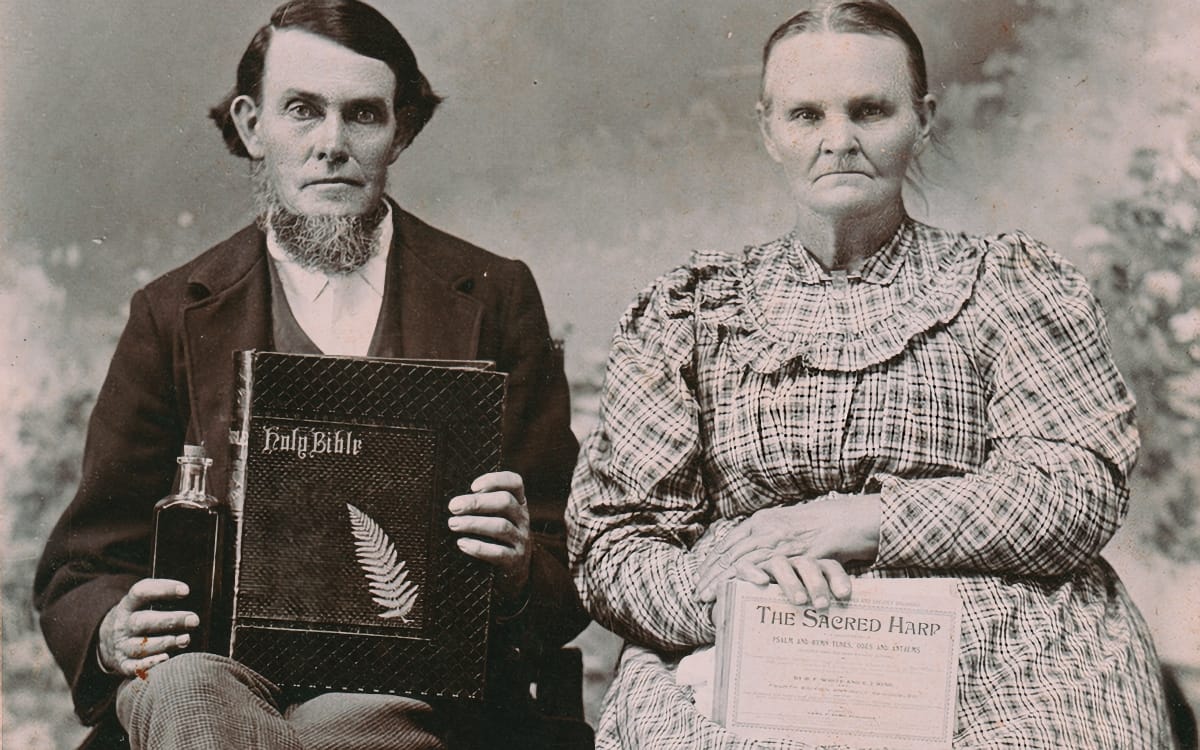
Per the Awake, My Soul website, "The events, called 'singings,' emphasize participation over consumption since they are not generally performed for an audience. Sacred Harp singers begin each song by intoning syllables which are represented by specific 'shapenotes' in their hymnal. To the casual observer, it is some foreign, unintelligible language, but to the Sacred Harp singers, it is the key that unlocks mysteries: songs of both beauty and sorrow, of life and of death, songs that cause feet to stomp and tears to flow, often at the same time."
Hinton: When we released the original film, it aired on PBS, which was great, but it was definitely more of a monoculture in those days, such that if something aired on PBS, you could be pretty sure that a fair number of people would see it. So that was good, and that was a good time to release it. On the other hand, it was the era of standard definition, and high definition didn't become ubiquitous until around 2007 or 2008, at which point our film was done and therefore immediately out of date—not in the same way that something on 16-millimeter film was. So after that point, I was disinclined to try to get it out on streaming services, because I just didn't feel like it was putting our best foot forward, or putting the film's best foot forward. And after a while, I determined, okay, I think maybe the technology will advance to the point where we'll be able to up-res the film to high definition. And sure enough, things have gotten to the point where they are satisfactory.
Garnett: Do you have these editing skills yourself? How'd you rework the film?
Hinton: We had a post-production facility handle things like de-interlacing, which is too boring to even talk about; it's purely technical. Ours was more on the creative end. But the question was, as soon as I felt like the technology was ready, could I get the film, the content off of the computer, the 2004 Mac Tower, that I had edited it on, back in the day. The footage had been on various external hard drives, but the Final Cut Pro project, in the editing software, was on a computer that would not stay on for more than about five minutes at a time. The fan would start spinning really fast, then start shaking, and then just shut off before I could get the project file off that computer onto a hard drive. Eventually, it stayed on just long enough to do that. It was an awful lot of work to get it into a form that a new computer could look at.
Once you're doing this, it's like, well, why wouldn't we re-edit a little bit? One ironclad rule I've discovered is that the instant you finish the film, there's no going back. And the instant you do that, people reach out to you and say, "Oh, by the way, I've got this cool thing that was my grandfather's." Raymond Hamrick gave me all of his reel-to-reel recordings of him recording his own compositions. Nobody was giving us that stuff beforehand because they didn't know what we were up to. I mean, they knew we were making a film, but I assume they didn't think it would be much. We had tons and tons of new footage, and sometimes new understandings—why wouldn't we try to improve this when we could?
The revised film includes much more archival material. There are a few things that were taken out from the original film, not that much. There's extra interview footage. There's more Raymond Hamrick in this version than in the original, because who could possibly have too much Raymond Hamrick?
There was, like, another guy we didn't use at all in the original version because the audio wasn't up to snuff. The microphone wasn't working that day, and the only audio we had was from the camera, which was 10 feet away, in this large, boomy room. It was terrible. It was unlistenable. Audio technology has improved to such a degree that the guy who mixed it, Matt Goldman, worked some magic. He made it sound like that guy was speaking directly into a microphone right here. It's just ridiculous.
Garnett: For a sonic experience, maybe somebody sees the film because they just dig music, and they're not even sure what they're going to see. They're going to hear an extraordinary live music concert recording.
Hinton: I wouldn't call it a concert. It's more like a field recording than anything else. But I think it's very high quality, and I'm pleased with the mix and so on. Here's the other thing: one of the reasons we wanted to re-release this is that Sacred Harp singing has really grown, has really expanded its reach around the country and indeed the world. And there are lots and lots of singers who probably have never even heard of this film, much less seen it. And so there's a new generation of people we've heard from who are interested in seeing it now, having not been able to see it when it originally came out, because they didn't know about Sacred Harp or whatever, or weren't watching PBS that night.
Some of the screenings that we're doing will just be the film. For some of them, I will be present, or my wife and I will be present, whichever the case may be, to do a director's Q&A afterward. And then, for some of them, we're going to involve the local singing community in whoever's town it's screening in, to do a demonstration singing after the film, and maybe even a short singing workshop or something like that. Because when you see it, you can't help wondering what that's like in person. It really is a different experience. There's through a mirror, through a glass dimly, with the recording. And then there's being in the room with it happening. And then there's standing in the middle of the square [a sort of conductor's space] while it's happening. And those are three incredibly different experiences.
Every now and again, an interview subject turns the tables, curious, I suppose, because of my horn-rimmed glasses and sonorous voice. He was intuitive, and I’m no liar. This is where our knowledge of Gothic American literature comes into play.
Hinton: And you teach?
Garnett: Yes. Wilson's translation of The Odyssey, Ovid, Shakespeare. Standard. We get them researching and working with databases, and we practice, you know, culling errant and biased sources. Also, avoiding the pitfalls of letting a machine do the writing.
Hinton: I used to teach a humanities class for high school–aged homeschool students. About a week and a half ago, I was at a Sacred Harp singing with a guy who lives in Kalamazoo, Michigan. The Scarlet Letter came up. And I asked him if he had read it before, and he had not. And I remarked that, when I first read it, it was taught in a way that was wrongheaded. I came to understand it was totally the wrong way to read it. I mean, that in my estimation. And he said, "Oh, well, I'm going to read it." And people say that, and they don't. But this time he did.
He and I got on a phone call and talked for an hour and 45 minutes about the novel, and it was so gratifying. Because I haven't taught that in a long time now. And I don't know if you've messed around with that book before, but it's so much better than maybe whatever you're thinking. If you're thinking that Hester Prynne is the protagonist, then it's worth rereading it.
Garnett: I read it and thought, "Let's not be too quick to decide who's right and who's wrong."
Hinton: [In The Scarlet Letter] Dimmesdale is the minister that she [Hester Prynne] engaged in this illicit relationship with, and Chillingworth is her husband. Chillingworth sent her across the ocean, ahead of him, and he seemingly got lost at sea—only he didn't. And therefore, the plot thickens. It's really a story about sin and redemption, and the spectrum of law, with legalism on one side and antinomianism on the other, with different characters representing different aspects. And is there a way to strike a balance? And is there a point at which the law and mercy touch?
Garnett: You've drawn such a conclusion?
Hinton: You didn't call me to talk about The Scarlet Letter.
Garnett: Well, I actually was optimistic that there'd be a lot we could talk about!
Check out more like this:
 Lawrence Peryer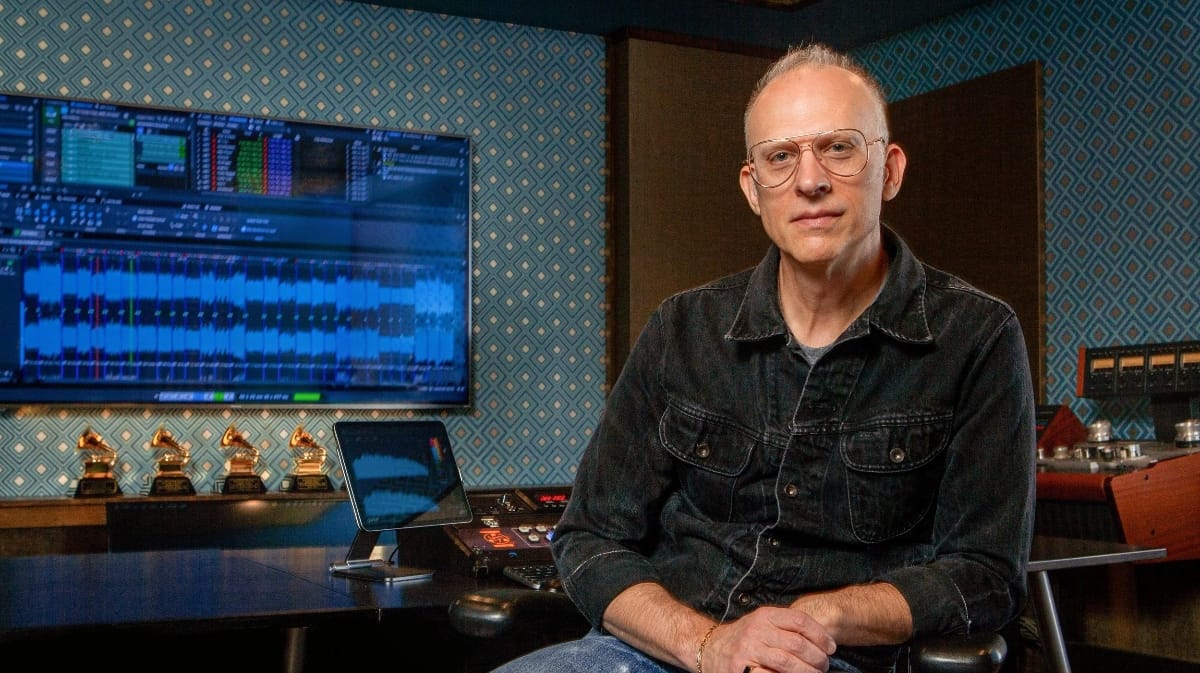
 Steven Garnett


Comments