


Now Playing on The Tonearm:
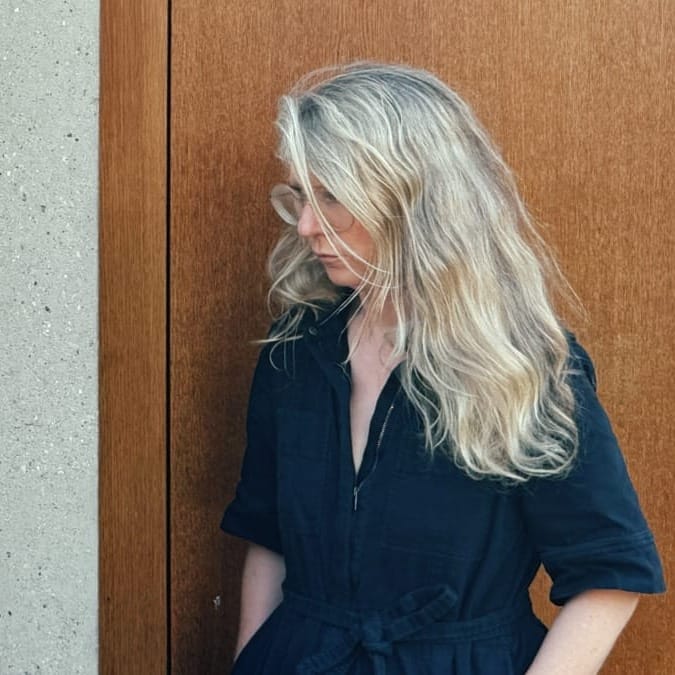
Félicia Atkinson — A Voice in the Shadows
The French artist and Shelter Press founder discusses her live score for Les yeux sans visage, the trial of Gisèle Pelicot, improvisation as a form of survival, and the politics of touring the US. Interview by Carolyn Zaldivar Snow.
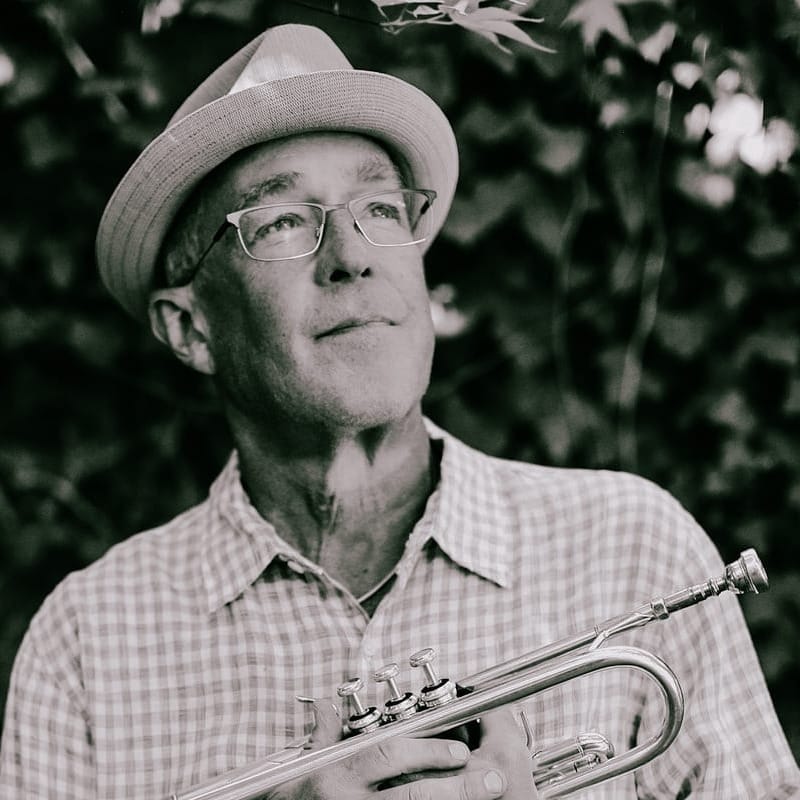
Dave Douglas — The Sacred and the Unfinished
On 'Transcend,' his second record with the GIFTS quintet, Dave Douglas reflects on Ellington's Sacred Concerts, the slab paintings of Jack Whitten, and the moment Booker Little broke the dam for a generation of trumpeter-composers. Interview by Lawrence Peryer.
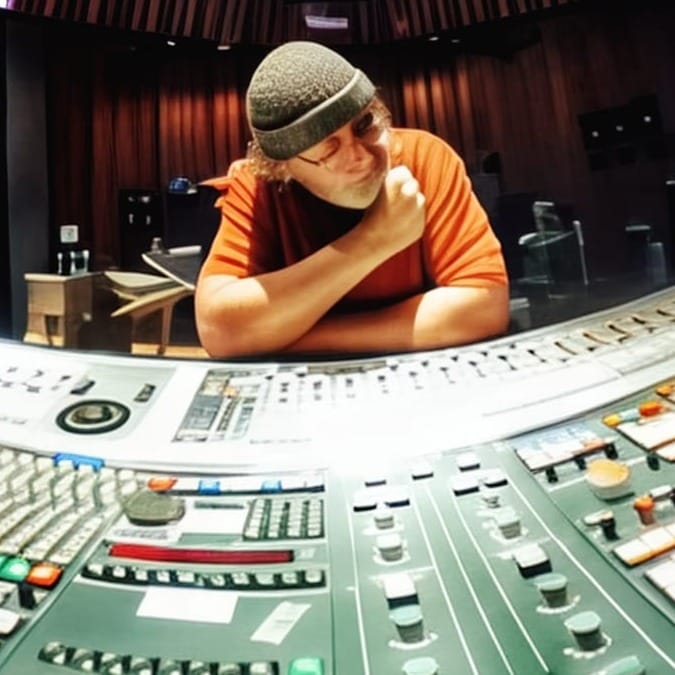
Robert Margouleff — From TONTO to 'Freedom of Choice'
The synthesizer pioneer behind TONTO, Stevie Wonder's classic run, and DEVO's 'Freedom of Choice' reflects on a life spent as the man behind the curtain in his new memoir, 'Shaping Sounds.' Interview by Chaim O’Brien-Blumenthal.
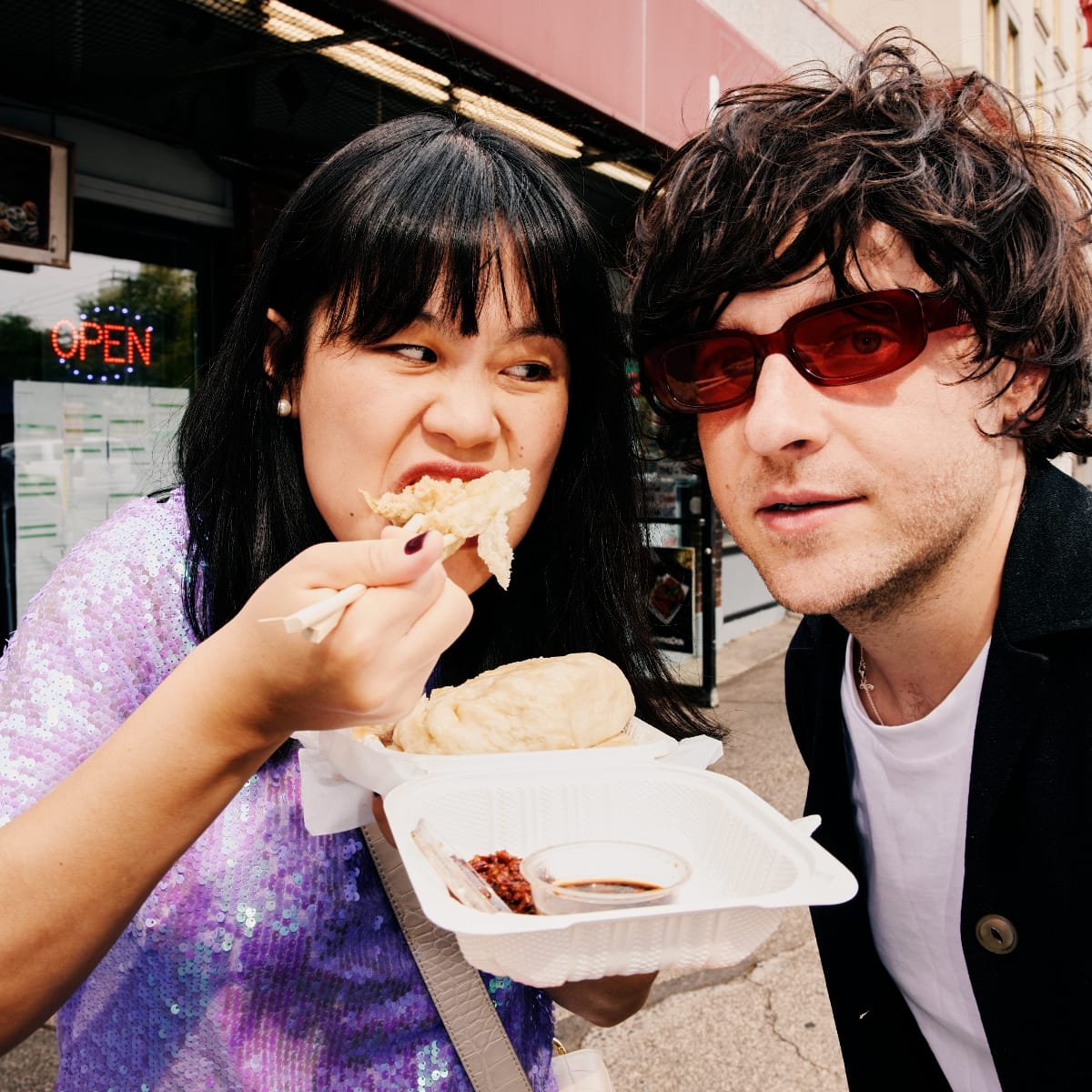
Silly by Design — Chinese American Bear's Accidental Path to Indie Pop
The Seattle-based duo of Anne Tong and Bryce Barsten speak about their new album 'Dim Sum & Then Some,' the band that began as a Mandarin lesson, their DIY aesthetic, and the unexpected resonance their music carries for Chinese American audiences. Interview by Meredith Hobbs Coons.
This Week's Episode of The Tonearm Podcast:

Alden Hellmuth: Saxophone Tethered to a Galaxy of Bass
Trained in the Jackie McLean tradition and later mentored by Herbie Hancock, Hellmuth explains how 'Tether' turns trust between bandmates into the record's actual structure.
Rotations
We're rolling fast into mid-summer with another edition of Lawrence Peryer's Rotations, the official radio show of The Tonearm:
Episode 12 is now up on the Mixcloud archive. Across four sets, we feature new jazz from trumpeter Dave Douglas, an electroacoustic film score from Félicia Atkinson, and bilingual indie pop from Chinese American Bear, all of which we recently covered in The Tonearm. The episode also includes a newly reissued Sun Ra Arkestra track recorded live in 1978, the night after the band appeared on Saturday Night Live. That makes me think we need a write-in campaign to get Shabaka Hutchings or Flying Lotus onto SNL. [How about SML on SNL? - ed.]
New episodes air on SPACE 101.1 FM in Seattle and stream everywhere at space101fm.org on Tuesday at 11 PM PT.

The Hit Parade:
"The 650-square-foot, three-room clapboard house where [Nina] Simone was born in 1933 stands as a testament to the relationship of art and history . . ." ❋ "Hearing 'Mack the Knife' from The Threepenny Opera was particularly influential. 'It was about a tough guy,' [Rubén Blades] says, 'someone who could have been from one of our gangs: Diente de Oro, Zapatas Negras. I kept these ideas in my head.'" ❋ "The stream-scape is miles wide and maybe—maybe—a tiny fraction of an inch deep. You can find jazz on the streamers, the most famous musicians and well-known albums, but records and artists at the margins of what is already a niche genre tend to be neglected." ❋ “Our whole reason for starting this program was to create something that will be left behind when we have moved on, to have something that can continue over the years. I think that sort of legacy is what Motown is all about.” ❋ "Jazz is a form of expression rooted in confidence in one's own individuality and in the freedom to improvise . . . I'm convinced that the only way to save the world is for people to truly listen to one another, to express what they have to express, and to respect each other. That's why I say jazz can save the world." ❋ "Sanders said a key lesson that Big Ears teaches is curiosity, which is applicable to most design practitioners or enthusiasts. 'Not knowing what you are about to see or hear,' Sanders offered, is a key part of discovery, which exposes you to new sights and sounds." ❋ "As a master drummer, it is easy to label [Tyshawn] Sorey’s role as that of a timekeeper, someone who keeps the ensemble moving forward at the agreed-upon tempo. As anyone familiar with the MacArthur genius’s work can tell you, however, he never confines himself solely to that conventional role." ❋ "Utilising an obsolete MCI console with a built-in high-pass filter and a homemade tape delay, [King] Tubby’s sonic alchemy yielded a distinctive sound that was totally unlike that of his peers, making his micro-studio the prime site of dub innovation during the 1970s, with far-reaching effects." ❋ "Ramones visiting the UK became the glue that bound the various factions of the British punk scene together while providing a blueprint of how an assault on the British cultural mainstream was now entirely possible." ❋ "That’s basically the beauty of what we do: bringing together all spectra of Black music that have been influenced by jazz and seeing what new combinations might arise.” ❋ "The music was scuzzy, violent, and explosive, the group reportedly aiming for 'anti-Beatles' status. Yet it’s difficult to imagine the future noisenik side of John Lennon not being green with jealousy at what The Monks accomplished with their incredibly brief career." ❋ "It is to the Jersey Shore what the Troubadour is to Los Angeles or First Avenue is to Minneapolis: a venue that wears its history on its sleeve while still feeling alive and vital. However, being able to hear any artist soundcheck while you hang out with an Italian ice on the neighboring Asbury Park boardwalk . . . well, that’s special to the Pony." ❋ “Andy would always like the more gothic, operatic versions of these songs. He didn’t like the rock’n’roll as much. He liked the ones that had a lot of drama to them. ‘All Tomorrow’s Parties’ was one of his favourites.” ❋ "Naturally, our furry friends also found their way onto album covers and label art. There are a seemingly infinite number of lenses that can be employed in the pursuit of cats in music." ❋ "One piece of criteria I want to make known before anyone dives into the ranking: we are only featuring one song per artist . . . And this list is by no means representative of who we think are the best artists of the 1960s. It’s all about songs released between 1960-1969." ❋ For more curated music links, be sure to follow The Tonearm’s feeds on Bluesky and Mastodon.
New Music Recommendations: Cecil Taylor Orchestra Humane - At Iridium 2004 (RIYL: Large ensemble free jazz; sets ranging from hushed and ritualistic to marathon blowouts) ❋ Concepción Huerta - No Queda Nada, Todo Resuena (RIYL: Voltage-generated drones folding into spectral decay; Pauline Oliveros, Daphne Oram, Mabe Fratti) ❋ Play Time - Magic Object (RIYL: Minimalist jazz-krautrock, olymetric improv for saxophone, drums, and Moog; SML, Alice Coltrane)
The Deepest Cut:
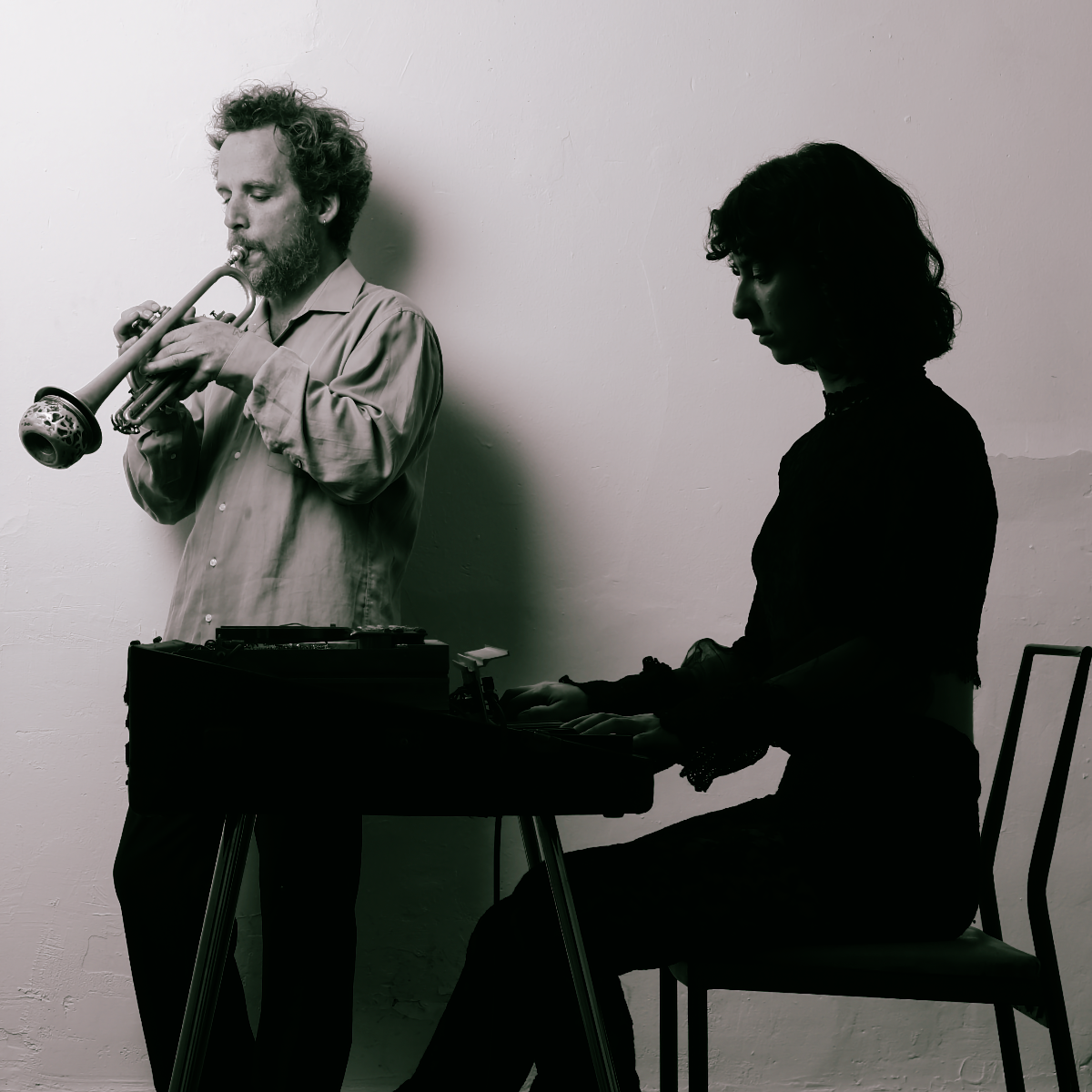
Santiago duo Lorena Álvarez and Alejandro Palacios just released their second album, Jardín Giratorio, a suite of six long-form pieces where dusty horns trace smoke rings over daydream keys, seesawing strings, and whispery wah guitar—narcoleptic jazz unspooling from turning gardens of the mind's eye, if you want it in the label's own poetic terms. Álvarez plays keyboards and effects; Palacios rotates through trumpet, trombone, guitar, double bass, and live processing. They met in 2022 through a Santiago residency that paired musicians who'd never played together. The duo's whole practice has grown out of that improbable, deliberate origin ever since.
Writer and poet Manuel Boher, in the album's liner notes, reaches for the myth of Python guarding the gardens of Delphi to describe what's happening here, and hears the trombone "perhaps swimming like a crocodile through the supple water that the keys and Rhodes strum." That's a lot of mythology to hang on an instrumental improv record, but it's in keeping with how the duo's first album, 2023's Paisajes Para Torcer al Reloj, got described—José Badía called it "an album that bends time." Both records, in other words, are based around something bent, something turning, something not running on a fixed clock.
I reached out to learn more about whether the duo actually thinks in those symbolic terms while they're playing, and how they confront the cosmic problem of time itself. Oh, yeah—and I also asked for something they love that more people should know about. The pair answered collectively.
We are an improvised instrumental music duo. We started playing together in 2022 after being invited to participate in Nieve & Smog, a music residency in Santiago, Chile, that brought together musicians who had never performed together before while maintaining gender parity across all editions. Lorena plays keyboards and effects, while Alejandro rotates between brass instruments, guitar, double bass, and live processing. The language of the project emerged organically through the residency rehearsals. At the time, we were listening extensively to Live Köln 1975 by Terry Riley and Don Cherry, and part of the game was imagining Lorena as Terry and Alejandro as Don. We never got particularly close, but it was fun.
The main idea behind Jardín Giratorio was simply to record under better technical conditions than we had for our first album, Paisajes para Torcer al Reloj. We discussed adding overdubs and giving ourselves more freedom in post-production, but in the end, we did neither. Every track is essentially a first take. So we're not actually sure how big the leap was from one record to the next. We also wanted to document a wider range of instrumentation. On the day of the recording, Alejandro got out of the taxi, leaned the double bass against the entrance of the studio, and a sudden gust of wind knocked it over. The bridge came off, and all the strings loosened. Because of that accident, he ended up playing it only with a bow, which is what was ultimately captured on the track "Siesta en el Lado Sabio."
In practice, all music affects our notion of time. In his Confessions, Saint Augustine said that time is not a physical reality, but a subjective experience of the soul. When asked, "What is time?" he replied with this paradox: If no one asks me, I know; if I want to explain it to the person who asks me, I do not know. In that sense, there is nothing particularly special that we are doing; we are simply placing our attention on a characteristic [time] that is intrinsic to music itself. This search is not something we approach from a conscious perspective of "let's use these rhythms" or "let's use these timbres," but rather from a meditative intention, an intention of mental clarity and serenity. We believe this can connect with a different perception of time, since ten minutes of calm are not the same as ten minutes of agitation.
Time is not rigid; it stretches, deforms, and is perceived in many different ways. The theory of relativity also proposes that it is we who move through the fabric of time. With Jardín Giratorio (Turning Garden), the image we have is that the ground itself is what rotates, something like a platform, and one can gradually perceive how everything is changing. The fact that there is no fixed point of reference—that our entire environment is moving in unison—means that we do not notice the tremendous speed at which the Earth is rotating on its own axis. Our music has similar qualities. There is an aspect of drift in the construction of the tracks, where sometimes you do not realize when something changed, when something entered, or when something left. This experience takes place in the present. The soul is stretched between the present of past things, through memory; the present of present things, through attention; and the present of future things, through hope and expectation.
There was a leap into the unknown—and a leap of faith—that we had to face from the very beginning, and that has continued to be present every time we approach a new improvisation. That feeling of vertigo will probably never go away. Improvised music always involves a dialogue in which listening is essential for anything meaningful to happen. Presence is equally important, so that whatever one contributes makes sense within the unfolding conversation. We think this idea extends beyond music and into life itself. The most beautiful relationships are those in which listening and presence are available.
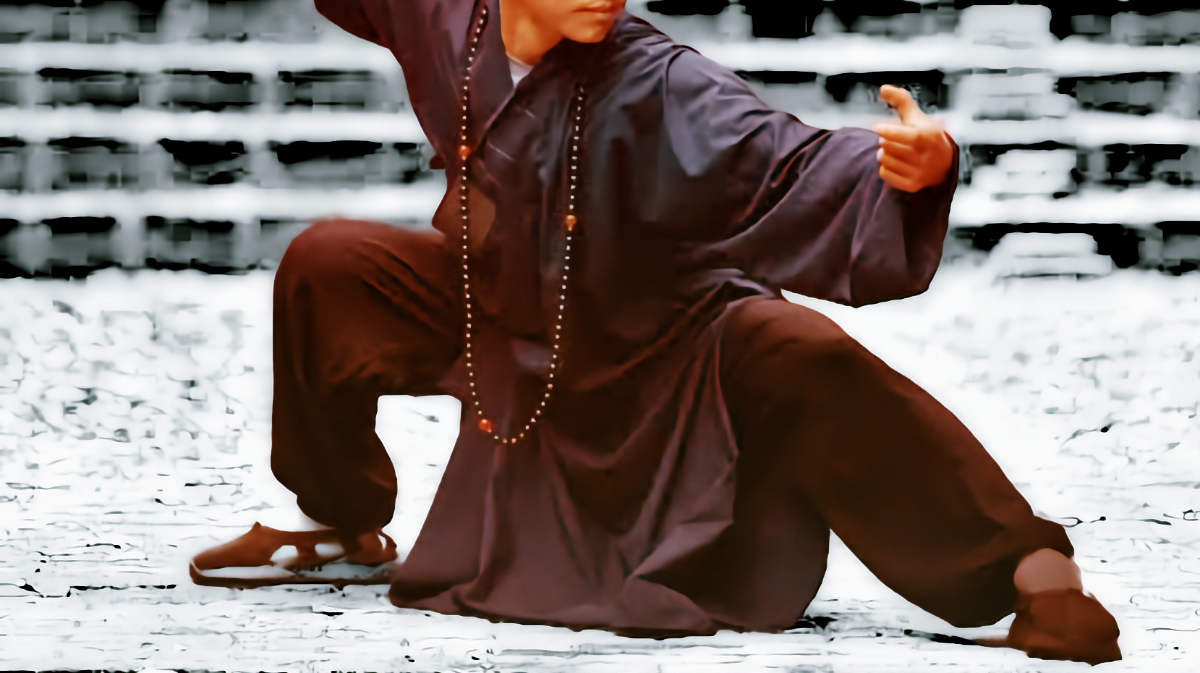
Lorena Álvarez took the reins to tell me about something she loves:
This year I started taking kung fu classes. A few years ago, I developed a severe case of bruxism, and kung fu has been one of the practices that have helped me heal the most. My hips and spine realigned, and my mind feels clearer, more grounded, and more serene. It's a perfect combination of play, strength, cardio, flexibility, memory, balance, and meditation. In class, we stretch, run, carry our classmates while running, do squats, jumps, and push-ups, practice different strikes, kicks, and stances, and at the end of each session, we practice forms, which is my favorite part. I deeply appreciate the values at the heart of kung fu: respect, humility, discipline, perseverance, and compassion. These values shape a very welcoming community. Those who know a lot have the humility to teach those who know less, and those who know less have the respect and humility to admit it and learn.
In one of our first classes, the teacher explained that the term "kung fu" refers to something close to mastery—a skill acquired through effort, time, and discipline. In that sense, anything can have its own kung fu. That idea has refreshed my interest in instrumental practice, since it is built on many of the same principles. It has also transformed my relationship with discipline, showing me that discipline can be joyful and almost effortless when it emerges from genuine engagement. I think I've also caught glimpses of the idea that dedication and presence can be pathways to a fulfilling life, but that's something I'm still discovering along the way.
Run-Out Groove:
- The Tonearm is a reader-supported publication, free of advertising and paywalls. Our supporters help fund our writers and make the site possible. Please consider joining and helping us to continue our mission.
- Join the rapscallions of The Tonearm on our new Slack community.
- Sign up to receive our latest articles directly to your inbox in a snazzy, easy-to-read email version. Just go to your account, manage your email preferences, and flick the lever to receive The Total Tonearm.
- The easiest and best way you can help us? Please share this newsletter and our stories with your friends.
Thank you for reading! We'll see you again next week. 🚀


Comments