


Chinese American Bear are carrying the torch for fun music out here in the big 2026. The husband-and-wife musical duo's offerings hearken back to the twee era of indie, drawing comparisons to Of Montreal, The Boy Least Likely To, and The Flaming Lips—experimental yet accessible, upbeat and melodic. On CAB's songs, veteran musician Bryce Barsten throws down a disco beat and bassline, tosses on some funk flavorings and spacey guitar, sprinkles in some ear candy—including partner and primary vocalist Anne Tong's laughter and spoken phrases in Mandarin, occasionally warped with otherworldly delay and reverb—and spreads in some background vocals of his own to support Tong's lead, creating tasty sonic snacks that delight on their way into our brain-bellies. And they're meant to. The goal in creating this music is not to challenge but to please.
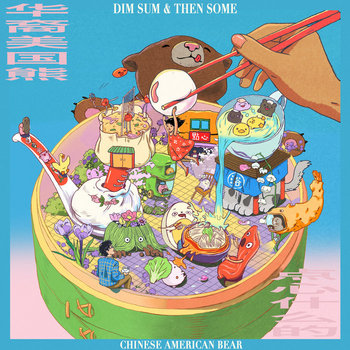
From the band's origins as a fun way of teaching Barsten the Mandarin language so that he could better communicate with Tong's family and the pair's future bilingual children, it settled into a proper project the two were eager to pursue with two full-length albums, multiple EPs and singles, and DIY music videos cementing their place in the pantheon of playful pop. With their latest album Dim Sum & Then Some, released on Moshi Moshi Records, Barsten and Tong continue in this tradition they have built together of making silly music full of food references and an appetite for aural adventuring.
They have also embraced the role their music plays in representing Tong's Chinese culture in predominantly white indie music spaces. "Fans come up to me crying," Tong says. They report feeling moved to hear her singing Mandarin onstage before them, and it is clear in speaking with Tong and Barsten that they take this responsibility to bring Chinese culture into these rooms seriously, as silly as their music can sometimes seem. As they solidified plans to tour the US and parts of Canada and Europe through the summer of 2026, the duo set aside time for a virtual call, during which they described their home studio setup, how they fell into making music as a couple after many years together, and the unique DIY vibe they have cultivated as artists. The conversation has been lightly edited for length and clarity.
Meredith Hobbs Coons: Tell me about yourselves. How would you describe your band and sound to people?
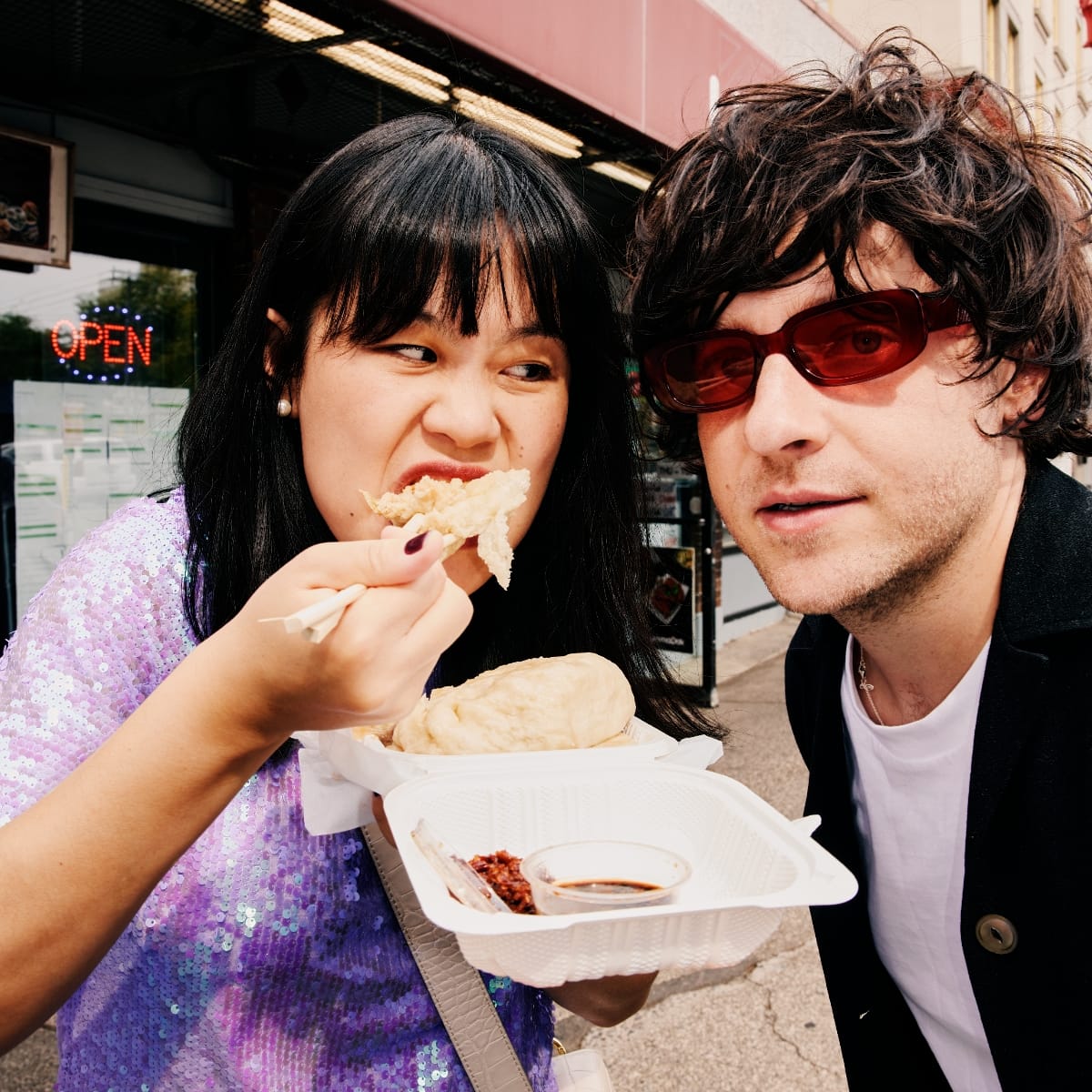
Anne Tong: We've been together since high school. We're a married couple—been together for 18 years—dated for 10, married for 8. Because we met so young, our relationship has always been kind of childlike and young-feeling, and we've kept a playfulness from the start. So when we started making music together, I think that the vibe that we have has translated into the music. We've always been a silly couple, and so we became a silly band.
In terms of sound, Bryce writes a lot of the music, and I write a lot of the lyrics. He gets his inspiration from a combination of things.
Bryce Barsten: Yeah, it's kind of all over. Throughout my life, I've been such a genre-hopper, and at different periods, I have liked different music, but I always come back to '60s and '70s rock bands. I take a lot from those eras, but still try to keep it modern and different. We try not to copy too much, or even listen to that much music all the time when we're making music, because I have fallen into the trap of wanting to sound exactly like XYZ band, and that's great for learning, but with this band, it was kind of like, "Let's not worry about that and make what we want." There's a little rock, a little psych, a little disco, a little funk.
Anne: When we first started writing music together, it was because Bryce wanted to learn how to speak Chinese to better communicate with my family, and we wanted to raise our kids bilingual. I had never been in a band before; he has always been in bands since he was 12. He just loved the sounds of the Chinese language in the beginning, when I was teaching him, and wanted to write some songs with Chinese words. It was more of a language lesson when we started. (laughter) He thought certain words sounded fun, and it kind of snowballed from there. I was helping him write lyrics, and then he wanted me to start actually singing them because I pronounced the words a little better. So I started recording my voice for this, and that's how it started.
Meredith: I'm curious—you're based in Seattle. What is your music community like? Or are you two in your own little world?
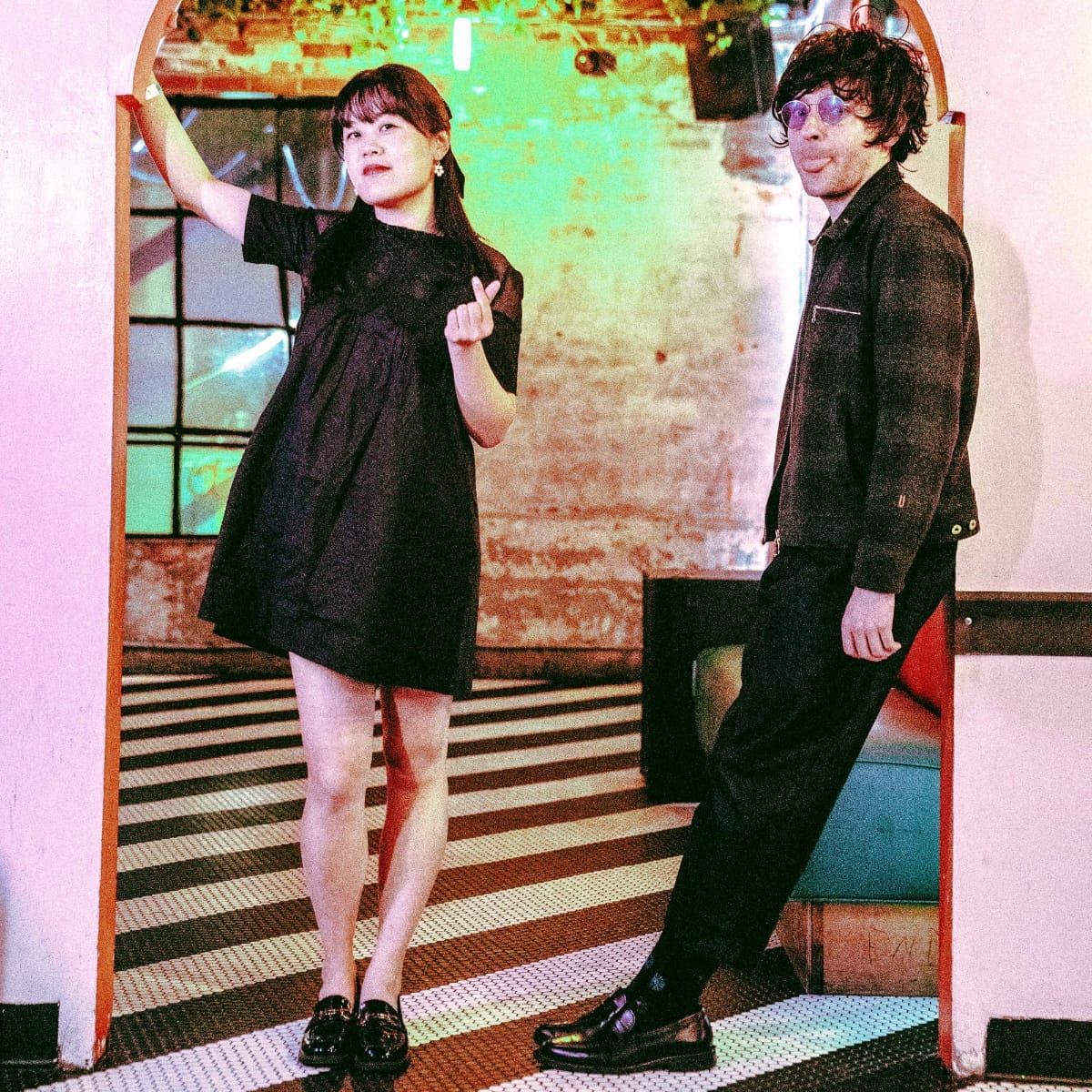
Bryce: I feel like we have a little bit of both. We are part of the Seattle community—we've actually really loved it. I worked in the music scene in New York for like, 10 years, and it was brutal, hard to open doors in the industry, and also to collaborate with other bands. You know, it's very cliquey.
Anne: Competitive.
Bryce: Yeah. It felt like, unless you were in one of the cliques, you were kind of doing your own thing—which, I guess, could be good or bad—but the Seattle community has been welcoming and open, and we only moved here, like, three or four years ago. It's been so awesome, so genre-bending, there's no "Well, you're a punk band, we're a folk band, so we can't hang out or play a show together." And even the industry part of Seattle, too, like KEXP, Sub Pop, etc., they're also very welcoming, though still a little bit closed-door, because that's just the industry.
Anne: But you feel their love and support for the local, little artists.
Bryce: I do feel like we are doing our own thing in Seattle, and there are not really any bands doing what we do. There's still a lot of grunge in Seattle, a lot of punk. We've made a lot of friends with those kinds of bands. There's a lot of psych in Seattle, too, and there's definitely a psychedelic tinge to our music.
Meredith: Can you walk me through your home studio as if you are giving me a verbal tour?
Anne: It's really his baby.
Bryce: In our current studio, you walk in, and there's a drum set that's fully set up to record. We have it ready to rock at any time. It's a vintage Ludwig. It's actually Josh Tillman's (Father John Misty's) drum set. My friend is good friends with him, and they often share gear, so I bought it from him. It's my coolest piece of indie superstar gear.
Then, you keep walking in, and there's a row of keyboards on the left: mellotrons, etc. There are some amps on the ground for recording. We use multiple Vox AC15s. It's what I love to play and record with, along with a couple of random Fender amps that were given to me. Then we have more keyboards to the right: a Korg Prologue, a Juno. There's the control station: an old wooden desk, monitors, a couple of racks of gear, compressors, some preamps. We just got a Roland Space Echo; I've been running everything through it, even full mixes. Then, behind the control station, there's a rack of guitars and basses.
Anne: Bryce's favorite is the Gretsch.
Bryce: Yeah. I got this green, solid-body Gretsch, maybe 10 years ago. It's called a Duo Jet, and it's become my favorite guitar to play, but I think it's also become the sound of Chinese American Bear. It has a distinct sound.
Anne: We have one guitar that is really unique, but it's more of a decor piece. The red one that looks like a racing car?
Bryce: Oh, my Baranik! There's this guy in LA. His name is Mike Baranik, and he makes these weird and funky, one-off, custom guitars. He's pushing the art of guitar making, whereas a lot of guitar companies aren't. Like, the input on the guitar is this clunky thing on the front that sticks out two inches.
Anne: But they're all one-of-a-kind, and we're too scared to play ours at shows. We want to keep it safe.
Stay on top of The Tonearm.
Subscribe for exclusive interviews, cultural tip-offs, and community fun.
And your support keeps our site free of advertising and paywalls.
Meredith: I am curious about the decor in the studio because your music encapsulates such a spirit of fun, and I'm wondering how you translate that into the space.
Anne: There's a lot of art hanging on the walls.
Bryce: There are some pen and ink drawings by my dad from the '70s.
Anne: Yeah, some drawings from high school by his dad. They're very cool. It's funny, because Bryce went to art school for college, and Bryce's dad was always like, "Bryce, I don't know where you got your talent from." (laughter)
Bryce: It's such a dad statement, you know? But yeah, there are lots of little photos, like Polaroids of friends and of us, and some stuffed animals in the studio. It's not super colorful. I don't know if the look of the studio matches the sound of the music.
Anne: But it is cozy. We do care about the aesthetics of the studio.
Bryce: There's a pink chair, which is nice, and a lava lamp, but I feel like we pull more from each other than from the aesthetics of the space. When I'm in there, I just need it organized so I can work quickly and efficiently.
Meredith: Frictionless recording. That's a great asset.
Bryce: Totally. Everything's always plugged in.
Meredith: I want to hear about your DIY ethic in how you approach your marketing as well as your music.
Anne: We started during COVID. When we made our first music video, we shot it just in our living room. We bought a green screen off of Amazon. In art school, Bryce studied computer animation, so he animates all of our music videos himself. And people seem to resonate with that, so it's important for us to maintain that aesthetic.
Bryce: All the bands I was in before Chinese American Bear were so caught up in this pressure to go into a nice studio and work with engineers and producers, thinking we needed to spend money to sound professional—not that there's anything wrong with that mindset. Most bands work with engineers. Maybe there's no one in the band who knows how to do that, so they do that out of necessity. I've just always loved engineering and production and arrangement myself, but we were always hiring it out, and I think that after our first few Chinese American Bear songs came out and they did better than any song I've ever put out with other bands where we spent, you know, $10k on mixing and mastering, it showed me that you don't need to spend $10,000 to make a piece of art that resonates with people. That's not how it works.
I like mixing, producing, and arranging, and I know how to do it, so I'll just do it and not worry about it not being a totally commercial-sounding, pro mix. I think it's more important to have the vibe and the authenticity. The experimentation of it is more important.
Anne: It's about the song itself, the melodies and things, rather than the final recording. If anything, we've gotten a lot of compliments on the production. People find our production unique. There have been a lot of comments about the uniqueness of the production.
Bryce: It scratches the itch of wanting to be really involved and have a lot of control over the music, so it works for us.
Meredith: It really does seem like everything that you do as a band presents a way of approaching not just music but life.
Bryce: The band does really feel like a reflection of our daily lives.
Anne: We have fun; we enjoy simple pleasures, like eating and traveling. We don't take life too seriously.
Bryce: And that reflects the production. From a commercial standpoint, it is a little rougher around the edges, but who cares?
Anne: If we're writing lyrics, we just try to go with our gut feeling and what feels good in my mouth when I'm singing, rather than the meaning. Even in how we approach writing, we try not to overthink it.
Meredith: And you gravitate towards subjects and sounds that feel true to you.
Bryce: Totally, which makes it easier and more fun. Writing about philosophy, I find it difficult. I'm not a philosopher. Some bands have someone in the band who's great with poetic statements and deep thoughts, and I think that's really great and powerful.
Anne: But we're not intellectuals, so we don't try to be. We work with what we've got.
Meredith: But it seems like there is a philosophy to be extracted from what you do, and one theme that stands out to me is a belief in and ownership of self.
Bryce: Definitely. It's hard to find your voice. It's comforting to emulate in many ways. I think it's really good to emulate, too. Some artists find their voice really early in their career, and that's amazing, and I'm jealous of them, but emulation can help with your vocabulary of music and of writing.
Anne: He used to think that he needed to write in a certain way because that was the way it was supposed to be done. But there's no right way, in art or music, for how it's supposed to be done.
Meredith: Everything that you're saying now hearkens back to the start of your band as a language-learning project.
Anne: Yeah. We didn't intend for this to be a band. Being in a band was not on my radar at all. I was on a totally different path. We joke that he dragged me into it.
Bryce: I just brought her in one day, because I was like, "I think you need to sing these Chinese lyrics here." Our first song was so ridiculously stupid, then she sang on it, and I was like, "Oh, this is actually fun and cute."
Anne: Yeah, the sound of my voice was making it cute. And at the time, I wasn't even thinking about cultural representation or anything like that. I truly was just like, "I want to teach my husband Chinese so that he can speak to my family." Then, as we started playing shows, a lot of Chinese Americans would come up to me and share that they had loved hearing Mandarin sung at an indie venue.
That was so cool to hear. Japan has been exporting to the West for a while now: Pokémon, anime, etc. Then, in the last decade or so, Korean culture has been so dominant with K-drama, K-pop, and K-beauty. I feel like Chinese culture hasn't had its moment yet—though it’s been trending on TikTok recently! It used to be that Chinese felt like the least cool of the East Asian cultures.
Bryce: Well, it's also just been a harder culture to export because China is so closed off. Japan seems to have invested a ton of resources into westernizing itself, but also exporting its culture. China doesn't really do that.
Meredith: That's a really interesting point. So you feel like you get to be part of introducing Chinese culture into the mainstream and into indie spaces.
Anne: Yeah. Our fans come up to me crying. It's really special. Or I'll be singing something on stage, and I watch them tear up. This was not our original intention, but I'm so proud that we can do that.
Check out more like this:
 Mariam Abdel-Razek
 Meredith Hobbs Coons


Comments