


revelations of divine love is Jason Calhoun's fifth full-length electronics album for Dear Life Records. The Philadelphia-based Calhoun (and likewise Dear Life Records) have been allied for years, though the label's roster includes primarily indie rock and folk stylings. Calhoun is also a founding member and violinist on the label's chamber folk ensemble Hour.
Calhoun has also recorded under the monikers Paper Armies and naps. To better understand revelations of divine love, I played a wide selection from this prior discography and discovered in this post-everything age hot-wired, textural, and melodic songs. Some catalog tracks met ambient criteria. Mental and emotional wanderlust were heard. Repetition was recurring. I wondered how Calhoun's fifth release for Dear Life would and could reveal or represent revelations of divine love.
Repeated listens left me enthused, with a renewed fondness for softer noise. revelations songs are brief, intimate, enhancing the ordinary. Calhoun's fondness for early Goldmund, Arvo Pärt, and Erik Satie makes their way into the stories. With revelations are the minutiae of low-volume AM/FM radio playing, a sleeping loved one's gentle breathing, and a potent low end.
The sounds allude to a stretched James Tenney tone until dynamic dissolution or a cartoonish rebound. What if Ms. Pac-Man and Mr. Pac-Man had a baby? Imagine Atari teenage riots swayed by laughing gas. Somebody's knocking on the door. Somebody's ringing the bell. It's Julian of Norwich, whose fourteenth-century writings were suffused with hope and trust in God, and her writings frame Calhoun's macro and micro. Open the door.
The transcript has been edited for length, flow, and clarity.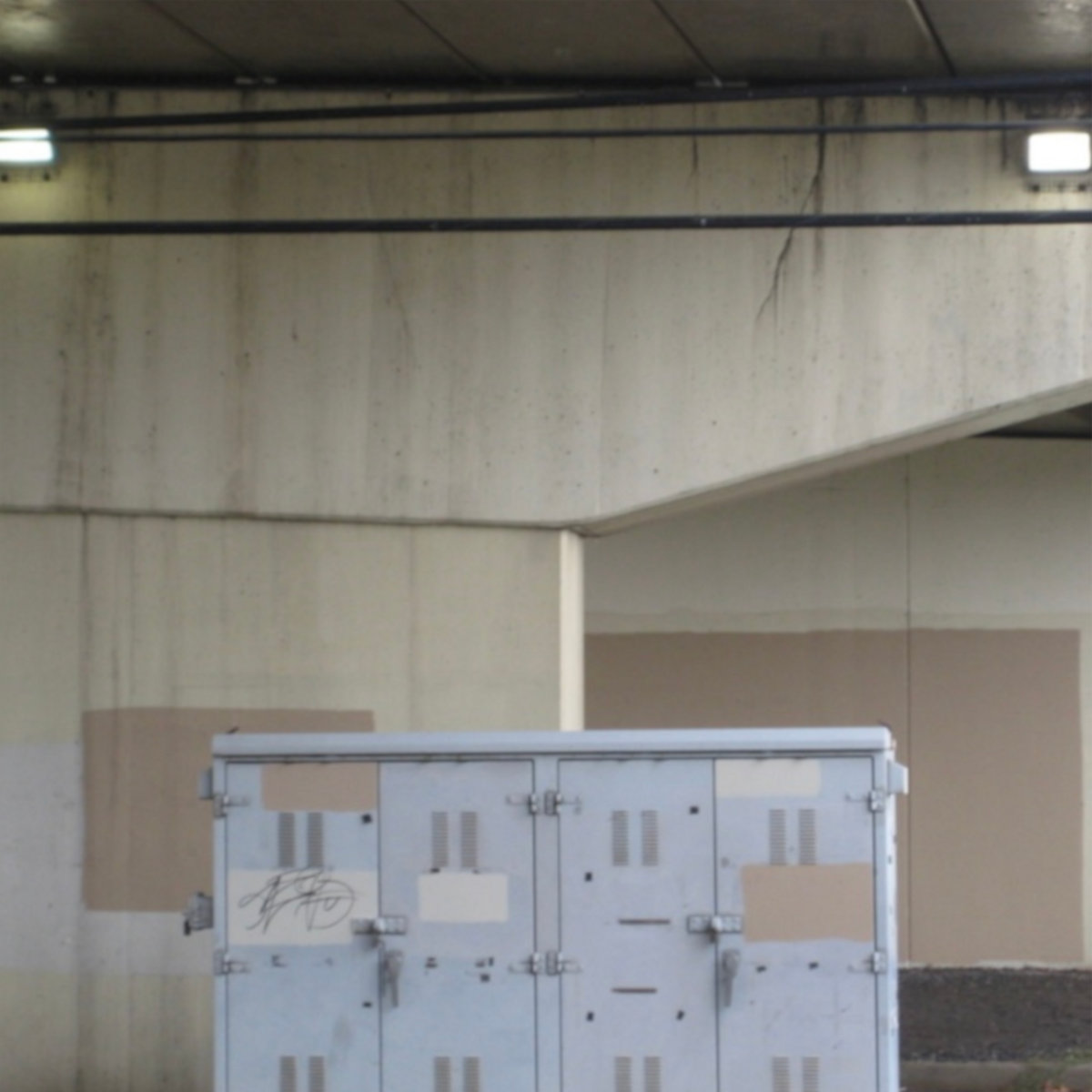
Garnett: I really like sound, and as far back as I can remember have been captivated by it. The dishwasher is currently running—and it's a quiet one—but I'm really pleased that I hear it running. That cycle where the water is going through the disposal feature. And earlier I was taking the trash outside, and the birds were singing, making their ways between hedges. And your record is what I've been wanting to hear in electronic music, honestly, for a long time. Please tell me more.
Jason: Oh, that's very nice of you to say. I'm thinking about what you've said so far about your childhood and your lifelong interest in sound. I grew up not liking loud noises. On the school bus, I remember the air brake or whatever—covering my ears for that. I never liked fireworks. We would have fireworks every year, and I would be inside at my grandparents' house. Which is funny, because now I listen to all kinds of very loud things. But I think on this record in particular, maybe there's more interest in quiet sounds.
Garnett: revelations of divine love refers to Julian of Norwich and her optimistic, scriptural interpretation that all will be well. To me, the record is a really bold sonic statement. It seems to say love; honestly, it felt intended to be received that way. Not just as a sonic thing.
Jason: I definitely think so. As much doubt as there is about all being well, so to speak, I think that's just something that's always there. And the reminder that this is something we're always working through, and that it's a comforting feeling rather than taking away from the positive message she's maybe trying to give. I think I was also interested in taking this very grand spiritual message and bringing it down to the microscopic, to our daily moments, and how those feelings of divine love you can find basically all the time.
The cover is from . . . I take the train to work every day, and I see that spot every day. After seeing it for a while, it just made sense as the cover of the record.
Garnett: I noted it. I thought it was a really dialed-in choice. Complementary to the sound.
Jason: Yeah. The last couple of records that I've done have been more like longer pieces, and certainly less melodic. I wanted to make something that was maybe more directly gentle than the past couple of releases. I don't know if I succeeded. I feel like some of it did.
Garnett: I think there's humor in this record as well, but I don't think it's at any expense of anybody. It really caught my eye that, if I understand correctly, professionally you serve cancer patients?
Jason: I work at an outpatient oncology center. I work in the clean room, so I'm preparing the chemo, which is then given to the nurses to administer. The room that I work in doesn't have any windows. Then I walk out of that room, and there are all these people being helped by this thing I do, which I am removed from. And so there's a sense of trying to keep the perspective of what I'm doing versus the bigger picture.
I do like what I do. I'm also a musician, and I love making music. And as most musicians these days know, there's that push and pull between those two things. It's also something that I'm grateful for, because I don't think music is self-serving, but it can feel that way as someone who mostly makes music in a studio in their house by themselves. So having a way that directly benefits someone else—obviously I'm also getting paid, so there's that too—has become an important other side of the coin in how I live my life.
Garnett: I know that you're not getting that direct patient interface, but Jason, honestly—you're in the basement mixing up the medicine; that's going to potentially save lives. Your hand is in it. And then you're referencing a saint—I don't know if Julian got sainthood—but she wasn't just a female author or just a devout Catholic. Your music just seems far away from noise and despair. When you hop on the train, do you think, I'm going to do something meaningful today, vocationally?
Jason: Yeah. And it's maybe a corny line, but the fact that I'm doing something for other people does also benefit me. And I think this happens with music too, of making things and not knowing how it's directly impacting somebody else. I try to play shows and do that, and I feel like that's the easiest way to be directly connected with what your music is doing. But most of the time you're releasing things and hopefully people are interested online, so it can be hard to feel that direct connection. I think the religious statements feel connected to my work, and also connected with me personally.
Garnett: You're in this sterile room, preparing the chemicals, and quite a few folks may not know who you are when you exit the room, and they're receiving their chemotherapy courtesy of you. There's something about that.
Jason: It is a funny thing. And I'm thinking, there's another layer of that, too, of making instrumental music. I'm trying to understand it, too. So it can be funny when someone asks me about the music, and I'm like, "I'm trying to figure it out." But I do like some of the things that you were saying about humor, and the gentleness is very much intentional. I love serious music, and I think there's also room for humor in it. I think noise music especially can be very funny. And that's how I approach synthesizers to a certain extent—trying to be playful, and also not taking myself too seriously. So it's deeply serious, but I'm also trying not to let the joy and fun of music be lost in that.
Garnett: I listened to some of the most abrasive noise that was out there in the 1990s, and I felt like it was very purifying, including To Live and Shave in L.A. I think there's a lot of humor in what the Shave was creating. But most noise music struck me as nihilistic. And I would say, for sure, revelations of divine love is not nihilistic, unless you're the most ironic man in the world.
Jason: I'm certainly not coming at it from a nihilistic perspective; the attempt is to be deeply sincere. There is one free improv—I can't even remember who it was, years and years ago—that I saw. The guy just had a blown-up balloon, and he's letting the air out, making the squealing noise, like a kid. And it's him and some guy with electronics. And that is just so funny to me. I don't know if I would necessarily call that nihilistic.
Garnett: I agree.
Jason: I guess it depends on your perspective. But to me that's just, let's do something goofy, let's see what this sounds like. But I get what you're saying about the other side of it with noise music—just the destruction and despair of a wall of noise that is unlistenable to most people, and getting some kind of enjoyment out of that.
Stay on top of The Tonearm.
Subscribe for exclusive interviews, cultural tip-offs, and community fun.
And your support keeps our site free of advertising and paywalls.
Garnett: I listened to hardcore, and then I got into noise rock and noise, and then I tempered it down. I continue to like the atypical but now appreciate Hildegard von Bingen and Anglican chants. My ears have had all the experience they need in a lot of ways. I want to hear something that affirms and has some gratitude. I sound every bit my age, but I just wonder if folks are missing something really big by not having hearts full of gratitude.
I'm struggling to separate your music from your employment. Do you consider that, with your music, you might be doing something bigger than just music, whether your audience gives you feedback or not? If they're just listening to their speakers, or they see you at a show, you might really be beautifully piercing their hearts with some love.
Jason: This is incredibly kind of you to say.
Garnett: I'm optimistic.
Jason: I try to be. It's definitely not an easy time.
Garnett: No.
Jason: And not an easy time to be making music. I think sincerity is important, as a way to help us connect with each other as people. I feel like I'm about to go down talking about, "Oh, kids these days and social media," but I just feel like everyone's disconnected from one another, myself included, and I don't feel like it's worth putting a lot of energy into irony right now.
Garnett: That's a beautiful sentence.
Jason: I'm glad that I finally got something out of my mouth. I make instrumental music.
Garnett: At least you take those tools, both digital and analog, and reshape sounds in a way that's not sterile. And again, I think of the room you work in: the literal cleanliness is uncommon. But the sonics you're creating aren't sterile. They're actually #resist. And I don't mean politics alone; I mean culturally—like instead of folks just surrendering to what the machines are going to tell us to do, or losing touch with each other, instead enjoying a nice meal together, or a cup of coffee, or a sweetheart, or petting the dog.
Jason: It's, again, just the gratitude of those small things. And I think my music helps build connections with other people, both emotionally, spiritually, and creatively. All those things are connected in a way that feels divine.
Garnett: So, this is a good talk about inspiration and the divine, but there is composition at hand. There's you as a musician, in your studio space, with analog and digital gear. I am interested in the actual process.
Jason: I tend to be someone who throws a lot of ideas at the wall to see what sticks. It depends on the record—for this one, there's more direct melody and harmony, depending on the track. And so with that, I'm mostly writing at a keyboard. Which does make it a funny thing to branch into the modular world, where, I think, for a lot of people, the interest is, "Oh, you don't have to use a keyboard." But I still feel like the keyboard is necessary for harmonic-structure things, at least for me.
For this record, I was recording a lot of really quick ideas, and then, over time, piecing them together to see which ones felt like they were worth developing a little further. I just try to record as much as I can of everything I do, so I have a catalog to search through. Which is very nice when you're feeling like you don't have an idea, and you can sift back through: what's this thing that I recorded three months ago, and can I develop it further? And then it could also become something totally different. I've certainly had this happen, where I start with one idea, and I have some tracks recorded, and by the end all the original ones are muted, and I've ended up with a totally different song—but they still needed to be those first ideas in order to get to the final thing.
Garnett: How do you catalog older recordings?
Jason: I'm recording to a computer, so I try my best to name files and keep things organized.
Garnett: Works?
Jason: Half the time. Once I'm like, okay, this is a record, or I'm starting to feel like things are emerging into something cohesive that I want to explore, it will become the working folder, so to speak, on my computer. These are the things that I'm searching through. And that usually just ends up being a period of time. There are definitely folders that have been left and forgotten. But I don't know, I try to be writing all the time.
Garnett: Is it pretty much like any person's discipline, where you must do some writing every day?
Jason: I recognize in myself when I am getting irritable, and I realize that it's because I have not had the time to go be by myself and play music.
Garnett: How great to know oneself. And spare those around us.
Jason: Exactly. But I've always been someone who tries to work every day, or at least as much as I can, rather than waiting for inspiration to strike, so to speak. That just doesn't really work for me. And I think part of that probably goes back to being a classical musician, and that being hammered into you, for better or worse—the practicing-every-day mentality.
Garnett: You stay sharp.
Jason: And you have a better idea of what you're coming back to. I feel like I might be too forgetful, or get too lost, if I were to put things down for a little bit. Just like reading a book, it's like, all right, where was I? If you put it down for too long, you can get back there, but it just takes too long. For myself, at least. And so I try to keep a pretty regular practice.
Garnett: Are you titling as you go? The titling is crisp; your packaging is pretty succinct.
Jason: Oh, thanks. I think with the titles, again, it depends on the record. I think this one, because of the nature of it, I was jotting them down as things came together. I try to keep titles reasonably short. As I'm sure you've noticed.
Garnett: It's nicer than just "Number One." And I don't mind a composer who does that; I understand those choices also. But you give enough words to trigger anyone's "what's my association with these words?"
Jason: I think you totally get it. I'm trying to give a part of myself, but then also leave space for the person that is listening. I'm frankly more interested in what is conjured up by other people than what I'm trying to conjure up in them. I hesitate to try to push something on someone else in a certain way. And so I want people to know where the music is coming from, but I also want room for the listener's ideas to exist as well.

Garnett: When you perform live, does one hear your albums or songs as they're already known via records?
Jason: I've done that before. I did that more with the naps stuff. But the last few years have been more improvisational, staying in a similar sonic rail.
Garnett: As in the same gear you use on the album? Are you surrounded by what you're comfortable working with but you take a leap?
Jason: Yeah. The sounds on the record you might buy after the show could be similar to what you heard, but it's going to be—I don't know. I've tried to take two different approaches to recorded music and performance over the past few years, but they're still sonically tied together. Talking about church music and religious music—you touched on it a little bit—I just really enjoy chant music. And I've done a couple of retreats at a Trappist monastery. That sense of silence, and reverence of silence—it's not about there being no sound, but just feeling in the space that you're in with the people around you. I feel like that's something that I've tried to bring out in a live performance. When you can feel quiet in a room with a bunch of people, it's a profound thing. It's hard to find an opportunity to do that. So there are times when I just try to . . . "manufacture" is not the right word, but give us all a second to do that in a musical context.
Garnett: You are not in the business of making music to punish your audience. And we have both been in rooms where that was clearly part of what was going on. And maybe it was perfect for that day, I don't know.
Jason: I've been to many noise shows where I leave, and I'm like, "That's exactly what I needed today." Is it what I need every day? Absolutely not. And certainly not what I would want to present as myself. But I see a place for it.
Garnett: Yeah, it landed well for me when it landed. Let's take it back to Julian of Norwich for a moment. Julian of Norwich wrote, "All shall be well, and all shall be well, and all manner of things shall be well." Maybe the point is we're not supposed to be perfectly comfortable until such time as, let's just say, the dirt nap. When all knowledge is revealed. And that covers a lot of belief systems. But the approach that all will be well goes back to gratitude and being inspired to make art.
Jason: I was thinking, with the book Revelations of Divine Love, part of it is that she's having these revelations while she is deathly ill. And the "all manner of things shall be well"—even when there's seemingly no hope around you. And you can take that to pretty much any context, whether it's environmental politics, or world politics, or personal mental health. You can go big or small. But that overwhelm—just trying to push through and being overly optimistic despite whatever you're being presented with—coming in with that kind of mentality, and also with an earnestness and a genuine feeling, is just something that I try to strive for in myself. And coming into music with a genuine feeling just feels really important, in order to push through whatever mental barriers are keeping you from the outside world in that context.
Check out more like this:
 Arina Korenyu
 Steven Garnett


Comments