


“When I was ten, my favorite artist was Leonardo da Vinci.”
It might sound like the sort of trite fun fact that’s offered in an ice-breaking exercise, but this one that Youniss Ahamad (who goes by the mononym Youniss as a stage name) shares with me is a great way to start to understand his work, because he is something of a renaissance man himself. Working across disciplines as a visual artist, producer, DJ, and musician, he’s left a firm, unique fingerprint on the Belgian underground scene.
Like many of his peers, Youniss makes music that balances unconventionality with a strong sense of—and homage to—his roots. Those might be his heritage, as explored on his spiky, defiant album White Space (2023), or his own musical influences, which he explored on his self-titled debut released in 2020. On both of these releases, he is audibly preoccupied by questions that plague anyone trying to find their place: how do I see myself? How do other people see me? How do I want to be seen?
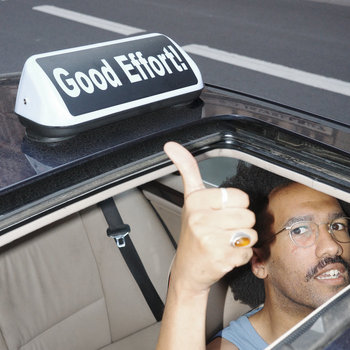
Youniss’s latest album Good Effort! was released last month on VIELNULVIER Records, a label attached to the well-loved community arts center of the same name, based in Ghent. It maintains something of the same reflective tone of the previous two albums—he refers to all three as a sort of trilogy—but with a more focused look outwards. His subject is the city; not just Antwerp, where he was born and still lives, but the modern city more broadly: its delights and surprises, its disappointments, its heartbreaks (the closing of beloved Antwerp live music venue Onder Stroom in 2023, after what it described as ‘poor support from the city’, was a particularly meaningful catalyst). The album also acts as a document of the kinds of people who live in cities, or around them, or just outside them. More than his previous work, Good Effort! sees Youniss embracing collaboration; not just with featured artists (though artists such as Pink Siifu, Petite Noire, and Amani bring great dynamism to the songs they are on, and offer the album a bracing three-dimensionality), but with musicians and artists, inviting them to bring their own skill to his work.
“I’ve started realizing that I can’t master it all,” he says. “There’s not enough time to do it. I wish I could be Leonardo da Vinci. But life does not allow for that.”
Maybe not, but still, there is the impetus to make kaleidoscopic, trend-bucking music. Shifting chimerically between jazz, hip-hop, rap, and electronic sounds, Good Effort! could easily sound chaotic or unfocused. Instead, it offers a rounded portrait of the buzz of a city and the adrenaline that comes from never really knowing exactly what lies around a street corner—for better or for worse.
I spoke to Youniss a couple of days ahead of the release of Good Effort!; our conversation has been edited for length and clarity.
Mariam Abdel-Razek: So, I think it’s good to start at the beginning. What made you want to make music?
Youniss: I would say that I’ve always had an interest. And when I was about fifteen, I discovered jungle music. Drum and bass and dubstep were really big in Belgium. Everyone in my class went to all these parties all the time. I went online, and I started getting really into that music and making some stuff.
A lot of that happened when I was between the ages of seventeen and twenty-two. I toured a lot as a DJ, under a different name, and made a lot of stuff. It was quite fun to do, but, as I grew older, I started feeling the need to express myself a bit more through music, not just make “sick tunes for the club.” And that was when I started writing the first Youniss album [Youniss, 2020]. I noticed that it had a more substantial story to it, other than “this bass line is cool.” So that’s how I rolled into making music.
Mariam: I’m interested in how you’ve posed the music you made as a DJ as being almost opposed to the work you're doing now. Do you see them as very different? Or do you still think there are a lot of influences from what you were doing before?
Youniss: There are, definitely. I work a lot as a producer, and one of the main things people call me for is my work on drums, which I think would not have been possible if I didn’t spend years chopping up breaks and making drum sounds.
When I was in school, there were these guys, a couple of years older than me, who had a glam rock band, and I thought that was so cool. But I didn’t have access to instruments; I just had access to my computer. So I just started making beats. I only started playing instruments and doing other things years later.
I feel like I had a lot of technical ‘baggage’ around using technology to make the music sound the way I wanted it to. But I didn’t really have the instrument baggage of “how do I make a good chord progression?” I was always really winging that part. So after years of digging on my computer and making beats, I thought, “Maybe I should explore this other side now.” I think this album [Good Effort!] is where it all starts coming together.
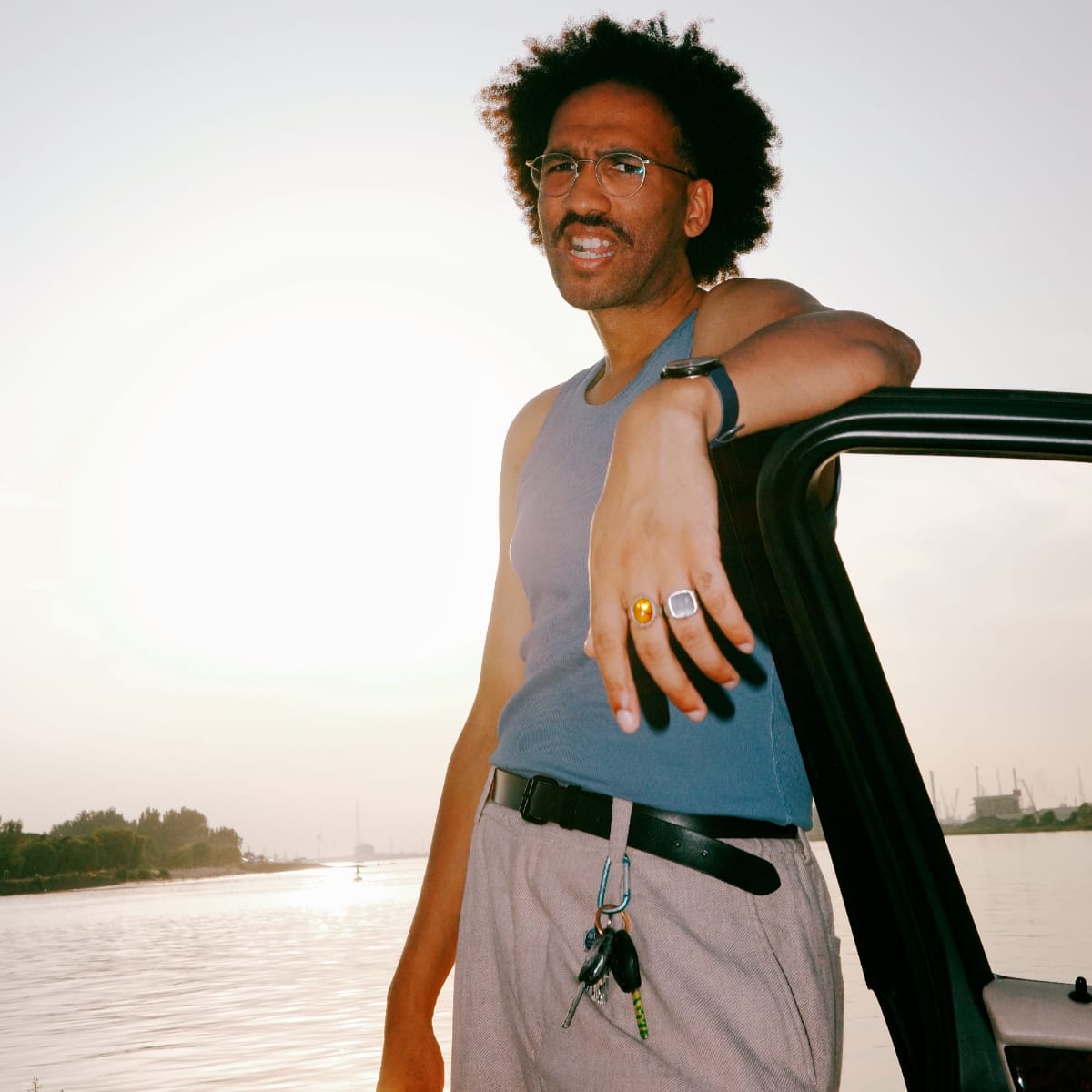
Mariam: Tell me about the album. It definitely has more of that live band sound. How did it come to fruition?
Youniss: When I made my last album [White Space, 2023] I basically picked up my old housemate’s guitar and was like, “This is an instrument I’ve always wanted to learn.” So, I started recording random riffs, chopping them up, and making things around them. And that evolved into a punk record. Then I thought, “Okay, I’ve got to start playing this live.” I was working with Tim [Caramin], who’s my drummer, while recording the album, and I asked him if he wanted to play it live.
Over the two years that I toured that record—we did between forty and fifty shows—the more I played it, the more I got frustrated with how I made the album. It’s not necessarily that I don’t like the album, but I would do it differently if I had to do it now. It frustrated me that I overcomplicated it so much. It made it hard to play live. The riffs are simple, but there’s so much production to it that to translate it live, we needed backing tracks and other things to happen.
After that, I wanted to make something meant to be played live. I didn’t know what it would be, but I wanted to think about how I was writing songs and how they would translate to being played live, rather than just figuring it out afterward.
Now that I’m preparing to play with my band again, it is a way easier translation. And that’s cool, because it opens up so much room for fun and experimentation, which is what I was looking for: a way to break it open instead of being confined to the structure that I made in the studio.
Mariam: Do you feel like you were relying more on other people when you were making this record, in terms of the instrumentalists who were coming in and playing, as opposed to you working by yourself, putting together beats?
Youniss: This album really had different stages of coming together. In the first two years, I was writing stuff on and off in between working for other people. Then, in late 2024, I hit a wall, not knowing what I was trying to make. I had around fifteen demos. At that point, I called in some friends to listen to what I was doing, because I didn’t really see it anymore; I didn’t see where it was going. It’s something I usually do at the end of the process —just before it goes to mix—to get some final feedback. But with this album, I needed to invite someone in way earlier, to help me pick apart my own brain.
I had a friend listen and say, “You have two albums in here. One album is a continuation of White Space. Really noisy, super experimental. But on the other hand, you’ve got a lot of really good songs. I think that you want to make really good songs.” I mulled it over a couple of days, and I was like, “Oh, shit. I guess I just want to write songs!”
That really opened [the process] up, and I started writing way more. It never became, like, a shitty pop record, but it helped me focus a bit more, and that maybe I shouldn't try so hard to make something experimental. Because there will always be something that I do which, you know, makes it me, instead of a bland thing.
Then I invited other people to play on it. I invited David, the bass player in my band, to replay all my bass lines. And it was nice to feel my parts come alive. The same with the drums—some of those I programmed, they got scrapped, and we recorded live drums over them. I invited Charles, who played saxophone on the record, to just play rough structures to help me figure out what I wanted to do with it. I didn’t really know if I needed sax on the record, but I thought it might be interesting, and that he’d understand what I’m trying to do. I think that pushed the album in the right direction.
So, there are way more people involved this time around than with my previous records. And it also made me realize why on many big albums there are maybe twenty songwriters. I’d say that I still wrote eighty percent of the record, but the twenty percent that other people added, without that, this album wouldn’t be this album. And I think it made a lot of sense, especially going into what this album is about—it’s so much about community, about the city.
Mariam: What is the marker of when that goes well, of good collaboration, to you?
Youniss: In terms of production, I’ll always have a first session when we’ll just talk, either in my studio or we’ll go for a coffee. I want to know why someone is making an album. If I don’t feel a sense of urgency that resonates with me, then I’m not doing the project. It might be a really good project, but if I don’t have that spark in my stomach when listening to your demos or talking to you about what you’re trying to make, then I’m just not going to be able to make something good with you. For me, any collaboration comes out of a mutual understanding for story or a theme.
Mariam: It’s interesting that you brought people in earlier on in this process this time, for the first time. Do you think you’ll do that again?
Youniss: A hundred percent. When I started the Youniss project, I always had the idea of making a trilogy, but I didn’t really know what it would be. Looking back, it makes sense as a three-piece, even though the records are vastly different. And now that this third album is behind me, I feel like I can do whatever I want. Not that I couldn't do whatever I wanted before, but now I really feel like, “Okay, cool. The one thing I wanted to do when I started this project, I have done. In two days, it will be out, and that's done. So, what do I do next?”
And I don’t really know. But I do know I will want to work with other people on it, because there's so much I can learn from them. Writing songs is fun when you’re not doing it on your own, so I feel like that’s something I want to explore now; just having rough ideas and sitting with one or two people and writing around them, and seeing where that takes me. It might not lead anywhere, but I think it will open up something new, for sure.
Mariam: And the record doesn’t always have to be the endpoint, right? Sometimes it becomes something completely different.
Youniss: Yeah, or something you weren’t expecting. That’s the interesting thing.
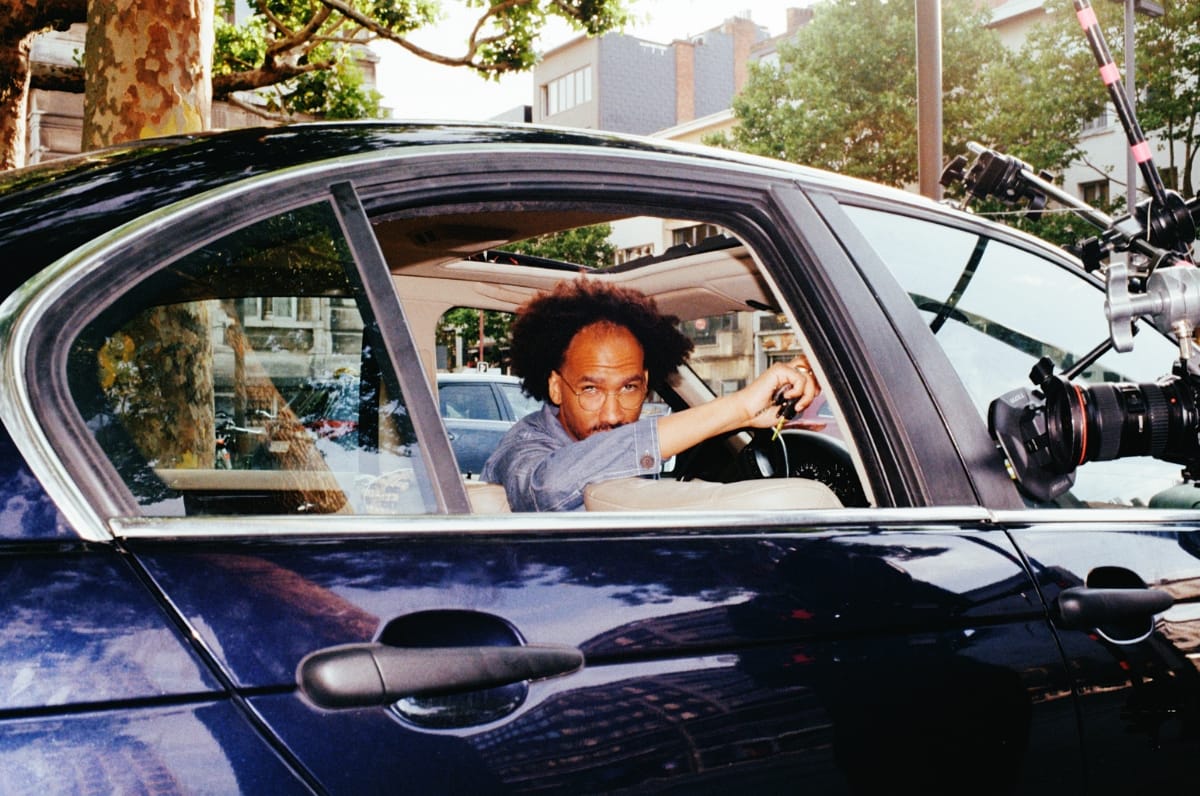
Mariam: You mentioned that a lot of the album is about community. It’s also about place, right? How do you feel place influences music, or music-making?
Youniss: I feel like my best ideas have come from traveling and speaking to people I don’t know. Like everyone, I’m influenced by my experience. But I can tangibly feel that if I meet someone new, and it’s exciting, that influences my process. When [after the COVID-19 pandemic] things were opening up again, and artists were touring, I went to New York for about ten days, and I met so many people, and it broadened my idea of what it is to connect, and go to where they’re from, and see how they live and how they do things over there. Seeing how someone like Amani [who features on Good Effort!] does so many DIY shows and does so much for all these artists coming in and out of New York was really inspiring.
It’s so exciting to enter a new place that you don’t know that well, and to meet people who guide you through their vision of the place. I feel like that is something I try to do when people come and visit me as well—not necessarily show them why I live here, but what it’s like living here, and why that’s important to the way I create.
A lot of good albums that I like, I can really feel the place where they’ve been made. I remember reading an interview years and years ago by Flying Lotus where he said that he made Los Angeles [2008] about LA because he went to London and listened to Burial’s Untrue [2007], and realized how much that album sounded like London.
Mariam: It’s the most London album ever.
Youniss: Exactly. I love that record, and when I went to London the first time, I really understood it. I wanted to capture that with [Good Effort!], not necessarily about Antwerp, but generally about the way a city lives, the way a city feels in this difficult world we’re living in, and what it’s like to live in a city that doesn’t really care about its inhabitants. I think it would have been cool to make an album about Antwerp, but I don’t know what Antwerp is anymore. And I think that’s why I made this record.
Check out more like this:
 Damien Joyce
 Mariam Abdel-Razek


Comments