


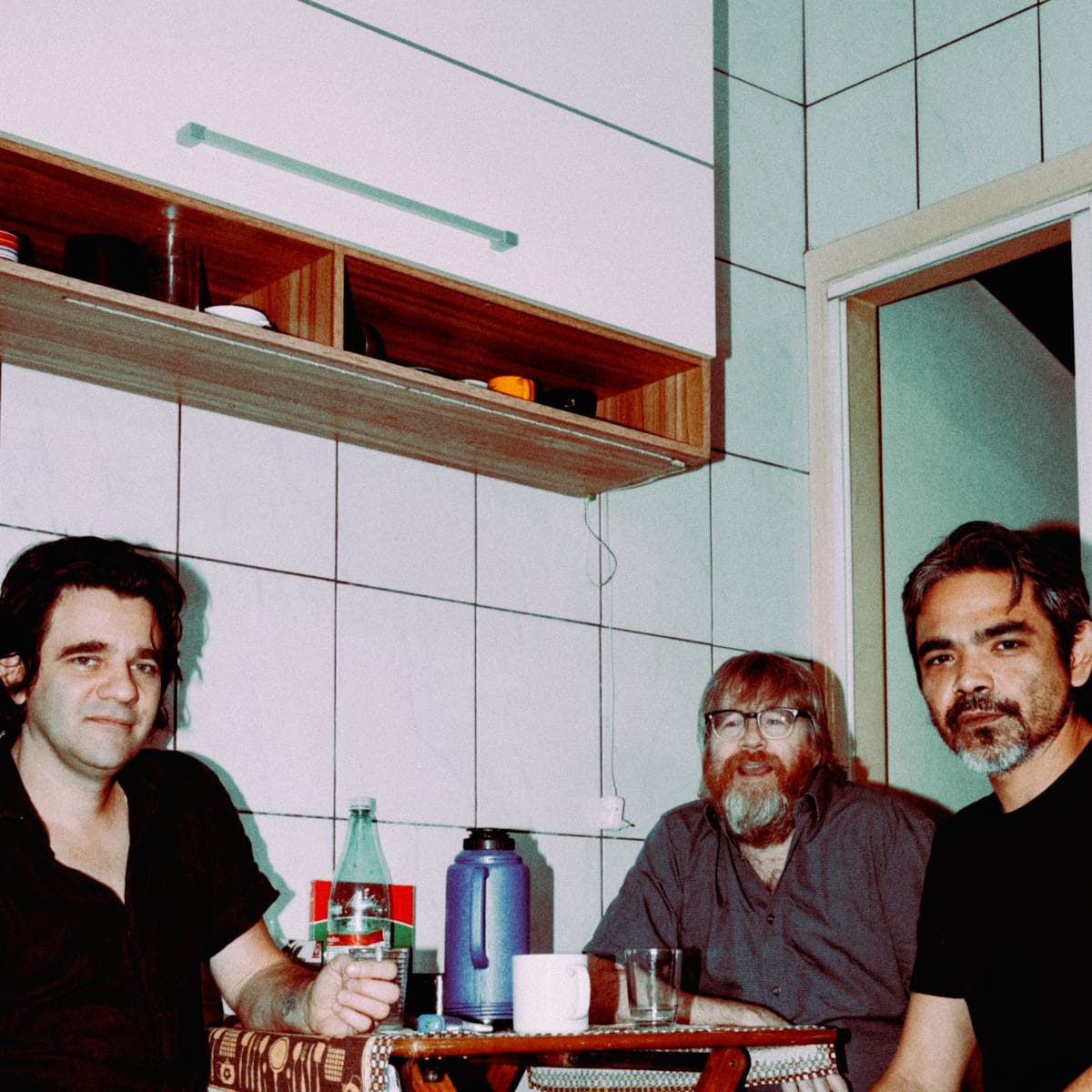
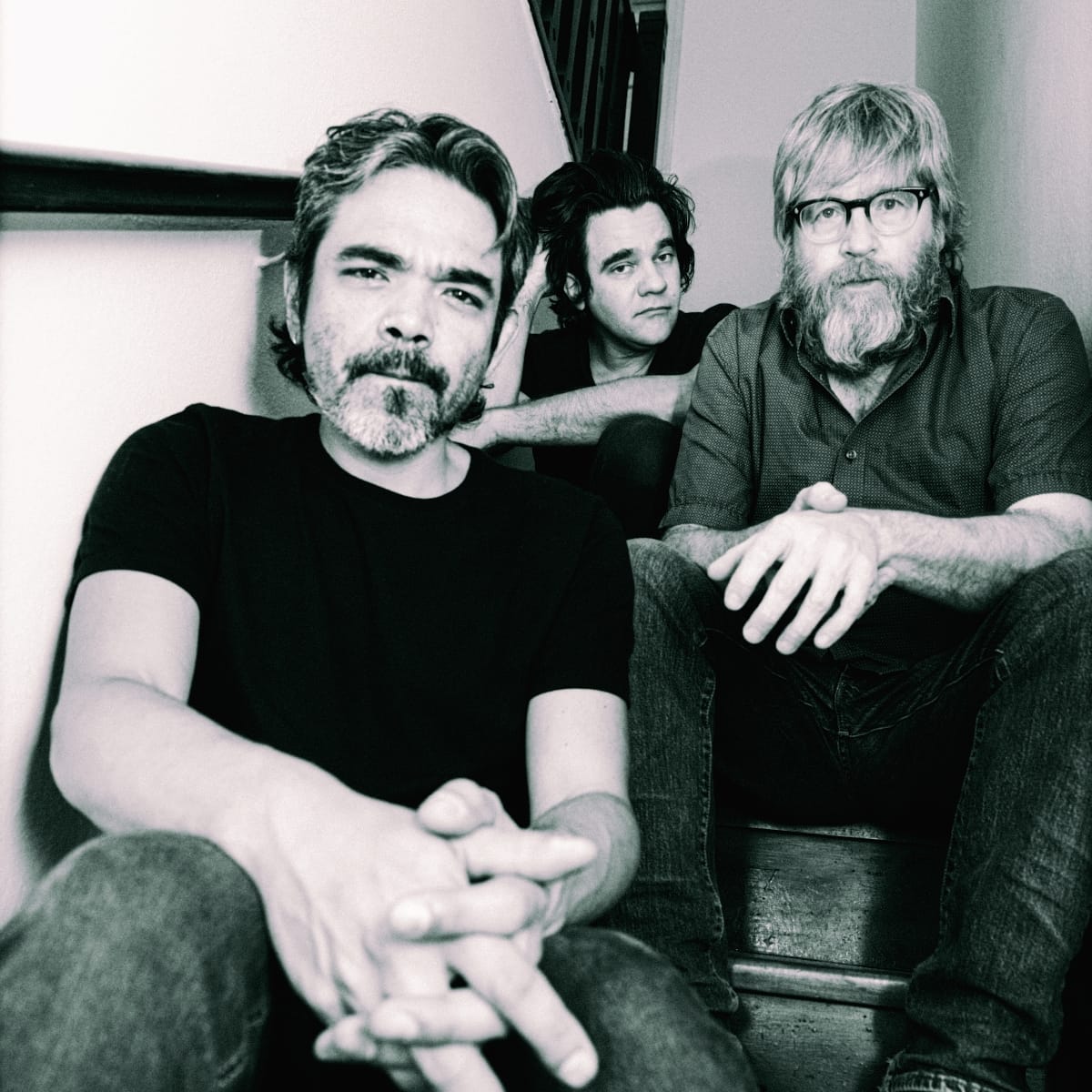
The psych-rock trio Riviera Gaz’s members span across two continents. In the United States, there’s ex-Sonic Youth drummer Steve Shelley, and in São Paulo, Brazil, there’s Gustavo Riviera and Paulo Kishimoto. Each brings their own sounds and influences to Catacroma, a word that refers to the prism-like shades of textures and sounds exploding throughout their second album. Though one could argue they were doing some of this on their 2018 debut album Connection, here, it sounds like they’ve perfected the formula.
Each track on Catacroma is a journey into a collection of genres, mixing and melding together into something both recognizable and alien. Take “Monomania,” with its poppy melodies, fuzzy psych-rock guitar, and Paul McCartney–esque bass tones. Halfway through the tune, the song shifts into howling Hendrix feedback, growing bigger and louder until it transforms into a sensational Britpop rocker the Gallagher brothers of Oasis wish they could have written.
Throughout Catacroma, you have David Bowie glam, trippy psych rock, screaming noise rock, grooving krautrock, Black Sabbath–adjacent heavy metal, the Kinks’ Ray Davies songwriting sensibilities, and more. It might sound like none of these could easily meld, but Riviera Gaz nail it. As such, the album becomes a fun romp through the group’s genres and tastes, making it easy to quickly become immersed.
However, there was one artist the band cites as a lesser-known influence (at least to me): the underground, obscure Brazilian psych-rock artist Erasmo Carlos. I was curious to hear more about who Carlos was and how he impacted Riviera Gaz’s music, and additionally, how the band made an album that so easily and effortlessly blended all sorts of genres and tones. Thankfully, I found my answers on a recent video call with all three members of the group.
The transcript has been edited for length, flow, and clarity.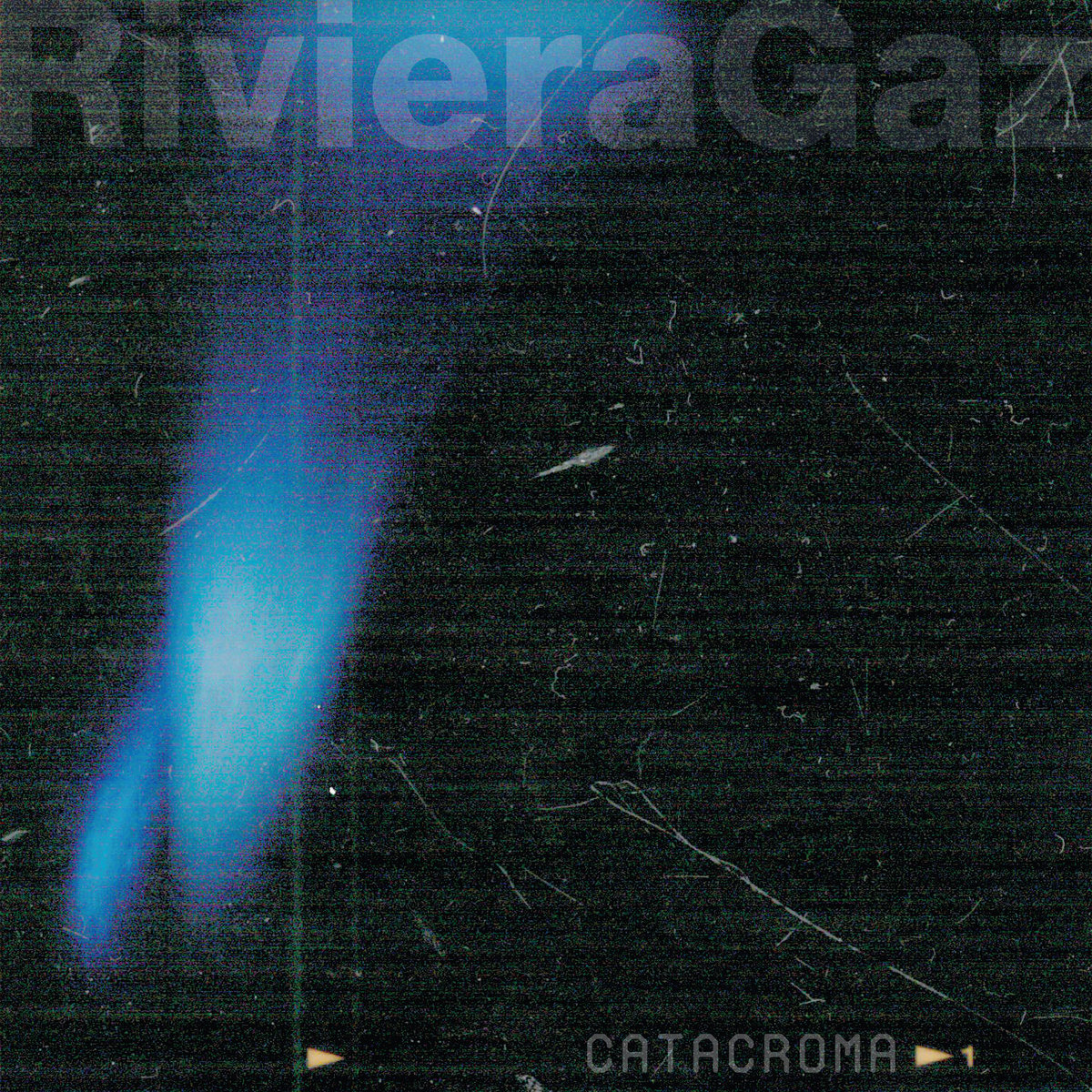
Bill Cooper: Considering how Catacroma has so many different genres and styles, I wanted to talk about how your musical tastes intersect as band members, and what you’ve gotten each other into as you work together.
Steve Shelley: One of the things that keeps us in touch with each other is that we host a weekly radio show for a São Paulo internet station, Veneno Live. Every week the three of us build a playlist, and it gets broadcast every Friday. Sometimes we get to listen to each other’s choices, and sometimes we don’t, so it can be a real schizophrenic mix of music that all three of us have brought together.
But that’s just the start of it. Of course, I knew a little about Brazilian music, but being around these guys takes you to many different places. It’s really a treat. They’ve brought me a lot of cool music—sometimes, but not exclusively Brazilian—over the last few years. Then, sometimes I’ll bring something underground that Paulo Kishimoto hasn’t heard of.
Gustavo Riviera: When we started the band and talked with Steve—especially because Paulo and I used to play together in other bands—we had similar taste. However, Paulo knows more Latino music than me. I grew up with more rock, punk, and proto-punk. That radio show is great for sharing new things. That’s how we understand each other.
Paulo Kishimoto: We’re about to hit show number 261 tomorrow, so we’ve been doing this for a while now. One fun thing we found out from doing the show is that we all love ’70s music—whether it’s Afrobeat, rock and roll, or even Brazilian music. I began listening to rock when I was very young, and I was more into metal, like Black Sabbath.
Later on, I went to music college and started to open up to other things. I started playing percussion, and I researched Afro-Brazilian, Afro-Latin American, and African rhythms. I used to play in a salsa band and a cumbia orchestra. When I played with Gustavo and his other band, I was introduced to punk. I think each of us brings his own cultural bag.
Bill: You talk about Brazilian musician Erasmo Carlos being a major influence on this record. I’m curious how it affects this album, and whether the influence was intentional or something that was noticed as you were working on the songs.
Gustavo: The starting point was during recording. Steve said he loved the album [Carlos, Erasmo…], and we started to talk about it. Then, we decided to put that vibe in our record. During the recording sessions, we started to practice the new songs.
Paulo: Fun fact: After we made the decision, Erasmo Carlos’s song [“É Preciso Dar Um Jeito, Meu Amigo”] from Carlos, Erasmo… was in the movie [I’m Still Here]—the first Brazilian movie to ever win an Oscar.
Gustavo: It was like this movement. We were doing our own things, and then this movie shows up.
Paulo: We had this real, brutal military dictatorship, from ’64 to ’80-something. It was part of the Condor Plan, an American military plan for Latin America involving coups and stuff like that. That film covers the dictatorship. This movie brought the song back, and it went viral again.
Bill: So, from what I understand, Erasmo Carlos released pop music, or more traditional music, and then moved into psych rock?
Paulo: There was this music movement in Brazil called the Jovem Guarda, a cheesy Italian-rock thing. Bands covered the original songs in Portuguese. Carlos came from there, along with another musician he was partners with for a while, Roberto Carlos. Brazilians think that guy is the greatest Brazilian singer. They call him “The King.” Roberto Carlos went straight from this rebel-rock Italian thing to being a romantic singer, while Erasmo stayed playing rock and roll. Unlike his partner, who became the king of singers in Brazil, Erasmo kept doing rock and roll and more experimental things. He even had a TV show with Roberto. They were famous in this first movement, the Jovem Guarda, which was exactly during the dictatorship’s first period.
Bill: Erasmo is starting to be acknowledged more in the past few years, but why do you think he’s been so isolated and unknown from psych-rock until now?
Steve: On the States side, I heard about him when I would go to Brazil and buy a compilation record. There would be one cut by Tim Maia, who later became one of my favorites, and one cut by Erasmo Carlos. Then, Light in the Attic reissued some of his ’70s records, so they became easier to find.
I would ask Paulo, “Do you know this guy? What’s his deal?” It became a new infatuation, and Paulo and Gustavo could fill me in: “Oh, he was part of the two Carloses.” Here I am, worshiping [Carlos, Erasmo…], but his friend became like Neil Diamond or Elvis in Brazil. So, I ended up learning about him in little bits and pieces.
Stay on top of The Tonearm.
Subscribe for exclusive interviews, cultural tip-offs, and community fun.
And your support keeps our site free of advertising and paywalls.
Bill: I remember reading Erasmo Carlos was somewhat political? Like, I know there was an issue with him singing about marijuana on the radio. Paulo or Gustavo, do you know what I’m talking about?
Gustavo: Marijuana, I don’t know. I know we were living in a time when it was very hard to release albums without censorship. Erasmo was a kind of ghostwriter. Most of Roberto Carlos’s songs were written by Erasmo Carlos. He was well known in Brazil, but not as much as Roberto Carlos, of course. All the good Brazilian musicians of the ’60s and ’70s were talking about how we used to live in this dictatorship, sometimes not out in the open.
Paulo: The left relates the first movement that Erasmo and Roberto Carlos were part of to an American movement to alienate students and remove them from politics by playing Italian rock on guitar. They’d say, “Drop the gun and grab a guitar.” Then they’d follow them until the bands they were following started doing drugs, and they’d say, “We don’t do those things anymore, because they do drugs.”
Roberto Carlos’s partner [Erasmo] had the first-ever strategic career in the music industry. He was the first singer that the major label had this strategy for. They were trying things, like Erasmo’s stories getting out in the gossip newspapers, and he was all around. Erasmo came from there, and he did something bigger than Roberto, who kept doing the same thing.
Roberto just went from a nice rock-and-roll guy to this romantic bolero and samba singer, while Erasmo kept being a rock-and-roll guy, an underground guy, low-profile. He wasn’t rich like Roberto, or even as famous, but he kept writing music and trying new things. Roberto still does the same thing—for several years now, the same show, and on TV he plays on a cruise ship. Erasmo was, like, revolutionary—a real rock-and-roll guy—while Roberto is just a good singer.
Steve: Like an entertainer.
Paulo: Roberto was also mixed up with the coups. He went to Chile and would cheer the general while the coup was going on. Pinochet was killing people there in Chile, and Roberto would go and say, “I would like to say hello to my friend, General Pinochet.” Erasmo wouldn’t do that kind of thing, so they were very different in this.
Bill: Was Erasmo actively speaking out, or was he just, “I’m not going to be associated with that”?
Paulo: He was not speaking out, like [Tropicália musicians] Caetano Veloso or Gilberto Gil. Those other guys had to leave the country. However, at the time, there was a march, like a protest, against the electric guitar. It was “too American.”
Bill: Do you feel like Catacroma is political in any way, shape, or form?
Gustavo: No, I don’t think so, but the band is totally left-wing.
Steve: We compare notes on leaders.
Gustavo: We hate Trump.
Paulo: We hate Bolsonaro.
Bill: One of the things I was fascinated by on this album is how you have various influences in a song. You put in these instrumental sections with cool guitar, but then you have catchier, poppy aspects. How do you develop these songs compositionally, and how do you maintain a balance of these characteristics?
Gustavo: We created Catacroma by jamming out first. From there, we’d take some ideas and start to work on them. The melodies and the lyrics always came after we recorded the instrumentals.
Steve: Paulo did the bulk of the mixing. We kept going back to the mixes, refining, taking things out, and chopping things up. There was a lot of arranging still going on. Often, we were trying to take things further out. It was also a long mixing process, because we were doing it long-distance.
Gustavo: We tried adding different instruments to the mix, including strings, keyboards, or percussion. After we shared them, we decided whether we wanted to keep them. It was an intense and slow process.
Paulo: It was different from the first album when Steve came here, laid down the drums, and we finished. This time, Steve came down to Brazil more often. All the interaction between the compositions is there. Steve was passionate about keeping it interesting for the listener and for us. We used to say, this already sounds boring at two and a half minutes—what should we do here? Should we cut the bridge? Should the intro be smaller or quicker? This editing process shaped the songs. It took a long time.
Steve: It took a long time because of the distance, too.
Bill: How were you working through that process, considering you’re in different places?
Gustavo: During the mixing, we were talking every day, sending tracks. Paulo and I were in a studio mixing, and then we’d send it to Steve, and Steve would reply with some notes, and then we’d have these video-call meetings. That’s the way we did it.
Bill: You have so many options and so many things you can pull in so many different directions. How did you know when you had it?
Steve: When you could listen, and it felt good, without any emotional or intellectual tic going off [laughing]. When there was more enjoyment than anxiety in the playback.
Bill: You have a lot of range in the topics you’re talking about on the album. You said you write lyrics near the end of the process? How did you incorporate them and how did they develop?
Gustavo: Some lyrics were written during the recording. Other songs, I had the melody in my head, and I’d try to write it after. When we recorded the vocals, I’d share them with Steve, because Steve could help me with the English. The lyrics are about some personal experience and sometimes fiction. We wanted each song to be different from one another. That’s why the album’s name is Catacroma: something colorful.
Bill: What I find interesting is that you cover so much ground with so many different influences and still can sound completely like yourselves. For example, I don’t feel like you’re copying influences—like, “This is our take on Black Sabbath.” How are you able to do that?
Paulo: Maybe we’re Brazilians doing rock in English, which is already different. It’s funny, because sometimes we do relate to some part. We say, “Oh, that Paul McCartney bass,” or “That has a Kinks vibe.”
Gustavo: We’re not young people. All of us have been playing music for more than thirty years, so we’ve all developed our own playing style. When we get together, it’ll be something from us.
Bill: What do you guys like most about the record, looking back on the experience?
Steve: I’m going to say something corny. I really enjoy it because it’s an audio representation of my friendship with Paulo and Gustavo.
Paulo: I love that. That’s cute.
Steve: Sorry to be so cute, guys.
Gustavo: What Steve says is true. We have a good relationship together. It’s good because we can try different things and respect each other. These two guys, Paulo and Steve, are great musicians. I love to play with them because they’re so good. They’re the best I’ve ever played with in my whole life. That makes me feel like I have to be better, because I know they’re so good.
Bill: Paulo, what about you?
Paulo: Playing with these guys—it’s very natural. We have this kind of trust and confidence. About the record, one thing I like is that it sounds like something I would want to hear and expect from a band I enjoy. That hasn’t been happening for me for a while now: finding something interesting and being hooked by an album. Only a couple of new bands make me feel like that. I wish I could listen to a record by a new band and be as interested as I am in our album. In general, this album reminds me why I choose to do what I do and play rock music.
Check out more like this:
 Steven Garnett
 Bill Cooper


Comments