

Lara Somogyi has an incredible sense for imagery—visualizing shapes through sounds—incanting through transposition in mimicry—creating in a lush, emotive state. Perhaps you could call it a release of sorts. And to boot, a partner in crime, Cyrus Reynolds, elicited the language of strings and worked with Somogyi in a reflective nature, and both in constant conversation about what the songs on a [time] patterned were trying to say. Human notions shift and shape something into a feathery melodic motif of space and time; Somogyi seems to always emanate energy, explicate ideas, and find a form that suits the moment of expression. It may be that her sophomore solo record presses into an amalgamation of all of the above while inviting the inherent visualization that came along for the ride, undenied by a fervent composition, a culling that started off with an approach in processing grief of a loved one’s loss, her father.
And a [time] patterned extends well beyond grief. Patterns, refractions, interruptions, story arcs, and meditations on the record reflect life through time and the music itself. On our video call, Lara Somogyi had a communicably boisterous energy and was instantly recognizable, even through a laptop screen. She reminds me of a guitar player who plays virulently on stage and is reserved in person, but sort of the opposite. She plays the harp, an instrument not known for “shredding,” while she absolutely does, and at the same time, imbues meditative states and everything in between on it. She was incredibly energetic and present, yet distant from the ethereal canvases she creates—and she makes space for curiosity in tangible moments. I felt excited to talk to her as she gave so much energy through our tiny little screens.
It took me several listens through a [time] patterned to understand how this record showed itself to my brain—where I reached a point where I could articulate its identity. a [time] patterned has this melodic velocity. Take the subtle flutters in “sojourn” sitting just behind the broad strokes of the strings. Those flutters push the song’s tension, bubbling so slightly. Or the rich and warm sounds of “mirabel,” the harp plays as if it yearns for the strings and vice versa, intentionally, heavily, melodic, reflecting and refracting shapes off of each other. And “elsewhere,” a potent melody that lives in a clear, song-shaping rhythm. Some of the variation comes from the different conversations the instruments have in each song and, as Somogyi describes, each song is its own little room. Lastly, I think much of the formulated harp texture comes through pace and length—and, much of the time, spacing itself— in conversation with the stringed instruments.
The album is filled with patterns of our humanity, interrupted fragments of our souls, swaths of joy, moments of contemplation, and a language that’s filled with a billowing amount of shapes and colors—images, there to be seen, emotions, there to feel in your chest, in the pit of your stomach, that place where it’s easy to feel so alive.
The transcript has been edited for length, flow, and clarity.
Jonah Evans: I thought it would be fun to start with something you said in an interview you did with Spitfire Audio. You mentioned that The Social Network movie has one of your favorite scores of all time, composed by Trent Reznor and Atticus Ross. What elements of the score made you fall in love with it?
Lara Somogyi: I really like that one piece, “Hand Covers Bruise.” It’s so striking with that melody, evocative and emotive at the same time. When I tried it on the harp with a bunch of pedals, I was trying to dive in and discover the tonalities they were using. I used things like trills on the strings with just my finger, kind of like a guitar.
Jonah: So if you hear something that’s interesting, you go to your harp and start messing around and seeing what the textures are, or how you get to that sound or close to it?
Lara: Definitely. I’m curious about different types of music and sounds, and how things are created. That’s why I started playing with effect pedals and electronics: I could widen the harp’s tonal palette and expand its capabilities just by connecting it to a delay pedal. Like, how does that sound? What does it mean when I add a glitch or some kind of looper? I used to be so excited hearing all these other wonderful musicians’ music, and I only have two hands, yet I wanted to play more. I wanted to play everything I could. So the looper helped me do that by using other bits of the instrument.
Jonah: What do you think is the most natural object whose sound you’ve tried to mimic, and what’s the craziest pedal you’ve used to achieve a certain sound?
Lara: Oh my goodness. Recently, I’ve been playing a piece I love called “aviary” that mimics this little bird that comes to visit my studio. It’s basically a bunch of small gestures on the high end of the harp, mixed with glissandos, and it’s me trying to feel what it would be like to be a bird. What color would I be? How fast would my wings flap? What speed? It’s about what it would be like to be a bird, or to sound like a bird.
There’s a technique on the harp called a pedal slide. We have these pedals on the bottom of our harp for flats and sharps and stuff. So if you put the pedal between a sharp and a flat, it growls. And if you put that through a guitar pedal, like a distortion or something, it can sound like a synthesizer. I try my hardest to explore different ways to just shift the perspective on the instrument.
Jonah: It seems like you also have a very image-driven inspiration, like maybe synesthesia.
Lara: I don’t have synesthesia, that’s for sure. But I do feel things really deeply. I’m pretty emotive; I always end up translating that in an image-based way.
Jonah: The way you’re describing seeing the nooks and crannies of sound, and you’re using your hands to describe the space in between certain sounds—maybe you can actually visualize. When you’re talking about the bird, I have strong images popping into my head.
Lara: I guess it is very physical and spatial. I’m just curious, I think, you know?
Jonah: Can you take me back to the first days of recording at the studio in Joshua Tree? What did the grief look like, or how did it start feeding into the music, or was it just a natural thing?
Lara: I was just left so confused after I lost my dad. I was like, “Okay, what is time, and why are we experiencing it in this way, and how come we get a certain amount of time with certain people or loved ones?” And then I was just like, “Okay, maybe I can just study time.” And I knew that as musicians—as a drummer, oh my gosh—time’s so important to you!
Jonah: Yes! [Jonah plays drums.—Ed.]
Lara: I know it’s in your body, probably in how you’re playing. It’s embodying you. So I thought maybe I could translate some of the questions through a musical definition of time, and use a lot of time-based processes to do that. So glitches, delays, tape, things that are out of my control. I learned a lot of lessons in this process.
I know it’s a big metaphor, and time’s an abstract concept. I had to be present with it and understand that it’s this very second, not a numerical thing. It’s an experience. This is something we all experience, but everybody’s experiencing it differently. So mine is more sensory. “How does it feel when the beat is behind?” “What does it feel like when you don’t have control over the tape or re-representation of what I just put in?” “How does that reflect on our lives?” “How do we remember things, and how does it make us feel at that time?” You know what I mean? It’s just a big question. I learned enough, but not enough. It helped. It definitely did.
Jonah: So, how might the harp find dynamic space on its own?
Lara: Dynamic space . . . in what way do you mean?
Jonah: What’s your interpretation?
Lara: It has dynamics. Not just the volume, but dynamic meaning—like, what can it say?
Jonah: Yeah.
Lara: There are so many elements to it. If you’re playing a melody, or playing with the ambiance and effects that come from it, a lot of different sonic languages come together to create this kind of cloud. Hopefully it’s a sonic space people can sit in, made by this luscious, wonderful instrument that I feel so lucky to play. But maybe the ambiances feel something, maybe the melodies and the string resonance feel something for people. Maybe the space in between feels something; maybe the rhythms in there feel something.
Stay on top of The Tonearm.
Subscribe for exclusive interviews, cultural tip-offs, and community fun.
And your support keeps our site free of advertising and paywalls.
Jonah: Similar to other classical instruments, it seems like there could be a big brother looking down on how the instrument’s supposed to be played or used. Is there tension there? And then when you learned your instrument, were you learning in a classical way up until the Royal Academy of Music in London? How did you start exploring what the harp could be to you?
Lara: I studied traditionally, so I wasn’t really doing what I’m doing now until probably after. It was at the academy that I started opening my eyes a little more, being exposed to more different genres and ways that I could play the instrument. I knew I was going to be a harpist just because I loved it so deeply. But I didn’t know how to express it, and after the Royal Academy, I was like, “Ah, it feels so right to be able to just explore the different ways to make sounds on this instrument.” But so many amazing harpists are doing awesome things. It’s such a wonderful instrument.
Jonah: What did you learn at the Royal Academy that helped to expand your playing?
Lara: I had an improvisation class, which was interesting. I gave a whole improvised recital on the color green. I think that unlocked something in me, and I started working in pop and other genres too. I started doing session work in London at the academy and in different studios, learning about different recording techniques and loopers, and researching how other instrumentalists have tried to mimic things. I would look at other instrumentalists and be like, “Oh, I want to play that. I like that song. How can I do that?”
I remember the first time I plugged in a delay pedal; it was like, “Oh, I have a pulse.” It’s not just made by my fingers. It felt like I could explore and break free of that rigidity. And there’s no wrong way to improvise. There’s no wrong way to express yourself on the instrument. But when you’re sometimes playing very traditional classical music, there’s a right way. You want to make sure you’re doing what the composer intended, which is a beautiful art form in itself. And I like to do both. I really do. But I feel a lot more enchantment, I think, being more improvisatory or exploratory in the ways that I play.
Jonah: If I think about how I hit a drum with a louder rock band, I hit hard. But I’ve noticed it’s hard for me to play with chill bands because I just want to play hard. Do you have techniques you switch between when playing classical music and the music you’ve created for yourself?
Lara: I would say I use the classical tradition in my everyday life. So in some of those pieces on the record, those arpeggios are just flying because that’s so in my body. It feels like I’m flying when I play those kinds of things. That comes from years of just shredding. But there are things that I do. For example, I use Blu Tack on the strings to create something like a muffled sound. Like milk frothers. That’s definitely not in the classical technique. Bowed bass strings [on the harp] are not ‘classical,’ per se. Although after I left the academy, I came back and I brought a looper and I was like, “I’m back. I just wanted to give this to you guys. Highly recommend.”
Jonah: Oh, really? To the Royal Academy? You took a looper there and said, “Hey, you guys should use this”?
Lara: Yeah. I gave it to the department. I don’t know if they use it, but it’s there. I heard they got an electroacoustic harp in the department, and I was like, “I’m going to give them a looper,” because it changed so much for me, allowing me to be an orchestra on my own by adding and weaving different things beyond what I could play physically. I was like, “I hope that it also changes someone else’s life,” because it really helped me discover my sound.
Jonah: Did you use it a lot on a [time] patterned?
Lara: You know, not this one. There were definitely loops in some of the pedals, but I would say my last record was much more loop-based. This one was more about disrupting the loops—starting maybe with a little something, then veering off into something else that doesn’t stay constant.
Jonah: Like life.
Lara: Yes. Beautiful. Exactly right.
Jonah: In a looper, there’s repetition, but also patterns, too, right? So what’s the difference between those on the album? Or are they mirroring themselves somehow?
Lara: There are similarities between the two. I feel like I made a lot of this one with patterns in my fingers more than with the looper, then disrupted those patterns with the electronics I used. So this one, which I have called the Cosmos, is like a memory machine: it reinterprets what you play and gives you something unique back—maybe in stretched or double time, or not any specific rhythm. You can set the time. You can set the parameters yourself. You’re in charge, really. But it’s an exciting feeling to have patterns you played come back in a way that feels inspiring and different.
Jonah: There is a thread, but it’s not linear.
Lara: Exactly. It’s not linear, but it hearkens to what you just put in there. It is what you just put in there, but it’s different.
Jonah: I love the record, and my favorites are “elsewhere” and “mirabel.” What stories would you tell about the record?
Lara: I think all my records are meant to be just little tiny reflections and spaces that either mark a certain time in my life, but not autobiographically, but more like an ode to that time. The first song on a [time] patterned has a sound sample of where I grew up on Kauai with my family. I took it at my best friend’s house, and it’s a very simple melody. It’s called “fingerprints,” so that’s kind of an ode to beginnings and my childhood. Also, I was reflecting on my dad and losing him, and thinking about our time together.
“sojourn” is the first one I wrote, and everything that you hear was through that machine, that little Cosmos device. When I finished that one, it felt like a portal, like stepping into a new sound that I hadn’t experienced. It was invigorating to hear. It just felt like, “This is the sound that I want to live in and feel.” So it was like a little ode to this new chapter of sounds.
Jonah: You’re collaborating with your partner Cyrus, and he co-produced it, right?
Lara: Yeah, co-produced it, and co-wrote it.
Jonah: What do you think one of his prominent fingerprints is on the record?
Lara: I think the whole thing. My sonic language has evolved so much with his influence. How he crafts harmonies and says, “Oh, what if we connected the harp line to the bass or the synthesizer?” I don’t think like that at all. So his mind and harmonic language, I think, are a nice marriage to mine—feeling-based rather than logic-based. You can have both, and they can complement each other.
Jonah: “open fields” is exceptionally dreamy. The song doesn’t feel like it’s trying to create big emotional arcs, or maybe the emotions are much more subtle. Tell me about that song.
Lara: That one, I don’t even remember doing because it just came. It was one of those things that I was like, press record, and I just played into it. I was really interested in suspension because, again, I was thinking about time and about moving so fast but not moving anywhere at the same time, like a suspension in time. So even though it was busy within the arpeggios, it was still very ambient and didn’t have any big harmonic progression. It was just meant to be there in time. That’s why, for the video, we did slow motion to really capture that you’re moving; there’s a lot of stuff happening, but it’s all frozen.
Jonah: Why did you put brackets on a [time] patterned?
Lara: Because I thought I was going to make a patterned record and have it kind of Steve Reich–esque, where you’re just going through patterns. And then everything made sense, where everything reflects each other. Do you know what I mean? Again, this is very abstract. But you know, you can find it everywhere. In music, in everything, it feels like it’s happening again or it’s already happened. Time is always patterning and reflecting, and it could feel like a repeat. What makes it different? How are we experiencing different things? It’s like these little things that are being patterned in.
There’s this book I use for a lot of the titles called A Pattern Language. It’s an architecture book about solving problems through patterns. So a sitting circle, or intimacy gradient, is an architectural technique where you gradually get smaller to come together.
Jonah: You gradually get smaller to come together? Are you using the same design or same concept?
Lara: Yeah, an intimacy gradient is how you spatially get closer together. I might be making a horrible synopsis of it, but things like that—where you can use physical space and patterns and things—are all in the same world.
Jonah: Is there an analogue to the process of the album to that architecture and how you’re conceptualizing time for a [time] patterned? Are there analogues people might take away when they’re thinking about time, your album, and how you created the songs?
Lara: I think, just sonic rooms of experience. Because I guess that’s all we’re really doing in life—just kind of experiencing things in each space. Each day you’re in this space, right? It’s like a metaphorical space. And within that space, you’re experiencing what we have now, which is a time. How are we experiencing it? Decorating it with this conversation, like how I’m going to remember this time together with you. So I feel like, in the record, I maybe give people a moment to pause and just experience their own timeline, or maybe be a little bit more aware of what things are decorating their space in any sense, or how that’s decorating their experience.
Jonah: What does it look like when you’re not creating little rooms? And do you think it’s important that you continue to create these little rooms?
Lara: If I don’t create these little moments in time, I think I’d go into a very expansive state where I could just play these patterns or loops for hours and hours. Which is also a reflection on experience because you’re just purely present, but you’re just going, sonically. So I really had to work to make the songs end, I think, on this record.
Jonah: Do you see that connected to grief in any way?
Lara: I keep thinking about this; I wonder about the same thing. I’m like, “Okay, how does it all relate? How did all this come together?” But the only thing I can think of is the pure experience of what I’m decorating, the current moment, this very second. Again, whether it’s a sonic thing, whether it’s a presence thing, I feel like the only thing I’m trying to do with this record is maybe feel something and, maybe offer a gesture of some kind of empathy towards others. Everybody’s experiencing the same thing, just in different ways. Yeah, a gesture— I just want to give this and be like, “I hope this helps you decorate your time in a way that makes you feel something.”
Check out more like this:
 Lawrence Peryer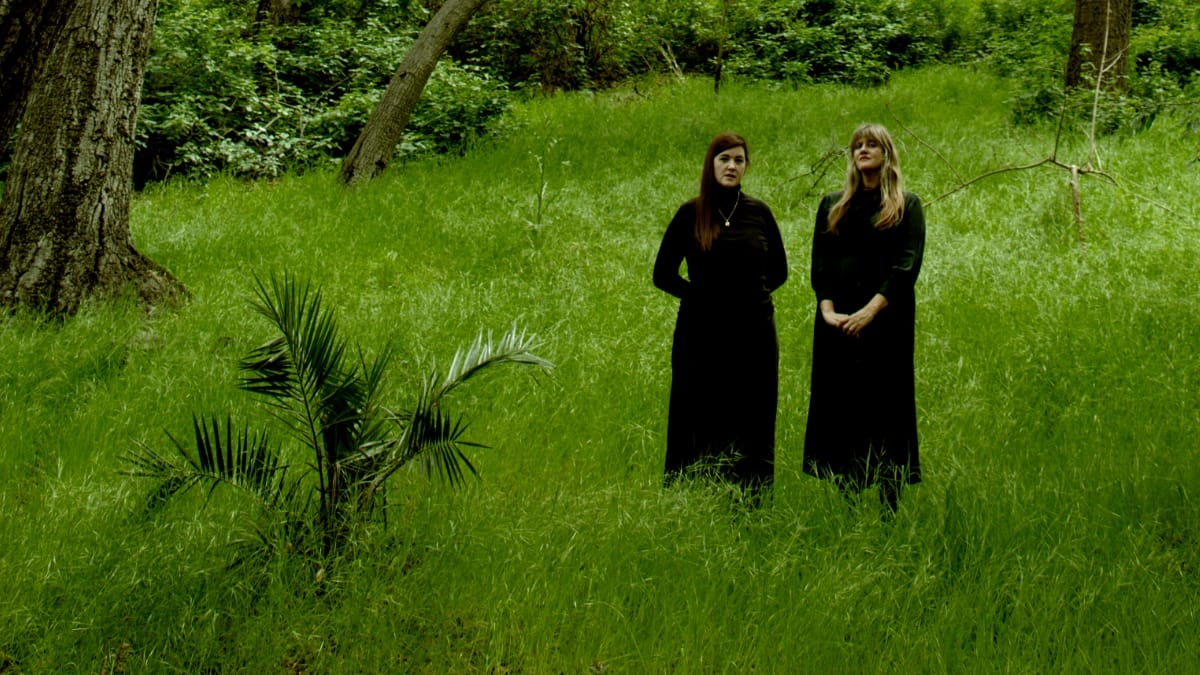
 Jonah Evans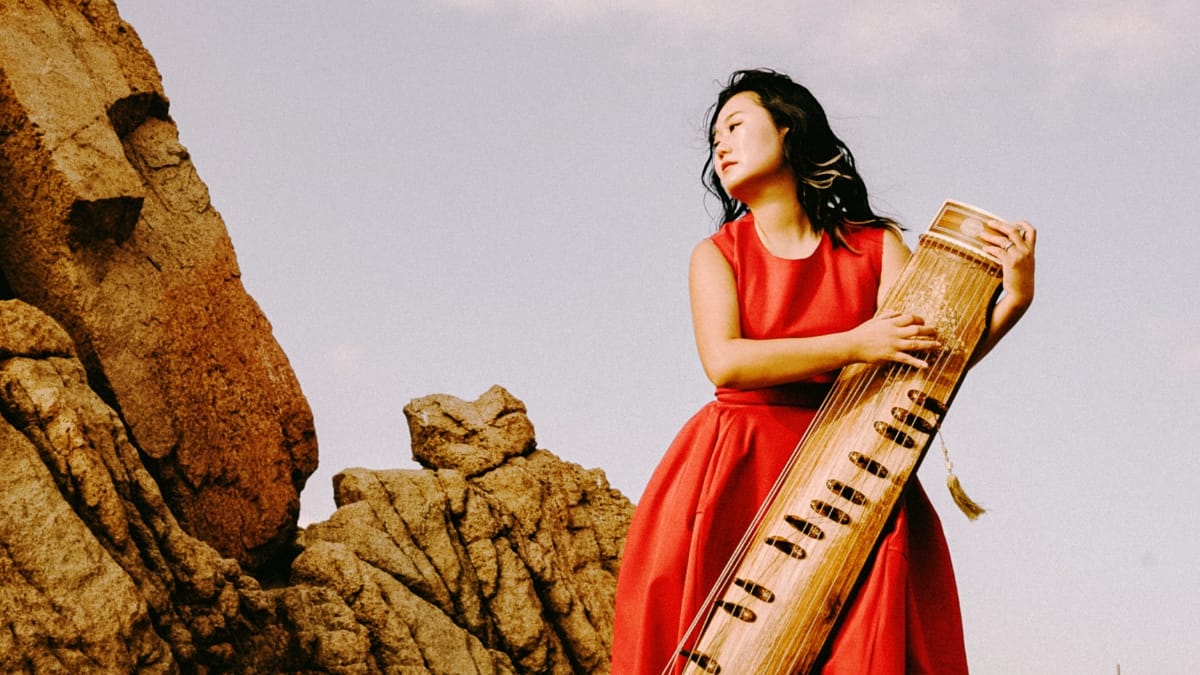


Comments