


Now Playing on The Tonearm

hackedepicciotto Find Their Clearing in Lichtenrade
Settled in the Berlin district of Lichtenrade after more than a decade of constant movement, hackedepicciotto discuss the making of ‘Lichtung’ — the German lyrics, the piano de Picciotto avoided, Hacke’s return to teenage experiments, and “Draussen,” a storm song with a home at its center. Interview by Kallie Marie.
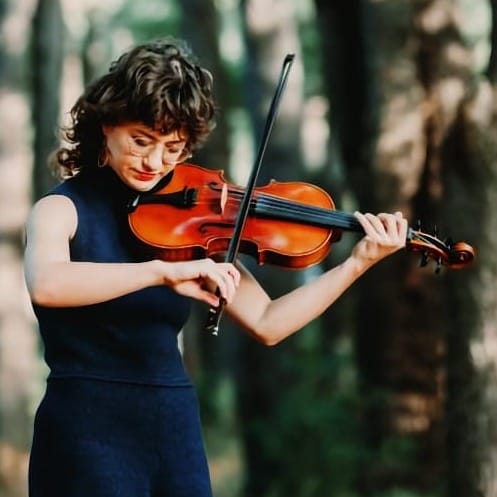
The Tune Isn’t Fragile — Sophie Wellington on a Living Tradition
Raised in the Shenandoah Valley and jazz-trained at Berklee, Wellington discusses old-time repertoire, the constant calibration between dancing and playing, and the making of the solo album ‘Her Bright Smile Haunts Me Still.’ Interview by Sam Bradley.
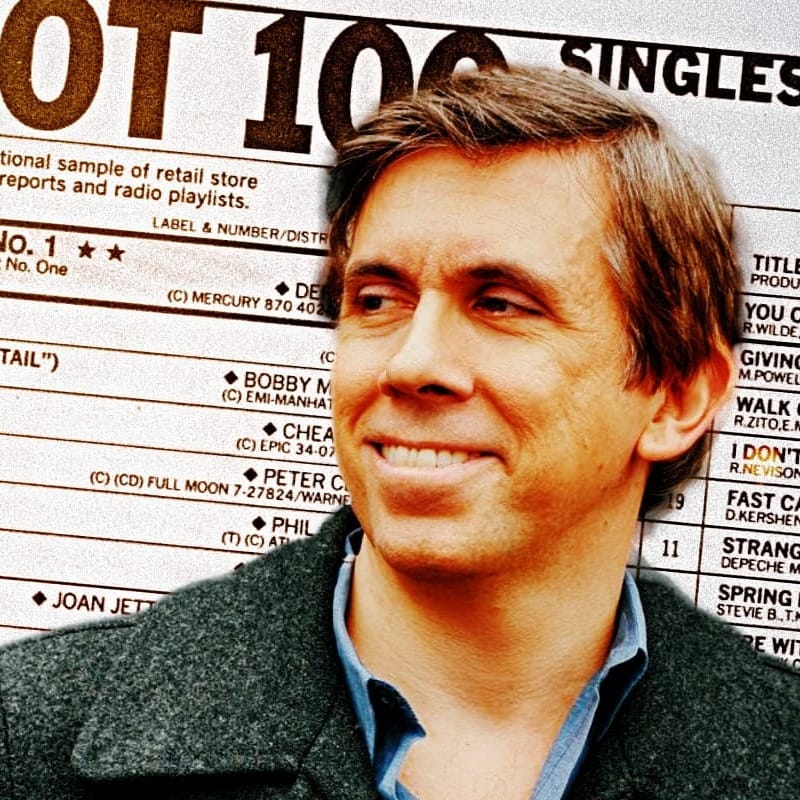
A Beat of His Own Making — Chris Molanphy, Chart Analyst and Pop Critic
The host of Slate’s ‘Hit Parade’ joins The Tonearm Podcast to discuss the two pools of data that keep the Billboard Hot 100 honest, the bundling schemes that turned the album chart into a promotional shell game, and the cultural rules that decide who country radio will play. Interview by Lawrence Peryer.
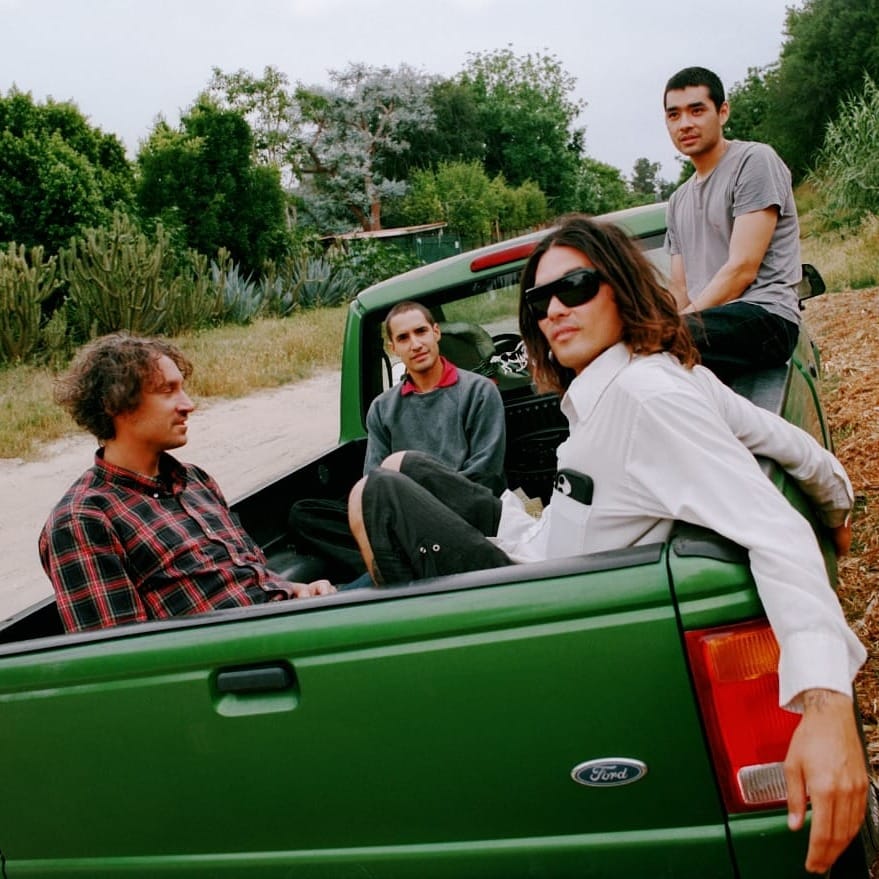
The Whole Greater Than Its Parts — Bondo on ‘Bondo’
Years of playing in the same converted room have left Bondo convinced the band is a thing separate from the four people in it. Interview by Bill Cooper.
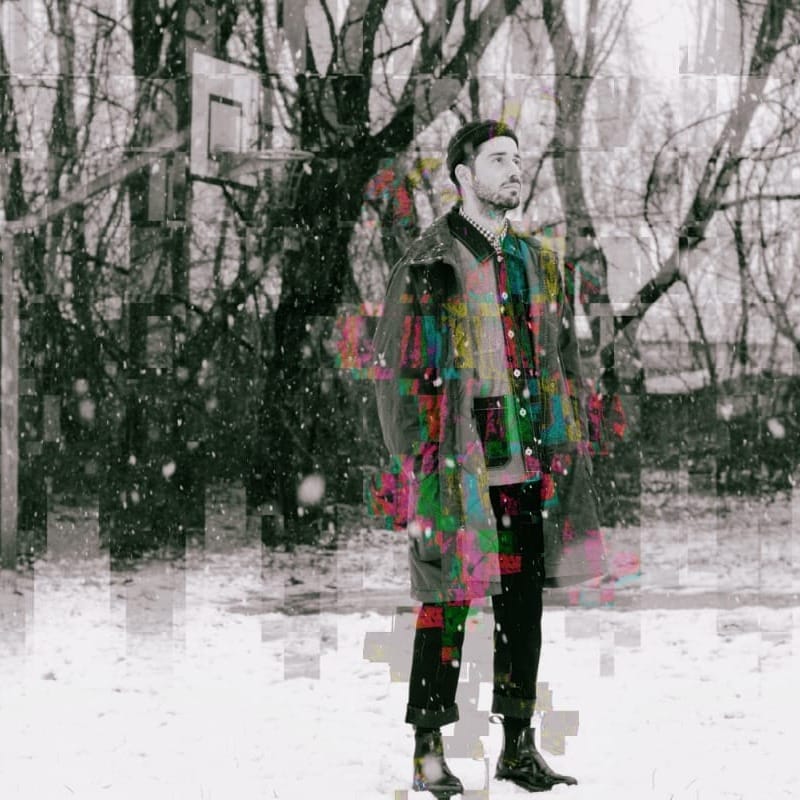
Half Chance, Half Sculpture—arc rae on ‘Bow and Arrow’
The Berlin-based French producer discusses ‘Bow and Arrow,’ a record assembled from improvised cello and randomized sample slices, and the working life behind it, in which every day at the computer is a straw pulled blind and most of them come up short. Interview by Arina Korenyu.
This Week’s Episode of The Tonearm Podcast
Rotations
Lawrence Peryer’s Rotations, the official radio show of The Tonearm, spends this week’s hour in some unexpectedly familiar company:
Episode 17 is now up on the Mixcloud archive. Artists we played that were covered on The Tonearm this week include Sophie Wellington, arc rae, hackedepicciotto, and Bondo. The hour also features some interesting music from what may be familiar names: Peter Gabriel, Bruce Hornsby’s latest (an odd track featuring Bob Weir), and the Grateful Dead themselves, in all their 1968 ragged psychedelic glory. Other stops along the way, too.
As always, a new episode of Rotations premieres this Tuesday at 11 p.m. Pacific on SPACE 101.1 FM in Seattle and streaming at space101fm.org.
Have a listen:

The Hit Parade
“He acquired the name Orbit, he said, because of his love of rocketry and astronomy, though he sometimes added that it was also because friends found him a bit spacey.” ❋ “Our songs were not very marketable. They came from a place of such utter honesty that it was difficult for us to become a band with an image, ambition, or direction, which plays well on a human level, but not on a corporate one.” ❋ “At the heart of all my music is the practice of listening in a kind of non-judgmental way. A lot of the time, when we listen, we listen with something in mind. We all have the experience of talking with someone and only paying attention to what we’re going to say next.” ❋ “Nobody was working to be famous or make tons of money or be commodified or sold to or labeled. We were really working against genre and gender, and that freedom is so essential to good art. If you start playing to the crowd, or you’re playing for money, the art’s going to suck.” ❋ “I used to call it the melody orphanage. Songs-to-be, but haven’t found a home yet . . . They obviously got put in the orphanage for a reason. There’s something special about them, and they might just be looking for a family.” ❋ “Most people know synthesizers. They think about a surfboard with black and white keys. They don’t think about Eurorack. They don’t think about experimental boxes that make sounds. I describe it sometimes as noise toys.” ❋ “[Ma] Rainey’s voice was powerful enough that when she hit her loudest notes, the grooves distorted. ‘The first time people played these songs on a Victrola with a heavy steel needle,’ Benson said, ‘it’d skip right past them.’” ❋ “Ransacking and embracing the darker and often more forgotten corners of American culture . . . The Cramps set about creating a hermetically sealed world that frequently held up a mirror to the environment from which they sought to escape.” ❋ “Whether delivering blistering solos with the Jazz Messengers or leading his own Blue Note sessions, [Lee] Morgan played with an urgency that felt both deeply rooted in Black musical traditions and eager to push them forward.” ❋ “Then disco dawned, dappling dancefloors with underground energy as Black, Brown, and queer people built a utopia apart from a world that gave them no room to dance.” ❋ “We will never know what [early music] sounded like and we’ll never know any authoritative answer to how we should be performing this music. To really bring sound off of the page, we have to add an element of our own personal creativity to that. We have to add the human element.” ❋ “It’s my firm belief that these [Grateful Dead] songs are visitors, that they’re living critters. . . . They’re visitors from another world, another dimension or whatever you want to call it, that come through the artists to visit this world, have a look around, tell their stories.” ❋ “[Harry] Belafonte and his marketers would claim that his biggest hits were songs he’d first learned in Jamaica as a boy. It wasn’t true: his repertoire was largely adopted from tunes he first heard or learned . . . in Greenwich Village.” ❋ “I just love the idea of someone stepping out of their house, walking to Semple Stadium [to see Björk], going apeshit to ‘Out Of Space’ or whatever, and then walking home again . . . this was 1994 in a town of 8,000 people. In Tipperary!!” ❋ “When Philip Freeman set out to start his own music website in 2010, he wanted to find a name that ‘didn’t immediately say this is a music website.’ He eventually landed on Burning Ambulance, which . . . fit the mysterious aesthetic of the experimental avant-garde music he was interested in.” ❋ “This wasn’t the first time Black punks had existed, but it was the first time I felt that presence in my own body, in my own moment.” ❋ “Rather than dismissing jedag-jedug as a derivative clone of Western electronic music, it is far more productive to recognize it as an authentic form of vernacular musical modernity.” ❋ “It’s the biggest song in the UK, but have you ever heard it? That was the question many were asking this week, after Sam Fender and Olivia Dean’s Rein Me In became the longest-running No 1 single in UK chart history, spending an unprecedented 19 weeks at the top.” ❋ “I came into writing this piece several months ago—wide-eyed, Gen Z, hopeful that gripping on to analog methods for dear life might just help us resist the slop . . . overtaking our media landscape.” ❋ “Juno Download abruptly announced its closure on June 1, wiping out the entire website and replacing it with a vague, 86-word farewell. It probably took less than five seconds for one of the most comprehensive archives of electronic music to be destroyed.” ❋ For more curated music links, be sure to follow The Tonearm’s feeds on Bluesky and Mastodon.
New Music Recommendations: Hana Stretton - tiarn (RIYL: ambient folk and home recording, Vashti Bunyan, Grouper, Mount Eerie) ❋ Jason Calhoun - Revelations of Divine Love (RIYL: intimate experimental ambient and electroacoustic built from field recordings) ❋ Mary Kouyoumdjian & Nigel Maister - Paper Pianos (RIYL: documentary-tape contemporary classical, Steve Reich’s Different Trains) ❋ Mondoriviera - La Laguna Dei Bei Sogni (RIYL: hypnagogic pop and vaporwave-adjacent plunderphonics, smeared guitar and funhouse keys) ❋ Roy Montgomery & Martha Skye Murphy - Nebular (RIYL: post-rock drone and experimental vocal, Stars of the Lid, glossolalia as sound art) ❋ Skúli Sverrisson with Bill Frisell - For All Your Flowers (RIYL: patient duo chamber jazz, Frisell’s Small Town)
The Deepest Cut
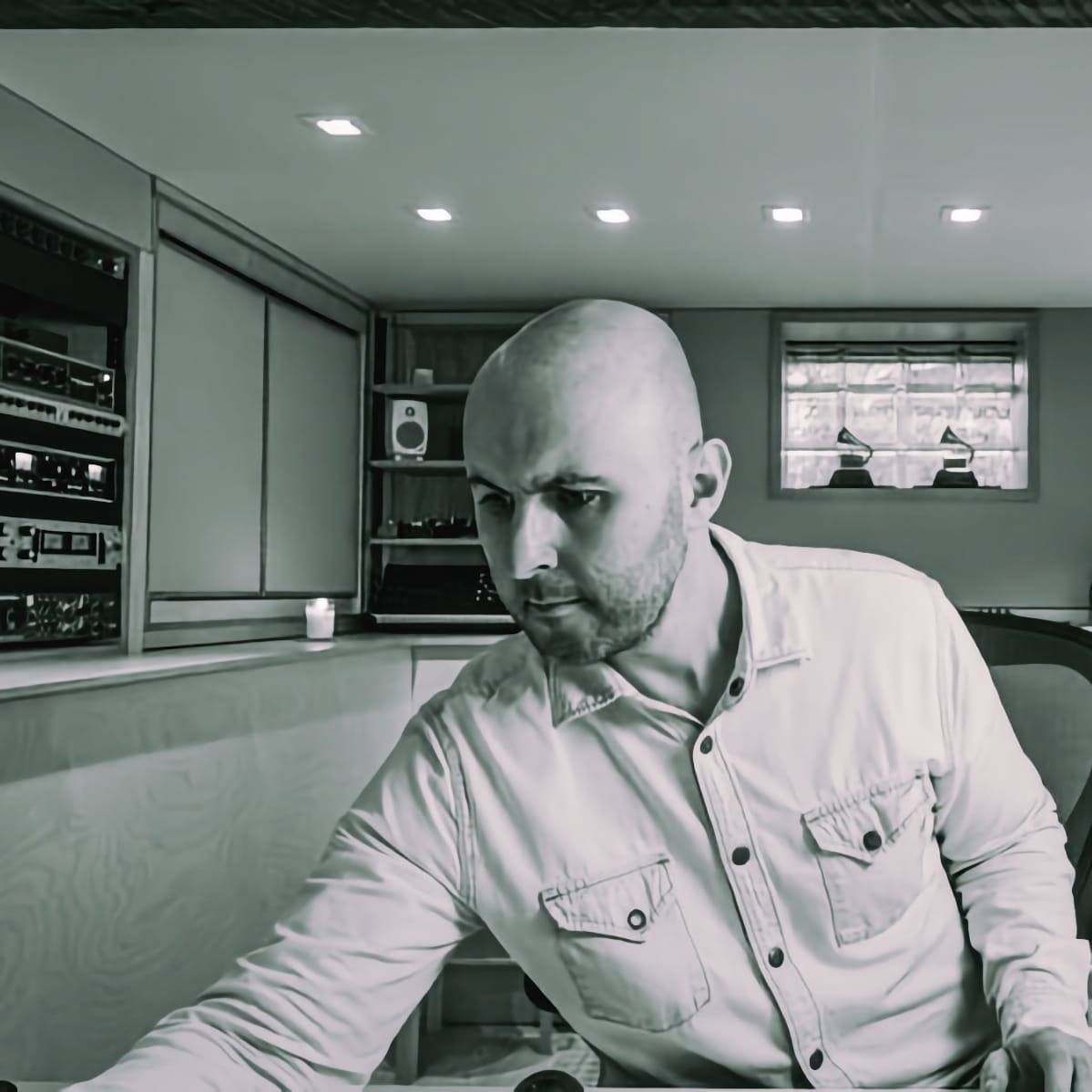
Joseph Branciforte has turned up in The Tonearm twice, once because of the live-editing system he built to slow down time and once to tell us about the small universe he built with Taylor Deupree. He is a Grammy-winning engineer who has mixed and mastered hundreds of records at greyfade Studio north of New York City, and a composer whose albums with Theo Bleckmann The New Yorker described as “beguiling explorations of voice and machine.” In 2019, he started greyfade, a label for process-based composition, alternative tunings, and improvisation shaped by software, and its FOLIO series presents an album as a hardcover book with the download tucked inside. I'm a fan.
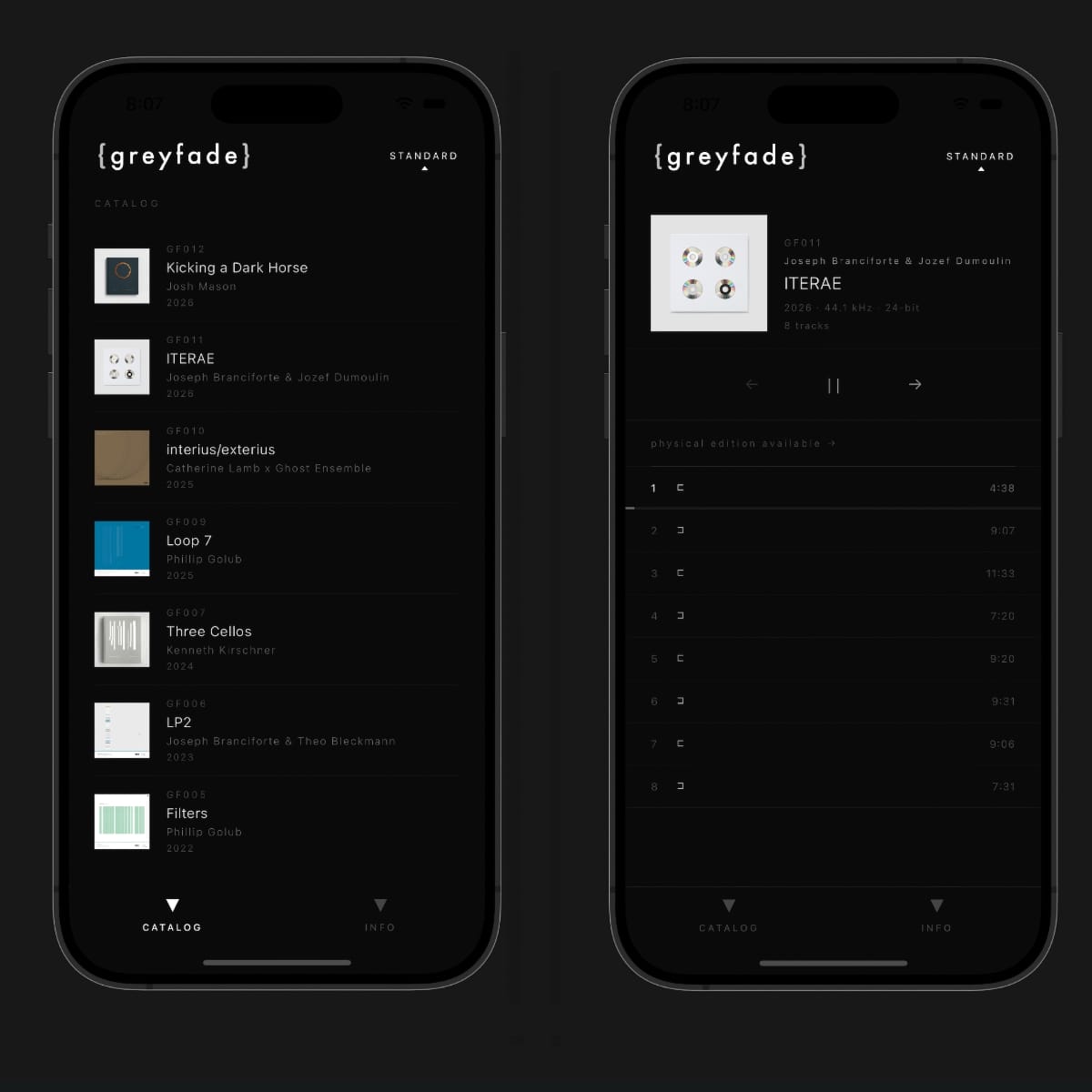
greyfade has never been on Spotify or YouTube, and Branciforte has been public about the reasons: the fidelity, the economics, and the way an album arrives on those services stripped of its sequence and its context. This month he proposed an alternative. The greyfade listening platform is in beta for iOS and the web, streaming the label’s catalog uncompressed and gapless, with no ads, recommendations, play counts, or feeds.
I wanted to know where the idea came from, what it solves, and why it suits greyfade in particular. I also put a theory to him, that a label-run app—or better, a collective-run one—isn’t out to topple Spotify or even to scale, and that the whole thing is for 'the heads.' He took it from there.
greyfade started from the premise that an album is a complete conceptual object rather than a set of audio files—that sound, sequence, visual design, text, and the release medium itself aren’t packaging around the music but an essential part of how it’s understood.
Since 2019, we’ve experimented with vinyl, CD, downloads, bespoke physical editions, and our flagship FOLIO series. We have obsessed over medium, packaging, typography, paper, binding, manufacturing, and the many small details that shape a listener’s experience.
Streaming was the exception. It was the one medium we never seriously engaged with, because it never felt like something that could be done convincingly on greyfade’s terms. You could upload the audio, artwork, and a small amount of metadata, but most of the meaningful decisions had already been made elsewhere. Sequence becomes optional, context disappears, visual stimuli compete continuously for attention. Albums become data entries in an infinite catalog.
But an absence becomes a story of its own. I’d find myself talking to people about why greyfade wasn’t on streaming services, when I wanted to be talking about the releases themselves. At some point I realized I’d rather spend my time building an alternative—the digital equivalent of FOLIO—than continuing to explain why the current streaming models weren’t working for us.
Albums are presented as albums. There are three modes—one for exploring the catalog, one for going deeper into a single release (essays, scores, interviews), and one that removes the visual interface almost entirely, leaving a play control and nothing else.
greyfade’s catalog is limited, intentionally so. Each release is the result of a sustained relationship with an artist and a belief that the work deserves time, context, and repeat encounters. The purpose of the platform isn’t to persuade someone that there is always something else to hear. It is to create an environment where the particular thing already playing can be heard more fully.
I’m excited about some new musical possibilities this opens up as well. Because the platform isn’t limited to playing back fixed audio files, non-linear and generative releases become possible: works whose structure is shaped by internal rules rather than fixed timelines, unfolding differently with each listening. This is something that greyfade artists such as Phillip Golub, Greg Davis, Kenneth Kirschner, and I have been exploring in our work for some time, but have never had a chance to present as such.
The economic terms imposed by the dominant platforms have been a major complaint among artists and labels. Here they become variables—things artists and labels are free to experiment with, finding the equilibrium that best suits them and their listeners. Whether a release can be streamed, downloaded, or something in between (I’ve been toying with a “stream-to-own” model, where what you pay to stream accrues toward owning the album outright as a download) becomes a decision an artist or label makes about that particular record, rather than one made by a tech company for everybody.
To be clear: this isn’t an attempt to compete with Spotify. A gallery isn’t trying to be a warehouse—it’s a different kind of room, with different assumptions about why you walked in. And none of this will ever replace the physical work; it’s another channel, for people who want the best digital experience of our music, but who’d rather not keep a library of large files on a hard drive.
One thing worth mentioning: the system underneath was built with greyfade as one client rather than as the whole thing. So it’s possible that another label, publisher, or organization could connect its own catalog to this architecture while keeping its own identity, presentation, and economics. This matters, because the real alternative to five platforms determining everything isn’t ten thousand incompatible apps—it’s shared infrastructure that lets each label, collective, or organization keep its own room. Whether it develops that way, I have no idea, but I’d be glad to hear from anyone thinking along similar lines.
Run-Out Groove
- The Tonearm is a reader-supported publication, free of advertising and paywalls. Our supporters help fund our writers and make the site possible. Please consider joining and helping us to continue our mission.
- Join the rapscallions of The Tonearm on our new Slack community.
- Sign up to receive our latest articles directly to your inbox in a snazzy, easy-to-read email version. Just go to your account, manage your email preferences, and flick the lever to receive The Total Tonearm.
- The easiest and best way you can help us? Please share this newsletter and our stories with your friends.
Thank you for reading! We’ll see you again next week. 🚀


Comments