


With themes that speak to finding your clearing in the forest of life, Lichtung, to the non-German speaker, may not immediately be self-explanatory in its themes and symbolism, but you can hear in the music a special kind of exploratory tenderness. There's a dedication in the elements, to intricate textures and fragile sonic creatures, living on the forest floor. It makes you want to stay for a while, examine each of them, and wait for the light to filter in between the trees until you find the path again. It's almost as if Alexander Hacke and Danielle de Picciotto have left the front gate open, inviting us to join them in this clearing—leaving sonic breadcrumbs for us to find.
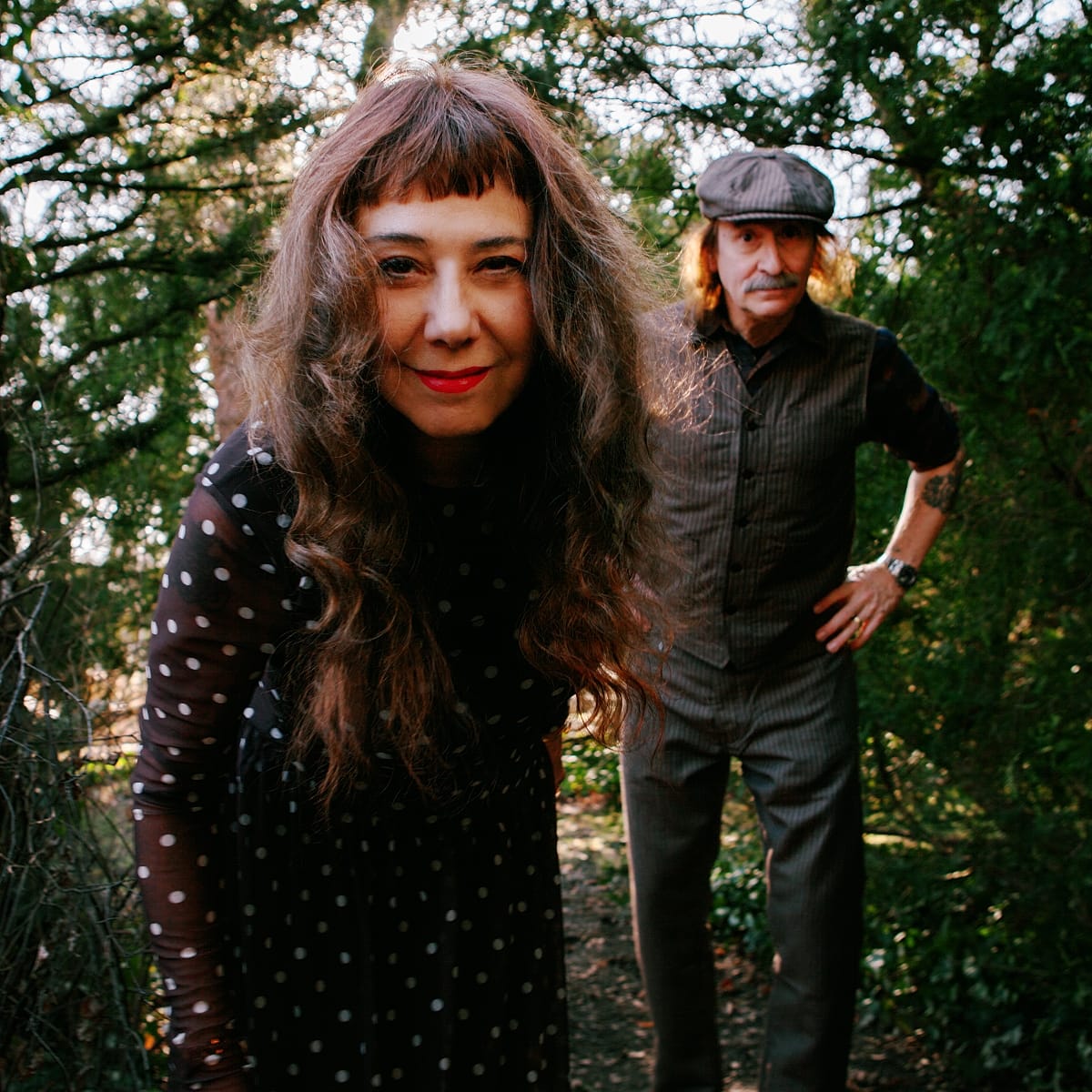
For some, hackedepicciotto may need no introduction, having a legacy that spans at least 14 years and many releases. Prior to giving up their nomadic life, many of their releases were made quickly and in different locations as they moved from place to place. Both members, Danielle and Alexander, bring to the table an impressive back catalog of projects, most notably Love Parade and Einstürzende Neubauten, respectively. Along with music, both parties have been wildly influential in the Berlin scene and globally. Danielle is also an author and has been a member of the Berlin art movement of Pop Surrealism, as well as singing for Die Haut with the likes of Nick Cave. She has been a curator and director, and has given lectures, panels, and talks on interdisciplinary arts. Alex is widely regarded for his collaborations with many artists, in addition to his longtime work with Einstürzende Neubauten. He has been an event organizer, helping pave the way for much of Berlin's electroclash music scene, and has also curated events and workshops on underground culture. His work also includes contributions to soundtracks, along with being a record producer in his own right. Together, the pair directed a film based on H. P. Lovecraft, and have performed in numerous multimedia shows. The creative outpouring individually and collectively between the two is staggering.
The instrumentation on their latest release is something of a new exploration of the past. Danielle shared that her background was very much in piano, violin, and classical training—which she remarked she was always afraid to dig into because she was concerned the structure and discipline she found in those instruments would tie her hands creatively. In this new album, they've both embraced elements of their pasts, creatively and geographically, to circle home. The album's opening track, "Lichtung"—which shares its name with the album title—reveals these paths as piano and hurdy-gurdy coax the plodding, driving percussion, drums, and bass, in a hypnotic invitation to their world. There is almost a reverent procession here, a tenderness that a ritual of discovery—of unearthing one's roots—is being shared.
We as humans have been nomadic animals for most of our history; what happens to us when we are able to settle, not just in location, but in our nervous systems and our creative hearts? In speaking to hackedepicciotto, they shared their experiences and reflections on leaving their former nomadic life, how it altered their process, and how it allowed them more time to focus on their work. It also shifted their work both structurally and intuitively, and informed and evolved their approach to creating together. In their exploration of their own musical roots, they each pushed one another to re-examine instruments and creative outlets that they had both grown away from. But now, with their mutual investment in their shared and separate artistic growth, they have found a way to guide each other, and so in their own way have found a new understanding of bringing past skill sets to the foreground with a cycle of renewal and shared perspective.
The transcript has been edited for length, flow, and clarity.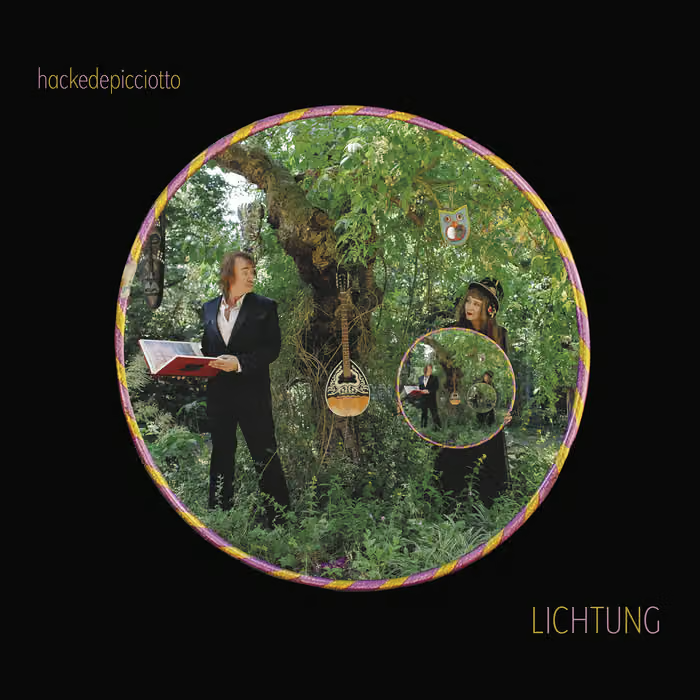
Kallie Marie: How has ending a more nomadic way of life affected your artistry, and were there any unexpected changes that came out of that?
Alexander Hacke: After 14 years, we settled in the very southern suburbs of Berlin, like on the edge of the city. Every place we lived in, and every place we recorded in, has informed the music that we play. One of our albums was recorded in the desert, in the Mojave Desert in California. Menetekel was recorded in a medieval church in Austria. The Current was recorded on the northwestern coast of England and in Blackpool; The Silver Threshold was recorded in lockdown, so nowhere really. Of course, this place has also informed our creative process.
Danielle de Picciotto: Basically, the difference between nomadic life and being in one place is that you have more time, because when you're a nomad, you always have to decide where you're going to be on what day, and you're constantly moving around because you don't have a place to stay. So all of our other albums were done in a very short amount of time. A lot of them we did in two weeks: two weeks recording, two weeks mixing, and that was that. Here we had the possibility of taking a little bit more time, and we still do it quite fast. We're always working on so many projects that we don't really have time to take more time. With this, we had the possibility of delving a little deeper into certain things, and I think that definitely made a difference.
Kallie: Was there anything surprising that was different for you two?
Danielle: It's funny because one thing I personally didn't expect, which I only really started to notice after people started telling us, is that the album sounds like one kind of piece that belongs together. I think it's interesting because we were trying out so many new things on this album. Like I was playing piano for the first time in a while, and we were trying not to be droney all the time, and we were doing a lot of electronics, and I was doing the lyrics in German. So it wasn't easy, and it was a lot of in-depth work with each piece, so we didn't really have a feeling for the whole album until a couple of months after we were finished. That was a surprise for me.
Alexander: The work generally presents itself at one point as an entity of its own, with its own demands. This time around, it was much more pronounced because we also had so many conceptual ideas and ambitions in doing this one, with the new instrumentation and the new language. At one point, the work, or the music, or whatever you want to call it, the pieces, they just come up to you and say, "No, whatever your ambitions may have been, I don't care about that. I want you to do this for me now," and that's what we did.
Kallie: This leads me to ask you both about the language aspect and the writing. I know that the language shift was a big focus. Does that affect or change how you write when you're switching gears between languages, and what is that like for each of you?
Danielle: It definitely changes. I never really thought about writing lyrics in German before. For me, writing lyrics has to flow. How do I say it emotionally—or just intuitively? That somehow always happened in English. I thought that when we moved back here, if I'm going to be living in Germany again, then I should tip my hat to the language that I've been speaking here, also as an act of politeness, and just write at least one whole album in the language. It's different because I wasn't writing intuitively as I was before. I had to think a lot more. Which sounds strange because I did think before, but I had to think more about rhythm because, for instance, German has a lot of long words, and sometimes it can be quite stiff—for me at least—to sing. So I had to think a lot about that. I delved into all kinds of different lyrics from other German musicians just to see how they use the language differently. I was like discovering a whole new continent, but it was fun. I really enjoyed it.
Alexander: I really only realized the power of singing in German when we did those first shows in German-speaking areas. I mean, I've been reading English books and speaking English for 40 years. I believe the one other thing that I can do quite well, aside from playing music, is my command of the English language. That language was always a way for me to separate myself from my background and surroundings; reading in English while everyone around me spoke German was always a way to concentrate on the content. But now, actually looking at people's faces and singing to them in German is a different feeling, and we get very new reactions, at least in these parts of Germany, because of that. Also, and I wonder—we just played in Portugal, and it adds some kind of mystique or exoticism to working or playing in other parts, because people are not familiar with the language.
Danielle: It's wonderful singing to an audience that can understand you. That's why we especially love playing in the US; people actually understood us a hundred percent, and now we're having that in the German-speaking countries—Germany, Switzerland, Austria—which is nice. It's a new experience.
Kallie: What was the most challenging aspect of creating the record, both individually and collectively?
Danielle: It was going from doing drone, which is repetitive and which I find quite easy, to being challenged by composing differently. We didn't have those repetitions, but we had to somehow keep the pieces continuing and make sense. Also, we didn't want them to be conventional song structures, and we wanted to have the two things that are in both of our sounds: Alex likes heavy, big walls of noise and bass, and I like little melodies that are very tiny, in this wall of noise. So we had to put all of that together and integrate it. That's pretty complex. So there were some moments where we were like, "Oh, this is scary. Is this going to work out?" Or, "Are we making a huge mistake?" But thankfully it did work out in the end, and we're happy with it.
Alexander: I think that's also a common issue, or that's a common challenge for us because as a couple we were still nomads. Everything we do is not just some project that we thought up and can work on and then leave behind. Everything we do is a statement and representation of our current life, and therefore, through the work on the art, we also get to reflect on life choices or how they are. We work a lot with symbolic meanings in the things that we do. Symbols, or looking at your reality through symbols, can make you realize a completely different pattern of truth. So that is something that we do sometimes struggle with because we go very deep. Not only do we go very deep in who we are, but in what we do.
Kallie: Are there any specific symbols or themes that you were focused on at the outset? Or did they just emerge?
Danielle: Basically, coming from being a nomad and settling down, the main difference is that you feel safer, in a way, having a home. When you're a nomad, you're very susceptible to whatever's happening around you. You don't know if there's going to be a tornado where you're at, or flooding, or you're suddenly not going to have a place to stay. So that was definitely a theme—the outside and the inside.
That's why one of the songs is called "Draussen," which means outside, and the thought of that was composing something that's like a hurricane, that's turning faster and faster within itself. In the middle, you've got the eye of the storm, which is the home that we're in, or everybody's home, and outside. The storm is going faster and getting more and more dangerous. That's the feeling I think that people have internationally, and that we have ourselves too. So that's like that depiction of inside and outside. That song is very, very much that way.
Alexander: The title of the album also has strong symbolic impact. The district of Berlin that we are in right now is called Lichtenrade—which comes from the term to cut a clearing into a forest—the clearing. That—just the title of the album, and to me, a clearing—is also a place where you are exposed to the full energy of the sun. It's an energy spot, like you would have in the desert or something. Also, this contains the word light, which I associate with enlightenment or with being on a quest to understand, like a spiritual quest. All of that to me is indicated in that title. It's like you find the clearing where you see clearly.
Kallie: What is your collaborative process like, and has it changed over time?
Danielle: Our collaborative process was figuring out how to work together because we come from such different areas. I come more from a classical area. Alex comes from DIY. I come from a specific electronic space, and Alex comes from a different electronic thing, and we're basically the opposite of each other in everything. The first album we did was Hitman's Heel, and that was an album with pretty conventional ballads, and neither of us was happy with it. We said, "Okay, we have to somehow find a way to do something which is more descriptive of us, if that's even possible." So we didn't really know what to do.
Then we went to Joshua Tree. We had a friend there, Dan, who has a fantastic studio, Gatos Trail. We were like, "Okay, come on, let's just jam and let's just each do what each can do best." I'm really good with melodies and playing these old historic instruments: violin, hurdy-gurdy, autoharp, these Turkish little weird flutes, and the cellos I have, and a little bit of piano. Alex is really good at percussion, bass, guitar, and throat singing. So we just jammed, and it worked!
We were scared that my classical upbringing paired with rock would be horrible, like in the eighties when they had that terrible kind of rock, like classical things set to rock. We were scared it would become something like that, but it wasn't. It became more droney and something we couldn't even describe. So we thought, "Okay, that's a good start." And we've been working from there.
We have very few rules, except that because both of us are so interested in so many different things, we should stick to the basic rule: we each do what we can do best and not include specific genres of other music in our music. Like introducing hip hop or dub or whatever, and including that in our music. We can't do that. We have to stay within that sound that we have, so that we have a specific sound that people can recognize and that represents us. That's basically what we've been working at for the last 20 years.
Alexander: Also, becoming nomads, we had the realization that once we had left those architectural structures behind—hallway, kitchen, living room, bedroom, bathroom—why should we contain our music in the same sort of structures? Intro, verse, chorus, verse, middle eight, verse, double chorus—or something like that. Instead, we just decided to base everything we do on the interaction between the two of us, wherever that might take us.
Kallie: Following on from that, how did each of you make choices about what instruments or sonic palette you were going to use when you're writing?
Danielle: I used to play a lot of piano. I started playing piano when I was six, but I haven't really played piano in our music because it somehow felt too structured. And because I had piano lessons when I was small, I always tend to suddenly fall back into Bach, and that's something I definitely don't want. Because of that, I tried to simplify the melodies, or somehow get a little bit of—I don't know if that makes sense with our music—but like this kind of jazz feeling, so that they're not so classical.
It's difficult. I was trained with somebody hitting me with a stick on my fingers and stuff, so that gets ingrained so strongly. It's hard to get away from that. I somehow had the feeling that I wanted to have a piano in there again, and everything else in the meantime—like violin and hurdy-gurdy—for me is very intuitive, and that's just our sound. I didn't feel like playing autoharp this time. I can't even explain why. So instead of the autoharp, I play the piano. I think that the structure of our songs is different because I was playing the piano without us even deciding or planning that, but that's the thing about piano for me. I guess that free jazz players are completely different, but with me it somehow immediately gets a structure, and that's what I was always scared about. Alex is good about breaking structure, so I could rely on him.
Alexander: There's a quote by Jaki Liebezeit, the drummer of Can. He said he doesn't like to play free jazz because there are so many conventions and rules. I can say the same of classical. Which is to say: I don't play free jazz because I like to get paid! For me, this is the first album where I really went back into something that I did when I was a teenager.
As a teenager, I called myself Alexander von Borsig, and I was this nerdy kid that worked with waveforms, envelope curves, and all these kinds of synthesis terms. That has always been in the back of my head, but this was the first time I actually started doing these things again. In the past, I've done a bunch of sound sets for virtual synthesizers and stuff like that, but in our work together, that was never a priority. This time, since we had a little more time than before, we put more effort into that.
Danielle: It's funny because for years I didn't play violin. I had a terrible violin teacher who also hit me. I had terrible music teachers, and I swore when I stopped playing, when I stopped taking lessons, I would never play violin again. Alex was bugging me for years, saying, "You should play violin again." Now I love it, and he does too. He didn't really work very much with sound for a long time, and I kept on saying, "You should go back to your roots. You did stuff when you were 14 that was amazing, and we should include that because it's just part of you," and so I kept on bugging, bugging, bugging him; so we bug each other.
Kallie: Oh, that really is lovely because it kind of suits the theme of coming home—circling back to roots—now that you're rooted.
Danielle: Yeah, true!
Kallie: Are there going to be any live performances of this work? If so, how will that work?
Danielle: We will be touring a lot in Europe, and we have just started collaborating a little bit with Vinnie Signorelli, the drummer of Unsane. He's a good friend of ours, and we've been thinking about asking another person to participate, so he's going to be playing at a couple of shows. We just did a record release party with him, and it was a lot of fun. He's an amazing drummer. So that's something.
We're pretty interested in collaborating with other musicians in general. And we play all our instruments; we have a hundred kilos that we carry around with us. We usually take the train because we try to keep our footprint small. It's pretty exhausting, but we love touring. We love performing. We wish we could come to the US if the visas weren't so expensive. That's going to have to wait a little bit, but we're going to be touring in Europe a lot.
Check out more like this:
 Lawrence Peryer
 Kallie Marie


Comments