


Let's get this out of the way—there is no baby. The baby is speculative. If you're familiar with Seattle's Julia Shapiro, then you're well acquainted with the playfulness and acerbic wit Shapiro brings to her music. Humor is the tool for negotiating feminism through the rise of sourdough brides and TikTok mom influencers, the cavalcade of tech bros ascending on Seattle trying to date in a digital meat market world called Tinder. Shapiro, the dynamo multi-instrumentalist, fronts Chastity Belt and Childbirth, but here's the secret ambient side project—Guest Bartender Deborah Toyota.
Music for Babies is without commentary, typically held in Shapiro's lyrics ("I hope I'm not pregnant, 'cause I don't want to have your kid"). Instead, close collaborator Samur Khouja joins the Guest Bartender roster to bring dissonance and noise to a soothing melodic palette that asks: what if I were a baby listening for the first time?
Khouja has logged significant hours with Shapiro's bands in the studio. The LA-based engineer and producer is the set of ears behind Seahorse Sound Studios, with a client roster that includes Olivia Rodrigo, Cate Le Bon, Paris Hilton, and Yeah Yeah Yeahs. Impressive, but Guest Bartender Deborah Toyota isn't about that. It's a respite. A rest. It's a deeply communicative, mutually appreciative pair of humans at a kitchen table, having fun.
Warbles and dissonance in a playful way. The secret ingredient is a nose flute sample pack representing Shapiro's brand of humor that meets a soft noise treatment from the prolific engineer. The multiple studio takes the pair is accustomed to are replaced by a mantra of first take, best take. There is a partnership of play where the pair meets one another in rest and improvisation.
There's a tenderness to two art kids at work. Their love of DIY zines, their expansion into poetry. Sometimes you need to do other things, at home, away from the jumble and content ring lights that are music production and marketing in 2026. I chat with Shapiro and Khouja over video in late summer—the first thing I notice is a lot of clowns in the background.
Carolyn Zaldivar Snow: Before we get started, I have to ask about the sad clown behind your head.
Julia Shapiro: My friends got me that as an apartment-warming gift.
Carolyn: Those are good friends.
Julia: I have a lot of clowns actually around my apartment.
Carolyn: What draws you to clowns?
Julia: I just like the aesthetic. I like the idea of a sad clown. I also have some papier-mâché clowns that I got in Mexico.
Carolyn: I have to ask just a blaring question: Is there a baby in existence, or is this a hypothetical baby?
Julia: There's no baby in our lives, but there are inner children.
Carolyn: All valid. Let's talk about listening for the first time, then. What is the first sound or song you remember from childhood? What's the first thing that captured you sonically?
Samur Khouja: Enya was my first favorite song. "Sail Away."
Carolyn: That's a really good pick. Did you have soft-rock, radio-listening parents?
Samur: No, my parents had smuggled a bunch of bootleg Arabic music over with them from Lebanon, and so those cassettes were kind of the first music I would hear. But I would sneak and wake up and watch MTV in the morning, and they'd always play the "Sail Away" song at 7 a.m. The video was just like watercolors to me. The music felt like that too. I was just a young kid, and this song feels like another world that's not my hectic parents' house.
Julia: I was just remembering that the first CD that I ever got was Everclear. There's a smiley face on the CD face. I forget the name of the album, but the song was "Father of Mine." That was my first CD. I don't know what my first music was I was into, probably Barney or something. Sesame Street. They had a very infectious song on Lamb Chop's Play-Along, and I think it went on forever. I think my brother was born into Lamb Chop, and then also Mister Rogers, which was just so boring to me. Now I find it really soothing, but at the time I think I needed more stimulation.
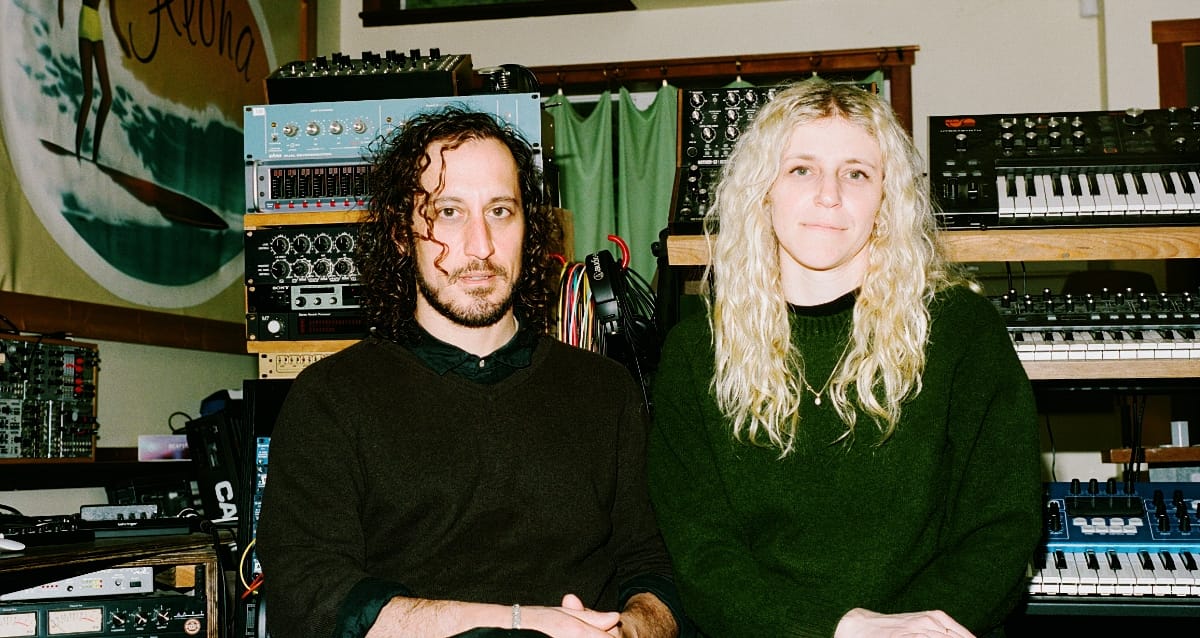
Carolyn: So I'm assuming when you're not touring and doing other projects that I'm not going to name here, because we were very focused on Guest Bartender Deborah Toyota, are you both sitting at your kitchen table with little synthesizers? What's going on? Do you live together?
Julia: Samur lives in LA, and I live in Seattle. We just happen to be in Seattle right now. We actually were just on a long road trip. We were just recording in Stinson . . .
Samur: John's studio—we were working on our second record.
Carolyn: You're an engineer by day. When you were piecing this record together, how did you get the idea to go make an ambient record?
Samur: We talked about making a record, and I thought about making maybe specifically music for babies, just something really gentle and sweet. I work on Julia's band a lot [Chastity Belt], and I'm always listening to her tracks soloed, and I hear a nuance in them that I'm just like, "Oh, this should be a record or part of something else, or a tassel on something." I think we've worked together for so long in different contexts that there was a budding album and sound that seemed refreshing to approach.
Julia: It happened very quickly.
Samur: We write very fast, and we overthink quickly, like it just happens in a second.
Julia: We have a million unfinished songs right now that we have to shape together for our next record.
Carolyn: So you say you write quickly and you collaborate fast. Is this something like Julia texting you a voice memo from Seattle at two in the morning? Are you sending loops back and forth? Do you just get together and go on a 20-hour synth bender?
Julia: Closer to the last one, we only really do stuff in person. Most of it is improvised, and after recording a bunch of different parts, we'll thin them out, shape the song, and give it a little more dynamic feel.
Samur: We generally agree on what the song needs, and we just give each other space. A lot of it is us setting up all the synths so we can jump around to different things quickly—it's very tactile. I can tell when she's really working on something or has an idea, and I'll just give her space.
Carolyn: Are you recording the entire time you're putting together ideas, or do you play around and then bring in things to record? Like Prince, for example, is just running a recorder. Arthur Russell wants you to hit record the minute they enter the room. How does that work?
Samur: We're always recording.
Julia: The first early ideas, you go back to them, and you're like, "Wait, I forgot about that one," because of how you progress playing it a bunch of times . . .
Samur: It's usually better. First thought . . .
Julia: Best thought.
Samur: I do a lot of field recording and archival stuff. I'm really particular about saving things so that there is an archive anytime, even if there's a new idea. I'm like, "Can you do a 1.1 so that there are incremental archives of everything?"
Julia: That kind of stresses me out. I'm like, "I don't have enough room on my computer for all that."
Carolyn: I will say, there's a magic to all the nerdy DAW-less synth stuff. Then I started becoming a responsible human with files and computers, I'm just like, "Damn it! I just spent two hours troubleshooting a file conversion."
Julia: That stuff is so stressful for me. I'm really glad to have Samur because there are certain points where I would have just given up, like when I couldn't make something work.
Samur: I think she's adopted my 'save-as' thing. She's so good at what she does, especially with graphic design. I'll archive the take, but she'll just redo it. I never feel like I can approach something again once it's done—which may or may not be true—but Julia will just redo something again.
Carolyn: Would you say one of you is improvisational and the other is used to many takes, and maybe that comes from being in a band?
Julia: Yeah, I think I'm learning to be more improvisational through this project. It's so different from anything I've ever done, because usually we go into the studio having at least some form of a song, and it's like, "Here's the first verse, here's the chorus, here's the second verse." So it's been freeing to work on this project without any of those constraints. Especially for this first record, we weren't really playing to a click or anything, which made editing more freeform.
Samur: It was more like truncating the long form. I am attracted to things that are out of time and out of tune and don't have any structure.
Julia: He's really the opposite of me in that way. He loves dissonance and things sounding fucked up and out of time. I think I reel him in a little bit, but then he keeps our music from sounding too poppy and too straightforward.
Samur: This is the most pop record I've ever done.
Carolyn: Have you asked any babies how they feel about the record?
Julia: I've talked to some parents. I feel like the parents are gatekeeping it from the babies.
Carolyn: The dynamic I like here is that you are playful. Sometimes I struggle with ambient music because everybody's like in a five-panel cap, all black, problematically perfectionist people. How do you remain playful?
Julia: I think it's necessary to remain playful, but I've also never taken any band I'm in super seriously, because that to me just ruins it. I want to be able to have fun, experiment, and laugh. I would say that in this project we were finding the most ridiculous sound and then seeing if we could make it work, and that was really fun.
Samur: Yeah, we did a slap bass. Our friend Chris let us borrow this old rack mount synth that had all these bizarro sounds in it, and then there was a slap bass sound that didn't sound like Seinfeld, but well, it did though.
Carolyn: I love a tone bank with a slap bass, but this is clearly like a late '80s, early '90s synthesizer.
Samur: And I was like, can you please just do a couple of low passes? All of a sudden, it sounds like these cool '80s toms. It went from Seinfeld to tom.
Carolyn: What is your main instrument for this record, Julia?
Julia: Probably my MIDI keyboard. The flute, specifically the nose flute. There was this free pack on Ableton. I don't want to give away all our secrets, but I was really riding the nose flute hard.
Samur: It sounds really dumb.
Julia: It's emotional. It's kind of sad.
Samur: It's almost kazoo-like.
Carolyn: So what differentiates sad sounds from happy sounds?
Julia: I think something like a chorus effect, but being slightly off, out of tune, makes it sad. Like a pitch bend. That to me is why I think I'm hitting the nose flute so hard because it had so many pitch bends that I could fuck around with.
Samur: I think where it is in time too, where maybe it's not in quite the right place.
Julia: Unexpected, like a little surprise.
Samur: Just a touch late.
Julia: Definitely like the later, the sadder it is.
Samur: I do a lot of drones, and Julia will do a lot of the lead parts, and we kind of switch off. Where there's a hierarchy of sound, it can kind of collapse on itself if it's not in the right place. To have a front and back loudness, where things are really far back, and the sound of it pierces through the veil enough for it to really be emotional. There's like a mist in front.
Julia: Whatever is creating a feeling. You'll try one sound or one part, and you're like, it's actually just not hitting. Then you're waiting for something to hit, and you just know when it really hits.
Carolyn: When you tour this record with all those big ambient funds, will you be hiring a nose flutist?
Samur: Full orchestra.
Carolyn: How often do you get to visit with one another?
Julia: Like once a month-ish. Samur's been traveling a lot recently, going to Greece to work at a studio.
Samur: So sometimes I'll hit Seattle on the way to Greece. I'll find little ways to just sneak in a trip here, just so we can . . .
Carolyn: Make ambient records?
Samur: Yeah.
Carolyn: That's a good goal for a visit. Since you are in the audio arts, what goes into engineering a good ambient record?
Samur: There's this fervor to record everything immediately. There's this diminishing returns set of things. The first take will be the most meaningful. Even if you don't use it, that's also pretty powerful. Julia has really good ears. I like things to be very asymmetrical, or that's what I lean towards. I don't know if I particularly like it, but my body just does that.
Carolyn: Do you listen to ambient music on your own?
Julia: I do. That's kind of like the only type of music I've been listening to recently. I went through a little bit of a phase where I was like, I don't actually like music anymore, and maybe it was just like an overdose from being in bands and touring and going to shows. I definitely still feel this way where I can't really listen to anything in the same genre as Chastity Belt. I just feel like I've heard it all or something. Nothing sounds new. To me, ambient music feels new.
Stay on top of The Tonearm.
Subscribe for exclusive interviews, cultural tip-offs, and community fun.
And your support keeps our site free of advertising and paywalls.
Carolyn: Glaring question: who is Guest Bartender Deborah Toyota?
Julia: The name is so long that it's that we thought that was funny, you know, like it's a little much, which I like.
Samur: We really regretted it when we were making the email address.
Julia: We're like, is that the right spelling? Like, we really have to make sure.
Samur: That was maybe our one big fight. How to spell Deborah.
Carolyn: Tell me where you were when you saw the sign for a guest bartender.
Julia: We were in Greece on this island called Hydra. There's a studio there that Samur's been working at. We were there with my band Chastity Belt, and we kept passing posters for this event that said, "Guest bartender Maria Nissan at the bar in front of the bar."
Samur: Maybe it was lost in translation because everyone does speak Greek there, but it was "at the bar in front of the bar." It was really bizarre.
Julia: Samur was like, "Oh my God, Maria Nissan is here. Maria Nissan is on the island." So that was funny, and the idea of a guest bartender is funny to me, too.
Carolyn: So it's actually Maria Nissan, and you invented Deborah Toyota. Did you ever go to the night with Maria Nissan just to see who they were?
Samur: We were going to go, but we were having a beautiful dinner. Never meet your heroes. That's a big rule I have.
Julia: It exists better in our imagination.
Samur: Or if you meet your heroes, be prepared.
Carolyn: Okay, going off your screen handles Julia because I can't stop laughing. When are you constipated creatively? I noticed you use screen handle "I M Constipated" for life stuff, and "I M Regular" for business stuff.
Julia: In graphic design, I'm more regular. I've yet to make a handle that says I have diarrhea, but I probably should do that at some point.
Carolyn: This is the summer of diarrhea if you haven't heard about America's food supply.
Julia: I've heard about it. It started as a joke. There was an era where everyone was just constantly changing their handles, and I had a bunch of different ones, and then I settled on that one, and then simultaneously, my Instagram account got verified, and I couldn't change the name. Or I had an opportunity to change the name, and I was like, no—I'm not a coward.
Carolyn: Does it affect you in the music business?
Julia: I put out a solo record under my own name, and so David Dickenson from Suicide Squeeze was like, "Do you want to change your handle, like your name for this? That might be helpful." And I was like, I really don't want to be a coward. I'm not going to do that. So, yeah, it's just kind of stuck. I think. Literally.
Carolyn: Okay, that joke took me a minute. So when are you creatively stuck?
Samur: I mean, this project is very freeing. A lot of my projects are just me toiling away alone, and it's so easy to just let things sit on hard drives once they're done. There's that whole speaking about social media and everything else. I don't like that you have to be your own cheerleader, your own number-one fan online, like the president of your own fan club, type thing. That stuff really bothers me. I don't like that labels, and everybody expects you to make content of your own records. Like that should all speak for itself.
Carolyn: Social media pressure is difficult. How did it feel to design the cover for your own record? What kind of pressure does that feel like? Or maybe it's joyful.
Julia: For this project, I didn't feel any kind of pressure. Sometimes for my other bands, I do feel a bit more pressure, but it's harder with more bandmates and more opinions and stuff.
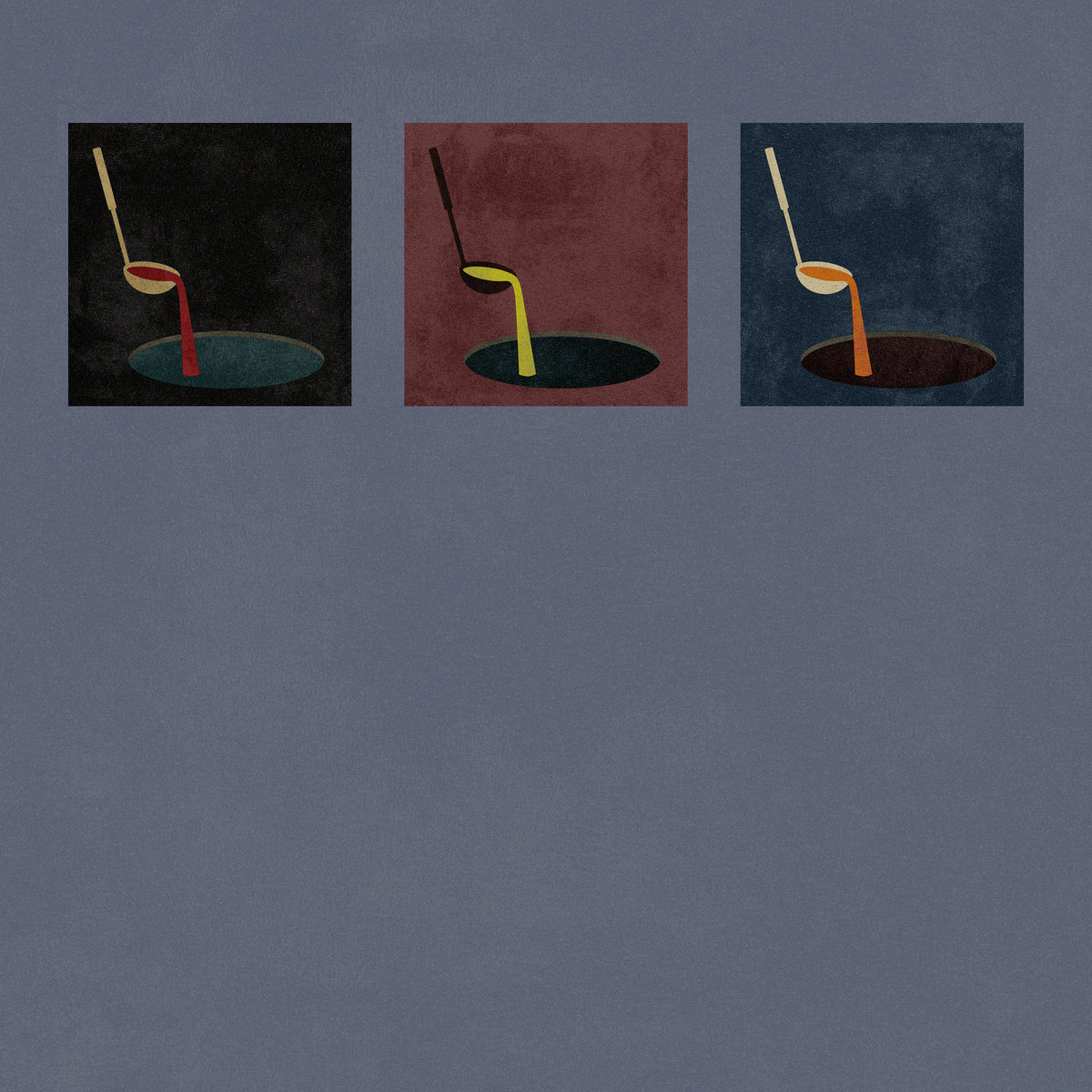
Samur: Sometimes we'll be talking, and certain words will kind of pop up, in this case the ladle [on the cover].
Julia: There's a ladle theme between us for some reason.
Samur: We're building each other up in the cosmic soup.
Julia: The ladle pouring into the abyss.
Carolyn: What made you feel like you wanted to press it to vinyl?
Samur: It was just one of those things of just letting it go out and then not being a part of us anymore. I think it's a really important exercise to do because you can make things all the time, and maybe there's just a little nudge, like wanting to have a good printer, and then all of a sudden you're printing your beautiful poems. I made a zine a few months back, and I was hand-stitching it like I always do. [Shapiro is in design school with access to what she deems a “fancy printer”; the printer furthers the duo’s DIY zine efforts.] But sometimes you can't have too many pages because it just gets impossible to either staple or even bind yourself.
Carolyn: What's your zine called?
Samur: It's called Hauling. I took a bunch of film photos of these hauling trucks. Before the ICE raids, they were kind of prolific. They had these hand-painted signs, and they all kind of have a similar aesthetic. They are these small pickup trucks with found objects. People go around and pick up your trash for you—it's a whole ecosystem. A lot of them have disappeared after all the ICE raids.
Carolyn: So, what's next? Anything you want to tell me?
Julia: We definitely will be putting out another record. We have a lot of material right now. We're also working on maybe becoming DJs because we just did a pretty sick DJ set the other night.
Carolyn: Like vinyl or digital?
Julia: Digital. Samur has a DJ app on his laptop.
Samur: It's cool. The iPad one's even cooler. Yeah, so we might do iPads.
Carolyn: Were you DJing for one another in your house?
Julia: This was actually for my cousin's wedding and at a variety show.
Samur: We DJed in bee suits.
Julia: We were wearing beekeeping suits.
Samur: We're going to projection map our beekeeper suits.
Carolyn: What's your DJ name?
Samur: I guess Honey Pot.
Julia: I thought it was Hive Mind.
Carolyn: What was the first song you led with?
Julia: Well, it was actually a mashup that my brother made 10 years ago. We should send it to you. He did a mashup between that Evanescence song and the Disturbed song. It's a masterpiece. That's what we led with, and my brother was really stoked.
Samur: We're available for weddings.
Check out more like this:
 Steven Garnett
 Carolyn Zaldivar Snow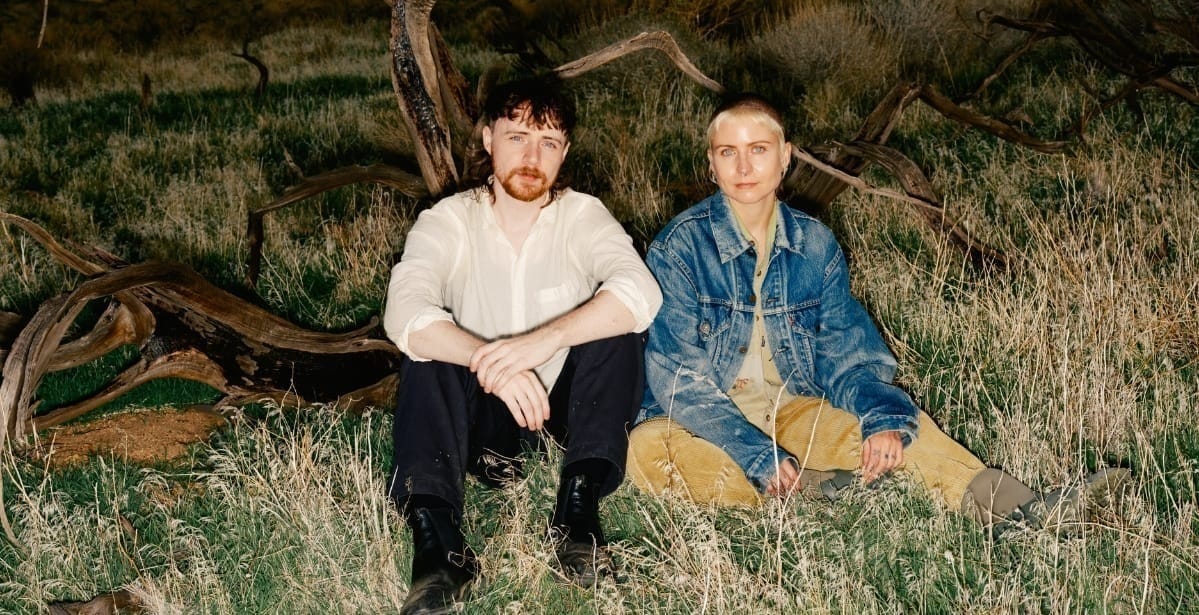


Comments