


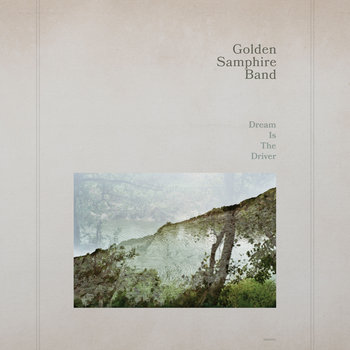
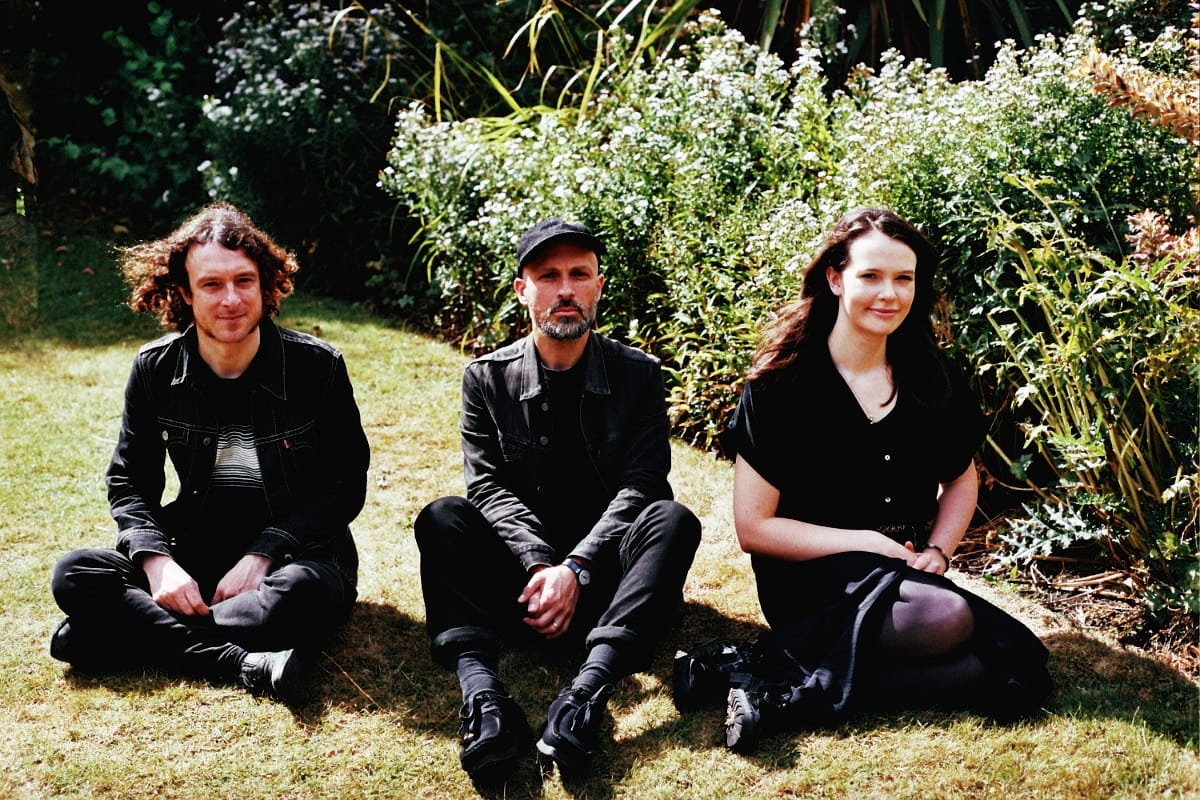
Based in Brighton, England, the Golden Samphire Band comprises vocalist Hannah Lewis and instrumentalists Rich and Mik Hanscomb. The brothers have made music together for going on four decades, most notably under the guise of Junkboy, and they’re no strangers to crafting clever pop and rock. Their music incorporates sounds of the past, present, and future, from lounge-core to synth-pop influences, abounding throughout their eclectic and diverse musical career. In turn, vocalist Lewis comes from a jazzy and musical theatre background. What the trio lacks, that other peers perhaps have, is a traditional background in UK folk music. Far from a failing, it's a strength, for it is rather their diverse passions and influences that work to grow the garden of musical delights that make their debut album, Dream is the Driver, such a wonderful and fresh listen. The trio isn't trying to sound like any particular sixties or seventies UK folk act; they're in an original space, with a uniting coastal influence shining through.
I sat down with Rich to discuss how the three came together and how his and Mik's shared musical influences as teenagers led them to create music first as Junkboy and now as Golden Samphire Band. Below are some excerpts from our conversation.
Chaim: When I listen to Dream is the Driver, I hear an obvious English folk influence, but I imagine that's just the tip of it.
Rich: Absolutely. I wouldn't consider ourselves totally psychedelic folk, as we have a variety of influences that all blend together in our music. I love English psychedelic pop, brilliantly orchestrated records. Things like Nirvana [the sixties UK psych group, not the Seattle grunge band], Blossom Toes. "King Midas in Reverse" by the Hollies. Which is just beautiful, with the twelve-string guitar in there, and the trumpets and everything. Just a brilliant record, the way it all comes together.
Chaim: What were your earliest musical influences?
Rich: My brother Mik and I discovered much of the same music at the same time, by going through our father's record collection when we were kids. Our dad was really into the Byrds and the Association when he was younger. He had all their albums growing up. So, we got into that early on, along with the Beach Boys. We went through different phases; the first phase started with getting deep into Pet Sounds, SMiLE, Smiley Smile—the whole mythos, as it were, of Brian Wilson.
And this was in the nineties, in the pre-digital age, before you could look up all these obscure records online. But my brother and I started discovering these obscure American psychedelic pop records just on our own, through what we already liked. Like the other groups beyond the Association.
Chaim: Like Sagittarius?
Rich: Oh yeah! And The Millennium, and Smoke. All these brilliant American soft pop and psychedelic pop records. It wasn't until I got into my early thirties that I really got into the world of British UK folk and psychedelic folk. There's this kind of imagined Albion around those records. This created world, probably an ideal that doesn't really exist.
Chaim: It sounds like you started with what was easily available, and that led you and your brother to dig further, down the same musical path.
Rich: Indeed. A big part of it is discovering what I call this alternative rock narrative; you've got the Rolling Stones, Dylan, Monterey Pop, Jimi Hendrix, Zeppelin, Floyd, all the name acts everyone knows. But if you dig further than that, you'll discover loads of great bands that never received their due at the time. All these artists fell by the wayside at the time but have since been reappraised and had their records rediscovered in the ensuing decades.
When it comes to British psychedelia and folk from the sixties, there's a certain charm and lo-fi element to all of it; bands recording for small labels, having a go of it. The fidelity may not be the finest, but the charm is there. I was listening to this beautiful little psych-folk song, “Just Another Day,” by a band called Neon Pearl. They were a British band. They did a stint in Germany in the late sixties, came back home, and tried to cut some psych singles, but nothing happened. The music they recorded, though, is absolutely lovely. And when you realize how many bands from that era are like that, you discover all these little nuggets. And now we can finally celebrate them and their obscure beauty.
Chaim: When you were a child, did you know at the time how influential your father's musical tastes were to you and your brother?
Rich: I think so. I also think I may have gotten my idea of alternative music history from him: he didn’t like the Beatles after their first album; he thought the Stones were shit after their first album; he never loved Bob Dylan; he thought Hendrix was crap; and so on! He grew up when those artists were just coming out, and formed his ideas on what he liked and did not like early on. He loved jazz, though, and folk; he loved West Coast American sounds of the sixties. He really did have diverse tastes, which we naturally picked up on.
Chaim: With you and your brother getting into similar music, I imagine you two spent a lot of time in record shops as teenagers.
Rich: Of course! And this was also in the early days of smileysmile, the Beach Boys fan community, where people would turn you onto all sorts of wonderful music. That's how we discovered the music of Curt Boettcher (Sagittarius, Millennium). And you pick up on the names on the records. You'd be listening to a Byrds album, and realize the guy who produced it, Gary Usher, is the same guy who wrote songs with Brian Wilson. Making all these connections.
We got into all this obscure music at the perfect time, for the UK music press was thriving, covering the new musical scenes of the time and digging into these obscure records from the sixties and seventies.
Chaim: Did you find it difficult to find shops that had what you were seeking?
Rich: Growing up in Essex, there was nothing there. It's a seaside town, but as far as record shops for us, nope. Mike, our friend, and I would trek to Rough Trade in Covent Garden, just underneath Slam City Skates, and also a place called Selected Discs. This is going to make me sound like a fucking old man, but I remember buying a new vinyl pressing of Love's Forever Changes around 1999, and it must have cost only five pounds. There was this period in the UK in the late nineties and early aughts when- new vinyl was super affordable. That definitely helps when you are young and seeking to discover music. Now it would cost you twenty-five pounds for the same album, brand new.
Chaim: The indie labels always kept the flag flying. But once the major record industry saw there was money to be made again, they shifted back to vinyl.
Rich: Everything changes. But vinyl is a beautiful form. And it's nice to see interest rising again with younger listeners getting into it. I'm glad that physical formats in music are being rediscovered because having tangible forms in the arts is really important.
Chaim: While we're on the subject of music in England, I think it's important to note that many records that didn't sell well at the time of their release in America did quite well in the UK back in the day. Albums like the Beach Boys' Sunflower and Love's Forever Changes sold well in Europe when they came out, so they had generations of listeners who grew up with that music.
Rich: That's an interesting point. Dad didn't have Forever Changes in his record collection, but he would speak of Arthur Lee with a revered tone, in the same breath as, say, Brian Wilson. It's like with Pet Sounds; when it came out in the UK, its reputation began almost immediately and has only continued to grow. There's a love for records and artists that has carried on from generation to generation here.
Chaim: Going back to your teenage years in the nineties, I imagine you were also tuned into what was then current in the music scenes worldwide.
Rich: Yeah, particularly the Shibuya-Kai scene going on in Japan at the time. Cornelius’s Fantasma was a big record for us. In reflection, it's pure surface; but at the time, it was fucking hip. And we deeply appreciated the Pizzicato Five's aesthetic, which was just sublime. I still listen to their music. American bands also influenced us; there was a great indie pop band called the Lilys. We'd read about Jellyfish in the music press all the time, but it wasn't until later that we really got into Jason Faulkner.
Chaim: You mention all this nineties music that was looking back to the sixties sounds, which was at the same time that the ‘Ultra-Lounge’ and space age sounds were having a resurgence.
Rich: We both loved that scene—Moog synthesizers coming to the forefront again. When this was all happening, Mik and I formed a band, Junkboy, in our late teens. We took in all the synth influences happening; the first two or three releases are our love of Moogs and basically trying to rewrite "Wonderful" by the Beach Boys. That's where we were at.
As we progressed, we set aside our lounge pretensions and, as we got older, moved toward a baroque, pastoral sound, which I feel we've really refined. It evolved naturally from being into certain strands of sixties music, the pop and the folk, and blending them together.
Chaim: How long have you and Mik been making music together?
Rich: We started when we were kids, playing in our friend's crap Nirvana cover band [the Seattle grunge band, not the sixties UK psych group], which used to rehearse at school.
Junkboy formed in the spring of 1998, recorded our demo that summer, and the following year it came out on seven-inch vinyl on this tiny little label, Enraptured Records. And we've been doing music together on little labels ever since, basically.
Chaim: How did Golden Samphire Band come about?
Rich: We met Hannah a few years back. Mik used to put on these nights around Brighton called Eight Miles High. With a name like that, you can probably guess what it is! He and his friend would play sixties music, have the oil lamps and projections going. Very trippy. One of those nights, they had this band playing, Across The Sea. Hannah was on vocals, and Mik just thought she was great, her vocals were amazing.
When we recorded the most recent Junkboy record two and a half years ago, we brought in Hannah to sing vocals on a couple of songs. And after it came out and we were writing songs for the next album, it dawned on us that we've been doing instrumental music for so many years now. Why don't we just do an album with Hannah singing? It was going to be ‘Junkboy and Hannah Lewis’ at first, but then, about halfway through, we're like, let's just call it something else entirely. We've been doing Junkboy with others, though always with the two of us calling the shots. So, the chance to do something a bit different under a different name and to work collaboratively with someone else has been a joy.
Hannah brings different influences into the music that neither Mik nor I have, which is really nice. She's not some middle-aged record-collector dude like us. She's much younger, and her tastes lean more towards jazz standards and musical theatre. She's coming from a completely different place, which is wonderful. She's a really cool person we wanted to be involved with. It's really important, with Golden Samphire Band, that it's not just musical. We're creating art that reflects where we live, along the coast on either side of Brighton. There's a beauty in living by the sea. A certain mysticism of the Sussex coastline.
Chaim: Having been in Brighton a few months ago, and having listened to your new album, I can definitely hear the influence of the seaside, particularly when things are off-season, and there's a certain mystique in the air. That, combined with a pastoral feel.
Rich: It's lovely for you to perceive that. That's something that we were going for. I mean, Mik and I can talk about our favorite sixties and seventies records until the cows come home. But I feel it's really important that when you create music, the last thing you want to do is make an album that sounds exactly like another brilliant record, say Swaddling Songs by Mellow Candle. You've got to take your influences and infuse them with your own art to create something a bit more unique and true to yourself. We wanted to evoke a certain kind of coastal melancholy. We all grew up by the south coast of England, and it affects your music.
Chaim: Brighton is a colorful, bright city, but it also has a mundanity to it. When you walk around early in the morning, you see people going to work, the people who keep the city running the whole year through, even when it's off-season. They live and work there.
Rich: There's a uniqueness about Brighton. I don't claim to be a well-traveled person, but if you're going to live in the UK and you can afford it, it's one of the best places to live. It's liberal, it's an art city, it's a special place. But that's not to paint some idyllic portrait; like any coastal city, there's a stratification of wealth. You've got this beautiful art-infused city, but there's also some terribly run fucking dark places. There's a sense of desperation, because it is so expensive to live there. It's eye-wateringly different to live there.
Chaim: On the creative side, there are lots of interesting people around.
Rich: Oh yeah. Funny enough, in the nineties, Stephen Kalinich lived in Brighton. He's best known for collaborating with Brian and Dennis Wilson in the sixties. It blew my mind that he was living here! A friend of mine used to run an ice cream shop along the North Lanes, and he said Stephen would come in every day and have an ice cream.
After our conversation, Richard Hanscomb was kind enough to give us a list of Golden Samphire Band's UK folk/psych recommendations:
Here is a bit of Golden Samphire Band's favorite British Psych/acid/singer-songwriter folk set. All these albums were at the back of our subconscious when making Dream is the Driver, and will probably be there when we make the next album too. Golden Samphire Band have diverse influences beyond music, especially with Hannah's input (art, cinema, literature), but this offering represents Mik and my favorite nuggets. The instrumentation—Robert Kirby-style strings, the overarching sense of exquisite melancholy, a general feeling of being 'out of time', a sense of hopeless romanticism, seeking solace in nature—these are all things we attempt to channel in our music and will continue to as the three of us create more together: Galton and Simpson to Hannah's Tony Hancock.
Neon Pearl — 1967 Recordings (2001) — "Just Another Day"
Nadia Cattous — Earth Mother (1970) — "All Around My Grandmother's Floor"
Forest — Full Circle (1970) — "Much Ado About Nothing"
Fotheringay — Fotheringay (1970) — "The Sea"
Sunforest — Sound of Sunforest (1969) — "And I Was Blue"
Danny Kirwan — Second Chapter (1975) — "Lovely Days"
Shelagh McDonald — Stargazer (1971) — "Stargazer"
Synanthesia — Synanthesia (1969) — "The Tale of the Spider and the Fly"
Trees — On the Shore (1971) — "Murdoch"
Check out more like this:
 Bill Kopp
 Chaim O’Brien-Blumenthal


Comments