


Deceit by This Heat is just one of those albums—ones that contain everything there is to love about music. Released in 1981, it galvanized everything that had happened in the underground before, and scorched a multi-pronged path forward. Springing off its lean and nervy post-punk frame were mind-bending progressive variations, sheets of noise, tape looping, avant-garde, industrial, free improvisation, no wave, field recording, musique concrète, and on and on.
That overglut of refraction points is felt as soon as you put on the record, and it hardly lets up throughout its run. Deceit is dense, difficult music, claustrophobic and instinctual, sharp and agile, and dizzyingly great. Countless artists who came afterward, proudly brandishing the 'experimental' tag, whether they acknowledged it or not, had dipped their feet into the fountain that This Heat had built.
Thankfully, Dälek had never shied away from singing This Heat's praises. The Newark, New Jersey, group let the hip-hop world, and the music industry at large, know early on that they were drawing from a different well. As their sampling peers plumbed the depths of Motown, Impulse!, and ubiquitous pop culture, Dälek plunged headfirst into the ugliest, dingiest corners of the underground. Their 1998 debut, Negro Necro Nekros, married turntablism with live drums, heavily distorted guitars, tabla, sitar, and trumpets, and spliced clanging industrial harmonics into the fold. If that wasn't un-commercial enough, they showed a proclivity toward extended instrumental breakdowns, with two tracks on the album clocking past the ten-minute mark.
With that viscous, omnivorous first step, Dälek forged a new inlet in the rapidly overcrowding field of rap—kids who were as in love with Throbbing Gristle and My Bloody Valentine as they were with Eric B & Rakim and KRS-One.
By the time Will Brooks (MC Dälek) and Alap Momin (Oktopus) were readying their sophomore effort, the underground buzz was real. Everyone wanted to catch a glimpse of the strange rap duo that played punk clubs and experimental festivals. From Filthy Tongue of Gods and Griots quickly proved it was no flash in the pan. It took everything their debut had thrown into the mix and made it smoother and even more hermetic, somehow without sanding off any of the edges. That singular metallic fury was now amplified at full power, and Dälek were fully formed.
From there, they have charted a steady course of ascension. Though true mainstream success never reached them, they happily traded it off for creative freedom and an uncompromised longevity. Somewhere along the way, they took a hiatus and returned reformed, with Mike Manteca replacing Momin. But the aesthetic core of Dälek remained—a temperamental mixture of industrial propulsion and hip-hop grooves. They played and recorded with both their peers, as well as avant-garde legends Faust, and most recently, Brooks got to bring his influences full circle by recording an album with Charles Hayward, the legendary percussionist of This Heat.
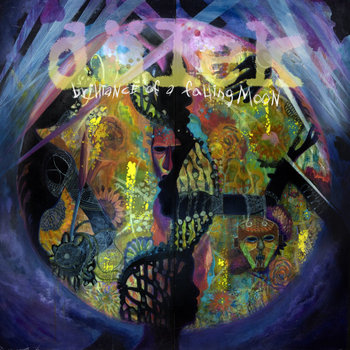
As I sit down to speak with Dälek, they are on the cusp of releasing their tenth full-length, Brilliance of a Falling Moon, an expectedly excellent swirl of noise and deft, vexed bars that shows how hungry and undiminished the group has managed to remain throughout the decades.
khagan aslanov: I remember when Filthy Tongue came out. The buzz seemed unreal. But I would say that even with all of that happening, you never really got your due, compared to some of your peers—not proper recognition for all you contributed to hip-hop and beyond.
Will Brooks: I mean, it's 2026, and they're still talking about us (laughs).
Mike Manteca: Before we get into that, what do you mean by proper recognition?
khagan: I mean, when people talk about crucial acts in the history of hip-hop, mainstream and underground, you should be mentioned in the same breath as the Rawkus Records lineup of the 90s and 00s.
Will: I definitely appreciate that and am humbled by people who are into what we do. The odds of getting even to this level are pretty astronomical, and lasting as long as we have is also a rare feat. But that's not why we did this. Ultimately, we concentrate on making the best records we can, maintaining our quality. And I feel we've done this; otherwise, we would have stopped a long time ago. To me, and I’ll speak for both of us, this music is our therapy. And it's worked. It's allowed me to be a somewhat well-balanced person in my regular life.
Mike: I will say, even when I joined the band, the motto wasn't to chase any sort of accolades. There was just such a creative energy around the group. We didn't know each other. They needed some help, we met for an hour, and now it’s been twenty-plus fucking years. Taking that energy, building from there, and witnessing that was the point.
There could be underlying things in your head, sure. You get to a certain point, you start thinking, "Why isn't someone doing this? Why isn't someone saying that?" But I don't think any of that was ever the purpose of the music. The purpose was always just to create, without any expectation. Destroying expectation was, in fact, the point: to play with every artist under the sun, from free jazz to metal to pop. That's all that needs to be said.
Will: As far as peers go, if we’re ever mentioned as the same type of band as This Heat, Faust, or Silver Apples, I'm good with that. There are so many bands that never got their due while they were around, but somewhere down the line, someone discovers them and thinks, "Wow, they did that back then?" I get emails like that from kids who just discovered us.
Mike: Kids who tell us they heard us when they were listening to music with their parents (laughs).
Will: At the end, we create what we create. We find our tribe, the people who are supposed to be listening to it.
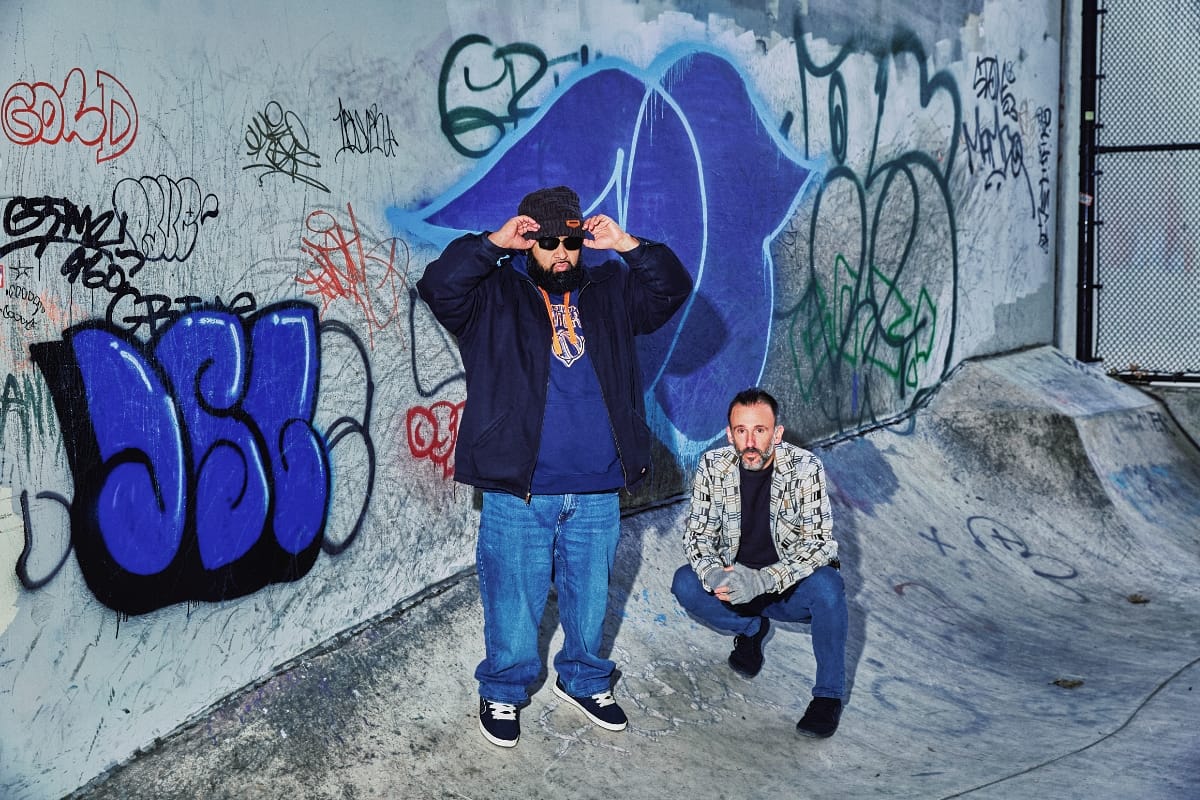
As their star began to rise, Dälek signed with Ipecac Recordings, an imprint founded by Mike Patton and Greg Werckman, a relationship that has lasted to this day. Ipecac was already gathering infamy within the music industry back then, as an artist-first label, one that prioritized quality over quantity as a business model, veering sharply away from the general pursuit of moving units and chasing chart presence. Ipecac signs artists to one-album deals only, allows them to own their masters, and splits all profits 50/50.
Though, in retrospect, that model was an idyllic place for a group like Dälek, at the time, it seemed like another left-field move. As an emerging hip-hop act poised to cash in, signing with an independent label instead of a major (which were still drowning in money from the CD and MTV era) seemed unthinkable.
khagan: You jumped on Ipecac early on, and it continues being a perfect home for you. But when the hype was first going, were you ever approached by any majors?
Will: In a way. We got into it at the tail-end of when the music industry and major labels were a thing. We got invited to a lot of dinners and got a lot of free meals. At one point, we were managed by the same company that managed Moby, right around the time when Play came out. So there was this weird time where we played some shows with Moby, and the whole time, I was thinking, "Why are we doing this?" No disrespect, but the two of us don't mix; we shouldn't be on the same stage.
Mike: Because to this day, people don't know what to make of Dälek. They love it, but they don't know what to do with it.
Will: We were approached, but I don't know how serious any of the conversations really got. I got a lot of nice free records out of it, from the labels that were speaking to us. I would raid their archives. At the end of the day, we always felt more comfortable with independent labels. We always knew we wanted to own our masters and not relinquish control like that. We didn't want a label telling us what to do and what to say. So a major was never really in play.
By even the most liberal approaches to music as a business model, artists on Ipecac enjoy untold creative freedom. This is why it's become a permanent home to long-standing outfits like Melvins, who have waded through the industry's ups and downs for half a century, straining to remain who they are in the face of constantly shifting tides. All that experience, chiseled the hard way, was something Dälek were able to learn from as their paths with the label and its gallery converged.
Will: We were looking for the right independent label to help us, and luckily, Ipecac was that label that came through. They really let us be who we wanted to be and nurtured us. We were kids, really. Mike Patton and the Melvins showed us how things worked, how to tour, how to put out records, but never really got in the way artistically, which is beautiful. Ipecac has never said a word to us about what to do. I let them know that a new album is coming; they give us available release dates, and we go from there.
khagan: And they don't seem to have interfered with your DIY ethos either.
Will: Except I don't sleep on floors anymore (laughs). That part of the ethos is gone.
Mike: Yeah, certain DIY things have gone.
Will: You can call us bougie or whatever, but we need hotel rooms.
khagan: Yeah, what's in your rider these days?
Will and Mike (in unison, laughing): Single hotel rooms!
khagan: I always know I'm speaking to an Ipecac artist, because they're the only ones who feel unrestrained enough to talk shit during interviews.
Will: Well, give us time, we just started.
khagan: I'll ask you now, then: give us your top grievances within the larger music industry.
Will: I hate venues that want a percentage of your merch. I mean, if you want that, then give me a percentage of the bar. When I hear this, I just shut down. Like "fuck it, we won't be selling then." It sucks, but what makes them think they're entitled to that? That rubs me the wrong way. What else, major labels and their 360 deals. That's ridiculous.
Mike: Paying to get on tours. Bands that have to pay labels and management companies to open for other bands. That sounds fucking insane when I hear about friends’ bands doing that. I get why you're doing it, but at the same time, why would you do that?
Will: Another is the concept that, as an artist, you need to create more content. Motherfucker, my album is my content. I make music. I'm not a director, I'm not making ads. I make music. End of story.
Mike: Dealing with bands who act like rock stars before they're rock stars.
Will: Or dealing with bands who act like rock stars when they're rock stars. I mean, we're all people. We write songs and play for a living. You should be humble as fuck that people are giving you their money for this dumb shit!
In 2010, Oktopus left the group, and Dälek went on hiatus, recalibrating. They had closed out the previous decade on a winsome run of albums, each topping the next in scope and reach. Manteca had already been working with the group in various capacities, and his own project Destructo Swarmbots had even opened for Dälek. He was the natural choice to take over the 'sound-sculpting' duties, and by the time Dälek returned to the fold in 2016, with the woozy Asphalt for Eden, it was evident that the gestation period only served to make them hungrier and sharper. The album also marked a brief step away from Ipecac, with the Canadian heavy metal label Profound Lore putting it out. But the period of reestablishing their footing didn't take very long. By the following year, Dälek were re-signed to Ipecac, and Endangered Philosophies put out the call that the vexed masters of atmospherics were back for good.
khagan: Are there any specific listening, reading, or other artistic pivots you use to get stimulated to begin a new album? How do you even start making something like Brilliance of a Falling Moon?
Will: In the very beginning, the vision was mostly Oktopus. We would go into a project, and he would essentially say, "Okay, the next thing will be this meets this meets this." None of it was literal, just a jumping-off point. So the albums would start way, but then they would become their own thing. It was never a matter of listening to something specific, though there have been songs that inspired us. As an anecdote, "Forever Close My Eyes" was heavily inspired by Bob Dylan's "Highlands" off Time Out of Mind. We basically patterned the arrangement based on that. That's as close as being inspired by something gets. Whatever we start never ends up in the same place.
Mike: With the last few albums, there hasn't been any discussion of direction. And usually, when I'm getting ready to write, I don't listen to music. I tune the whole world out for a bit. I want whatever is going on in my head to be as clear as possible.
Will: And the stuff I tend to listen to is the polar opposite of what we're creating anyway. I listen to a lot of songwriter stuff—melancholic, sad shit.
Mike: The biggest thing we've put out into the world of our creation for this record was to strip it all down. Even if we thought a sound was really cool, it didn't mean we needed to put it in.
Will: We started working on the core ideas, and narrowed them down from fifty or so to fifteen, and then started writing to them. It was obvious then that they didn't need much more. Overdubbing and adding layers weren't going to benefit anything. It was natural and good.
Mike: Also, on this record, Will's vocals really defined how songs were designed. He wrote to ideas, and we sculpted around the vocals. We didn't set up loops; we just played through and then trimmed it down. Aside from finding time to get together, this was a very easy record to get through.
Will: Each album has its challenges, and on this one, it was time. The time we did have, we made the most of it. There was an urgency to keep moving with ideas. And the album really showed itself to us.
khagan: You said there were fifty initial tracks workshopped for this album. Would you ever do the Sonic Youth thing, this gigantic vault dropping all these rarities decades down the line?
Mike: Why revisit the past?
Will: I'm a digital pack rat; I keep everything on hard drives. And before I leave this plane, I need to burn that motherfucker to the ground, just to make sure this thing never comes out. Some of the stuff is pretty terrible. It doesn't need to come out. I'm sure there are some gems there, but the trash far outweighs them.
khagan: And what's your rig looking like for this tour?
Mike: We tweak the rig every tour. It's mostly because we're lazy and don't want to carry a lot of shit.
Will: I do my own vocal effects on stage, so I run an Eventide H90 (Harmonizer), a Roland SP-404MKII for samples, and two tablets to add sonic layers.
Mike: My end is Ableton Live and live guitar, also run through the H90. And then different effects I made. We used to travel with a sound engineer. And then we decided to make it as easy as possible. It's not about control issues, but it's definitely about control issues (laughs). And I now also finally have a guitar with a detachable neck that's built to last.
Will: You need to find the tools that let you express yourself the way you mean to. Small samplers and synths you can travel with—there isn't much you can't create that you need nowadays.
Mike: Because we can feed certain things to the house engineers in clubs, but they may not understand where in the mix those things should live, and we're relying on them to know.
khagan: I'll also throw into that grievances list 'house engineers who think they know your sound better than you do.'
Will: Definitely! But we can't say that because we're about to go on tour.
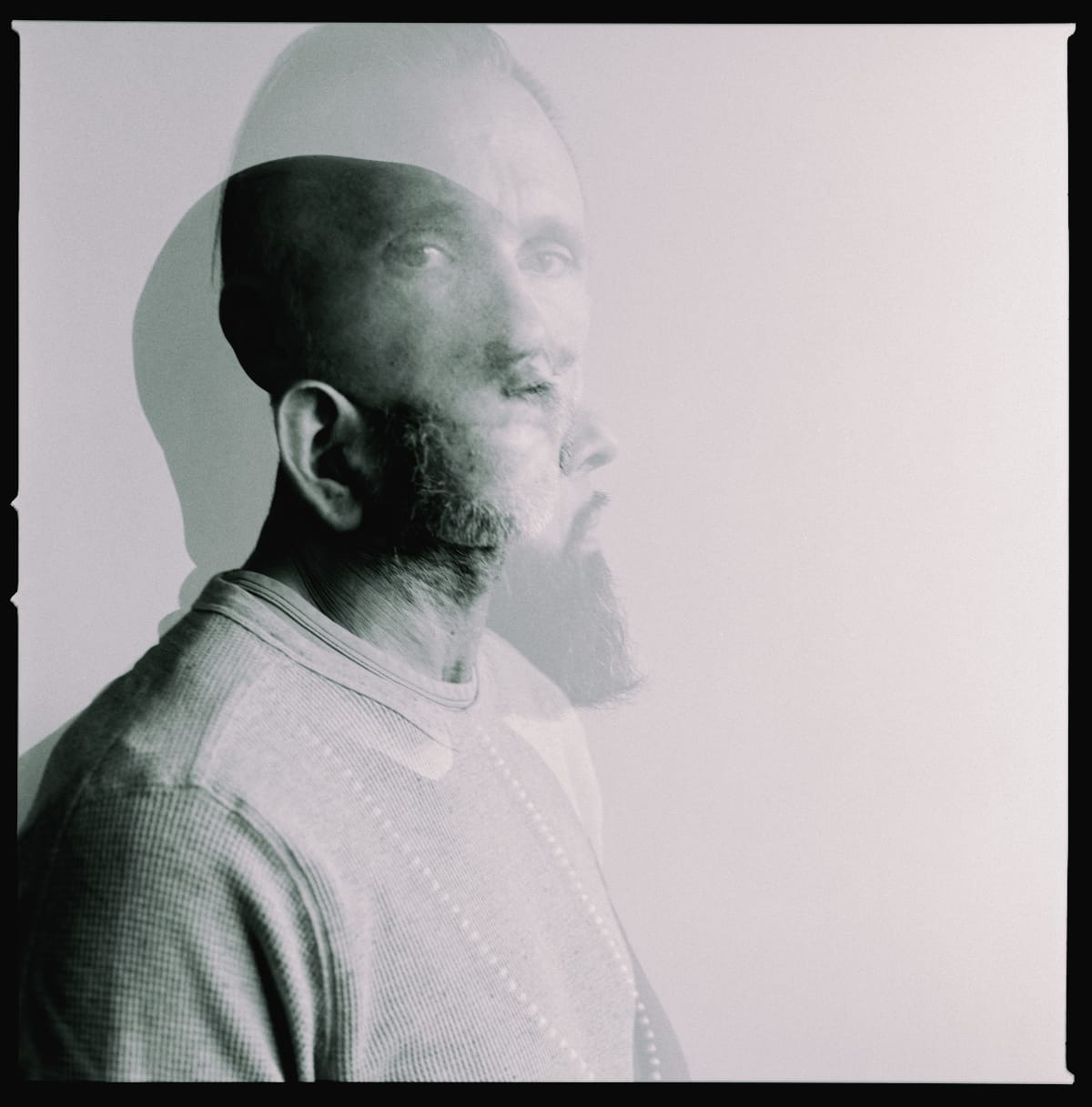
As for Brilliance of a Falling Moon, it's another patented Dälek affair, tense and screaming with life, another cross-section of a cataclysm as the duo reconciles with everything that has been happening in the world since they last traveled it. Soaring costs of living, a second, more emboldened Trump office term, the full-on resurgence of fascism, ICE and civility, exhaustion and detachment, and the quotidian paranoia that has imbued our daily lives all get an eloquent skewering, courtesy of Brooks, coasting on brutalized, minimalist droning beats. In short, it's every single thing you may possibly want from a Dälek joint.
After all these decades, and against some pretty steep odds, much like This Heat that inspired them so long ago, Dälek have become one of those bands—they may not be part of the ubiquitous dialogue, but once you find them, all you can do is wonder where the hell they've been your whole life.
Check out more like this:
 Anthony David Vernon
 khagan aslanov


Comments