


Now Playing on The Tonearm

Lambchop's Choir Answers Back
Kurt Wagner discusses Lambchop's 17th album, 'Punching the Clown,' in a conversation running from untrained singers and lined-out gospel to the difference between spiritualism and religion. Interview by Steven Garnett.

Speculative Babies — The Inner Children of Guest Bartender Deborah Toyota
Recorded fast and almost entirely improvised, 'Music for Babies' sets Julia Shapiro's melodic instincts against Samur Khouja's appetite for dissonance, and the conversation takes in sad clowns, nose flutes, hearing music as a child, and why they never went to meet Maria Nissan. Interview by Carolyn Zaldivar Snow.
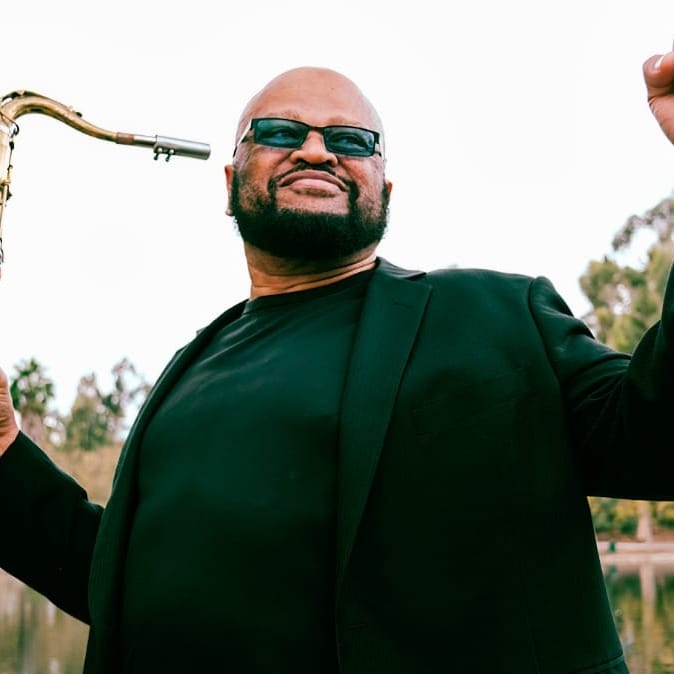
Azar Lawrence Is the Lineage
Half a century after the Prestige trilogy, the tenor saxophonist marks 'Turn the Music Up' with an account of Horace Tapscott's Los Angeles, McCoy Tyner's touch, Pharoah Sanders's generosity, and a practice routine he hasn't altered since he was a teenager. Interview by Lawrence Peryer.

GB Sings Above the Fuzz
The Danish songwriter sang his first album quietly into a microphone at home, and on 'Herzsprung' he had to fill a room. Interview by Arina Korenyu.
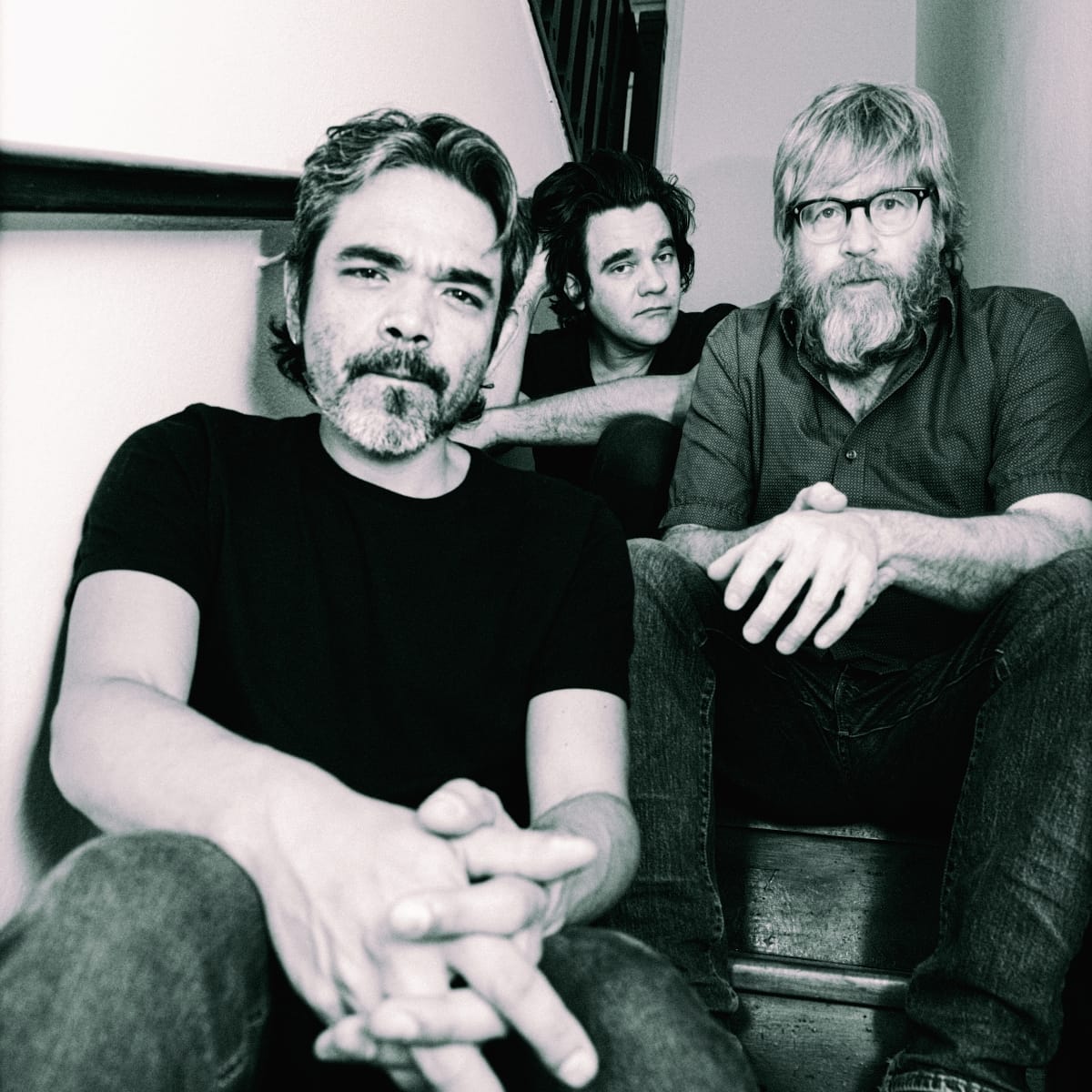
The Sound of Friendship — Riviera Gaz Across Two Continents
Steve Shelley, Gustavo Riviera, and Paulo Kishimoto discuss 'Catacroma,' the overlooked Brazilian rock and roller Erasmo Carlos, and the weekly radio playlist that keeps three musicians in two hemispheres listening to the same records. Interview by Bill Cooper.
This Week's Episode of The Tonearm Podcast

Rotations
Lawrence Peryer closes out August with another edition of Rotations, the official radio show of The Tonearm, and no intention of ever reaching the bottom of the pile:
Summer's winding down, and while planning the last episode of August and the first of September—my usual process for creating the sets involves combing through a massive 'holding pen' of new releases, old favorites, and music I am only now getting acquainted with—I am reminded not only of the absurd amount of music in the universe, but of the joy I get from plumbing the bottomless well of it.
It can be overwhelming, but really there is a lot that is exciting, even stabilizing in a crazy world, about a backlog that never shrinks. For me, that means the well isn't running dry. Never will run dry. I love the idea of a project that will never be done. All of the music still there, out there, waiting for me to find it, not going anywhere.
That's part of where my head and heart are at, pulling together music for us to enjoy together, heading into September: not trying to catch up so much as making peace with the fact that I never will, and treating that as a feature of the job rather than a bug!
As always, a new episode on the Mixcloud this week, a new episode airing live Tuesday at 11 p.m. Pacific. Fear not—there's plenty more where they came from.
Listen to the latest show, featuring the artists highlighted over the past week on The Tonearm plus much more:

The Hit Parade
"But this isn't all I am . . . It's not even most of what I am. Hopefully people can see beneath the hair to know there's a brain, beneath the boobs to know there's a heart and behind all the other stuff to know there's some talent." ❋ "'Jolene' is a murder ballad whose victims all survive, a cry of revenge in the face of betrayal that puts a woman in charge and unexpectedly creates a bond between two rivals." ❋ "A good example would be Johnny Shines playing 'Sitting on Top of the World'. That was blues, but if Doc Watson played it, it was country or old-time. The category depended entirely on the race of the performer, not the music." ❋ "It's partly why it bothers me when people refer to my music as ambient. I think of ambient music as something you check out from . . . My hope is that my music helps people really lock into something and be present." ❋ "The 'joke' in question is [Licensed to Ill's] cartoonish send-up of frat-bro culture, set to fusions of hard rock riffs and hip-hop beats. As for how far it got them: destinations included global stardom, a page in the history books with rap's first US chart-topping album, and the crosshairs of British tabloids as they roused a generation to 'fight for your right to party'." ❋ "I've learned over the years that songs appear to me. If a song is there, it'll let you know, and you have to receive it. It's like getting a phone call; if you don't pick up, it'll go away and won't leave a message. Some songs are like cats, they're subtle, insidious and likely to stalk you." ❋ "When I find myself in a city for the first time, I explore not only what the city looks like and how it lives, but also how it sounds. Every city has its own specific sound; London sounds different from New York, which sounds different from Tokyo." ❋ "Pussy Galore's 'Exile On Main St.' was recorded 40 years ago this month. It's a brilliant idea — a totemic album controversial in the context of its makers' own career, revived/desecrated by a new generation — and the execution is astonishing." ❋ "One day, someone will map out Clean Feed and see that there's not another label in the whole history of labels that covered as many different countries and scenes. Connecting dots as Clean Feed has been doing is perhaps our strongest achievement." ❋ "Although Iron Maiden are often celebrated for their historical songs, those histories are rarely presented as straightforward reconstruction. Instead, they arrive pre-haunted: mediated through literature, cinema, mythology, and popular memory." ❋ "One minute, he was capturing the freedom and joy of [Notting Hill Carnival]; the next, he was running amongst the chaos, capturing the scenes that erupted around him." ❋ "Strictly defining genres as white or Black only further solidifies the dangerous racialisation of culture and denies the porous nature of how music is born." ❋ "There's another idea in [street music]: musicians who don't just play in the streets but make music for the streets. It's a philosophy so out of the ordinary that it puts the musicians in the streets because that's the only way they can find a public audience." ❋ "As the 80s ticked into the 90s, however, something curious began to happen: a clutch of bands emerged who were wise to the hardcore classicism of Minor Threat and SSD but also looked east to Krishna consciousness." ❋ "I painted the whole board, not thinking about where one piece of paper stopped or started. I liked how it gave the work a sense of being midstream, like capturing a sound in time." ❋ For more curated music links, be sure to follow The Tonearm's feeds on Bluesky and Mastodon.
New Music Recommendations: Ibukun Sunday - Olùsìn [Worshippers] (RIYL: deep ambient built from West African devotional tradition, with choral drones and Nigerian field recordings) ❋ Marty Ehrlich - OPEN AIR: The Complete Saxophone Quartet Compositions of Julius Hemphill (RIYL: Julius Hemphill and the World Saxophone Quartet, overdubbed reeds alongside full live quartets) ❋ Miguel Zenón & Luis Perdomo - El Arte del Bolero, Vol. 3 (RIYL: Latin jazz duo, sweet-toned alto over spare piano, bolero repertoire cut in very few takes) ❋ Sarah Davachi - The Will of Tongues (RIYL: minimalist writing for historical pipe organ, microtonal chamber ensemble, and choir; Kali Malone, Ellen Arkbro) ❋ Siichaq - The Righteous Sword (RIYL: overdriven noise rock and shoegaze with dark melodic songwriting; Gilla Band, Cat Power) ❋ The Animeros - ¡Qué Bárbaro! (RIYL: psychedelic cumbia and Tex-Mex soul, in the lineage of chicha and '60s–'70s cumbia psicodélica)
The Deepest Cut
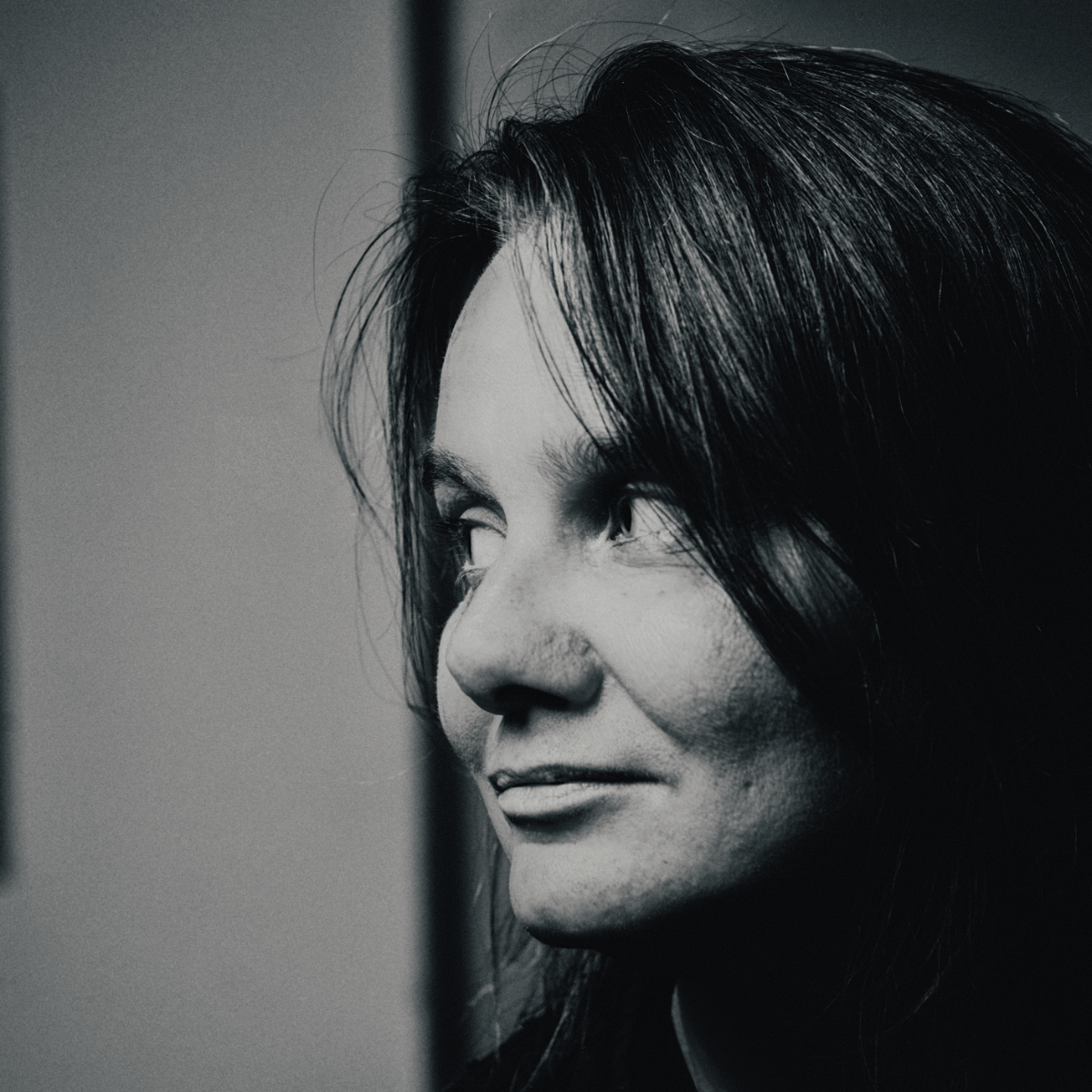
Christiane Bopp came up through the harmony-orchestra world in Mulhouse and took first prizes in chamber music and trombone at the Paris Conservatoire, and now her name appears on close to forty records. From 2020 to 2025 she was a soloist with Frédéric Maurin's Orchestre National de Jazz, across its Rituels, Dracula, and Ex Machina programs. She currently plays in the trio Les jours rallongent with Sophia Domancich and Denis Charolles, in Snow with Alexandra Grimal and Benjamin Duboc, and in Elise Dabrowski's Tomber sans bruit, and she teaches trombone and runs an improvisation workshop at the conservatoire in Poitiers. In December 2023, Jazz Magazine and Jazz News named her one of the three French trombonists of the year.
Rêver, murmurer, dire is her third solo record and her first since 2018, fifteen pieces across forty-six minutes, recorded over two days at the Studio des Résistants in Poitiers by Matthieu Metzger. The instrument list reads trombone, voice, bass drum, and objects, the last two new to her solo work. Relative Pitch, the storied label releasing the album, describes whispers, drones, fractured melodies, and sudden eruptions, which is accurate and undersells how tight the record sounds—the pieces average three minutes, whereas solo improvisation of this kind usually runs to ten and past it. The album title is French, and all fifteen track titles are English, most of them states or instructions rather than nouns: "With fervor," "Optimistic obsessions," "What is still burning," "Around her – She knows it." The album's dedication runs through family and colleagues and then ends, unexplained, "and to Her, too."
A player with Bopp's range could have made one forty-six-minute piece, but she made fifteen short ones. I wanted to know how deliberate that was. I asked whether the title's three verbs describe the album's sequence, and whether playing seventeenth-century repertoire on the sackbut influences her improvised pieces. And because the game isn't over until somebody recommends something, I also asked for something she loves that more people should know about.
I am a classically trained trombonist (Conservatoire National Supérieur de Musique de Paris). Initially, I performed a great deal of contemporary music on the trombone and early music on the sackbut. I also turned toward jazz and improvised music because I wanted to develop a personal musical language. All of my experiences as a performer have deeply nourished me. It is a process of journeying through music and letting music journey through you. All these different musical worlds leave traces behind, from which unique fruits ultimately grow.
This solo project, Rêver, murmurer, dire, is my third solo album, following Noyau de Lune (Fou Records) and the solo session PAUSE on the Studio Sextan YouTube channel. My universe is a dialogue between the instrument, the voice, and various objects, each taking turns to express themselves with different colors.
I recorded this solo just a few days after my father passed away, while also dealing with other significant challenges. The timbres are less polished than in my previous solo work, which fully reflects the emotion of the moment in which it was recorded. I am really pleased with how the tracks flow into one another, and with the overall structure of the album.
For me, each piece expresses either a deep interiority (to dream), an intimate and perhaps fragile expression (to murmur), or an assertive statement (to speak). The voice, the instrument, and the objects are not assigned to a single role of dreaming, murmuring, or speaking. It varies. There is no 'progression' over the course of the album. And 'to speak' is not the ultimate goal. Ultimately, it is up to everyone to connect with the album's title in their own way. In the same way, anyone can interpret the illustration by Bobi+Bobi, which beautifully complements my music (it was a commission on my part).
I have indeed collaborated in the past with Jean Tubéry's La Fenice, Christophe Rousset's Les Talens Lyriques, as well as with René Jacobs and others. These experiences and repertoires have influenced my work as an improviser, particularly in terms of vocality and phrasing. Playing colla parte on the sackbut (doubling the singer's exact line) and practicing ornamentation in early music have left a very strong imprint on my improvisations. However, I am not improvising on the sackbut at the moment. Perhaps I will in the future.
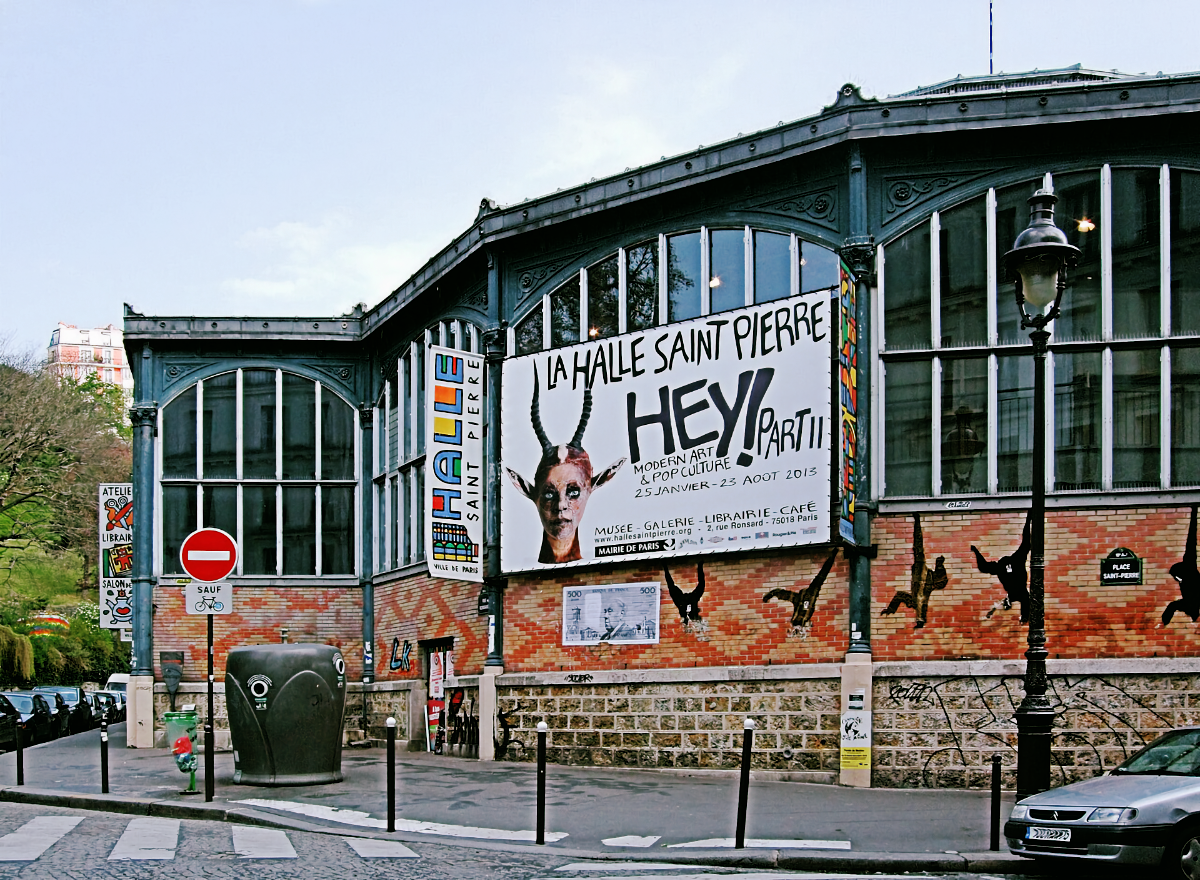
Christiane Bopp took the reins to tell me about something she loves:
I would like to share my love for Outsider Art (Art Brut). It is incredibly powerful, resolute, and expressive, often utilizing amazing materials. It is a true source of energy and inspiration for me. I never miss an exhibition at the Halle Saint Pierre in Paris, a venue dedicated to Outsider Art that also features a wonderful bookstore.
The Run-Out Groove
- The Tonearm is a reader-supported publication, free of advertising and paywalls. Our supporters help fund our writers and make the site possible. Please consider joining and helping us to continue our mission.
- Join the rapscallions of The Tonearm on our new Slack community.
- Sign up to receive our latest articles directly to your inbox in a snazzy, easy-to-read email version. Just go to your account, manage your email preferences, and flick the lever to receive The Total Tonearm.
- The easiest and best way you can help us? Please share this newsletter and our stories with your friends.
Thank you for reading! We'll see you again next week. 🚀


Comments