


The Danish artist GB (Gustav Berntsen) makes texture-heavy guitar music with a pop sensibility, and Herzsprung, released by AD 93, is his second album. His debut, Gusse Music, was a collage-based cult record from 2024, the last vinyl LP Posh Isolation issued before the Copenhagen label closed. It was a slower and murkier record than this one.
Herzsprung was created during his stay in London and largely reflects the city’s restless atmosphere. Yet the record also carries something of the opposite impulse: the reflective space of Copenhagen, where he remains rooted.
That contradiction is perhaps most apparent in the way the album was recorded. Despite being made with lots of jamming over one week in the Swedish studio, every accident caught on tape sounds carefully selected. The studio was a villa in the wilderness, paid for by a viral Jaguar ad that cast him in 2024, and he filled it with trusted musicians. The songs arrived as memos and took shape live, tracked to 24-track tape.
The same goes for the lyrics: based on little bits and pieces from London’s free Metro newspaper, they become distinguished poems. He spent weeks in London cutting up copies of the paper.
Musically, the record constantly shifts its center of gravity, balancing dense, layered arrangements with more direct melodic passages. Elements of jazz, noise, punk, grunge, and outsider pop surface throughout, blending with strong hooks and rhythms to give the album distinct patterns despite its playfulness. The alt-pop of his Copenhagen peers is in there, and so is London’s impatience with rock form.
Perhaps that is the central paradox: by stepping away from intention, GB arrived at something very mature and precise. This conversation reveals a little more about what went on behind the scenes during the album’s creation.
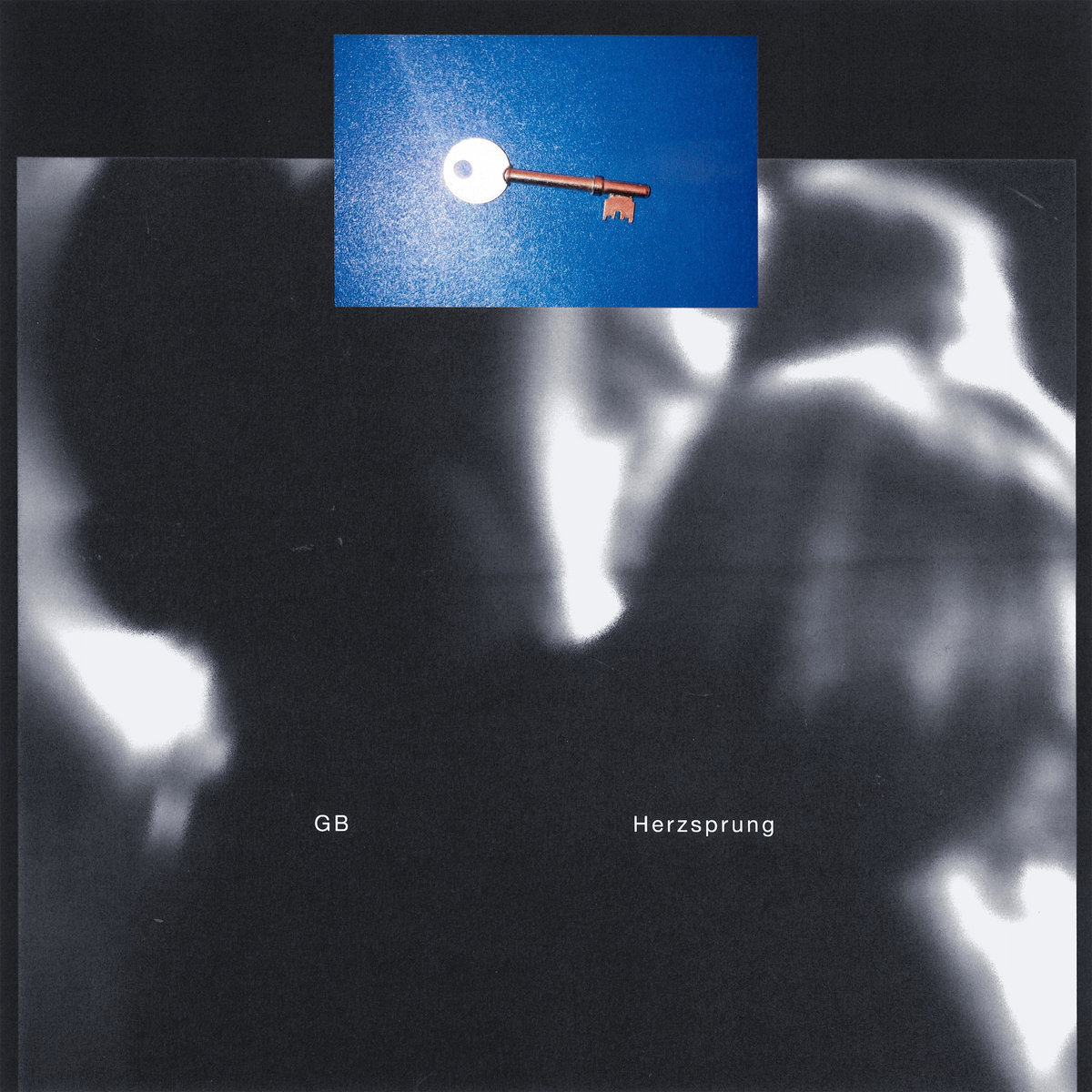
Arina Korenyu: Why did you choose the German word Herzsprung for the album’s title instead of a Danish or English one? What does the title mean to you?
GB (Gustav Berntsen): I’m not so sure about the meaning, but there was an energy in the word that I liked. The drummer in my band is German, and he told me it’s a made-up German word—it doesn’t really exist. I guess the direct translation is something like “heart jump,” and the way I think about it is that it’s like an explosion.
It has an energy to it that I like. It also has a lot of consonants—five consonants in the middle—which I like. I didn’t put that much thought into it, but I wanted to pick a word that could become my own, and I hope it will be like that.
Arina: The album moves between several genres. What influence do you think listeners might be surprised to discover on this record?
GB: I think one influence that isn’t so obvious is that I’m a big fan of Frank Ocean. Specifically, the album Blonde has been with me for a long time. It’s an album I go back to a lot, and I think it’s quite far from my usual references. Just from hearing him for so many hours, I think there’s something that’s informed the way I sing sometimes. I especially think about the very last song on the album, “Katie Magic True”—when I hear it, it reminds me of moments on Blonde, like “White Ferrari.”
What’s really cool about him and Blonde, and what relates to my own practice, is that he’s mixing loads of different styles on that album. I think that’s what makes it so eclectic and interesting. I think it’s Alex G playing guitar on “White Ferrari,” and he’s referencing the Beatles’ “Here, There and Everywhere.” It feels like a mix of a lot of styles, and I think that’s been an influence on me.
Arina: Are there artists you keep returning to—not necessarily because you want to sound like them, but because they remind you why you make music?
GB: Yes, definitely. Since I was a teenager, Alice Coltrane has been one of those artists for me. To me, it’s very healing music that I can get lost in. It reminds me of the real power of music: when it flows freely, with improvisation and this sort of spiritual approach to playing. With time, I hope to achieve that myself with my projects, but maybe it’s not on this album.
Stay on top of The Tonearm.
Subscribe for exclusive interviews, cultural tip-offs, and community fun.
And your support keeps our site free of advertising and paywalls.
Arina: You built lyrics from cut-up copies of the newspaper. What attracted you to that method? Were you looking for surprise, or trying to escape your own habits?
GB: I think both of the things you just mentioned, but the cut-up technique is also a portal into language—or into writing—that you can go through. It opens up language for you because you work intuitively. It allows you to let go of intention and just work with words more freely, and I think that can be liberating when you sit down and want to write a song.
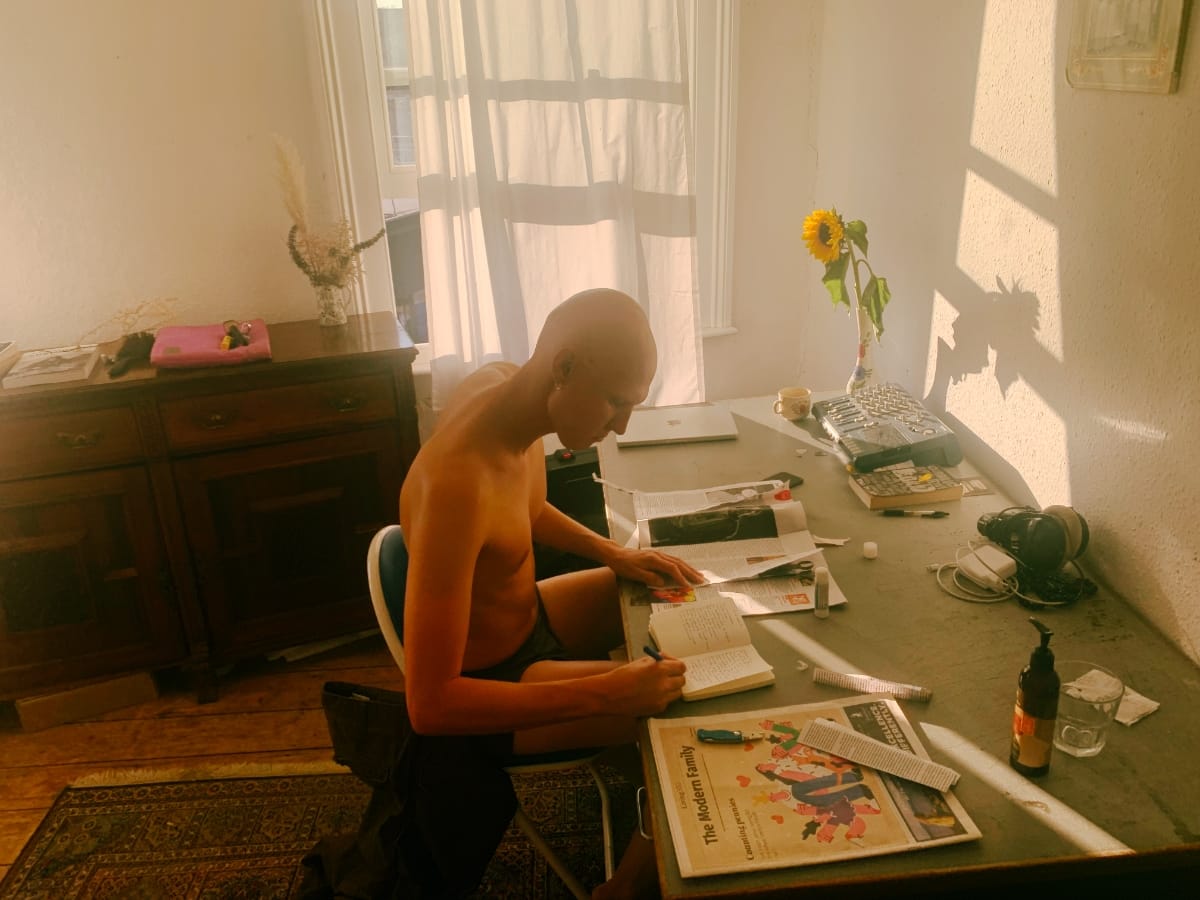
I find it uninspiring to just sit with a blank piece of paper and a pen. That’s never how I approach writing. For me, it’s more about collecting a lot of small pieces—little poems, cut-up pieces, and things like that. Then I have them on a table in front of me, assemble them, and put the song together visually. After that, there’s a lot of editing. Then I start singing, the melody takes shape, and I rearrange the words.
With this album, it was also specifically because I was in London while I was writing it. In London, there’s the daily Metro, a free newspaper you can just pick up on the street. So it was very clear to me that there was a ritual or method I should pursue. It was also a way to establish a routine after moving to a new city. I had loads of time, and I didn’t know that many people. I was looking for ways to create a daily life, and that was one way to do it. Every morning, I would go and pick up that paper and write a little piece.
Arina: How do you know when a random fragment becomes your lyric?
GB: It’s a visceral thing. Sometimes, when I look at a sentence and find it interesting or funny, I just know—it’s a feeling. It’s also about how it feels to sing the line. I have lots of lines that I like, but that never end up in songs because I just can’t find a way to sing them properly.
More and more, I really enjoy the process of writing all these bits and pieces before they become songs. I don’t consider myself a writer in the traditional sense, but it’s just a very nice headspace to be in—to sit with loads of paper. I have it right here on my desk in front of me: all these small bits and pieces. These are lyrics that I’m working on, from the papers. And it becomes like a game. It’s like assembling a Lego thing.
Arina: You’ve chosen a fairly old-school recording process. Do you enjoy the commitment that comes with recording on tape?
GB: The first record, as well as the small EPs and other things I’ve put out, were all these collaged records that I made by playing on top of myself and doing multiple recordings in the studio. I love that approach. But for this record, I really wanted to do something different. I’d been playing all my older songs live with the band for a while, and that inspired me to bring them into the studio and record together.
I wanted to introduce an element of risk into the music-making. When you sit in front of your computer and have total control over the arrangement and recordings, there aren’t many accidents. But when you put four people in a room and record on tape, you’re allowing those accidents to happen. You jam the songs and arrangements, and there are always great surprises. It’s faster, too. You book a studio for a week, go in there, and just get it done. And it meant letting go of control and trusting other musicians to translate my ideas.
When you’re in a studio with outboard gear, you don’t spend hours adjusting an EQ or a compressor. You just dial it in and think, “Oh, that sounds great, let’s go.” Whereas in Ableton, you can sit around for hours EQing things and working with plugins. And in the end, it doesn’t matter—it’s about the performance and the song.
That takes me back to where I started with music, when I was a teenager and had a band in a rehearsal room. You didn’t think about recording back then. You just thought about playing songs, getting shows, and going out to play concerts. You brought ideas to the rehearsal space and jammed them out. Doing that in the studio now reminds me of why I started making music in the first place.
It’s also way less depressing than looking at a screen all day, moving around small, colorful blocks in Ableton. So I enjoyed it a lot. Unfortunately, it’s also a much more expensive way to make records. You can make them for almost free if you’re working on your own in Ableton.
Arina: You wrote the album while living in London, but remain rooted in Copenhagen. What does each city bring to your music? Are there certain songs where you can feel, “Oh, this is London,” or “This is Copenhagen”?
GB: I don’t know if I can tell which ones. They’re all London songs, I think. But I think what London brought, or how London influenced the music, is its music tradition. The contemporary canon of rock music is very different, and I think that influenced me a lot.
I’ve been listening to a lot of British post-punk and noise music. Things like This Heat have been a great influence on me. And I think this DIY approach to music is more apparent in London. It’s such an expensive city, and people work a lot and don’t have much time on their hands. So I feel like there’s more urgency in the music. People will book a weekend with their friends or whatever, play music, record, and get things done quickly because everything is so expensive and people don’t have time.
And coming from a band background—being in punk bands and stuff—there’s something about that approach in London that’s really appealing to me. A lot of the bands playing there now, like Moin or Still House Plants, have an approach to music-making that has influenced me.
What’s good about Copenhagen and this scene is that people have so much time because of the way our system is put together. So people will sit around and work on the details. That also makes for great music, but it’s a very different approach.
Arina: Compared to your previous album, this one feels more melodic and more direct. Do you think you’ve become more confident as a songwriter, or just less interested in textures?
GB: I think the older songs are more behind a veil, or there’s a fuzz over everything, and I sing in a lower register. I think that has to do with me making the music on my own in a room. You sit with headphones on and the mic in front of your mouth, and you can sing quietly. Then you gain it up and make it sound big or whatever.
I realized, playing those songs live, that if you’re in front of a crowd—at a festival, for example, or it’s late and people are drunk—it can be hard to translate those songs to a live situation. Singing in such a low register, I don’t have that much power in my voice, so sometimes it doesn’t work so well live. So I wanted to write some music that challenged me to sing in a more powerful register and to work more with melody.
I work on new material all the time, and it would be nice to record live in a studio again, but I also miss being very much in my own headspace with the computer—just working with textures and recording myself. At the same time, I’m still interested in taking part in this tradition of being a songwriter with a guitar. I want to do more of that: just sit in a room with a guitar, make up the songs, sing them, and have that more traditional approach to composition and songwriting.
Arina: Is there something that no one has asked you yet that you wish they would, about this album?
GB: I think something I haven’t been asked about much is the production techniques and stuff. Maybe it’s just too niche or specific—making an album and producing it yourself. I’ve had so many thoughts about the specific production choices and recording techniques, like how we miked everything up in the studio.
That was all stuff we planned out before going in. I knew I wanted the two guitars playing to be recorded, each through two separate amps. That meant we could mic them up differently, pan them out, and create this weird phase effect.
I tried so many different reverbs on the vocal to find the right one. I’m in a studio in Copenhagen where we have an original EMT 140 plate, and I ended up putting that on almost all the vocals because it just sounds so great.
Arina: What are your plans afterward? Is there any specific territory you want to explore, or do you just want to get the album out, play some shows, and think about the next steps later?
GB: For me, Herzsprung is a very dense record. Before making this album, I was listening to Boredoms, the Japanese noise band, and stuff like that. I think that’s what I was drawn to at the time: music that was exploding with ideas, with loads of layers and everything. I wanted to make something playful and allow loads of ideas to come and go within the arrangements. I think I’m interested now in doing the opposite—maybe making something with longer songs that’s more repetitive and minimal.
I’ve been listening to Meredith Monk a lot. I have a CD box set with all her records now, and I’m just going through them chronologically. It’s so beautiful and inspiring to me that the recordings feel ancient and prehistoric in a way, but at the same time so contemporary and modern. And timeless. I’m also inspired by how she sticks to a few ideas. Some of her pieces are so sparse and minimal, and I think it takes a lot of courage to do that without adding loads of ideas on top of each other.
Check out more like this:
 Carl Dexter
 Arina Korenyu


Comments