


Tomeka Reid has a self-description that cuts against her instrument's conventional image: "I was never like, I have to be the first-violin energy. I'm definitely more like ‘bass player energy’ for the cello." That goes against an instrument often typecast in the sustaining, lyrical lead, and it illuminates how Reid thinks about ensemble work. The New York Times called her a "New Jazz Power Source," a label that's accurate enough, though it says nothing about the deliberateness behind it.
Reid grew up outside Washington, D.C. Her studies took her to Levine School of Music and then to the University of Maryland, where she earned a Bachelor of Music in 2000. She moved to Chicago and completed a master's at DePaul in 2002, then spent several years teaching strings at the University of Chicago Laboratory Schools before committing more fully to jazz. Reid eventually earned a Doctor of Musical Arts from the University of Illinois at Urbana-Champaign in 2017. "People in my studio had come from Manhattan, Juilliard, and Curtis," she has recalled. "And then there was me." The AACM deepened her as an improviser and led to sustained collaborations with Anthony Braxton, Roscoe Mitchell, and Nicole Mitchell. She received a USA Fellowship in 2021 and a MacArthur Fellowship in 2022. Reid founded the Chicago Jazz String Summit in 2013 to further the underrepresented profiles of string players in creative music. "Whenever anyone calls anything," she has said, "it's always a Miles Davis tune, a John Coltrane tune, a Wayne Shorter tune—and those are great compositions. But it's never something by a string player."
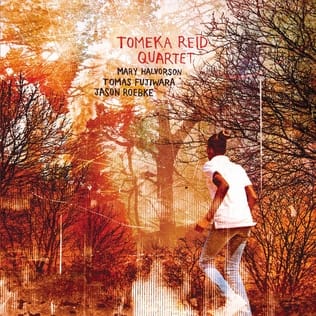
The Tomeka Reid Quartet is her most enduring compositional focus. Guitarist Mary Halvorson, bassist Jason Roebke, and drummer Tomas Fujiwara complete the group. Their self-titled debut arrived in 2015 and landed on the Chicago Reader's list of the decade's best albums. Old New came out in 2019; 3+3 appeared in 2024, with All About Jazz calling it "as transportingly good as jazz gets." January 2026 brought Dream Archives, Reid's first release for ECM alongside pianist Craig Taborn and drummer Ches Smith. And now, Out Of Your Head Records has issued dance! skip! hop!, the quartet's already critically acclaimed fourth record. The recording took place at the Brink in Richmond, Virginia.
Recently, Lawrence Peryer hosted Tomeka Reid on The Tonearm Podcast. In the course of their conversation, the two discussed the decade-long development of Reid’s quartet, her compositional process and how it has changed with experience, the physical relationship between cellist and instrument, her path into jazz and the AACM, and the family history that informed dance! skip! hop!'s visual identity.
You can listen to the entire conversation in the audio player below. The transcript has been edited for length, clarity, and flow.
Lawrence Peryer: I wanted to start by asking you about the evolution of the compositions. If I'm reading the material correctly, maybe you didn't set out to make songs so suitable for dancing, but you realized after the fact that they were very danceable.
Tomeka Reid: Oftentimes, people think of the cello as having long, sustained lines or things like that, so I wanted to inhabit a different kind of space. And I like to dance, so I wanted some of that energy to be in there. I didn't know specifically how that was going to happen, but that was just something floating around in my mind. But then once the composition came into being, I was like, “Oh yeah!” It was like I was enjoying bouncing around to the ideas I was coming up with.
Lawrence: The cello may not come across as an instrument that involves a lot of bodily movement, although it obviously is a physical machine. How much of that relationship between body and instrument do you think about?
Tomeka: I guess it's a big part of it. Cello players often have trouble with their backs, shoulders, and necks—especially on tour, hauling the instrument around in its case. The older I get, the more I realize how we're all musical athletes. I do think about my body, especially because that's how I get sound: using my relaxed shoulders and arms to pull the sound out instead of pressing it out. But when you're improvising, sometimes that goes out the window because you're just trying to grab that idea or make that sound. So you might do something that's quote-unquote not "cello-istic." (laughter) You might do something that isn't in the best form because you're trying to accomplish that sound or idea you have in your mind.
Lawrence: Given that dance! skip! hop! is the fourth record with this quartet, I wonder if what you're able to ask of the band members is different from what you were able to ask or expect of them in 2015.
Tomeka: It's more like I know what to ask, because I have more experience. I know what I like, what sounds I like. Now I can be more specific, more intentional, clearer in expressing that. Whereas before, I was just a younger bandleader—I was like, “Oh my gosh, I have a band. I have people willing to play my music.” You're just happy with that. I'm able to be clearer now—like, that's not exactly the sound I want, or that's not exactly the groove I want. I can express that more clearly now.
Lawrence: When you are beginning a new set of compositions, are you sitting down to compose specifically for this quartet?
Tomeka: I'm definitely thinking about my bandmates in any project. I'm really sensitive to that. For example, early on, I wrote a lot of ostinatos—I love vamps. So I've tried to figure out how to stretch things, because I don't want anyone to get bored. And I'm also trying to figure out how to shift roles within the ensemble, so that maybe there's an instance where I can be the bass player, and Jason [Roebke] can play a counter-melody or another type of figure, or I can play a guitar figure or ostinato so that Mary [Halvorson] can do something different.
I'm always trying to figure out how to shift roles within the ensemble as much as possible. Maybe Tomas [Fujiwara] is a little bit more fixed as far as providing groove, but I try to give comping and groove figures to everyone so that we're all kind of being drummers in the ensemble. I have some ideas about what I want to do for the next record regarding Tomas—giving him more melody. He gets some melody now; he'll accent some of the melody. But maybe there's something more I can do with that so that we're really trying to shift all the roles.
They're just such great players, so I want to create something interesting and engaging, because if we go on tour, we’ll be playing this material night after night. I want to create music that can loosen up and open up, go places, not be too fixed. I definitely want everyone to shine. And I love them—they're really great musicians and people.
Lawrence: There were moments listening to the record where I couldn't quite tell who was playing what role at the low end. So it's interesting that that's something in your mind while it's happening, because it comes across in the music. To be able to revisit the same people over twelve years in creative music—that's something of a privilege, right?
Tomeka: Yeah, I feel very grateful for that. I always wanted to be in a band—even in high school, that was what I wanted. And so sometimes people are looking for, “What's your next thing?” And it's like, yeah, I like doing other things, but I think there's something to be said for having a band and a band sound. I really value that notion of just being together—working together, traveling together, eating together—just knowing each other's energy and vibe.
Lawrence: Do you think you'd be able to articulate what the cello uniquely allows you to do in a jazz context—what it allows for that a more traditional combo can't?
Tomeka: I think it just opens up endless possibilities because it can play so many different roles. I'm sure I haven't explored all of them—I try to explore as much as I can, but there are others exploring it in their own way, and there's no one path. There are many wonderful cellists in this space doing great things. So there are just a lot of possibilities: it can function as a bass, double with a bass, or act like a horn. If you have a combo, it can fill that function—like a trombone. It can comp because it can play chords. And then you have the bow, arco, and pizzicato. Maybe you want to add some electronics or preparations—even a pencil, paper clips, or something like that.
Every player is going to be so unique and different. I think that's true of any instrument, but I'd say it's definitely really special to the cello. And if you're transcribing and getting influences from different instruments, that's the language you're bringing into it.
Lawrence: How would you describe your initial relationship with the cello?
Tomeka: Well, my mom put me in a French immersion school when I was in fourth grade, and that's when everyone in Montgomery County, Maryland, was able to pick an instrument. I just remember that a lot of the girls were choosing the flute and violin, and I was definitely more of a tomboy at the time. This girl, Lena Mendez, and I were like, “We’re going to play cello!” I had never really heard the cello before—it looked cool, it was big. I don't know why I thought playing the cello would make someone think I was cool, because then it was just like, “That thing is almost as big as you are,” or, “Is there a dead body in that case?” You just hear the endless jokes.
But playing in the orchestra—I'd changed schools every year, so I just wanted to be part of something with other kids, because I felt kind of by myself a lot. I think maybe that's why I really like collaboration: I’ve always been into the idea that if you do this thing and we do this thing, and we work together, we can make this bigger thing. And I think I liked my role in the ensemble—the cello—that it was the low sound, the underpinning, the glue, the carpet. I'm definitely more like a ‘bass player energy’ for the cello. I like being the glue, and then maybe there's a moment where you pop out, but you're just kind of always there, helping the sound be warm and round.
Lawrence: Could you tell me about the various ways that family and family history run through this record? What brought the notion of family into this project?
Tomeka: It's interesting—it wasn't intentional with that either. I had my friend Damon Locks do the art for my very first record. And then for my next record, I was starting to get closer with my paternal side of the family, particularly my grandmother and her sister, Aunt CeCe—Sara Green.
My grandmother grew up in southwestern Wyoming. They were one of maybe four Black families that grew up in that part of the state; her stepfather worked in the mines, which is why they ended up there. When I went to visit, my grandma and her brothers and sisters still kept the house where their parents had lived. And in that house was a museum of photos on the walls—that's your great-great-grandmother, your great-grandmother—and I was like, “Whoa.” I never even thought I would know my father, let alone his family or that part of the family.
I was just taking pictures of everything, because I was like, “Oh my gosh, this is amazing—I have this history.” They were so beautiful. And because it's Wyoming, you don't often think of Black people in Wyoming, or Black people in the West like that. When I saw these photos, I was like, I have to use them.
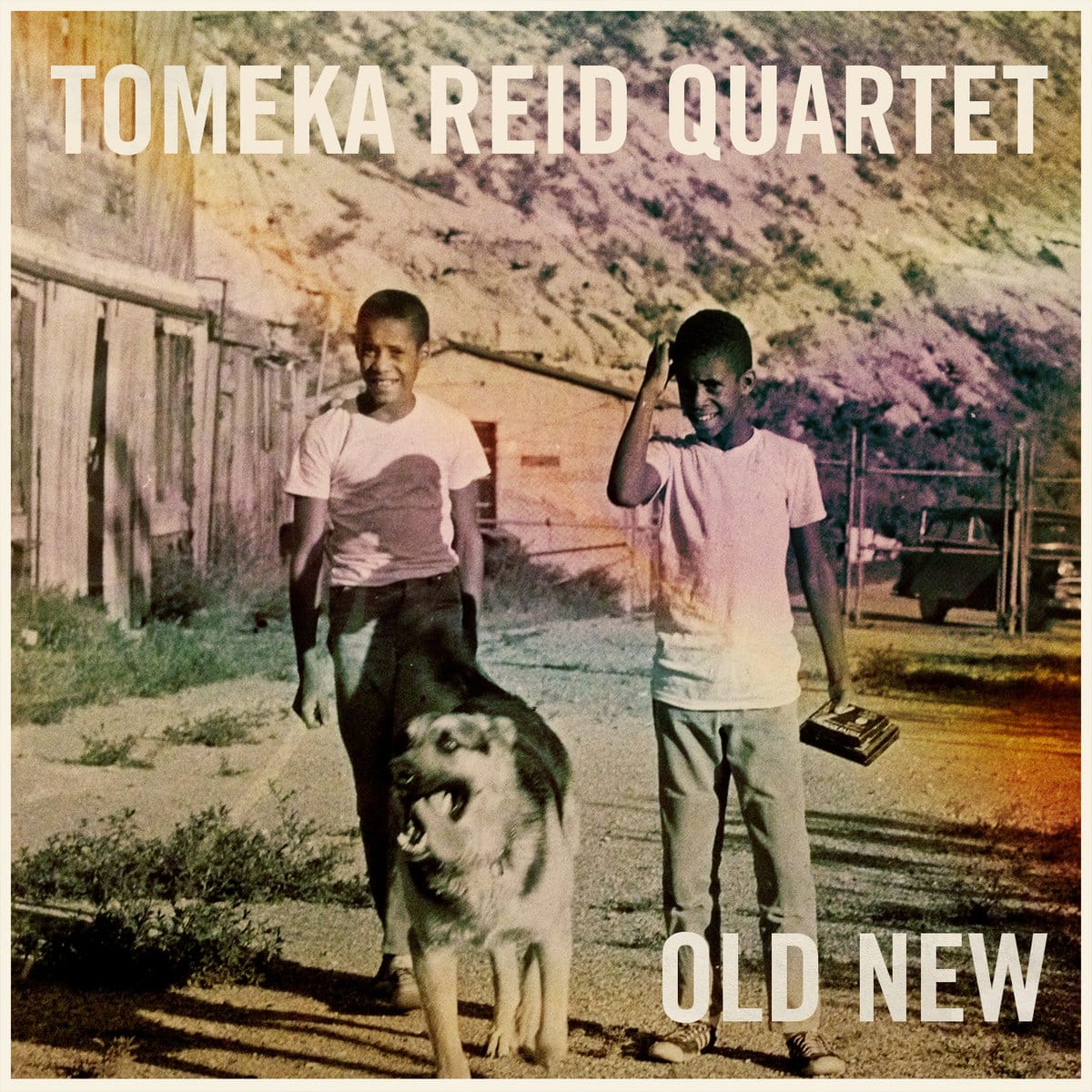
My grandmother was a very fashionable woman—she loved getting her hair done, and she was always put together. She is wearing a fur coat in Green River, Wyoming. The juxtaposition of that image was just very striking to me. For Old New, I have a picture of her and the twin boys. My biological father is a twin. On the cover, I have the two of them walking their dog—it's just an image I don't see regularly, two Black boys just walking their dog. Maybe that exists somewhere, but I hadn't seen it. So I was like, “I want these pictures to be seen.” They're so beautiful, and I want them to live on.
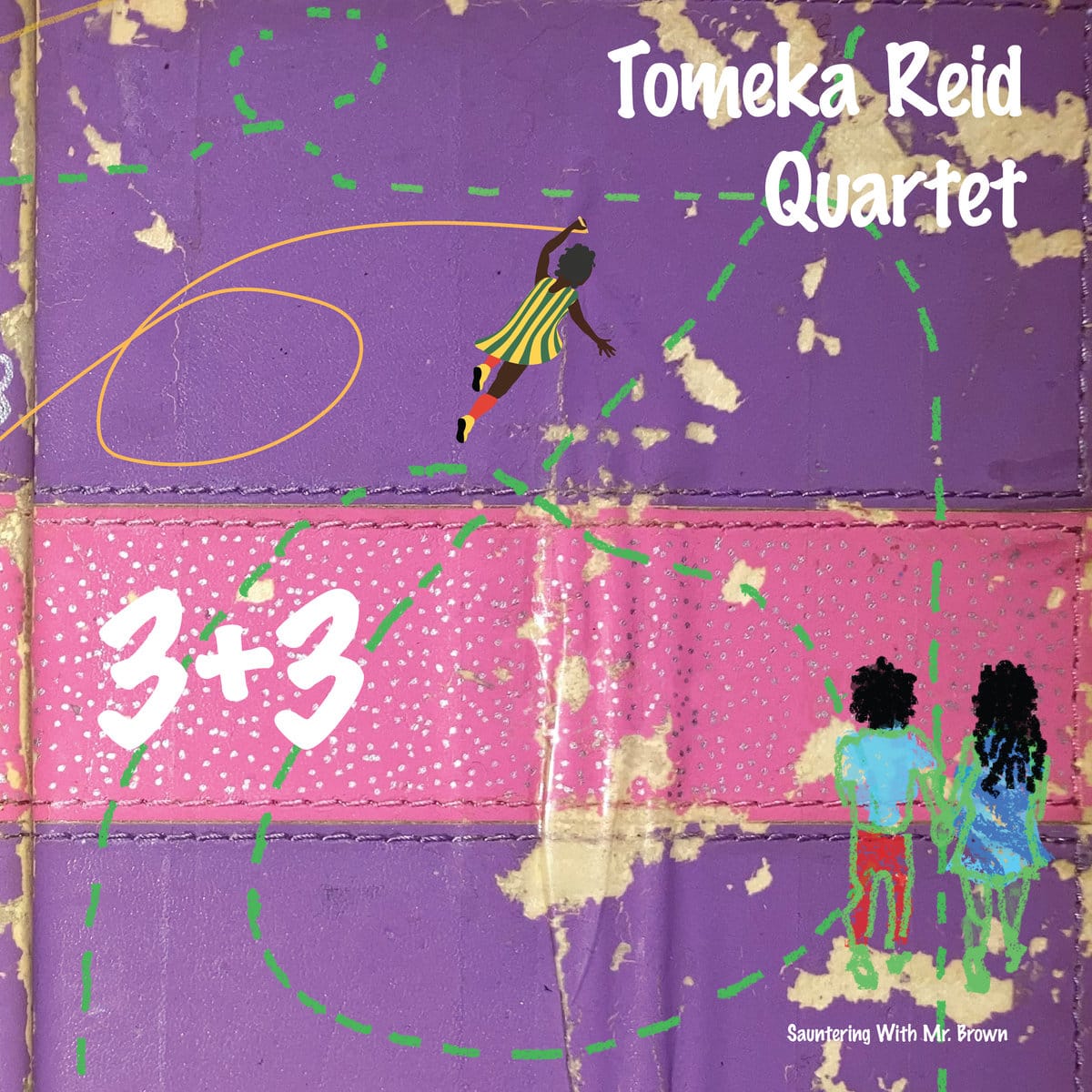
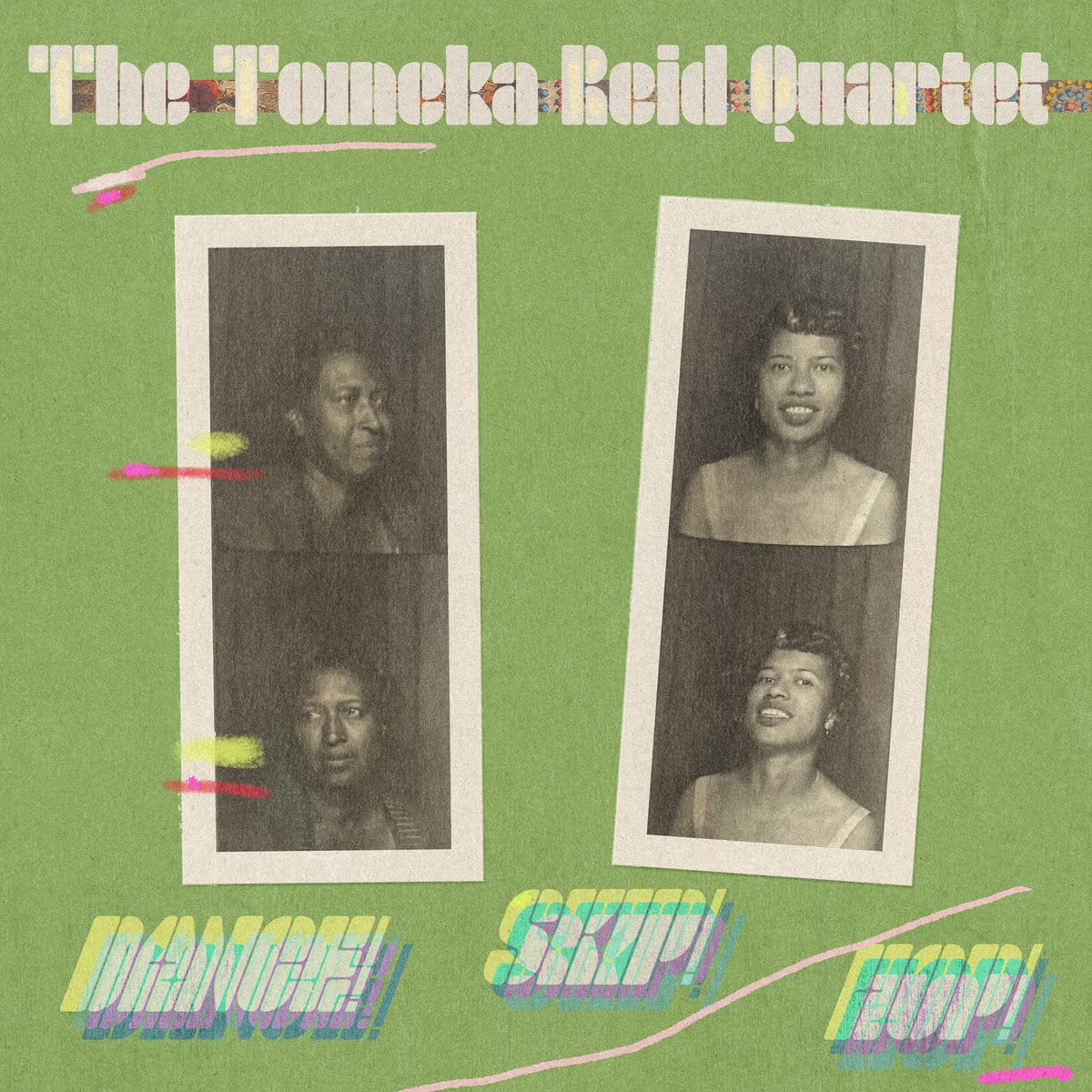
So when I was thinking of this record, I came across those photo booth pictures and was like, “I love these so much.” And thinking again about how these live on—it's not like people haven't seen Black people in photo booth pictures. But for me, it's like, who do I give these to? I don't have children, so how do they live on? They're beautiful, and I just want other people to see them. And so that's when I thought, “Oh, it'd be cool to have them on the record.”
The picture on the vinyl and CD is of my grandmother and her sister, back-to-back. I just love that image. They went in to do a photo shoot in their swimsuits just for fun. They wanted to do a Hollywood-type thing, and I thought it was so cute. It brought me a lot of joy. I kept thinking I would love to see that image twirling on the vinyl while the music plays.
Lawrence: When you point to some specific examples—like the photo of the two boys with the dog, or your grandmother and your aunt doing the swimsuit photos—there are all these little moments that feel really unencumbered. The weight of the world's not there. I think a lot of times we don't get images of Black people just living their lives, where the context of the photo isn’t weighted with things they maybe don’t deserve to carry in every photo.
Tomeka: Exactly. And that's the joy part. They're just walking a dog. They're just cute girls taking a photo. Sometimes I think that's a social injustice—that we can't just have more moments like that. Can't we just be hanging out like anybody else?
And these are old pictures of people just hanging out in the fifties or sixties—or even the forties. The sisters are actually ten years apart. I think one is thirty-one and the other is twenty-one in that picture. That would have probably been around 1956 or so.
Lawrence: That's even more interesting, right? Because it's a time we think of as so tumultuous in the Black experience. And it's like, some people had days where they were just living life.
Tomeka: Yeah. I would ask my grandma what it was like living in Wyoming. There aren't many Black people there. What was racism like? She said she didn't really experience it until white southerners came up to work in the mines. They would use some language, but then she said everybody would just beat them up. She said it was actually very diverse—she grew up around Japanese people and Mexican people. There were a lot of different people because everybody just came to work in the mines.
I've learned through this that there was a significant Chinese community in Rock Springs. It's sad; there was a Rock Springs massacre that happened. But she said it wasn't until she left—when she went to Manhattan, Kansas—that she learned that being Black and dark-skinned was a problem. She said, “We were just riding horses, going to the movies, and climbing trees.” She always talks about how she used to climb trees.
Lawrence: Could you tell me about the track "a(ways) for CC and CeCe"?
Tomeka: So I feel like I'm terrible with track names. As I already said, my grandmother's sister is Sara Green, but she goes by CeCe, so I call her Aunt CeCe.
During the pandemic, I became my grandmother's caregiver, which was a lot—but when I look back on it, I realize how blessed and lucky I was to have that experience and that time with her, even though she had Alzheimer's. I'm just sad I didn't get more years of her being coherent. I would reach out to Aunt CeCe whenever I didn't know what to do—I needed to get a family lawyer, figure out how to find a home for her, or I couldn't just take her to the hospital and go with her during a pandemic. It was just a lot. So I would talk to Aunt CeCe—I just needed her help.
Going back, there was a gentleman who used to come to Fred Anderson's Velvet Lounge in Chicago all the time—he would go to all the jazz sets. His name was Clarence James, but he went by CeCe. So for a long time, CeCe—that name, that sound—was him, from when I first met him, probably around 2002, until he passed in April 2018.
He was always so encouraging. I would go to his house in Hyde Park, on the South Side of Chicago, and he would just play a bunch of jazz because I was still learning about the spectrum of jazz. He knew all the guys in the Art Ensemble—he hung around all those musicians and went to all the sets. So he just knew all these people and would be like, “Oh, you should check this out.” I remember us watching that Cecil Taylor film, the one where he's playing in all white, watching that together, watching a Sun Ra film together. He was always supportive, always saying, “Just keep going. Play loud.” (laughter)
So he was CC to me. And when I was thinking about naming these tunes, I was like, wow—he transitioned, but the creator put another CC in my life: my Aunt CeCe. I just didn't really make the connection until last year. Even though CC is gone, I have my Aunt CeCe.
Lawrence: When you were talking about CC, your musical mentor, it reminded me that I wanted to ask you about your journey into jazz. It does seem like a very deliberate, specific motion toward this music. What caused you to walk down that road?
Tomeka: Well, I didn't intentionally think, “Oh, I'm going to play free jazz now.” I feel like it was kind of organic. I was trying to learn standards and tunes, and I didn't find many people in Chicago at the time who were interested in doing so. And then being part of the AACM, being around those musicians and eventually joining—it was very much like, find your own voice, create your own sound, do your own thing. I feel really blessed with my path because it wasn't something I totally set out to do—it just kind of happened. I'm playing with Nicole Mitchell's Black Earth Ensemble, learning how she composes, or with Dee Alexander, seeing how she does it. Eventually, I'm playing with Anthony Braxton or with Roscoe Mitchell, seeing how they put things together.
I think I really liked it, too, because it was just open. When I was starting out, people would say, “Oh, you don’t know the jazz language?” And I'm like, “Well, I do play the cello, and that's not really part of our regular training.” The folks in the AACM world were more welcoming. They just had faith in me—they'd say, “You have ideas, and what you're doing is not wrong. Maybe you want to make a different choice another time, but if you're hearing something, just go with that.”
Lawrence: How do you carry yourself differently when you're a leader versus when you're a side person?
Tomeka: I think to be a good leader, it's helpful to have been a side person—and a good one. I like to believe I'm a good bandleader because I've been a side person for so long, and I’ve noticed things I’d do differently and how I want to be treated. I try to carry that with me.
I feel like I can be a little more relaxed as a side person, because I'm not—as my friend Dee Alexander would say—thinking about fifteen things. I'm just thinking about how I can be the most supportive in this ensemble. Usually, I'm playing with my friends, and I'm like, “Yeah, I believe in this person”—whether it's Angélica Negrón or Tomas Fujiwara. They're great, and I want this to be great. I can just focus on that.
In my own projects, there's more taking up space in my brain—I want to make sure the tour schedule is comfortable, that we have enough time to get there and eat. I'm also thinking about the music itself: for the last two records, I was like, “I want to write in keys that are comfortable for me so I can really make use of my open strings.” Why should I write everything in B-flat just because that's comfortable for horns? I did that more, starting with 3+3 and kept that idea in mind for dance! skip! hop!. So—as my great cello teacher at undergrad, Ms. Elling, would say—I can just sing.
Lawrence: I wanted to ask you about your experience with educational institutions, both as a student and a teacher. What's your honest read on what those environments are and are not good for?
Tomeka: I wanted to do my thesis on Abdullah Ibrahim, and my advisor was like, “Who's that?” It just wasn't the right institution—very much stuck in a certain realm of jazz. I remember professors saying, “Do you even listen to jazz?” I just thought that was such a weird question. The compromise we landed on was transcriptions and talking about how you might phrase them on the cello to sound more like that specific era.
With my own teaching—when I was directing strings at the University of Chicago Laboratory Schools for eight years—I tried to be the orchestra teacher I always wished I had. I made sure that my students, even when they were fifth graders, knew Abdul Wadud and Pablo Casals. Sharing real stuff and making sure they know not just the Western canon, but also the Black music that’s happening and the other things that are happening.
Lawrence: In your work with the Chicago Jazz String Summit, how do you think about issues of access and curation?
Tomeka: I try to look for improvisers who write their own material—particularly violin, viola, and cello players. Jazz, for me, is music where improvisation is a huge part of it. I was like, where's the space for us more avant-garde types? So that's really where I'm coming from. And I also added strings of diaspora because there are wonderful gángan players out there —erhu, koto—I wanted to make space for that too. And I try to make sure I have a Chicago musician at every event. I don't want it to suddenly become New York-centered. I want Chicago people doing it.
Check out more like this:
 Meredith Hobbs Coons
 Lawrence Peryer


Comments