


Before they collaborated on Directors, composer, arranger, and multi-instrumentalist Jan Šikl and composer, producer, multimedia artist, and head of the Floex solo project Tomáš Dvořák had mapped out illustrious careers. Dvořák’s Floex has released electronic music for over twenty-five years, with well-received solo albums Zorya and A Portrait of John Doe. He’s also created award-winning video game soundtracks for Machinarium and Samorost. Šikl has written many compositions for various esteemed theater and dance productions, created arrangements for the Prague Symphony Orchestra FOK and Unique Orchestra, and even drummed for the jazz-prog band Zabelov Group. Beyond this, Šikl is also the arranger and conductor of the Floex Ensemble.
Featuring renowned violoncellist Tomáš Jamník, the Floex Ensemble is a world-class six-person group, including violinist Kateřina Lekeš, viola player Anežka Jiráčková, clarinet/bass clarinet player Jiří Javůrek, vibraphonist Jakub Tengler, and Dvořák, who plays clarinet. The Floex Ensemble makes up one part of Šikl and Dvořák’s four-track album Directors (Minority Records), which merges the live ensemble with electronic elements created by Dvořák. The result is gorgeous minimalist music, where adventurous chamber music transforms into blustery walls of tension and sound, before returning to its original motifs. On Directors, it can be difficult to know where the live elements begin and the electronic parts end.
In the press release for Directors, Šikl and Dvořák explain that they used an “inverted method” to create their collaborative LP. The gist is this: the two recorded the album live, then added electronic production elements afterward. However, when you can’t easily tell live from electronic in the recording, it becomes harder to parse how the two worked on the album after they finished recording the live ensemble.
When I spoke with Šikl and Dvořák over a video call, I felt a bit like I was asking magicians to reveal their secrets. Still, I desperately wanted to know: what changed from the live recording to the final released version? The answer involves an arduous process and, additionally, a conversation about collaboration, including its strengths and weaknesses.
The transcript has been edited for length, flow, and clarity.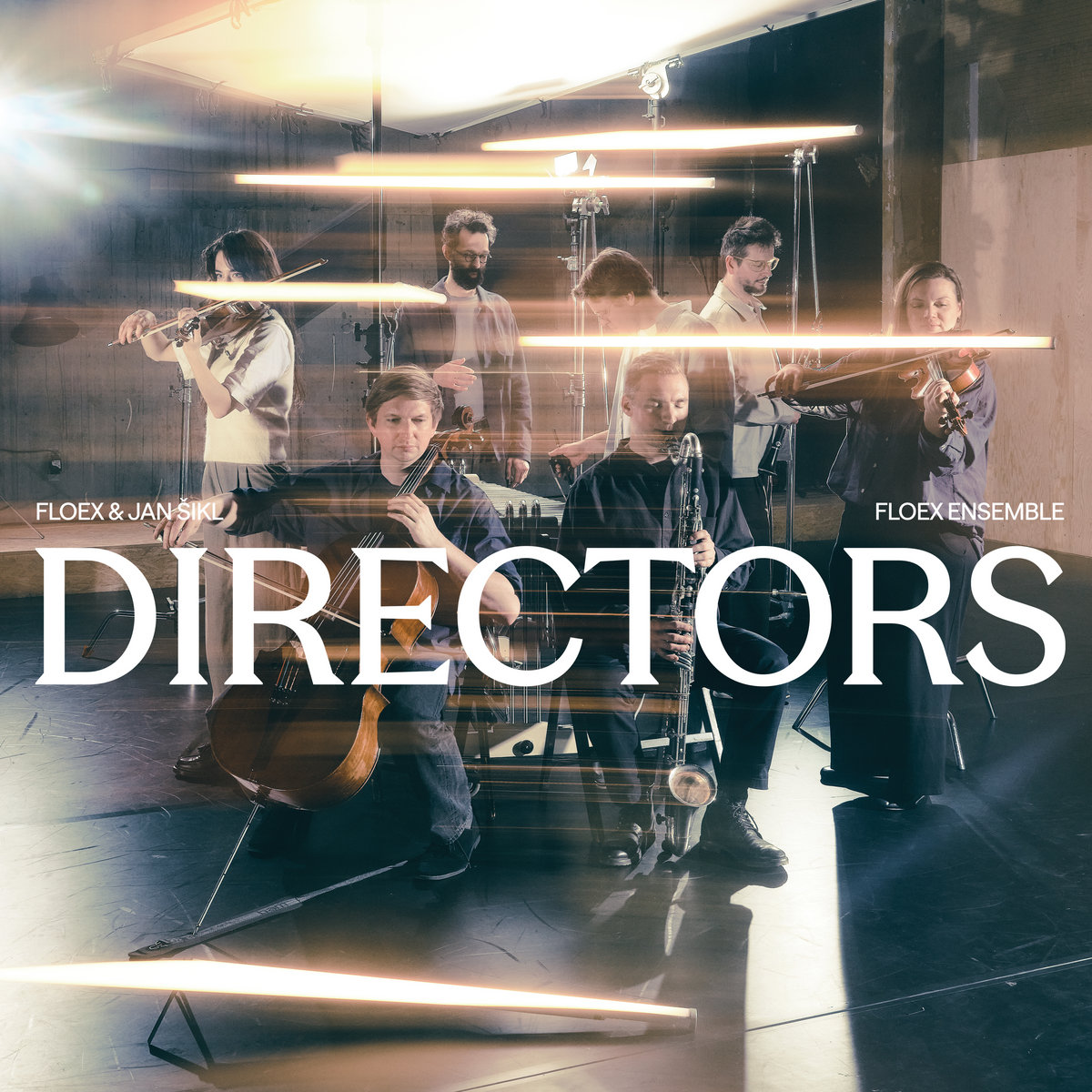
Bill Cooper: What made you decide to call the album Directors?
Tomáš Dvořák: When we started, I talked to Jan about linking track names to people. Maybe it’s an obsession, but I love that sort of thing. To me, every person is a micro-universe of emotions. Because music is often about emotions, you can express people well through music. At first, we didn’t know what names to choose, but then we thought we could name songs after directors. We originally really wanted to name them David Lynch or whoever, and even working names of the songs sometimes had that idea—“David Lynch sketch” and so on.
However, over time, we felt that was too concrete, both for us and our listeners’ imaginations. So, we decided to make it abstract instead: “Director No.1,” “Director No.2,” etc. The album name became a lengthy discussion topic because we wanted to be particular about how we communicated that concept. For ages, we went back and forth on whether to call it Director’s Cut or just Directors.
In the end, I wanted listeners to imagine one script directed by four directors, with each directing their own movie. This is why you’ll hear motifs in the first movement that show up differently in other tracks. Because directors often have strong personalities, they would end up with very different movies. Directors must have strong visions: they manage big budgets and lots of people, and they have to persuade everybody their vision is correct.
Bill: Have you two worked together before, or is this the first project?
Jan Šikl: Our partnership began when I arranged Tomáš’s compositions for the ensemble. After developing the ensemble for some time, we felt it might be beneficial to cooperate more deeply as composers.
Tomáš: This project was originally for one of my video game soundtracks. I asked Jan to arrange it, and he became the ensemble’s conductor. The result was so cool that we decided we needed to create something for the ensemble directly together.
Bill: One of the things that attracted me to Directors was how you created it with an inverted method. How did this idea first come about?
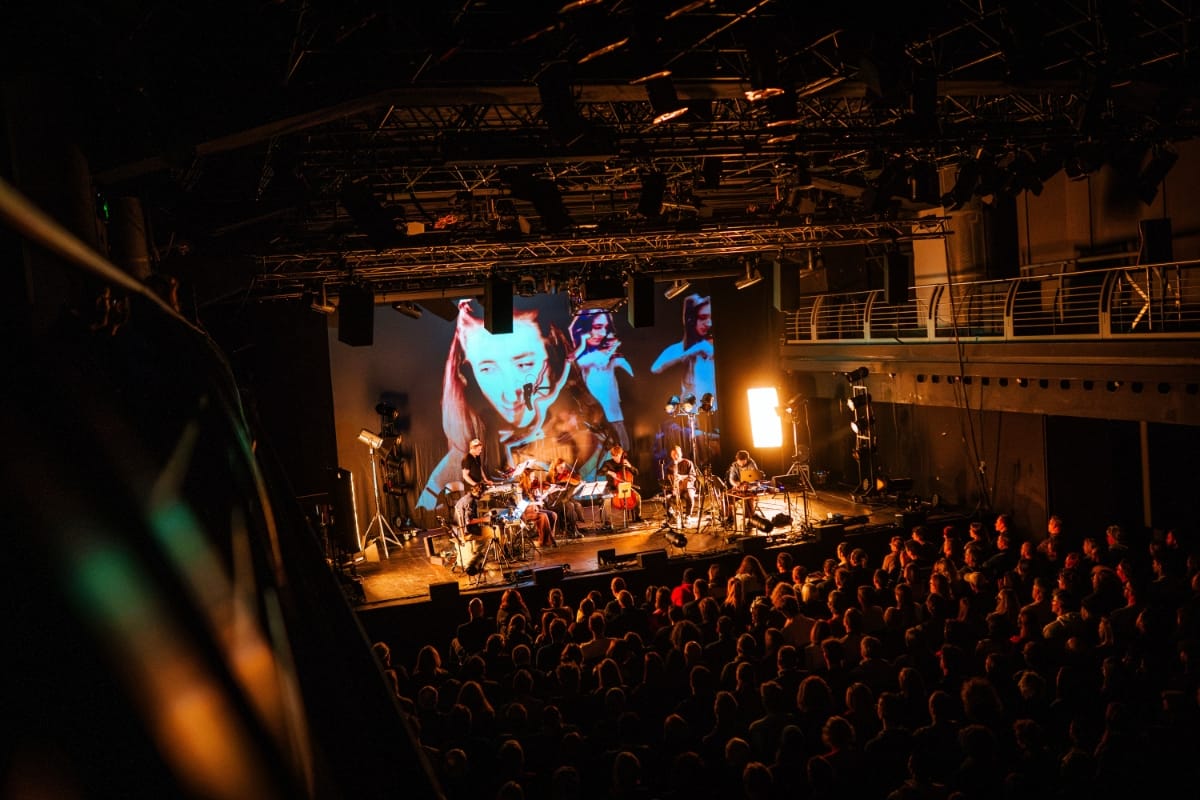
Tomáš: A festival gave us an opportunity to play live music, and they wanted us to write an original score. It felt like a good time to start this project, which we had had in mind for a while.
We thought very hard about how to connect electronics and this ensemble sound in a way that would work. I tried to find electronic sounds that would work with these live instruments. Because these live instruments are mic’d closely, you get a concrete, in-your-face contemporary sound. I felt the electronic aspects of the composition needed to be simple too. With my electronic music background, I used analog synths and similar instruments.
In the beginning, I wanted to start with sophisticated electronic club music and then take aspects of it away, such as rhythms and grooves. Only the residues of the process would remain, and we’d combine that with the acoustic instruments of the live ensemble. We made a lot of sketches, simulating ideas with electronic sound samples and ensemble motifs to try to find this universe. Over time, the two of us started to have a dialogue through music. I would make one part, and Jan would answer me, and we would develop the whole song.
Jan: Sometimes, our opinions were strong, as each of us believed different aspects of the songs were important. Still, we had to find a way to meet in the middle.
Bill: How did you work through that?
Jan: If Tomáš had a very strong idea, I’d agree to follow it. In other situations where I felt strongly about something, such as the harmonic development, for example, Tomáš would say, “Do whatever. I don’t care about the harmony here. I want to see how we can work with emotion in the piece.” I found it to be a natural part of the process. Sometimes it was easygoing; other times we struggled with fifteen versions of one part until we found what worked.
Tomáš: As Jan said, some parts were easier. The second movement, “Director No.2,” was the easiest. But “Director No.1” was a struggle, because we had to find and define the album’s sound. In general, we worked quite linearly. We started at the beginning and worked through to the end of the song, like we were writing a story. After we worked to the end of the composition, we saw the beginning from a different perspective. Then we would partly rewrite the song’s beginning to shape the whole thing altogether.
Bill: So, you wrote the composition, recorded it live, and then did the production elements afterward?
Tomáš: It was different with each movement. For example, in the third movement, we had to overdub, as the harmonies were more complex. We couldn’t do it in one take. Also, we didn’t have such a clear idea of how it would sound. After we recorded it, we’d review it to hear how it sounded. We added the electronic elements after we recorded. In this sense, it was inverted because we started with the ensemble recording, which was the core. Then, we wrapped everything else around it. At the beginning of the first movement, the ensemble sounds normal and clear before suddenly morphing into a distorted, different reality. We used moments like that to tell a story.
Bill: I feel like that’s the first part where you catch what you’re doing on this record. Was balance between electronics and acoustics an important aspect of these compositions?
Tomáš: Yes. We made it a focus. Electronic sounds can be very strong. They’re very abstract but also intense. To keep a balance, we imagined the electronic sounds as an instrumentalist in the orchestra. Jan and I spoke about that a lot.
Jan: Sometimes I would have this image in my head of a scale with the ensemble and the electronics being connected. Sometimes, they work together, but other times, one of those elements is missing. There are nice acoustic parts where you can enjoy the subtlety of the acoustic ensemble, and the same with electronics. We also didn’t hesitate to use electronic sounds.
Tomáš: On the last track at the very end of the album, there are beautiful arrangements that Jan wrote. Out of context, they sound like normal chamber music, but in an eight-minute composition, they become heavier. With this song, we wanted the ensemble behind a wall of electronics. You go through an intense wall of music before the end, where you reach a clear orchestra playing beautiful music.
Stay on top of The Tonearm.
Subscribe for exclusive interviews, cultural tip-offs, and community fun.
And your support keeps our site free of advertising and paywalls.
Bill: What other production elements did you add to the live ensemble pieces?
Tomáš: We weren’t afraid to play with the recording, thinking about it like a collage. We cut parts and replaced them with other instruments, with the notes staying the same. For example, at the beginning of the third track, we recorded the ensemble, and you can hear a rhythmic instrument, like a muted piano, playing the same motif. It’s very repetitive. Then, the ensemble emerges for a few moments before disappearing again. We wanted a primitive, clear rhythm, and what we had with only the ensemble didn’t work.
Bill: There are so many possibilities in that process. I feel like you could go down so many pathways and get lost. How did you know when you had the final product?
Tomáš: We kept trying as long as we felt there were problems. When we weren’t satisfied with our results, we looked for a different solution. So in that way, it was easy.
Jan: I don’t know about you, Tomáš, but sometimes in my projects, I can feel quite lost and disoriented, which is also important, and one must be brave to follow instincts as an artist. On the other hand, I’m glad we worked together throughout this project. It brings new quality to the creative process, and decisions are easier to make.
Bill: What did you both learn from this project?
Jan: I can name quite a few things. As we mentioned at the beginning, I started as the arranger, but through this project, I practiced conducting and learned I love it. Though I had taken conducting lessons, I’d never actually stood in front of an ensemble or orchestra. Since then, I’ve had the chance to conduct a couple of orchestras. This project opened a new world for me.
Conducting is a very different approach to music. It was also somehow therapy for me, because it’s not easy for me to express myself. I’m an introvert, and I like this challenge. It was also a new experience for me to play in a top-class Czech ensemble.
Tomáš: I learned a lot from Jan, actually. The best way to cooperate is to find a partner who can do something you can’t. Jan is mainly an arranger, and as such, he has much deeper knowledge of instrumentation and how to work with live instruments. He also has a sensitivity for harmony, knowing how to compose it for each instrument, and so on. All of this inspires me.
My background is in electronic music. Although I work with live instruments and I’ve done soundtracks, I’m not a professional player. I studied clarinet at a basic level in school, but because of our ensemble, I’m now playing the clarinet. It was a really cool experience to be an instrumentalist in the studio, and not just the composer.
Check out more like this:
 Lawrence Peryer
 Bill Cooper


Comments