


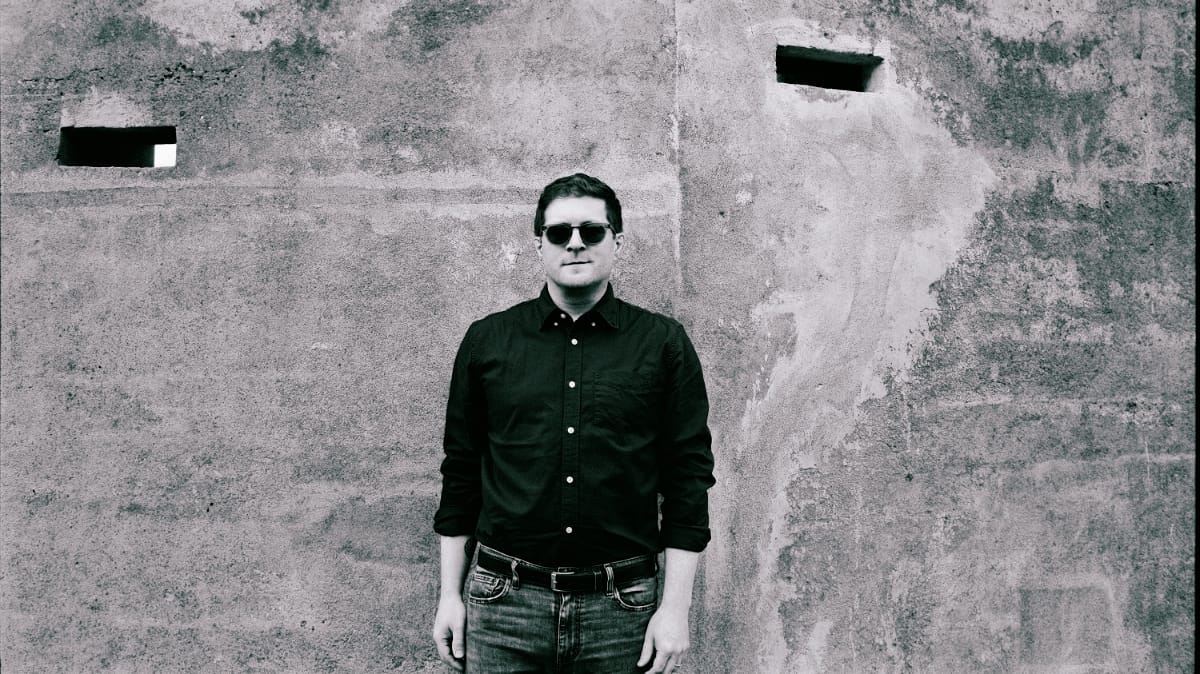
Based in Portland, Oregon, Eric Angelo Bessel is a composer, photographer, and one half of the musical duo Lore City, which he formed with his wife, Laura Mariposa Williams, in 2011 after meeting at Syracuse University, where they both studied visual arts. His solo albums, Visitation (2023) and Mirror at Night (2025), mix ambient textures with slowly developing instrumental compositions. Bessel has been composing with the Mellotron since 2017 but continues to discover new sounds and possibilities within the instrument, which has become an important part of his musical approach.
Photography is another major part of Bessel’s creative life. Working with medium- and large-format film, he has developed an interest in capturing landscapes and the details within them that most people might miss. His photography and music share a similar quality, both allowing plenty of room for interpretation and encouraging people to take their time with what they’re experiencing.
On his latest album, Illusion of an Inland Ocean, released through Lore City Music, these two creative outlets come together in interesting ways. Images of landscapes in transition helped shape the album’s atmosphere. Bessel wrote, recorded, mixed, and produced all 18 tracks himself, bringing together a wide-ranging collection of soundscapes.
Listening to Illusion of an Inland Ocean, I found myself wanting to put everything else aside, lie down, and simply let the music soak in. It even started to feel like meditation as I let the compositions take me wherever they happened to go. The album’s expansiveness gives you time to switch off from the outside world and get lost in its many layers, and it’s especially rewarding with repeated listens.
I spoke with Bessel and later exchanged a few emails, discussing the connections between his music and photography, the influence of his surroundings, and his approach to composition.
The transcript has been edited for length, flow, and clarity.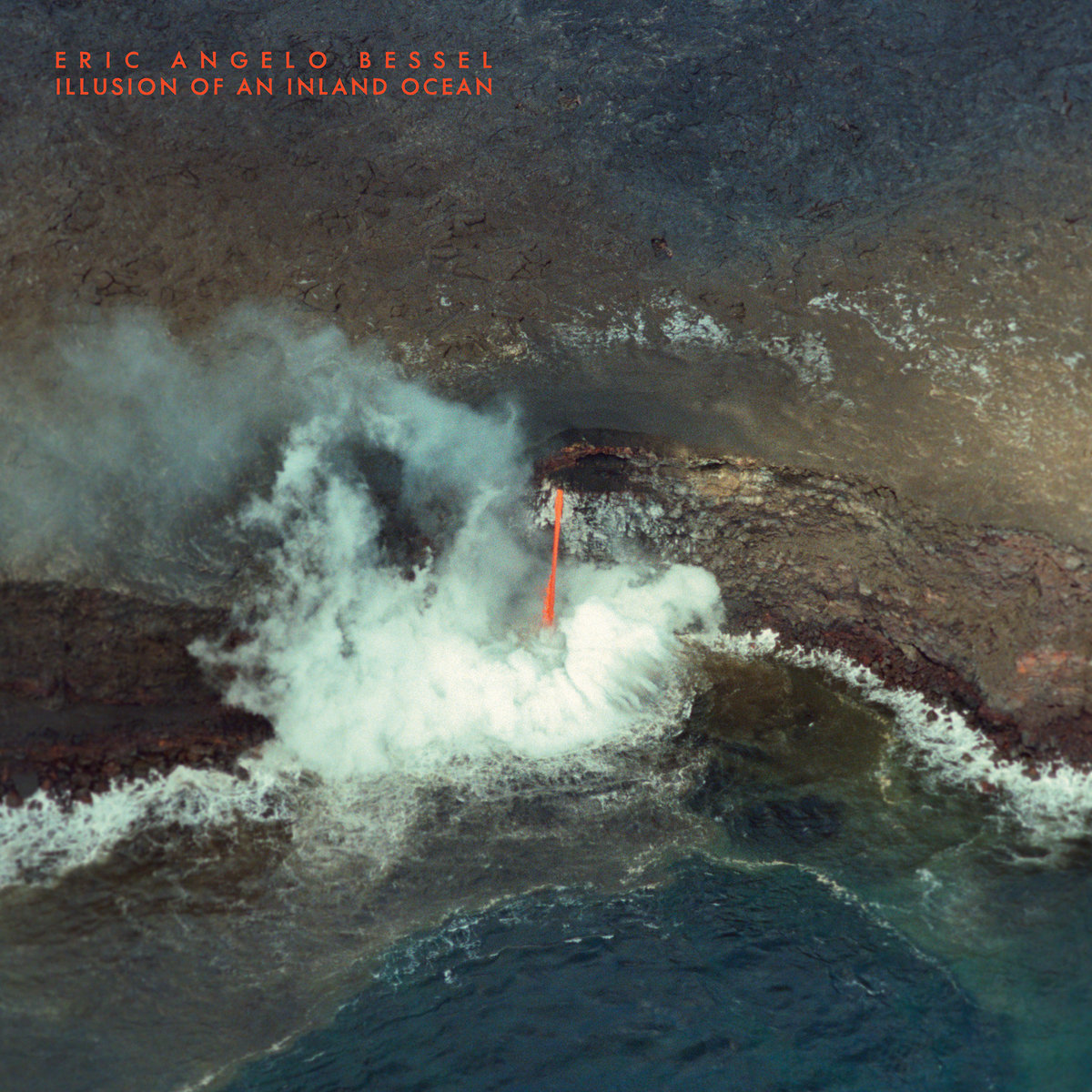
Carl Dexter: I was listening to your first album, Visitation, the other day, and it’s so easy to just space out, and it made a previously rough day better, for sure.
Eric Angelo Bessel: Yeah. I’ve heard from some folks that the music can host all sorts of emotions and, without you even knowing it, become a space people live in, so I’m glad you had that experience.
Carl: And I was wondering, regarding Visitation, how would you say that it connects to your upcoming album, Illusion of an Inland Ocean?
Eric: Well, thematically and visually, with Visitation, its artwork is of a dormant volcano. And it’s in this stark black and white, with mist going over it. And then Illusion of an Inland Ocean is another view of a volcano, but more of a volcanic stream, kind of spilling into a body of water.
But with the actual sounds of Visitation, I went about making the album with water as the concept I was going for, specifically. Illusion of an Inland Ocean, interestingly enough, I was channeling mostly air, but I think I ended up making an album much more, if not even more so, aquatic-sounding than the earlier work. In terms of sounds and progression, I’d say Visitation was my first attempt at doing these long-form, kind of instrumental pieces. Visitation is a bit more melodic, with a lot more obvious repetition in the songs. Whereas Illusion of an Inland Ocean, just when you think you’re picking up on a melody, you realize that it’s drifted into something else entirely, and sometimes where you begin is nowhere near where you end up by the time the song ends.
Carl: That’s what I picked up when I was listening. That said, is there any kind of interconnectedness, or recurring sounds or ideas, that tie the tracks together?
Eric: I spent a lot of time coming up with the order of these songs to create as much flow as possible, at least for me as the creator, when I listen to it. It’s not necessarily a linear progression from the very beginning to the end, but when I listen to it as a whole, where I’m taken from the very beginning of the album to the end, it feels cohesive. And I know that everybody’s experience is going to be different. As the creator, I’m certainly projecting things that nobody could know unless they share that experience. Have you had a chance to watch the videos or visualizers for “Pathways” or “Book of Astrology”?
Carl: I was actually going to ask about that because you mentioned wanting to go with air, but you ended up more aquatic. And that’s what I noticed in both videos; they’re more aquatic. So did those visual ideas come from the music, or was it the other way around?
Eric: So they were both filmed at a fish ladder in Oregon. There’s this large hydroelectric dam, and there’s this area where you can, if you’re lucky, watch salmon and other species migrate through space, but what struck me about this place is just how, as you’re observing, at least with, let’s say we begin with the video for “Pathways,” the fish are working so hard to go upstream. Obviously, they’re in water; they’re fish, but there’s so much air moving through the space, pushing up against them. So as you’re watching it, it’s this soup of air bubbles, air current invisibly moving through this water, pushing the fish in the opposite direction that they want to go. And as you watch the video, I mean, none of the fish really make it. They all get pushed backward. So I think of wind as being this force that nobody can really see, except for when it’s interacting with something stable, like a tree, like the tree limbs moving.
So I was trying to work with that underwater, but I guess that’s maybe too heavy of a concept: the idea of underwater wind.
“Book of Astrology” is another view from a similar place in that dam, looking down where the fish are going in and around those pools and the way that the water is moving; it’s almost like what you would see if you were riding at the back of a boat and seeing the water being parted from the boat or the boat engines kind of getting pushed aside. But it’s happening at a rapid pace, and the fish are trying to either leap out of the water or fight the current. So there’s a certain amount of water and air going on at the same time.
I also like the idea of hinting at or representing air with places or creatures that don’t necessarily evoke air. I mean, it would be very easy to suggest air with a bird, but with a fish, it’s something quite different.
Carl: So the themes of air and water are big throughout the album. Would you look at fire or more earthy, grounded themes in the future?
Eric: Oh, possibly. If I were to assign one of the elements to each of these albums—I don’t know, the idea of fire being its own thing, its own album, is kind of tricky. I think it would sound a lot like air, perhaps. Earth? I would imagine earth would have quite a bit more mid-tone, heavy mid-tones possibly.
Carl: A lot of this album felt dreamlike. But then I’m looking at “Downed Power Line,” and it’s kind of unsettling. I don’t know if that was intentional, or could you speak more about that specific track?
Eric: Having that more subjective title sets you up for what the song might do. At that placement in the album, you’re over halfway through. So, “It Wasn’t Always This Way” is probably the most melodic song on the album. And then “Moss” has this plodding sound but then becomes wistful at the end. So, between these two very melodic songs, I decided to put something opposite, but still in the same space as the others.
Something I try to do is create album flows where you can listen to the end of the preceding album or listen to the preceding album and then go right into the next album, and they kind of work together. With Visitation, it ends with “Kindly Rewind,” which easily translates into the first track of Mirror at Night, and then with Mirror at Night B-Sides, you have “Upstate,” which would go right into “Pathways.”
Carl: You mentioned the fish swimming upstream. Are there any other surroundings like that that inspired you, especially in Portland, Oregon?
Eric: We have several sections of town throughout the southeast portion where you’ll just be driving along a street, and then all of a sudden there’ll be a sign, “Roadway Not Improved,” and then it just turns into gravel and potholes. It’ll be in seemingly normal sections of a town: you’ll be driving along a major street, and then your GPS might have you turn down 68th alley or something. And all of a sudden you’re on this gravel road. These are either just other streets, or kind of secret streets in some places, where they’re all overgrown. In some of them, you can’t get a car through. But if you’re lucky, you’ll find one with blackberries or huckleberries just growing on the side, and you can pick them.
But the album, thematically, I mean, it’s like I was saying earlier, it wasn’t specifically looking for water, but it was conjuring it. I was thinking the closest I could get would be weathered shorelines or infrastructure that might be forgotten or no longer used. I do a lot of driving for work, and I often pass roads or exits that have been made derelict, and you just see vegetation growing onto them, and stuff like that. The natural world kind of creeping back into what man has made.
Carl: A few years ago, I went to Georgia, near Armenia and Azerbaijan, where spa towns from the communist era fell into disrepair after the Soviet collapse in the ’90s, and now moss and little trees are growing through a lot of the old buildings.
Eric: I appreciate the many faces a structure can have. It’s like, it can have the time when it was very much purpose-built, and then things change, and it becomes something else. You may have been to a place where people went to work or relax, but now it’s a place where wild animals bed down for the night, or birds pass through, or a vine decides to go in the doorway and out the window.
Carl: I wanted to get back to your album cover. You described the lava hitting the ocean, but what made you choose that image?
Eric: I mean, the idea of molten rock that, if you touched it, would cauterize you. Hitting the ocean or a body of water and instantly turning into earth—it’s literally creating a landmass by what it’s doing, which just kind of blows my mind. You have molten ground, somewhere deep below, just kind of passing through, and then it’s spouting out, and it’s creating extra millimeters or centimeters of landmass in that spot. It’s almost kind of primordial, the idea of new earth being created right there.
Carl: That seems to be a theme, not just with the album cover, but you were explaining driving along the highway and noticing these little derelict areas where nature is overtaking. I feel like that’s what the album is trying to get you to do. You want to discover these familiar places, and look for those overlooked details.
Eric: You could say that. As I’m creating songs, I often sketch out what they evoke for me visually, and I do a lot of my creation in the very early morning hours. Typically, when I’m composing, I wake up, and I go straight to my Mellotron, and I don’t drink any coffee. I have a little bit of water, but that’s it. And I’ll usually just write and start building up the sounds and the structure of the song. I try to go at it in the most unaffected way as soon as I wake up.
Then, as I listen to what I’ve written, it starts to show me what it is. That’s how I get there with most of these. Take “Cistern,” for example. After I wrote it and kept listening and listening and adding bits and stripping away pieces, I realized that it made me think very strongly of a water tower I’d seen in Berlin, and then once I held that in my awareness, I couldn’t strip that connection away from that song. And then, you know, I will always think of that specific place when I perform that song or listen to it.
Carl: Do you feel, in ambient music, sometimes there’s this lack of intention with the sounds and textures and that they drift along too much? I’ve heard other ambient musicians speak about this.
Eric: I take that sensibility from being a photographer that’s worked with the film medium, even when digital became a thing. Part of that process is waiting for the film to be developed. You don’t always know if you got the shot. So depending on how motivated you are to get the film processed and work with it, a long time can pass, and that creates critical distance between when you captured it and when you decide to work with it. You become a little different in that time that elapses.
I like to let these pieces sit for a while before I start working with them. So I’ll often write and write and write, then go in and start working with them, passing them through sets of pedals and other sorts of sound modifiers months later, sometimes in batches, but sometimes one at a time.
One song on my last album took about four years to complete. It wasn’t doing exactly what I needed it to. Some people might listen to it and think it’s a straightforward ambient song, but there’s a lot more to it. I compose almost exclusively on the Mellotron. And then sometimes there’s a little bit of guitar that’s swirling around in the background. Usually what people think is the guitar is a clavichord sound from the Mellotron, but if they want to think it’s guitar, I’ll let them think it’s guitar.
Stay on top of The Tonearm.
Subscribe for exclusive interviews, cultural tip-offs, and community fun.
And your support keeps our site free of advertising and paywalls.
Carl: Have you thought about bringing other instruments into your music in the future?
Eric: Honestly, the Mellotron is such an amazing instrument in that, on its own, it has a hundred different sounds, and they’re not synthesized sounds. People in the 1960s and ’70s recorded these little 7- to 9-second takes of someone playing a note, and recorded them to tape. So when you’re hitting an F sharp, it’s somebody from the past playing that note on a violin, or a single person singing that one note. I mean, it’s mind-boggling. It’s like every time I press a note, I’m calling upon the spirit of that person to perform it for me. And it gets even stranger when I start making chord progressions. Playing individual notes stacked together with other notes is a completely ghostly sound.
Since the digital Mellotron was released, they’ve put out another sound card every few years that you can plug into the back. There are many, many sounds. Everything from violins and pianos to clavichords and celeste keyboards—you name it. There are orchestral sounds, more modern sounds; there are all these weird rhythm tracks that I’ve yet to really dive into. It’s an instrument platform that you can keep finding new things to work with. I started using it in 2017, and haven’t really used much else since then. It’s kind of perfect for me.
Carl: Do you think silence is as important as the sounds themselves when you’re making ambient music?
Eric: I think so, yes. Although I’m not sure I’d separate silence from sound quite so neatly. Even in a very quiet piece, there’s usually something happening beneath the surface, whether it’s a subtle change in tone, a sound slowly coming into focus, or the way one layer changes how you hear another. The space around those sounds is part of the music, too.
I like the idea of giving people room to settle into a piece and discover things at their own pace. Silence can help with that. It lets a sound linger a little longer, or gives you a moment to notice something you might have missed. I think it’s similar to being in a familiar landscape and suddenly seeing something you’ve passed a hundred times but never really noticed before. Sometimes you just need to slow down a little and let yourself be there. That’s something I’m always drawn to in making music.
Check out more like this:
 Carolyn Zaldivar Snow
 Carl Dexter


Comments