


Within the nexus of improvised jazz and neoclassical expression, the nine-track LP Alight! represents a journey for pianist Sophia Subbayya Vastek. Between this latest album and her last, In Our Softening (2022), Vastek chose a new artist name, Sova, which means "owl" in several Slavic languages. She takes this step to symbolize moving outside a more traditional classical music upbringing: her first album, Histories (2017), consisting of Indian ragas and John Cage pieces, was based around her own histories with classical music and their intersections with larger classical music work, and 2020's Lili explored the solo piano music of early 1900s French composer Lili Boulanger, a Symbolist/Impressionist classical musician.
Sova's journey into a harder-to-pin-down neoclassical music/jazz fusion involved the pianist rescuing a damaged 1902 upright piano from a hate group 'church.' Premiering on In Our Softening, the instrument often has a life of its own on Alight! Hear it on "Hum" as it creaks and whines, a counterpoint to the uplifting, swirling melody the pianist plays in the foreground. Experience it as each piano hammer moves on the moody melody of "Hymn for Slowing." As the piano almost breathes with life, with a cracked soundboard and its aged qualities, Sova guides it lovingly, playing gorgeous cinematic riffs and phrases that engage and challenge the listener. Saxophone, bass, cello, and drums often add to Sova's complex compositions, building a world of beauty and delight. Hear their delicate, then dynamic interplay with Sova's swelling arpeggios on "Burn," one of the other highlights on the LP.
After hearing Sova's expressive and dynamic work in her latest LP, Alight!, I wanted to know how working with that piano helped create her new sound. I spoke with her on a video call, and we covered her 1902 upright piano's origin story and limitations, how she writes compositions, and, ultimately, how she shifted toward embracing herself authentically in her music.
The transcript has been edited for length, flow, and clarity.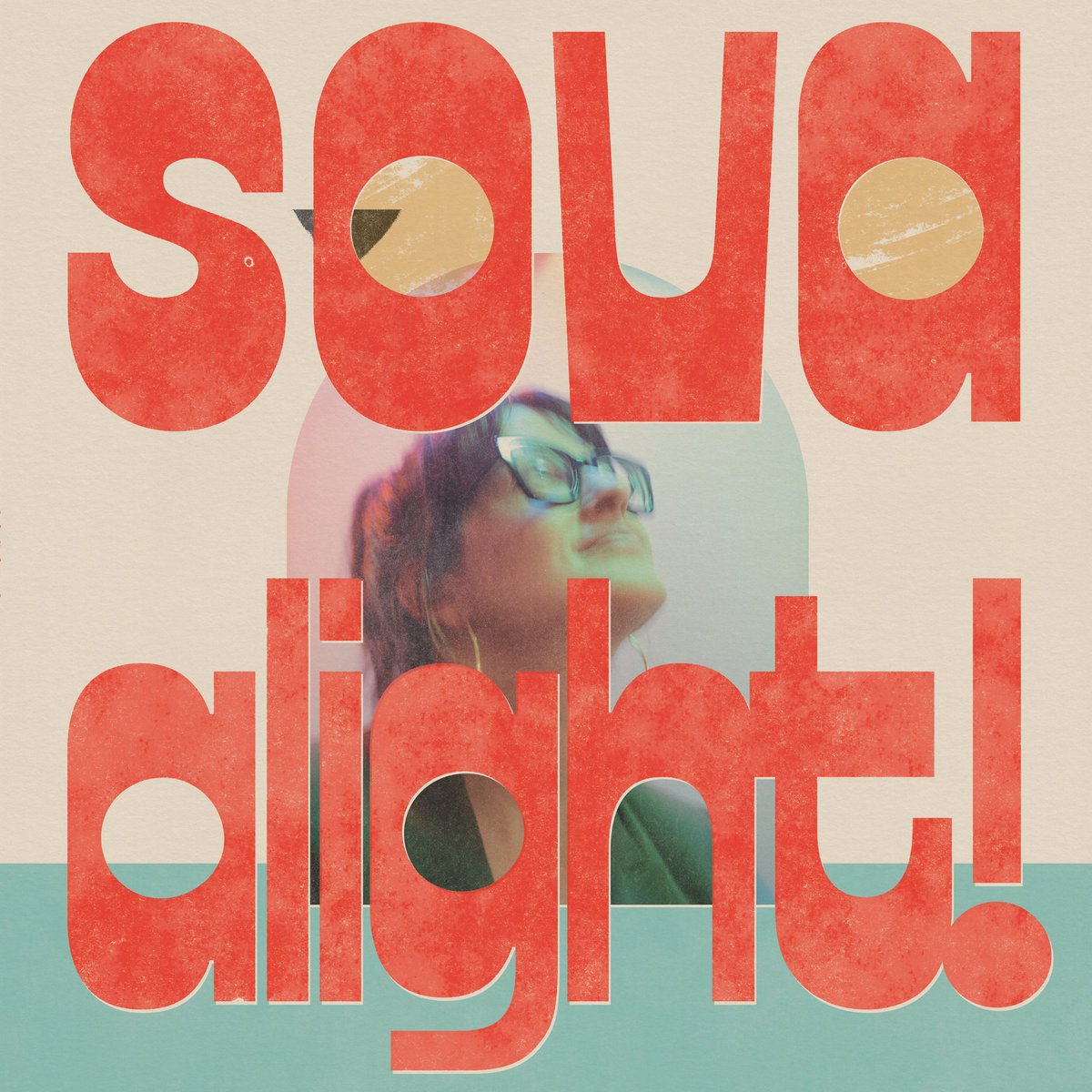
Bill Cooper: Talk to me about choosing a new artist name. What went into making the change, and how do you feel it better represents you?
Sova: It was a long time coming. I almost did it for my previous album. Looking back, I wish that I had, but I wasn't emotionally ready for the logistics. Of course, I love my name, and I use it all the time. However, my music had gone through so many big shifts that I felt like it didn't represent me anymore. It was also attached to old modes of making music. Giving myself a new artist name was a method to permit myself to live in new processes and new ways of thinking about my art.
Bill: I know owls connect to your new name, too. How do you feel owls represent you?
Sova: Sova means owl, and my true name, Sophia, means wisdom. I love birds, especially owls, because they have an incredibly rich, long mythology that goes back to ancient cave paintings. In many cultures, owls can be a harbinger of evil. On the flip side, they also have a lot of positive connotations, like wisdom. I like how they represent varied things to different people.
Bill: I read you had a turning point on that last album, and part of it had to do with this 1902 piano. I want to hear more about this—how you found it, what drew you to it, and why you decided to create music on it.
Sova: I have a friend [in Troy, New York] who bought an old church building. He's a visual artist, and he reached out to tell me that there was this upright piano in his building. He wasn't using it and wanted to donate it.
As a known pianist in the area, I get texts and emails like this all the time. Most of the time, the piano is not taken care of, and I have no interest in it. Because this was a friend, I went to see it. It had been sitting in this building uncared for, for decades at least. It's a huge, old upright piano, practically a piece of furniture.
When I started playing this instrument, I was just like, "Oh my God, the sound of this piano is so beautiful and so unique." It's a muted, felted piano with incredible resonance and a deep bass register. That instrument opened a door for me, and I started writing all this music on that. It was an important piece of my journey.
Bill: It is damaged, correct? How has that affected your sound versus other pianos you've used in the past?
Sova: My piano tuner—God bless her—she's here all the time, because the piano doesn't hold tune at all. If you're trying to record on this instrument, especially if you're trying to record with other things going on, or overdubbing later, that becomes really interesting.
For my last album, which was all piano, I'd tell my piano tuner, Chloe: "You've got to come to it in the morning." Then, the rest of that day is for recording, and maybe some of the next day. This instrument is so precious, so I have to make the most of it and the life it has left. It's such a magical instrument that even when it is out of tune, it just sounds so good to me.
Bill: Have you been drawn to another instrument like this before, or is this the first time it feels almost like a collaborator in itself?
Sova: This is the first time that I've had an experience like this. This [upright church piano] was just like love at first sight.
Bill: Apparently, the piano also belonged to a hate group?
Sova: The building my friend bought had previously been owned by a hate group pretending to be a church. Sadly, they are still in existence in Troy, although the group isn’t as active or as vocal recently.
Here's an example of their practices: they would put raw ham outside the door to their church and make everyone touch it, I guess, conceivably, to keep Muslims and Jews out of the building. They had a few different raffles for AR-15 rifles, which—I'm like, "Why are you raffling guns?" The vitriol that would come out of the mouths of the pastor and the people—it's a sad thing.
So, part of the mythology of this piano for me is that it existed in this building while that group was there. I spin the story in my head—because I don't know what went on in there—that they never touched it, because music is a beacon of joy and love. I imagined it sitting there untouched, absorbing this group's hate and removing it from them. That's also why it's so soft and beautiful, because it's the antidote to this group. While writing the music early on for the last album, that story was going through my head—of this piano, this music, being an antidote in a way to what the piano was witnessing for all those years in that building.
Bill: Do you just play the upright on this album?
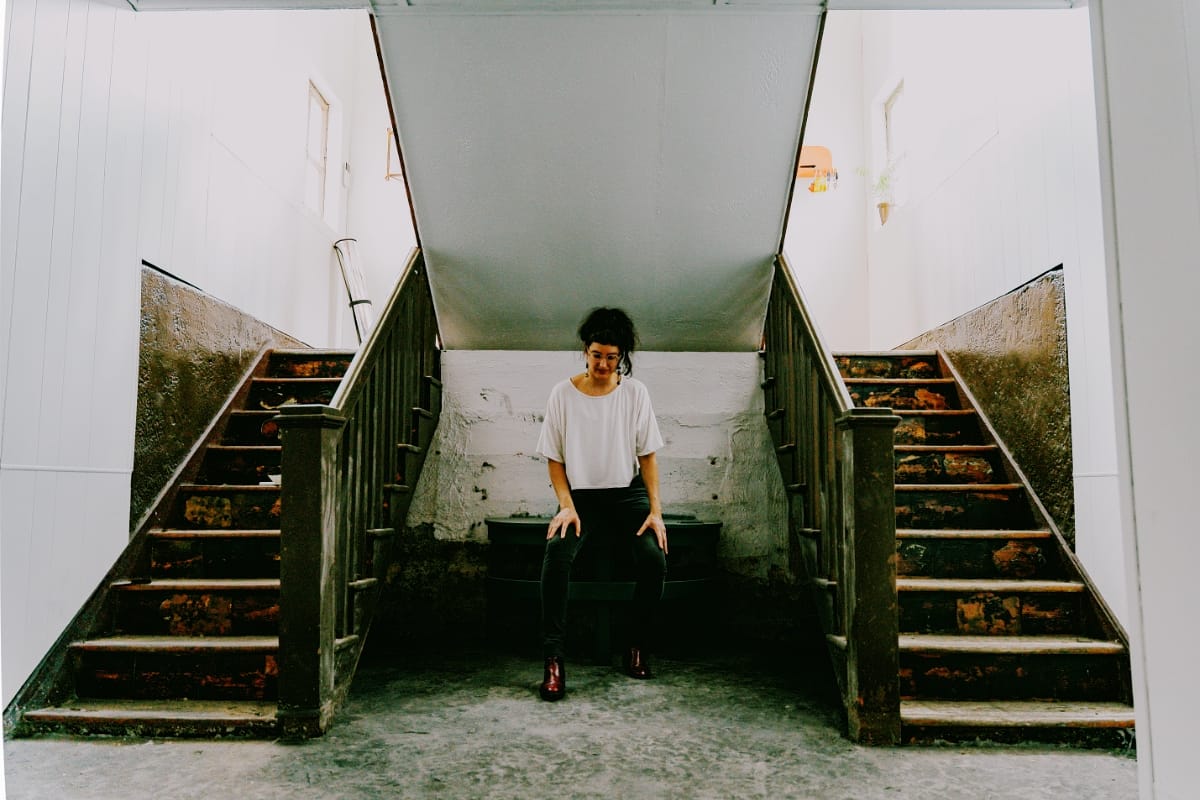
Sova: On my latest album, I play three different pianos, but most of it is on two. I added my grand piano as well, which I love. I've had my grand piano for twenty years at this point, so I know that piano so well.
Bill: How do you decide which of the three pianos to use?
Sova: They're all so different. The grand is louder, brighter, and showier. It's also more responsive and has a much bigger dynamic range. I can also do things that are a little technical or faster.
I can't play very fast or do traditional techniques on my upright. Because of this, when I do play quickly, I blur notes. I love doing that, because each note plays unevenly. With a lot of pedal and reverb, you can create these sound clouds in a way that I would have to fight to do on the grand, because every note is so clear on that piano.
Pianists are a weird breed, because when we do travel and perform, we are almost always playing on a different piano. It's in our DNA to be used to playing different instruments. If you're in a venue for the first time, you must be able to understand a new piano very quickly. On the flip side, it's also special, because we do play so many instruments all the time, so I feel lucky to have a close working relationship with one or two instruments.
Bill: How did you develop the pieces for your latest album?
Sova: My writing process is improvisation-based. It starts with fiddling around on the piano and seeing what sticks. When I land on a little seed, I'll just keep playing. It all comes through my fingers, which is also why the instrument itself is so important to me. After starting with improvisation, I whittle it away over time by playing the material repeatedly until it starts to solidify into more of a composition. After starting with solo piano, I play the pieces more and start imagining the other instruments and production elements.
Bill: When you're trying to create these soundscapes you're creating, do you picture anything?
Sova: I get asked this question a lot about how much I think about narrative in instrumental music. The answer is yes and no.
In the early stages of writing something, it's very vague. It's a rare instance where I have something very specific in my mind, and I'm trying to write about that. If I'm just sitting down to write, it doesn't really happen that way.
Usually, as I work on it and get to know it better, it starts to have stronger associations for me. Sometimes it's just an emotion or feeling. Sometimes it's a more specific narrative that'll start to emerge, or a visual cue of some kind. One reason I love instrumental music is that people can have such different responses to it.
Even if I have an extremely specific story behind something, no one needs to know that. There's a track on the album, "Burn," written in response to a very specific thing. People will listen to it and possibly have related associations, but it'll also go in a lot of directions for people. There's something really cool about letting your music go that way.
Bill: Would you say it becomes more freeing as a result?
Sova: Absolutely. If someone is willing, it can ask something of a listener. It can ask you to go someplace. It can also be passive—it can purely be background music for someone. But I think if someone is in the right kind of space for listening to instrumental music, it can ask a lot of you, in a good way.
Bill: You said earlier when you're working on something, you get an idea and you work through it until it becomes a composition. But when you come to the studio, and you're recording with this upright piano, I assume those sounds aren't always coming up, and they're going to change. So, you have to capture what's happening in the moment and work with it?
Sova: Yeah, it's alive. The piano is different from day to day, even if it gets tuned to the same place. The way that it's creaking, or the way that it's making noises, even the timbre of it, can shift.
Bill: You mentioned the creaking, and I noticed it, along with all the other ambient tones when you play this upright piano. Was that intentionally part of the process to make it so prominent in the album?
Sova: Yeah, it's very intentional. Honestly, it was a big part of what drew me to the instrument right from the start—it has so much life in it. Nicely regulated concert pianos are built so you only hear the music. With this piano, it's in your face, and you're aware of the mechanisms that create music.
We were very intentional about how we miked, mixed, and EQ'd it, so the character of the piano comes through. It does inform how I write music on it, because sometimes something mechanical or rhythmic happens, and I'll work with that. I love music that puts you in a place where you can hear the performers interacting with each other. There's so much depth when you can feel like you're in the world of the music and the performers.
Chuck [Johnson], who mixed the album, did a really good job handling all the different sounds and elements. This was our first time working together.
Bill: What drew you to him? How did you decide to work together on this one?
Sova: Sam [my husband] and I were looking for someone to mix the album. We did the usual thing: looking at who mixed or worked on similar projects. We ended up asking someone I trust very much for advice, and he recommended Chuck.
We were like, "Great, we love his work, he seems like he would be perfect for this." We hadn't reached out to Chuck yet, but within a week, or maybe even a few days, someone emailed us saying they wanted to come and play with Chuck at our house, because we sometimes host live concerts.
Chuck is an amazing musician. He's a pedal steel player and does a lot of ambient electronic stuff. Within less than a week, I'm getting two pointers bringing me to Chuck. So that was it.
Bill: Do you have any advice for musicians who are trying to make music, or just any musicians in general?
Sova: Surrounding yourself with community is really important. I don't just mean musical community either. Truly, community, in whatever form that is. Being reminded that we're not alone in life, and also for art creation, is very important for being able to keep going, because it's just so hard. I feel very fortunate that we have a strong community here in Troy that is very supportive and gives in wonderful ways. Those connections, those threads, really helped me to keep making music.
Check out more like this:
 Carolyn Zaldivar Snow
 Arina Korenyu
Stay on top of The Tonearm.
Subscribe for exclusive interviews, cultural tip-offs, and community fun.
And your support keeps our site free of advertising and paywalls.


Comments