


One of the great gifts music gives us as a society, as a planet, is that it can take a deeply personal experience and make it universal. Deniz Cuylan’s For Luca does this beautifully, and goes a step further, rooting the theme of loss in our natural world and the animals we share our lives and homes with. For anyone who’s ever adopted an animal, or had one adopt them, the experience can be transformative, educational, and moving. With For Luca, Cuylan shares his grief over losing his beloved Luca, and explores his friends’ experiences of being caregivers to critters as well.
Born in Istanbul, Cuylan has spent the past fifteen years moving between composition, improvisation, and sound design, drawing on classical guitar, electronic music, jazz, and musical traditions from around the world. He played in bands and worked in Stockholm, New York, and Istanbul before settling in Los Angeles, where he began scoring film and television. His first solo album, 2021’s No Such Thing As Free Will, brought his classical guitar playing and compositional voice to the foreground; on 2023’s Rings of Juniper he surrounded that guitar with strings, piano, and clarinet. For Luca, his third, is out now on Hush Hush Records, the Seattle label run by KEXP’s Alex Ruder.
For it, Deniz called on his global cohort of composer and musician friends for a multicultural exploration of the shared stories of our natural world, our pets, and grief. His many collaborators include Peni Candra Rini, Makoto Kubota, Sarah La Puerta, Casper Clausen, and Thor Harris. He shared that his collaborative process was one of open arms, of knowing and trusting his collaborators, getting out of their way, and letting them do what they do best. Together, the album paints a beautiful world, sonically sensitive—a lullaby eulogy for all loves lost, not just the human ones.
We discussed his experiences of growing up on the Aegean, being a child of sailors, and his unique relationship to nature, and how nature called him to his craft, perhaps long before he had words for the conversation. We explored what it means to be a film composer, and the contrast of writing music for oneself without a visual narrative. Deniz also shared how he holds space for himself and his collaborators, whether film directors, actors, or, in this case, his friends—and how his own inner world came to the fore through his relationship with Luca. I hope you’ll find a space, perhaps with a critter you care for, and spend a small window of time with what he and his collaborators have so beautifully articulated through music.
The transcript has been edited for length, flow, and clarity.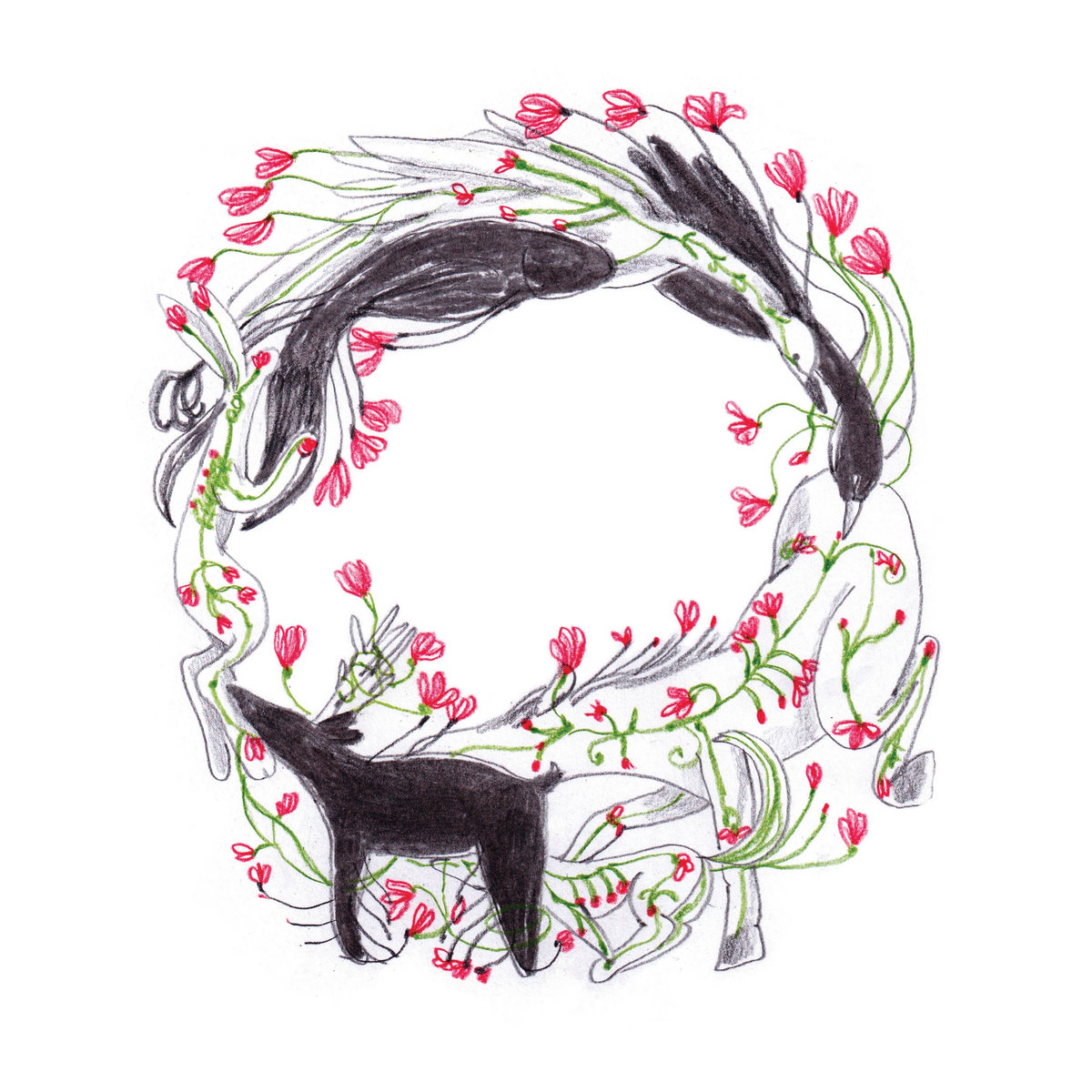
Kallie Marie: I wanted to start by asking you a little bit about the fact that you collaborated with a lot of different friends. Do they all share a similar love of animals and nature, and did that draw you together to work on this project?
Deniz Cuylan: Of course, I made this album for my dog, Luca. He passed away last year, and the best way to deal with grief is to share it. Since I’m a musician, my way of dealing with anything is making music. So I reached out to my musician friends to create a space where they could also share their stories about losing pets, or about grief and loss in general—not just pets. Loss was the biggest concept I had in mind when I was choosing the people I was going to work with.
I had all these ideas in mind, but what started it all was Makoto Kubota. I met him in Japan through some friends, and he had just lost his cat, Shirasu. He told me his cat’s story and got really emotional. This is a big generalization, but I hadn’t seen many Japanese people open up like that. Makoto was so open with me, and I was moved. Luca was alive back then, and I thought, “Oh, I need to prepare myself for if something happens in the future.” I faced his grief, and it stayed with me.
A couple of months later, we learned that Luca had bone cancer, and he died in a month or so. I immediately thought of Makoto’s story about Shirasu, and I reached out to him. I told him he could record something for me: a spoken word piece about his cat, how they met, and what happened between them. He sent me this recording. I thought this would be really good with how I reinterpret my songs.
Since Luca came into our lives—basically my first record, No Such Thing As Free Will, my second record, Rings of Juniper, and a couple of singles I was preparing to release—I was going to reinterpret them with my musician friends. I thought Makoto’s spoken word was perfect for this, and that’s how it all started. It started with this story of other people sharing their grief, sharing their stories, and it started with Makoto.
The same thing with Efterklang’s vocalist, Casper Clausen. Casper’s family dog was Viggo, and he wrote lyrics for Viggo. He’s from Denmark, and you get that Nordic sense of mystery; you can imagine Viggo in the mist, a mythical creature. Everyone approached the animals in their lives from different perspectives. Peni Candra Rini, from Indonesia, mostly talked about how we’re connected not just to animals but to Earth. She was really obsessed with the idea of Earth and having this connection with the ground. How do you ground yourself when you’re connected to the space around you? That’s the type of connection you have with your loved pets. Everyone had a similar story.
Kallie: It’s so universal, across cultures—this bond, this shared understanding. Grief can be very isolating, but in this sense it’s an understood experience. Was Luca your first pet, or your first time being a guardian of a creature?
Deniz: I think I became an adult with Luca. I was married, but we both had independent lives, and we never thought of ourselves as adults—my wife and I. We were still surfing the earth, if you will. We were just explorers. But once we had Luca—I remember Luca crying in the other room, and we were hugging each other and crying because we thought our lives were over, as we knew them back then. That’s the impact of becoming a parent, I think, or of being responsible for something other than yourself. It unlocks all of these emotions in you, and some of them can be hard to deal with. It’s not a rose garden. Even if it is just a dog—you project all of these emotions onto them, so they become your parents, they become your child, they become yourself sometimes, like a mirror.
I remember becoming an adult because of it, and I didn’t enjoy it at first. Then, like everything that happens in life, you have to face it. You have to take a position on how to interpret this and how to navigate it. Then you understand it enriches your life beyond imagination, even though it comes with hardship.
I also remember starting psychoanalysis because of Luca. When you become a parent, you have to acknowledge all these things, and you have to self-examine a little bit. So I started psychoanalysis, and this came up during free association: We had a dog when I was growing up; his name was Bozli. I remember thinking, “Did I have a brother?” I always thought that we were two in the beginning, but now I’m one. There was definitely a story there—I remember growing up with this dog that I saw as a brother. That’s what happens with siblings—you become like each other; you become similar. I think I inherited something dog-like from Bozli, and I still try to maintain that curiosity and amazement.
Kallie: They really do teach us so much about ourselves, and about patience, our perceptions of things, and how we interact with the world. It’s really true; they teach us a lot.
Deniz: Definitely. Oh! I remembered something: We were in Santa Barbara when we got Luca, and we were on the beach, and there was this beautiful sunset. Luca wanted to run after the seagulls, and he was barking like crazy. He’s a puppy, so his bark isn’t that loud. But there were a lot of people around us, and I was a bit ashamed because it was a peaceful moment, and Luca was destroying it by barking so much. He wants to go after the seagulls. I’m trying to teach him not to do that. I’m trying to have control over this chaotic being. I was trying to contain him.
When I thought about that moment afterward, I was the only thing that wasn’t peaceful on that beach. Luca was okay, everyone was okay with Luca, and everyone was okay with the sunset and everything. I was the one trying to control the situation. So, any pet owner would understand this feeling of, “How much control do you need?” To be like, “Heel,” like that kind of order—do you feel a bit weird about teaching things like obedience? It’s called obedience training, but it’s actually a training for yourself. So they definitely teach us a lot about the balance of control and coexistence.
Kallie: Do you think Luca understood your world of sound and music? Did he ever interact with you, with the music, or hang around your working space?
Deniz: He was comfortable in the studio. This is a general thing about musicians: they love having pets in the studio; like, modular synthesizers and cats were a thing. I remember ten years ago, everyone was posting videos with their cats on modular synthesizers.
Having a dog in the studio is calming. I remember Luca sitting right next to the microphone while I recorded my guitars, and I was really picky about the sound. Since I’m not a classical musician, I was more interested in the character of the classical guitar, so I needed complete silence in the studio when I recorded these songs. Luca sat right next to the microphone, but he didn’t make a sound. Sometimes, in the middle of a take, he barks, moans, grunts —he makes a sound—and then the take is ruined. And I understand that Luca was my producer—that take was no good. So I followed his instructions. Although he didn’t know how to play an instrument, he was basically Rick Rubin. He was just listening and knew what to do!
Kallie: He had good taste.
Deniz: Yes, definitely. But unlike Rick Rubin, Luca was never in prediction market commercials. That was the biggest difference. (laughter)
Kallie: There’s a lot that animals can bring to us, and that connects us to our deeper sense of self. Did any of this impact you as a composer, not just on this record, but did that change your approach to music at all?
Deniz: It brings out the vulnerability in you. That’s what good producers do: they get you out of your comfort zone and teach you how to be comfortable in that vulnerable space. Luca did that for me, because I always had bands, and when you’re in a band, it’s always a debate about what the right decision is and how to move forward. There’s always a strategy element in a band, and that’s good—that’s like community decision-making. I love that, but it’s also a push-and-pull kind of game. When Luca came into my life, I started releasing my solo albums; that’s when you get vulnerable. You expose yourself with all of your caveats, and Luca, I think, taught me how to do that—it was okay to show those vulnerabilities.
Stay on top of The Tonearm.
Subscribe for exclusive interviews, cultural tip-offs, and community fun.
And your support keeps our site free of advertising and paywalls.
Kallie: I also wanted to ask you about your use of the guitar. You use the guitar in quite a unique way.
Deniz: Yes, I remember my first classical guitar. I loved recording it from the first couple of months, even though I didn’t know how to play the instrument. I was obsessed with how it sounded, and I remember using two cassette players: recording one take on a cassette, then playing it and recording another take on top of it, and recording both guitars on the second deck. I did so many layers. I also remember doing this during summertime in Turkey. There were a lot of cicadas in the background, and with each take, they got louder and louder. So it’s becoming this noise type of genre, with just one guitar becoming like multiple guitars. So, I’ve always been fascinated by layering guitars on top of each other. Then I got interested in electronic music, even with acoustic instruments. Aphex Twin was doing interesting stuff, like bringing out unique sounds from those acoustic instruments. So I started approaching music from an electronic perspective, and I started collecting synthesizers.
I had a synth pop duo. I was known as an electronic music producer or musician, but I always kept classical guitar in my mind, and I came back to it, and I think that’s how you show your vulnerability; you go back in time to your childhood, and you find out about something that made you excited about music, and then you try to recreate it over and over again. It’s like an obsession, and I did that with my solo albums: layering guitars on top of each other and creating an orchestra—a wall of sound with guitars—using just one instrument.
Kallie: What was the collaboration process like between you and your friends on this record? Did you know the direction of each piece before you set out?
Deniz: I think everyone on this record was familiar with my albums, so they knew where I was coming from musically, and I think the best way to collaborate is Miles Davis’s approach to improvisation: you pick the right people, then you don’t say much about what they do in the band. You observe them and give light direction on where you’re going instead of micromanaging. You just tweak it a little, because sometimes you can get carried away. You get too attached to an idea, and you need someone else to look at you and say, “It’s okay to let go of that.” I think I did that, and everyone’s such a good musician.
You create the space, and then things happen in that space. I was open to that, especially since the whole album is collaborative, so if you’re not open to it, you become this annoying force, trying to force everyone into a box. It’s a conceptual album; you can say that about For Luca, because it’s about grief and loss. A concept guides all the musicians, but musically, I don’t want to guide anything. Since they knew the songs, before they started sending me the recordings, they knew exactly what to do. So there were no second takes.
Kallie: Everyone is geographically spread out. How did you come to know all of these people in different places?
Deniz: I feel really lucky about that; it feels like the world is shrinking. I feel lucky to be in different countries—to have a history of living in different regions, keeping in touch with people from the past, and becoming friends with new people. Creating your own community is the reason why you make music in the first place. So I kept my friends in Turkey, where I grew up; in Europe, where I did many projects, in different parts of Europe. I also lived in New York for seven years, so I met a lot of amazing musicians. Then I moved to LA—I made film music, so I know a lot of composers here.
This is a privilege, and I don’t take it for granted. Having those connections is the most important thing, especially in times of grief, because once you share the grief with your friends, it becomes universal rather than self-centered sadness and melancholy. This melancholy is shared with other people. It’s not a bug; it’s a feature. It’s part of the experience. So they remind you that you are friends, so you need your friends, especially the friends that keep coming up with new albums that you never listened to. There’s no better luxury than that. I was lucky enough to have those people in my life. We can hear them in this album for sure.
Kallie: You mentioned film music. How is writing for yourself different than when you’re writing for a show or a brief? Those two head spaces can be very different, so how do you experience that?
Deniz: You always find something that you’re interested in, whatever project that you work on. There’s always an angle to keep you interested and curious. I call it method composing. I love to do that. I love to lock myself in the studio, be with the film or TV series I’m working on, and become one of the characters. It may be escapist, but we all need escapes, and you can use projects to escape; it’s the same with film music. I love being in the story and serving the story instead of my own ego. That teaches you—no one can claim it for themselves. Even directors know they rely on the whole crew, with all the departments working together. As we said before, they just create the space so that everyone can show themselves. It’s like an ensemble in a recording—you create the space, and everyone knows what that space is all about. Then everyone performs freely.
I’m just a cog in the machine, and it’s good to surrender your free will from time to time to something that’s larger than yourself. Working on film is definitely that for me. It’s an ego check on musicians. I recommend this to every musician: get out of yourself, whatever you were yearning for in music, and be more fluid in how you approach music and film. It definitely teaches you how to do that.
Kallie: Yeah, it also teaches you to be a little less precious sometimes about a thing, because the deadline is the deadline. So nothing can be too perfect; you just have to get on with it.
Deniz: Definitely, and like sometimes you’re known as a specific style of music maker. For example, I’ve worked on so many historical shows. Maybe it’s because of my beard? I don’t know! But I’m always doing the historical epic—like I always do patriarchs for some reason. I did Moses. Maybe I’ll do Jesus in the future. I did Rise of Empires: Ottoman—those series. So there’s always that element for me. I don’t know what it is, but I have to deal with it, whatever that is.
Kallie: What excites you most about our natural world, and how do you see music fitting into it?
Deniz: My parents were both captains, so I grew up on a boat. I remember the sounds you hear on a boat, and that was my first musical training —especially at night, when you just hear the gentle waves hitting the hull. When you sail, the engine’s off, so you hear only the wind, and nothing else around you. So it’s almost like a clean ECM recording when you’re sailing, so that was my first musical training. I remember the nature speaking to me, especially in the Aegean where I grew up.
I felt like there were so many stories from the past, from history. It was probably my fantasies, or the Greek mythology that I was reading at the time, but it felt like something spoke to me, and I didn’t know what it was. That conversation led me to music. That conversation was musical for me. It was almost like a dance, like a recording session with another musician. So I listened to nature sounds as memories from the past. You could sense that in the small coves of the Aegean and the Turkish coast; in every cove, there’s so much history.
I remember having the opposite feeling when I went to the desert in California for the first time. I felt like there was complete silence, no history, and no baggage in a way, which was freeing. I think that’s why people move to the desert: it feels like your mind can’t bounce off anything else. You have to face whatever you need to face within yourself, since there’s no mirror in the desert. There’s no nature here; this is the absence of nature, so no sounds, nothing to speak to, and you can’t have a conversation with the desert.
But that wasn’t true. That was my first time, and I think I was in shock. The second time, I started learning about how to approach the desert, and there was another conversation there too. I think wherever you go, you always take the conversation with you. I think nature is a projection, and it’s also the space that you exist within; there’s no escape from it. It’s a trap. You’re trapped in your environment, but you also depend on it. So it’s okay to let go, and it’s okay to acknowledge that, to let go of controlling the environment, to just exist in it.
Kallie: I think sometimes our environment can change how we write, whether that’s nature or even just the physical space. As musicians, we are a bit like a conduit to whatever is out there.
Deniz: Yeah, definitely. You need to be brave enough to just open the gates and see what comes through. Sometimes it’s a bad trip. Sometimes it’s a good trip. You just need to be okay with whatever comes.
Kallie: Yeah, and that is that loss of control, right? You can’t control what’s going to come through the gates, and you have to be ready for that.
Deniz: Whenever I’m in New York and I record music, I become louder and a little aggressive because of all the sounds. I keep hearing the neighbors, and instead of fighting with them, I write music accordingly. So it changes. If you allow it to change your music, it becomes a gift. If you try to resist, it becomes an adversary to fight.
Kallie: Even when you think about electric current, right? The resistance and the impedance; if you impede the current, it’s not going to flow. So you can’t impede the charge; just let it be.
Deniz: But also we should keep in mind that there are so many air conditioning units that work on a certain frequency. That frequency is between B and B-flat. I need to write microtonal stuff because it’s between perfect tuning. We should tune the ACs to either B-flat or B; we just need to make up our minds! (laughter)
Kallie: I might have to send a memo to the people who make my fridge because it’s on its own key.
Deniz: Definitely! Hopefully this interview will unlock that. We will all tune our ACs and electronic instruments to B-flat.
Check out more like this:
 Lawrence Peryer
 Kallie Marie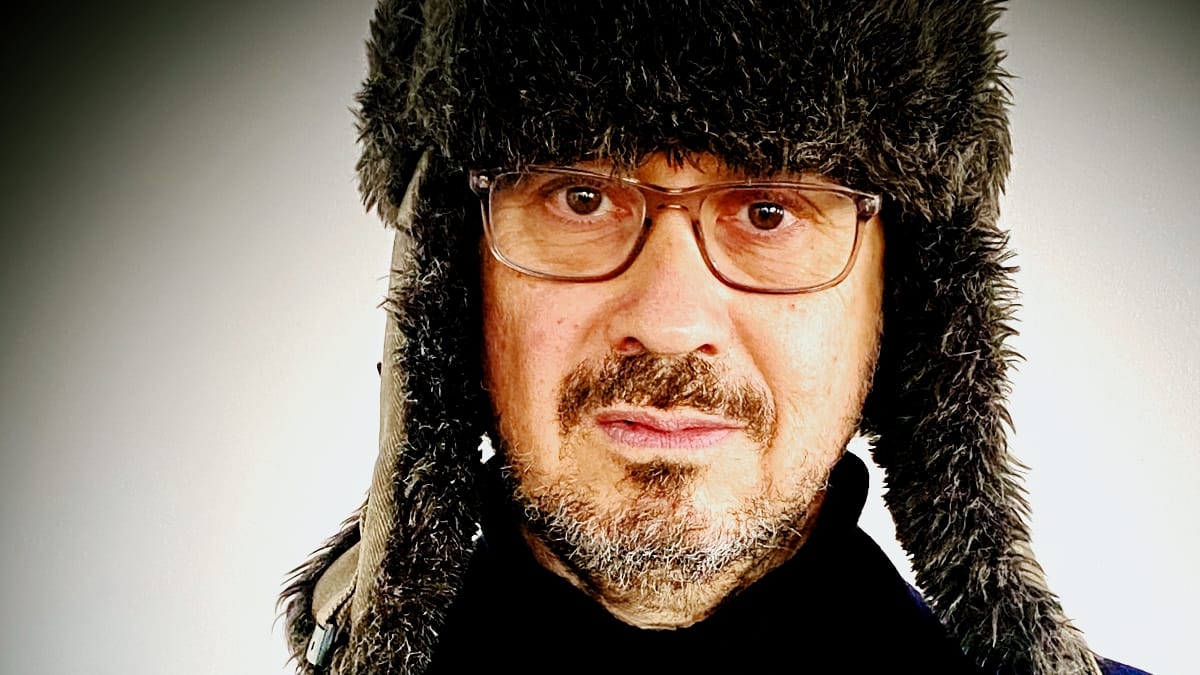


Comments