


I had the privilege of seeing Eliana Glass perform at Big Ears in Knoxville, Tennessee, in a solo piano and voice set at the First Presbyterian Church, where I sat a few pews from the front. She settled at the grand piano with her head slightly bowed, glancing out toward the audience between songs before turning back. The high ornate ceilings gave the music enormous room, and the warm sounds of her piano and voice slowly spread upward into that space. At times, my mind locked into the performance, and at other times it drifted freely, carried along with the sound. Her piano playing lingers on notes, plays with its own timing and spacing—calming in a way that feels considered rather than accidental. And when she sings, the cadence of her voice is incisive while remaining unformulaic, which is what made the experience so contemplative. It reminded me of her video for "Shrine": that sense of life slowing, of textures becoming suddenly palpable.
Glass was born in Australia, raised in Seattle, and is based in New York, where she studied in the jazz program at The New School under Andrew Cyrille, Ben Street, Kris Davis, and Jay Clayton. Her debut album E, released last year on Shelter Press, draws from a wide inheritance—covers of Carla Bley, Annette Peacock, and Karin Krog alongside originals, all built around piano and voice. The follow-up, E at Home, took that intimacy further: Glass tracked down the son of German folk singer Sibylle Baier and purchased the same reel-to-reel machine his mother used for her home recordings in the seventies, drawn to the grainy, resonant quality it gave her voice—close, she's said, to how she hears herself from the inside.
Talking with Glass got me thinking about how infrequently we let ourselves return to a state of playfulness when entering creative expression and our artistic endeavors—before particular forms, constraints, and structures were introduced—and what we find when we allow our minds and bodies to break free from these confines. It’s something she’s thought about too.
This interview has been edited for length and clarity.
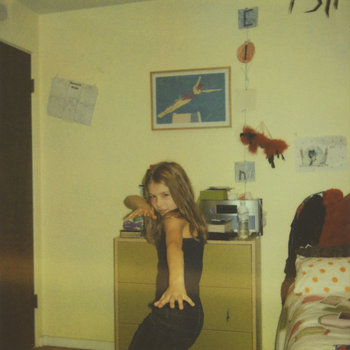
Jonah: So, how are you doing? When did you get up for this tour, and have you played any shows yet?
Eliana: I got to Europe just a couple of days ago, and I haven't played any shows here yet. I'm playing the first show in Holland, which is where I am right now. Just on Sunday, this Sunday. So that will be the first of this leg of the tour. I came from performing in the US last week, or I guess it was maybe a week and a half before, in the south in Knoxville, and from just before then, I was in Australia and New Zealand.
Jonah: I actually saw you at the Big Ears Festival at the First Presbyterian Church. I was going to say 'hi,' but then you were talking to some folks. I didn't know if it was a situation where I should say 'hi.'
Eliana: Oh, feel free to say 'hi' anytime. I love talking with people after the shows. It's the fun part of music, getting to know people.
Jonah: What's fun about that for you?
Eliana: I think music is just like a conduit for connection with other people. So talking with someone afterward to see what they're feeling, why they came there, or who they are is really interesting and fun. I like getting to know people through making music.
Jonah: How was your Big Ears experience? I know you had two performances. Did you get to see some acts?
Eliana: Yeah, I saw so many acts that I really loved. One of my favorites was the Tara Clerkin Trio. They were having a lot of fun on stage; they clearly had a strong rapport. In moments, Tara's voice reminded me of Broadcast's sound. I've been listening to that music, so sometimes it feels like a reincarnation of it. I saw Moin, which was really interesting. I didn't know their music before going into it. It felt post-apocalyptic; they had these samples they would play that were indiscernible, but with some of them, you could hear words. People were talking in the samples, and someone on a phone said, "Hello, is anyone there? It's pretty fucked up over here." And I thought, wow, this feels very reflective of how the world can feel at times. It was really well done.
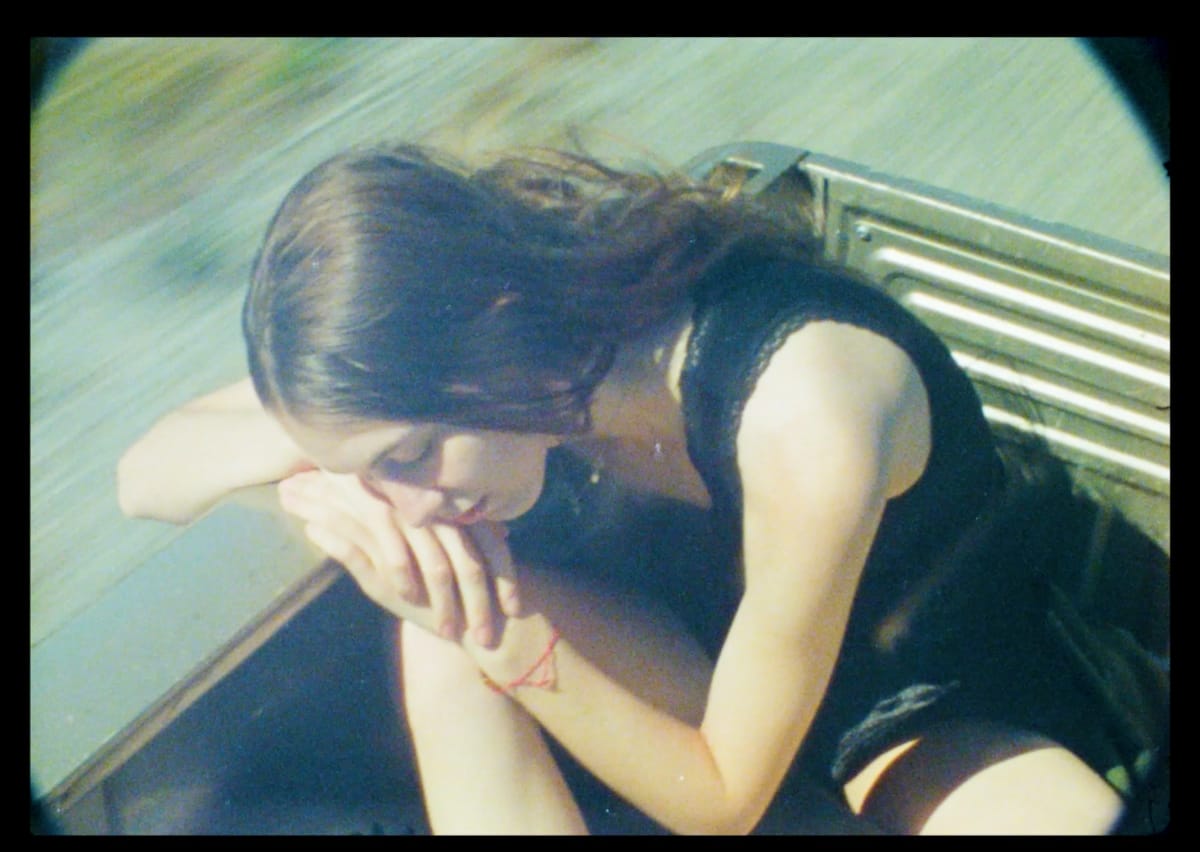
Jonah: I did a deep dive into your Instagram account, and I just wanted to ask: what's your relationship to water?
Eliana: Oh my God. That's a really cool question. I'm curious why you asked that, but I'll try to answer.
Jonah: I saw bodies of water that you were in or next to, from all over the world. Also, there were starfish!
Eliana: I love starfish. Just off the top of my head, I like swimming a lot and being near the water. I love the ocean. I always talk to people about the lake or the ocean, and see what people's preferences are. My preference is probably the ocean. What about you?
Jonah: I grew up going to this lake in the Adirondacks. I'd go swimming every day. I find it calming, even when going underwater. I guess I love the ocean too, though. It's like an absolute force of nature, and you have to respect it a lot.
Eliana: It's like this sense of flow, which I'm totally fascinated by, but then also, because I've been traveling on planes a lot, I have been thinking about the phenomenon of traveling over the ocean, and everyone on the plane is like, "It's all fine, everything's fine." Thinking about just being out in the open ocean, and a kind of lack of control, too, in a way.
Jonah: That's funny that you mentioned that, because I've been having a similar feeling when I've been on a plane. I think to myself, "This is weird and wild. I’m in a rocket ship right now, and it's in the air."
Eliana: Oh, that's amazing. I feel like that's from the mind of a child, like a playful thought.
Jonah: Speaking of playful, does much of the music you make involve some kind of improvisation?
Eliana: I think there's always a degree of improvisation because the song will never sound the same way twice.
Jonah: When you play live, too?
Eliana: Yeah, because I don't have the technicality to be able to do that. I can maybe sing something the exact same way twice if I wanted to. Playing the piano the same way twice would be difficult for me. I think change is ultimately a good thing, too. Change is what keeps things alive.
I was reading YouTube comments about a band, and someone wrote, "I loved the old music, and they haven't put out a record like this before." The person felt like the band had moved on from that phase of their life or their music. And this person basically hadn't. They had just continually loved the band's older music. And I think about that a little bit these days because of the songs that I played recently and the songs I have on my album. I've moved on from them.
But I have to remember that for someone else listening, it might be their first time hearing it. So it may have some congruency to the way I first felt when I played or made the songs. It's a different experience for other people, which keeps the music more fun and interesting for me as I play with small changes. Spontaneity is what helps me oppose the "moving on from the music."
Jonah: It almost seems necessary to have that outlet and to allow the music to evolve on its own when you play live.
Eliana: Totally. And then interesting things come out of the lack of strength, I suppose—different conceptions of time or rhythm and maybe harmony too.
Jonah: You’ve mentioned that you feel more like yourself when singing, as if you're more connected to your voice. But you talked about playing Adelaide in Guys and Dolls in an interview with Tone Glow. You said you felt frustrated by not being able to sing in your normal voice. You couldn't sing the way you wanted to sing.
Eliana: That character Adelaide has a strong New York accent. She also has a high-pitched, nasally voice. And so when I did those two things, which were fun because it was a character, it was great, but it was also not really the way my voice sounded. And so it felt like this pain, like, "Oh, I actually want to just sing how I can sing," or not hide who I am. I remember feeling torn about that as a kid when I played that part. I was like, "I like to just sing. I don't really like to pretend."
Jonah: That's interesting. It's as if you recognized that you were separating yourself from who you wanted to be in a performance. Seems very intuitive at a younger age.
Eliana: Maybe. I like that interpretation. It is cool to think back to the way you thought about things as a kid, because I think of those thoughts as being really honest or true.
Jonah: Let's talk about Nina Simone.
Eliana: I love talking about Nina Simone. I feel like I really love how Nina Simone has so many recordings, and everyone has different recordings, and I find that really interesting.
Jonah: Tell me about some of the ones that you like.
Eliana: Lately, I've been really loving "My Way." That's really beautiful. I've been loving "Tomorrow Is My Turn." And "New World Coming." And I love the song that she sang in Georgia called "Sunday in Savannah," maybe in the seventies or something. It's an interesting song because it's bluesy, and she's singing about Savannah, Georgia. So I don't know if the song was written for that concert or what, but it's so cool.
Jonah: You said she's the last way to learn how to sing, and your teachers said you need to learn the way the composer wrote it to know the song. Why is that?
Eliana: I think because Nina Simone really makes the song her own and changes it. A lot of times, at least coming out of this sort of traditional jazz background that I come from, people want you to learn the song as it was written by the composer, and the melody to be sung exactly that way, and for you to start that way. And then you can create interpretations, which I'm sure is how Nina Simone learned them.
Jonah: Would you agree that's the best way to go about that?
Eliana: No, I don't think so. I think Nina Simone makes songs sound so emotionally different from the original. For example, that song "Stars" is a great Nina Simone rendition of a Janis Ian song. Janis Ian wrote that song, and it's amazing hearing her sing it. But when Nina Simone sings it, it takes on a whole new interpretation and meaning, and it feels like a story. When you read the words, it's not really a story, but the way Nina Simone sings makes it sound like one. And you're listening with your ears, you have to hear every word. So the power of someone like Nina Simone is that she can turn something into something else in the best way.
I guess the sentiment behind it, a teacher saying you need to learn the way the composer wrote it, is just giving you a chance to see how it was originally written. Then you can develop your own ideas about how you want to interpret it. Because if you're learning something from an interpretation of someone else, that's fine, but then it might not—or won't—leave room for you to create your own interpretation. So that's maybe where people are coming from. But I don't know, you can create your own interpretation from another interpretation, because it's the same thing.
Jonah: Yeah. Why not?
Eliana: If it's about what really inspires you—because, for example, Nina Simone singing Cole Porter's "Night and Day," it's so different from the original, and it's so inspiring. And if that inspires you more than the way Ella Fitzgerald sings that song, then you should just do what you like and enjoy it.
Jonah: Then are there any lessons from past teachers that you see connected to your performances today? As in, "I wouldn't have been able to do this unless I learned this"?
Eliana: I've been singing for such a long time. I feel like those things are harder for me to notice. I think those things are easier to notice if you're singing in a particular style. For example, if I were an opera singer, that's a very certain kind of vocal acrobatics. So those kinds of exercises, vocal technique like that, are important for opera because there is so much range and movement. You also have to adhere a little bit to a certain style, but if you're singing the way you want to sing, like in my case, it's not a very acrobatic style; it's more like just talking. It's not strenuous or anything. It's pretty plain. So it doesn't really require much vocal technique, I would say. It's not as hard as those things.
Jonah: Through childhood to today, how did you find and keep and develop your own voice with all these other expectations and societal, musical constraints that were surrounding you? How did you stay true to your own path?
Eliana: I think by having a lot of things that I love to draw from and leaving behind the things that maybe didn't feel as natural to me, but that I still loved, because they didn't feel like something that I wanted to do myself. And having a broad intake of everything, too—not just jazz, but lots of different kinds of music. With such a wide range of things, you create something of your own because we each have our own associations, inspirations, and different amalgamations of them.
Jonah: I feel like, through music scenes and people who you've been trained by, there could be a lot of constraints where you could stray from knowing your own voice.
Eliana: I think the other part is trying to connect with your younger self a little bit, and with how kids think of things that are honest and true. I really loved playing piano when I was a kid, but I was bad at reading music and a bad piano student. But I still loved making music on the piano, and when I was in my early twenties, I was like, "Why don’t I try going back to the piano and have fun, the same way I did when I was a kid?"
I tried to access my own inner child. I guess it sounds really cheesy to say, but that's what I was trying to do. That feels honest or true: trying to talk to yourself, or maybe your younger self before you were exposed to all these different things, different ways, and walks of life.
Jonah: Now I'm thinking about how much and how often people try to access the thing that they might want to be. They're looking at all these other things on the outside, but not necessarily looking at who they are inside.
Eliana: So true. That's interesting to think about. Looking within.
Jonah: They're like, "I want to be able to play like that," which can work in ways. But how much more often can we look internally to ourselves, our inner child?
Eliana: Yeah, it's an interesting question. It's also like the internal is so influenced by the external, too. So it's hard to know when it starts and when it ends, or what the beginning is.
Check out more like this:
 Meredith Hobbs Coons
 Jonah Evans


Comments