


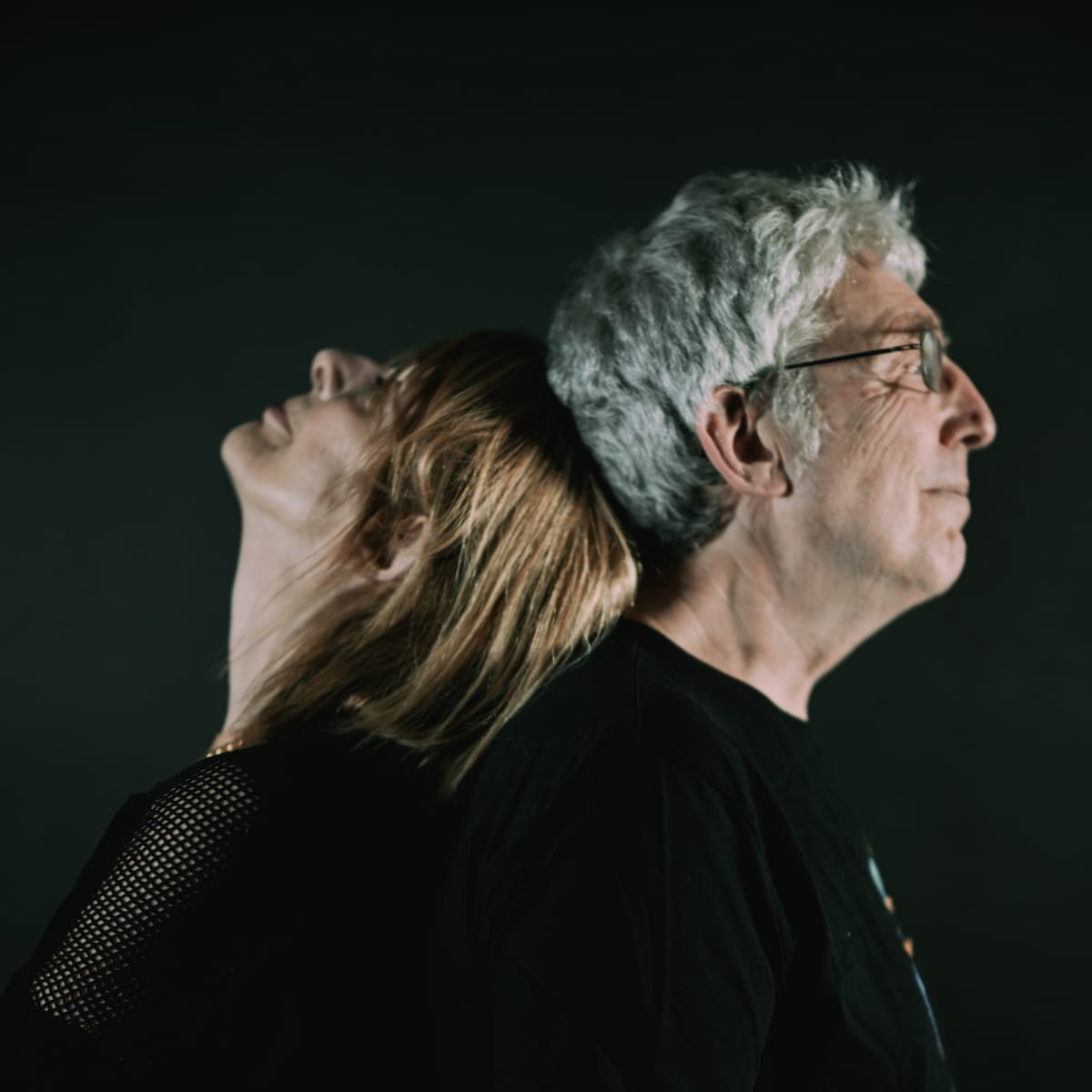
Steve Hillage and Miquette Giraudy embarked on their fascinating musical journey several decades ago. They began working together musically within the context of Canterbury-meets-French-freaks collective Gong, continuing on to record and tour in support of Hillage's albums. Along the way, they've explored psychedelia, ambient, and other forms. Their musical odyssey eventually led them to the world of techno and dance music. Concurrent with other projects, they launched System 7 in the late 1980s.
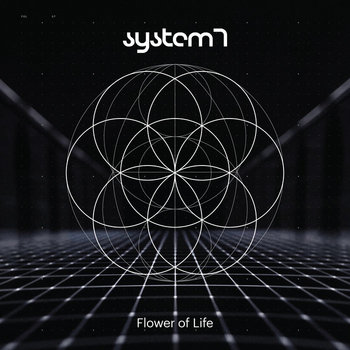
In 2026, System 7 released Flower of Life, their 15th studio album. While it's stylistically consistent with previous releases, the new album may be the project's most successful synthesis to date in terms of blending and balancing Hillage's lyrical, melodic guitar work with the heady beats and textures of electronica. I spoke with Steve and Miquette via video chat about System 7's beginnings; the allure that dance music holds for them; the ways in which the duo constantly reinvents, revises, and re-processes existing material; and the joy they derive from collaborating—together and with other innovative artists.
Bill Kopp: First, let's go way back. What inspired you to bring System 7 into being?
Steve Hillage: Oh, it's quite a long story. We were quite involved in electronic music back in the '70s. And that's one of the reasons why we wanted to work with Malcolm Cecil, who produced our [1977] Motivation Radio album, because we loved his TONTO's Expanding Head Band. We had quite a lot of contacts with German groups from that time. And in German psychedelia in particular, with a chap called Manuel Göttsching of Ash Ra Tempel. Our good friend, the late great Manuel Göttsching, is someone we sorely miss.
And then in the '80s, I was very much focused on producing records for other artists, and there was a whole stirring in dance music. At the beginning of the '80s, in fact, I was working with Simple Minds doing club remixes, and there was a whole club scene then called Futurism. The whole thing just blew up in the '80s, and we felt this irrepressible urge to become part of the new dance music movement. That's also when we met Alex Paterson of the Orb. It was what they called the 'Second Summer of Love', which appealed to our idealism. And we've been doing it for almost 40 years now.
We still like playing the older stuff in the rock band format as well. We're doing a festival in Italy in July where Miquette and I are performing a [1979] Rainbow Dome Musick set; we've worked out a way of doing it live. Also, I'm guesting with the current lineup of Gong, and we're going to play a Gong set together. I still love doing all that, but System 7 is our main thing.
Bill: Would you say that System 7 brings together the psychedelic, creative, and musical values from Gong with the qualities of acid house?
Steve: Absolutely. When we first started System 7, we thought it'd be really cool to make really groovy dance tracks with some of our old classic psychedelic sounds on top; that was the original idea. We thought we could carve out a special identity in the dance music world, and it seems to have worked.
Bill: How do you think that the appearance of System 7 made an impression on the character and subsequent direction of the electronica underground in the UK?
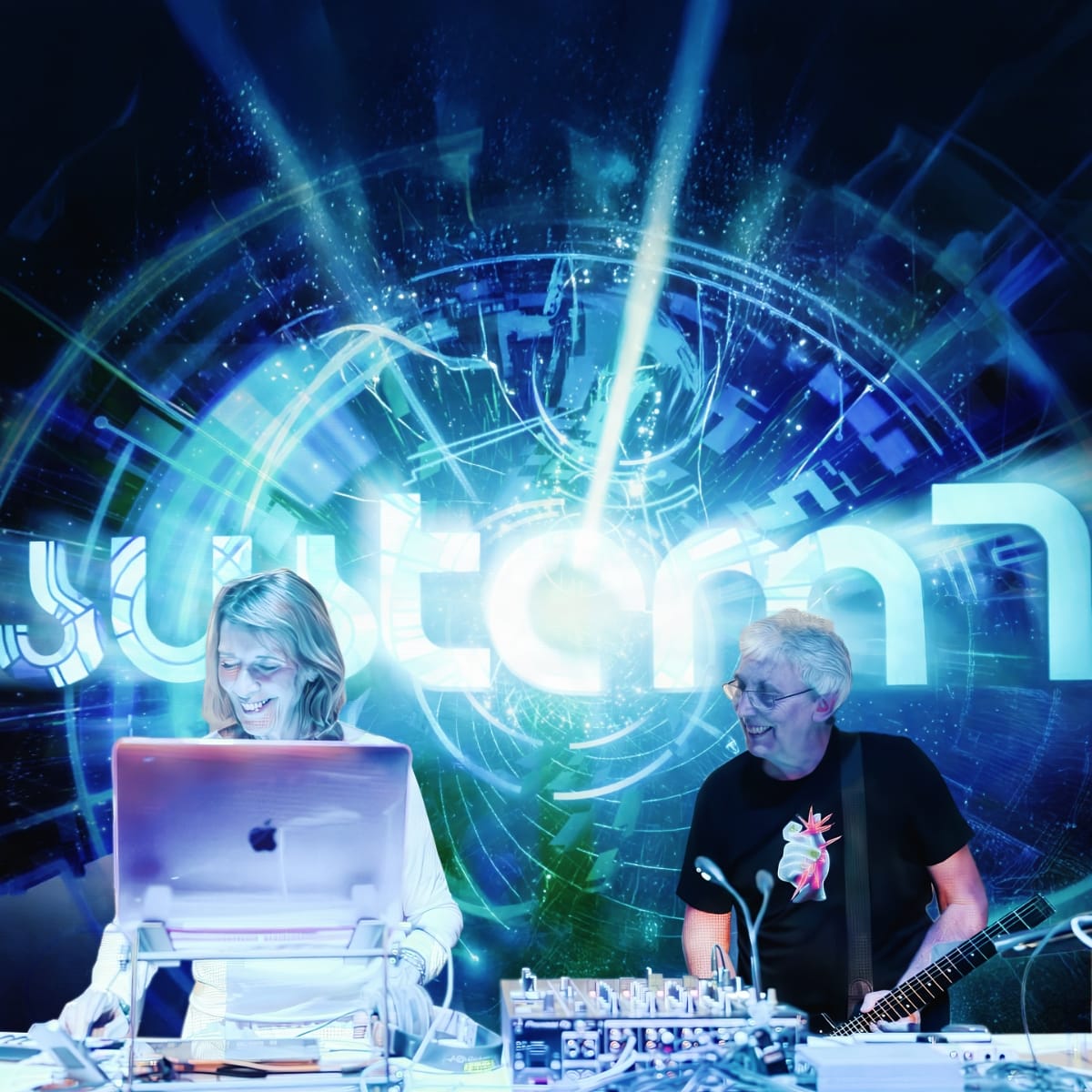
Steve: We were one of the first techno groups to play live. We actually had live instruments going, and were still making incredible techno and tech house sounds, so we've had quite a big influence on the live scene. And right now there are a lot of live techno bands that include instruments: I saw a Japanese one with a trumpet! We've become more fashionable in a way, because we've been putting live instruments on the music for a long time.
And we've also had a lot of contacts through various collaborators who we've worked with, and people who wanted to work with us. We've got a little spot on the dance music map, and I do think we've had an influence, but we accept—and hunger for—influence upon ourselves. That's for sure as well.
Bill: Miquette, I know that you were involved on both sides of the camera in the film world; you were an assistant editor on the Barbet Schroeder film More. From your involvement in film, what did you learn about the effective use of music in multimedia?
Miquette Giraudy: I don't know, because I just go on feeling. I'm not an intellectual. I studied images from a very young age, and I had my photo lab at 15. And then later in life, I started loving the sound scene and became involved with that. But in movies, I was working in the Service de la Recherche and I did all kinds of things which influenced me without me knowing it.
Bill: Steve, from my perspective, your guitar work seems to be more integrated into what System 7 does on Flower of Life than it perhaps was on some of the earlier recordings.
Steve: It's an ongoing project to try to get the guitar to work with dance music. Because just blasting solos out on top of a dance beat? That doesn't cut it. It's nice to play bits and have hints, to have various peaks and arrivals, but you have to do it with a lot more ingenuity.
Over the years now, we've developed all kinds of ways of using the guitar. And quite a lot of what's in there is based on guitar, but it doesn't actually sound like guitar: we're using the waveforms. But there is definitely more guitar now than there was, and we're happy about that.
Keep The Tonearm free.
We publish without advertising or paywalls.
Reader support makes that possible.
Bill: Do you view System 7's back catalog as source material for potential reuse in other forms?
Steve: Yes, we reuse bits. It's all potential ammo, you know. On the new album, the track "Firewheel" has a repeated rhythmic noise that comes in after about a minute and a half or two minutes. That's actually a sound from a remix done by a celebrated techno artist. It was one of our tracks from a record, [1997's] Golden Section, called "Ring of Fire." That in itself was a sound that came from a cassette—given to me by a guy in Bali—of some drums from the island of Timor. We did a lot of filtering and messing with the sound, and we came up with all kinds of interesting techno noises for the original "Ring of Fire" track and various mixes of it.
And then I suddenly thought it'd be really cool to use that one particular sound, but at a slower tempo. I had that idea about six years ago; I wanted to use it, and we did. So that's an example.
Bill: Collaboration has been a defining characteristic of System 7 from the beginning. Can you give me an example of how working with someone else has influenced you?
Steve: We can give loads of examples. Alex Paterson and the Orb: I could write a whole chapter about how that has transpired and is still ongoing.
But I'll also mention one particular collaborator who opened a huge number of doors: Derrick May, the Detroit techno artist. We were introduced to him by our label manager at Virgin Records. They had a new dance imprint called Ten Records. And when we decided to start System 7, they enthusiastically put us on Ten Records. They had just done a compilation of early Detroit techno, and they said, "Hey, Derrick May's in town; would you like to meet him?" I said, "Wow! Is the pope Catholic?"
We met him, and we really got on because he was familiar with Gong and a fan of Manuel Göttsching. We were best buddies instantly because Manuel's E2-E4 [1984] had become an iconic ambient house source for remixes and sampling, and he had huge status in the dance scene in the early '90s. And then, through Derrick, of course, we met a lot of the other Detroit characters, including Carl Craig and Juan Atkins.
It's a wonderful thing, dance music. The whole dance music thing has been about collaboration. Not just with us; with a lot of people. It's one of the good things about the creative side of the dance music world.
Bill: How has your approach to making music changed since the beginning of System 7?
Miquette: Like Steve said earlier, I think now he is playing his guitar in such a rhythmic way that you don't know if it's a guitar. He used to be "time captain" in Gong; he's so precise in his beat that nobody knows that it's only a guitar.
Steve: I wouldn't say our approach has changed enormously. I hope—touch wood—that we're getting a bit better at it. But we're always open to learning new things and new ways of approaching stuff. And I'm always looking for new ways with sound, mixing, mastering, and all that sort of stuff. That's quite important for making dance music records. It's important to making all records, but more for dance music.
Bill: Would you say that your music is a companion to the psychedelic experience, or a musical manifestation of it?
Steve: Bit of both, really. We used to joke when we first started System 7 that what attracted us to acid house wasn't so much the house, it was the acid.
We're kind of cross-genre. I often find that people get too specific when classifying dance music genres. But if I had a gun to my head and was asked what genre we are, I'd say "psychedelic techno."
Bill: Do you see a through-line that connects psychedelic, space rock, ambient, house, and techno?
Steve: For us, yes. For other people, maybe not. But we see everything we've done as a logical progression.
I'll give you an example. In 1973, when I first joined Gong, we all lived in this house in a forest in France. And one of the great things about this house in the forest was that it had a big room where we had all our gear set up. We could practice 24 hours a day, in whatever state we wanted to be in. And my music progressed massively in that year when we had that. (We lost it at the end of '73.) That was when I was really getting into my echo loop thing, playing the guitar with rhythmic echo.
We had this fantastic drummer, Pierre Moerlen. He'd come in and jam with me playing my echo loops. We did some really nice stuff. But the thing is, with the echo loop, if you get really, absolutely, totally into the tempo, it opens up a kind of wormhole. This is where it really gets psychedelic and goes into a really interesting sonic space.
So there'd be occasions with Pierre when I'd be jamming with him, his tempo would shift a bit, and I'd lose my wormhole. And I'd say, "Pierre, can you just sort of hold the tempo a bit more steady?" And he'd get a bit pissed off: "Hey, you know, I'm not a machine. If you want the perfect tempo, you should work with a drum machine."
And I was thinking, "Well, that sounds like a good idea." So that's an interesting example of how things progress.
Bill: We've talked about the continuum of different styles all fitting together. Where do you think the music will go next?
Steve: We're not actively looking for some great new revolutionary musical situation. We're quite content in our little universe, trying to improve on what we do and reach out to more people. I mean, who knows where music's going to end up?
Check out more like this:
 Michael Donaldson
 Bill Kopp


Comments