


“No man ever steps in the same river twice.” The ancient observation attributed to Heraclitus speaks to the constant movement of life: nothing remains quite as it was, not the world around us, nor the people we become. Music, however, offers a particular way of returning to moments that have passed, allowing us to encounter them again while discovering something different in each listening.
This paradox between change and return runs through Temporary, the latest album by Berlin-based composer and musician Aimée Portioli, who records and performs as Grand River. Released on Editions Mego, the eight compositions emerged during a time of personal upheaval and bereavement. Moving between resonant guitar tones and electronic textures, Portioli builds an immersive sound world in which sounds gradually unfold, dissolve, and find new forms. The result is a deeply introspective work that considers the fragility of human experience without losing sight of the possibility of renewal.
Over the past decade, Portioli has developed a distinctive body of work at the intersection of electronic composition and sound art. Her discography includes Pineapple (2018), Blink a Few Times to Clear Your Eyes (2020), and All Above (2023), a deeply personal tribute to Editions Mego founder Peter Rehberg. In 2024, she joined forces with Abul Mogard for In uno spazio immenso, released on Caterina Barbieri’s light-years imprint, before revisiting the relationship between natural and electronic sound on Tuning the Wind (2025). Her practice also extends into spatial and multichannel installations, most recently with Symphony for Endangered Birds, a seven-channel work exploring the sonic presence of vulnerable bird species, first presented in 2025 at Museum Folkwang in Essen.
Her music has reached audiences at international festivals including Berlin Atonal, CTM, MUTEK Montréal, and WOS, as well as at prominent cultural venues such as the Barbican Centre in London, Centre Pompidou in Paris, and Berghain in Berlin. Alongside her own artistic practice, Portioli runs One Instrument, a project she began in 2016 as an experiment in musical limitation. Inviting artists to work with a single sound source, the project explores how creative possibilities can come from seemingly restrictive conditions.
Against this backdrop, we spoke with Portioli about the making of Temporary.
The transcript has been edited for length, flow, and clarity.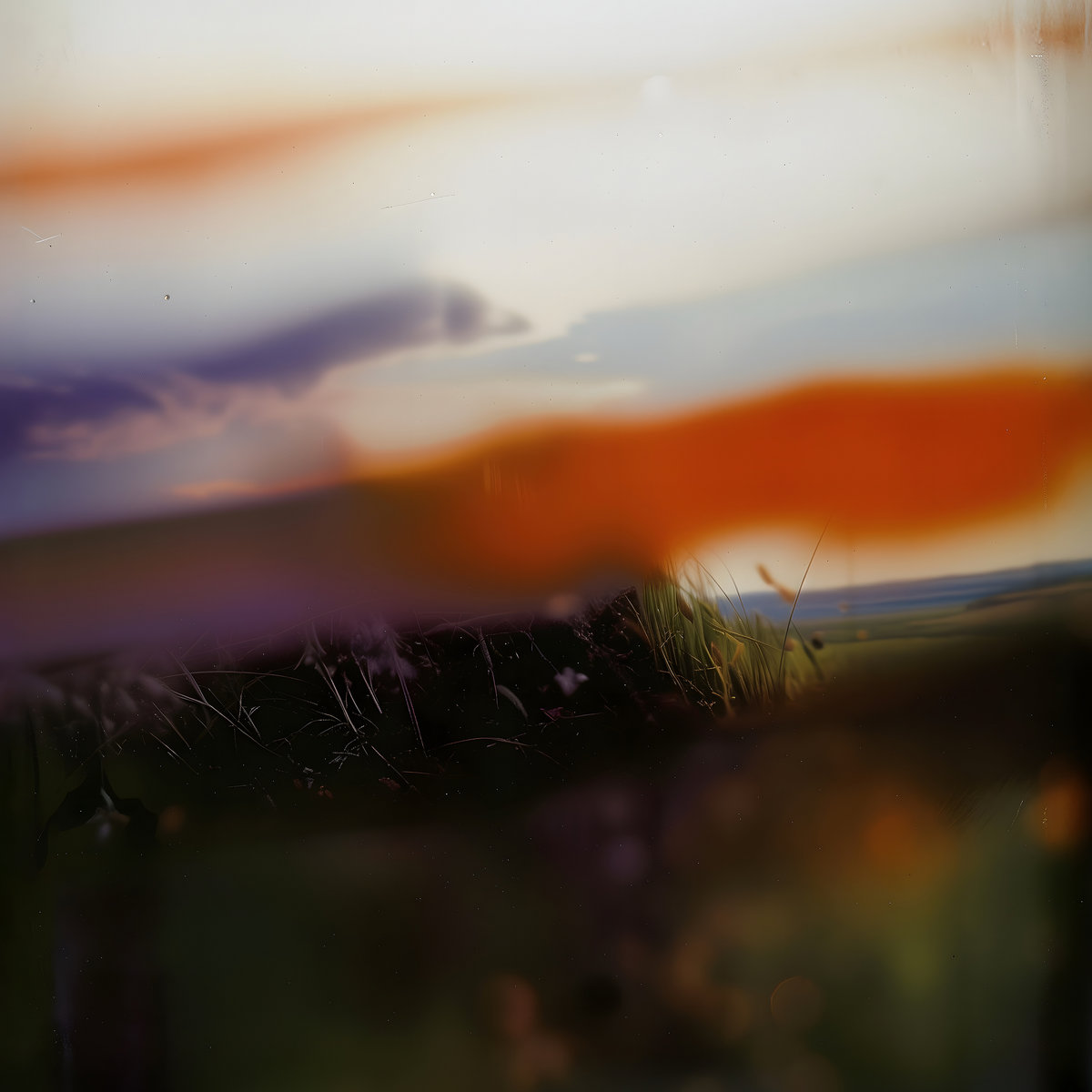
Arina Korenyu: In a culture in which music is increasingly encountered through playlists and continuous streams of new releases, what does it mean to make a work that asks for sustained attention?
Grand River: I think it has a lot to do with going against the world we’re surrounded by: this constant, fast consumption of information that leaves so little room to slow down. We need to find the space and silence to really appreciate things, because I believe understanding and appreciating something takes time.
Making an album, a long-player rather than something that can be consumed quickly, is therefore challenging. It asks for the listener’s attention, which is increasingly difficult to find in a world where everything seems to happen in a matter of seconds. Still, I want to believe there are people who are willing to make space for music and understand that art deserves their time. It’s not all about fast art and instant consumption.
I feel the same way myself. We’re constantly bombarded with information, so we have to make a conscious effort to protect our time and attention. But I feel so much better when I can slow down and really engage with something. And I believe many other people feel the same.
That’s also why I think it’s important to keep making albums. If we stop creating art that requires time and attention, what’s the alternative? Making nothing but short snippets for social media? I definitely want to resist that. I still believe deeply in the album as a format. For me, listening to a full album is often much more rewarding than listening to a single or an EP. There’s something special about telling a story that unfolds over time.
Arina: The title Temporary describes a condition that applies to the music itself, to the experiences that inform it, and ultimately to the person who made it. Yet an album is also an attempt to give something a durable form. Do you experience this as a contradiction?
Grand River: It could seem like a contradiction, of course: an album is something meant to last, yet it’s called Temporary. But there are different ways of looking at that. The way we experience music changes over time. We might listen to the same piece today, tomorrow, or a year from now and perceive it differently, because we’ve changed or because our circumstances have changed. So while the album itself remains, our relationship with it is never quite the same.
There’s also the broader idea that everything in life is temporary. Nothing really stays as it is, whether it’s our circumstances, our relationships, or ourselves. I’ve become much more aware of this over the years, especially as I’ve experienced significant changes in my own life and realized how different things can become.
These reflections are at the heart of the album. In a way, it’s a reminder that everything is constantly changing. And I find it interesting that even though music can remain with us, the way we experience it never stays the same.
Arina: The album emerges from personal grief, yet it takes a musical form that other people can enter without knowing the circumstances that produced it. How does it feel for you when something so particular to your life becomes available to someone else’s experience?
Grand River: It’s definitely been a very personal journey. Composing, recording, and producing the album, as well as the entire process of releasing it, has been my way of processing grief and responding to the changes I’ve faced in recent years. In that sense, making this record was a very healing experience.
For a long time, it was something shared only with close friends and collaborators. Releasing the first single and announcing the album meant finally bringing something very personal into the world. That transition is always exciting, but also a little scary, because you suddenly expose a part of yourself to others. The more personal the work, the more vulnerable you feel. But it’s also a beautiful experience, and one that comes with many different emotions.
Arina: Without needing to explain the personal circumstances behind it, how did that experience influence your compositions?
Grand River: I was composing this record during a difficult time. It was a form of nonverbal communication, not only with the outside world but also with myself. I could put my feelings into music, listen back, make changes, and have this ongoing dialogue with myself.
The pieces have no lyrics, so the only words are the titles, which together form a story and a journey. They reflect what each piece meant to me emotionally and where it belonged in that process. Being able to externalize what I was feeling and give it a musical form was incredibly important to me.
Arina: You’ve described the titles as fragments that form a larger poetic sentence. How did you decide the order of the tracks?
Grand River: Through the titles, and the way they form one longer sentence, I wanted to create the sense of a story: an abstract transitional journey that’s open to interpretation. For me, it moves from the beginning of a transition toward its end. It can be understood as a journey from life to death and perhaps into another existence, but it can also represent the many transitions we experience in life, whether that’s moving somewhere new, ending a relationship, or going through a major personal change. Death is perhaps the ultimate transition, but change is something we face constantly. Symbolically, the titles take you from one place to another.
I also wanted this narrative to be reflected in the musical structure. The album opens with “18 circles to heaven,” which acts as an introduction, and later returns to it in the form of a reprise, creating a moment of reflection. More generally, I wanted the record to build toward somewhere new. I don’t particularly like circular structures, where you end up back where you started. I prefer a journey that begins in one place and takes you somewhere else. That idea shaped both the composition of the pieces and the sequence of their titles.
Arina: Your music quite often blurs the borders between composition, performance, and installation. However, a recording allows you to control the relationship between sounds with extraordinary precision. A live performance introduces physical presence, duration, and the possibility of change; an installation introduces space and the listener’s freedom to move. Do these different conditions allow you to reveal different aspects of the same composition, or do they fundamentally alter your composition?
Grand River: The live show is very much based on the album. I played it in Berghain yesterday, and the week before, I premiered the Temporary live show in Venice as part of Biennale Musica. I play most of the pieces from the record, but I approach them differently. The order changes, and I add new sections, bridges, and reprises, so it’s not simply a reproduction of the album. I like to build a different experience around the same material. Listening to a record is usually more intimate, whereas a concert brings in the venue, the space, the audience, and the energy of the moment. It’s the same music, but revisited in a different context.
An installation is quite different again, because it often involves entirely new material. Last year, for example, I created Symphony for Endangered Birds, a seven-channel installation about seven endangered bird species, one from each continent. I’m presenting it again in January at a museum in Italy. It’s a very different listening experience: people can move around or sit within the space, while the sound moves around them. This spatial dimension plays a big role, as does the ecological concept behind the work.
I think the concept also influences how we experience a piece of music. With Temporary, the themes of grief, change, and transition are quite universal, so listeners can relate them to their own lives and experiences. With an installation like Symphony for Endangered Birds, the subject is more specific. People might approach it out of curiosity or interest in the ecological theme, rather than through a personal connection. So I’d say these are different ways of listening: one is perhaps more open to personal interpretation, while the other is more closely connected to a particular concept.
Arina: I would also like to talk about your label, One Instrument, where you release works produced only using one instrument. What initially attracted you to this concept, and what possibilities did you hope it would open up for the artists involved?
Grand River: I started One Instrument in 2016, so this year marks its tenth anniversary. In the beginning, it wasn’t a label but simply an experimental idea that I wanted to try myself.
At the time, I was working in a shared studio with lots of different instruments and equipment. I noticed that I was constantly switching between instruments and effects, without really giving any of them enough time or attention. So I started wondering what would happen if I committed to just one instrument for a week, really sitting with it and exploring its possibilities.
I made a piece using only one instrument and reverb, with no other effects. I wanted to stay as close as possible to the instrument’s original timbre rather than transforming it with chorus, distortion, or delay. I was very happy with the result, so I uploaded the track to SoundCloud.
Then I invited some composer and musician friends to try the same experiment. More and more people got involved, and eventually listeners started asking where they could buy the music. That’s when I realized there was potential for something bigger. So, in 2018, two years after the initial experiment, One Instrument officially became a label. And that’s essentially how the project has continued to grow ever since.
Stay on top of The Tonearm.
Subscribe for exclusive interviews, cultural tip-offs, and community fun.
And your support keeps our site free of advertising and paywalls.
Arina: After ten years of One Instrument, what still surprises or excites you when you listen to new submissions?
Grand River: I’m always excited when artists use hardware instruments rather than virtual ones. It’s a personal preference, of course, and I have nothing against virtual instruments; I use them myself. But for this experiment, I really appreciate the physicality of an instrument and the opportunity to disconnect from our constantly online, computer-centered world. I like the idea of artists sitting with their instruments, taking their time, and developing a real connection with them.
I’m particularly excited when someone sends me a piece, and I discover an instrument I’ve never heard before. I might ask what instrument they used, look it up, and then be amazed by what they’ve managed to create with just that one sound source. Those are the moments I love most, because you can really hear the time and attention they’ve invested in exploring its possibilities. You can do so much with a single instrument.
Arina: Is there a question about sound or composition that your work is bringing you closer to answering, or one that becomes more complicated the longer you explore it?
Grand River: For me, it’s an endless journey of learning. When I compare myself to my younger self, I realize how differently I approach things now. But it’s also fascinating to listen back to music I made ten years ago and wonder how I managed to do certain things, because I probably couldn’t recreate them in the same way today. We’ve changed, and I find that exciting.
Creative possibilities are endless, so there’s always something new to discover and learn. I think I’ve become more selective with age, too. As you gain experience, you become more aware of what you want to achieve and start going deeper into certain aspects of your work. You develop higher expectations of yourself, and I see that as a natural part of the learning process. The more you learn, the more possibilities open up.
Arina: Or the more you know, the more you understand how many things you still don’t know.
Grand River: True, but sometimes, the more you learn, the less you do, because you become aware of how much better something could be. That can also become a kind of creative block. I think that’s what I meant by becoming more selective and precise over time: I have a clearer idea of what I want to achieve, but I’m also more aware when something doesn’t quite express what I have in mind yet. As a result, the process takes me longer. I’ve always been a slow composer, and I’m not someone who finishes a piece and releases it the following month. I need time to explore, reflect, and feel that the music has reached the point I want it to.
Check out more like this:
 Tony D'Onghia
 Arina Korenyu


Comments