


In this algorithmic and AI-dominated era, there's such a drive for perfection with all the latest music production tools out there that are used to gloss over—I don't want to say "mistakes," but rather little idiosyncrasies in the way musicians play. I think some producers forget that's what gives it the human connection.
A few months ago, I hadn't even heard of a Brooklyn-based independent trio called Myra Lee, who were simply labeled as alternative rock. But I discovered their album, Capture the Flag, was live-tracked—six songs recorded with engineer Jeremy Harris (Devendra Banhart, Hand Habits, Allegra Krieger) over two days in a basement studio in the Lower East Side of New York, then mixed and mastered by producer Calvin Lauber (Boygenius, Julien Baker) in Memphis. I wondered if lightning had struck twice: one of my favorite albums of 2025 was a self-titled offering from The Altered Hours, an indie rock band based in Cork City, Ireland, who also recorded to tape with each song tracked live—and whose propulsive, psychedelic, post-punk sound captures exactly that human connection I'm always chasing.
Since then, I have gotten to know their music and backstory. They comprise lead singer and guitarist Tahlia Amanson, Aiden Velazquez on bass, and McCabe Teems on drums. Formerly known as Dino Expedition, the band decided to change its name in late 2025, after a year of its formation, and Myra Lee was created as a fictional character/stage name, inspired by Cat Power's 1996 record.
Their debut release is a multi-instrumental yet intimate collection full of melancholy, heavy guitar tone with plenty of tremolo and fuzzy distortion, offset by the sweet, light female vocals of Amanson. There are touchpoints with influences—indie sounds from the '90s, from bands such as Yo La Tengo, Sonic Youth, and Electrelane—but with their added baroque/chamber rock twist and haunting strings. There's an emotional trajectory on the record; the first few times I listened to it, I just sort of got lost in the dense layer of lush guitar, descending basslines, and drums with an energetic momentum that caused some involuntary foot tapping on the lead singles "Dean" and "Magpie." On later listens, there's a little bit of poignancy that comes in waves, across different melodies amplified by Amanson's evocative vocals and lyrics.
Vocalist, songwriter, and guitarist Tahlia moved to NYC from a small beach town over the Golden Gate Bridge—the Bay Area, San Francisco—called Bolinas, which has a population of about 1,500. Growing up in a West Coast beach town with beautiful nature, lakes, Redwoods, and the Pacific Ocean inspired the way she writes. She came to New York to study at the Pratt Institute in 2021, completing her first year, but she got an opportunity to record with Calvin Lauber in Memphis, Tennessee. When she came back, she decided to leave her studies behind to pursue music.
Wanting to find out more, I spoke to Tahlia of Myra Lee about the name change, which accompanied a sonic change, the advantages of recording live, stage anxieties, and whether songs should speak for themselves. The transcript has been edited for length and clarity.
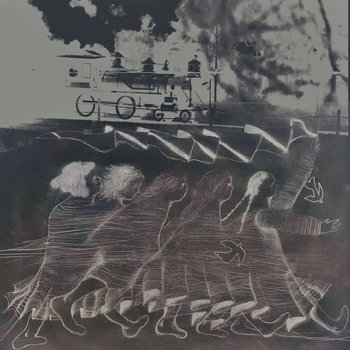
Damien: You originally started as a solo project called Talz and later adopted the name Dino Expedition as the project grew into a band. I know of the Cat Power 1996 album Myra Lee, but what prompted the change in band name—was it to give you a fresh start?
Tahlia: Yes, so the previous name, Dino Expedition, I came up with from an old kids' shirt I found at a thrift store, and just thought it was a cool name. But it was a different band when I created that.
It's really hard creating a band name because you're like, does it need to have meaning? Does there need to be a story behind it? I used to work at a cafe as a barista, and one of the people I was talking to when we were choosing names, who's also a musician, suggested choosing a name that would pass the 'bar test.' Meaning, if someone's asking for your band name in a loud bar, it needs to be an easy name that they're going to get right off the bat when you're trying to yell it at them.
Damien: I've talked to other bands who've done something similar, and it can feel like a metamorphosis after changing the name. But for yourself, it must also have been a little bit daunting because you've built up a bit of a following under Dino Expedition.
Tahlia: We had done so much stuff with it; there were articles written, we played shows in a few other states, were on so many bills, and so many bands knew us under that previous name. It was definitely scary because, with the release of this new record, there was now no trace of our band under this name, Myra Lee. It was starting back from ground zero in terms of being known by the world and being able to look us up.
Damien: Your previous record, Thanks a Million, under Dino Expedition, was so different with its indie folk vibe. Now you've got this more driving guitar, bass, and drum sound, and the loud/soft dynamic just works so well. When I heard Capture the Flag, what appealed to me most was the mix of a soft female voice and loud instrumentation, as well as your decision to use live tracking for six songs. Was there an economic factor driving that recording decision, with just two days in the studio?
Tahlia: Our songs were fully fleshed out; we had played these songs so many times live. Every time we play them, they just sound better and better. Live recording costs a lot of money, but that wasn't the main factor. I personally love the grit and how you can feel the band's presence in a live recording. Obviously, not just the genre, but if you listen to Thanks a Million, which was track by track, it was just Calvin and me on each instrument, as I didn't have a band formed then. Now, this record that's live-tracked, every song is pretty much in one take, and then we overdub cello, viola, and some vocals. If you listen to both, the difference for me, at least, is like day and night. Now, when I listen to other bands, I know when the music's single-tracked.
Damien: I think the more musicians lean back towards that live recording, the more the authenticity comes through, and that's what people respond to.
Tahlia: Something that inspired me was the music project Songs: Ohia and their song "Farewell Transmission," which was recorded all in one take. My friend had a drawing of the whole studio and everything that was mic'd, and I was inspired by that, thinking that is insane, and it drew me towards the live recording. That instance of recording there, because it was all at once, is a story that I get to hold forever.
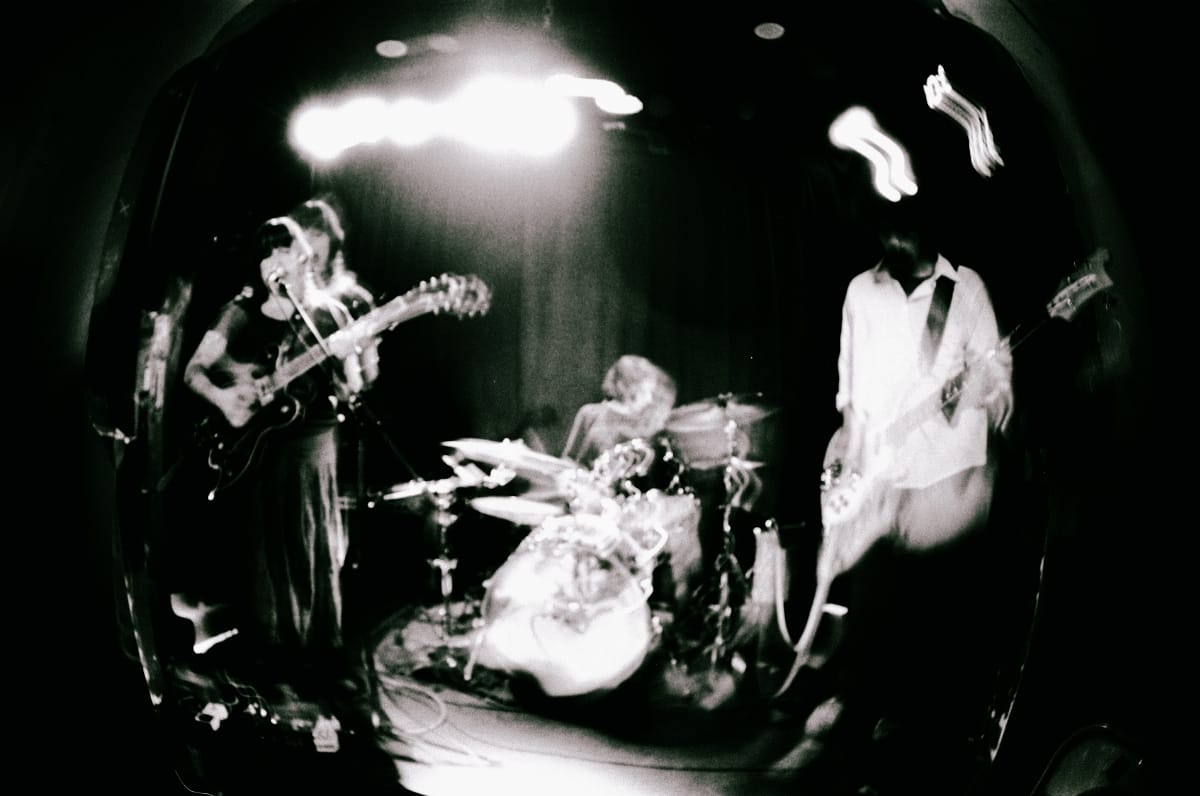
Damien: I know you often play live together and come across as a band that really enjoys playing live. But did it take long to get into the zone because you had the pressure of just these two days set in the calendar for live tracking, or did it just feel natural—like another live gig?
Tahlia: Yes, totally, it does take a second. Because every gig is so different, I realize that I can only give as much as I can in a live show. Some days, I'm not feeling that great, and that is going to roll over into my show. If I feel like a show wasn't that good, it's probably because I wasn't feeling that great before that. And that's ok; I've had to accept that because I'm human.
Damien: That's exactly what I'm referring to, that human component.
Tahlia: Yes. I was actually thinking about this before we recorded the record, and I was hoping I would be feeling ok that morning because that would really suck if I'm using and paying for that studio time, and I'm just not feeling well. It's a gamble, and that was a good day. The weather was right; it was March, so spring was just coming out of winter. I did get a parking ticket on one of those days, but I still got six amazing songs from what was recorded. For me, I can't fake, nor can I forget how I'm feeling when going on stage. I can't just bottle it up and throw it to the curb. We all have emotions, and we're all going through so many things, especially in this world right now. It's just a lot.
Damien: Do you get a little anxious before playing?
Tahlia: It's crazy because I grew up having total stage fright with performance—with presenting projects in school, I would literally get so anxious and feel so sick before. But ever since my first performance playing music—and I've only been playing music for five years now—I haven't even been that scared. It was that first second that felt kind of like a pit of fire, and then it's just fully diminished ever since. Having played so many places, I think it's more about the anxiety around the room's sound, the sound person, and the technical aspects now.
Damien: I've spoken to musicians who mentioned using the same person as producer and mixer, and that being beneficial to the final outcome. I know you worked with Calvin Lauber before. Was it the trust in that relationship that made your decision easier to go back to him for the mixing?
Tahlia: I am very much into relationships, and usually, I go into something with someone I'm already friends with. With Calvin, I went to Memphis not even knowing who he was, having a few phone calls with him, and trusting my instinct. I've found that my gut is usually right, which is good. But the ten days in the studio in the month that I was in Memphis with Calvin were just magical. He made me feel so safe and secure, prouder of my work, and very motivated. We became good friends, and he knows exactly what I want, especially when it comes to mixing my vocals.
I love working with friends; I feel like they know my vision, and also, I want to support them. I feel like we're just bouncing off of each other and supporting each other's artwork.
Damien: The track "Corkscrew Drawers" uses the memory of an increasing number of wine corks that your mother kept in a kitchen drawer—a constant reminder of alcoholism and a difficult period in your relationship. You can feel the emotion in that.
Tahlia: Most of my songs have a sad story behind them, but I try to deliver them in a way that's hopeful and also fun, that you can perceive in your own way—bring your own story, whatever story that is. Nostalgia is something I try to hit with my melodies, and I feel like it's being received.
Damien: I remember David Lynch's insistence on letting a movie speak for itself, and I was wondering—do you feel the same way about your album, or do you enjoy talking about the actual individual tracks and the emotional heavy themes on there?
Tahlia: Yes, I do want the music to speak for itself, but I also find I take a lot of pride in my songwriting just because I started writing songs about a lot of family trauma. I find that my music is the only way I can communicate with my parents and let them know how I'm viewing things. "I just want to let you know that I still love you, but this is happening"—because for many years before I started writing, I would cry, plead, tell them how I was feeling, and they just wouldn't take it. They'd be like, "Oh, I'm so sorry," and then still have the same ways.
I am not joking when I say the music has mended our relationship. I mean, I was on the verge of totally cutting off ties with my father. But it's just made my relationship with my parents so much stronger, and I'm able to talk about very uncomfortable things—like alcoholism, addiction, and mental health issues. So much stuff that is real and so many people face.
It's just the ability to communicate with them. So I love being able to share that, since I'm not so direct in my songwriting. I very much hide through imagery-based words, and I'm kind of making little hints and connections. But once I tell people the actual story, they see it in such a different way, which I find is such a powerful thing. So I do like talking about it.
Check out more like this:
 Lawrence Peryer
 Damien Joyce


Comments