


I'd caught glimpses of Darcy Spidle, better known by his nom de guerre Chik White, long before I actually knew who he was. At intermittent intervals, his singular face and art would slice through the dense smog of relentless content, like some subterranean folklore you never knew you needed in your life. The set-up was always the same—White, front and center, almost always clad in layers of flannel and rain-proof clothing, sitting against a monochromatic backdrop. What would follow was something equidistant between symphony and cacophony—gulping throat music, desperate gasps and guttural vocal drones, at times unaccompanied, or set to the resonant skronk of a detuned acoustic guitar or the metallic twang of the jaw harp, strange and intense, and oddly intoxicating. With gusto and enviable frequency, he would unleash these mini-golems of minimal noise onto the world.
There was always a certain self-evident disconnect between the mainstream and the avant-garde, and nowhere in recent memory had that divide been more pronounced and articulated at such length than in the comment sections of White's videos. There, the mutual snobbism shared by the two camps would regularly bloom in all its septic glory, with one side derisively calling White's pursuits "non-music," and the other just as haughtily accusing them of toxic reductivism. As White's popularity grew and those debates intensified, internet fame was tugging him between being perceived as some notorious novelty and being recognized as a bona fide experimentalist. To White's eternal credit, he seemed entirely unconcerned with mediating this moment and simply continued doing what he did.
As I connect with White, he's transmitting from his home in Nova Scotia, Atlantic Canada, and the questions on my mind have as much to do with his current artistic output as with his enigmatic beginnings. He was born and grew up on the South Side of Nova Scotia, a remote and pious place, where the very idea of art and music had historically been filtered through a post-colonial prism, somewhat stubbornly steeped in the Scottish Gaelic and Celtic traditions.
"I started playing music when I was a little kid, probably 12 or 13. My family is fundamentalist Christian, in a quite serious way. So all my early playing was in church. I played guitar in Sunday school for the kids. Everybody would sing. We weren't allowed to listen to secular music. We listened to Christian rock and Christian metal, things like that. My brother, Casey, is also a musician. We would hide Guns N' Roses tapes in the house. My parents became a little easier as we got older, but they were still quite strict. I was the oldest, so it was all quite strict for me."
As he reached his teens, White had begun pulling away into the underground, and by the time he was in his mid-20s, he had tried his hand at most of the prevalent rock genres of the era.
"I played in some crappy indie bands when I was young. I put out tapes when I was in high school, just little bands. I went through the years always involved in music. My 20s were spent playing in bands. I started a record label in 1999 or 2000, something like that, called DIVORCE. It was mostly for my own bands, but then it branched out. I started working with bands from across the country, and even around the world.
"I began playing in a punk band in my late 20s. I was kind of late, but that had a really big effect on me. I sang in a crust punk band called The Hold. I was in a band called Attack Mode as well, where I played drums. Then there was the doom metal band called Vent. I also had a noise project around then, called Shit Cook. It was just a solo thing, where I played an electric guitar with a butcher knife."
By the 2000s, White's tastes started shifting more and more towards atonal and formless music. Acts like Boredoms and Wolf Eyes were grabbing his aesthetic attention, and in 2007, he started his own punk and avant-garde festival in Halifax, called OBEY Convention. Over the next decade, some of the biggest noise acts in North America and the world would figure in its rosters, like Bastard Noise, Tim Hecker, Moor Mother, and Senyawa.
Though both the festival and his label were growing at a steady pace, White's priorities shifted when his daughter was born. He'd stopped playing shows, moved out to the countryside, and for a while, pursued a very solitary life. It was around then that he discovered what would become not only his re-entrance into public playing but would shape his online presence and bring him untold amounts of popularity and infamy.
"I started playing the jaw harp. It was sort of my thing. I'd just hike up the coast, sit on a rock, and play some jaw harp. That has sort of evolved to what I'm doing now. I've put out a bunch of albums with jaw harp. I started incorporating a lot of my experimental influences in my playing. It was the first step to what I'm doing now, which is more guitar and voice-focused. And I still play the jaw harp. I guess that's a condensed, broken history of my path as a musician. Who knows where it goes next?"
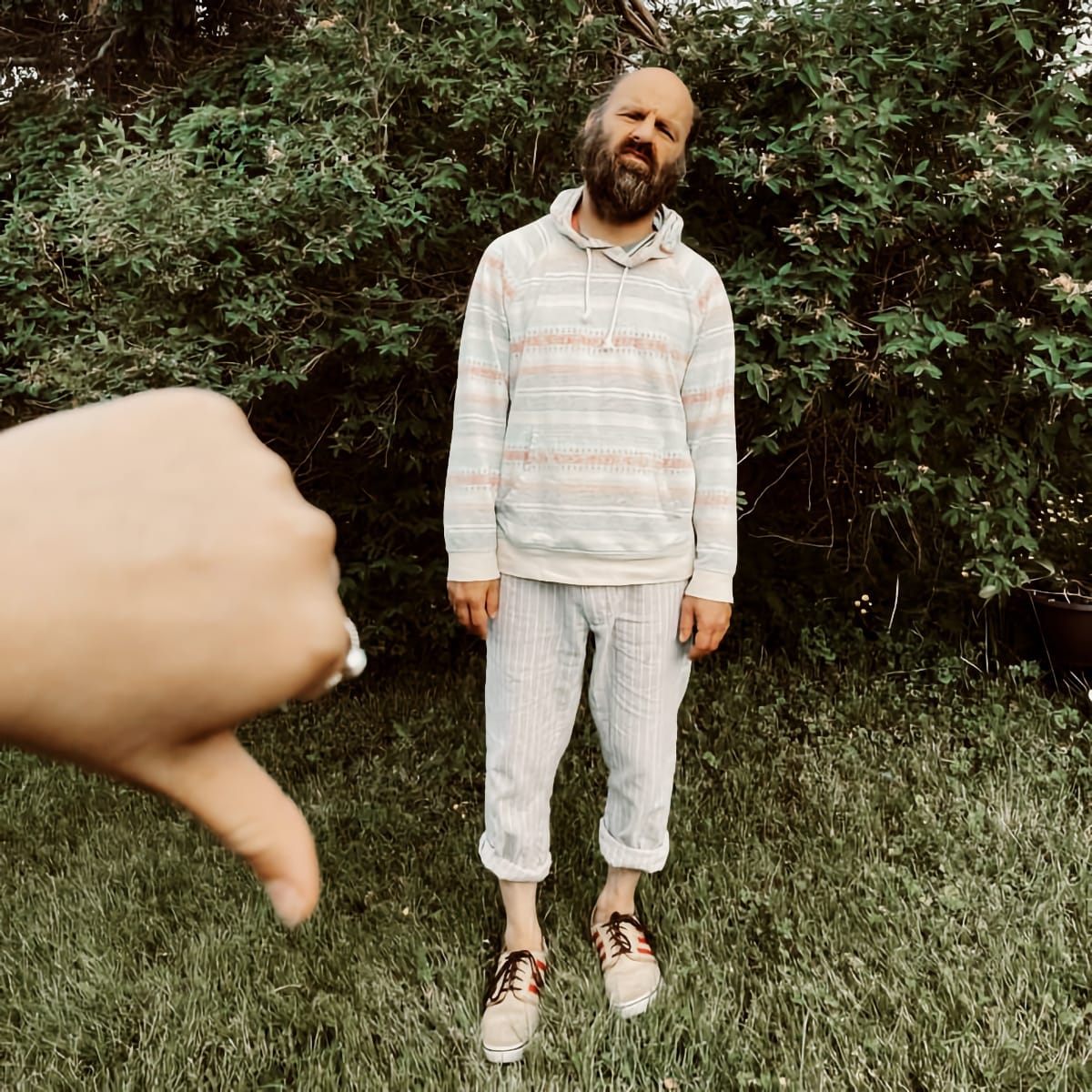
It might seem odd, given how rustic and unostentatious White's day-to-day life still is, that he was forged, at least partially, in the violent, rigid, and beer-soaked environs of crust punk.
Khagan: When you played crust punk, were you one?
Chik: That was the weird part. I wasn't. There were lots of real punks in town. There has always been a big punk scene in Halifax. And they didn't reject us by any stretch. We were liked. We really liked punk music. I still really love punk music.
But I never felt like we totally fit in with the real crust punk scene. Our drummer was a real indie and math rock person. He refused to indulge in any of the punk modes. He put on a weird scarf. I think that's what made us an interesting punk band. We had our own take on it. Punk can be very rigid in some ways. We never fit into any of those particular genres of punk. We did our own thing.
It was a great thing to be part of. It was probably one of the most important musical times in my life. I tore my voice to pieces when I did that band. It was hard on my body.
Khagan: You're still pursuing a very physical form of art. How did the shift happen out of punk and metal and into the experimental?
Chik: I got interested in noise music pretty young. I started listening to a lot of Japanese noise stuff. Like Merzbow, Masonna. I was really into Boredoms. I wasn't really incorporating that into what I was doing until I started the Shit Cook project.
I made two little CDRs. That was when noise was starting to get attention. People were starting to talk about bands like Wolf Eyes. It was around that time that I was starting to play around with those ideas.
Shit Cook was working for me. I really liked doing it. But then I got into running a label and the festival. I transitioned into being a curator and administrator for a lot of years. I think that happens to a lot of artists. You switch from your own practice to helping other people. That became my focus, and it informed my taste in music. I got into free jazz and noise. Seeing all these artists at the festival was really inspiring.
Khagan: The lore of a friend of yours giving you a jaw harp as a gift and sending you on this trajectory is well known by now.
Chik: When I started playing the jaw harp, I never thought of it as anything. I would just play when I'd go on a hike. Then I started playing with different microphones. I used to wear a contact mic on my throat. I just incorporated free improv and noise ideas into it.
I started making textures with the jaw harp instead of playing it in a traditional way. I put bolts and chains on it. That was all informed by exploring this world of avant-garde music. Over time, the jaw harp evolved into a sound-poetry instrument for me.
I liked the sounds I was creating. I liked close-mic'ing a lot. I started getting the sounds of my throat and my mouth. I would say a lot of people find what I do with the jaw harp disgusting and hard to listen to. I've heard that comment a lot. But to me, I think of what I do with the jaw harp as a kind of noise music. It's an acoustic, quiet kind of noise. Then I took that approach to the guitar. And I play guitar exactly as I play the jaw harp—fully improvised and very much textural.
The throat mic, I don't use it anymore. And I don't play the jaw harp as much live as I used to. I used to bring a mixer. No effects. Just a regular condenser mic with the throat mic. That was sort of my thing for a long time. The throat mic adds some really interesting texture. I stopped using it because it was kind of complicated to carry all that gear around. That was a big part of my sound for a bit. Just the movement on your neck alone. It would be noisier if I didn't shave.
Khagan: I think to an outsider, a lot of this music feels very ritualistic, very purging. And you seem to be in the middle of a very fertile period. You're putting something out almost every day. So was it ever a purging moment? Is it still? Has it become a need, or is it a quotidian thing you do every day?
Chik: There's a mental health element to it, I think. I do play music for a few hours every day. I'll play mostly guitar, do a bunch of screaming and muttering. That's what I do. I've got this oak building. I go out there, and I record, and I play every day. I'm trying to hone what I'm doing. It's my own thing that makes sense to me. I'm trying to get better at it every day. You're right, it is very much about a release. It's about processing emotions and memories.
Some people listen and think it's just silliness or nonsense, or that I'm just a funny guy on the internet. I love that part of it, too. I think it's fine if it's funny. But there is a purging. That's a good word for it. I feel emptied out every time I play. It was the same with the jaw harp. My performances are pretty visceral. I let it all out. Sometimes that's really ugly. Usually it's really ugly, I guess. I think if it's done right, it should be.
Khagan: Do you ever notate or score your music in any way?
Chik: What I do is purely improvised. I did a jaw harp concerto some years ago. A Canadian composer, Bekah Simms, had seen me in Toronto and asked to write a concerto for me. I don't read music. She notated a score for me using the sort of language we developed. Then she wrote it more conventionally for the ensemble. That was the only time I really played to a score.
I still improvised within the structure. It was a big moment for me to play with a bunch of classical musicians. It was, of course, awkward, a little bit. I'd do rehearsals with them every day for a week. It was like we were in two separate worlds. The show came together really well. We really clicked when we performed.
Khagan: You have been pursuing a very insular musical moment. Would you ever put together an ensemble or a band for your own music like this?
Chik: Yeah, I've thought about writing an improvised opera. The last tour I did was with a collaborator, Naomi McCarroll-Butler. She's a saxophonist. I have a duo coming up with Sam Shahabi. He plays the oud, and I do vocals. Bill Nace is another guy I've done a few things with.
It just has to be the right people. I've jammed with lots of people, and it can be challenging. I have a very singular acoustic approach to music. People can really overpower me. If you play with a really aggressive saxophone player, you just disappear, no matter what the mics are doing. That's what's great about Naomi. She was so delicate in her playing that we complemented each other very well.
I like playing solo, though. I've played in bands for a lot of years. There is something liberating about being by myself up there. It's challenging and terrifying. There's a real intensity to it. When I ran a festival, I really admired the solo musicians.
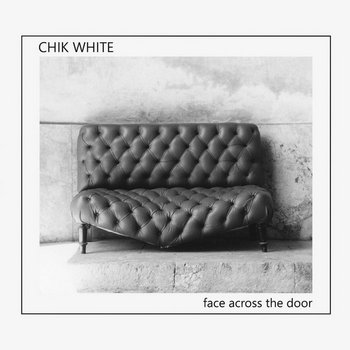
As we speak, White's latest release is face across the door. An excellent minimalist study in localized resonance and extended vocal technique, it continues his exploration of the desolate, consuming, and emotional depths his voice and diaphragm can achieve when allowed to travel on sheer instinct.
Though he speaks of himself and his art in predictably modest ways, the amount of micro-nuance White packs into his pieces can sometimes feel staggering. face across the door bypasses rhythmic meters or diatonic harmonies, instead plunging headfirst into the erratic, microtonal shifts of finding the very limits of both your throat lining and pulmonary capacity. Still, through it all, in a way that has become all his own, Chik White manages to project a tremendous humanity through these percussive, glottal, and organically reverberating pleas.
White is aware that his rogue, self-taught, and folkloric pursuit is something that clashes not only with the mainstream but with many branches of the avant-garde itself, which by now is firmly rooted in its own modus of formal training and technique. Yet, to listen to him touch on this is to hear perhaps the purest motivation an artist of any realm can offer for carrying on:
"I'm sincere in what I do. I put all my heart into my art. I think experimental music can be overtly academic, and I certainly don't connect with all of it. But what I do comes from a very honest place. I think of it as a sort of blues music. It comes from my soul. It also expresses my own limitations.
I got really into recording birds for a while, with a parabolic dish mic. And each bird has its own song. Some of them are complicated and musical, and some of them are simple. That's how I see myself as a musician. I just sing my song. Some of it may be ugly or unmusical. But I'm just trying to express the honest song that is in me."
Check out more like this:
 Steven Garnett
 khagan aslanov


Comments