


To much of the world, New Zealand looks almost like a real Tolkien Middle-earth, sitting in the bottom corner of the world. But it’s also home to one of the most iconic record labels from the southern hemisphere, Flying Nun, which has continued its tradition and reputation since 1981 of championing unique, fresh-sounding indie music from that remote corner of the world.
Following up on their 2016 debut LP Eternal Delight, Purple Pilgrims, composed of sisters Clementine and Valentine Nixon, released their 2019 sophomore Perfumed Earth and the 2023 album The Coin That Broke the Fountain Floor (as Clementine Valentine) via Flying Nun. They have collaborated with label greats the Chills and Roy Montgomery and have toured with performers such as Aldous Harding and Weyes Blood.
Now Purple Pilgrims are back, releasing their third album, Given to the Night, and have also announced signing to London-based AD 93 to help their music reach new audiences around the world. (The album will still be released in New Zealand on Flying Nun.)
Travel was a key part of the Nixons’ childhood; they journeyed through Asia, spending time in Borneo, Sri Lanka, and Indonesia. Originally from Christchurch on the South Island, the sisters relocated to Hong Kong after the 2011 earthquake, where they fell into the city’s underground music scene. They returned to New Zealand in 2013, but this time to the western side of the Coromandel Peninsula on the North Island, where their isolated home recording studio resides.
From the comfort of that secluded bubble, Purple Pilgrims have created another dreamy indie-folk world of light and dark, fairy tales with analog textures, synths, and expansively layered vocals that pay homage to influences from Joni Mitchell and Kate Bush to Beach House and the Cocteau Twins’ guitar touchstone. There’s a sort of unearthly feel to the record where you have all this modern instrumentation, sound, and textures built up, but the vocals have almost a seventies hippy-folk analog-revival vibe to them, especially on tracks such as “Echo” and “Receive.”
After a shaky video call start, the internet connection became stable, and I began conversing with the siblings.
The transcript has been edited for length, flow, and clarity.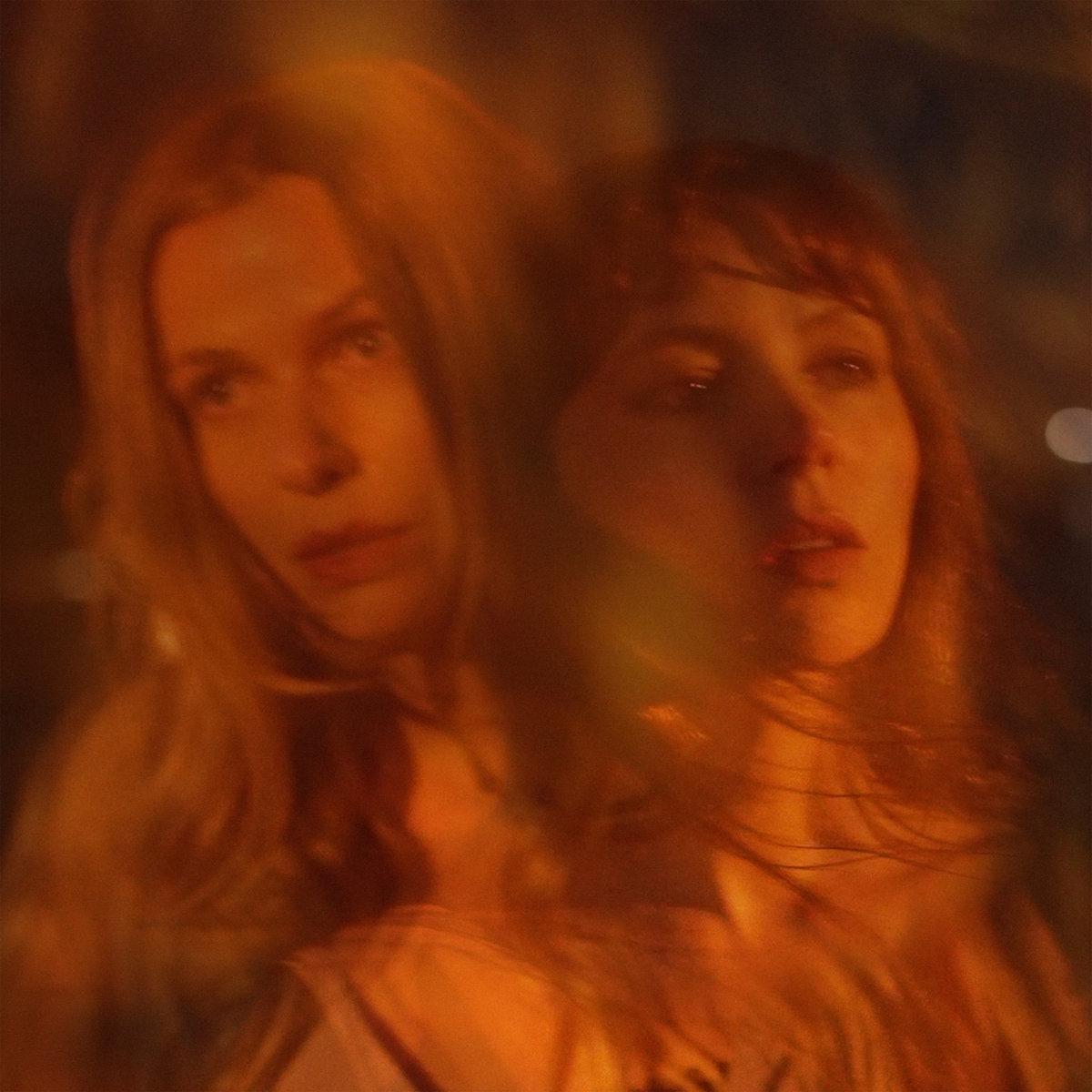
Damien Joyce: Kia ora, ladies, and thanks for joining me for a yarn. I believe that is what the Kiwis say for a chat?
Valentine Nixon: It is, yes, a little old-fashioned, though!
Damien: What can I say, I’m a little old-fashioned. You’re living on the North Island, but have you been back to Christchurch since the earthquake?
Clementine Nixon: Not too often, but we do go every now and again. It’s a very different city, because so many buildings were destroyed. The landscape has changed so much that it’s always an interesting perspective, trying to remember where things used to be.
Valentine: We left with the earthquake, but now there’s a great scene down there. There’s a lot happening with music and stuff, and it’s really rebuilding. It’s been a rebirth.
Damien: This new album, Given to the Night, I’ve been playing it on and off the last couple of weeks. But I’m still not certain what the primary emotions are on it; I feel I haven’t distilled it myself yet because, listening to it, there’s a sort of duality to it, both happy and sad. Is that what the intended emotions were?
Valentine: Yes, absolutely. I think you hit it on the head with the duality. We definitely came at it from a writing perspective during a transitional time for both of us. But we had a strong inclination to experience that with a kind of openness, trying to interpret what might feel heavy with a sense of light; I think that was really important to us. If you can sense that duality, then hopefully, we were successful with that.
Damien: Oh, there’s a wave of emotion for sure. While I would recommend the album, I wouldn’t say it’s totally uplifting because there’s a little tinge of sadness in there, if that makes sense.
Clementine: It makes perfect sense. I think both perspectives are probably right. But I actually think it’s fairly uplifting.
Valentine: I think it has a real spectrum of emotions and experiences that we just kind of went with, as they came up.
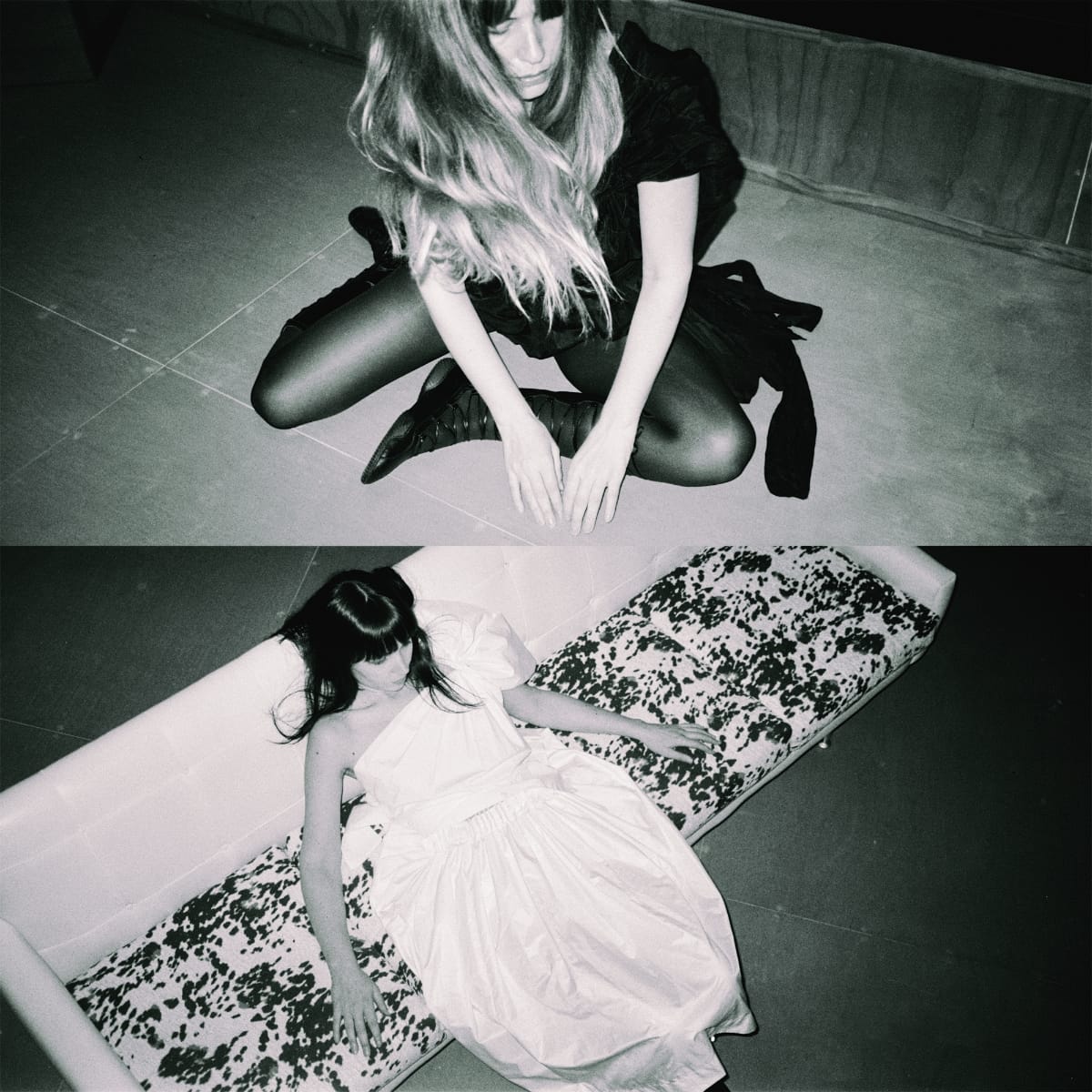
Damien: To make this record, you retreated from social media. That must have been pretty great, to be able to close off social media for a while.
Clementine: Yes! We really just spent a period of time off the grid, so just sort of away from the world and, yes, as you say, very luxurious at this moment in time. It’s not easy or common for any of us.
Valentine: Well, where we are, we physically removed ourselves and went into this environment that was very isolated. So, we just felt like doing the whole thing and going right deep into that process. We don’t have cellular reception anyway, and as you noted, the internet doesn’t always cooperate either. So, I think it was a little easier for us than most.
Damien: Where did the recording take place? Is it northeast of Auckland (on the North Island)?
Clementine: Yes, so it’s a place called the Coromandel. That’s about a two-hour drive from Auckland, where we recorded in a home studio. It’s very beautiful.
Valentine: So we’re still out here, but we’re a little less isolated now. We’re a bit more connected to the world, and it’s pretty secure.
Damien: It sounds idyllic, and being off the grid for a while is very appealing at the moment. You followed a DIY process as well?
Clementine: Yes, for this record, we wanted to get back to that essence of just being the two of us and experimenting with different instruments and the writing process. As sisters, we grew up with a very close relationship, and how we work together just feels natural. We did a lot of it ourselves, and then we recorded, for example, some drums and a few different parts in a studio in Auckland. It was a nice balance of keeping this insular world for all of our ideas to develop. Then we used the professional studio for the parts that were a little too complicated to mic up ourselves where we were.
Damien: It’s interesting about the sister relationship. I interviewed an amazing cellist called Rebecca Foon; her sister, Aliayta Foon-Dancoes, is also a virtuoso violinist. She described it as this almost telepathic type of communication.
Clementine: I feel like telepathy is definitely how we communicate.
Valentine: Yes, we have a shorthand that’s very much between the two of us. So, we’ll often be in situations where, if we’re working with anyone else, they’re usually completely infuriated by us because we tend to be completely silent. We don’t need to use a lot of language and just can play off each other really easily.
Clementine: Over time, we learned that we have to use our voice in terms of communicating different ideas at times because that initially was difficult because we didn’t need to do that with each other. It’s been a learning process.
Stay on top of The Tonearm.
Subscribe for exclusive interviews, cultural tip-offs, and community fun.
And your support keeps our site free of advertising and paywalls.
Damien: I’m sure you’re fed up hearing all the superlatives. I have written down some of them: ghostly, dreamy, hazy, ethereal, mystical, angelic. If you were going into a record store and wanted to place this record alongside your contemporaries, who would you put it next to?
Clementine: That’s a hard question.
Valentine: I mean, it’s not even an attempt to be elusive or mysterious at all. It’s genuine. We’ve never set out to sound like any one thing, and I think we are quite open in that sense. But we definitely had influences in different areas. I think at a DNA level, we belong to a sort of ethos of New Zealand music because it comes from a very DIY background, and that’s our background. It’s something that feels true to us and always does, maybe place us in the “Aotearoa” section?
Damien: But I guess that it’s something in the DNA of the New Zealanders being so far remote, having to do things yourself anyway?
Clementine: It’s deeply embedded in the psyche. Just starting out and having to kind of learn how to do everything yourself, which I think we have taken that with us from the beginning. It’s something that now we kind of hold quite a special approach to. Feeling so isolated that you have to learn or fumble your way through finding how you want to make music and how you want to approach it, really.
Damien: That nomadic lifestyle and experience of being homeschooled, spending time in Hong Kong, traveling around Asia and then coming back into New Zealand, you must have a lot of memories to process from different environments. But from living in a 26th-floor apartment in Hong Kong to then coming back to the seclusion of the North Island must be kind of surreal at times?
Valentine: Yes, definitely; we spent a lot of time together. I think we either were going to hate each other or become quite humbled; thankfully, it was the latter, to this day. I don’t know if that was inherent or not, but I guess from that upbringing, we really do like extremes. Whether it is the middle of a metropolis or the absolute middle of nowhere, I think we’re quite comfortable. I think we both tend to get bored anywhere in the middle, and we really enjoy touring. When everyone else around us is exhausted and wants to go home, we’re quite happy to keep going.
Damien: How do you share songwriting duties, or is it more shared ideas that come between you?
Valentine: It depends. I mean, one of us will have an idea, whether it be a lyric or a melodic idea or a textural idea; we’re not particularly formulaic with the writing process. Maybe that’s back to the telepathic thing?
Clementine: Kind of happens differently every time.
Damien: Is the fun part of that creative process packaging the reflections from around the world between you, whether it’s melodically or in lyrics, for each of you?
Clementine: All of it, to be honest. Doing a little bit of everything.
Valentine: I think because we both take different roles. Our roles aren’t really defined. I think we both enjoy a lot of it.
Clementine: We love recording and playing live as well. It’s the whole opposites thing Valentine mentioned: kind of having this isolated world where you’re building a record and then taking it on the road; it’s the opposite, where you’re around other human beings sharing it. It’s the extremes of that, which works well for us.
Damien: Is the creative circle or process complete when you finish recording and you’ve put it to tape, or once the music has connected with people?
Clementine: I think once you start playing live.
Valentine: Yes. I think it’s that live experience which makes it feel real. Then the songs sort of take on their own life, especially when you’re playing them so many times, and they start to take on new characteristics performed live. Obviously, at the point where we’re releasing, at the moment, it feels really wonderful, actually, that feeling of sharing what you’ve made. It sounds like a cliché, of course, but it really does feel like it becomes the listener’s at that point. You sort of lose some claim over it, which I think is beautiful.
Damien: Trying to organize that live situation, when you’re building all these textures in the studio, is something that I’m always interested in. When does it come to mind, “Oh shit, we have to play this live,” or are you just concentrating on making something?
Clementine: No. We just kind of wildly let ourselves go, and then at the end, we’re like, oh, okay, how are we going to do this? Because, usually, we actually like to tour as a duo as well, just because it’s a lot more straightforward at times. But it means that we have to take on a lot of different roles. We always say that we wish we had more arms so that we could do more at once. But I think it definitely starts to become real by the stage anyway. We’re trying to figure out how we want to do that.
Valentine: We’re deep in the middle of that at the moment, to try and decode what we’ve already made.
Clementine: It’s a fun challenge. Something we like to do.
Damien: Does your bond then grow stronger as you bring other people into the fold, as you start thinking about performing these songs live and going on tour? Is it just another phase for you now, since you’ve been together playing music for over ten years?
Valentine: Long time, yes, and we’ve always toured together. I think it’s been really lovely for us to experience it all together as a family. We’ve had really great tour experiences, and I think it’s probably down to having that familial bond in all sorts of different situations; it’s a nice thing in our case. We do fight; we’ve had some awful fights on the road, but we always forgive each other because you have to, you know, family.
Damien: I’d be very skeptical if you said you didn’t!
Valentine: You could say some awful things to your sibling that you’d never say to anyone.
Clementine: We always have each other’s backs.
Valentine: When it comes down to it, you’re the people who know each other best.
Check out more like this:
 Meredith Hobbs Coons

 Damien Joyce


Comments