


Now Playing on The Tonearm:

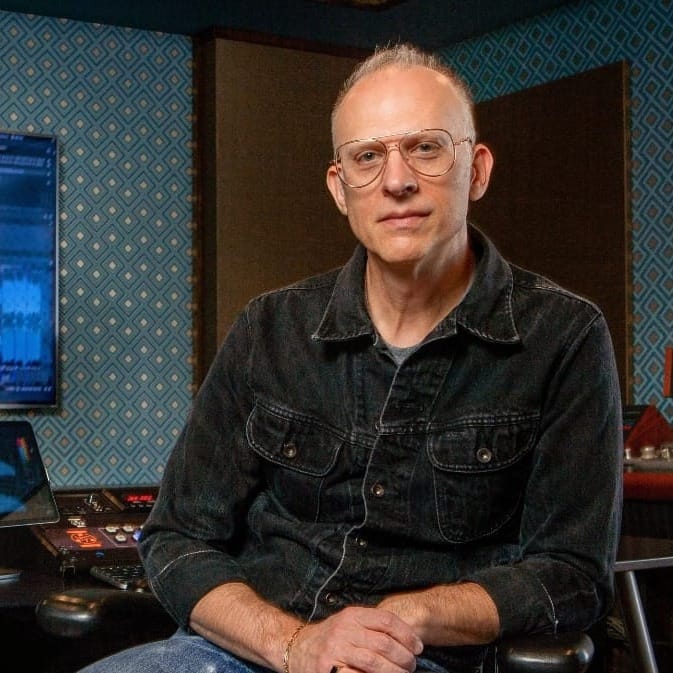
Putting the Performance First — Michael Graves on Archival Audio
The five-time Grammy winner discusses the daily tension between preservation and intervention, his analog-first approach to archival audio, and what his restoration of unreleased Stax songwriter demos revealed about the ethics of serving the archive. Interview by Lawrence Peryer.
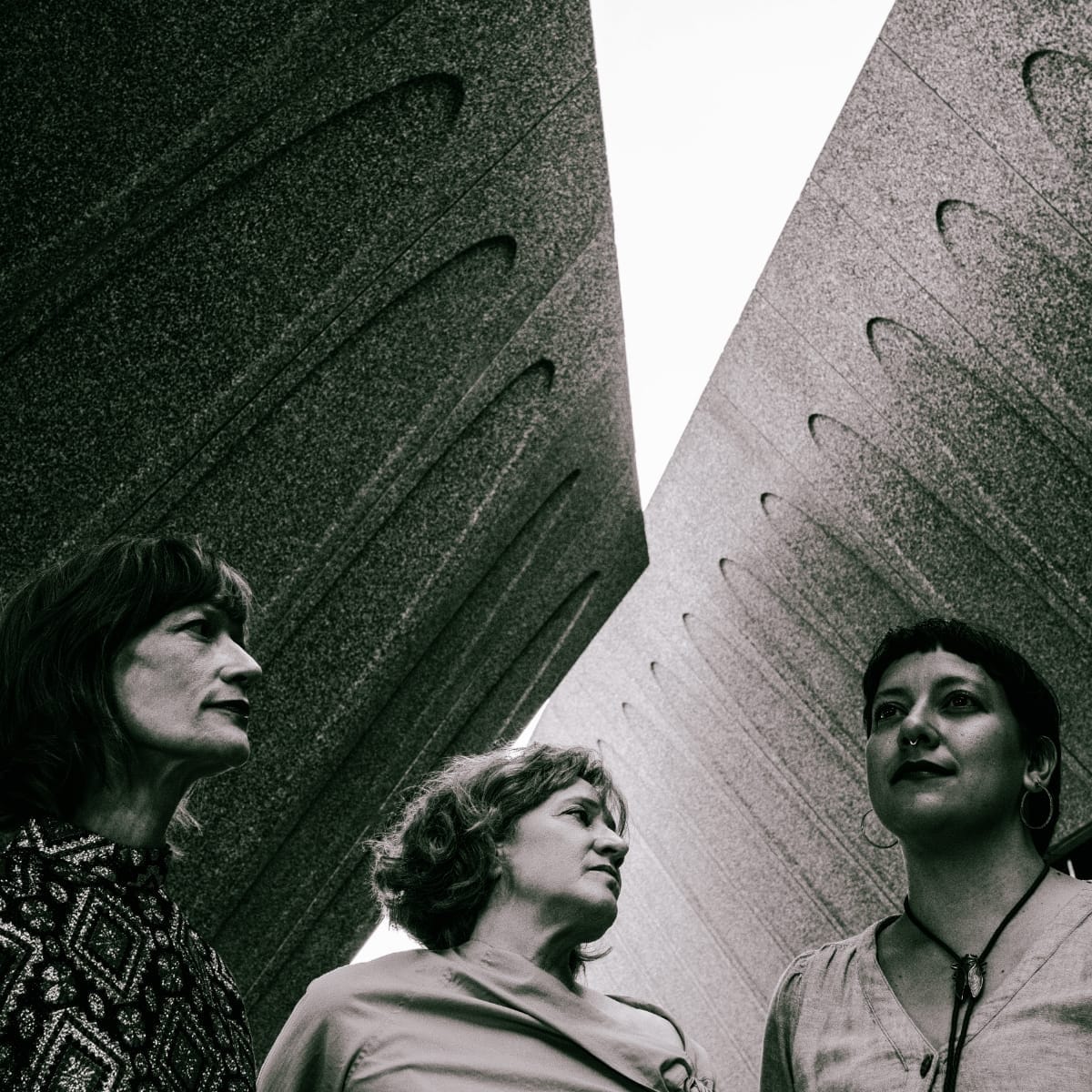
The Paleo-Futuristic Cabaret of Lost Noises Office
Holly Tavel, Sarah Morrison, and Beatriz Ramirez-Belt discuss 'cloud, castle, lake', their improvisational rehearsal process, and why music that creates a scene beats music that creates a feeling. Interview by Steven Garnett.

Audrey Golden's 'Shouting Out Loud' Brings The Raincoats Into Focus
In 'Shouting Out Loud,' Audrey Golden brings her background in law, gender studies, and human rights research to the Raincoats' full story, from art school in North London to the cells of the Maze. Interview by Andrew Hamlin.

The Groove-Centered Ease of Modha's 'At Your Pace'
The German production duo discusses their resistance to the music industry's rat race, the shift to collaborative live-band recording with trusted friends, and why protecting the raw joy of music-making matters more than chasing metrics. Interview by Sam Bradley.
This Week's Episode of The Tonearm Podcast:

Zeena Parkins: Invention, Loss, and the Living Harp
From a Detroit high school full of concert grand harps to the experimental clubs of the East Village, Parkins traces the unlikely path that made her one of the most restless instrumentalists in contemporary music.
The Hit Parade:
"[Author Rickey] Vincent likens it to a 'celebration of the infinites of which Blacks were now capable.' … George Clinton was more succinct in his ambitions: 'I was getting ready to take the ’hood into outer space.'" ❋ "These photos would’ve easily fit right in as an album cover, yet the image of his former self speaks much louder, tying back to the journey he raps about on Illmatic." ❋ "Anyone who lived in Manchester in the 90s will know that the city belonged not to Oasis, The Stone Roses or New Order but to the Happy Mondays, a borderline genial / menacing group from Salford who looked like they might show you the best night of your life then rob you on the way out." ❋ "György Kurtág is a centenarian with little interest in retirement . . . he teaches as meticulously as ever, and writes music with the searching mind of a composer who may never be satisfied with his body of work." ❋ "This is the story of Amsterdam is opeens van chocolade ('Amsterdam is suddenly chocolate'), a song written by the young alt-pop musician, Thor Kissing. It is an example of a cheeky and rebellious aspect of 20th-century Dutch popular culture, ludiek ('playfulness'), which may be on the rise again." ❋ "My work had evolved to the point where 'the archive' stopped being something I was acquiring solely for my own pleasure and became something I was curating for others. When I had my first opportunities to get involved with vault work, there was a jarring gap between my fantasy and reality." ❋ “A Parkinson's diagnosis sent one couple on an unlikely journey into the world of Highland bagpipes, one of the most physically and cognitively demanding instruments, which is precisely why they thought it was a good idea.” ❋ “Some people are obsessed with numbers and volume but I tried to find a feeling. For [the front of house mixing desk], I specifically did not have the SPL reading up on the screens, because people were staring at it from the barrier, so to relieve ourselves of that felt really freeing.” ❋ "When Franco Trincale was a barber boy, he used to sing Sicilian songs in breaks between customers. He could never have imagined that he would grow up to become Italy’s last great cantastorie, a now dying tradition of wandering musicians who entertain audiences by recounting the news in song-form." ❋ "Although he does not make the music about himself, the band makes the music about him and projects themselves as one reflection: Miles. To a man, they are Miles.” ❋ "The group’s ideas were ahead of their time. The technology to achieve those goals was not. That’s where Power excelled. He enjoyed the meticulousness of painstakingly isolating and blending the sounds and samples." ❋ 2026 Big Ears Preview ❋ "I'm going to have to go with this Górecki."
New Music Recommendations: Delphine Dora – L'inéluctable pulsation du temps (RIYL: Lau Nau, James Blackshaw, 'cyclical arpeggios spiraling into a liminal dream space’) ❋ Jake Baxendale - Waypeople (RIYL: Guzheng-inflected chamber improvisation, Coltrane drifting into ancient poetry) ❋ Laurel Halo - Midnight Zone (RIYL: Arca, Hildur Guðnadóttir, synthetic waveforms singing through a piano's physical body) ❋ Ora Cogan - Hard Hearted Woman (RIYL: Haunted folk and psych rock with shadowy country undertones, JJ Cale reimagined for darker times) ❋ Simo Cell & Abdullah Miniawy - Dying is the internet (RIYL: Leftfield club music, experimental Arabic lyricism meets bass-heavy minimalism)
The Deepest Cut:

Mary Ocher was born in Moscow to Jewish-Ukrainian parents, raised in Tel Aviv, and radicalized early by encounters with religious and political authority. She left Israel at 20 after refusing military service and landed in Berlin, where she became a central figure in the city's experimental scene. Her two-decade journey building an underground practice was defined by political candor and creative restlessness—releasing records with manifestos, making DIY films, performing across national theaters, museums, and queer sex clubs.
Ocher’s new album, Weimar, is more exposed than anything she has previously released: piano and voice, stripped of the art-punk noise that she’s known for, with themes of divorce, grief, and domestic violence treated with forthright directness. And then of course, there’s the political dimension; the album’s title bluntly alludes to Ocher’s historical interpretation of our current age.
Mary Ocher graciously offered to tell us more about Weimar and its themes, and then, of course, to reveal something she loves.
I've been making music my whole life—mysteriously and miraculously full-time for my entire adult life—despite everyone telling me that I would never be able to do that. I dropped out of high school, did not serve in the IDF, and moved to Berlin at the age of 20. I've been doing nothing but music for a living for the past 18 years, playing to a dedicated, music-savvy audience (OK, we're all music nerds! There, I said it!). And while I guess you can use some prior musical knowledge to appreciate parts of my catalog, Weimar is actually a fairly accessible piano album. It's probably the easiest, smoothest access point to the catalog; you don't really need to come with prior knowledge.
Weimar is not an attempt to recreate the political cabaret of the 1920s stylistically (Tom Lehrer did a great job reinventing it in the 1960s). I write about the hypocrisy of the post-Soviet regime, the hypocrisy of the family as an institution, and then there are the instrumentals. I generally don't write an album to fit a title; I name the album when it's finished. The title is a warning.
Using ‘Weimar’ in this suggested context in Germany is surely stepping on some people's toes. Evidently, we're getting lots of attention from the international press, but the German press refuses to read my essays (there are two) and writes about the album without talking to me. And last year, I kept turning down offers to perform at conservative/right-wing events organized by cultural institutions and embassies, which kept inviting me as a token Jewish/Israeli artist without actually looking at the content of my work.
Berlin is not the same city I moved to almost 20 years ago, which very much resembled the myth of the Weimar Republic back then—the way it was remembered and retold —in that Isherwood/Cabaret kind of way (it was poor, it was free, and full of art and experimentation). We now have fascists in the government for the first time since you know who. (That makes three of my countries now.)
We absolutely have to speak up now, and we have to speak up especially when everyone else is being silent, even if it's scary (and it is fucking scary!). First, it's the people who silence you, then it's the law.

What's something you love that more people should know about?
Aww, this is a great feel-good question to end this with. Thanks! I'll go with The Rubaiyat of Dorothy Ashby, a 1970 record that's tragically nearly forgotten. My band and I made variations on three of the pieces for the previous album (Your Guide to Revolution). They're based on 19th-century Victorian translations of the original 12th-century Persian poetry of Omar Khayyam. It's a magical record that, oddly, doesn’t have the unequivocal classic status it deserves.
Run-Out Groove:
Next week: Momoko Gill, Isabel Pine, Komodo, Wattzotica, and more.
- The Tonearm is a reader-supported publication, free of advertising and paywalls. Our supporters help fund our writers and make the site possible. Please consider joining us on our mission.
- Join the rapscallions of The Tonearm on our new Slack community.
- Sign up to receive our latest articles directly to your inbox in a snazzy, easy-to-read email version. Just go to your account, manage your email preferences, and flick the lever to receive The Total Tonerm.
Thank you for reading! We'll see you again next week. 🚀


Comments