


Combing through the rubble and dust of a collapsed civilization, one might stumble across Phil Geraldi's full-length debut LP, Rural Deceased Undiscovered. To truly capture the concept of alien americana, one must similarly collapse their idea of linear, Earthly music to best engage with it. The California composer takes familiar concepts of hook and melody and flips them on their head, creating "music both rustic and placeless, warped by weather and technology, shimmering like northern lights over the badlands," per a press release.
Rural Deceased Undiscovered finds Geraldi exploring his brightly burning curiosity over eleven fractured yet mesmerizing tracks. From the slow-burning shortwave shimmer of opener "Quartzite Stereo Band" to the sonic collapse and rebuild of the shoegaze-y "Tuesday June," a myriad of influences and textures paint this transmission of country music from a timeline that separates from ours.
I spoke with Phil Geraldi about the making of the record, the importance of a universal musical hook, and how he aims to flip the context of modern music's ingredients to create a fully alien album experience. This conversation has been edited for clarity and length.
Sam Bradley: What were the early things that pushed you to create music?
Phil Geraldi: The thing that stands out for me is listening to oldies radio. I think with most radio stations, you typically hear the same 25 songs. With oldies, there obviously aren't any new ones, but certain songs become the radio canon of oldies, at least where I grew up. That was a constant mix tape for me; all I would listen to was the radio. I'm not really sure I've ever tried to articulate this, but it was something that glowed a little brighter than other things, what these songs did to me.
There's a personal thing in how I relate to that kind of music, and the hooks in these oldies songs. '50s and '60s pop songs were pretty explicit about exploring, in a short time, the real basic notion of a hook. That put me on a lifelong chase, we can say.
Sam: I think that idea of a radio canon could be linked to that idea of mastering a hook. Would you agree?
Phil: For sure. I don't know if "radio," as a noun, would put this philosophy forth. I think it's probably a little too meta. Radio is meant to serve up something quick and nutritious, you know?
Sam: How do you feel being in San Diego has influenced your output?
Phil: My experience when I was really young was the punk scene. The DIY punk scene here was really strong, obviously looking at it through retrospective, rose-tinted glasses. This was the early 2000s, so, fairly early internet. There was a text-based DIY calendar called sandiegopunk.com that anyone could edit. People would put on shows there, and I remember that every weekend there was a show to go to; they were mostly all-ages, except in a couple of spots. Now that I'm older, especially after living in places like Portland, I'm appreciative of how open that scene was to us young kids. Portland has an incredible DIY punk scene, but the shows are all booked through bar-type spaces. I'm sure if I were growing up in Portland at 15, there would be a different infrastructure of DIY spaces I would stumble on. You know what I mean? In San Diego, it felt like you couldn't get away from that even if you wanted to, because all these spaces we were shared with older teenagers and people in their 20s and 30s.
I think it's a common tale for people who get into experimental and noise music. The punk scene has this almost extreme orthodoxy, a philosophy of radical, experimental attitudes. I think it makes sense that a lot of people who cut their teeth in that kind of scene quickly go on to more exploratory forms of music and art.
Sam: Do you feel a social similarity or ethos in the punk and experimental scenes as well? How strong is that connective tissue between the two?
Phil: I would say yes. I mean, I see that same connection in country music. That's a stretch for most people, but I guess I've seen it through that filter. I think that there's something, at least artistically, with punk music and its orthodoxy that's similar to the country music tradition. That's what I'm attracted to, where it's big on the orthodoxy of the ritual itself. It's like, this is how it's supposed to be, and this is how it sounds, and it's kind of frowned upon to get away from that. There's a similar energy to punk, metal, and stuff like that. But that's only part of it—the rest of the scene also has so much to do with taste, flavor, and fashion. Within that, it's encouraged to experiment, be original, and try new things.
In every city I've been to, the experimental scene is kind of interchangeable with the punk scene. Usually not literally, where the people are at the same shows, but in terms of the attitude being kind of the same. A punk scene encourages a certain kind of independence, but it also encourages an extra reliance on friends and community, and on having a good time in community spaces. It encourages a certain kind of self-confidence that, in the best-case scenario, at a young age, encourages your creative bones or instincts.
Sam: That is a really interesting point about experimenting or creativity within a more orthodox scene. I'm a big bluegrass guy and can see a potential parallel there. You can introduce elements or add other influences, but there is ultimately an expectation about how we structurally engage with that music.
Phil: Yeah, it's community-based music.
Sam: How did you find your voice in merging all of the kinds of music you liked? How does country music tie this project together?
Phil: In one sense, it comes simply from an open-ended passion for country music in general. I just want to wrap myself in this and swim through '60s Waylon Jennings tunes. One of my favorite things is exploring people like that into their '80s output, when they're all kind of coked out and tired, getting half-exploited by their record labels. Country radio is such an interesting cultural point. Then, with modern country radio, there's a whole angle that's kind of repulsive to a lot of people. All those things I just described, they could all be abstractions. It made me want to explore those abstractions that can be applied to anything.
The thing that I'm really interested in with experimental music, and ambient music to an extent, is taking something and playing with it in an elastic sense. I feel like country music is right for that, for me at least. It has this rigidity to it, but it also has such a rich palette. My main thoughts going into the process were that I could just paint. I can use this palette of colors, sounds, and flavors and do whatever I want with them. It's a world-building thing; it's a slightly alternate take on our world.
Sam: There are certainly a lot of cinematic moments on the record, and that ties in with the alien americana themes I read about. Do you tie a linear backstory into something like this?
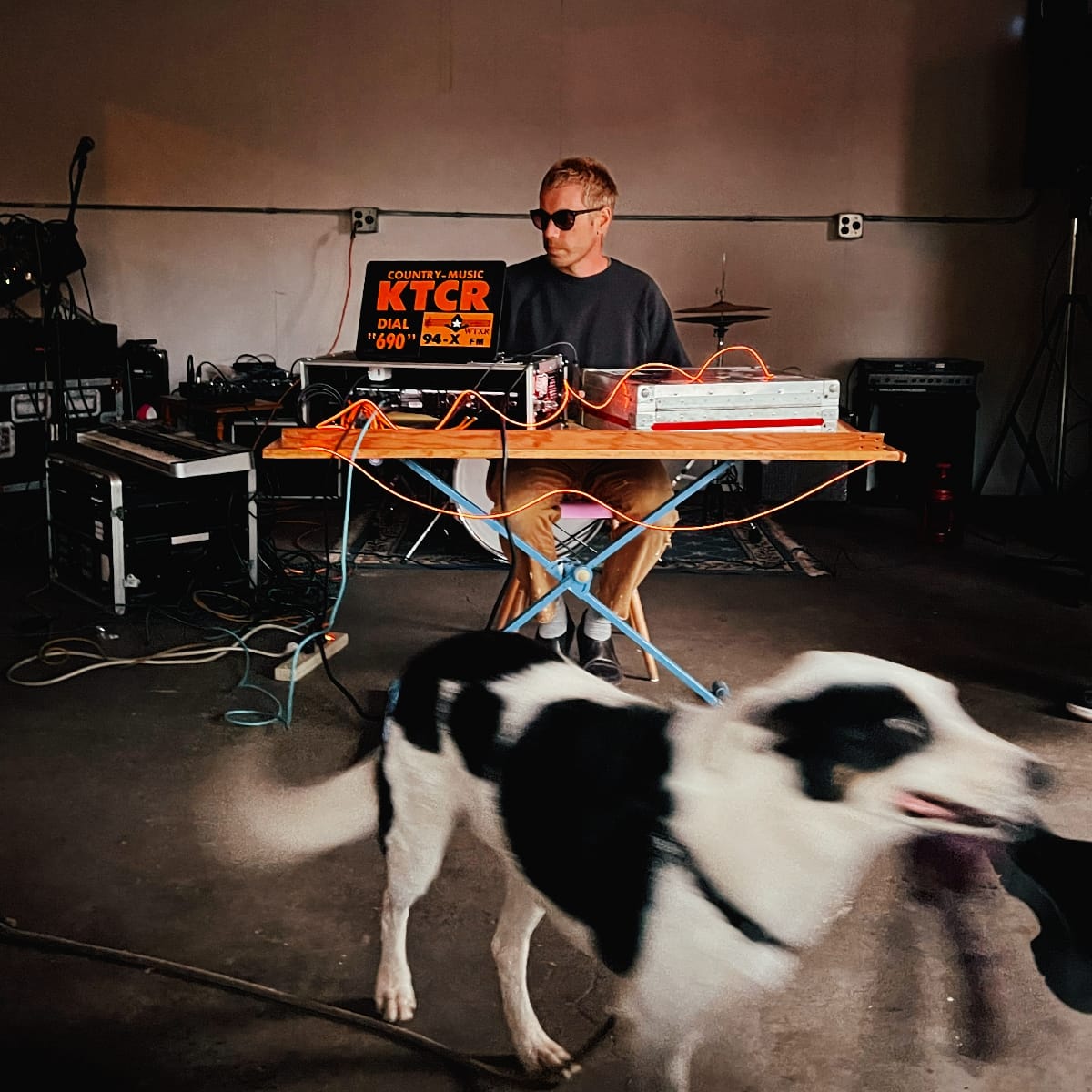
Phil: More like an attitude and philosophy. I have a backstory, but not necessarily an explicit one. For Rural Deceased Undiscovered, I'm trying to create country music, that sound palette, that taste, that flavor, filtered fractally and explored in an alien context. I mean, alien, literally—divorced from all human context.
There's no "this goes here, and this sound goes here because this happened," because the music we know and recognize was built on music from hundreds and hundreds of millions of years ago. There are probably physical realities of the universe that all creatures have in common and can recognize. So you can imagine an alien race that may have completely different bodies and a different way of contextualizing the world, yet still relate to the physical universe, which would be similar or equal to ours because of the nature of reality, right? One of those things is harmony. There's a certain mathematical harmony in music that really hits us. I think that those things we can maybe have in common, but they wouldn't have anything to do with the structure that we make music in. Therefore, I'm trying to come from a mindset—and I'm not doing this in a very scientific way—where we put our musical ingredients in a pot without the context of human American music. I'm trying to toe a line between music that feels comforting to a human in our time and music that would feel comforting to a non-human observer.
Sam: Does this go hand in hand with the idea of a hook, as you mentioned a bit ago? Is there anything universal that makes a hook, or that makes it catch someone's ear?
Phil: It's something I'm exploring, but again, it's more like a feeling. I don't have a background in music theory, so I actually can't even really articulate it. Still, I understand that you can say "harmony is pleasant because of this process," and you can explain this kind of thing mathematically.
The idea of a hook is more abstract. How do you define what a hook is? You can define it in a million ways. I think a hook is a complete sentence—when you hear something, and it feels like a complete phrase. I think that there's something similar to a good country or pop song. It's not limited to country music, but country can be really explicit about that. That's why the music that I'm making right now sounds, to me at least, really liquid, and that's when I felt the document was complete.
Sam: How do you know when something is finished?
Phil: I think truthfully, it just comes with age and experience. When I want to deep-listen to something, I'll put on headphones and walk while listening. If I have headphones on and I'm playing music, it's almost always very intentional. So it allows me to really listen to it, and by doing that, I've developed a taste for what moves me in other people's music over the years. So, when I put on whatever I'm working on, it’s in that same context, and when it gives me that same feeling, then it feels complete. I've pretty well trained myself to take myself out of the equation as a tool.
Sam: Talk to me a bit about the session process for something like this. Did you write it as separate pieces, or is Rural Deceased Undiscovered edited down from one lengthy session?
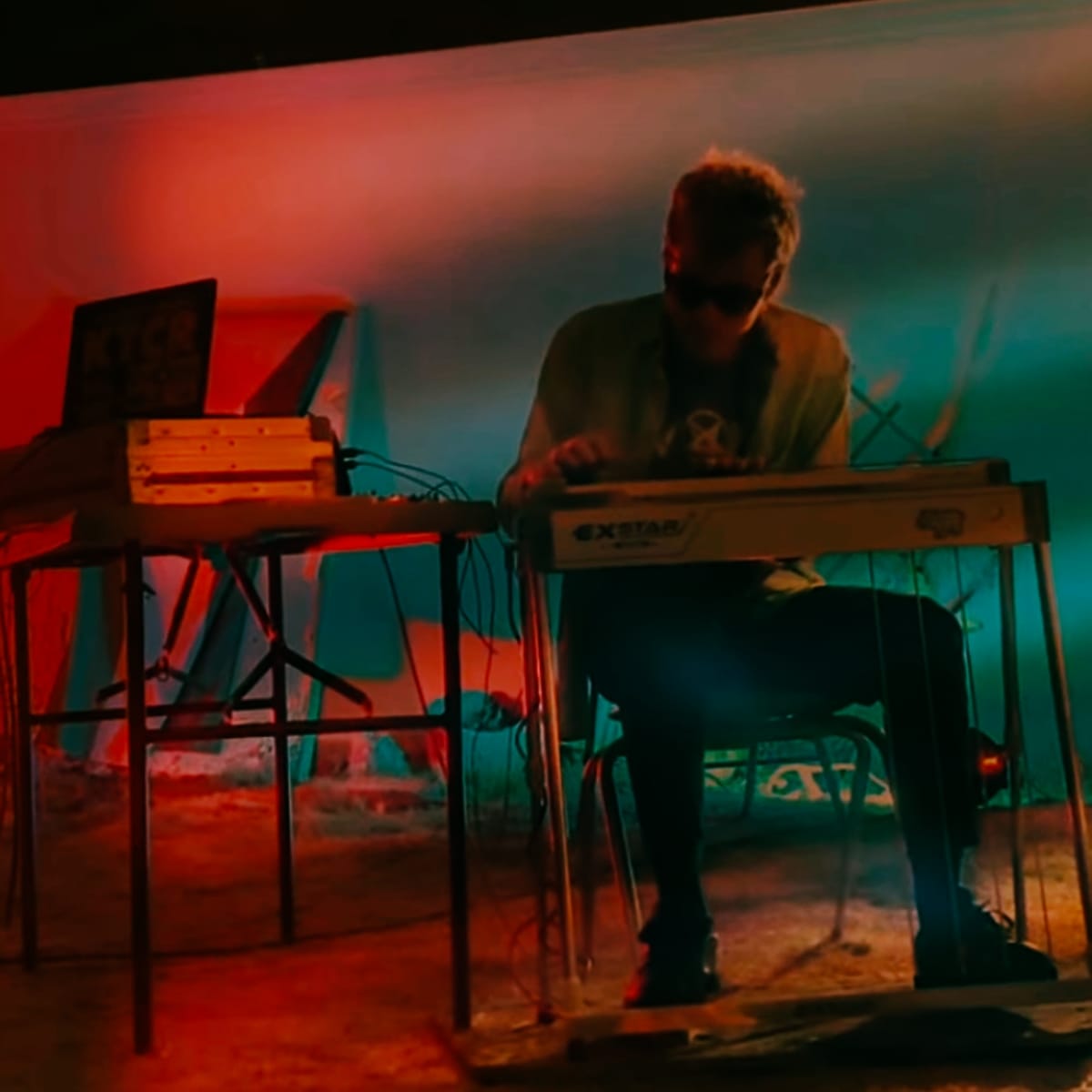
Phil: They’re not really clipped from a longer piece. I'll have a bunch of pieces, layers you can call them, and sort of compile what works together. What I'm working with are not 'capital L loops,' you know what I mean? But there is a loop, so you could use that term a little bit. By the time I get to that point, I have an idea of what a piece will be, what the vibe is, what it feels like. I never know what I'm going to get because it's always going to be a little different.
I love experimenting like this; it goes back to my early days of listening to My Bloody Valentine and Boards of Canada. I love the outro vignette-type things that are vaguely in the same key. That will usually come later, and sometimes I will marry two tracks that weren't necessarily of the same kind of band session in that way.
Sam: Your last record, Steele, ND, feels a little darker. Simply put, there seem to be more sunny and fun moments on Rural Deceased Undiscovered. Was that a conscious thing, or is that an incorrect reading?
Phil: I feel that. Without getting into it too deeply, I think of Rural Deceased as brighter, with a neon color to it. Was I going into it like that? Not necessarily, but it's like they're also two pretty different pieces of music. They're in the same world, and they work together for me. In my own head, the newest record does have some dark aspects. I'm interested in marrying the really over-the-top, modern country palette and its queasy attitude with this bleak, dystopian human hell world that we're living in. I want it to feel hopeful and uplifting in a sense because it has no context. It could be either: you could feel it's dark and twisted, or it can be really nice, and you don't have that context to fall back on. It's kind of like glass half full, glass half empty.
Sam: Is there anything you hope that people take away from the record after listening?
Phil: In terms of original intention, not really. I love the idea of people coming to this on their own. I'm approaching it with a country palette, but if you didn't know that or hear that, would it even read as country music? I love that kind of thing, the context of where someone approaches it. I think really good experimental music has this alien quality to it, where you don't know how it was made. I love the idea of making an experimental ambient noise record you can put on when you're hanging with your friends.
I want this to be enjoyable to the widest swath of people. I still want it to be threatening, and I'm less worried about accessibility. Even if it tastes really weird, I want you to want to put it in your mouth.
Check out more like this:
 Lawrence Peryer
 Sam Bradley


Comments