


Much has already been written on recorded music and listening habits—because, at its onset, many were horrified at the idea of people listening to music without the musicians in front of them. Today, recorded music is ubiquitous in modern life. There are already established schools of thought on focused listening, active listening, listening spaces, and critical listening—which, for the record, is the form of listening I am most familiar with as an audio professional. And when I am listening, if I am really honest, I am never sure whether I can separate my professional practitioner self from anything that enters my ears—except, perhaps, when all the nostalgia buttons are pushed.
The focus here won't be on where and how we listen within the aforementioned scope, but rather on the little rituals of self that many create in the act of listening, and the tools used to do so. What does this communicate about our desire to connect with music and music culture? By creating listening experiences for ourselves through intentional listening habits, we actively choose to engage with music and ourselves. The framework I am operating on here is wholly subjective, but worth exploring in ourselves, especially in a world that can deprioritize an art form that seems to only exist in moments and quite literally hangs in the air. My hope is to encourage some reflection (not acoustically!), and maybe an emerging focus on conscious consumption rather than passive consumption, which in our modern world is really easy to fall into.
Ola Stockfelt wrote about what he called 'adequate listening' and created his own framework that intersected with semiotics, explaining how we all know what is expected of us as listeners, depending on where we hear music. For example, he expressed, roughly, that you wouldn't clap at the end of a jazz solo in 7-Eleven, while getting your road trip snacks, the way you might in an actual live performance. Evaluations of the state of music being everywhere even date back to Erik Satie in 1917, when he developed his ideas around what he called 'Furniture Music,' or literally, musique d'ameublement. In contrast, Theodor W. Adorno and Hanns Eisler wrote about the 'politics of listening'—where politics impose a 'cultural control over consumption.' From the latter, we see a common thread in much of today's passive listening and consumption culture. Adorno and Eisler discussed the importance of novelty, and that "music releases or gratifies the emotions, but these emotions themselves have been difficult to define. Their actual content seems to be only abstract opposition to prosaic existence. The greater the drabness of existence, the sweeter the melody. The underlying need expressed by this inconsistency springs from the frustrations imposed on the masses by social conditions. But this need itself is put into the service of commercialism."
From this, I want to posit that our ritualized or reverent listening is an important conscious act, especially under advanced capitalism and encroaching fascism. In this creation and curation of intentional engagement, a space is created for both appreciation of the music, the recording, and the artifacts and cultural significance, and also for reflection of our inner emotional worlds, experiences, nostalgia, and a 'non-productive' (in the capitalist sense) space. How this manifests for the individual is personal, and it was interesting to observe in some of its forms and practices as I floated around the 2026 NYC installment of CanJam, an annual audiophile and headphone convention.
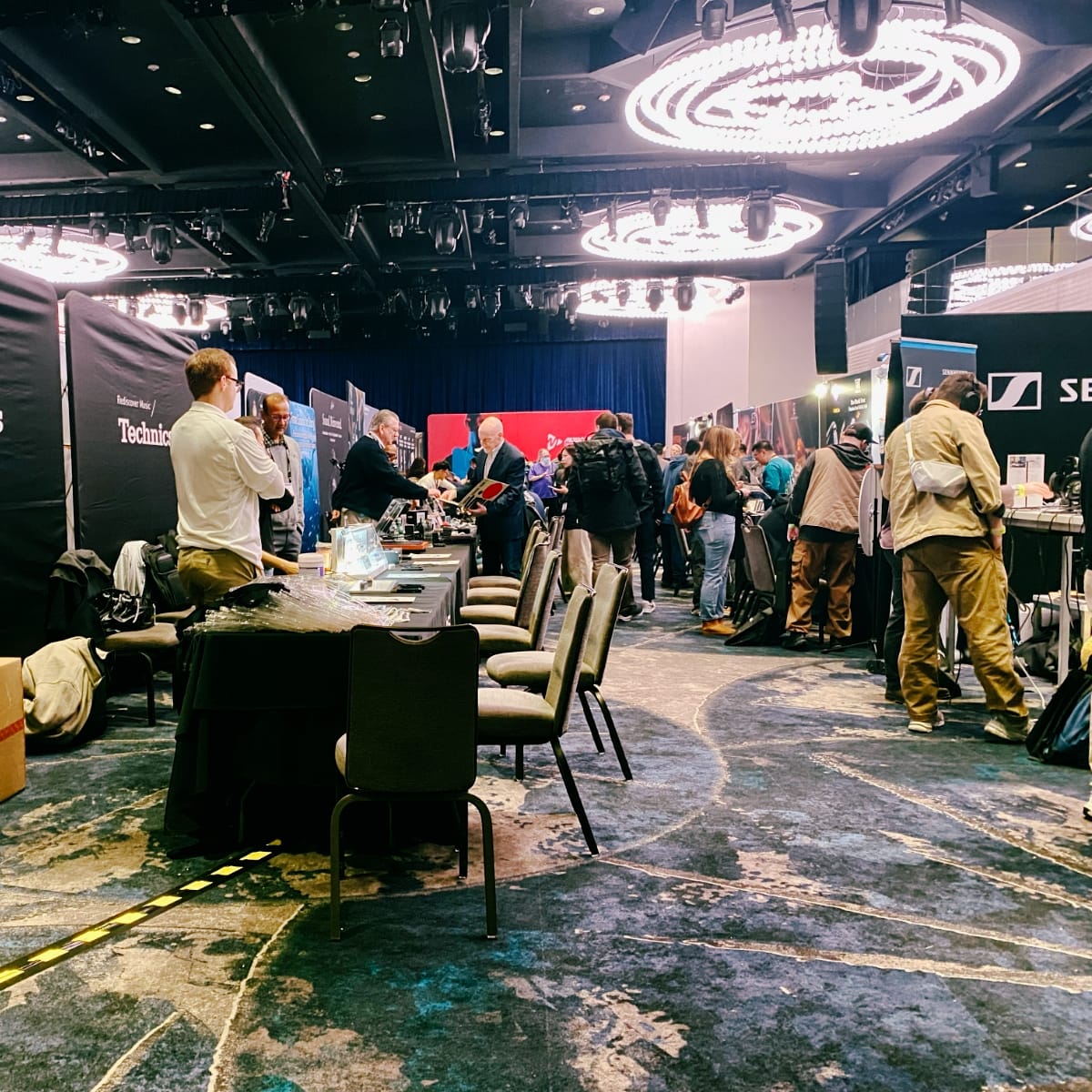
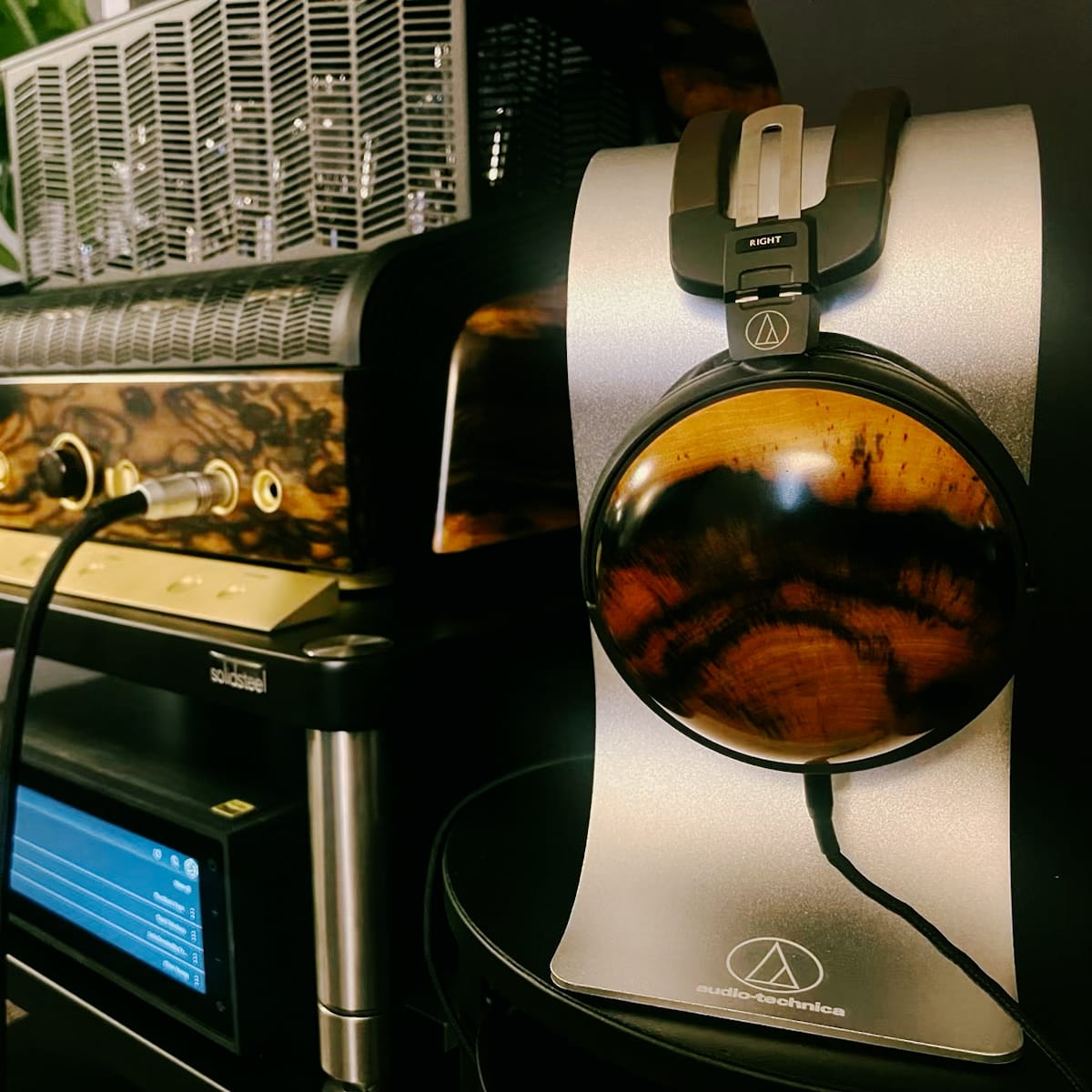
Photos from CanJam NYC 2026 by Kallie Marie.
It is safe to say that some of our listening paraphernalia may be just tools, or may have personal or cultural significance to the listener. Take, for example, a brand of headphones like Apple AirPods or Beats by Dre. They're a cultural snapshot in their own way. They can be a status symbol, a fashion adornment, and a tangible artifact of connection. For those who work in music, pro audio, or are audiophile aficionados, these tangible artifacts not only physically enable the connection to the music but are also, in part, a way of expressing, investing in, and deepening those connections. People in the audiophile world are investing sometimes hundreds of thousands of dollars in headphones, cables, digital-to-analog converters, hi-fis, and more.
The reasons any individual does anything are highly subjective and personal, but it does say something that many people engage in rituals of procuring the finest listening tools and creating a space for music in their lives. It is not the casual listening that Stockfelt termed 'adequate listening' where listeners are contented with music accompanying them while they run on the treadmill, cook, or shower. Is this connection to the artifacts of listening also part of a social subculture? Judging by CanJam's mere existence, and that audiophile culture is nothing new, one would say yes—it's a hobby of listening, belonging to a perceived social group, and participating in a subculture of music appreciators, alongside concertgoers, festivals, clubs, and people who play instruments as a hobby.
You'd have to ask each person what they like about this hobby of listening. Some of the people I spoke to at CanJam had created special times of day and even pairings of their favorite drinks—bourbon, coffee, or tea—to accompany their listening experience. One manufacturer, T10 Bespoke, showed me a listening kit that looked like a small briefcase and housed not just the listening paraphernalia but also different kits for bourbon lovers or cannabis fans. These bespoke cases are meant to help an audiophile have their curated listening experience wherever they choose—truly some luxury listening habits.
Stay on top of The Tonearm.
Subscribe for exclusive interviews, cultural tip-offs, and community fun.
And your support keeps our site free of advertising and paywalls.
This raises the next question, one of the perception of fidelity and the listener. From an audiophile standpoint, listening is quite idiosyncratic, and of course, there is a lot of marketing and snake oil in the field that will try to tell listeners that one company's headphone cables are better and that you really can hear the difference. Scientifically speaking, that is only true up to a point; after that, it may well be a placebo. However, there are other subjective listening experiences involved with coloration, which is very real. For example, while at CanJam, I tried a pair of headphones from a German company called Grell. Their new OAE2 headphones did something I had never seen (or heard) before; their open-back headphones have "natural sound reproduction" with their own reorientation in a circumaural headphone, by orienting the headphone cup to have a front-sided sound transducer. It's an acquired taste, at least to my ears. Simply put, they aim to make listening more "realistic," trying to replicate how you would hear in a room, with the sound coming from a more front-facing orientation, since our ears point a little bit forward. This differs from traditional circumaural headphones, which direct sound more from the sides.
To my ears, NIN's "A Question of Trust (Boys Noize Remix)" sounded fine on these headphones, but Soundgarden's "Fell on Black Days" didn't, and that for me was enough to wrinkle my nose and pull the headphones off. The Soundgarden song instantly sounded harsh, fatiguing, and somehow drier. So what was happening that I was perceiving there? Likely, my experience of the mix was impacted. The NIN track is a very forward mix, and the Soundgarden one is very different, with more space and different instrumentation. They're both different styles of rock; however, my choice of headphones shouldn't affect the listening experience in this way, to my ears as a recording engineer. I can't untether myself from my training, but if I could, I know I might choose other headphones for a mere "wine & cheese" pairing with these specific pieces of music.
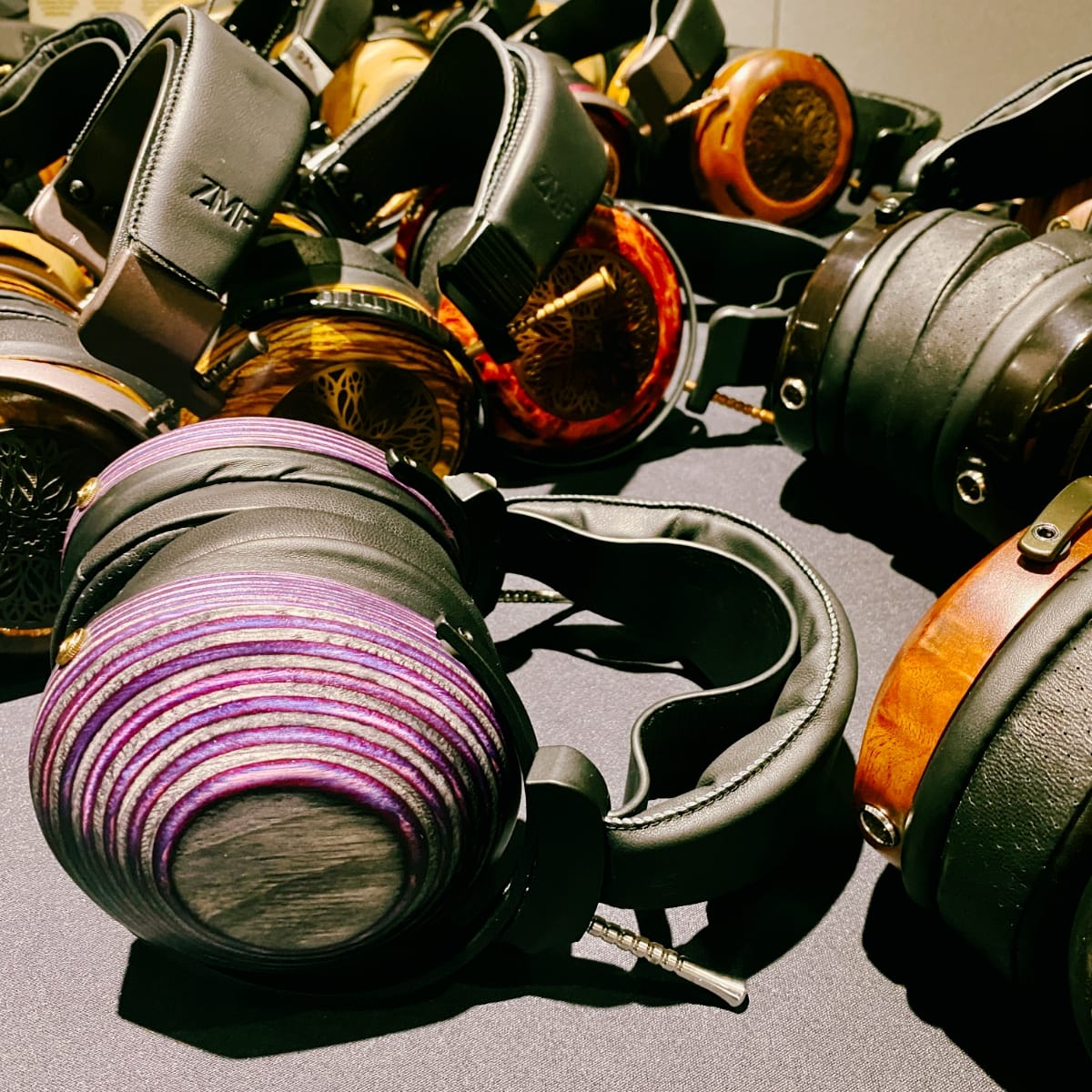
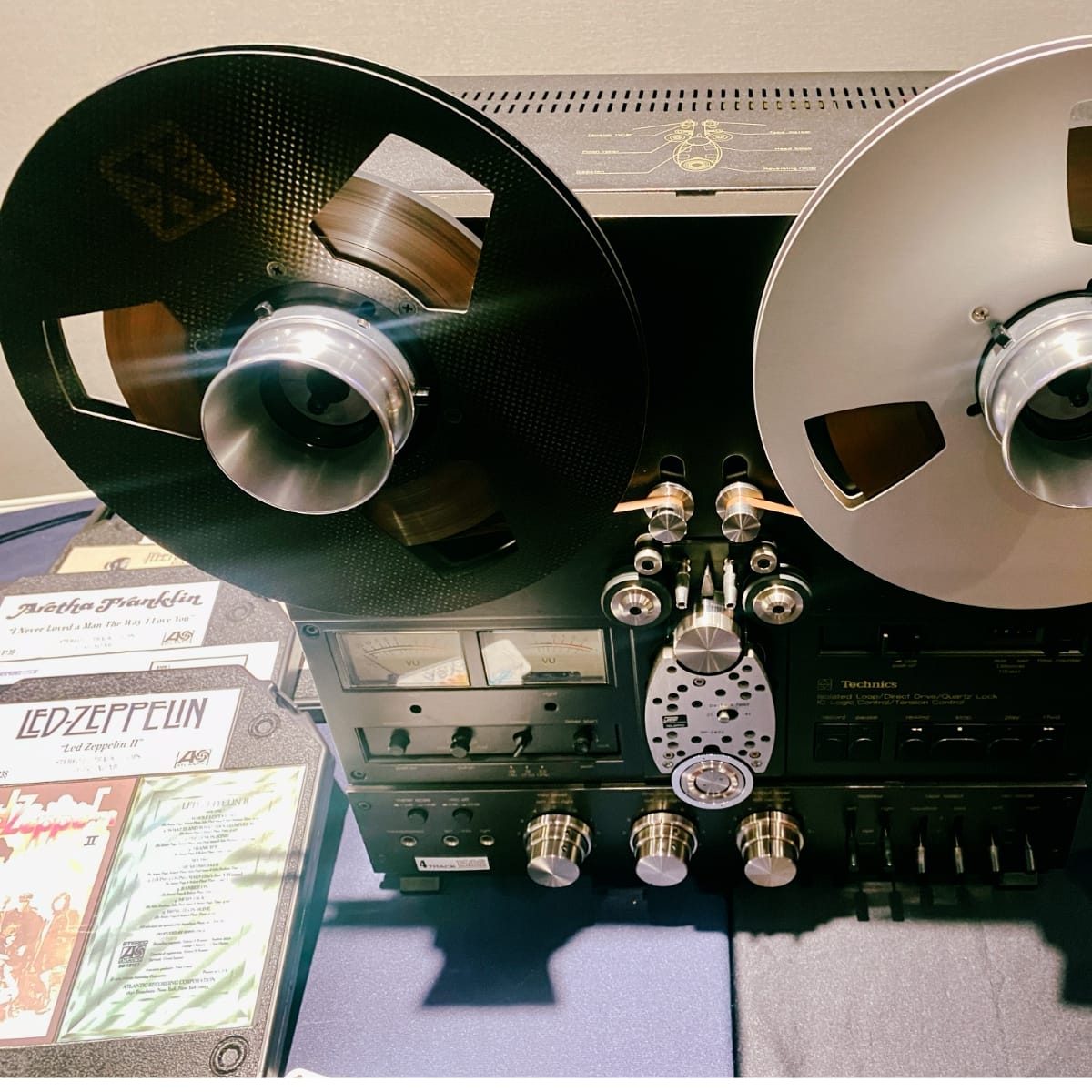
Photos from CanJam NYC 2026 by Kallie Marie.
So whose ears are 'right'? In this space, the audiophile one, I would say, everyone's. There is a specific niche of curation to taste, for the sheer joy of listening, and a wholly personalized listening experience, tailored to the style of music the person enjoys, their listening environment habits, their comfort in the type of physical fit they want, as well as any aesthetic or other individual factors. This is very different from critical listening, but there is some overlap with performative lab coat-wearing. Audio coloration can be subjectively enjoyed by the listener. Take, for example, overhyped bass registers. Many people love, want, and need it for their perception of their listening experience to be enjoyable. This might even be a matter of taste, depending on the person. Critical listening, on the other hand, requires evaluating the audio to ensure consistency across all listening platforms and experiences.
For many, though, there will be a wide variety of listening experiences they find pleasurable in myriad ways, and in this, the audiophile space does something quite interesting by making the individual experience of listening and music the central focus of these exalted listening practices. When we think about how often listening is deprioritized and how music is often just a soundtrack or sonic wallpaper, the audiophile community—along with lots of devoted music lovers—is actively creating a culture of reverent listening. This isn't to say that you're not a reverent listener if you don't have fancy tools—the reverence is in the attention to it, born of choosing focused listening time and favored ways of doing so. The listener's intentionality and habits around listening create a 'sacred' way of spending time with recorded music and sound. This could look like times of day, streaming, home setups, walks with a new album, a favorite chair to listen in—whatever way people choose to spend focused time with recorded music.
There is a specific kind of engaged listening that people are seeking out and creating for themselves, which, in turn, almost creates a set of listening rituals. There is even an emerging resurgence of listening bars in cities like London, NYC, and Chicago. The time set aside for focused listening, and the tools used for the listening experience—be it headphones, hi-fis, or a special vinyl collection—suggest a connection to the music and the intentionality of the practice, created through tangible artifacts. Tangibility might not be the only driver of connection—although it may be a large part of the experience that some people crave. These intentional listening experiences allow the listener to spend time either listening in a focused, attentive way or losing oneself in the emotional, relational, or cultural states and experiences of their own inner worlds. Active listening can be quite empowering in a culture of passive consumption.
What music have you purposefully chosen to listen to recently—actually decided to listen to, and not an algorithmic pick? Where and how did you listen, and with what tools? Have your listening habits changed over time, and if so, why? I invite you to reclaim your listening experiences, spend some time with old favorites, and explore new ones; put away the distractions, silence the notifications, and open your ears.
Check out more like this:
 Lawrence Peryer
 Kallie Marie


Comments