


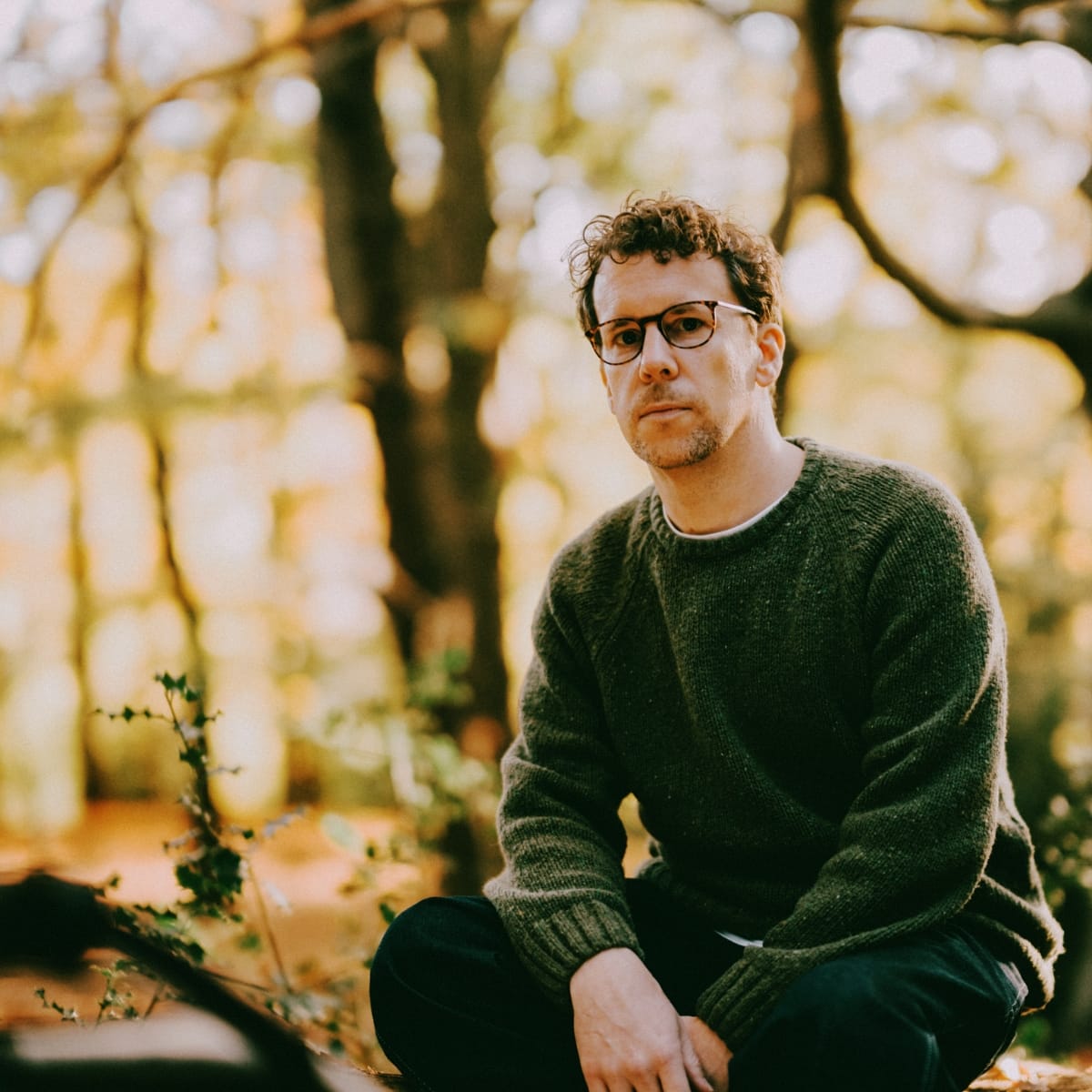
When I had the pleasure of speaking with Scrimshire via video chat, he was in the English woodside, taking a breather from studio work and city life to surround himself with the calmer joys of nature. That beauty shines through in his records, most recently his latest studio album, Bring Our Light to Every Corner, which blends his trademark soulfulness with spiritual jazz overtones to create something truly magnificent and inspiring, while remaining attuned to social issues in his country that often infuse his art. Ever since he made his first beats at the tender age of fourteen, on an Amiga 500 with a Yamaha Tone Generator and an 8-bit sampler, music has been an essential part of Adam Scrimshire's life; a Cambridge band competition win and a self-released CD at seventeen set him on a path that led to London, where he studied audio engineering before signing to Wah Wah 45s in 2006. There he recorded three critically acclaimed studio albums—Along Came the Devil One Night…, The Hollow, and Bight—blending his loves of soul, jazz, and funk into work that drew praise from Gilles Peterson, Huey Morgan, Nemone, and Don Letts.
After establishing his Albert's Favourites label in 2015, he's continued to record and release new music while also actively championing emerging musical artists from Europe and beyond, both in the studio and as a DJ. Joe Muggs called his 2021 album Nothing Feels Like Everything "a masterpiece," Gilles Peterson nominated it for Album of the Year at his Worldwide Awards, and The Guardian named Scrimshire one of three crucial soul-music producers in the UK.
If there's one thread that's remained consistent through his musical endeavors, it's a never-ending desire to create and to collaborate with other musical creators, to bring and showcase their talents to the world. It's this passion that drives Scrimshire's artistic and life journey, as evidenced by our recent conversation.

Chaim: There's something to be said about stepping away from the city and going to the country, where you are surrounded by nature—taking a step back, taking a breather to embrace the peacefulness. I hear that in your music.
Scrimshire: Yeah, absolutely. I spend a lot of time engaging with that, even where we live in London, it's quite a green area, and there are lots of woodlands around. But I do take time to get into the countryside, take time for walking and climbing. And I find that gives me a lot of inspiration for the music; it allows me to be centered again and decompress from things, particularly social media.
Chaim: Which is very important, given the constant push and pull of social media and how it can engross someone, even if that's not your intention. In your case, doing constant press, even just catching up on emails, and spending all day at a computer.
Scrimshire: Totally, though I can almost handle the work element. It's more the hellhole that we are in as a society, the grimness of things in the UK at the moment, with racism and misogyny and the anti-trans hate going on. It all affects my moods, this huge amount of negative grimness. Doing promotional work is almost an escape, in a way.
I'm not the most successful social media person, but I try to approach it with the same creativity I bring to music. It's more that the environment that we are doing it in is quite a horrendous place to be, particularly at this point in history.
Chaim: That's not exclusive to England, I might add. I'm sure there are many in America and elsewhere who share those feelings on the current state of society—they see it happening where they are. But music can be escapism, and I felt that on Bring Our Light to Every Corner, which is very joyful and uplifting. Was that something you set out to do, or did it just come naturally while recording?
Scrimshire: It's a funny thing, because with this album, it didn't come together in as concerted an effort, with an eye towards making an album. These songs have been coming together over the last four years, while at the same time I'd written other albums; in particular, [2023's] Paroxysm, which was inspired by the Bibby Stockholm, which was a ship moored off the south of England, where they were imprisoning asylum seekers in a horrendous environment; there were outbreaks of disease. What was going on was completely inhumane, and I built up a lot of rage, which I let out on that album.
These last four years, though, I've been very much on an exploration of what it means to find personal peace at a time when there isn't a lot of societal or global peace. It's about finding community, love, and happiness within that space, and exploring and drawing together that joy. My inspiration may start in a darker place, but it gradually develops into a joyful one, which is very much my intention in my music these days. To bring calm and peace and create that space for people to find their own happiness and joy.
Chaim: That's key, though, granted, once you release music into the world, the listener can interpret it any way they hear it, any way they see it. For me, listening to the new album, compared to your previous release [2022's Music for Autumn Lovers], it feels like a melancholier record, more in tune with the autumn season, whereas this new work is more uplifting. Did you find that was the case as well?
Scrimshire: The process was different for both albums. The records I create are really coming together in a more sort of anthology-style way these days because I'm always writing, but I'm stretched between different projects, be it my own music, producing and mixing other people's music, or just running the record label. And just dealing with life in general. Autumn Lovers was a more nostalgic record for me; it's a season that really resonates personally. It was a much less complex process recording that album, very stripped back, compared to the new album. Very gentle electronica, with some keys and guitar. I don't think it was intentionally ambitious; it was meant to be calmer and more comforting. Almost like a little rest point between projects.
Chaim: Speaking of nostalgia, when I saw the album cover, the first thing that came to mind was Pete Jolly's [1970] Seasons album cover.
Scrimshire: Yeah, the album cover absolutely took inspiration from that, and from an old James Last record cover with gold leaf on the front, which my granddad had. Also, there's a record by Rustin Man with Beth Gibbons, Out of Season. All of those album covers were key influences.
Chaim: You've mentioned your grandfather and his records, which makes me curious about what music influenced you growing up.
Scrimshire: I grew up in the Midlands, just outside of Coventry, and there was a radio station, Mercia Sound, which broadcast a show, Saturday Night Out, in the evening, which played a lot of Brit funk and jazz fusion, more on the disco end of things. Artists like Herbie Hancock, Incognito, that sort of sound. When my mum and dad were young, they used to record those shows onto cassettes so they could play them throughout the week. We'd listen to those a lot when I was growing up, plus they were really into Stevie Wonder and also the mainstream Brit funk like Level 42, stuff like that. Whereas my mum and granddad were really into swing jazz, I got exposed to that as well. Jazz was fairly central to my growing up; we had records on a lot of the time when I was a kid.
Chaim: And at what point did you start exploring other types of music on your own?
Scrimshire: When I was around thirteen or fourteen, I started working at a newsagent, and I would pick up copies of NME and Q magazines, occasionally Mojo and Select if I had the money. I was basically buying any music magazines I could find in the shop, which led me to become intrigued by all these different sounds. A lot of my friends at the time were into rock, but I was still very much into jazz funk and the growing Acid Jazz scene in the UK.
Reading these magazines would clue me in on what was happening in music; I recall reading these little drops about a new band called Portishead, and Massive Attack was coming along around this time as well. And it was impossible to avoid things like the first Oasis album, and the Britpop bands like Blur, which were everywhere. Good teenage music, but I was ultimately more into black music. Things then crossed into the Bristol scene and trip-hop, which interested me. What artists like the Beastie Boys were doing would lead you to explore older artists they sampled.
Chaim: You mentioned Bristol, and there's long been a vibrant music scene there, a strong DJ culture, and arts in general.
Scrimshire: Absolutely. Wherever there have been prominent black communities, be it from African, Jamaican, or Caribbean heritage, there is incredible music; South London, for example. That melting pot of people and cultures, of soul music and sound systems, which crosses over into jazz funk and all sorts of areas.
Chaim: You mentioned being interested in the new music coming out at the time, but when did you start exploring older jazz and funk records?
Scrimshire: I started digging into the more obscure stuff later on. In 1997, I moved to London to be an audio engineer, working in the studio and stuff, but it wasn't until really 2005 or '06 that I started to pick up on what Soul Jazz Records were putting out, that Saturday Night Fish Fry record, and the funk compilations they were releasing. Around that time, I also met Dom Servini at Wah Wah 45s, who's a massive collector and good friends with Gilles Peterson, and also Chris Goss at Hospital Records. Really picking up on what was happening in the UK with the independent label and DJ scenes, along with meeting members of the jazz community like Jessica Lauren and Jake Telford, as well as bassist Graham Silbiger, who was playing with Soul II Soul back in the nineties. Meeting these sorts of artists was a true education, and it started to expand my knowledge of more obscure music.
Stay on top of The Tonearm.
Subscribe for exclusive interviews, cultural tip-offs, and community fun.
And your support keeps our site free of advertising and paywalls.
Chaim: And at what point did you start making records yourself? Progressing from just making beats at home to putting together an album?
Scrimshire: Well, when I was seventeen, I self-released an album; five hundred copies on CD, which I sold at school. But it was always on my agenda to take it further. I was entranced with the idea of making and releasing music. I got into music through production, and making records was fundamental to that idea. The holy grail was to make a perfect record. But when I moved to London, that kind of got sidetracked, and it wasn't until around 2006 or 2007, meeting Dom and talking with him about my desire to make records, that it led to the release of my first proper album in 2009 [Along Came the Devil One Night…].
Chaim: How did you find yourself signed to Wah Wah 45s?
Scrimshire: They had been around a good six or seven years before I first met Dom at a party, through a friend of a friend. We just got on, and he said I should bring some of my music to his next gig. So, I started bringing music along to the gigs. I should say that I'm quite a shy person, and not very good at introducing myself to people. It was Dom who really took my hand, introduced me to people, and started that process, for which I'm immensely grateful to him.
Chaim: That led to your involvement with the label for many years.
Scrimshire: Yes, until around 2022. It was a good run there, releasing records I'm immensely proud of, not just my own, but also working with great people like Dele Sosimi and the Milk and other amazing artists on the label. Working on Dele's album [2015's You No Fit Touch Am] in particular felt like a landmark record for me, being a part of putting it together in the studio. It felt like being a proper record exec when you're an indie label, you don't always get the chance to do that kind of thing. So when it happens, it's very special. Just being in his presence is extraordinary; he's a wealth of stories about performing with Fela Kuti. Also, we got to work with Ben Lamdin, a.k.a. Nostalgia 77. Being in Ben's presence and learning from him in the studio was highly influential to me.
Chaim: What other records that you worked on at the label would you recommend to listeners looking to discover new music?
Scrimshire: There was an album by Stac [2010's Turn That Light Out] that I produced, and I'm really proud of it. She's a brilliant songwriter and terribly underrated. The Milk's Favourite Worry album, we recorded it with Paul Butler from the Bees. It's a phenomenal soul record with a retro, Stax-influenced sound. Working with those guys, we all went on a journey together, and we recorded it over Christmas in a snowy barn on the Isle of Wight.
With all these records, being part of the creative process, experiencing it, and sharing stories is truly special. Though it's the music that's magical, obviously.
Chaim: As someone who works with artists on both new and archival releases, I absolutely understand and agree with you, that the stories and experiences are truly special, but it's the music that's the magic.
Scrimshire: It really is. I think that the winnings can be very slim when you're releasing music independently, so the experience needs to be an enjoyable one. I've always believed that the care of the artist is an absolute priority and that the chemistry between an artist and a label is correct. There's a lot to navigate, and there are inevitably stressful moments during that process; things may become trying. And it's at that point that I feel the personal relationship is vital.
Chaim: Mentioning labels, several years back, you started your own label, Albert's Favourites. How did that come about?
Scrimshire: It had always been on my mind to start my own label, and I knew I was going to call it Albert's Favourites. That was my granddad's name, and he used to make compilation cassettes for us when we were kids. When we would go on holiday, he would record all our favorite songs, he'd buy the vinyl and dub them onto cassette tapes for our road trips, and that's what the tapes were called.
After years of working with labels, I started finding that there were some artists I was collaborating with who I didn't feel like they were a good fit for Wah Wah 45s, and I realized that there was a community I was becoming a part of that had the capacity to make a lot of music. If perhaps I could build a mechanism that could connect that music with the world, and a label could be that outlet for this collective of artists. The initial idea was to turn it into a sort of cooperative, but that proved to be too ambitious.
Chaim: Just look at the number of record labels that are run as cooperatives in 2026. There are some, but it's an incredibly difficult thing to manage.
Scrimshire: Yeah, and the amount of work and care that needs to be done to make that kind of mechanism work successfully, to pull it off. It's a lot. So, we just put a bit of money in and started releasing things, and more people kept coming to us, making more friends and releasing more records. And we continue to do that.
Chaim: What are some of your favorite releases on the label? I know that's a difficult question, as I'm sure you love them all! But perhaps a few you would suggest to new listeners.
Scrimshire: Hector Plimmer is a phenomenal producer and one of our first external signings outside of our little group of friends. We heard his music and felt we needed to put it out. His records are representative of him as a person, his playfulness, his inquisitiveness, his honesty, and his kindness.
I have a soft spot for Huw Marc Bennett, a Welsh bass player who makes very humble yet beautiful music, which engages with his heritage. His latest album is Heol Las, and like all his records, it's truly special, blending dub, folk, and the history around them.
We signed a Hungarian psychedelic band, Mörk; their album [2024's Still Dreamin'] has a song, "Only Mine," which, if I could pick one song I wish I had written, would be that one. The whole record is absolutely beautiful.
What kicked off the label was The Expansions [2018's Murmuration], a straight-up jazz funk record that's absolutely worth checking out. So much energy goes into making all of these records that they just become a part of your being. It's really hard to separate yourself and your heart from any of them.
Chaim: People often don't realize just how much time, energy, and passion go into every project, and the overarching goal of doing right by the artist, first and foremost. And on top of all that, the job of promoting this music and trying to get it noticed by listeners in the twenty-first century, with all the distractions.
Scrimshire: Completely. I spend a lot of time with artists defusing their dislike of journalists, producers, and DJs, and I have to explain to them that these people are receiving like hundreds of promo emails a day, pushing new artists, and it's incredibly difficult to cut through. When I released my first album in 2008, it was still the days of CDs, because the vinyl market wasn't fully back yet. The resurgence hadn't truly taken place yet, at least in the marketplace. And the only social media was MySpace. It was very hard to get things on the radio at that point, and then came the idea of going direct to your fans through social media and Bandcamp, and there was this real connection and an explosion of excitement around that. It was a wonderful feeling.
But now we're at a point where it almost feels like 2008 again: you're doing all this work, yet it can feel even harder to connect and have any meaningful impact. There's more to empower artists than there was twenty years ago, but there's also more saturation, particularly from A.I.
We still have the capacity to create and build a business from scratch, make money off of it, and build a community, and I think some people are doing it very well. If you have the right skills, the right ideas, then it can be great. But trying to keep up with how to communicate in the world can be tiring.
Chaim: What does the future hold for Scrimshire? What projects are you currently working on?
Scrimshire: I'm always making music, even during this promo process for my new album. The drive to create never stops. Writing and recording bring joy, and it's important to keep that joy close when you're a bit discouraged. I've got another album almost ready to go, which is generally how I work, and I'm thinking about another at the moment.
I'm also sounding out various people about putting a band together for live shows, which excites me. Probably in Europe for the moment. I've never toured extensively before, though I would love to perform in the U.S., as my father lives there, and it would be really nice to go and play for my dad.
As long as I keep creating, I remain a happier person.
Check out more like this:
 Elsa Monteith
 Chaim O’Brien-Blumenthal


Comments