


A hearty ahoy to all! Welcome back to Talk Of The Tonearm, the Sunday newsletter that dives precariously into our recent artist profiles in search of glistening pearls. There's some good stuff here, and I'm totally in love with the two albums I recommend below the fold, so hold your breath, take my hand, and let's plunge into the depths together. PLOOOSH:
Surface Noise
 Lawrence Peryer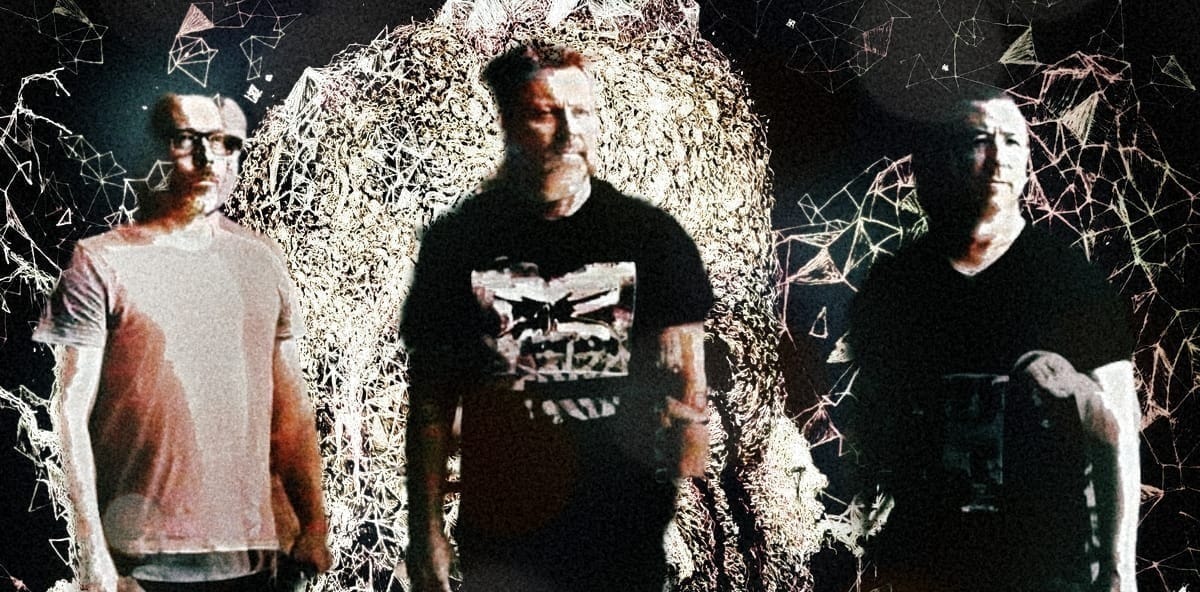
For his artwork on Locrian's landmark album The Crystal World, the late Justin Bartlett's intricate crystalline imagery, with its detailed skulls and transforming eyeballs, created core aesthetic elements that functioned like genetic anchors. The artwork accurately portrayed Locrian's challenging sound while interpreting J.G. Ballard's literary universe, creating a mythology spacious enough to accommodate the band's evolution from improvisational duo to structured trio. Hannum's fascination with crystallization in time-lapse—"really weird" and "fascinating," as he describes it—becomes a valuable metaphor for Bartlett's memorable and often reproduced cover art. Certain aesthetic elements become structural foundations around which everything else forms, like crystals growing around a seed.
This principle finds a remarkable example in Stephen O'Malley's work with Sunn O))). O'Malley's amplifier-worship imagery and stark ritualistic aesthetic have remained consistent through drone epics, Scott Walker collaborations, and orchestral arrangements. The visual language provides listeners a through-line as the music evolves and changes, much like Locrian's own progression from the one-take spontaneity of "Pathogens" to the complex multi-tracking that characterized later work. Neurosis offers another example, building post-apocalyptic imagery across decades while their music evolved from hardcore to textural ambiance. Each album adds layers to their visual mythology without abandoning core aesthetic genetics.
Underground metal scenes accept longevity because audiences will follow artists through transformations if certain visual touchstones remain recognizable. Likewise, Locrian's Terence Hannum consciously separates his visual art from music, moving from cassette-tape sculptures to 3D-printed works about poisonous plants while maintaining distinct aesthetics. The posthumous reproduction of Bartlett's Crystal World imagery on bootleg prints speaks to how effective visual DNA becomes culturally viral, carrying enough genetic information to survive outside its original musical context, thriving memetically.
Playback: Hitting the Pavement — Cary Baker's Love Letter to Busking → Street performance lacks consistent visual DNA in the traditional sense, yet author Cary Baker identifies recurring aesthetic elements that create continuity, such as the guitar case, the Dixie cup, and the relationship to public space. These become identifiable anchors that allow busking to survive across different cities, musical styles, and generations.
 Sam Bradley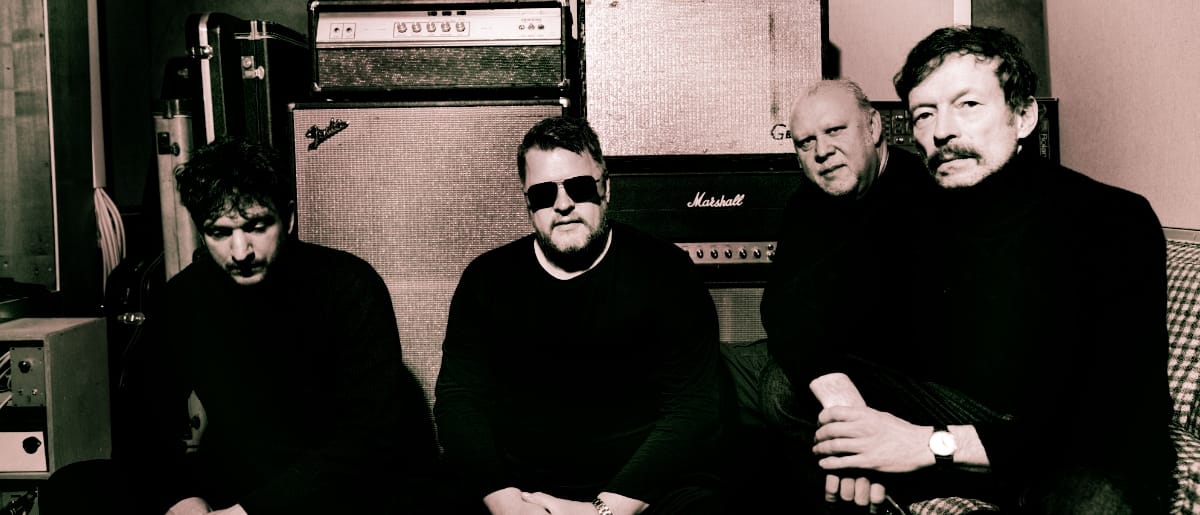
Roberto Di Gioia, who describes his band as "servants of the music," convenes Web Web once a year to record extended improvisations before dispersing. Is it a stretch to say this process, alongside Roberto's declaration of servitude, echoes the temporary communities that form around Zen meditation retreats? In both instances, individual identity indeed dissolves into shared presence. CAN, the legendary krautrock collective, understood this dissolution intuitively, spending hours in what drummer Jaki Liebezeit called "molecular music"—repetitive patterns that gradually hypnotized the players into a single organism. Like Roberto's approach with Web Web, CAN prioritized collective flow over individual virtuosity, creating music of a shared unconscious rather than from separate minds.
Roberto's philosophy mirrors the Buddhist concept of "no-self," where the illusion of separate identity falls away to reveal interconnectedness. Maybe the Grateful Dead accessed this same idea through their legendary improvisational passages, where Jerry Garcia often spoke of "listening to the music" rather than playing it. Web Web's practice of assembling the band, often with a rotating guest member, for unpracticed improvisations that result in separate album tracks suggests a similar surrender to collective intelligence. I'm also thinking of what Brian Eno termed "scenius," the idea that genius belongs to communities rather than individuals.
The power of Roberto's approach lies in its temporal nature. Improvisation demands giving in to the collective moment, forcing musicians to disappear and remain completely present simultaneously. This is a paradox that Zen practitioners recognize as enlightened action. Web Web's yearly ritual becomes a form of meditation, where ego-driven decisions give way to what Roberto calls serving "what our spirit together brings forth." The music carries traces of this 'enlightened' state, offering listeners a chance to dissolve into the shared space that results from their collective artistry.
Playback: The New-Age Vibes of Greg Davis's 'Full Spectrum' Series → Greg Davis describes his "sound-on-sound" process, which he uses on his Full Spectrum releases, as a compositional practice where "you don't know what you will end up with when you start." Davis operates here as an individual, rather than part of a collective, but has still found a way to surrender to his music.
 Lawrence Peryer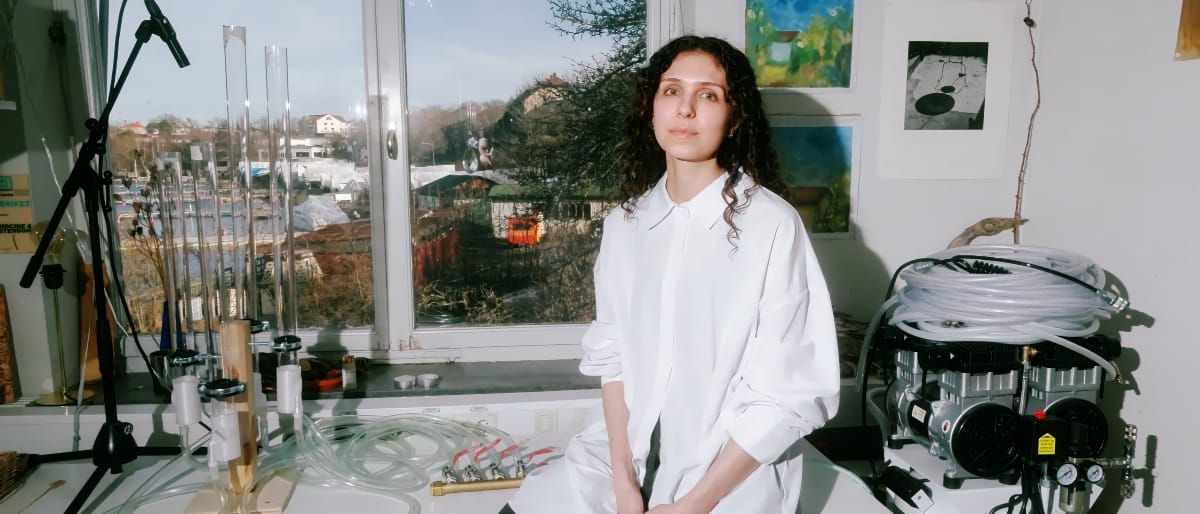
Amina Hocine's search for "Foghorn DIY" led her to Benjamin Wand's 3D-printable membrane holder. Inadvertently, she had also stumbled into a musical research network of basement tinkerers who document their failures in real-time and accidentally outpace the innovations of traditional instrument development. Wand didn’t design his membrane holder, shared freely on his Better Call It Art channel, for experimental composers. He was solving a practical problem, looking to build a better horn or sound effect device. Wand's open trial-and-error exercise led to a sort of "productive accident documentation"—a phenomenon where unintended discoveries are available to anyone curious enough to search for them.
Traditional instrument development occurs behind closed doors, with failures buried in corporate R&D departments. Alternatively, YouTube's basement inventors have created a real-time archive of musical accidents, complete with comment threads as collaborative problem-solving sessions. Hocine's own documentation of her surprise at how electronic her PVC creation sounded, and her discovery of what she calls "sound crystals," becomes research data for the next experimenter searching "PVC pipe organ." The speed differential matters. Academic research on acoustic phenomena might take years to reach publication, but YouTube creators stumble into the same discoveries by accident and document them immediately.
Now it’s common for university composition programs to have students build instruments from YouTube tutorials, while researchers mine comment sections for innovation patterns. Hocine's spiritual teacher tells her that "enlightenment is easy—just drop your opinions," and the YouTube instrument community seems to have internalized this philosophy. Without preconceptions about what materials should make music, creators see PVC pipes, ball valves, and HVAC components as legitimate sound-making objects. Their experiments become a library of "what if" scenarios, creating a new form of musical research that operates at internet speed.
Playback: Shifting Realities — Julius Smack's Starlight as a Dystopian Reverie → Julius Smack's creative process embodies the spirit of distributed innovation through an intentionally democratic use of technology and materials. He describes permitting himself to include anything he comes across as a tool to realize his music, creating a richer "data set" to work with.
The Hit Parade
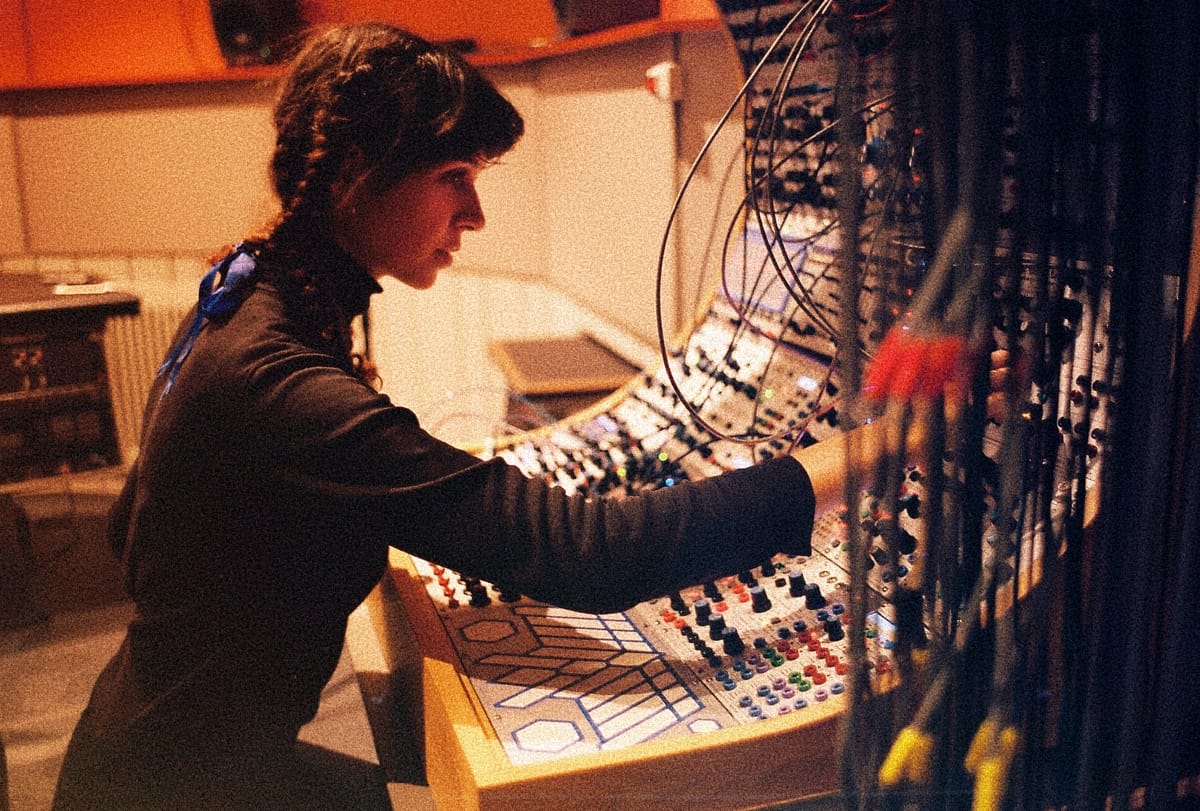
- Different Rooms arrives as the second duo album from Jeremiah Chiu and Marta Sofia Honer, following their acclaimed 2022 debut Recordings from the Åland Islands, also released by International Anthem. The intervening years have seen both artists expand their creative reach considerably. Chiu toured with M83, released the solo effort In Electric Time, and co-led the trance-jazz collective SML. At the same time, Honer contributed strings to projects by Makaya McCraven, Daniel Villarreal, and high-profile releases from the likes of Kendrick Lamar. Their experiences inform this new collection, which finds the pair working in adjacent studios with a light-hearted seriousness, creating stellar musical prose that bounces with swelling and sparkling textures. The album's urban sensibility marks a departure from Åland Islands' remote Baltic landscapes; here, field recordings capture train platforms and city streets, creating a day-to-day sonic environment that intentionally "meets you where you are." Occasionally, they’re joined by collaborators like Josh Johnson, whose sax wraps in duet with Giovanna Jacques' vocal on the title track, accompanied with gentle intensity by the core duo. "One of Eight" evokes memories that are particular but unknown through unplaceable field recordings and dream-spun texture, while "Before and After Signs" offers a shoegazed ultra-sheen and frenzied subtlety that makes for the most narrative-like composition here. I find the interplay between Chiu's modular synthesizer and Honer's processed viola stunningly natural, intertwined like vines around a marble column. Stylistically, the tracks could inhabit different rooms, but all certainly exist within the same warmly painted house. Gorgeous and thoughtful stuff.
- Qur'an Shaheed's Pulse arrives as a bold take on spiritual music from the perspective of L.A.'s vibrant electronic jazz scene. The album also manages to exorcise the ghosts of genre and replace them with spirits of influence. The Pasadena-based artist, daughter of musicians who worked with Stevie Wonder and Marvin Gaye, has spent her debut for Leaving Records dismantling the norms of piano-driven composition. Working with producer Spencer Hartling at his Altadena studio, Wiggle World, Shaheed unveils an album that feels like exploring the contents of an endless music room, with her piano often processed, chopped, or just played elegantly with melodic confidence. Occasionally sprinkled with stuttering electronics that playfully tickle the fourth world, Pulse largely achieves imagination transportation through Shaheed's expressive vocal delivery. "Dreams" unfolds like its namesake, a bending flurry of instrumentation, vocal effects, and ever-changing mood board pins, while the cybernetic R&B of "Doo Doo Doo" sounds like Timbaland superimposed into Neuromancer. The two-part "Fix It" functions as a studio-tuned sound collage with narrative force, and there's unapologetic ambient loveliness—so lovely!—found on the sonically idyllic "Mixing Colors." And then "Variation 3" offers a radical, delicately digitized take on chamber jazz, supported by Maia Harper's hypnotic flute and harp textures. I guess there's a lot going on here, but the disparate sounds manage to gel in an uncomplicated way. Qur'an Shaheed is obviously on a mission, and the vision that holds Pulse together rewards multiple treks through its intoxicating pathways.
- Short Bits: The phenomenal classical guitarist—and Berklee College of Music guitar chair—Kim Perlak joins LP for a delightful conversation about nylon strings and New Haven pizza on the latest episode of the Spotlight On podcast. • "... a couple of days ago, we canceled that paid subscription, and we will no longer be making playlists on Spotify or linking to the platform. It feels great." • Meanwhile, the compact disc isn't going away quietly. • "We Japanese understand this. We live in the moment. And so does jazz." • "The metal body is one-part cyborg and one-part stubborn working-class Brummie." • Casey MQ covers "Head Over Heels".
A Shout From the 'Sky
Deep Cuts
Brook Ellingwood is an esteemed contributor to The Tonearm, responsible for this fantastic article about The Undertones and Northern Ireland that consistently makes the rounds. He's also a famed Mastodon cut-up. I asked him to share some things he loves that more people should know about, and he gave me a list of several. Classic Brook! For now, I'm just going to pull out the two movies he recommended, both of which I have not seen:
The movie Funny Bones (1995). Director/Co-writer Peter Chelsom combines elements of mystery and mysticism with a meditation on the things that makes us funny, or not funny as the case may be. Along the way we get a delightfully surreal performance by Lee Evans, classic vaudeville schtick from George Carl and Freddie Davies, and a serious turn by Jerry Lewis as the father whose comedic success Oliver Platt struggles to emulate.
The movie Peppermint Soda (Diabolo Menthe) (1977). I saw this movie in the theater with the rest of my high school French class. I don't know if I learned any French from it, but it did make me want to make movies. First time filmmaker Diane Kurys draws from her own teenage experiences as she follows 13 year-old Anne and her 15 year-old sister Frédérique through the 1963-64 school year in Paris. The episodic coming of age story resonated with me as the most honest depiction of adolescence, even one as different from my own as Anne's, that I'd ever seen. To this day I still treasure it as special film, beloved as a classic in France but little-known in the US.
Run-Out Groove
Pretty cool, right? I'm glad you trusted me enough to take the plunge. When have I led you astray?
Thanks for reading and putting up with all the link temptation and potential clicking action. I hope you discovered a fascinating rabbit hole or two. That said, if you have a friend who also likes rabbits, please forward this newsletter like the delicious carrot it is. You can also post the 'View in browser' link at the top via your social media places.
If there's anything you'd like to tell me—such as ideas for this newsletter, suggestions for things to cover, general comments on the state of things—please reach out. You can reply to this email or contact us here.
Enjoy your week as we plummet headfirst into the second quarter of the 21st century. We're now closer to 2050 than the year 2000. I think that's … good? Anyway, keep yourself and those around you safe and well-hydrated, and I'll see you again next week. 🚀
Connect with The Tonearm:


Comments