


Hi! Michael here, welcoming you aboard this Sunday's edition of the Talk Of The Tonearm newsletter. Veteran readers (thank you!) will notice some changes this week as I play around a little with the format. The gist is that our writers are doing a fantastic job, and I want this newsletter to better highlight them. We're also publishing more stories each week on the site—and we'll soon publish even more—so inevitably, my weird screeds on how an interview intersects with some little-known philosophical figure will get out of hand. Many of you probably thought they were out of hand already. So, breathe a sigh of relief and enjoy what our writers delivered to The Tonearm over the past week. Onward!
Two Hearts, Two Languages — The Chicano Rock of Joshua Josué
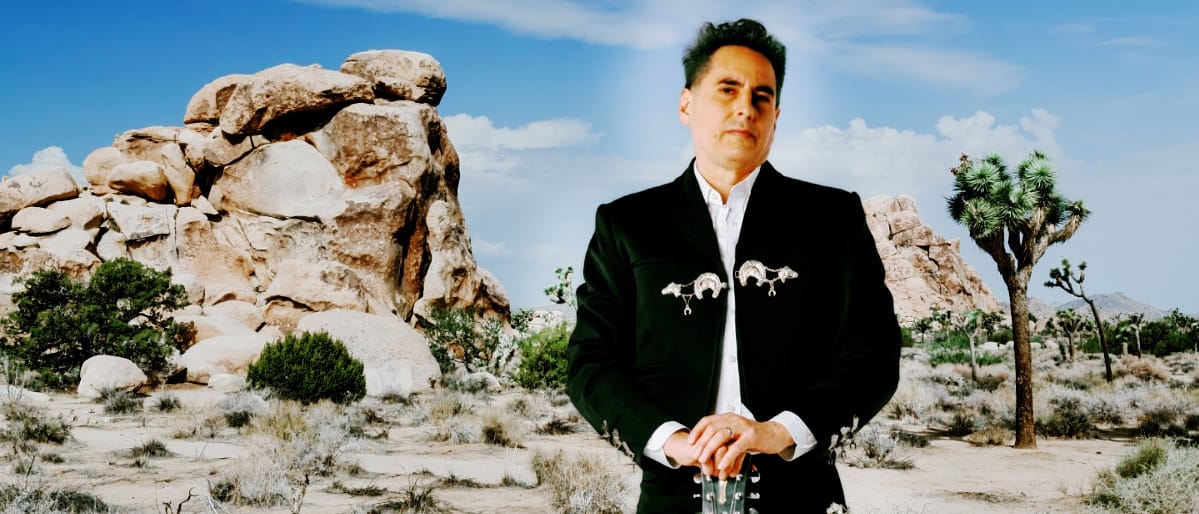
Our writer Michael Centrone specializes in the heavier side of music covered on The Tonearm, so I was surprised when he offered to write about Portland-based Mexican-American performer Joshua Josué and his debut album, Beneath the Sand. Joshua does commandeer a guitar-powered rootsiness, which more 'metallic' blues-tinged musical forms could also be said to share, and his wandering, loner spirit has that outlaw element which often bedevils Michael's subjects. Like Mr. Che, Joshua rode a motorcycle through South America. Perhaps also revolutionary (in its way), he ended up recording an album inspired by the desert in the desert. "Being there felt like stepping into a Sergio Leone spaghetti Western," he says. We should also look back in our digital pages at Raz Olsher, who reflected on similar feelings as he descended Spain's Camino de Santiago.
The Archival Rescue of Dick Davy's Civil Rights Stand-Up
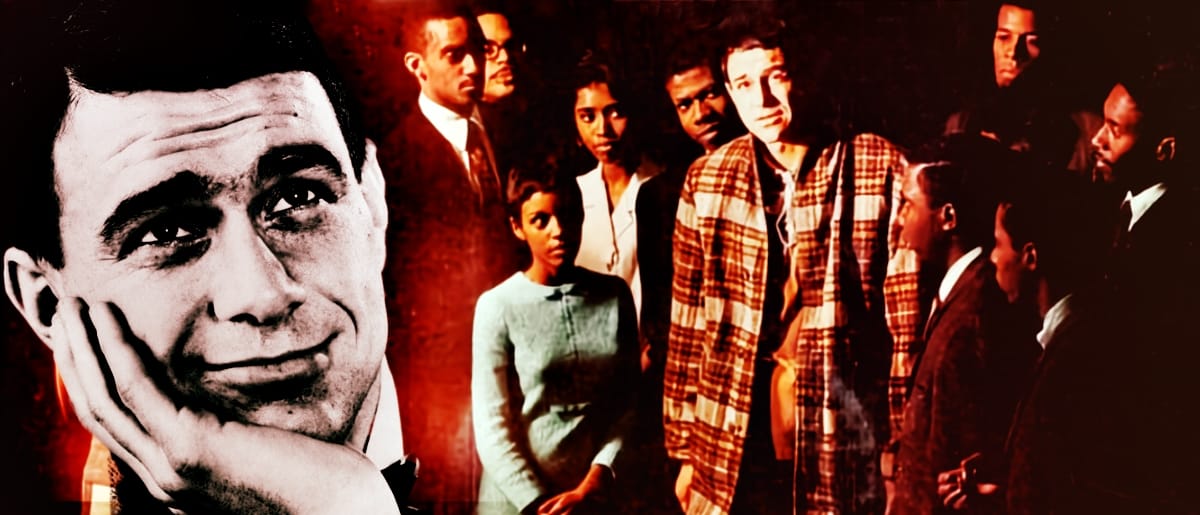
Comedians are still influential enough in our society that they get offers to help whitewash murderous regimes, but are comedy albums still a thing? It seems to me they were phenomena in the '60s, driving culture and minting comedy stars long before sitcoms did that job. But there are still comedy albums—on vinyl, even—with the Stand Up! Records imprint a current stalwart. Professed comedy album collector Chaim O’Brien-Blumenthal dives into a recent archival release on the label, an album titled Presenting… Dick Davy. Mr. Davy is probably best known for performing at the Apollo Theater in 1965—on the bill with Tina and Ike, no less—in character as a clueless Arkansas transplant trying to wrap his head around the civil rights movement. This, as well as his unique take on Jewish humor ("The Bar-Mitzvah Dude Ranch" is a should've-been classic), are legitimately funny, even almost sixty years later. Chaim really dug into this strange story, including the fact that Davy was signed to Columbia Records by John Hammond, who had also recently signed Bob Dylan.
Digging Through the Ashes — Chris O'Leary on Bowie, Blogging, and Music Writing's Future
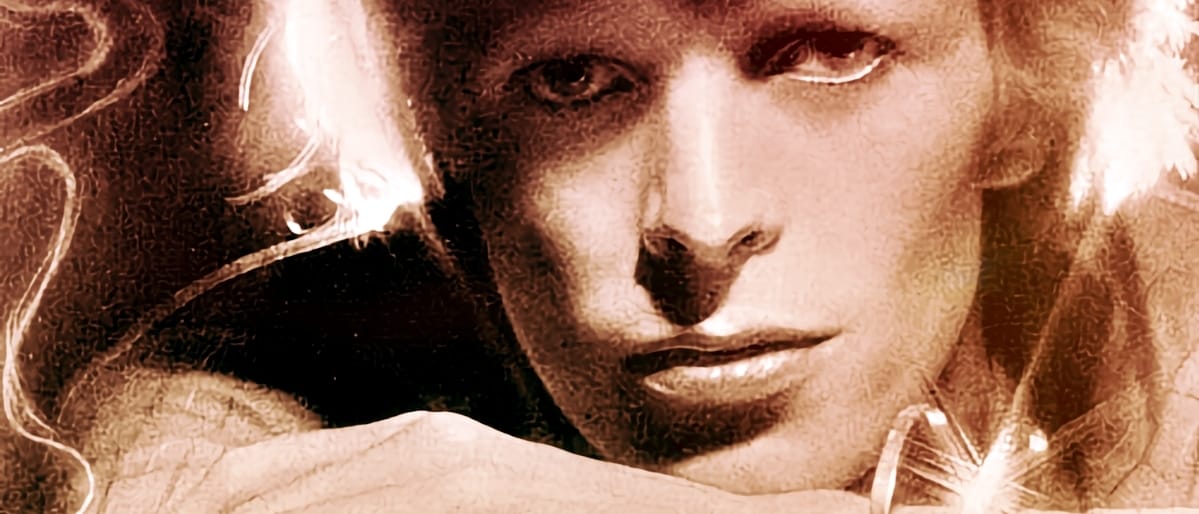
Lawrence Peryer's interview with writer Chris O'Leary is so meaty and nugget-filled that Chris's David Bowie tales are just a single part of the fascinating conversation. I'm personally drawn to Chris's adherence to blogging and how his current online projects, which include 64 Quartets and Pushing Ahead of the Dame, could really only work as blogs. Medium, meet message. Chris wonders if his path—blogger to author of two books, Rebel Rebel and Ashes to Ashes, both seeded by his blog-work—is still possible in 2025. I think it is. Don't underestimate the power of independent publishing in any of its guises. But his predictions about the lack of research materials for future music historians are probably, sadly, spot-on. Video essays may be the most ephemeral medium of all, especially when hosted on corporate-owned algorithm-driven platforms. A shift from blogs to video will likely deprive late 21st-century authors of the accurate materials for fully understanding today's culture. At least we've got Bowie.
Guitar Riffs and Calm Glitch — The Dual Electronics of Names On Tapes
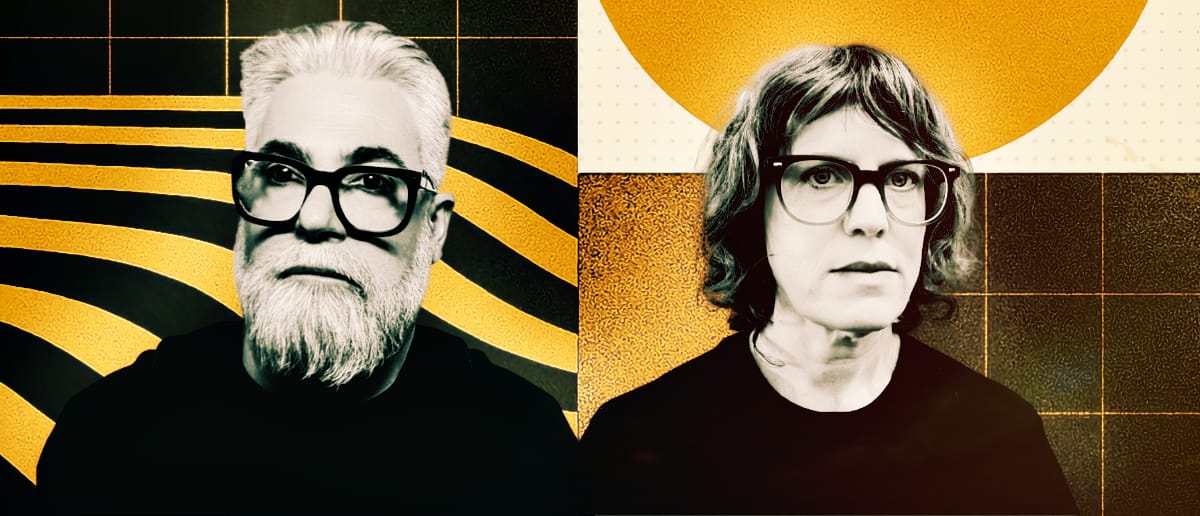
The two members of Names On Tapes met The Tonearm's Mykadelica in "a back-street central London pub called The Hope." A fun and free-wheeling interview-slash-conversation followed, marking Mykadelica's debut with our humble publication. Names On Tapes turn out to be Stacey Hine and Neil Kleiner, guitarist and electronics wiz, respectively, and pals for 25+ years. Remarkably, this is their first project together (and they've started another one, called The Derns). Threads unspool from post-rock like Tortoise, glitched beats detoured through J Dilla and Madlib, and even free jazz a la drummer Steve Reid (a past collaborator of Neil's). The duo's debut, We Weren't Programmed For This, is a varied and fascinating amalgamation of these polarities—worth a listen. The conversation shines light on where this came from and where it's going, a light that glows brightly across a genre-resistant horizon.
Brothers in Folk and Fire — Sturle Dagsland's Norwegian Soundworld

Sturle Dagsland is one Norwegian guy, but it's also him and his brother and the enormously dramatic music they make together. Not only is brother Sturle's vocal range freak-of-nature-ish, but the two brandish a wild array of instruments for their songs, including waterphone, the Nordic nyckelharpa, the Chinese guzheng, and a goat horn. Sturle is particularly proud of the goat horn. "Quite literally, the music we play carries a very real connection to the animals and the land," he says. I have to say that still doesn't prepare you for the music these two make. It's anthemic, evocative, and a bit nuts—just the way we like it. Also, this week's profile brings the return of one of our longtime writers, Arina Korenyu, to our digital pages. She started writing for us in the Bonus Tracks days (that was the Spotlight On podcast's blog), and it's terrific to have her back.
The Hit Parade
- There were a few titles we threw around for this week’s episode of the Spotlight On podcast. I won’t hide the fact that 'Bringing the Headbanger Out of the Pipe Organ' was under serious consideration. But we went with 'Blizzard of Organ.' All of this is because Swedish musician Hampus Lindwall may have made an album with a pipe organ that approaches heavy metal, analogous to Icarus flying toward the sun. Or maybe that should be the Sun O))), as that band’s guitarist Stephen O'Malley assists with this devious endeavor. So, Lawrence speaks to Hampus on the podcast and, if you listen, your knowledge of the pipe organ and its unexpected capabilities will be expanded in the most entertaining way. Tune in.
- It’s almost a given that a Western artist’s first visit to Japan results in a rejiggering of imagination and inspiration. Woodland-attuned ambient artist (and member of 'folk and friendship project' Florist) Emily A. Sprague is not immune to the same. Her long-delayed tour of Japan in 2024 saw her develop each performance from a 'blank slate,’ tailoring each set according to time, place, and a sort of psychic mood. Travels, meetings, hospitality, and probably a little bit of homesickness inevitably seeped in. Emily’s luxurious new album, Cloud Time, is a document of these gigs, as well as these feelings, providing a portable burst of ‘comfort despite dislocation.' There’s also a visual accompaniment that’s plenty soothing, suitable for distant journeys in small rooms.
- Who is the person ‘U’? The Tonearm was intrigued and requested an interview, but was turned down due to the project’s mysterious nature. Did we ask too much? Is this a secret project of someone famous, like perhaps Idris Elba? Or is it just some Burial-like bloke who would rather not be bothered as he games his way to another high score instead of doing endless interviews? No matter, as we have ARCHENFIELD as evidence, a strange and spooky artifact that this U has dropped into our unsuspecting laps. It’s an audio collage, a found sound emporium, an underwater church service, and a Mark Fisher-esque songbook all rolled into one. It’s also very British. But mere descriptions serve no purpose here. I suggest you put on your slippers, light a pipe, prop your feet up with an open copy of The London Times (circa 1951) in your hands, and turn off every source of light. I have the feeling U’s ARCHENFIELD will fit right in.
- Short Bits: I have added about half of the film-inspired t-shirts on this site to my mental want list. • Here’s a gift link to a terrific 'Overlooked No More' profile of Chilean folk music hero Violeta Parra, widely recognized as the mother of la Nueva Canción Chilena, and adored by the late Susan Alcorn. • Speaking of gift links, here’s one to the gorgeously executed virtual tour of some of the items found at the David Bowie Center museum exhibition. Includes his personalized Oblique Strategies set. • Friend of The Tonearm Blake Leyh scored the essential documentary Stripped For Parts, which is now streaming for free via PBS. • Laurie Anderson revisits her 1995 Puppet Motel CD-ROM using the only thing the interviewer could find to run it, a blue iBook G3. • I’m a little skeptical, while hopeful, but apparently, there’s a Gen Z college radio revival. • An Introduction to Today’s Unconventional Polish Jazz Scene: Part 1 + Part 2.
A Shout From the 'Sky
Deep Cuts
In the introduction to her interview with Matthew Sage, Carolyn Zaldivar Snow noted that “while I want to pound out pages on sustainable farming practices as told to me by Sage, this is about music and place." So, inevitably, there were a few things left on the cutting room floor, including this lovely exchange, which includes a book recommendation that sounds essential for budding farmers:
Carolyn: How are you learning about these [farming] practices? Books? Local knowledge?
Matthew: All of the above. We have really lovely neighbors, and some of them are older and have been here a long time, and don't necessarily have the most sympathetic cultivation practices. They're more likely to use pesticides. The chickens really helped with the grasshoppers. We had tens of thousands of them on our house our first two summers, and it was terrifying. We have some neighbors down the road who are the same age as us, and they run a flower farm. They have given an indispensable amount of information. Anytime something is going wrong, we call Dustin and Kate, and we're like, “What do we do?” They've learned by asking other people and going to the library, and then I'll read a book. I just passed The One Straw Revolution: An Introduction to Natural Farming on to Dustin. That author, Masanobu Fokuoka, is a Japanese horticulturalist who is very into no-till farming. He doesn't even weed his garden. We can't do that, but there are interesting things to pull from that.
Run-Out Groove
How did I do? I think I could really get into this new format. Please give me a nudge by replying to this email or contacting me here. I'd love to know what you think—yay or nay—and if there's anything you'd like to see more of.
Likewise, sharing this newsletter with your hippest friends or copying and posting the 'View in browser' link at the top on your fiery social media dragon is always an appreciated move.
The Tonearm is feeling good, I'm generally feeling good (despite, well, you know), and I'm looking forward to the week ahead. Our writers keep outdoing themselves, and the surprises that they're cooking up are difficult for me to keep to myself. I can't wait to tell you. I mean, things are wildly in motion. So to you, be sure to stay groovy, always, and I will see you here again next week. 🚀
Connect with The Tonearm:


Comments