


Winged Wheel create music through dialogue and communication. This amalgamation of artists is a robust array of minds that pours into this band, and certainly, into their albums. The members include, but are not limited to, a sociologist of sound, a co-owner of a small music venue, a producer, a drummer from a legendary rock band, a solo guitar wizard, and a slide-guitar stinger. What is it that they bring when they come together, you ask? What can this plethora of knowledge produce or explore? You could say it has something to do with unlocking boundaries between curiosity about sound, communication, and exploration. Or you could say that there are no boundaries except for those who want to be tested, subtly and purposefully. The members of Winged Wheel use words and minds to shape, to mold, and what comes to pass is the band composing together, instruments speaking to each other sometimes frenetically, sometimes in a halcyon, and the result is a motif that is Desert So Green.
The album is quite instrumentally dynamic. The instruments' purposes shift from song to song, always producing a distinctive sound and never relenting to a particular technique. Whether it's agitated and sparse, atmospheric and warm, or rhythmic with or without a dominant melody, there is always a conversation of sound and tension. For instance, in "Canvas 2," stringed instruments, one distorted and heavy, the other, high-pitched and never giving a full note, take turns at filling in space with sporadic chords. The drums are restrained and play more in tempo with the hi-hat, not using the whole kit, or as you might expect, more toms and kick, but slipping into a cavity of the soundscape. The hi-hat's seething sound is important. So are the distant, shallow vocals, which play with the instruments and help build the escalation. In contrast to the range of musical conversations, "More Frog Poems" sits in a solemn tension. It's slow-paced, with exploratory, melodic guitars. The song lives closer to a low-end type of tension. The vocals are still shallow and feel almost like an incantation or echoes of a Gregorian chant.
Desert So Green is an album that plays with resonance, resolve, contemplation, and experiential statement. There is a patience in coming to the places that relieve the tension, and the tension is consistently explored. Winged Wheel draws its members from the rosters of other bands, which is hardly unusual—yet something about what they've assembled here stands out to me. What is it that happens, sonically, when musicians carry their histories into a new room together?
The band includes Whitney Johnson (Matchess, Circuit des Yeux), Cory Plump (Spray Paint), Matt J. Rolin (Powers/Rolin Duo), Steve Shelley (Sonic Youth), Lonnie Slack, and Fred Thomas (Idle Ray, Tyvek). I had the pleasure of speaking with four members of Winged Wheel, and we discussed musical communication, their formation, their evolution, and, of course, Krautrock. This interview has been edited for length and clarity.
Jonah Evans: How are you guys feeling about the release of Desert So Green? Are you nervous or excited, or what's going on in your minds?
Matt Rolin: I think everyone's probably a little nervous, but just how you get when you're releasing a record and you hope that people like it. For me, there is maybe a little more nervousness than the last one, just because it's different, but not too different.
Cory Plump: I'll second Matt. Every time I put something out in the world, I feel like I need some kind of "good job." As soon as I get a couple of "good jobs" on it, then I'll be fine. I think if you don't feel nervous, you're probably superhuman. Anytime I make art that has my name on it, I want people to have some reaction, hopefully positive.
Jonah: Do you guys try to separate how people respond from how you make the music? Do you try to block that out?
Fred Thomas: I feel like there's very little thought about public perception when we're all working together. The way this band came together is unlike a lot of others, because it started as a through-the-mail, track-sharing thing at the beginning of 2020, when the pandemic was just getting started. We'd all met here and there, but we weren't close friends. We'd never all been in the same room. That was our first record. It quickly turned from this kind of, "Okay, here are some ideas, we're killing some time in this very strange time," to, "Oh, I guess this is going to be a record."
Steve Shelley played at [Cory's] club in Kingston, at Tubby's, and he was like, "Hey Steve, I got this band going. Would you want to be the drummer?" So we all met up in person and recorded our second record. And that was just jamming and a couple of days of improvising and all being in the same room for the first time. And I'll speak for myself: I was starstruck to be in a band with Steve from Sonic Youth, because I'd always loved that band since I started listening to music.
So that was pure excitement. And I wasn't thinking about anybody else's experience. I was mostly just riding this wave of excitement. Then, when we started playing shows and actually became friends and musical collaborators, that's when it got even deeper. This new record is probably the best example of our musical communication.
Jonah: What does it mean to grow as a band, as music communicators, and how does that affect the music?
Matt: As Fred was describing, we went into the last few records with no idea what they would sound like. This new one might be the first one where we were like, okay, we all know each other now, and we have done some gigs and toured a little bit, and so we can maybe put a little thought into it. Personally, I was terrified the first time we all got together and were jamming because I didn't wanna mess it up for everyone else. I think having positive feedback from that made it much easier to focus on making better music than on surviving in that situation.
Fred: Absolutely. That and there's also a thing with improvisation where you have to do a lot of listening. A lot of our music starts as improvisation, and if you're playing the entire time or only thinking about your own part, you're not really making much space for anybody else. I've gotten a little bit better at that as we've gone on, and I've learned my bandmates' musical and human personalities, and made considerations for those things that I didn't really know before.
Jonah: Whitney, I saw an interview where you talked about writing and teaching about social theories of hearing and listening. How have you thought about those ideas, maybe related to this communication as well?
Whitney Johnson: I think this idea of a musical communicator is so fascinating. We each come from different places, and all have our own tastes and our own orientation to what we're expressing. So it's not just about raw expression in this project; it's more like I'm letting out my individual self. It's about, "How can I make this match with someone else's?" We're listening, responding, adding to that, or trying to communicate something that other people in the group can hear and understand, and that's what makes it unique.
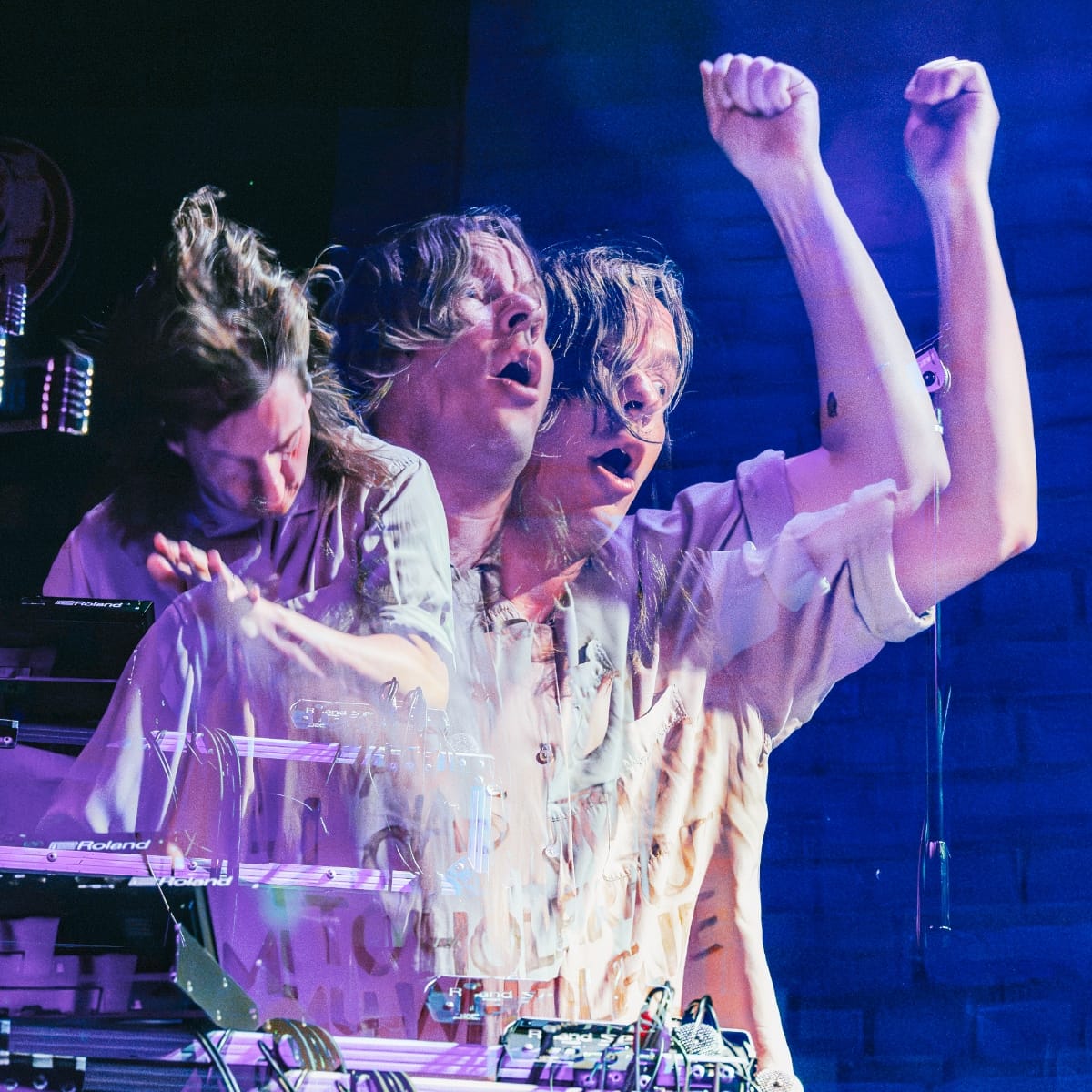
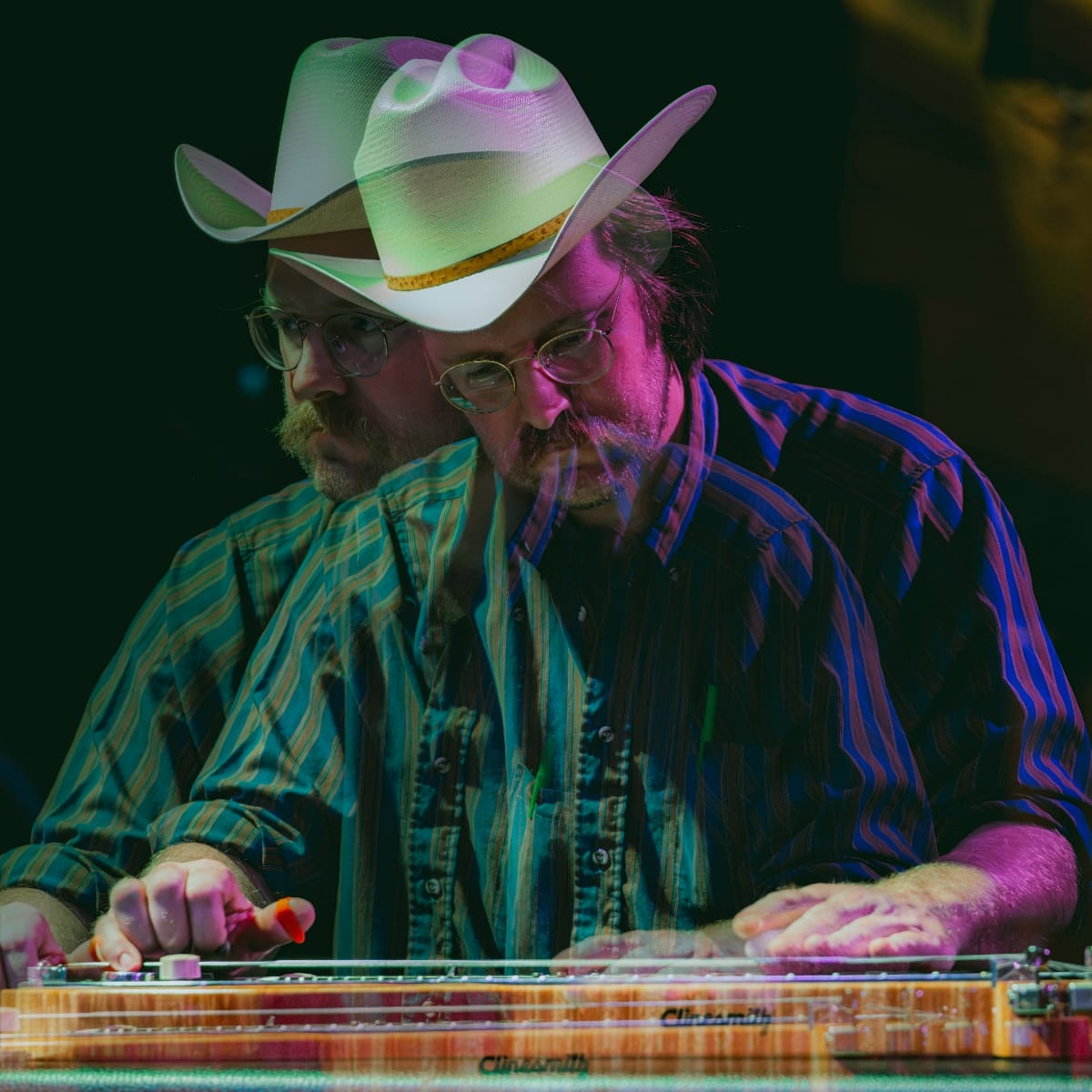
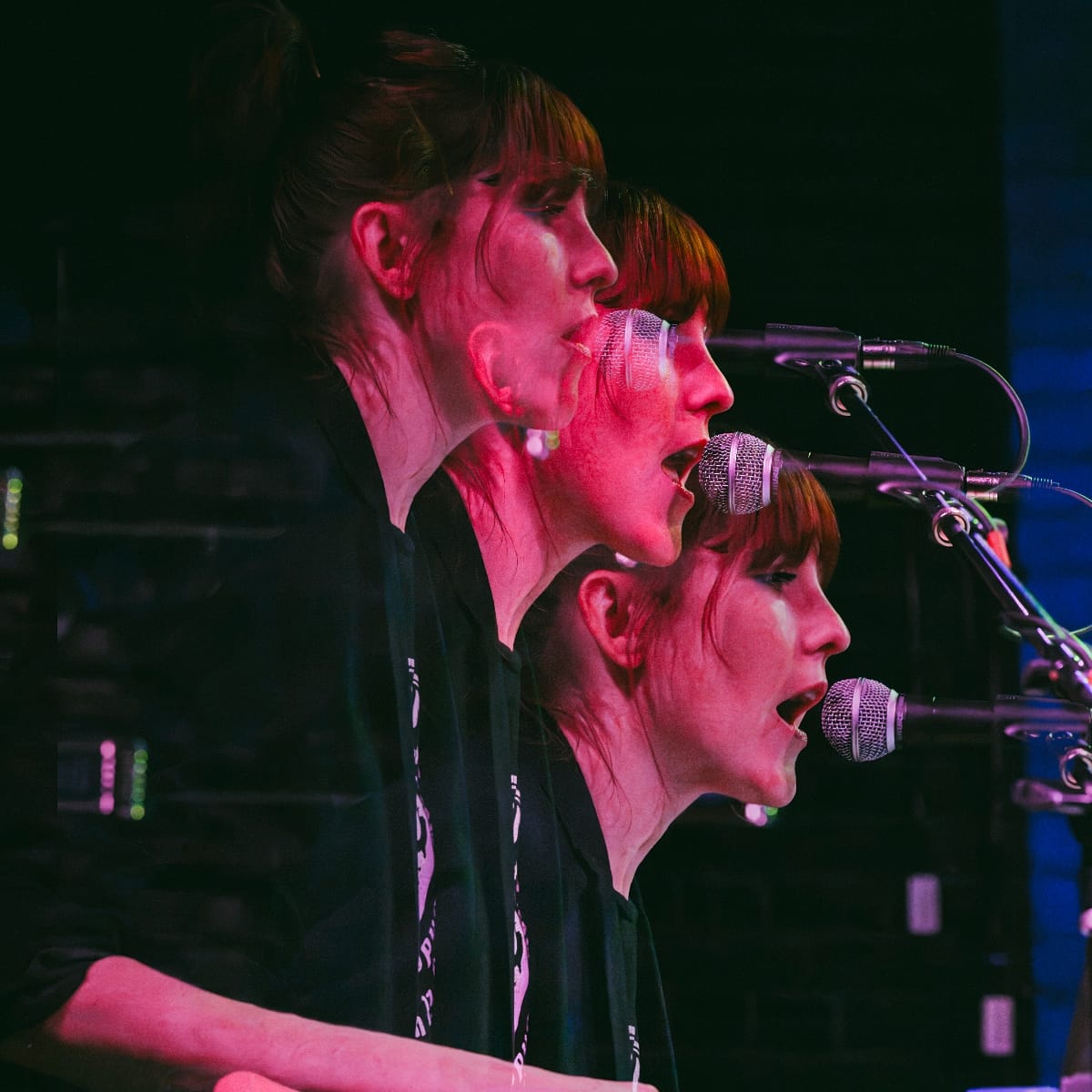
Winged Wheel at Third Man Records Cass Corridor in Detroit — May 10, 2025. Photos by Doug Coombe.
Jonah: How did you know when a song on this record was done? And are there any songs that were a little more difficult or easier to finish?
Cory: It can't be overstated how much Fred is shaping the sound that everyone's hearing on all of these records. We've handed this guy so many hours of material that he has to melt down into these bits that are somewhat palpable to regular human beings out there. I do not envy that process, and, in my opinion, Fred decides when a song is done.
Fred: That's not completely true at all. I have mixed and edited all three records so far, but they've been very different experiences. Big Hotel, our second record, the one where we all met for the first time, was a huge group process of listening to everything we made. We listened to hours and hours of stuff, taking notes and being like, "Nope, that one sucks," or, "I like that one." Or, "Let's go back to the average length of our jams," which was about fifteen minutes, and we had twenty-five of those or more. We just had to make it into nine songs.
But this time, we finished a week-long tour, and then hung out in a studio. We basically wrote, recorded, and arranged the record together. All six members had something to say about that. There were a couple of jams that we did like the old style of, just let it rip and get cosmic. But there were a lot more like, "Here's part A and part B, here's where we change, and here's where we take the energy down." I do a lot of sonic sculpting with this band, but the new record is the best example of everyone's input having a place and being clearly visible.
Jonah: So you're giving each other space to speak and perform as a collective.
Fred: The mission statement agreed on for Desert So Green was to make a record that's not like the others. We don't want to just make the same record again; we don't want to default to anything. If you start improvising with a group for long enough, you'll click into a default mode, and you'll start at a certain place. That can be fun and exciting in a live setting, but for this record, it was like, "Okay, let's take it somewhere different." And we did. And so it's already a success.
Matt: Every person in this band has been playing music for a long time and has a lot of releases under their belt. Everyone has ideas I would never personally think to do. We've gotten a lot better at communicating through our ideas, and regardless of whether someone thinks something is stupid, we just do it. And oftentimes it leads to something really cool that none of us would've ever thought of.
Jonah: How did you guys think about shaping Desert So Green, start to finish? And what songs stand out to you?
Matt: I like the record as a whole piece because it's all over the place. There are a few songs that are almost poppy and melodic, and then there's stuff that throws it back to our harsher, sound-collage territory. But it's done with a lot more intent than on some of the previous stuff. The single, "Beautiful Holy Jewel Home," is a standout because it doesn't really sound like any of our other stuff. And "Speed Table" is really fun to play live, so I like that one a lot.
Fred: Cory sings on this record for the first time. He did not sing on either of the other two, and that's adding a whole new character to the songs. Both the songs Matt mentioned are different for us, coming from a place that's less about structure and changes and more about a journey, and sorting out that journey later. It's also a very textural record. The final song on the record, "The Sweet Goes Quiet," is one of my favorites. It started out as an idea Will had, like a prepared extended technique. I don't even know what the fuck he did. He was messing with his pedal steel guitar, but does anybody remember exactly how he modified it?
Matt: He had pieces of cardboard that he was putting in his slide guitar to get that initial sound. And then I think I borrowed a couple of those, used a random acoustic at the studio, and did the same thing.
Whitney: I did the same on viola, too. It was just a piece of cardboard from a beer box.
Fred: That song stands out for me because it just came from nowhere. All these melodic instruments became rhythmic instruments on that tune, but it's still an atmospheric song. It doesn't sound like anything we've done before, but it still carries the spirit of the band. There's a specific sort of energy to all of these records that doesn't sound like any other record I've been on. It doesn't sound like any of the records that I've listened to from my bandmates.
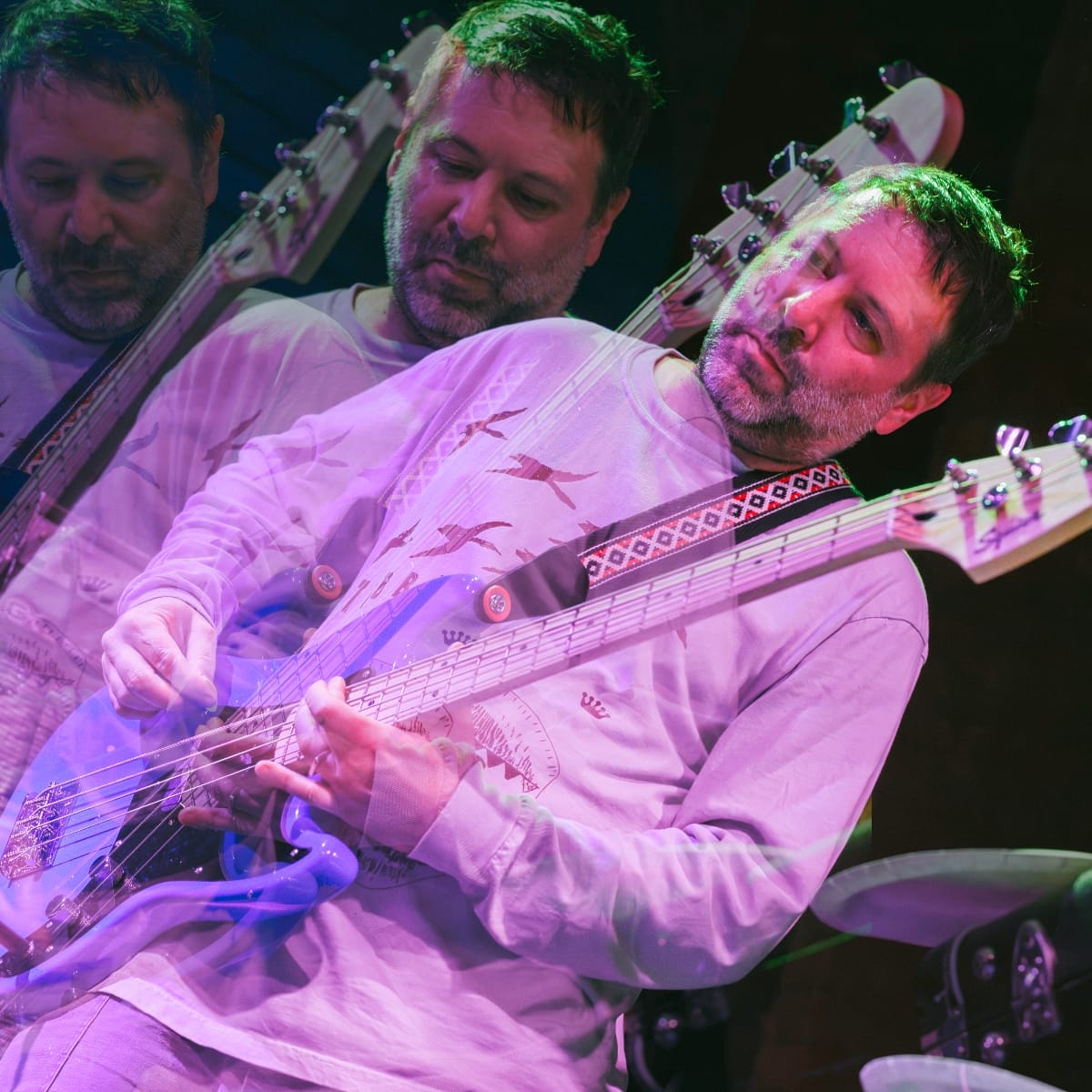
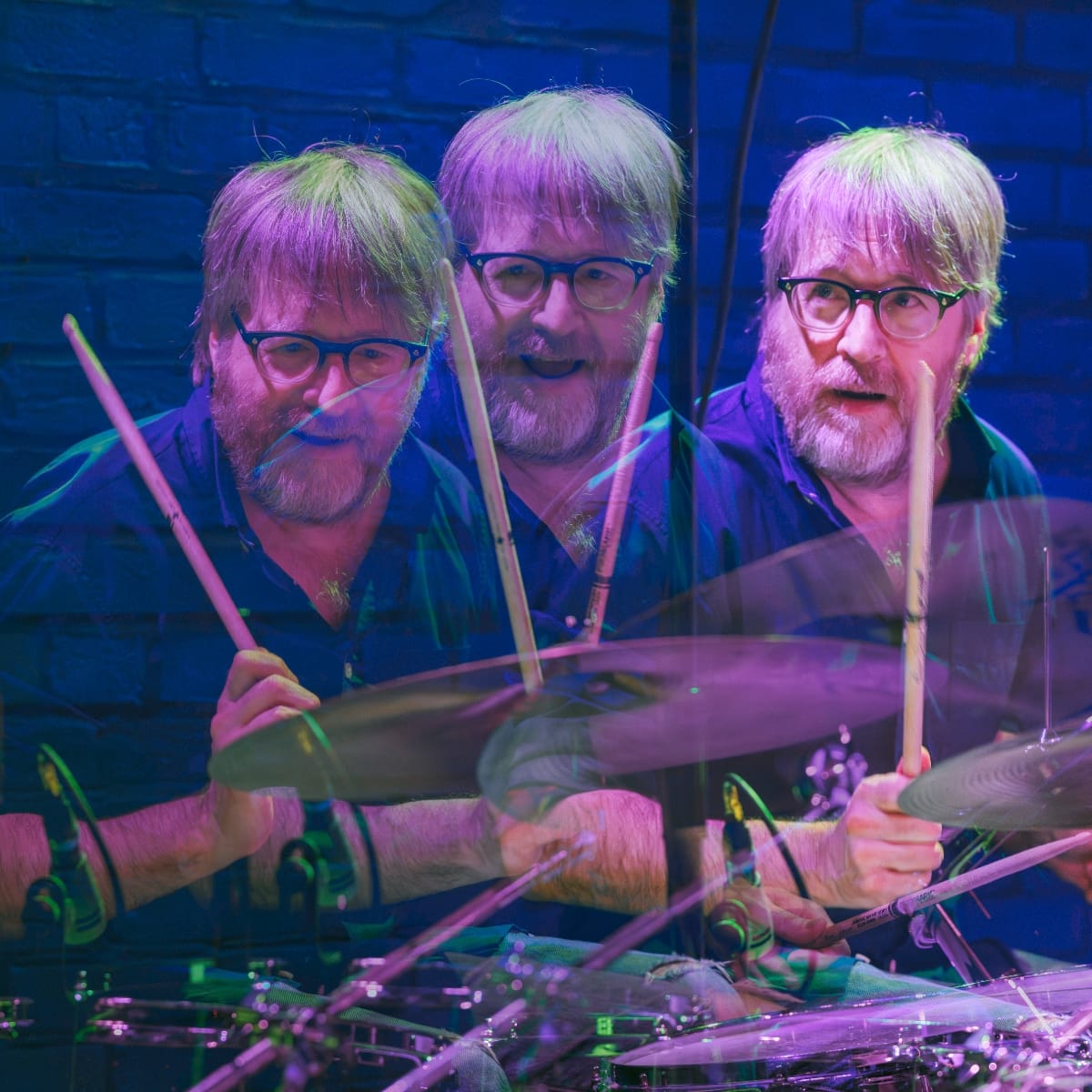
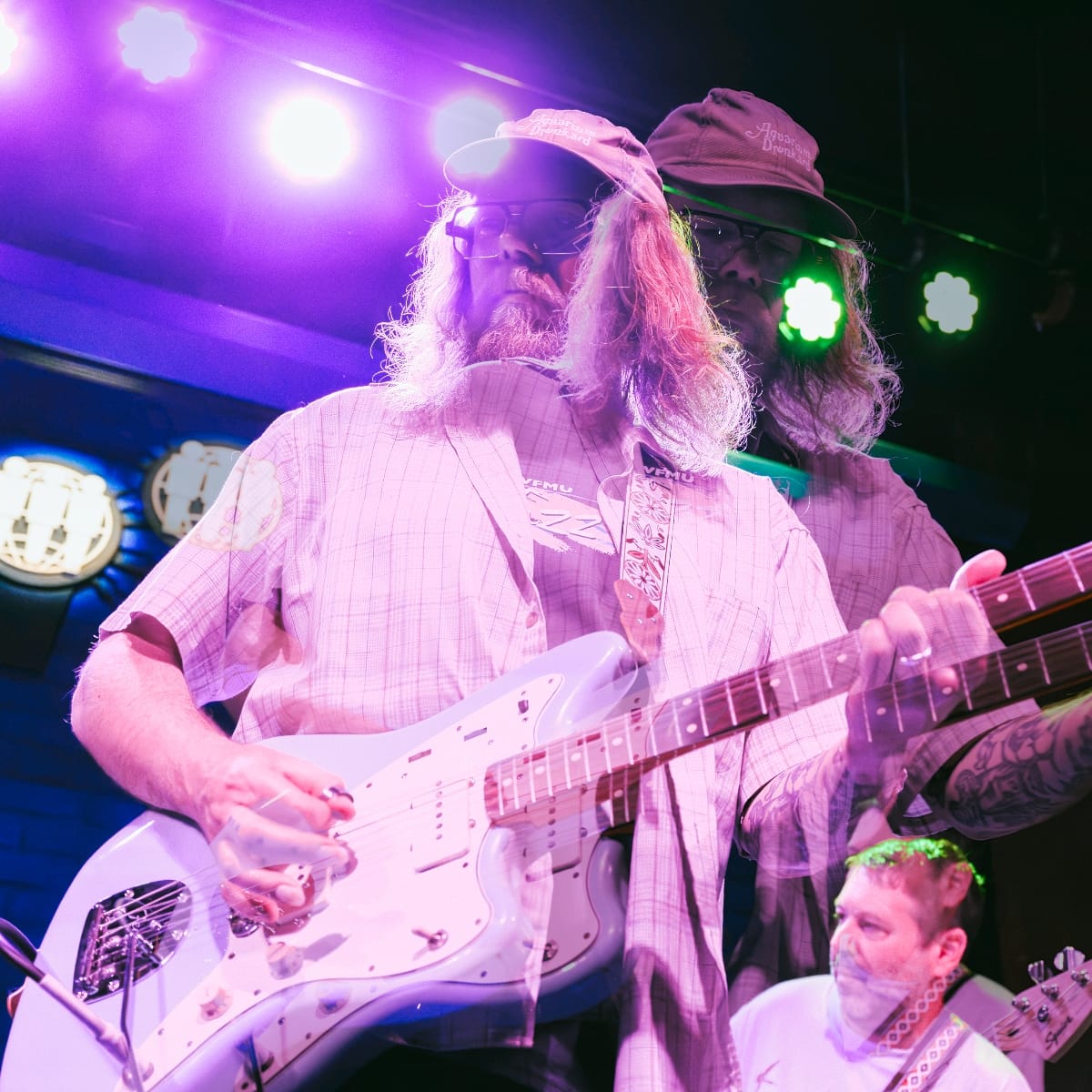
Winged Wheel at Third Man Records Cass Corridor in Detroit — May 10, 2025. Photos by Doug Coombe.
Jonah: Some of the record reminds me of Krautrock. I wanted to just dork out a little bit and talk about Krautrock. What's your relationship to it?
Matt: Love it.
Whitney: I actually played in a Krautrock-style band from 2008 to '11, something like that. It was called Verma. So, this is like a return to form for me, because there's so much about the jamming-turning-into-songs process. A lot of the influences feel familiar.
Fred: I listen to bands like Faust, Can, and Manuel Göttsching pretty regularly. I don't get tired of it. We definitely went deep into a Krautrock vibe on Big Hotel because it is a shared starting point. You can just play the Krautrock beat and go from there. But that's also something I think we wanted to get a little further away from now that we've gotten the Krautrock energy out, and we don't want that to be a defining factor of who we are.
In 2010, Steve played a show backing Michael Rother, the original guitar player for Neu! At the end of the show, I went up to the bass player, and I was like, "That was an awesome show, man." And the guy was like, "I played one note for an hour. How awesome could it possibly be?" I was like, "Oh, now that's fucking awesome." It was really good.
Jonah: Is that one of the qualities of Krautrock, a minimalism kind of thing?
Matt: Yeah.
Fred: Repetition, hypnotic repetition, and pushing the groove further than you think it can go. It's not always minimal, because it can grow dynamically, but the bass player could play one note for an hour, and it would never be boring.
Cory: If I had my druthers, I would only play one note every show, and that'd be great. It does something to your mind if you are just on the note and have to entertain yourself by saying, "I'm only playing whatever key you're in."
Jonah: Yeah, I can see how on this album, there are moments where the song is sitting in that moment of the notes or selected notes, and then it shifts either at the end or it waits to shift from the beginning until later in the song. So you guys are still playing with it, but also allowing yourselves to break out of it.
What's something you'd like people to ask about Desert So Green?
Fred: I would love it if someone asked us what kind of activity or scenario this music was for. I have no idea. Maybe if they ask that question, they'll think it through themselves.
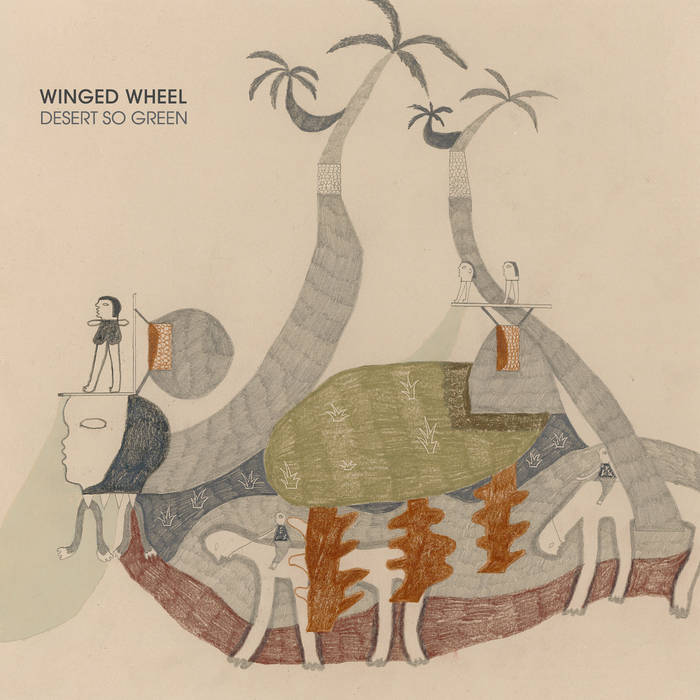
Cory: If people ask about the artwork for this particular one, that would make me happy. I've been a fan of the artist, Abel Burger, who did the cover art; I just found her on Instagram years ago. I've been obsessed with her artwork. It's just so weird, and it scratched an itch for me, so I hit her up.
Whitney: One thing that comes to mind is, what time of day is this music meant for? I think that's a great question. Similar to what activity would this correspond with, but also how does this work in the course of your day? Or maybe it could be the season of the year. Is this winter music, or is this middle-of-the-night music? Is it the first thing in the morning music? Is it like spring rain music?
Check out more like this:
 Steven Garnett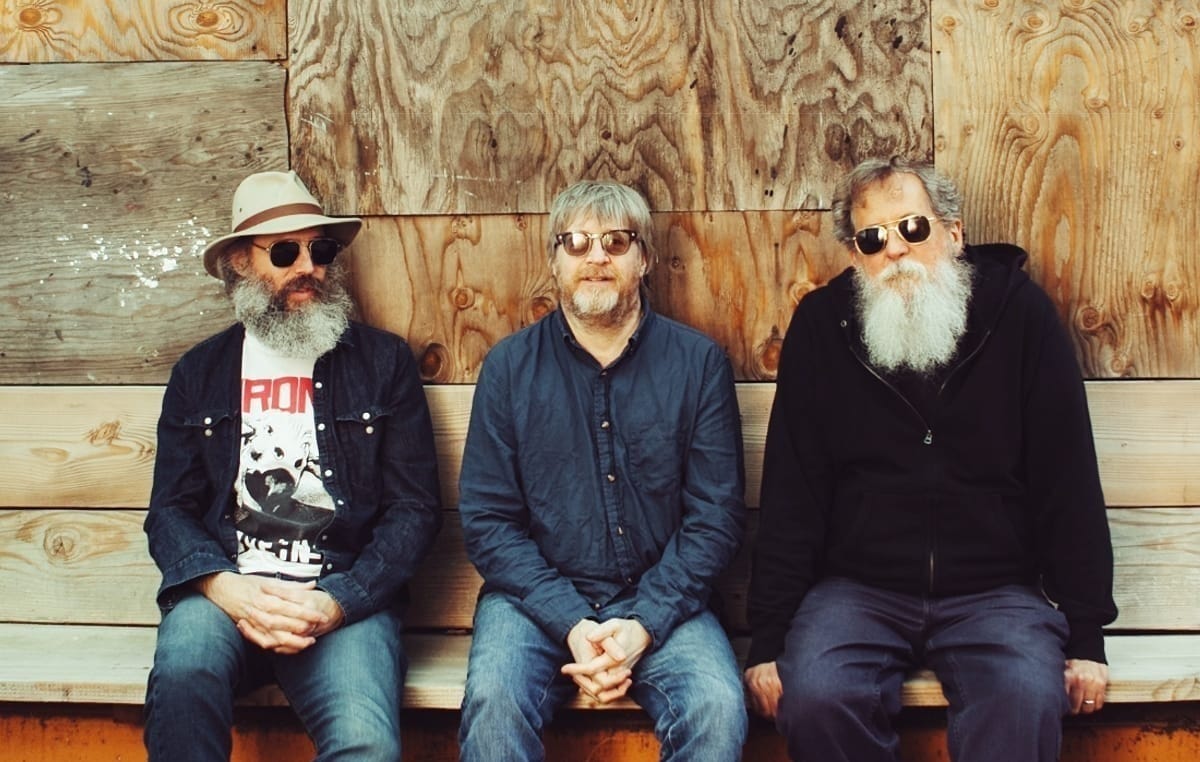
 Jonah Evans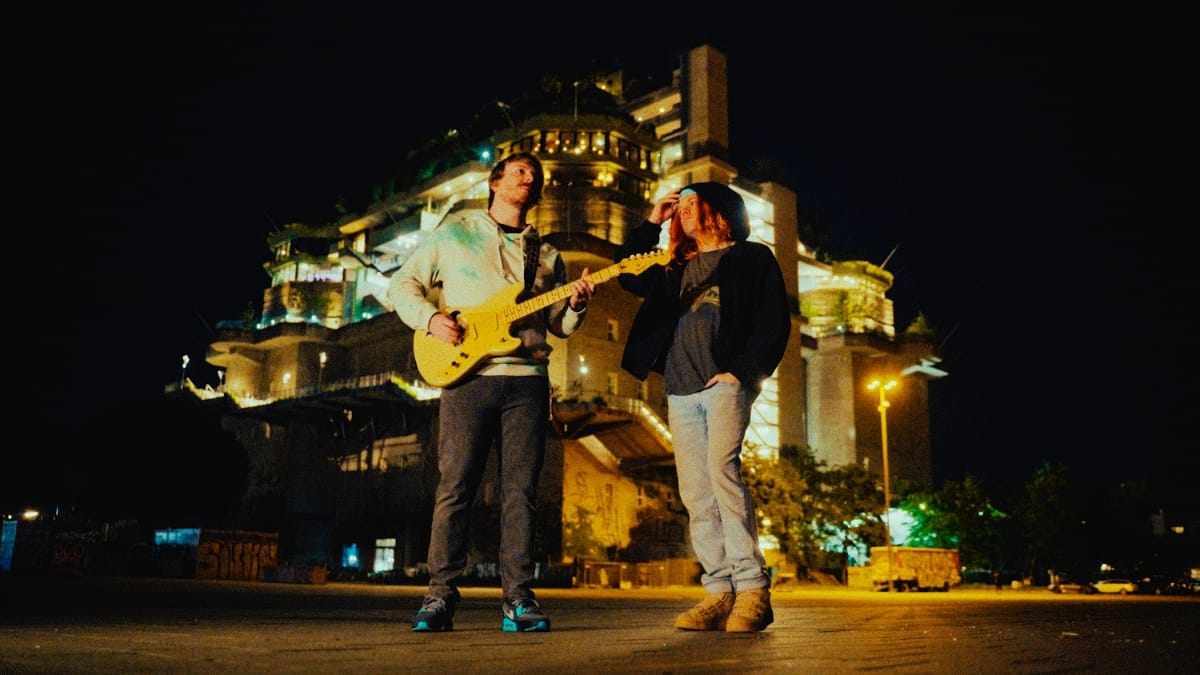


Comments