


Ahoy, you, my very favorite reader of the Talk Of The Tonearm newsletter! Welcome to this week's edition which remains action-packed and kind-hearted and full of all the clickable link magic and snazzy recommendations you've come to expect from the seasoned team at The Tonearm HQ. I think you'll enjoy this one—it's a trip, it's got a funky beat, and you can bug out to it. Let's dive in:
Surface Noise
Claire Cope, whose new album, Every Journey, features the expanded Ensemble C, has stumbled onto something interesting. In a recent chat with The Tonearm, the British composer discussed how she has been transcribing her own piano improvisations, completely transforming how she writes music. Instead of staring at Sibelius trying to force ideas onto the page, Cope just sits down and plays, then figures out what she did later. She says this opens up "more possibilities" than the usual notation-first strategy, and that makes total sense.
This connects her to a whole tradition of musicians who've used transcription as a creative tool rather than just busywork. Charlie Parker famously transcribed Lester Young’s solos to find his voice, and contemporary classical composers like Julia Wolfe dig through folk recordings looking for structural ideas they'd never think of on their own.
The idea is to use transcription as a filter between your unconscious musical instincts and your analytical brain. Cope mentions a flute and piano piece she wrote that would never have happened if she'd tried to compose it the traditional way. Instead, the complexity emerged naturally through improvisation, and then she captured it through transcription. Every Journey draws inspiration from female explorers like Isabella Godin and Kate Marsden, which feels fitting since musical exploration requires the same kind of courage as the composer is trusting her instincts over predetermined plans.
Cope briefly mentions Wadada Leo Smith's frustration with free jazz. Smith wasn't bothered with rules per se, but with how the tools meant to preserve freedom had become their own kind of prison. Even "free" improvisation had developed this rigid vocabulary of expected gestures. This inspired "Ankhrasmation," a visual language that looks more like hieroglyphs than standard notation. Smith’s symbols suggest energies and emotional territories instead of demanding specific pitches and rhythms. Both Smith and Cope figured out that the act of notation itself—whether analog or digital—inevitably changes the music.
 Lawrence Peryer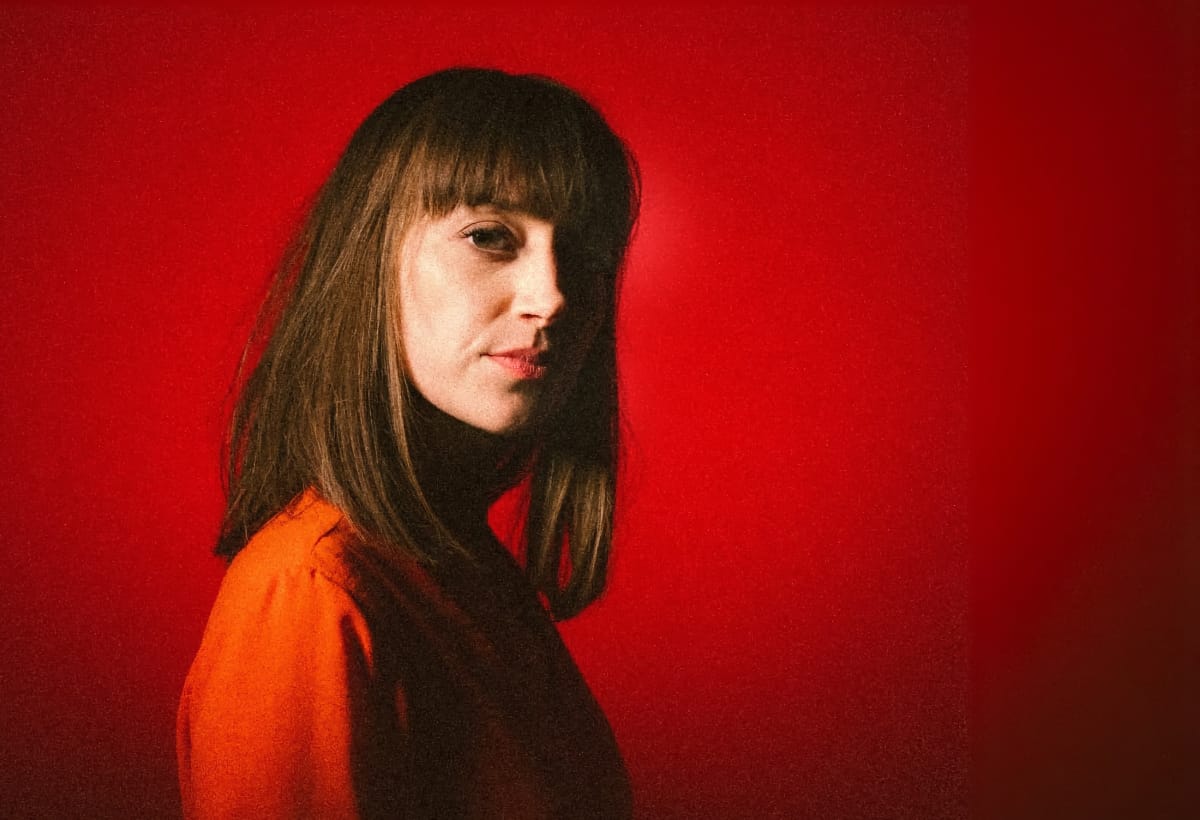
Playback: Brüder Selke and Midori Hirano walk a similar path on their album Split Scale. Each artist started pieces based on single notes (A through G), creating minimal parameters that left room for interpretation. It's the same balance between compositional intent and performer freedom that makes alternative forms of composition so compelling.
Michael Reinboth thinks about music curation the way gardeners think about compost—you take old stuff, break it down, and use it to grow something completely new. That's been his thing for three decades running Compost Records, and honestly, it's a brilliant methodology. Back in the '80s, when he was documenting all the weird cultural shifts happening through his Elaste magazine, Reinboth figured out how to stay true to music's roots while embracing its change into new sounds and forms. His DJ sets were all over the place—New Wave next to proto-disco next to jazz—and that same anything-goes spirit carries through to Compost's releases, where you might hear Brazilian percussion layered over techno beats. He's never chased what sells; he goes after what surprises.
Here's the thing about his fertilizer idea: it works way better than the nostalgia trap most labels fall into. Acid jazz basically cosplayed the '70s, but Reinboth goads his producers to dig into vintage sounds and remake them with modern tools. He calls it "future-jazz," which sounds a bit buzzwordy but makes sense when you think about it—it's honoring the source without copying the homework.
Labels like Compost are cultural DNA banks at this point. Label people like Reinboth are preserving entire ways of thinking about music. His gardener approach creates space for unusual combinations to grow naturally, which feels quite radical when compared to streaming algorithms that psychologically incentivize you to click the next track. Those are systems that care about engagement, not evolution.
 Lawrence Peryer
Playback: Producer Dave Pezzner does something similar when he mixes his electronic music background with compositional work for Seattle’s Can Can Cabaret. When he spoke recently with The Tonearm's Sara Jayne Crow, he described his process in terms that sound a lot like Reinboth's fertilizer metaphor: taking electronic techniques and letting them grow inside theatrical arrangements without killing either tradition.
BANKERT's latest release, MEno.001, presents music that's about building systems rather than pouring out feelings. When BANKERT mentions Ralf Hütter calling himself a "Musikarbeiter"—basically a music worker—it's a dead giveaway that we're dealing with a Germanic attitude to electronic music. Think Kraftwerk's factory vibes, the way Can and Cluster treated sound like they were constructing projects in a workshop, not channeling the muse. These artists figured out that you could treat sound like raw material or something to shape and mold, the same way you'd work with metal or write code.
BANKERT takes this whole philosophy and runs with it in a digital medium. Instead of albums, they create “digital containers,” which sounds a bit unsexy until you realize they’re essentially saying, “Forget about the romantic idea of albums as artistic statements." These are just functional objects, modular pieces you can rearrange however you want. Their whole production process reads like software development: plan, build, test, iterate. It's the German systematic approach, but powered by laptops and DAWs instead of analog synthesizers.
What's really interesting is how this method of creation, perhaps first put into practice by the Bauhaus school, predicted where digital music was heading. Traditional musicians "play" songs, but music workers "construct" them. BANKERT puts it perfectly: they're "building a spacecraft just to drift in it." You spend all this time creating these elaborate digital systems, and then you operate within them as if you're running machinery in a factory. The art is about systematic exploration of what's possible within the system you've built.
 Sara Jayne Crow
Playback: Tamiko Thiel's design for The Connection Machine is a perfect example of this way of thinking. Those blinking lights weren't decoration; they were showing you the machine's actual computational work. Just as Kraftwerk made their electronic production process visible through their entire performance aesthetic. Form follows function, even when the function is making art.
Red Snapper's three-decade abstinence from cover songs ended with David Bowie's "Sound and Vision," a choice that is as much about collective healing as musical homage. In his interview with The Tonearm, Ali Friend's admission that the song "chimes with us—and people we know—who are getting through dependency and mental difficulties" relays the song's intent from nostalgic to therapeutic. Red Snapper's terrific version becomes a form of musical sobriety, taking Bowie's documented recovery process from Low and filtering it through their own accumulated wisdom about addiction and mental health struggles.
In a way, Bowie's 'Berlin trilogy' accidentally became an unofficial soundtrack for psychological reconstruction. Red Snapper's decision to tackle "Sound and Vision" acknowledges this legacy while adding their own hard-won understanding of what it means to make it through the years. Here was a song about the slow return to creativity after a period of necessary withdrawal, performed by a band that had spent decades learning to trust the healing power of musical patience. Their rendition transforms Bowie's solitary plea into a communal thing—Ali and Tara's voices supporting each other, where Bowie doubled his own voice, the rhythm section providing steady ground where the original felt deliberately unsteady. The song becomes less about covering Bowie than about using art to process trauma, with the band's characteristic genre-defying approach serving as their own form of recovery. Like Bowie, Red Snapper is always moving forward, never settling into the comfort of repeating what worked before.
 Michael Donaldson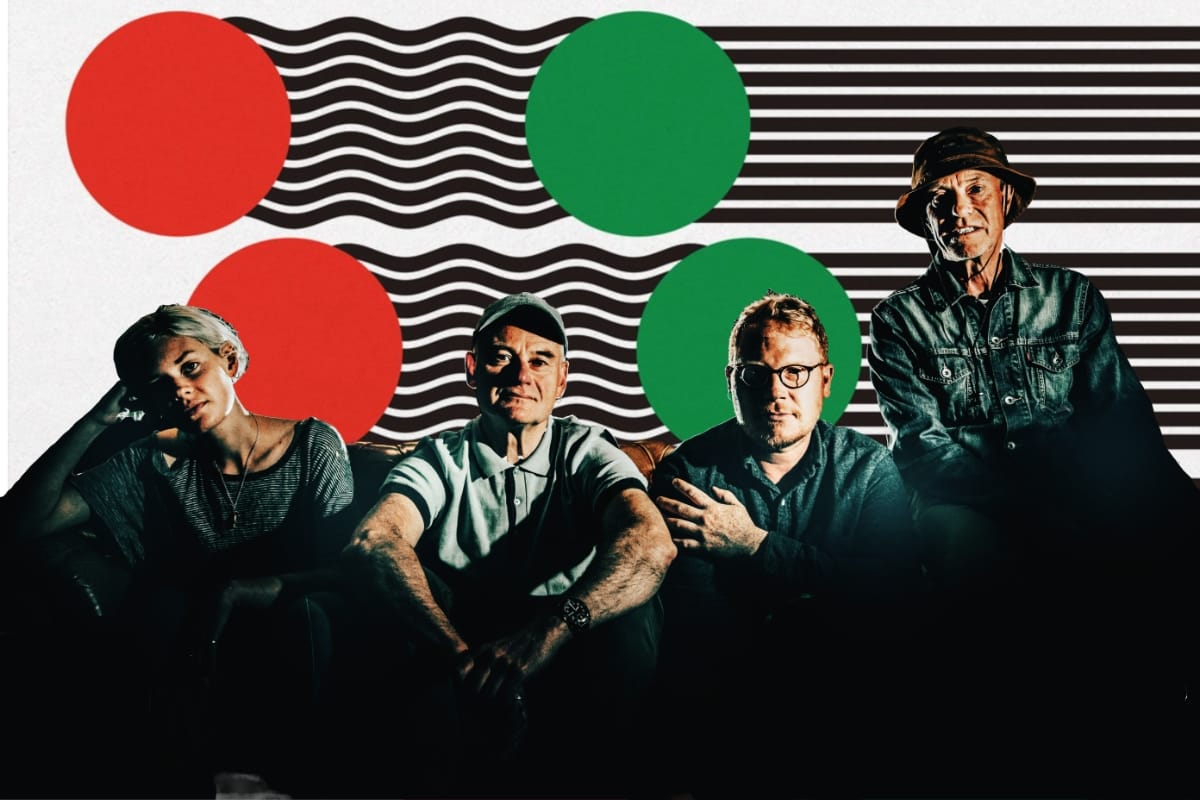
Playback: Jerry David Decicca's album Cardiac Country ended up being an unintentional form of therapy through music. In his recent interview with Sam Bradley of The Tonearm, Decicca described how the music helped him process fear and mortality during an unexpected health scare, creating what he calls "a document" of his emotional state.
The Hit Parade
- LP's Recommendation: Phil Haynes's Return to Electric unites the drummer with longtime collaborators Steve Salerno on guitar and Drew Gress on bass in a power trio format. The album mixes fusion classics from Chick Corea, John McLaughlin, George Russell, and Wayne Shorter with Haynes's original compositions, resulting in a thirteen-track collection that honors the experimental spirit of early fusion while adding the group's contemporary sheen.
Haynes's original pieces like "Spell," "Eclipse," and "Some Sick Slick" sit alongside thoughtful interpretations of Corea's "Crystal Silence," McLaughlin's "Spectrum," and Shorter's "Paraphernalia." The album features three short cadenzas—one each by Haynes, Salerno, and Gress—showcasing each musician's individual voice. The music shifts between intricate composition and open improvisation, with each player contributing to the album's raw energy and thoughtful execution.
(btw — Here's an excellent conversation with Phil Haynes on an archival episode of the Spotlight On podcast.) - Michael's Recommendation: Repetition Repetition's Fit for Consequences: Original Recordings, 1984–1987 summons the spectral presence of Los Angeles's experimental underground with startling clarity. Ruben Garcia and Steve Caton operated in the shadowy corners of the mid-1980s avant-garde, creating what Harold Budd called "difficult" music that somehow achieved greatness. Their method was deceptively simple: Garcia's synthesized foundations meeting Caton's guitar responses in endless cycles of call and response, each iteration building toward sounds that hovered between the meditative and the manic. This music occupied its own temporal zone, and minimalist repetition became a vehicle for maximalist feeling.
The duo's original cassette releases existed in editions so limited they hardly qualified as underground. Now, thanks to Freedom To Spend's careful curation, the duo's mostly unheard output is ready to delight a wider audience. The remastered tracks lose none of their otherworldly quality, their synthetic textures and steel-string incantations still capable of inducing the kind of suspended animation that recalls the works of Jon Hassell and Hiroshi Yoshimura. Freedom to Spend has done archaeological work of the highest order, rescuing music that sounds less like a message from the Reagan era and more like transmissions from a bizarro world where ambient music learned to breathe fire. For those who've exhausted the usual suspects of 1980s experimentalism, Repetition Repetition offers proof that the decade's most innovative sounds were often locally baked and barely distributed. - Short Bits: Genre-jumping guitarist Tal Yahalom is the guest on this week's Spotlight On podcast. • Bill Million and Glenn Mercer of The Feelies talk about the making of Crazy Rhythms on the Life of the Record podcast. Those guys are not known for being chatty so this one was a pleasant surprise. • In heaven everything is for sale. • This story about an encounter with chef Thomas Keller is just fantastic and subtly ends up examining the role and responsibility of the critic. • Bandcamp shines a light on the late, great Susan Alcorn. • LP writes about What Musicians and Mystics Both Understand.
Deep Cuts
At the end of his conversation with Claire Cope, LP asked, "What's the next music that you'll probably listen to?" Cope immediately inquired, "Can I say two?"
Claire Cope: I'm gonna big up someone in my band. Matt Carmichael plays tenor saxophone and has just released a gorgeous album that delves more into folk. He's Scottish and heavily influenced by Scottish folk music, and his new album, called Dancing with Embers, is fascinating. He has such a beautiful sound on the tenor saxophone, and I've only listened to it once, and I already know I need to hear it again.
I also want to recommend a massive piece, which I only just discovered on Monday. One of my favorite composers here is Mark-Anthony Turnage. I did not know he had written a piece called "Blood on the Floor," which features a classical ensemble with a jazz band. It’s a 45-minute piece that merges his quite radical contemporary composition with improvisation. Harmonically, it's very interesting. I think it divided audiences when it came out. It’s intense.

Run-Out Groove
Thanks once again for reading! Should I call all of you 'The Tonearmy?' No? Okay, never mind. I'm just throwing that out there, so feel free to forget I said anything.
Even without a name to group everyone together, we at The Tonearm HQ appreciate you and the time you've given our little endeavor. Feel free to reach out with feedback, things you'd like to see us cover (or not cover!), or maybe better name suggestions for our righteous clique than 'The Tonearmy.' And, it may go without saying by now, but a fantastic and quick way to show your support is to forward this to one friend. You could even post a link to it on your social media robot—we wouldn't mind one bit.
It's starting to rain and the cats are ready for dinner, so that's it for me. Meow? Keep it lovely, and I'll see you next week! 🚀
Connect with The Tonearm:


Comments