


Brazilian guitar demands technical mastery. It is a lineage that expects virtuosity. Examples of the form's exacting nature include Baden Powell's 1979 surgery to repair ribs worn away from cradling his instrument. Or the precision and dexterity required to execute Egberto Gismonti's compositions. Or the etudes of Heitor Villa-Lobos, complex rhythmic structures, necessitating precise right-hand technique to carry samba's pulse while the left rings out classical Spanish repertoire.
Fabiano do Nascimento absorbed all of it, but was not subsumed by it.
"I've never really cared to be an 'athlete' of my instrument," he says. "I just liked learning from all and distilling it into my own thing."
That attitude puts him at odds with a tradition where technical mastery is paramount. Do Nascimento grew up in Rio studying Dilermando Reis, Radamés Gnattali, Baden Powell, Laurindo Almeida, and Rafael Rabello. These are the canonical Brazilian guitarists whose virtuosity defined what the instrument could do. He moved to Los Angeles at sixteen, carrying that education but not adhering to it as scripture.
"This wasn't really the line I wanted to follow. It was more of a school for me. A fountain I still drink from to this day."
The water metaphor is important here. Drinking from a fountain keeps you alive. Drowning in it is quite literally a dead end.
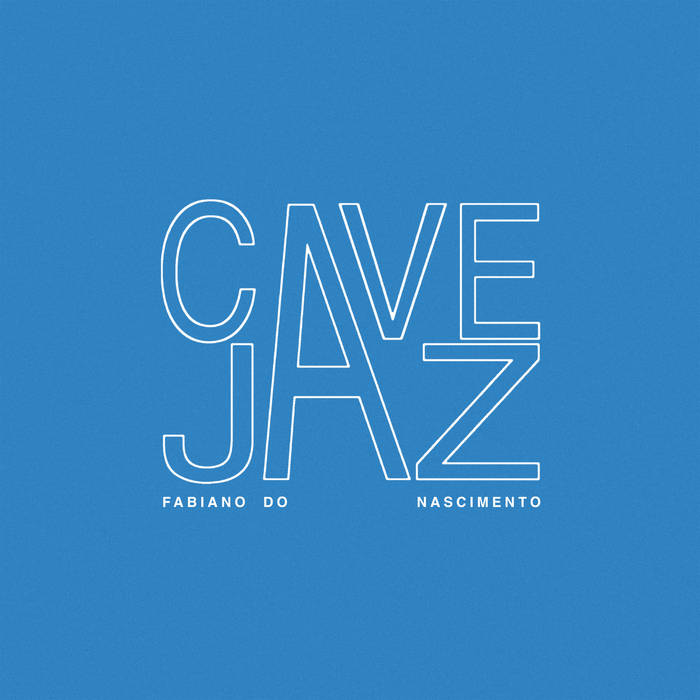
Do Nascimento's album Cavejaz makes a case for restraint over display, a seemingly contradictory minimalism from someone who plays six-, seven-, eight-, and ten-string guitars. The Brazilian ensemble UAKTI understood him and this paradox. Founded in 1978 by Marco Antônio Guimarães, they built instruments from PVC pipes, glass, water, and sponges, creating what Philip Glass called a "primitive character" paired with modern compositional techniques. Their artistic manifesto centered on minimal music, even with multiple players. Theirs was a complexity in the service of simplicity.
Do Nascimento's collaboration with UAKTI's Paulo Santos, the ensemble's percussionist who has performed with Philip Glass and Paul Simon, came through singer Jennifer Souza in 2023. The sessions happened fast. In August 2024, Brazil suffered one of its worst wildfire seasons. Smoke blanketed Belo Horizonte, one of Brazil's largest cities, forcing do Nascimento and Santos indoors at Studio Ilha do Corvo, cutting their recording time to sparse sessions. Producer Leo Marques hit record and let them work.
"We managed to have a good time still, and to enjoy recording the open and free ideas that would come up. Leo would just hit record, and we would just play."
Environmental catastrophe as a recording condition is not another of do Nascimento's metaphors; this time, it is a material fact. But the constraints produced music that do Nascimento's technical capacity alone could not create, music that Belo Horizonte needed. It was music that breathed when perhaps the city's people could not. Guitar and handmade percussion responding to each other, adjusting tunings and preparations to complement, never compete.
"I see the guitar as a percussion instrument. Each instrument Paulo Santos brought had a certain thing to it which I would adjust my guitar to, tuning or preparing it a certain way to complement what he was doing and listen."
The album assembles sessions from Brazil, Japan, and California. Japanese tabla master U-zhaan joined do Nascimento for a concert in a Noh theater in Tokyo, where do Nascimento didn't know they were recording until afterward. Percussionist Ricardo "Tiki" Pasillas contributed material from a Los Angeles performance. Do Nascimento, now based between Los Angeles and Tokyo, assembled these geographically scattered sessions into a cohesive statement. Saxophonist Sam Gendel suggested the title, describing it as "music coming from a cave with water and organic elements."
The disparate origins should fracture cohesion, but they do not. The minimalist instrumentation and organic performance create unity that technical precision cannot manufacture, let alone match.
Multi-instrumentalist and composer Hermeto Pascoal, known for his experimental approach to Brazilian music, taught do Nascimento something more valuable to the guitarist than technique. "The music of Hermeto completely opened my mind and heart in a beautiful way because Hermeto was so himself, so unlike anything else, his music so vibrant, that this in itself was his greatest influence on me. To just be me. I think that was his greatest contribution to music. Freedom. Not about playing like him or anybody else."
But freedom has limits. Do Nascimento has not abandoned tradition, though he refuses to let it define him. "It is always worth preserving traditions and studying them because they enrich us. It grounds us while also giving us more ways to expand if we are willing to go there. Without that, musical exploration can lack depth. It is a balance of having a wide palette to draw from while not being too stuck or rigid in any of them."
That balance is, in fact, harder than virtuosity. Any talented guitarist, if dedicated enough, can demonstrate technical ability. The discipline required to restrain that capacity, to choose minimalism when you have the tools for complexity, and to privilege listening over displaying requires a different strength.
Cavejaz is that strength in action. Do Nascimento performs on multiple guitars with different string configurations and tunings, but the album never feels like a showcase. The handmade instruments, the tabla, the spontaneous recordings, these all exist in service of something smaller and harder to quantify than technical achievement. Perhaps spirit?
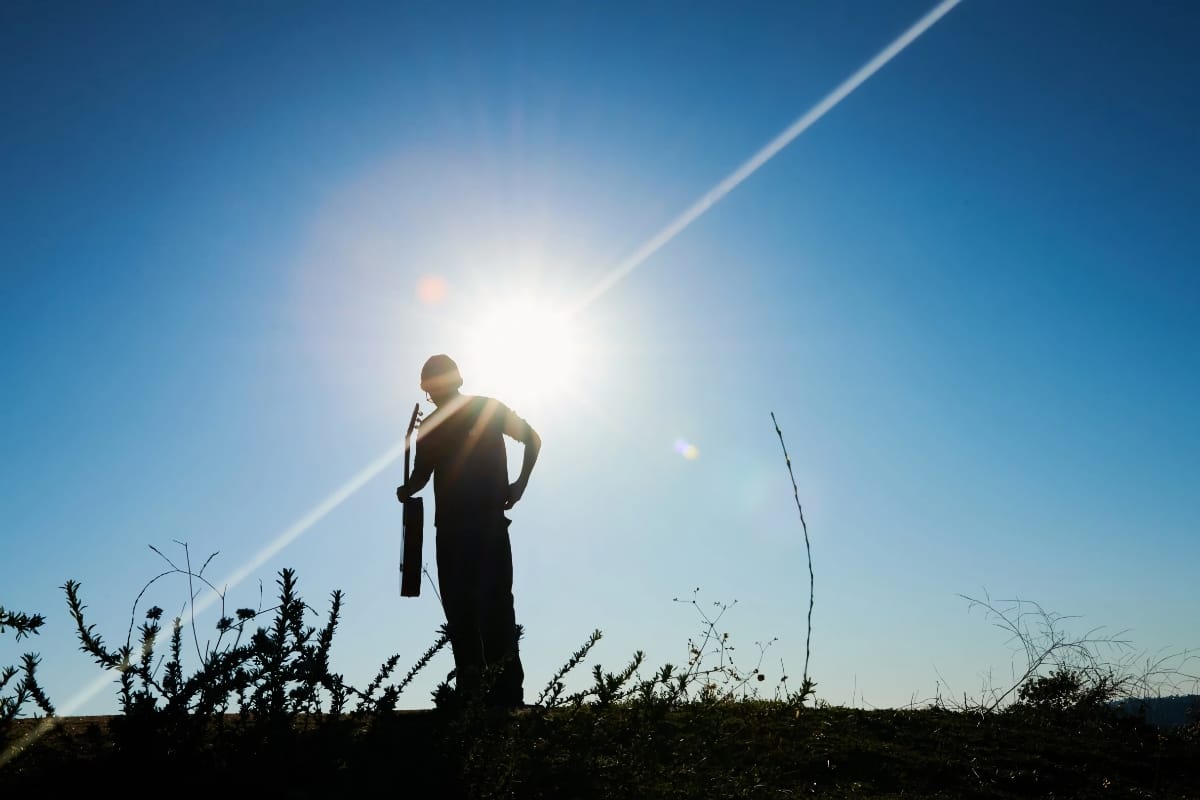
Brazilian guitar tradition built its reputation on what Powell biographer Josef Woodward called the ability "to find a path between twilight-like melancholy and controlled passion." Do Nascimento found a different path: freedom through restraint, complexity through minimalism, tradition as a foundation rather than a ceiling.
The wildfires forced brevity. The Noh theater captured the accident. The cross-continental sessions prevented overproduction. Constraints that would doom most projects became the conditions that made this one work.
Do Nascimento claims he's "less precious about things," preferring to "capture the moment in time they are happening." His casualness masks the rigor of a practice that successfully restrains virtuosity only after it has first developed it. The meaning of choosing minimalism matters so much more once you've mastered complexity. The freedom to be yourself is hard-won by doing the work of getting to know who that self is.
Brazilian guitar tradition gave do Nascimento technique, vocabulary, and expectations. Hermeto Pascoal gave him permission to use them differently. Cavejaz shows us someone drinking from tradition without drowning in it, exhibiting the great discipline of knowing what not to play.
Check out more like this:
 Miguel Angel Bustamante
 Lawrence Peryer


Comments