


Now Playing on The Tonearm:
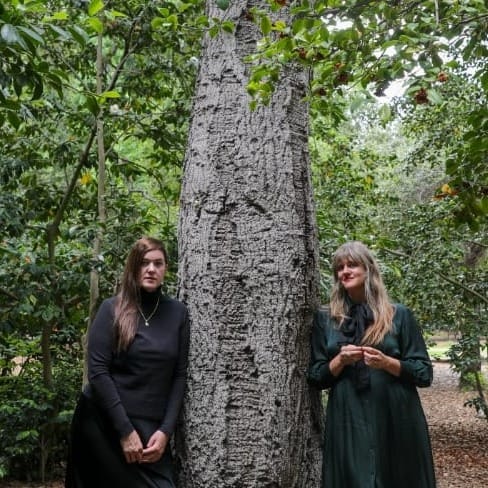
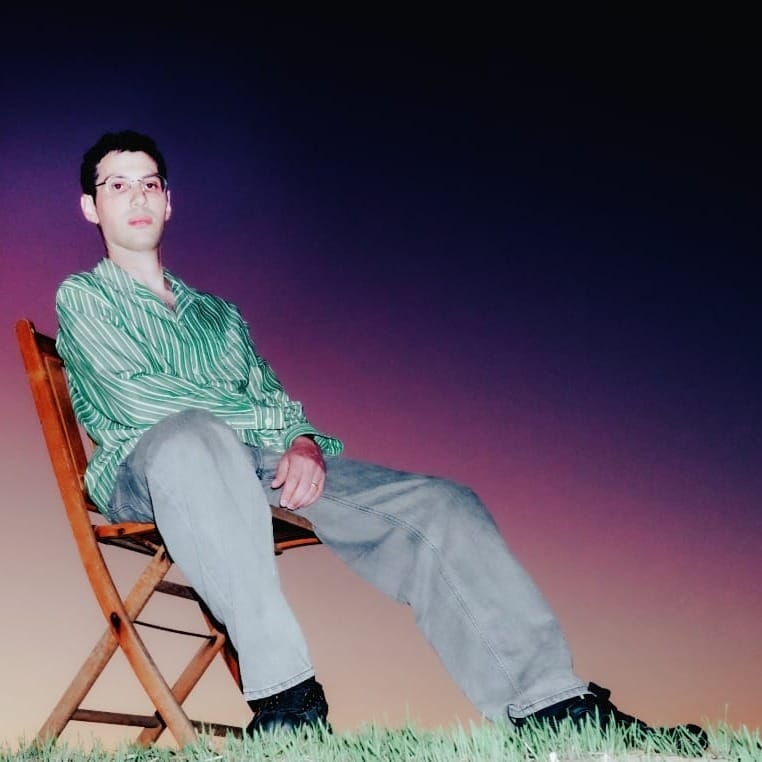
Gregory Uhlmann's Call-and-Response with the Dark Sky
Guitarist Gregory Uhlmann discusses 'Extra Stars,' a five-year collection of pieces inspired by stargazing in the California desert, and the Los Angeles musical community threaded through it. Interview by Sam Bradley.
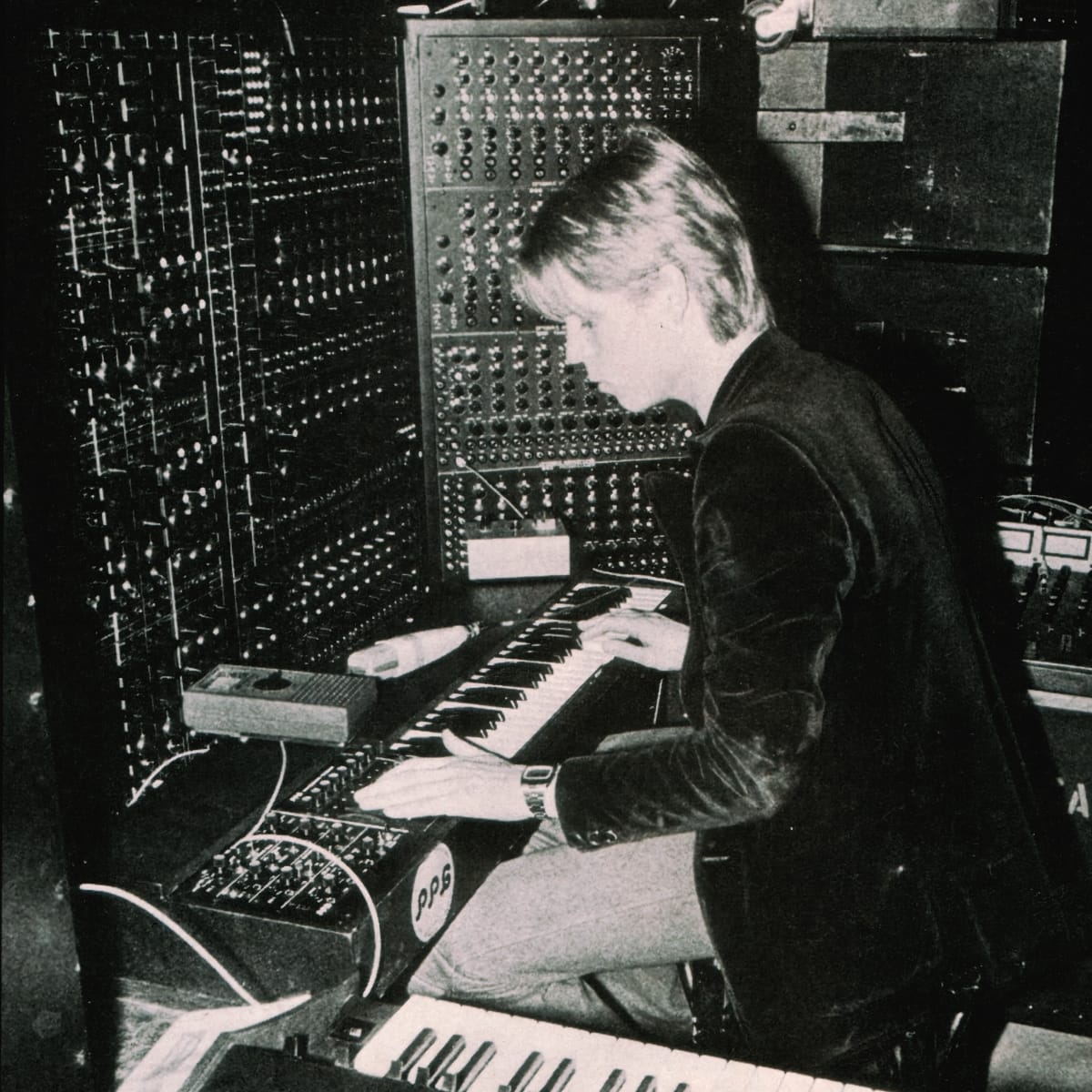
Peter Baumann, Conrad Schnitzler, and the Fun of Destruction
The former Tangerine Dream keyboardist discusses his friendship with Conrad Schnitzler, a man who proudly announced, "I'm not a musician, I just make noise," the serendipitous origins of 'Romance 76', and a Berlin underground he considers irretrievable. Interview by Bill Kopp.
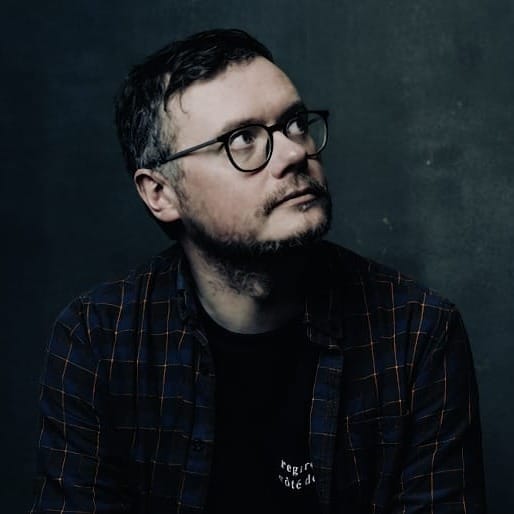
The Patient Return of worriedaboutsatan
worriedaboutsatan's Gavin Miller discusses 'No Knock, No Doorbell,' his 20th release, the post-rock and electronic push and pull at its core, and what a nine-to-five job taught him about taking his time. Interview by Kallie Marie.
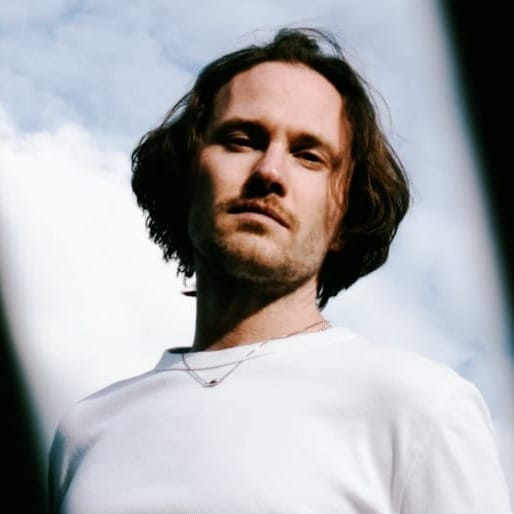
The Intimate Machinery of David August's 'Hymns'
The German-Italian producer David August returns to the piano he has known since childhood on 'Hymns,' nine devotional improvisations treated with prepared strings and recorded to preserve every creak and breath of a century-old instrument. Interview by Michael Donaldson.
This Week's Episode of The Tonearm Podcast:
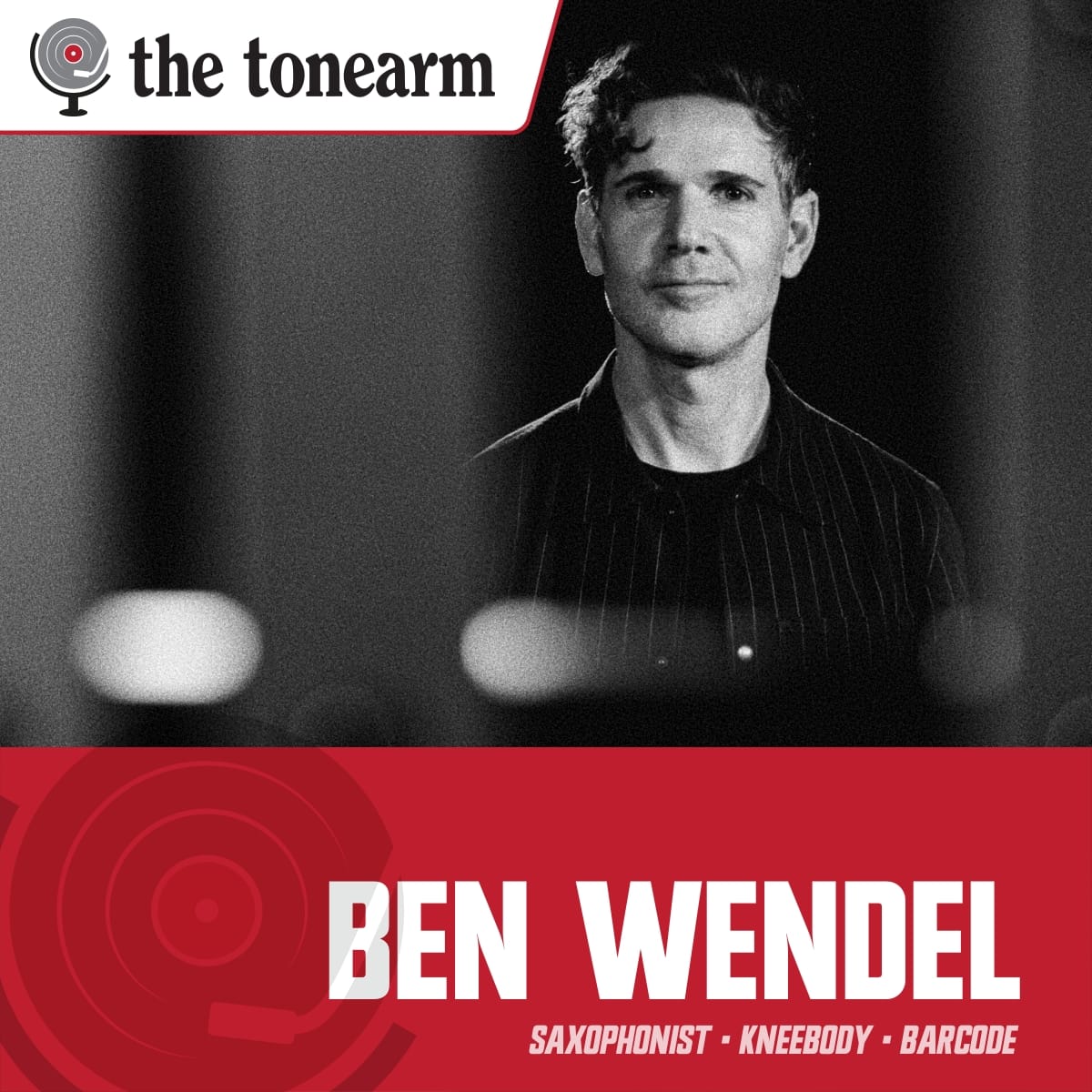
Ben Wendel: Assembling the Mallet Avengers
The Grammy-nominated saxophonist and Kneebody co-founder joins us for episode 300 to discuss his new album BaRcoDe, a project built around four of the most inventive mallet players working today.
The Hit Parade:
"Amid the encomiums that followed the loss of a founding father of hip-hop [Afrika Bambaataa], fans and students of culture found themselves grappling with the problem of separating his achievements from the man himself." ❋ “… of sacred spaces and secular drones, of the residency as a model for deep listening, of the joy and exhaustion of choosing your way through 250 performances, and of the peculiar alchemy that turns a small city in Appalachia into a gathering place for music that rarely finds a home anywhere else." ❋ "I knew [Sun] Ra had a house where the band lived together collectively, but I didn’t realize what that meant until I saw this community in glorious purpose. I was sold, and I realize in retrospect that this was the seeding of the idea that has come to define my thinking, which is that music is a social activity." ❋ "The French underground music scene was very literally born from the fires of rebellion—specifically the May 1968 Paris riots. The bloody struggle between Parisian protesters and authorities was one of the most radical, game-changing countercultural uprisings of the era." ❋ "Dawn choruses are getting shorter and the oceans echo with the din of transcontinental shipping and deep-sea mining. We are, [Basil] Bunting notes in the poem’s coda, 'long earsick'; and yet, 'a strong song tows us,' still." ❋ "Jacobs doesn’t consider himself obsessive or, as many call him, an archivist. He says he’s just a music fan. He figured if he was going to attend a few concerts a week anyway, why not document them?" ❋ "Powered by upright bass lines, church chords and the quiet insistence of swing, [Detroit’s] jazz story began in jam sessions and storefront clubs along Hastings Street." ❋ "Converging in 1969 Berlin, Dieter Moebius, Hans-Joachim Roedelius, and Conrad Schnitzler—or Ensemble Kluster, as they were originally known—made music that went very far out, even when compared to their contemporaries in Kraftwerk (then called Organisation) …" ❋ "The composer Terry Riley quips that 'Western music is fast because it’s not in tune.' We have bought ourselves convenience at the expense of consonance. Angine de Poitrine’s solution to the Terry Riley problem is to say, well, let’s play even faster and further out of tune." ❋ "Les Blank’s movies are gourmandizer’s delights—they will make you hungry—and they introduce us to unforgettable characters. But it’s the music that brings the viewer back again and again." ❋ "Tucked away in one of the rougher neighborhoods in the western part of Caracas, Viñas’ concept has become something of an underground culture hub, a centralized locale for shows and rare vinyl sourced largely from within Venezuela." ❋ Wishlist: A Rare Complete Braun Atelier 1980s Hi-Fi System
New Music Recommendations: Flore Laurentienne – Volume III (RIYL: Arvo Pärt meeting Brian Eno's Discreet Music; acoustic-synthetic layering with guided improvisation) ❋ Mei Semones – Kurage (RIYL: Bossa nova-inflected jazz-pop; math-rock guitar complexity meeting melodic accessibility) ❋ Dagmar Zuniga — in filth your mystery is kingdom / far smile peasant in yellow music (RIYL: Tape-saturated folk/ambient, layered vocal harmonics, cassette hiss)
The Deepest Cut:
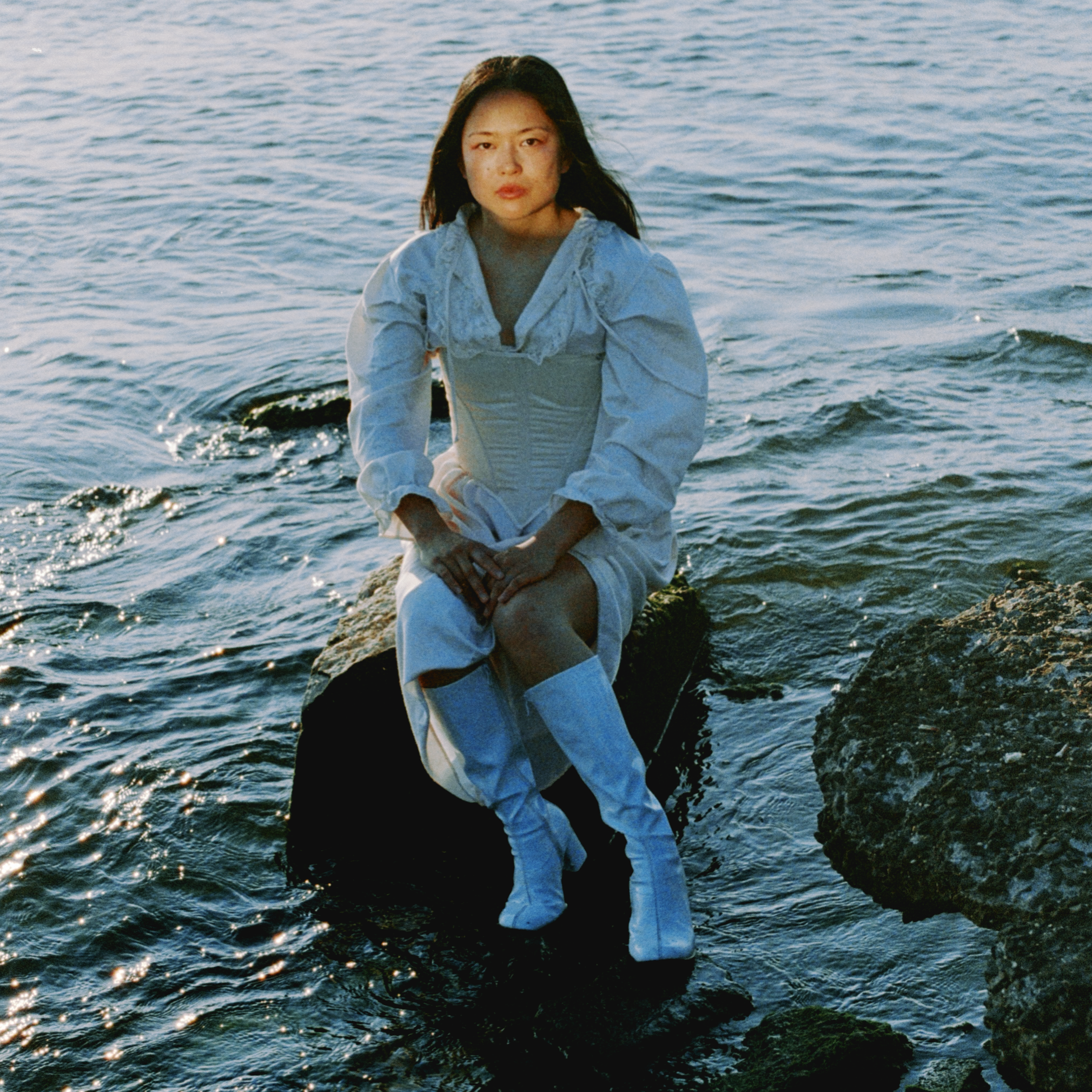
The track list for Rachel Lime's second album, STORIES, doubles as a fantasy map. For the CD release, Lime drew forests, mountains, and ships at sea beside each song title, borrowing from the illustrated guides in the novels she loved as a child. The music works the same way, with each song a world unto itself, as Keats, Korean pansori, and Arthurian legend share space on a single art-pop record.
Lime's debut, A.U. (2021), established her boundless imagination. The title referenced astronomical units, the chemical symbol for gold, and the fan-fiction tag for "Alternate Universe," three meanings that captured the album's orbit between science, mythology, and speculation. STORIES carries that world-building instinct into more rhythmic territory. While A.U. leans into an orchestral sweep, STORIES pushes toward danceable beats and synth-heavy production, mixed by Brian Tench, who worked on Kate Bush's Hounds of Love. The body is more present here, with pleasure and motion alongside the literary themes.
I reached out to Rachel Lime to ask her to tell us about the ideas behind STORIES, her work with Brian Tench, the CD’s elaborate artwork, and how she knows when creating a universe in a song, that it’s time to stop. Of course, I also wanted to know about something Rachel loves that more people should know about.
My project is ultimately about longing and escape. It is being a child and reading fantasy books on long summer days, dreaming of stranger, more beautiful places. I'm never really sure what new listeners hear, exactly, but I always hope it connects them with childhood, wonder, and mystery. I think I've accomplished this in some ways. I am always really pleased when listeners tell me they've never heard anything like it, but it somehow reminds them of something familiar.
I have a friend who told me that she loved my first record, A.U., but that it didn't have any grooves she could really settle into. I realized that a lot of the music I love has repetition and patterns. I consciously wrote songs that carried forward patterns and loops, and had more of a traditional structure (even though what was within the structure may not have been that conventional). So that drove a lot of the shift on STORIES. I also wrote a lot of the songs out of more of an abstract perspective, less confessional, and more the way a writer will write short stories—still conveying universal human truths and emotions without relying on biographical details. And intentionally paying homage to other literary works. Which is why it's called STORIES!
The album was mixed by Brian, yes! I found his freelance profile while looking for someone to mix A.U. Obviously, Kate Bush is a huge influence, so it was important to me to find someone who had experience with and appreciated the vision for what I wanted my music to be.
I conceived the idea for the album art as an extension and expression of what I wanted the album to be. In other words, not as a response to the call (which I agree with) that physical media is important and, ideally, the future, moving away from corrupt and exploitative streaming systems. I'm happy it's now an expression of that value, and I do think it's related. I wanted to convey the experience of getting a fantasy/sci-fi book, opening its pages, and seeing a map filled with strange and lovely names, with coastlines, castles, and forests.
I never know when each song, as a universe or otherwise, is complete. It's usually when there's nothing super pressing I feel I should add (that comes months and months later), and also the feeling of being—to be honest—bored and ready to move on to write new things. It is that famous quote, right?: A work of art is never finished, only abandoned. If I spend too much time perfecting, I lose momentum and just get mired in all the things I don't like about it, and maybe even edit and revise to the point of moving away from the raw original concept. But there's also great value in continuing to refine and not rushing it. So, all that to say, I don't really know when something is complete!
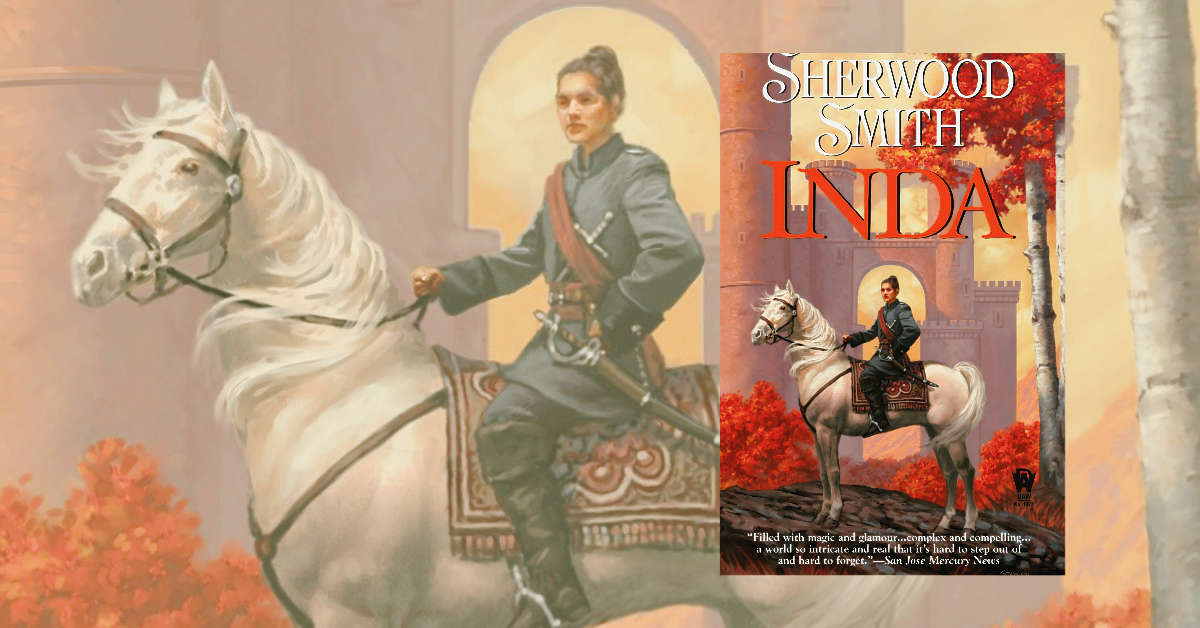
Something that Rachel loves that more people should know about:
I did another interview that asked a similar question. So I'll repeat the answer here: More people should know about Inda by Sherwood Smith. A fantastic book and series by an amazing author whose work has deeply influenced how I look at the world.
Run-Out Groove:
- The Tonearm is a reader-supported publication, free of advertising and paywalls. Our supporters help fund our writers and make the site possible. Please consider joining and helping us to continue our mission.
- Join the rapscallions of The Tonearm on our new Slack community.
- Sign up to receive our latest articles directly to your inbox in a snazzy, easy-to-read email version. Just go to your account, manage your email preferences, and flick the lever to receive The Total Tonerm.
Thank you for reading! We'll see you again next week. 🚀


Comments