


One might think that an album that arose from a therapy technique to address relational grief would be a bit of a bummer, but that is not at all the case with Ratboys' sixth album, and second with Chris Walla co-producing, Singin' to an Empty Chair. There are pop-punk harmonies, exuberant drum fills, and sunshiny guitar riffs galore. Zoom in a little on those bright choruses, though, and the longing is there, asserting itself lyrically if not vibes-wise. That's what makes this album so relatable and human. Yes, some situations suck—the ones that actually inspired the songs on this album or the ones that listeners project onto them from their own lived experience, as listeners do. But all can find some validation, even comfort, in singing along with Ratboys frontwoman and principal lyricist Julia Steiner as she repeats "you didn't care," or "we gotta burn it down," knowing that someone out there gets, at least, the feeling.
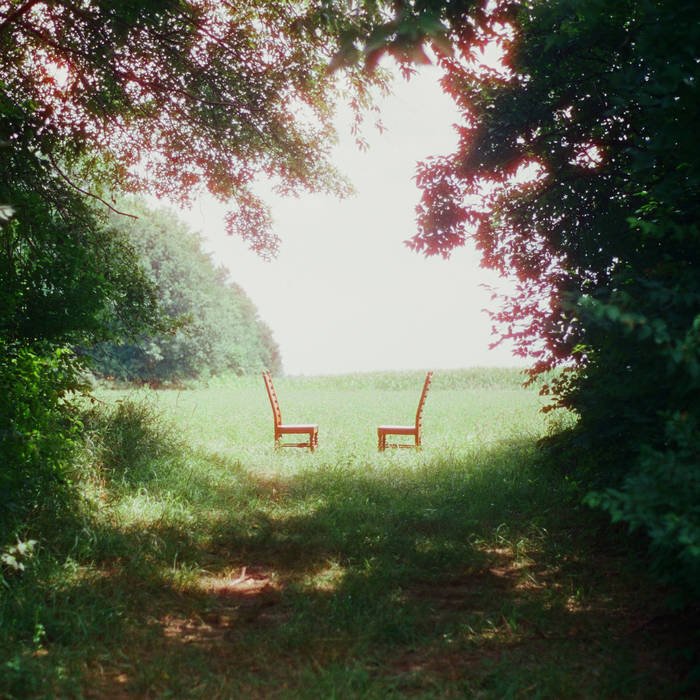
And Steiner certainly gets it. It was her time engaging in empty chair therapy, a technique in which a person addresses the chair as if it were occupied by a significant someone with whom they share some emotional tension, that formed the songs on her band's latest album. Steiner and I spoke virtually about the dissonance inherent in translating difficult emotions in an upbeat way, as well as the effect of collaborations with bandmates Dave Sagan, Marcus Nuccio, and Sean Neumann, producer Walla, and the good folks at Electrical Audio in shaping the band's sound on their latest release.
Meredith Hobbs Coons: From looking at your catalog, it seems like you had kind of been co-producing as a band, then brought in Chris Walla as a collaborator.
Julia Steiner: For the last two records, The Window and Singin' to an Empty Chair, yeah. It was kind of a similar process where we had a pretty fleshed-out group of songs, with rock-solid arrangements, and we felt very confident about them. When we first brought in Chris and started working together, it was less about rehashing things. We never really asked him to help us figure out how to bring a song to life. It was more refining what we already had, and he brought a lot of ideas for individual elements that added so much to the mix. Mic placement, for example, creates so much spirit in a recording that the average listener might not notice (where mics are, what kind of mics you use), and Chris is just so deft with that—and with using tape machines. He's just such a fun person, and all of those things combined were the special magic touch he brought to the table.
Meredith: Obviously, he was a major part of Death Cab for Cutie, and he has collaborated with other people like Tegan and Sara. What were you specifically seeking for him to add to your sound?
Julia: It's hard to say, because so many of his records have really resonated with us over the years. It's wild to think that, really, the only thing that those records have in common is him. It's not like he has this stamp that he puts on something, necessarily, where it has to sound a certain way or go through a certain filter of his own perspective. Records like, Nearer My God by Foxing (which was our big, direct gateway to knowing him, because we met him on that tour when we were opening for Foxing), The Con [by Tegan and Sara] and Death Cab records, from a songwriting perspective, don't have a ton in common, necessarily, but Chris has this lovely sense of creating an atmosphere. His recordings are all very atmospheric, but not in the same way. It's not like he has a secret piece of outboard gear or some pedal that he runs everything through. He just has a very intentional way of approaching songs, embracing the sound of the room and the band itself, and sprinkling in little overdub details or emphasizing something in a mix to bring that atmosphere to the forefront.
I don't know if we were necessarily thinking about that when we first reached out to him. It was more, "Let's cold email our hero and see if he responds." I never thought we'd be on his radar, so it was really exciting when he responded. And then, when we got to know him, we started thinking about all the possibilities.
Meredith: You cold emailed him after you had met him, tangentially, through that tour?
Julia: Years later, though. We met in 2018. I was really late in discovering The Con by Tegan and Sara, like ten years after it came out. So it was fresh for me when we met him that September. I went up to him and was just like, "That record is incredible. Thank you for your time. Thank you for your service. Goodbye." I didn't even give him a chance to respond. I was just trying to stay out of the way. But then we cold emailed him three years later, and I was stoked that he remembered seeing us that night, and that our records were somehow on his radar at all. It was really a pinch-me moment from the start.
Meredith: One of the things that I recognized as a little bit of a stamp of his on Singin' to an Empty Chair is the Death Cab/emo style harmonies on that.
Julia: Harmonies are very important to us, and we work on them a lot. My only regret about making The Window is that I sang all of the harmonies. I enjoy the experience of harmonizing with myself on a record. It's fun and kind of like a fantasy—it's not something you can do in real life—so I hoarded them. I didn't give Sean a chance to sing, and that was my mistake, because he has such an incredible, powerful voice that's very different from mine and complementary at the same time.
Going into this record, giving Sean the spotlight as far as harmonies was one of my main goals, and I'm proud of how he approached them. He had so many wonderful ideas, and Chris gave Sean a lot of confidence in recording. Chris had never worked with Sean in the vocal booth before, but made multiple comments relating to his own experience recording vocal harmonies on Death Cab records—how he approached it, how it can be kind of intimidating sometimes, and knowing how much presence to shoot for.
He's an incredible vocal producer—that's my favorite thing about working with Chris. He has a real ear for it. He knows when the take is right and will fight for it. I really appreciate that.
Meredith: What do the harmonies on this album do for you emotionally?
Julia: They make me feel less alone. And it speaks to the themes on this record—connection, embracing your relationships and fighting for them, and seeking out others. I think of a song like "The World, So Madly," where Sean and I do a call-and-response thing. It wouldn't have been as good a song if Sean didn't add those harmonies. Harmonies were a big part of not just the recording process, but the songwriting process for this record. He's a wonderful singer. I've got to shout out Jupiter Styles—that's his solo project. The boy can sing.
Meredith: It's interesting, harmonies being a supportive element in music, emotionally and melodically. My friend Yoko Oji Kikuchi told me about this concept that singing together is like moving water together, because of how much hydration is involved in the vocal mechanism.
Julia: I mean, so much of singing is being in touch with your body. And I feel like every time we make a record, I come to appreciate that more and more. Even thinking back to being in choir, I'm realizing that a huge part of what we learned is how to feel your voice inside you. Sean comes at that from a totally different perspective from his own upbringing in music, of playing in punk bands and stuff. It's cool to have that contrast. It's a different kind of projection for sure. He's loud, so it's exciting.
Meredith: I feel like you make great use of contrast, particularly in your choruses and how sing-songy, dynamic, big, bright, and sunny they feel when you're really repeating things that communicate a lot of longing or a lot of hurt.
Julia: I have rarely set out to do that. I think part of it is that, if I'm going to write anything I'm going to repeat, I need it to be catchy, because I am hesitant to repeat myself too much. I don't know if it's some sort of insecurity that people are going to get bored, or maybe I'm going to get bored. Sometimes things that are inherently catchier have that brightness—it's like a chicken-and-egg thing. I don't know if it's catchy because it's bright or it's bright because it's catchy. But I also don't think we give ourselves enough credit as human beings for the nuanced emotions we feel. Feelings of grief or loss or panic—frustration, yearning—these are all things that are sad and happy, frustrating and devastating, and hopeful, all at the same time. We're all experiencing so many feelings at once. That naturally comes out in music sometimes, and it's nice to realize that not everything is just one shade or one note. We're all living very complex lives all the time, and art is a mirror that reflects that back to us.
Meredith: And the repetition that we're talking about with choruses makes me think of mantras, of singing to an empty chair, these grief practices that require us to put language to things.
Julia: Mantras are something that we've referenced before. We're often chasing this sense of hypnotism, or like this kind of Zen feeling, where you can lose yourself and not think about what you're experiencing. It's just pure feeling. The way we like to enter into that is with a steady rhythm and a consistent tempo. I don't feel like I know enough about Eastern philosophy to actually call it a mantra, but the idea of having a steady room for mental exploration is definitely appealing to us.
Meredith: It lays the foundation to put language to things. It's an interesting thing that music can afford us.
Julia: Absolutely. There's power in that, too, in embracing the fact that repetition sometimes provides more of an opportunity than I realize. It's good to lean into it from time to time.
Meredith: Though, as you said, it can feel challenging. It can feel too simple. I think it's Bob Dylan's fault. He's ruined us all for choruses.
Julia: Yeah, Bob! We don't have to have ten verses on each song. I feel like, on this record, we've got a decent amount of choruses. We've got a couple of songs that are, like, verses only. It's all a balance.
Meredith: So, before Chris Walla came in for The Window, what was your process for crafting sound as a band?
Julia: It was pretty variable. Over the years, we have become more comfortable in studios. When Dave and I first met and started the band, it was just the two of us, and I was recording into GarageBand on my laptop with, like, a Blue Snowball mic, and no interface—just straight in. Before that, I was literally recording on my laptop without an external microphone or headphones. It sounded psycho, like I was in a sewer, which is why I called it Songs and Sewer Noises. It was ratty! When we made our first record, it was about two weeks after I bought my first electric guitar and amp, so I wasn't very used to playing it. That took time.
On the record we did after that, I was obsessed with achieving these perfectly double-tracked vocals. My big focus was creating this smoothness. Then our next record was a reaction to that, focusing on crunchy guitars and capturing our live sound on a record. Each time we've grown more comfortable recording. Before Marcus and Sean came into the band, Dave and I would do these little demo excursions, just the two of us, and write songs. Essentially, I would write the seeds of songs, and then Dave would flesh them out with me. Once Sean and Marcus came into the fold, it became the four of us doing that. It's been a gradual, slow build of becoming more confident as musicians and songwriters, and also having access to and a slightly higher budget for nice gear and recording studio spaces. One step at a time, you know?
Meredith: Do you have any kind of inkling of what your goals might be sonically for your next album?
Julia: For the band, I think it'd be really cool to try doing something where we go to a faraway place and don't bring any gear, just kind of show up and use whatever is there. Or, maybe, we're each tasked to bring one indispensable instrument, and that's it—not stripped down, necessarily, but placing ourselves out of our comfort zone a little bit. I also have a goal of making an acoustic record, just on a four-track tape machine, as Bruce Springsteen did for Nebraska. It would be based around performances without a metronome—no editing, no vocal comp—just guitar and voice recorded at the same time, and maybe room for, like, three overdubs on top. I would not mix it down. I wouldn't bounce it. I would just want it to be as minimal as possible. I am collecting songs that I think might work for that, but I'm not quite there yet.
Meredith: That's getting brave.
Julia: Dude. For me, absolutely, because I have become so used to vocal comping and having a ton of control over the vocals. I want to challenge myself to let that go a little bit.
Meredith: So you recorded at Electrical Audio, the house Steve Albini built. What was that like?
Julia: A fucking honor. It was so thrilling to realize that this studio is, like, the best in the world, and it's literally a 20-minute drive from my house. I had passed it, probably no exaggeration, like 100 times in my life, and just never knew it was there. I mean, I knew it was in Chicago, but it's tucked away, right in the middle of everything.
It was kind of bittersweet at first because we never got to meet Steve, and he was a hero of ours. But that bitterness of wishing we had gotten to cross paths with him was cast aside when we realized, walking in there, that it truly is his legacy. And that extends beyond the actual nuts and bolts of what makes the space so special—there's a cool mic locker, an amazing console, and everything—but it's more about the people who work there. Their staff is the best at maintaining all the gear, being stewards of this space, and being awesome engineers. We worked with Taylor Hales and Mac [Lauren MacDonald] at Electrical, and they brought so much know-how and calm to the sessions. Every day, it was awesome to see them. That studio needs to outlast us all.
Check out more like this:
 Damien Joyce
 Meredith Hobbs Coons


Comments