


Composer, writer, and multi-instrumentalist of Grenadian-Jamaican-American heritage, JJJJJerome Ellis creates immersive sound worlds that draw on saxophone, organ, dulcimer, electronics, and voice. JJJJJerome spells their name with five Js because it's the word they stutter on most frequently, following the lineage of Black artists who remake language to reflect their realities. Their practice explores relationships among Blackness, disabled speech, divinity, nature, and sound, spanning recorded music, live performance, theater, and installation.
Ellis's practice extends well beyond recorded music. They've created theatrical works with childhood friend James Harrison Monaco as James & Jerome, scored plays and podcasts, and experimented with what they call Sonic Bathhouses—immersive sound environments designed to invite rest and slower forms of listening. Recent installations at the Whitney Museum and the Fralin Museum of Art have explored how continuous musical atmospheres can create spaces for reflection. Their work has been recognized with a Creative Capital Grant, a United States Artists Fellowship, and the Anna Rabinowitz Prize, and has been presented at venues from the Venice Biennale to National Sawdust to Rewire Festival in The Hague. Eliis currently lives with their wife, poet-ecologist Luísa Black Ellis, on traditional Nansemond and Chesepioc territory in Norfolk, Virginia.
JJJJJerome Ellis's debut, The Clearing (2021), arrived as both album and book, earning recognition as "an astonishing, must-listen project" from The Guardian and an 8.0 from Pitchfork. Poet Claudia Rankine described it as "a restless interrogation of linear time. Vesper Sparrow, their sophomore album on Shelter Press, draws on Black religious traditions, granular synthesis, and hymns to explore the stutter as both rupture and architecture—a structuring force in sound and life. The record splits the four-part composition "Evensong" around a recorded stutter, placing two interpretations of the gospel hymn "His Eye Is on the Sparrow" in the opened space. It's a choice that mirrors how stuttering works in daily experience: involuntary rupture creating room for possibility.
I recently spoke with Ellis about the album's long evolution, the influence of spiritual lineage, the practice of collaboration, and the dream of creating a "sonic bathhouse"—a place for collective rest and deep listening. The conversation has been edited for length and clarity.
Arina Korenyu: Your artist name, JJJJJerome, honors your stutter. You've said that "the stutter becomes a structuring moment." How did you approach turning a moment of suspended speech into musical architecture on Vesper Sparrow?
JJJJJerome Ellis: The process of making this record has been long and winding. I've been working on it, on and off, since 2018. There have been twists and turns, and also months, even years, when it sat on the back burner.
So I think one answer to your question is that the decision to shape a moment of suspended speech into musical architecture happened slowly and organically. But another answer is that it's part of a much longer thread—questions I've been occupied with most of my life, certainly since I started making music when I was ten or eleven. One of those questions is: What are the different relationships between stuttering and music? I've been exploring that for a long time.
Something that continues to fascinate me is the way stuttering, for me, is involuntary—something I don't control—whereas in music I have much more agency over what I'm creating. I've become interested in following or taking cues from my stutter as a way of honoring it, even treating it almost as a collaborator.
I first made the piece "Evensong" in 2020. When I began assembling the album last year, I was experimenting with how to sequence everything. I had "Evensong" in four parts, and then two other tracks—interpretations of old hymns. I kept trying different orders: should "Evensong" come first, followed by the hymns? Or the other way around? Nothing quite felt right.
Then I became curious—what if I took one of the stuttering moments from "Evensong" and used it as a structural hinge for the album? A kind of rupture—perhaps even an unexpected one, which is often how stuttering feels for me. So I decided to place the first two parts of "Evensong" at the beginning, and the third and fourth parts at the end.
That idea actually connects to something I was exploring on my first record, The Clearing. When I encountered stutters in my recordings, I started treating those moments as hinges—as opportunities for the music to change in some way: to shift keys, to add or remove an instrument. That mirrors how stuttering feels in daily life for me—it opens a space where something unexpected might happen.
Arina: You've described both stuttering and granular synthesis as ways to "suspend moments in time." Can you talk about how you used synthesis or sampling on Vesper Sparrow to explore that temporal elasticity?
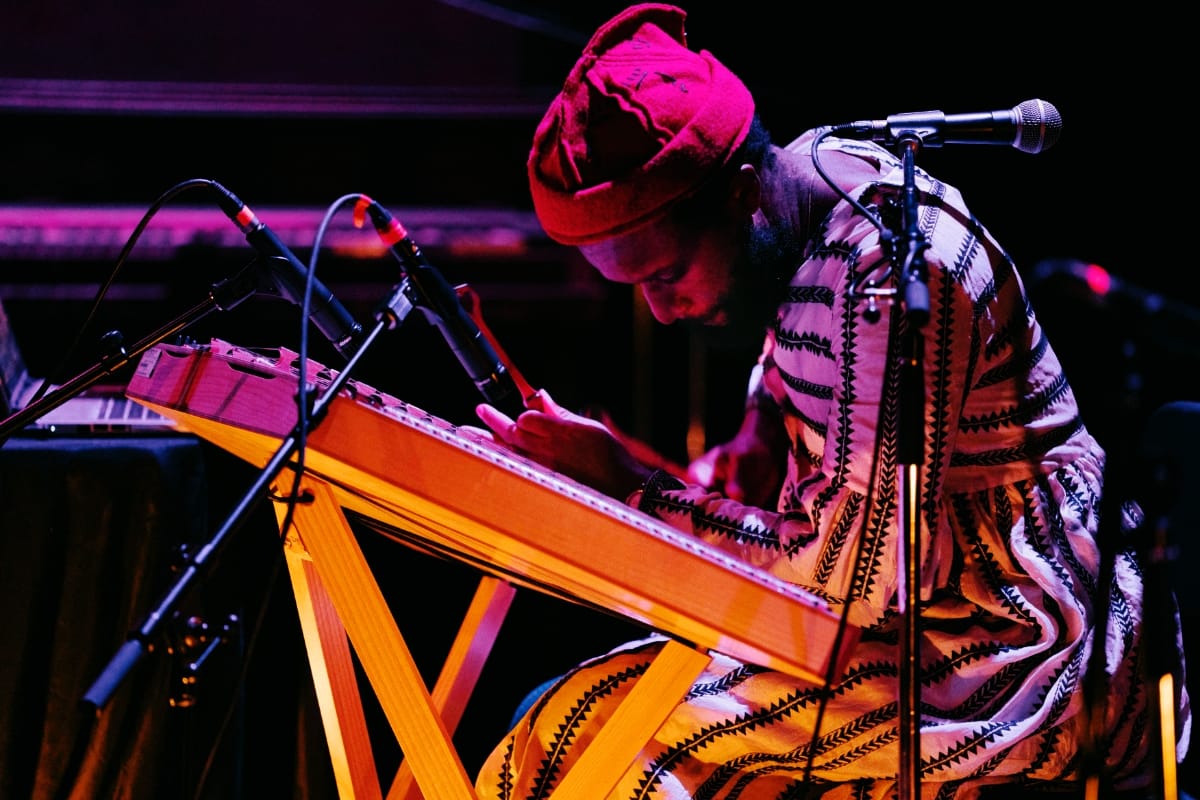
JJJJJerome: Yes—my mentor and role model, the artist and director Mikaal Sulaiman, was actually the person who introduced me to granular synthesis. He also introduced me to the specific software I used, called Cycles, in the spring of 2020, shortly after we entered lockdown. He sent it to me and said, "This instrument reminds me of you—I wonder if you might like it."
Almost immediately, I felt a strong connection to it. I think part of that kinship came from the way granular synthesis can engage with what you called temporal elasticity—how it reshapes moments of musical time in very particular ways. I was drawn to that: to its approach to sound, and its way of approaching time itself.
A couple of months later, I received a commission from the MacDowell artist residency. I had only been using granular synthesis for a short while at that point, and "Evensong" became one of my earliest explorations with the tool.
In general, I'm interested in music as a way of thinking—as a kind of philosophy. And granular synthesis felt like a new way of thinking through sound. It became not just a compositional tool, but a spiritual one. Like the saxophone or the hammered dulcimer, it feels to me like a meditative, even prayerful, practice. There are certain questions and gestures my spirit feels called to return to, and working with granular synthesis allows me to engage them from a place of stillness and curiosity.
Specifically on "Evensong," I was moved by how it allowed me to approach time in nonlinear ways. The piece I made in 2020 was created by applying granular synthesis to music I had recorded a year earlier, in 2019, at MacDowell. I was reshaping sounds from a different time and place—in New Hampshire—while working in New York and Connecticut. That act of reentering older material, transforming it through time, felt deeply meaningful.
Around that same period, I encountered the work of the poet M. NourbeSe Philip for the first time. In her book Zong!, she reworks and reenters the language of an 18th-century legal document about the massacre of Africans aboard a slave ship. I felt a powerful resonance between her method and granular synthesis—both offer tools for returning to the past, reshaping it, and finding a new relationship with it.
In that sense, she also taught me how to use granular synthesis—not directly, but through her example, through the way her writing transforms time and history.
Arina: The record also connects to Black religious inheritance. What drew you to this sacred thread, and how do you reinterpret that tradition?
JJJJJerome: I grew up in the church—in several churches, really—within both African American and West Indian traditions and lineages. That environment is very deep in my bones. So much of the music I encountered as a child, the songs I sang and heard, came from within the church.
It's a kind of music I don't really have a choice about being connected to—it's simply part of me. But as an adult, I've left the church. I don't know that I ever strongly identified as a Christian, and I certainly don't now. Still, it's important to me to have some kind of relationship with the divine. I've been trying to find ways to do that that feel aligned with who I am—spiritually, ethically, and politically—especially since many of the reasons I left the church were political, rooted in the branches and contexts I was raised in.
One way I stay connected to the divine is through the songs I grew up singing. I return to them slowly and intentionally, singing them in ways that feel true to my spirit. I'm grateful for that, because I find so much of that music deeply beautiful.
I'm especially moved by how a song like "His Eye Is on the Sparrow" feels like a kind of common good—something shared, something public. It's been sung by so many different people in so many parts of the world. It feels like a communal resource, a shared inheritance. I'm deeply grateful to the lyricist Civilla D. Martin and the composer Charles H. Gabriel for creating it—for giving us something that continues to connect people across generations and geographies.
Arina: You've said that you no longer identify with the church, yet you currently live in a monastery setting. How has that environment influenced your listening, your pacing, or your sense of sacred attention?
JJJJJerome: The ‘monastery’ is really just the little house my wife and I live in. It's not a monastery in any formal or religious sense—but Luísa was the one who first brought that word into our marriage as a way of describing our home.
I love it because thinking of our home as a monastery helps focus my attention. It invites me into certain forms of sacred attention, as you said. We have this small piece of paper hanging by the front door—it came tucked inside a shopping bag from a bookstore in Brazil. It reads, in Portuguese, "Leia, escute e entre"—"Read, listen, and enter." We placed it there intentionally. Seeing it each day helps remind both of us of the kind of sacred attentiveness we want to practice together—to make our home a sanctuary for that.
Both of us are drawn to different aspects of monastic practice: prayer, reading, silence, gardening, a certain relationship to work, rhythm, and ritual. So our ‘monastery’ is really a shared spiritual form—one we shape between us.
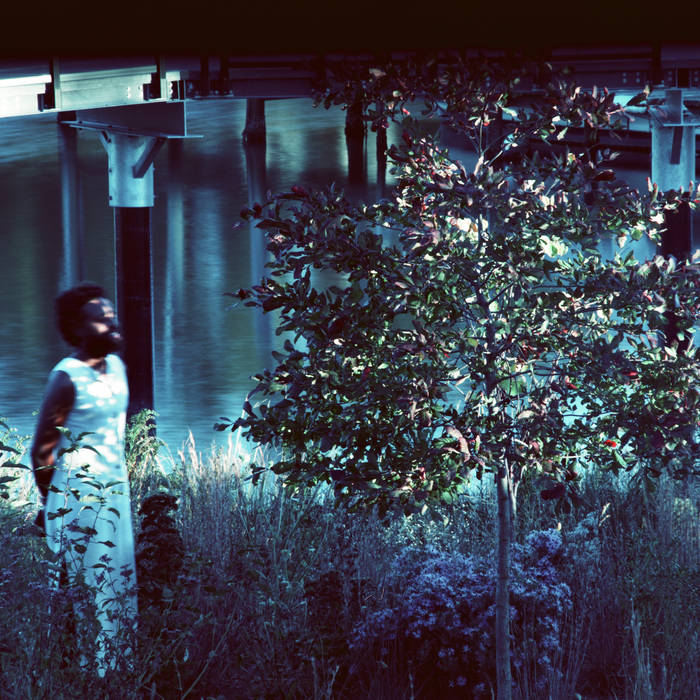
And I have to say, I feel so lucky every day to share it with Luísa. She's a poet, an ecologist, and one of my greatest teachers. She also created the artwork for Vesper Sparrow—she took the cover photograph and did all the design. I'm deeply grateful that we could collaborate on this record in that way, too.
Arina: Your process has been compared to "chipping away at large slabs of recordings to reveal the piece like a marble sculptor." How do you know when a piece has been revealed—when it's complete?
JJJJJerome: I often find it difficult to know when a piece is ready. Sometimes, when I reach a draft that feels close—that might be ready to move to the next stage—I can't actually tell if it's time to release it. So what I often do is set it aside. That could mean a week, two weeks, a month, two months—even a year or two.
If it's music, I simply don't listen to it for a while. Then, when I finally return to it after that period of distance, I often know right away. That coming back—that act of hearing it again with fresh ears—tells me whether it's ready. But even then, I don't think of readiness as ‘finished’ or ‘complete.’ For me, it's more about feeling that the work is ready to be released, to move into the next stage—to invite listeners into its presence. I feel that it's really the audience, the listener, who completes the work.
One of my mentors, the poet Dawn Lundy Martin, once shared something from her mentor, the poet Myung Mi Kim: sometimes the practice is to intentionally release something before you feel it's ready. To not wait for the sense of completion, but to offer it anyway. I find that a powerful idea, especially because I can be such a perfectionist—often to a degree that doesn't feel healthy. So I try to hold that teaching close: sometimes you release it before you're sure. Sometimes you trust the work to find its own timing. In the end, I try to live in that balance—between patience and release, between refinement and letting go.
Arina: You've touched on collaboration a bit already, but I'd love to ask more directly: how do collaboration and community shape your practice?
JJJJJerome: For most of my adult life—really from around 2008 until 2020—the majority of my work as an artist was in the world of theater. That's the environment in which I was really schooled, and of course, it's a deeply collaborative world. I learned so much from entering creative spaces with writers, directors, costume designers, lighting designers, set designers, dramaturgs—sometimes fifteen people in a room, all building something together. That experience taught me a lot about attention and interdependence. Even now, when most of my work is more solitary—composing, recording, or performing under my own name—I carry that sense of collaboration with me. It's shaped how I think about making art.
On Vesper Sparrow, for example, I play most of the instruments myself, but the record is still very much a collective creation. There's a sample at the beginning of track three—a granular synthesis version of an older recording I made with four other musicians: S T A R R (busby), Ronald Peet, James Harrison Monaco, and Haruna Lee. Beyond the musicians, there's Angel Marcloid and Graham Duncan, who mixed the record; Heba Kadry, who mastered it; and Félicia Atkinson and Bartolomé Sanson at Shelter Press, who prepared it for release. And of course, there's Luísa—my wife—who created the album artwork and design. So even though not everyone is playing an instrument, all of these people helped create the record. It's a shared work.
I also think of audiences as collaborators. So much of my music develops slowly over time through performance—it changes as I play it live, in response to the people who are there listening. Those audiences shape the music just as much as I do.
So I feel deeply grateful for all the collaborators and communities that help carry the work. I really do see myself as just one strand in a much larger tapestry.
Arina: You've mentioned dreaming of building a "sonic bath house." What would that space feel and sound like?
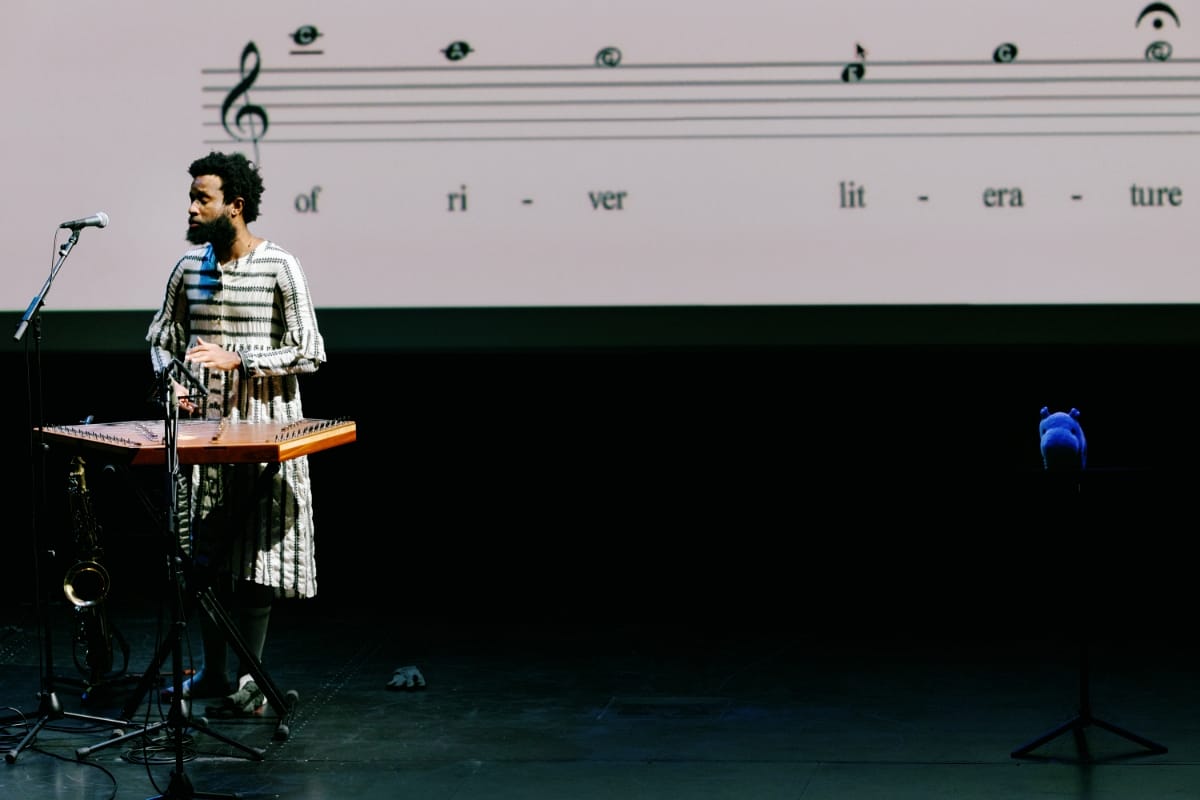
JJJJJerome: I actually had a recent opportunity to experiment with this idea. The curators Kristen Nassif and Molly Joyce co-curated a group show at the Fralin Museum of Art at the University of Virginia this past year, and they invited me to contribute a work. I created a piece called Sonic Bathhouse No. 2. The first Sonic Bathhouse was a live, four-hour performance I did at the Whitney Museum last year. It was an experiment in creating a live sound environment—what you might call a sonic or musical bath—with the intention of inviting rest, reflection, or simply a slower form of listening.
At the Fralin, I translated that idea into an installation format. I composed an eight-minute musical piece that played on a continuous loop in the gallery. The curators arranged for the space to include pillows and cushions equipped with vibrotactile technology, so that the sound could also be felt through vibration when people held or sat on them. They also furnished the room with very comfortable seating, so visitors could really settle in, lie down, close their eyes, and stay for a while.
It felt like a glimpse into what a Sonic Bathhouse could be—perhaps a series of rooms, each with its own continuous musical atmosphere designed to invite rest, softness, and reflection. Much of the music is slow, drone-based, and low-frequency—what might fall under the umbrella of ambient or environmental music.
I feel very grateful to have had these opportunities, both at the Whitney and at the Fralin, to keep exploring this ongoing question of how sound can create spaces of rest and attention.
Arina: Lastly, what possibilities do you hope open up when someone listens to your work for the first time?
JJJJJerome: For some reason, I'm finding it hard to say. I hope the work can be of some use to someone or maybe offer someone a moment of pleasure. I'm really curious to hear from folks what might open up for them when they hear the work for the first time. Listeners can feel free to reach out to me through my website or on Instagram if they want to share any impressions with me.
Check out more like this:
 Jonah Evans
 Arina Korenyu


Comments