


Ahoy, dear reader! Welcome aboard the latest installment of the Talk Of The Tonearm newsletter. Each week, I provide a handy rundown of recent stories from our online journal, along with a few extra thoughts and sidebars. You'll also find plenty of fabulous recommendations and, near the end, a guest observation on an unnamed music genre that "asks you to feel its weight." Let's get to it:
Surface Noise
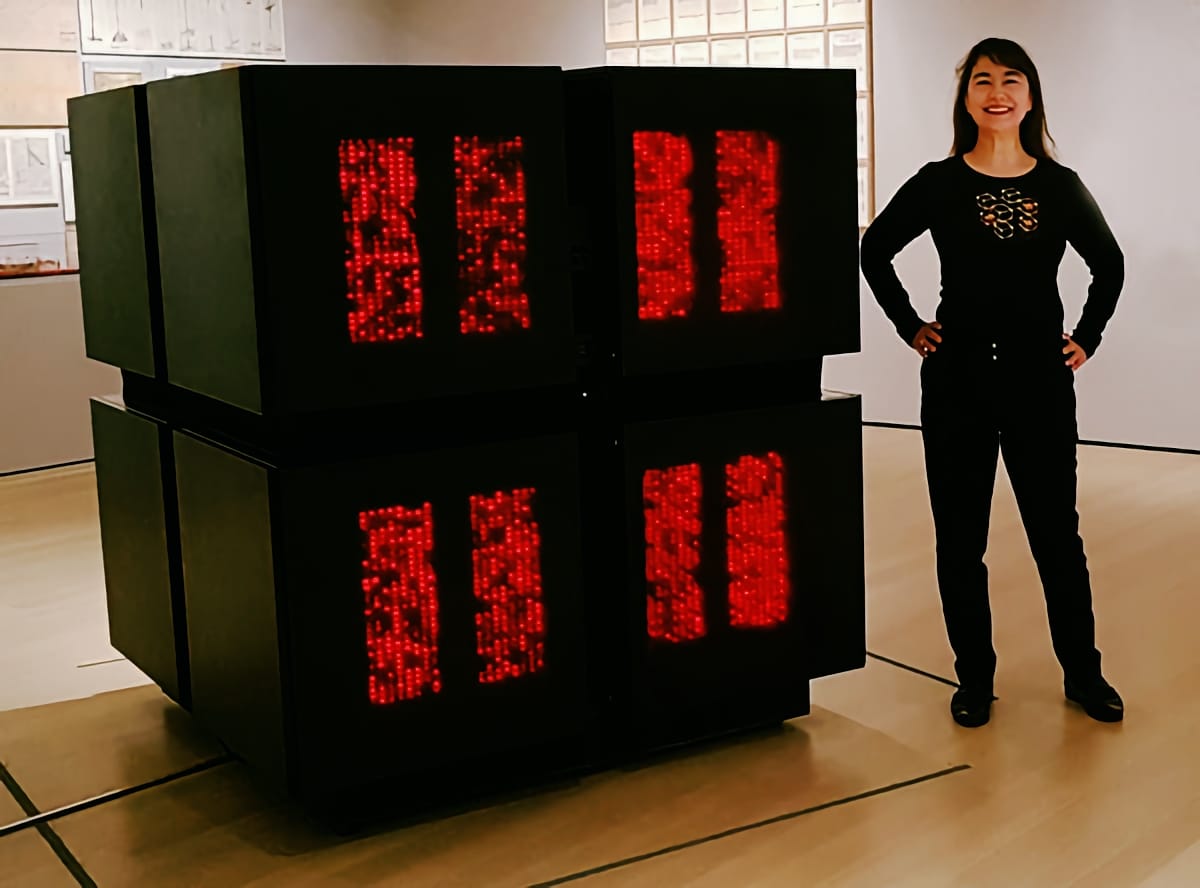
Tamiko Thiel's road trip from designing the iconic black cube of the Connection Machine—a hypnotic monolith with blinking red lights that beguiled Steve Jobs—to creating virtual gardens that confront ecological crisis forged an artist who understands that environments tell stories. Working alongside figures like Danny Hillis and Richard Feynman, Thiel transformed abstract computational concepts into physical presence through what began, improbably, as a T-shirt logo. "When I imagine the Connection Machine," Carl Feynman once told her, "I imagine this cloud of lights all blinking as they send messages to each other"—a poetic vision she materialized by moving status lights to the machine's translucent edges, creating an object that people would obsessively watch "thinking."
This spatial understanding later evolved when Thiel turned from designing computers to using them as artistic tools. Drawing on her father Philip Thiel's theories of spatial perception and rejecting conventional narrative structures that require character-based conflict, she recognized that environments themselves create emotional arcs. It's a subtle but revolutionary idea born from her artistic exploration of virtual reality: narrative doesn't require characters. "If you've ever climbed a mountain or sat on a beach and watched the sunset," Thiel explained, "you are going through a dramatic arc." This insight—that environments themselves can tell stories with "you" as the protagonist—challenges fundamental Western assumptions about storytelling.
There's a surprising parallel in the Japanese environmental music movement of the 1980s known as Kankyō Ongaku (環境音楽). Just as Thiel rejected character-driven narratives in favor of spatial experiences, composers like Hiroshi Yoshimura and Satoshi Ashikawa created music designed as architectural elements that transformed physical spaces and the listener's perception of them. What connects Thiel's virtual environments and these sonic landscapes is a shared philosophy about how meaning emerges from environment rather than exposition. When Ashikawa described his music as "not to be listened to specifically, but to be heard as part of the environment," he was articulating exactly what Thiel meant when she said of her VR works: "you, as the main character, are encountering the virtual world I've created for you."
 Lawrence Peryer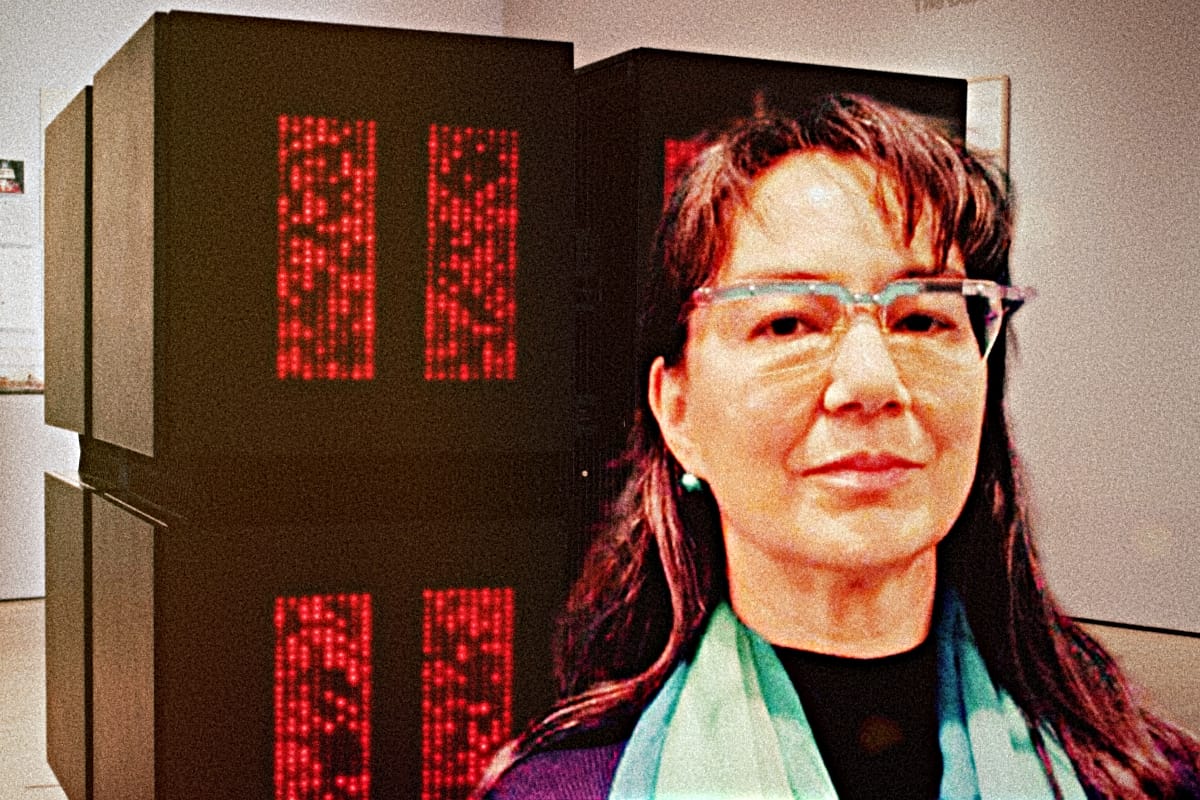
 Lawrence Peryer
Playback: This discussion echoes our interview with Brüder Selke & Midori Hirano, who execute composition with architectural thinking. They talk about "building a house" with sounds and creating spaces between notes, with Selke comparing different compositional mindsets to constructing houses versus gardens.
In Arina Korenyu's interview with Sam Beste (The Vernon Spring), we witness an artist for whom removal is as significant as creation. Beste discusses a process of continual stripping away—lyrics reduced to fragments, vocals pushed to the background, his voice often relegated to texture rather than foreground. There's something beautiful in this sculptural approach to silence, where what remains unsaid bears as much weight as what's spoken.
Perhaps most intriguing is his casual revelation about "Esrever Ni Rehtaf"—"Father in Reverse" spelled backward. This linguistic inversion opens a portal into the album's central theme of perception and its contradictions. Like the palindromic title, Beste's work explores how familiar things (fatherhood, humanity, even sunlight) can suddenly appear strange when viewed from a different angle.
For Beste, this reversal technique embodies the album's central theme. The title "Father in Reverse" suggests a relationship being viewed from an altered perspective—perhaps the transition from being a son to becoming a father himself, that strange doubling of identity that occurs when you find yourself on the other side of a relationship you've only known from one direction.
What is particularly meaningful is how Beste mentions stripping away most of the original track, leaving only "tiny fragments" as samples. The process mirrors how memory works—we don't recall our parents in their entirety, but rather as fragments, samples of experience that we process and recontextualize as we age.
 Arina Korenyu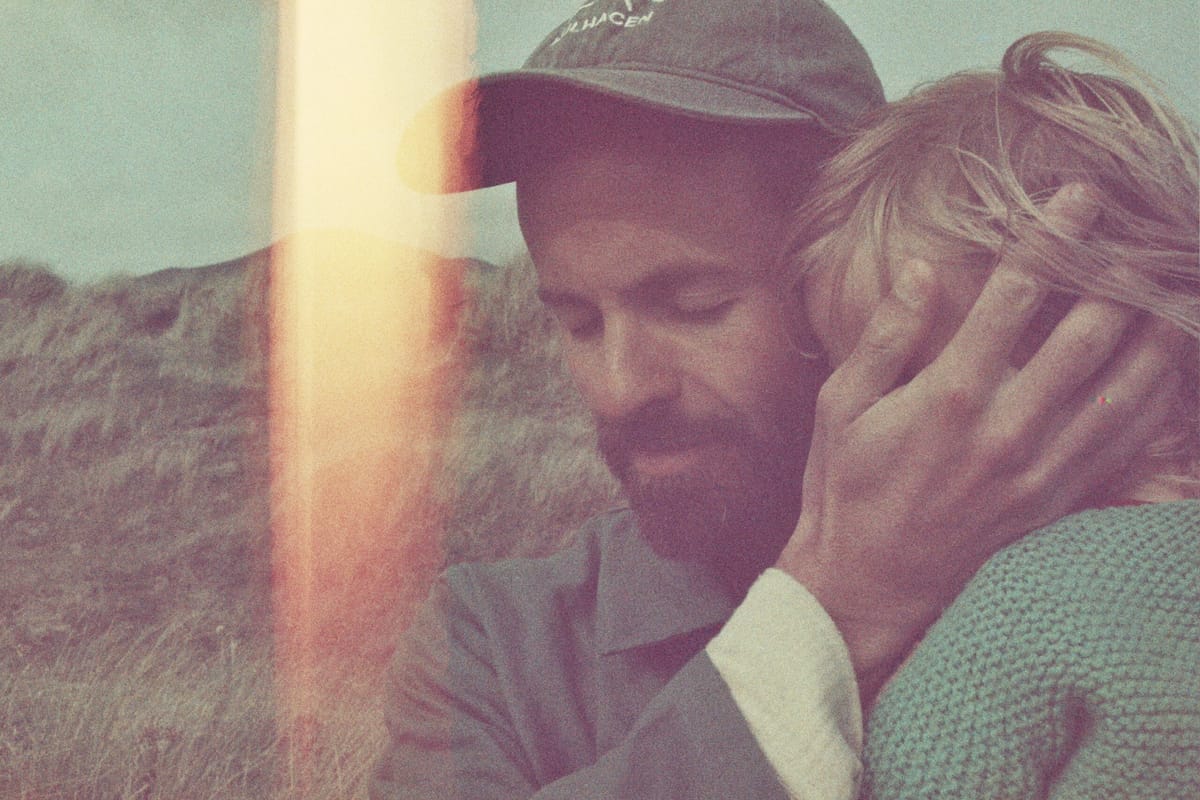
Playback: Greg Lisher, formerly a guitarist with Camper Van Beethoven, underwent a complete artistic reversal by abandoning his primary instrument to explore electronic music. His process involved drawing MIDI notes and then returning to play everything by hand—a kind of compositional palindrome where the end reflects the beginning, but transformed.
"The Solomon Diaries," clarinetist Sam Sadigursky's collaboration with accordion player Nathan Koci, draws inspiration from decaying Borscht Belt resorts, those abandoned Jewish cultural centers in the Catskills that once thrived before assimilation rendered them obsolete. I'm intrigued by how Sadigursky's artistic approach mirrors his personal history: born to Soviet immigrant musician parents, his father left behind handwritten folk tune collections and sheet music from little-known Soviet composers—works of "very high level, modern twentieth-century writing" virtually undiscovered in Western circles. These compositions sit waiting, like the ruined Catskills resorts in Marisa Scheinfeld's photography that initially inspired this project. They represent cultural legacies preserved and vanishing, waiting for someone to move air through them again.
These manuscripts, offhandedly mentioned by Sadigursky in our profile, had underground distribution networks that didn't end at the Soviet border. They stretched across generations. His father, who supported his family from age fifteen playing marathon wedding gigs for Soviet elites, carried this musical contraband into a new world, creating an unbroken line between past and present. These scores weren't safeguarded through institutions but through family bonds and cultural memory.
While we in the West canonized our Stockhausens and Cages, an entire parallel avant-garde thrived and suffered behind the Iron Curtain. Composers like Andrei Volkonsky, who introduced twelve-tone serialism to Soviet music in the 1950s, were labeled "formalists"—a dangerous designation in a time when aesthetic choices could lead to professional death or worse. Sofia Gubaidulina worked in near isolation for decades, her compositions deemed too mystical and abstract for Soviet sensibilities. Nikolai Korndorf developed his microtonality and complex rhythmic structures in relative obscurity. Their music survived not through concert halls or record deals but through personal connections, through families, through memory.
 Lawrence Peryer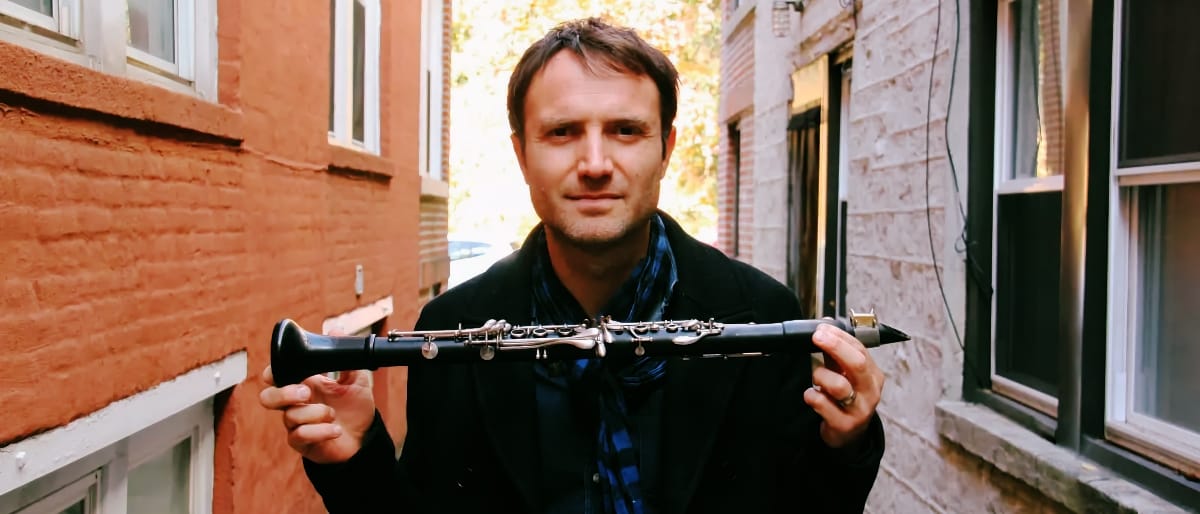
Playback: Peruvian electronic innovator Mauricio Moquillaza told us about creating physical spaces for experimental music performances in abandoned buildings in Lima. This parallels how Soviet experimental composers would organize private performances in apartments or remote locations to avoid censorship. The community-building aspect of his work demonstrates how musical networks form under challenging circumstances.
The Hit Parade
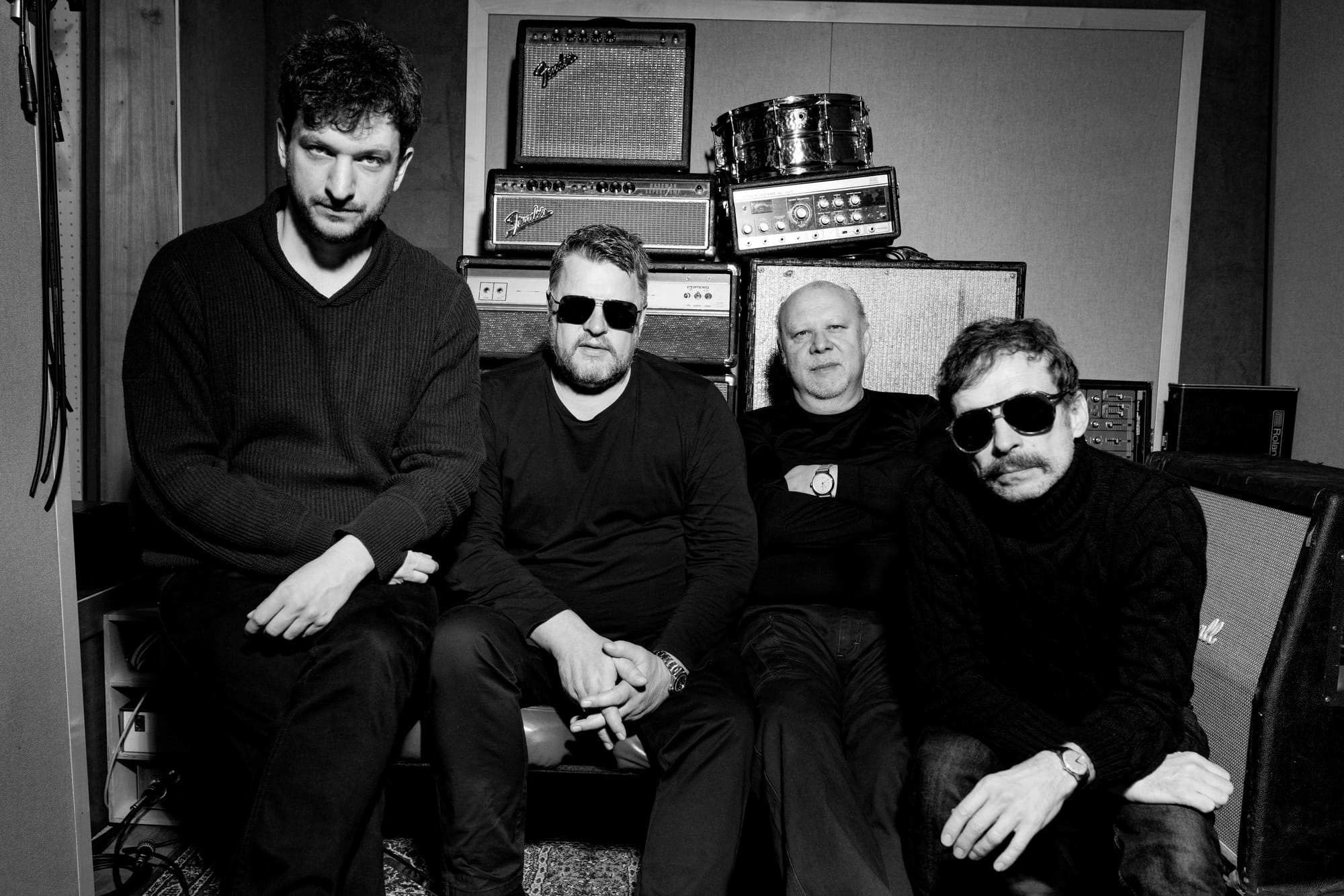
- Web Web returns with Plexus Plexus, their sixth album, and one that marks a sharp pivot toward psychedelic and krautrock territories. The Munich jazz collective of two-time Spotlight On guest Roberto Di Gioia on keys and bass, Tony Lakatos handling saxophone and flute, Christian von Kaphengst on bass, and Peter Gall on drums, invited guitarist JJ Whitefield (known from The Poets of Rhythm and Karl Hector & The Malcouns) for these spontaneous sessions. Recorded over two intense days in Munich, the album emerged from marathon improvisations, with musicians swapping instruments to create varied textures across the fourteen compositions. Unlike their recent albums with Max Herre, albums with structured compositions and production polish, Plexus Plexus embraces raw spontaneity and musical freedom. The entire album formed from just two extended jams, one lasting 25 minutes, the other 45, later shaped into discrete tracks. Their cover of Moondog's "Bird's Lament" demonstrates their technical mastery, learning, and recording after hearing the original just once. The musicians' versatility shines throughout, as Kaphengst's Rhodes playing brings a different harmonic structure than Di Gioia's, creating an interweaving network of sound reflected in the album's name itself. (Review by LP)
- The JJA Awards just dropped, and The Tonearm's circle is crushing it. Anat Cohen snagged Clarinetist of the Year, Mary Halvorson took home Guitarist of the Year, and there was a posthumous award for Susan Alcorn as Player of Instruments Rare in Jazz. On the writing side, Paul De Barros earned Lifetime Achievement in Jazz Journalism, while Jonathon Grasse's Jazz Revolutionary: The Life and Music of Eric Dolphy won for Biography of the Year. The Buzz podcast (where our co-founder, LP, occasionally hosts) claimed Podcast of the Year. Catch the latest episode featuring LP chatting with Neil Tesser and Mark Ruffin about lifetime achievements, standout players, and why some names keep dominating year after year. Mad respect to everyone who won or got nominated.
- You heard it here first: our next livestream is on the way. On Tuesday May 20 at 1 PM ET / 10 AM PT, join Cat Henry (Executive Director, Live Music Society and Spotlight On alum), Liza Levy (President, Salt Lick Incubator), and Tom DeGeorge (COO, D-TOUR) for a critical discussion about the state of independent live music and their collaborative solution to address the challenges facing your local music venue and touring artists. The catalyst for this conversation is the One Night Live tour – a 14-date run featuring rising artists Ellie Williams, Sofia Lafuente, and Farayi Malek that kicks off May 16. This unique collaboration pairs these talented musicians with independent venues across the East Coast, South, and Midwest, creating a model that supports emerging artists and the spaces essential to their development. Learn more here or go to the registration page. The event is free but requires you to sign up in advance.
- Here are some quick musical things to check out from my side of the sonic universe: Michael Scott Dawson's beautiful Guitar, Solo (Dawson was once featured on Spotlight On), "Lens Flare" by SEAMOUNT (which features friend of The Tonearm Danielfuzztone), Hungarian sampling wizard Kovacs The Hun and his wild new album Drowning, and interius/exterius by Catherine Lamb X Ghost Ensemble, new from our friends at greyfade.
Deep Cuts
I asked Joe Brent—mandolinist, 9 Horses member, and Adhyâropa Records don—for a last-minute "what's something you love?" intervention. As you're about to read, he responded admirably.
There’s a particular type of music that doesn't have a catchy genre name like “Dark Ambient” or “Brazilian Slap House,” doesn’t win Grammys, and warrants no herald by the Tastemakers, while simultaneously manages to be wildly popular, heard everywhere in just about every medium, and is often artistically unequivocal. I know better than to doom the thing by naming it, but if I list some of the artists I think work within or adjacent to it, you'll have a sense of what I'm referring to: Michael Nyman. Ludovico Einaudi. Ólafur Arnalds. Nils Frahm. Ryuichi Sakamoto. You know what I mean. It's more Romantic than Minimalism, less ironic than Postmodernism, more urgent than Ambient, and less shitty than New Age. Whatever it is, it owes a lot to the comet-like popularity of Gorecki's 3rd Symphony, which has the iterative structure of something out of Reich, Glass, or Riley, but when seen in detail is actually made up of yearning, grasping gestures that wouldn't be out of place in a Mahler slow movement. It wears its emotions out in the open; it asks you to feel its weight. Listening to it now, I understand what Chuck Klosterman meant when he said he liked Weezer precisely because they were so unironic.
But my favorite example of this whatever-this-is, and the single piece of music I spend the most energy forcing upon people, is Jóhann Jóhannsson's IBM 1401: A User's Manual. Written as a tribute to his father who was an early IBM mainframe designer, Jóhannsson begins by sampling a brief bit of musical code his father had programmed the lumbering computer to "sing" and slowly spools it out with strings and sound design into something grand, magisterial, tender as a children's lullaby, and dignified as a rolled umbrella. It grows, it pulls back, it overwhelms, it soothes—all organically, all part of a single song with one long verse. By the time it's complete, not only do I feel moved but changed. The world sounds different; its silences have heft and anticipation, and its cacophonies feel more of a piece with its little moments of synchronicity. I don't know if Pauline Oliveros would have liked this piece, but she would have loved the way that I love it.
Nowadays, we call things "cringe" that don't come wrapped in a veneer of irony, because we're so used to postmodern artists' habit of demurring from anything that could smack of sincerity. Or as Nathan Fielder recently pointed out: "Sincerity punishes those who can't perform it as well as others." But there's nothing performative about this piece. I think writing this piece fucking mattered to Jóhannsson, and because of how I feel that, it matters to me too, and I want it to matter to you.

Run-Out Groove
Thanks for reading our humble newsletter and lending your support to The Tonearm. You're the best. Whatcha think? We'd love your feedback, critique, and comments. Let us know what you'd like to see within our virtual pages.
And just putting this out there: if you're into the things we cover and our loosely defined mission and enjoy slinging words onto digital paper, then perhaps you'd like to become a contributor. We're always looking to add more brilliance to our already brilliant team of writers. If this sounds interesting, bop over to our contact page and scroll down a little bit.
Okay! Enough for now. Stay safe, relatively calm, and do your best to shield yourself from all the nuttiness. I'll see you next week. 🚀
Connect with The Tonearm:


Comments