


For most of his career, Erik Hall occupied several roles at once: multi-instrumental anchor for the bands NOMO and Wild Belle, songwriter under the moniker In Tall Buildings, film composer, producer, and engineer for artists including Natalie Bergman and Western Vinyl label mates Lean Year. In 2020, he took a creative detour. "At the time I think I was working through my identity as a musician and an artist," he has said, "and on a level there was some sort of exorcism of a long-held pop spirit." That process led to a solo reconstruction of Steve Reich's Music for 18 Musicians, performed entirely by Hall on keyboards, guitars, and synthesizers in his Michigan home studio, each part recorded individually.
The timing was strange and, it turned out, apt. Hall's Music for 18 Musicians arrived on Western Vinyl in April 2020, in the early weeks of pandemic lockdown, and listeners found something they needed in the album. Pitchfork praised the record for making "a minimalist standard freshly thrilling to revisit." It won the 2021 Libera Award for Best Classical Record. Even Reich himself wrote to congratulate Hall, saying he had "reinvented the piece." The reception was an unlikely outcome for a project that had started, by Hall's own account, as a private obsession.
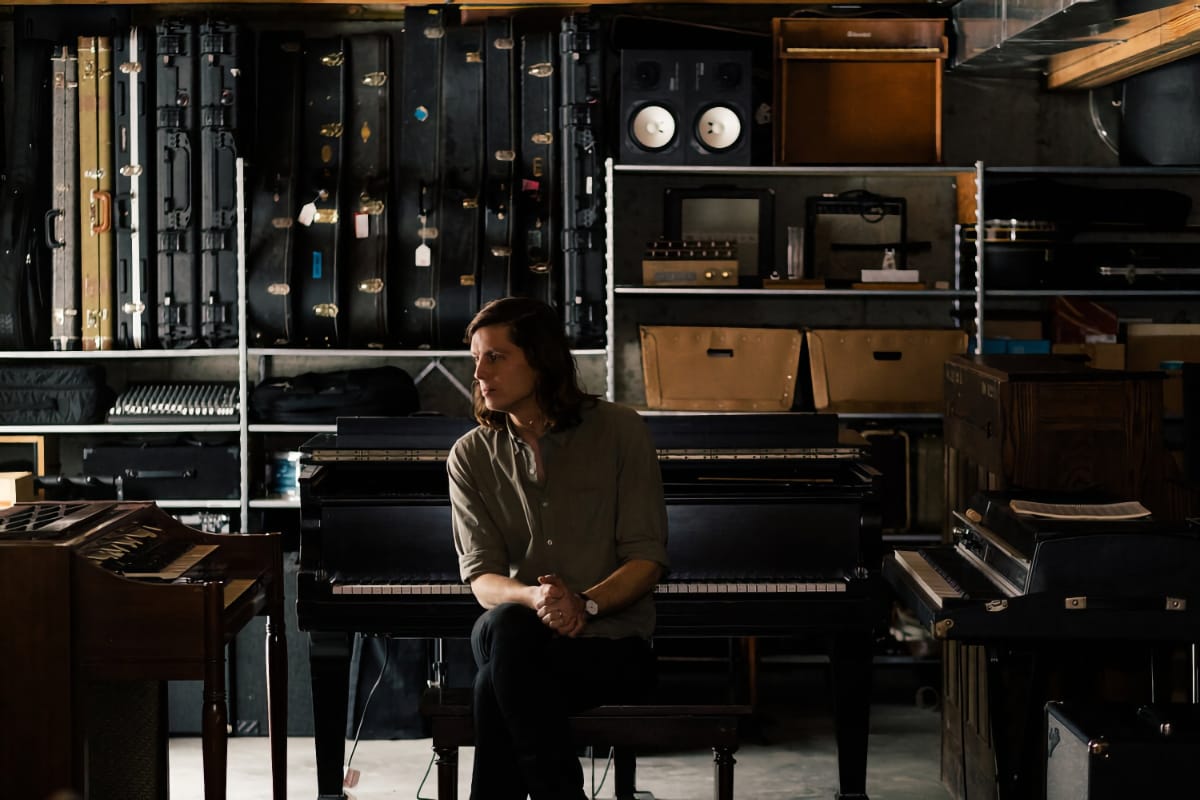
Hall followed it in 2023 with Canto Ostinato, his interpretation of Simeon ten Holt's hour-long piece for four pianos. Ten Holt, a solitary Dutch composer of the mid-twentieth-century avant-garde, had rejected the twelve-tone orthodoxy of his training in favor of tonality, the simple triad, and repeating rhythmic patterns. His work was largely unknown outside the Netherlands until recently. Hall brought his usual method, limiting his palette to instruments already in the studio—a 1962 Hammond M-101 organ, a 1978 Rhodes Mark I, and a family heirloom 1910 Steinway grand piano—and layering each part individually, without loops or sequencing. He has described working this way as offering "a pseudo-meditational benefit," a quality of sustained attention that the music seems to demand. The New York Times featured Hall in a piece on ten Holt's growing influence, and the project initiated a years-long collaboration with New York's Metropolis Ensemble and Sandbox Percussion.
Now Hall closes the trilogy with Solo Three, out now on Western Vinyl. Where the first two records each centered on a single composition, this one collects works by four composers: Glenn Branca, Charlemagne Palestine, Laurie Spiegel, and a return to Steve Reich. Hall performs every part himself, rendering Branca's "The Temple of Venus Pt. 1" through organ and prepared piano, Palestine's "Strumming Music" through felted piano and guitar, Spiegel's "A Folk Study" acoustically rather than electronically, and Reich's "Music for a Large Ensemble" in a sixteen-minute convergence that closes the album. The wider range, Hall says, has changed how he thinks about his own practice. "These records have liberated me from any firm sense of what I'm about. Now it's a little daunting, but it's like I can do anything I want and that will still be me."
Lawrence Peryer recently hosted Erik Hall on The Tonearm Podcast. The two discussed the origins of Hall’s practice in American minimalism, what fidelity to a score means when you're performing every part yourself, the distinct challenges each composer on Solo Three posed, and what this music continues to offer listeners who come to it now.
Listen to the entire conversation on the audio player below. The transcript has been edited for length, clarity, and flow.
Lawrence Peryer: Solo Three is a little different in that you are bringing together the work of multiple composers. What led to that choice as opposed to focusing on a single composer, as you did on your other two releases?
Erik Hall: Every stage of this project has been a natural progression from what came before. The first record began as a somewhat whimsical decision to record a solo version of Steve Reich's Music for 18 Musicians, followed by this Dutch minimalist piece, Canto Ostinato. In considering what to do after that, there wasn't a single long-form, hour-long piece that I could find that resonated with me in the same way those did. My label and I were racking our brains because it's a bit of a puzzle to solve, making these records. Then we had this realization: it doesn't need to be one long piece. It could be a collection of shorter works. That opened up a whole world of possibilities.
Lawrence: My impression is that you really do go deep into these works—they get deconstructed and put back together as part of your process. This is not a covers album.
Erik: Right. It's a delicate recipe for success—the way the music translates to my own set of instruments here in my space. It has to be the right combination of paying respect to the work and taking it somewhere I find interesting and new, while maintaining that musical and emotional behavior and sentiment. It's so easy for this process to turn something into a gimmick or to distract from the actual nature of the work. That's the balance to strike.
Lawrence: Could you take me back to when you first encountered Music for 18 Musicians and what it did to you?
Erik: It set a course for the rest of my musical interests. I was in college at the University of Michigan, in my freshman-year musicology course, and the syllabus included Steve Reich. The piece we focused on was "Come Out", one of his early tape loop experimental pieces. I was a teenager in the nineties and studying classical music and playing in an orchestra, but also a huge grunge rock fan. Avant-garde music was not really on my radar, so when I heard "Come Out," that wasn't what drew me to Steve Reich. But when I was in the music school library, something about the record cover for Music for 18 Musicians caught my eye. I recognized the name from my class and thought, “This looks interesting.” I checked it out, brought it home, and it immediately pulled me in. It was like an awakening—essentially my introduction to American minimalist contemporary music. It opened a door to this whole world: you can have permission to write music like this, which is also beautiful and gratifying to a wide range of ears.
Lawrence: Something that struck me was just how modern and vital the compositions still are. And when you hear different versions of Reich’s work, you always seem to find something new in it—the overtones, the elements that appear whether they're played or not, because of the phasing and the way the tones blend.
Erik: It really is true. When you hear different versions, you always find a new element of the composition that you maybe hadn't realized was even there before, because of how it's framed. And it's one of the most fun things about engaging with the score and recording these pieces that I've listened to a thousand times. When I'm actually reading the notes, there are certain parts where I think, “Oh, that's what that is—it's actually interacting with this other part in a way I hadn't understood.” You realize how they're actually doled out and how the overall picture is painted. You get to see all the individual brush strokes for what they are. It's fascinating.
Lawrence: Your approach reminds me of artists in other media who do something similar as part of their practice—a painter sitting down to copy an old master, or a writer typing out a Hemingway short story to inhabit the work and understand, mechanically, how the pieces came together. It's a very intimate way to inhabit a composer's mindset and to understand exactly the threads they were pulling on.
Erik: Absolutely. This exercise has informed my own composing over the last five years. It's a great way to open up your mind to other ways of doing things and to keep learning. Music for 18 Musicians was always kind of my desert island record. It was in 2018 that I got disenchanted by the pursuit of success in indie rock—writing songs, making records, leading a band. An album cycle had come to a close, and I wanted to be working on something in my studio, but I didn't want to write new songs. My wife was the one who, on a whim, said, “Why don't you do a cover of Music for 18 Musicians?”
It's funny because, in the world of pop music, this is not novel. But applying this treatment in the world of classical music is radically different. It really was this idea she had: “You love that piece, why don't you try a version of it?” And it was like immediate clarity. I started it; it sounded cool, it felt good. I sent it to my label; they were excited, and we decided to put it out. It just went from there.
Lawrence: Let's talk about the reconstruction in your studio. Did the work dictate the approach, or did you have to make decisions about how deep you were going to go?
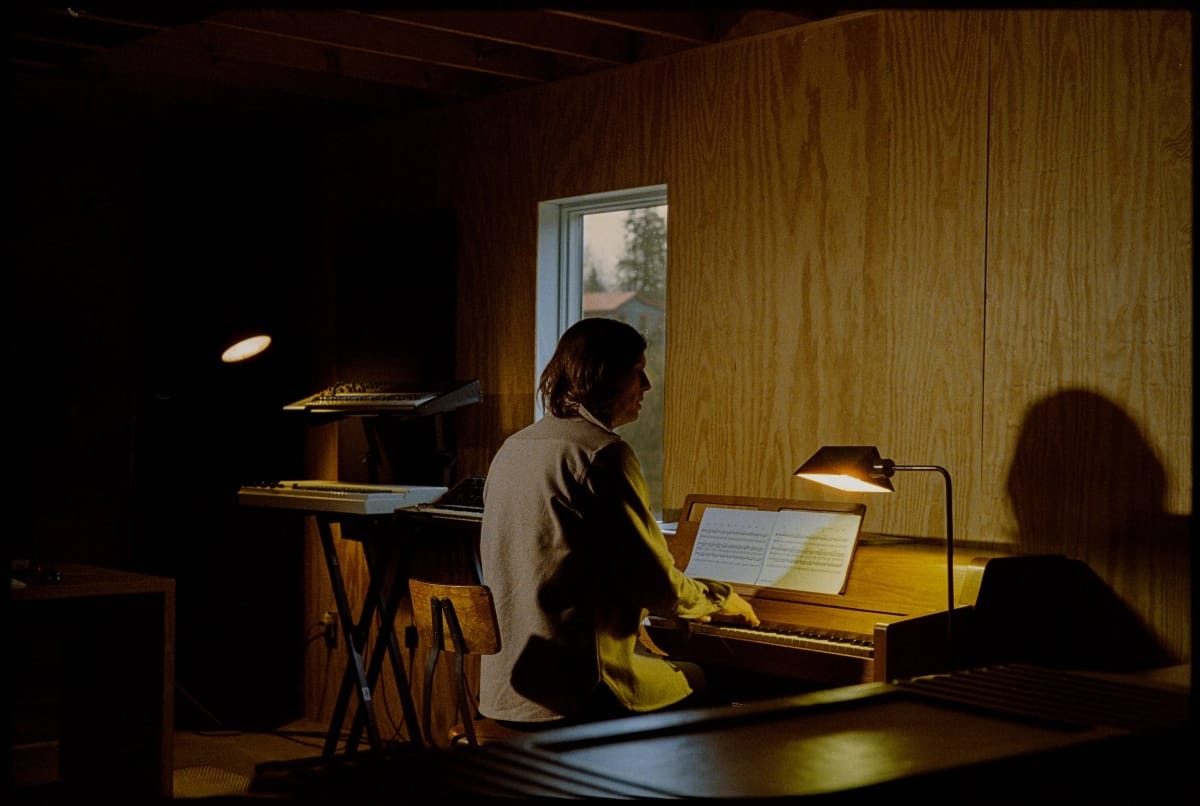
Erik: From the beginning, it was clear that what I wanted to do was create a faithful performance of the notes on the page and play the piece exactly as written. I got the score, and the only obvious major change was to use the instruments I have in my studio and that I can play. I gravitated toward acoustic instruments or electromechanical keyboards: my Rhodes, my Hammond organ, electric guitar, and piano. There are a couple of synthesizers, but they're simple patches played like any other keyboard. So it's playing the piece as an ensemble would, with mallet percussion and woodwinds, but assigning each part to a different instrument I can actually play.
The only area that became truly murky was the vocal parts. For Music for 18 Musicians, I figured out a way to sing them, filter and EQ them, push them down in the mix, and not really feature my voice, but they're in there.
By this third album, I'm definitely taking more liberties with regard to interpretation. There's a piece called "A Folk Study" by Laurie Spiegel that I transcribed a little loosely—it's not a perfect note-for-note transcription. I wanted to stay faithful to how I understand that piece was created. She used an algorithmic approach with relatively early electronic synthesizers, and I'm channeling that idea through performance. I actually recorded three different pieces of hers before deciding this was the one that worked. For her music, it was such a fine line—both in process, and for the listener, and in order to remain respectful and reverent of the work.
Lawrence: There's your adamant insistence that everything be performed live—no loops, no programming. To a certain extent, there's a sort of radicalism in that, not leaning into the technological marvels we have at our disposal. Is there an aesthetic or philosophical element to that?
Erik: I wish I could tell you there was some larger commentary, but it's just the truth of how I work. It kind of emerged as the way these projects could actually happen and be completed. It's not some dogmatic stance against loops or sequencers. It's just that I'm not good at that stuff. I don't really make electronic music in that way, and I don't have Ableton. I have Pro Tools, microphones, and instruments, and I just like to play and record. Once I started approaching things this way, I realized it's actually doable and enjoyable, and so it kind of became a theme. But I'm also not trying to prove anything. Things do get cleaned up, and there are edits. This is a studio, and it is digital audio, so it's not a live multi-instrumental performance. It's multitracked and overdubbed. I'm just trying to do the best I can as a player while making the best record for someone to put on and enjoy.
Lawrence: I'm sure you've had the experience of going into the studio, and it's almost like a submarine or a casino—if you don't leave the room, it's twelve hours later and time has sort of passed by. Whether it's ambient music, phase music, or the type of work you're doing here, the time, space, and mental state conjure a very unique experience. Did you have any perceptual experiences while doing this?
Erik: It absolutely plays with your experience of time and your sense of how much time has elapsed, particularly with these longer pieces that require sustained focus and a relaxed state. When I'm in the process of making one of these records, it's incredible how I can enter the studio and suddenly realize the day is almost done and I need to pull myself out of this headspace, go pick up my son from daycare, and answer some emails. You really do get fully immersed, and it's hard not to because the music just perfectly lends itself to that. For me, it's so humbling. It's the most fun way to make an album because you already know and love these pieces, and you get to just exist in the studio. It feels kind of selfish, actually.
Lawrence: You mentioned that you don't have an outside producer on these projects—you're playing a lot of roles, quality control included. How do you maintain honest self-judgment about what actually works?
Erik: Not being in a rush, being able to step away and come back—all of that is part of the process. I love this approach to recording, but it can’t be just anything under the sun. It really has to add up to something that is truly compelling and worthy of adding to the conversation. I don't want to make something just to make it or just to say that I could. That's why there were roughly twice as many pieces that I recorded, to some extent, as those that actually ended up on the record. I just needed to be honest with myself about whether they were actually particularly good renditions. The ones I didn't think were—nobody will ever hear. (laughter)
Lawrence: Steve Reich himself got in touch with you after the first album came out. How did that come about?
Erik: He's been so encouraging and gracious. I had been intending to send him a note—to inform him of what I had done and thank him for the music—but I was probably just nervous about it and hadn't gotten around to it. Then, suddenly, there was an email in my inbox from him. It was astonishing. The gist of it was: congratulations and thanks, I love what you've done here. He even mentioned that when he was writing the piece, there was a period where he had an eight-track and was recording different parts to make sure they worked together—so he could kind of relate to this idea of being alone in the studio, multitracking the piece. I really appreciated it. Since then, we've had a nice light correspondence. I haven't studied with him, but I already feel, intrinsically, like he's one of my teachers, and it feels like that kind of relationship.
Lawrence: I think a lot about minimalism in music, and there's quite a bit of social commentary around it, especially among people maybe a little younger than you or me—this conversation around people looking for more analog experiences and offline experiences. There does seem to be a place where longer-form music plays in much of this. I see artists and musicians looking to this music as inspiration. What do you think this music is offering today, and has its importance or the role it occupies changed in your mind?
Erik: One thing that's certainly changed is that the audience has grown so much, which I think is fantastic. I don't tend to worry too much about technology and the music industry. I'm not that interested in the newest tools, but I'm also not trying to cast judgment on their use. The music I like to make and the music I like to listen to—I'm interested in it because of what it is, how it was made, who made it, and what their story is. That's why, as a listener, I latch onto certain things, and I assume the people listening to my records feel the same way. They're aware of what it is and how it might have been made, and that's interesting. That's all you really need—that base-level connection to a record. I just think that will probably never go away.
Lawrence: I can't help but think it's one of the positive effects of the entire canon of recorded music being available to everyone all the time. I have a twenty-year-old son in art school, and the music he listens to is stuff it took me decades to come across—I needed a mentor to draw the connection from one artist to another. It is genuinely nice to see people have that opportunity to discover this music. Growing up in suburban Connecticut, it took me years to even find a copy of a Reich album.
Erik: A hundred percent. We can't even fathom what that would have been like when we were twenty, let alone twelve.
Lawrence: Something else I wanted to ask you about is the role of imperfection in this music. To someone who's new to it, it can often sound mechanical, with a modernist bent that's a bit alienating. I've talked to people about even Kraftwerk in this context—I know people who say it's the most sterile music ever, and I think, no, to me it's soul music. I feel the same way about Reich's music. Part of it is that it isn't always so precise. These overtones, to me, are evidence of—if not imperfection—unintended consequences. Could you talk about that?
Erik: I think there are a couple of things at play. Some people just have a visceral distaste for minimal, repetitive music—maybe a reaction against it seeming overly intellectual or heady. I understand that. But for those who are comfortable with how it hits, it's like this continuum of imperfect execution. The music is based on very fixed patterns and can be metronomic, but the various renditions reveal the myriad shades of human execution. I love that about it because it puts a magnifying glass on the human element. Look at Reich—he came out of creating these pieces with actual loops of tape, then abstractly applied that concept to a pair of people clapping, and then extended it further with the different phasing pieces.
Imperfection is interesting to me. I purposefully retain most of the uneven repetitions and little flubs—those moments in the studio. They kind of subconsciously remind the listener that this happened somewhere, at some point in time.
When my Music for 18 Musicians came out, it was funny how it quickly got pulled into this conversation. People would say it's the ‘electronic version’ or the ‘modular version.’ Someone commented somewhere, "I have no interest in that; it totally lacks the human element." And I thought, really? I actually played every note. It wasn't programmed and set in motion. It was just funny to observe how a record like that can spark conversation, get misconstrued, and provoke a visceral response either for or against it. I think it's all cool and interesting.
Lawrence: Going back, it was actually Reich's album cover that first caught your eye in the library, which makes me want to ask about the visual side of this project, because I love the art on all three records. It's not tacked on.
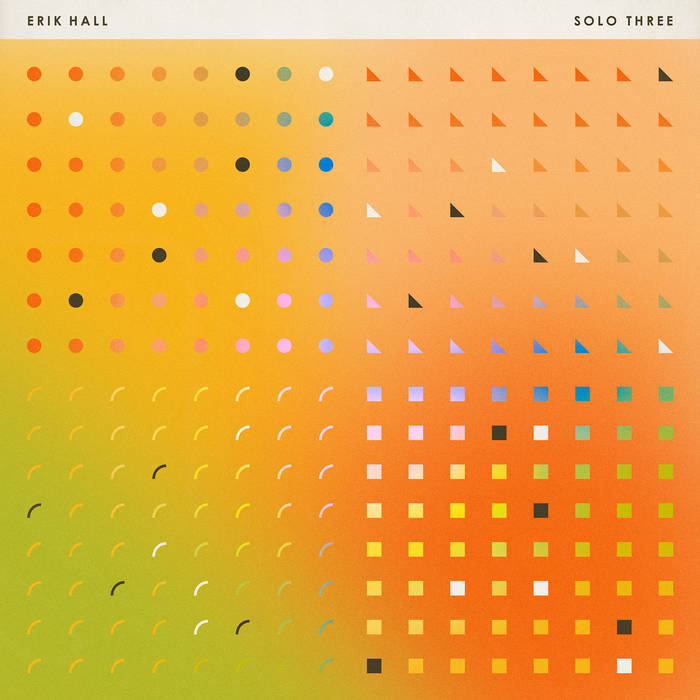
Erik: Aaron Lowell Denton is the designer, and I attribute it all to him. He's brilliant and amazing to work with, based in Bloomington, Indiana, just a few hours south of me. I was put in touch with him because I was looking for someone to create artwork for Music for 18 Musicians. We had one conversation about reference points and direction, and he just got it. We talked about geometry, color, and drawing somewhat from a mid-century or Bauhaus sensibility. He sent me a couple of different ideas, and what you see is one of them, and I was just like, “This is perfect.” With that record cover, we created a kind of visual world, and the subsequent covers were just an evolution of that. I've put out records in the past where I didn't feel like I got the visual right—where the visual didn't match the music or the story. I've been very grateful that these records feel like they're resonating in that way.
Check out more like this:
 Chaz Underriner
 Lawrence Peryer


Comments